- English
- French
- German
- Portuguese
- Spanish
- Russian
- Japanese
- Korean
- Arabic
- Greek
- German
- Turkish
- Italian
- Danish
- Romanian
- Indonesian
- Czech
- Afrikaans
- Swedish
- Polish
- Basque
- Catalan
- Esperanto
- Hindi
- Lao
- Albanian
- Amharic
- Armenian
- Azerbaijani
- Belarusian
- Bengali
- Bosnian
- Bulgarian
- Cebuano
- Chichewa
- Corsican
- Croatian
- Dutch
- Estonian
- Filipino
- Finnish
- Frisian
- Galician
- Georgian
- Gujarati
- Haitian
- Hausa
- Hawaiian
- Hebrew
- Hmong
- Hungarian
- Icelandic
- Igbo
- Javanese
- Kannada
- Kazakh
- Khmer
- Kurdish
- Kyrgyz
- Latin
- Latvian
- Lithuanian
- Luxembou..
- Macedonian
- Malagasy
- Malay
- Malayalam
- Maltese
- Maori
- Marathi
- Mongolian
- Burmese
- Nepali
- Norwegian
- Pashto
- Persian
- Punjabi
- Serbian
- Sesotho
- Sinhala
- Slovak
- Slovenian
- Somali
- Samoan
- Scots Gaelic
- Shona
- Sindhi
- Sundanese
- Swahili
- Tajik
- Tamil
- Telugu
- Thai
- Ukrainian
- Urdu
- Uzbek
- Vietnamese
- Welsh
- Xhosa
- Yiddish
- Yoruba
- Zulu
Is the RB Series Crossed Roller Bearing Better Than the RA Series?
Choosing between the RB Series Crossed Roller Bearing and the RA Series depends entirely on your application requirements. The RB Series features an integral inner ring with a split outer ring and plug design, making it ideal when the inner ring rotates—common in robotic joints and precision rotary tables. Meanwhile, the RA Series offers a split inner ring with an integral outer ring, better suited for applications where the outer ring rotates. Neither is universally "better"; each excels in specific mounting conditions, load profiles, and space constraints that align with distinct industrial automation and precision machinery needs.
Understanding the Core Design and Features of the RB and RA Series
It is important to know the structural changes between the RB and RA Series when looking at crossed roller bearings for high-precision uses. These differences in design have a direct effect on how each bearing fits into your system and how well it works when it's under stress.
Structural Configuration of the RB Series
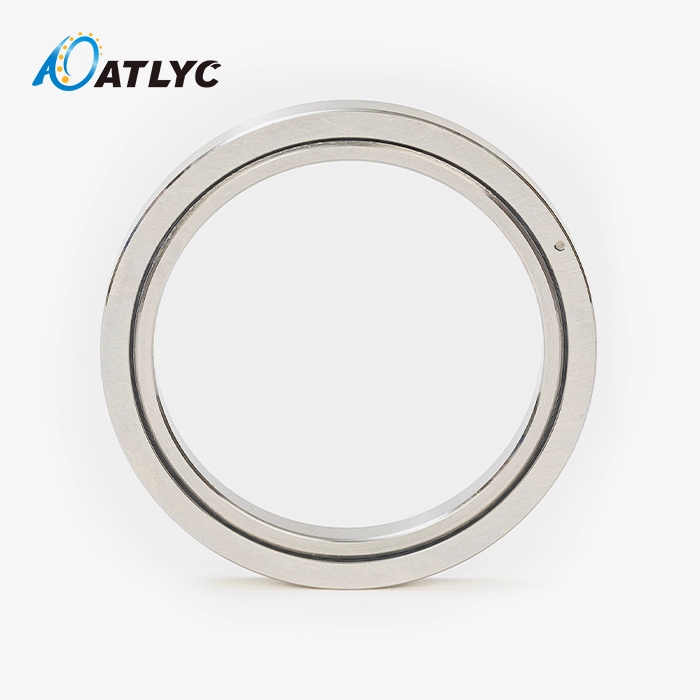
The RB Series uses an inner ring that is integral and an outer ring that is split and held in place by a locating plug. This design makes installation easier when the inner ring needs to turn while the outer ring stays still, which happens a lot in industrial robot joints and machine center rotary tables. The split outer ring design makes it easy to attach to shafts without the need for special tools or taking apart parts that are close together.
These parts are made from high-quality Gcr15 and Gcr15SiMn bearing steel and are carefully heated to make sure that the hardness is spread out evenly. The cylinder-shaped rollers are arranged at right angles to each other at 90 degrees inside V-groove raceways. This makes many contact points that spread the load evenly in all three directions at the same time: radial, axial, and moment.
Structural Configuration of the RA Series
On the other hand, the RA Series has an inner ring that is split and an outer ring that is one piece. This design is useful when the outer ring needs to be able to move while the inner ring needs to stay attached to the housing. The split inner ring design makes mounting easier in situations where the housing can't be easily reached or taken apart.
Both models use the crossed roller principle, which means that the rollers are positioned perpendicular to each other and move back and forth. The ring design, on the other hand, determines the freedom of the mounting and the load path. When outer ring spinning is best, the RA Series is usually used for things like rotating units in building equipment and rotary joints in material handling equipment.
Precision Grades and Manufacturing Standards
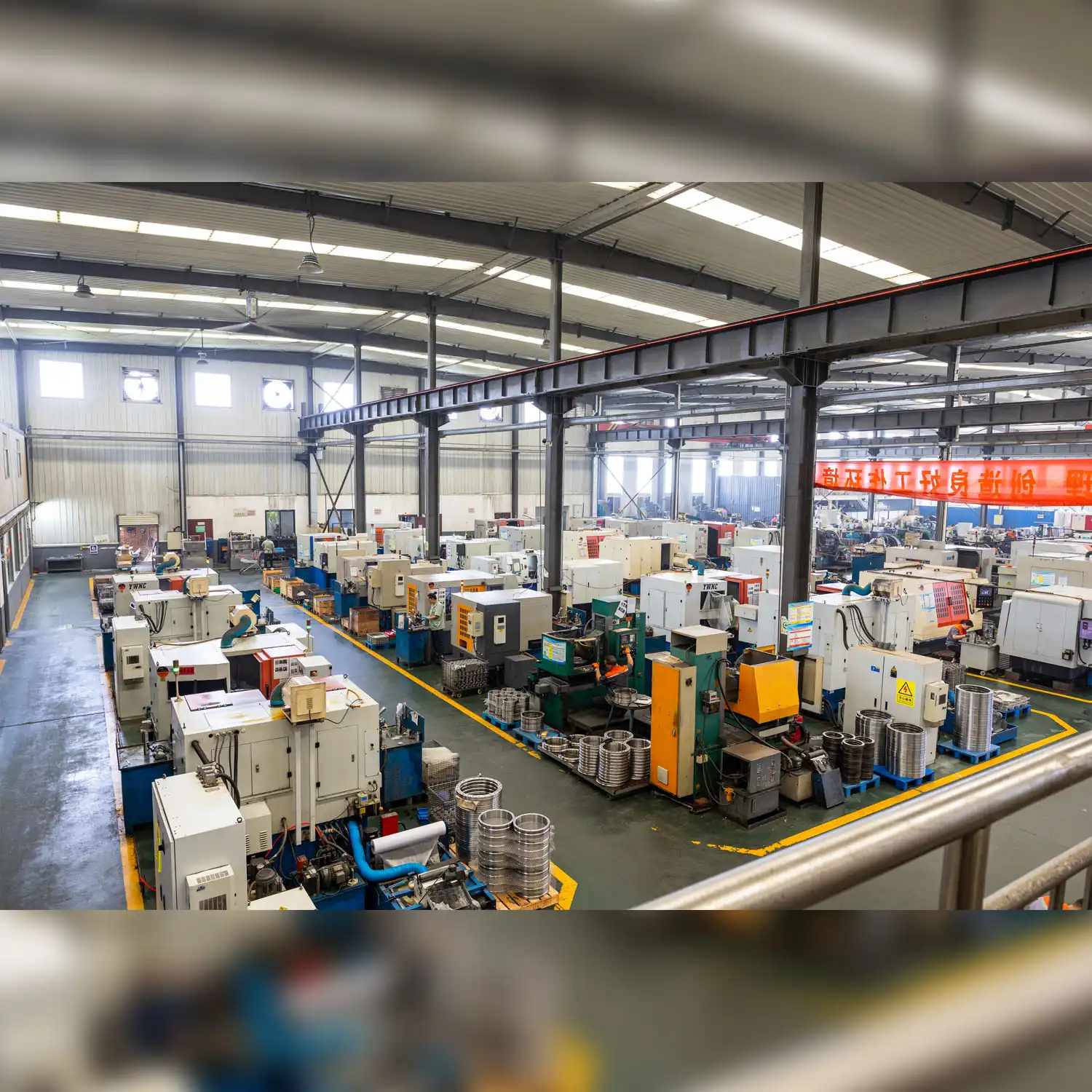
At factories like ATLYC's ISO 9001 and IATF 16949 certified production lines, strict quality control measures make sure that both the RB Series Crossed Roller Bearings meet exact size requirements. There are six precision grades available: P6, P5, P4, P2, and P1. Each grade has better geometric consistency and runout accuracy. P4 grade bearings keep radial runout below 5 micrometres, which is very important for medical imaging systems and equipment used to make semiconductors because precise placement affects both product quality and diagnosis accuracy.
The inner diameter can be 20 mm to 1100 mm, the outer diameter can be 70 mm to 1500 mm, and the width can be 12 mm to 110 mm. This means that it can fit a wide range of sizes, from small robotic wrist joints to big spinning systems in flight testing equipment.
Performance Comparison: RB Series vs RA Series
Performance metrics reveal how design differences translate into operational capabilities. Understanding these distinctions helps procurement teams specify the correct bearing for each application's unique demands.
Load Capacity and Stiffness Characteristics
Both series deliver exceptional multi-directional load capacity, but the load path geometry differs slightly due to ring configuration. The integral inner ring of the RB Series provides marginally higher stiffness in applications with predominant radial and moment loads, reducing deflection under asymmetric loading conditions common in robot arm extensions.
The table below summarizes key performance parameters:
| Performance Metric | RB Series | RA Series |
|---|---|---|
| Radial Load Capacity | High | High |
| Axial Load Capacity | High | High |
| Moment Load Capacity | Excellent (integral inner ring) | Very Good |
| Stiffness | Superior for inner ring rotation | Superior for outer ring rotation |
| Friction Coefficient | Low (0.002-0.003) | Low (0.002-0.003) |
| Runout Accuracy (P4 grade) | <5μm | <5μm |
These performance characteristics stem from the orthogonal roller arrangement, which creates preloaded contact that eliminates internal clearance and ensures immediate response to directional load changes. This zero-clearance design proves particularly valuable in CNC indexing applications where backlash would compromise machining accuracy.
Durability and Service Life Considerations
Fatigue life calculations using ISO 281 standards indicate that properly maintained crossed roller bearings achieve L10 life exceeding 20,000 hours in typical industrial robot applications. The actual service life depends on operating conditions, including load magnitude, speed, lubrication effectiveness, and contamination control.
The split ring design in both series requires attention to bolt torque specifications during installation. Inadequate preload allows roller slippage and accelerated wear, while excessive torque induces stress concentrations that reduce fatigue resistance. Manufacturers like ATLYC provide detailed installation specifications that balance these competing requirements based on bearing size and application loads.
Rotation Precision and Vibration Performance
Runout accuracy directly affects the positioning repeatability of automated systems. Crossed roller bearings manufactured to P4 or higher precision grades maintain rotational accuracy within single-digit micrometer ranges, enabling sub-millimeter positioning in robotic assembly operations and micron-level registration in IC manufacturing photolithography equipment.
The low friction coefficient—typically between 0.002 and 0.003—results from the rolling contact geometry and precision-spaced retainers that prevent roller-to-roller interference. This smooth operation reduces heat generation and vibration transmission, extending component life throughout the kinematic chain.
Choosing the Right Bearing: Decision Factors for B2B Clients
Procurement decisions must balance technical specifications against operational requirements and total cost considerations. Several evaluation criteria help identify the optimal bearing series, RB Series Crossed Roller Bearing, for specific applications.
Application-Specific Selection Guidelines
Your mounting configuration largely determines series selection. When designing equipment where the inner ring rotates and the outer ring bolts to a stationary housing—such as robot joint mechanisms and swivel turntables—the RB Series offers simpler installation and maintenance access. The split outer ring allows bearing replacement without shaft disassembly, reducing downtime during scheduled maintenance intervals.
Conversely, applications requiring outer ring rotation with a stationary inner ring—common in revolving platforms and certain indexing mechanisms—benefit from the RA Series integral outer ring design. This configuration provides superior dimensional stability when the outer ring interfaces with rotating structures.
Cost-Efficiency and Supply Chain Factors
Pricing varies based on bearing size, precision grade, and order volume. The comparison table below illustrates typical cost considerations:
| Decision Factor | RB Series Considerations | RA Series Considerations |
|---|---|---|
| Unit Cost | Comparable across equivalent sizes | Comparable across equivalent sizes |
| Installation Complexity | Lower for inner ring rotation | Lower for outer ring rotation |
| Maintenance Accessibility | Excellent (split outer ring) | Good (split inner ring) |
| Lead Time from Chinese Manufacturers | 4-6 weeks for standard sizes | 4-6 weeks for standard sizes |
| Customization Availability | Standard and custom options | Standard and custom options |
| Inventory Requirements | Lower due to mounting flexibility | Application-specific stocking needed |
Establishing relationships with manufacturers demonstrating production scale and continuous improvement capabilities mitigates supply chain risks. ATLYC's 15-year manufacturing history and expansion from one workshop to six specialized production lines exemplify the scalable capacity that supports growing OEM requirements across automotive and industrial automation sectors.
Supplier Qualification Criteria
Quality certification remains paramount when qualifying bearing suppliers. ISO 9001 certification verifies quality management system compliance, while IATF 16949 specifically addresses automotive industry requirements, including advanced product quality planning and production part approval processes. These certifications assure that manufacturing processes consistently deliver components meeting dimensional and metallurgical specifications.
Technical support capabilities differentiate reliable suppliers from commodity vendors. Engineers evaluating bearing applications benefit from manufacturers offering load calculation assistance, mounting recommendation guidance, and application-specific customization for non-standard dimensional requirements or specialized lubrication needs.
Installation and Maintenance Best Practices for RB Series Bearings
Proper installation and maintenance procedures directly influence bearing performance and service life. Following manufacturer guidelines prevents premature failures and maximizes return on equipment investment.
Step-by-Step Installation Protocol
Installation begins with a thorough inspection of mating components. Housing bores and shafts must meet specified tolerances—typically h6 or h7 for shafts and H7 for housings, depending on fit requirements. Surface finish should achieve Ra values below 1.6 micrometers to prevent stress concentrations at contact interfaces.
Clean all components with appropriate solvents to remove protective coatings and contamination before assembly. Even microscopic particles can indent precision-ground raceways, creating stress risers that initiate fatigue cracks. Controlled cleanroom environments are recommended for P4 and higher precision grades used in semiconductor and medical applications.
The split ring must be aligned carefully during installation. Tightening bolts in a cross-pattern sequence to manufacturer-specified torque values ensures uniform clamping force distribution. Torque specifications vary with bearing size—smaller bearings may require 5-8 Nm while larger assemblies need 40+ Nm. Using calibrated torque wrenches prevents both under-tightening, which allows ring separation, and over-tightening, which induces deformation.
Lubrication Requirements and Schedules
Crossed roller bearings operate effectively with grease or oil lubrication, depending on speed and temperature conditions. Grease lubrication simplifies maintenance and provides contamination protection in dusty environments common to manufacturing facilities. Lithium-based greases with EP additives suit most applications, while synthetic greases extend relubrication intervals in high-temperature operations.
Oil lubrication becomes necessary at higher speeds where grease churning generates excessive heat. Circulating oil systems provide cooling benefits and allow continuous filtration to remove wear particles. Oil viscosity selection follows standard bearing practice—ISO VG 68 or VG 100 grades typically suit crossed roller applications operating at moderate speeds and ambient temperatures.
Troubleshooting Common Issues
Abnormal noise during rotation often indicates a lubrication deficiency or contamination. A grinding sound suggests particle intrusion between rollers and raceways, requiring immediate shutdown and bearing inspection. Increased torque resistance may signal inadequate clearance from excessive bolt torque or thermal expansion from insufficient cooling.
Periodic runout measurement using dial indicators detects developing problems before catastrophic failure. Runout increases beyond specification limits indicate wear progression or preload loss, triggering planned replacement during scheduled downtime rather than unplanned production interruptions.
Market Comparison and Future Outlook
The crossed roller bearing market continues evolving alongside advances in robotics, automation, and precision manufacturing. Understanding competitive positioning and emerging trends helps procurement teams make forward-looking sourcing decisions.
Competitive Landscape Analysis
In the past, Japanese and German companies dominated the market for precision crossed roller bearings, setting performance standards and usage guidelines. Chinese companies like ATLYC have slowly closed the technology gap by buying new tools, developing their manufacturing skills, and putting in place quality systems that meet foreign standards.
New test results from a third party show that P4-grade crossed roller bearings RB Series Crossed Roller Bearing made by licensed Chinese companies meet the same runout accuracy and load capacity standards as well-known international brands. This equal performance, along with price benefits of 20–35% based on size and volume, makes Chinese providers more appealing for OEM uses that need to save money without sacrificing quality.
Emerging Technology Trends
The future of crossed roller bearing technology will be shaped by some new ideas. New materials, like ceramic blend designs, make things stiffer and lighter at the same time, which is especially useful in aircraft and high-speed uses. If you compare silicon nitride ceramic rollers to regular bearing steel, they are less dense, harder, and less likely to rust.
Improvements to the manufacturing process keep making things more precise and consistent. Automated grinding processes with in-process measurement systems make sure that all production batches have the same dimensions. Statistical process control methods find capability drift before parts that don't meet specifications get to customers, which helps six-sigma quality goals.
Another new trend is the addition of condition tracking. Embedded sensors that measure vibration, temperature, and sound emissions make it possible for predictive maintenance plans to replace parts based on how worn they are instead of strict schedules based on time. This method makes the best use of the bearings while also preventing failures that were not expected.
Industry Application Growth Sectors
As the market for shared robots (cobots) grows, so does the need for small, high-precision crossed roller bearings. Crossed roller technology is perfect for these human-safe robotic systems that need smooth, accurate joint motion in designs that are limited by space. Analysts in the market think that the number of cobot setups will grow at rates higher than 30% per year until 2028. This will lead to steady growth in demand.
Another area with a lot of growth potential is medical robotics. For minimally invasive treatments to work, surgical robots need to be very accurate at placing and moving smoothly. Crossed roller bearings are very important for surgery because they are reliable and accurate. This means that quality and consistency must be met when buying them.
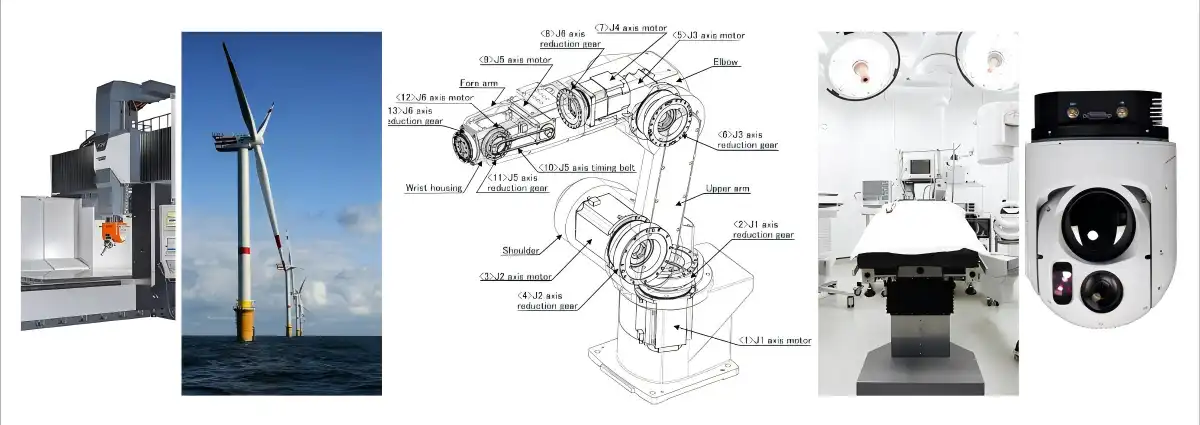
Conclusion
When choosing between the RB Series Crossed Roller Bearing and the RA Series, you need to make sure that the bearing configuration fits the needs of your application. The RB Series is great when you need the inner ring to rotate, thanks to its split outer ring and combined inner ring. This line comes in sizes ranging from 20 to 1100 mm inside diameter and precision grades from P6 to P4. It can handle radial, axial, and moment loads all at the same time in small spaces that are needed for robotic joints, machining center rotary tables, and precision instruments.
Neither series is always better than the other; the best choice depends on the application's rotation needs, mounting limitations, and load profiles. Long-term supply dependability is ensured by working with qualified makers who offer technical support, uniform quality, and production capacity that can be expanded.
FAQ
1. What are the primary structural differences between RB and RA Series crossed roller bearings?
The fundamental distinction lies in ring configuration. The RB Series features an integral inner ring with a split outer ring secured by a plug, optimized for applications where the inner ring rotates. The RA Series uses a split inner ring with an integral outer ring, suited for outer ring rotation applications. Both employ the same crossed roller principle for multi-directional load capacity.
2. Can RB Series bearings handle high-speed robotic operations effectively?
Crossed roller bearings perform well in robotic applications, though speed capability depends on bearing size, lubrication method, and precision grade. Most industrial robot joints operate at relatively low speeds, where crossed roller designs excel due to high stiffness and accuracy. Consultation with bearing manufacturers helps determine speed suitability for specific applications.
3. How does proactive maintenance extend the RB Series bearing lifespan?
Regular lubrication according to manufacturer schedules prevents metal-to-metal contact that accelerates wear. Periodic runout inspection detects developing issues before failure occurs. Maintaining proper bolt torque on split rings ensures correct preload throughout service life. These practices routinely extend bearing operation beyond calculated L10 life expectancy.
Partner with ATLYC for Precision Crossed Roller Bearing Solutions
ATLYC brings 15 years of bearing manufacturing expertise, ISO 9001 and IATF 16949 certifications, and proven international supply reliability to your precision component needs. Our RB Series Crossed Roller Bearing portfolio spans 20- 1100 mm inner diameter capacity with precision grades meeting the most demanding automation applications. As a trusted bearing supplier to OEMs across automotive, industrial machinery, and automation sectors in South Korea, the United States, Germany, and beyond, we combine Chinese manufacturing efficiency with global quality standards. Contact our engineering team at auto@lyautobearing.com to discuss your specific requirements, request technical specifications, or obtain volume pricing for your next project.
References
1. Harris, T.A. and Kotzalas, M.N. (2006). Advanced Concepts of Bearing Technology: Rolling Bearing Analysis, Fifth Edition. CRC Press.
2. ISO 281:2007. Rolling Bearings - Dynamic Load Ratings and Rating Life. International Organization for Standardization.
3. Eschmann, P., Hasbargen, L., and Weigand, K. (1985). Ball and Roller Bearings: Theory, Design and Application, Second Edition. John Wiley & Sons.
4. Kreith, F. and Goswami, D.Y. (2004). The CRC Handbook of Mechanical Engineering, Second Edition. CRC Press.
5. Bhushan, B. (2013). Principles and Applications of Tribology, Second Edition. John Wiley & Sons.
6. Hamrock, B.J., Schmid, S.R., and Jacobson, B.O. (2004). Fundamentals of Fluid Film Lubrication, Second Edition. Marcel Dekker.
Learn about our latest products and discounts through SMS or email