- English
- French
- German
- Portuguese
- Spanish
- Russian
- Japanese
- Korean
- Arabic
- Greek
- German
- Turkish
- Italian
- Danish
- Romanian
- Indonesian
- Czech
- Afrikaans
- Swedish
- Polish
- Basque
- Catalan
- Esperanto
- Hindi
- Lao
- Albanian
- Amharic
- Armenian
- Azerbaijani
- Belarusian
- Bengali
- Bosnian
- Bulgarian
- Cebuano
- Chichewa
- Corsican
- Croatian
- Dutch
- Estonian
- Filipino
- Finnish
- Frisian
- Galician
- Georgian
- Gujarati
- Haitian
- Hausa
- Hawaiian
- Hebrew
- Hmong
- Hungarian
- Icelandic
- Igbo
- Javanese
- Kannada
- Kazakh
- Khmer
- Kurdish
- Kyrgyz
- Latin
- Latvian
- Lithuanian
- Luxembou..
- Macedonian
- Malagasy
- Malay
- Malayalam
- Maltese
- Maori
- Marathi
- Mongolian
- Burmese
- Nepali
- Norwegian
- Pashto
- Persian
- Punjabi
- Serbian
- Sesotho
- Sinhala
- Slovak
- Slovenian
- Somali
- Samoan
- Scots Gaelic
- Shona
- Sindhi
- Sundanese
- Swahili
- Tajik
- Tamil
- Telugu
- Thai
- Ukrainian
- Urdu
- Uzbek
- Vietnamese
- Welsh
- Xhosa
- Yiddish
- Yoruba
- Zulu
What Grease Fits SX011848 Crossed Roller Slewing Bearing Best?
Choosing the right grease for the SX011848 Crossed Roller Slewing Bearing has a direct effect on how well it works and how long it lasts. Lithium complex grease with extreme pressure (EP) additives is the best choice for this precision part because it can hold more weight, stays stable at high temperatures, and doesn't get wet. With an inner diameter of 240 mm and a width of 28 mm, this bearing needs to be oiled so that the crossed-roller arrangement stays safe when radial, axial, and moment loads are applied at the same time. By knowing the temperature range, level of pollution, and duty cycle of your particular working area, you can match the grease's qualities to its performance needs. This will ensure accurate runout and keep important systems from failing too soon.
Understanding SX011848 Crossed Roller Slewing Bearing and Its Lubrication Needs
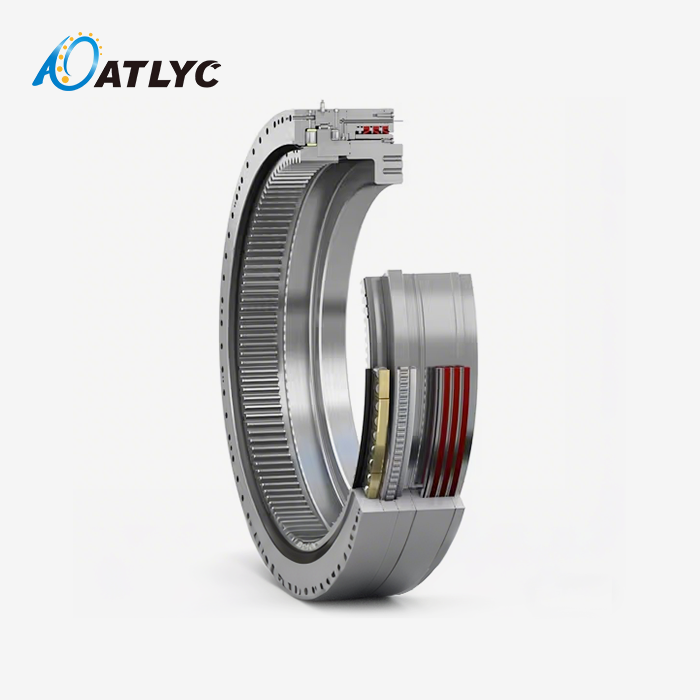
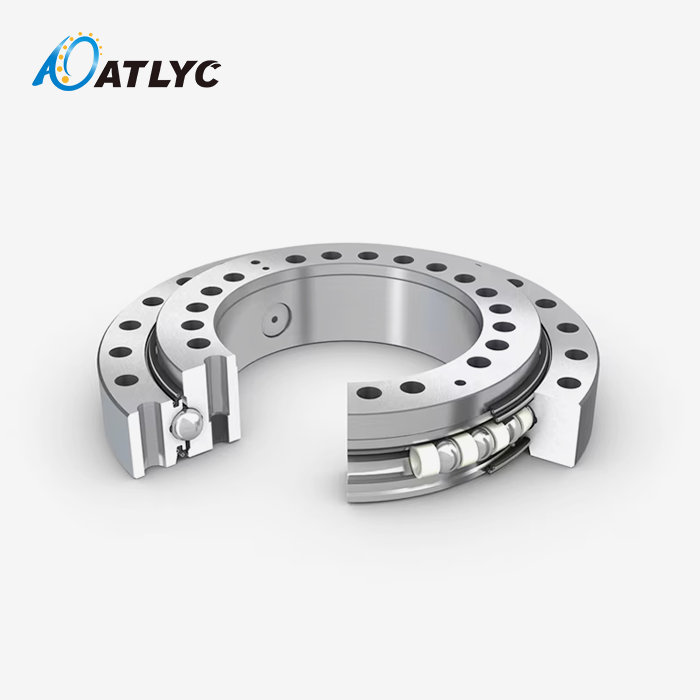
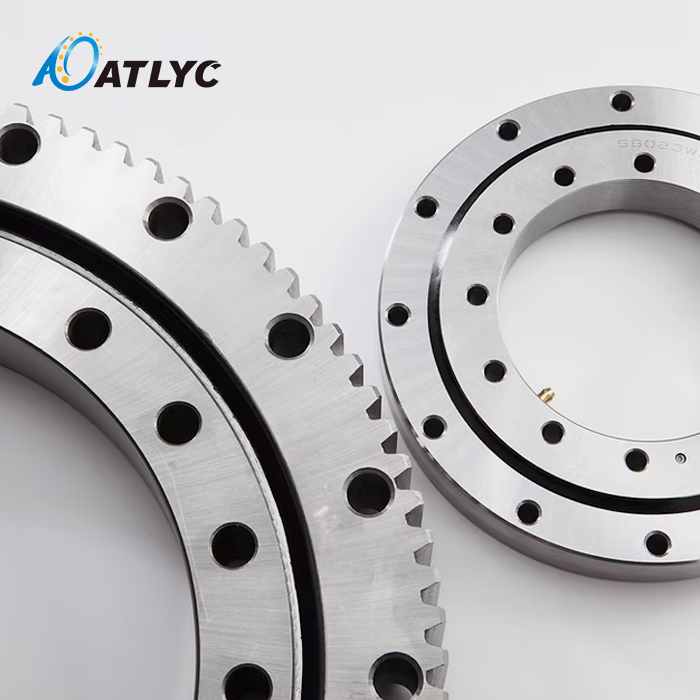
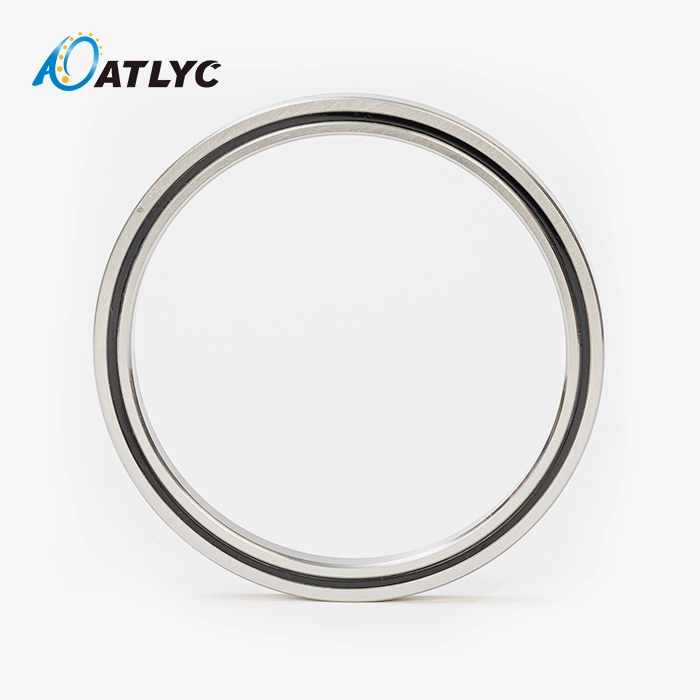
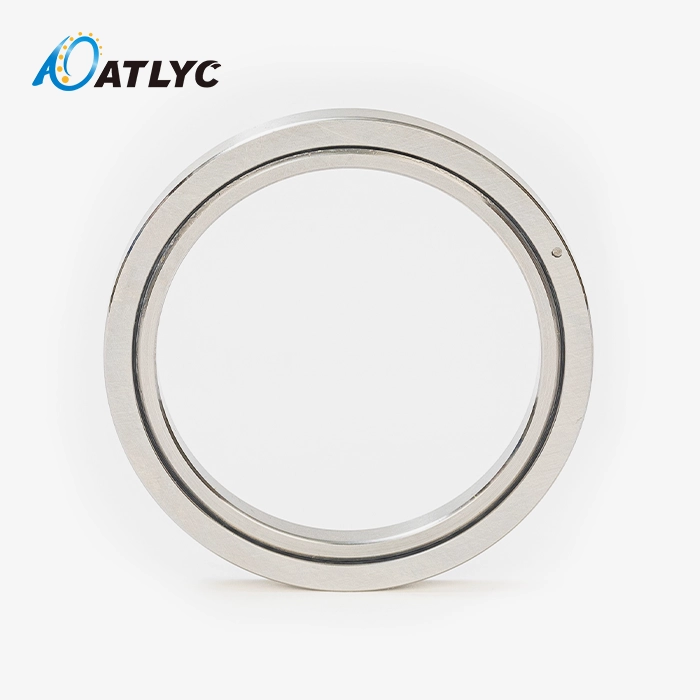
The SX011848 model is an example of the crossed roller slewing bearing, which is a big step forward in small precision engineering. This part is made from high-carbon chromium-bearing steel (GCr15 or GCr15SiMn) and has cylinder-shaped wheels that are placed at 90-degree angles. This makes many contact points that spread loads evenly in all directions. Because the design is so thin, there are no fixing holes in the inner or outer rings. Instead, a flange and bearing seat must be installed. This design has a combined inner ring and a split outer ring that are held together by three fastening rings. It works well in situations where the inner ring needs to rotate.
Structural Design and Load Distribution
The combination of horizontal rollers makes a V-groove raceway that gives the rollers and raceways the most contact area. Polyamide gaps divide the rollers so that metal doesn't touch metal and the movement stays smooth. By using this engineering method, what used to need two angular contact ball bearing setups can be done with a lot less weight and space. The crossed configuration can handle axial loads from both directions, radial forces, and tilting moments all at the same time in a single small unit. This ability to support loads in more than one way is important for keeping the accuracy of industrial robots, precision spinning tables, and medical imaging equipment.
Why Lubrication Matters for Precision Applications
If you choose the right grease, it will protect the bearing's accuracy classes (P6, P5, P4, or P2), which are measured in microns and determine how well it works in tough conditions. As long as the oil layer keeps the moving elements and raceways from touching directly, there is less friction and wear. In places like CNC machining centers, rotary tables, or robotic joint assemblies, not enough lubrication leads to runout deviation, which lowers the quality of the workpiece's surface finish or makes it harder to repeat the position. Changes in temperature in factories make it hard for lubricants to stay stable, and contaminants from metalworking fluids or exposure to the environment speed up the breakdown. Choosing grease that is right for the job has a direct effect on how often maintenance needs to be done, how much time the equipment is up and running, and the total cost of ownership.
Key Properties to Look for in Grease for SX011848 Bearings
When procurement workers look at lube options, they have to balance a lot of different performance factors to get the best bearing life. Because the SX011848 Crossed Roller Slewing Bearing has a unique operational profile that combines high rigidity with small dimensions, it has specific needs that can't be met by regular greases.
Load-Carrying Capacity and Base Oil Viscosity
The SX011848 bearing can handle heavy loads thanks to its 240mm to 300mm dimensional area, even though it is only 28mm wide. The thickness of the oil film under working stress is based on the density of the grease. Base oil viscosity between ISO VG 100 and ISO VG 220 is usually good for moderate-speed uses. On the other hand, ISO VG 68 may be needed for higher-speed rotary tables to lower the resistance to churning. Molybdenum disulfide, zinc dialkyldithiophosphate, or organic phosphates are extreme pressure additives that make loads stronger by creating safe boundary layers when fluid film lubrication breaks down at high stress. This safety feature is very important for start-stop operations like those found on indexing tables and robotic manipulators, where overloads can happen at any time.
Temperature Stability and Oxidation Resistance
In manufacturing settings, bearings are constantly exposed to temperature changes that range from room temperature to high levels above 80°C. Along this range, the consistency of the grease must stay the same, without getting too soft or too hard. As a safety measure, the dropping point—the temperature at which grease changes from mostly solid to liquid—should be at least 50°C higher than the highest temperature at which it can be used. Oxidation inhibitors stop the breakdown of chemicals that make acids, which raises the risk of corrosion and changes in viscosity. Synthetic base oils (polyalphaolefin or ester-based) are more stable at high temperatures than natural oils. This means that they don't need to be re-oiled as often in high-temperature settings like automatic industrial systems.
Water Resistance and Corrosion Protection
Grease that is very resistant to water is needed for equipment that works in damp places or is washed down. Being able to fight emulsification keeps the protective coat intact and stops oil washout. Rust and oxidation inhibitors protect precision-ground raceways from rust caused by water, since even tiny pits can make them less accurate. Grease that meets ASTM D1743 water washout ratings below 5% at 79°C is needed for outdoor use or places that use steam cleaning. This specification makes sure that the lubricant stays where it's supposed to be and doesn't move away from critical contact areas. This way, the protection stays the same between service intervals.
| Performance Property | Specification Range | Application Benefit |
|---|---|---|
| Base Oil Viscosity | ISO VG 68-220 | Matches speed and load conditions |
| Dropping Point | >200°C | Maintains consistency at elevated temperatures |
| EP Additive Content | 3-8% | Prevents surface damage under peak loads |
| Water Washout Resistance | <5% @ 79°C | Retains lubrication in humid environments |
| Rust Prevention | Pass ASTM D1743 | Protects precision surfaces from corrosion |
Recommended Types of Grease for SX011848 Crossed Roller Slewing Bearing
By matching the oil chemicals to the needs of the process, the SX011848 Crossed Roller Slewing Bearing will last as long as it was meant to while requiring as little upkeep as possible. The suggestions below are based on industry standards that have been formed through a lot of experience in a wide range of applications.
Lithium Complex Grease for General Industrial Use
Because they work well and don't cost too much, lithium complex soap-thickened greases are used most often in industry. The complicated soap structure makes the lithium grease more mechanically stable than simple lithium greases. It doesn't break down when crossed roller setups apply cutting forces. The NLGI Grade 2 consistency is perfect for automated lubrication systems because it can be pumped easily and has enough body to stay in place while it works. The highest temperature at which machinery can work is 150°C to 177°C, which is the temperature range for most industrial equipment. This chemistry is better at resisting water than simple lithium formulations, so it can be used in places that don't have strict environmental controls. Companies like SKF, LGMT 2, Kluber Isoflex NBU 15, and Shell Gadus S2 V220 2 make lithium complex greases that are made to work with rolling element bearings and have been shown to work well in precise settings.
Synthetic Grease for Extreme Conditions
When operations involve keeping temperatures above 120°C for a long time, being exposed to harsh chemicals, or needing to be re-oiled more often, synthetic grease is a good investment. Polyalphaolefin (PAO) base oils have a lower viscosity variation across a wider range of temperatures. This lowers the torque needed to start an engine when it's cold and stops the oil from becoming too thin when it's hot. Synthetics that are based on esters can hold more weight and work with elastomer seals. When polyurea thickeners are mixed with synthetic base oils, they provide working ranges from -40°C to 180°C. This is important for equipment that needs to work in climate-controlled or non-climate-controlled areas or in areas where temperatures change with the seasons. The longer oxidation stability—often twice that of mineral oil greases—reduces the number of times that maintenance needs to be done. This saves money on materials by cutting down on labour costs and the risk of downtime. These formulas work well for medical equipment, tools used to make semiconductors, and accurate measuring tools that can't have contaminated oil that has broken down.
Specialty Greases for Niche Applications
Sometimes, specific operational constraints call for unique formulations. FDA-approved base oils and additives are used in food-grade greases that meet NSF H1 approval. This is necessary for medicine processing equipment or food packing machinery with accurate bearings. In places where noise is a problem, low-noise greases with fine-particle additives can reduce shaking. Grease that is approved for use in clean rooms reduces the amount of outgassing and particle production. When buying, teams know what the unique needs of an application are, and they can choose oils that meet both performance and legal compliance needs. This keeps companies from having to make expensive changes or limit their operations.
Best Practices for Lubrication and Maintenance of SX011848 Slewing Bearings
Even choosing the best grease won't give you the best results if you don't follow the right steps for application and maintenance. Setting up systematic procedures improves the performance of bearings and makes maintenance schedules more predictable, which helps with planning production.
Initial Greasing During Installation
The right lubrication starts with the fitting. The bearing comes with a protective preservation compound that needs to be taken off before it can be used. Use the right solvents to clean the raceways and rolling elements, making sure that all the preservation materials that could get into the new grease are gone. Fill up about 30 to 40 percent of the bearing's space with the initial grease charge. This is enough to cover all contact areas without making the spinning resistance too high. Viscosity cutting makes heat when there is too much grease, which is especially bad in high-speed situations. Spread the grease out evenly by slowly turning the bearing a few times while it's being filled. This will let the grease flow into all the contact areas between the raceways. Before finishing putting the equipment together, make sure that the grease fittings are in the right place and can be easily accessed for future maintenance.
Setting up intervals for re-lubrication
How often you need to re-lubricate depends on the speed, load, temperature, and amount of contamination. This method is used for a standard approach: The number of hours between re-lubrications is equal to 14,000,000 divided by the speed of the bearing in rpm. This interval needs to be cut in half in dirty places, but it can be increased by 50% in clean, moderate-temperature places. Re-lubrication is usually needed every three to six months for things that run continuously at speeds below 10 rpm, like robotic joints and indexing tables. Applications that use a high-speed cutting center may need to be checked on once a month. Monitoring temperature gives early warning of deteriorating lubrication: long-lasting temperature rises of 10°C above normal indicate inadequate or contaminated grease that needs to be inspected right away.
Inspection and Grease Condition Assessment
As much as possible, grease samples should be taken from purge fittings as part of regular maintenance. A visual examination shows that darkening is a sign of oxidation, separation is a sign of incompatibility or thermal breakdown, and contamination is a sign of metal particles or water getting in. If you rub two fingers together, you can feel a change in the consistency or the texture, which could mean that wear particles are building up. These signs cause corrective action to be taken before a drop in performance affects production. Using condition-based monitoring instead of just time-based intervals makes the best use of maintenance resources and cuts down on unexpected failures. Recording the type of grease used, when it was applied, and the conditions under which it was used creates past data that helps the maintenance plan keep getting better.
Comparing SX011848 Lubrication Solutions with Alternatives
The crossed roller bearing's SX011848 Crossed Roller Slewing Bearing precision requirements and operational profile create distinct lubrication challenges compared to conventional slewing bearings. Understanding these differences prevents costly specification errors that compromise performance.
Load Distribution Differences
Traditional ball-type slewing bearings concentrate loads on small contact points, creating high Hertzian stresses requiring robust EP additives. The crossed roller design distributes loads across cylindrical contact lines, reducing contact stress while increasing sensitivity to lubricant film thickness. Grease viscosity becomes more critical—too thin allows metal contact under load, while excessive viscosity increases friction and heat generation. Standard slewing bearing greases formulated for ball contact geometry may not optimize film thickness for roller contact, potentially reducing service life by 20-30% compared to application-matched lubricants. This distinction particularly affects high-precision applications where micron-level accuracy must be maintained throughout the bearing's operational life.
Speed and Temperature Considerations
Many large slewing bearings in construction equipment operate at extremely low speeds (under 1 rpm) where grease consistency matters more than base oil viscosity. The SX011848's applications—precision rotary tables, robotic joints—involve moderate speeds (5-50 rpm) where churning resistance and thermal management become significant. Greases optimized for ultra-low-speed operation may generate excessive heat and friction in these applications. Temperature rise accelerates oxidation, potentially reducing grease life from 5000 hours to under 1000 hours if thermal characteristics mismatch operational reality. Case studies from automotive assembly robot maintenance show that switching from generic slewing bearing grease to precision-bearing-specific lithium complex formulations reduced joint temperature by 8-12°C, extending service intervals from quarterly to semi-annual schedules.
Contamination Sensitivity
The SX011848's micron-level tolerances and compact cross-section create limited internal clearance for contamination accommodation. Abrasive particles exceeding 10 microns can indent precision raceways, creating vibration and accuracy loss. Greases formulated for large, tolerant slewing bearings may lack the fine filtration and contamination encapsulation properties needed for precision applications. Selecting greases with enhanced solid additive dispersion and contamination encapsulation characteristics protects the bearing's accuracy class throughout its service life. This protection proves especially valuable in manufacturing environments where metalworking fluids, coolants, or airborne particulates constantly threaten lubricant integrity.
| Bearing Type | Typical Speed Range | Primary Load Pattern | Grease Viscosity | Re-Lubrication Interval |
|---|---|---|---|---|
| Large Slewing (Ball) | <1 rpm | Point contact, high Hertz | ISO VG 220-460 | 6-12 months |
| SX011848 Crossed Roller | 5-50 rpm | Line contact, moderate stress | ISO VG 100-220 | 3-6 months |
| Standard Deep Groove | 100-3000 rpm | Point contact, centrifugal force | ISO VG 32-68 | 1-3 months |
Conclusion
Choosing the right grease for your SX011848 Crossed Roller Slewing Bearing is a strategic choice that can affect how reliable your equipment is, how much it costs to maintain, and how much time it is available for production. Lithium complex greases with EP additives have been shown to work well in most industrial settings, while synthetic formulations are better for high temperatures or long-term use. You can match the lubrication properties to the specific needs of the bearing instead of just generic requirements if you know about its crossed-roller design, operating environment, and precision tolerance requirements. Choosing the right grease and following the right maintenance procedures can turn it into real operational benefits that protect your investment in precision machinery and help you meet your goals for continuous production.

FAQ
1. Can I use standard lithium grease for SX011848 bearings?
Standard lithium grease may function in low-demand applications, but lithium complex formulations with EP additives provide superior protection for the crossed roller design. The complex soap structure resists breakdown under shearing forces better than simple lithium thickeners, extending service life and maintaining lubrication film integrity under the bearing's multi-directional load pattern.
2. How often should I re-lubricate crossed roller slewing bearings?
Re-lubrication intervals typically range from 3-6 months under continuous operation, adjusted for speed, load, temperature, and contamination exposure. Equipment operating in clean environments at moderate temperatures may extend intervals, while contaminated or high-temperature conditions require more frequent attention. Monitoring bearing temperature provides an early indication of lubrication degradation.
3. What happens if I apply the wrong grease type?
Incorrect grease selection accelerates wear through inadequate film thickness, promotes corrosion from insufficient protection, or generates excessive heat from viscosity mismatch. Incompatible greases mixed during re-lubrication may separate or harden, blocking lubricant flow to critical contact zones. These failures manifest as increased noise, temperature rise, accuracy loss, and ultimately, premature bearing failure requiring costly replacement and production downtime.
Partner with ATLYC for Precision Bearing Solutions
ATLYC brings 15 years of bearing manufacturing excellence to your precision machinery challenges, combining ISO 9001 and IATF 16949 certified quality with deep technical expertise. As a trusted SX011848 Crossed Roller Slewing Bearing supplier serving OEMs across the United States, Germany, and South Korea, we understand how lubrication choices impact your production reliability. Our engineering team provides customized grease recommendations matched to your specific operating conditions, backed by comprehensive technical datasheets and application support. Contact auto@lyautobearing.com today to discuss your bearing requirements and receive expert guidance on optimizing lubrication strategies for maximum equipment uptime. We deliver the consistent quality, competitive pricing, and reliable supply partnerships that global manufacturers depend on for competitive advantage.
References
1. Harris, T.A. & Kotzalas, M.N. (2007). Advanced Concepts of Bearing Technology: Rolling Bearing Analysis, 5th Edition. Taylor & Francis.
2. Khonsari, M.M. & Booser, E.R. (2017). Applied Tribology: Bearing Design and Lubrication, 3rd Edition. John Wiley & Sons.
3. ISO 281:2007. Rolling Bearings - Dynamic Load Ratings and Rating Life. International Organization for Standardization.
4. Lansdown, A.R. (2004). Lubrication and Lubricant Selection: A Practical Guide, 3rd Edition. Professional Engineering Publishing.
5. SKF Group. (2018). Bearing Lubrication: Technical Handbook for Grease Selection and Application. SKF Publication.
6. Hamrock, B.J., Schmid, S.R. & Jacobson, B.O. (2004). Fundamentals of Fluid Film Lubrication, 2nd Edition. Marcel Dekker.
Learn about our latest products and discounts through SMS or email