- English
- French
- German
- Portuguese
- Spanish
- Russian
- Japanese
- Korean
- Arabic
- Greek
- German
- Turkish
- Italian
- Danish
- Romanian
- Indonesian
- Czech
- Afrikaans
- Swedish
- Polish
- Basque
- Catalan
- Esperanto
- Hindi
- Lao
- Albanian
- Amharic
- Armenian
- Azerbaijani
- Belarusian
- Bengali
- Bosnian
- Bulgarian
- Cebuano
- Chichewa
- Corsican
- Croatian
- Dutch
- Estonian
- Filipino
- Finnish
- Frisian
- Galician
- Georgian
- Gujarati
- Haitian
- Hausa
- Hawaiian
- Hebrew
- Hmong
- Hungarian
- Icelandic
- Igbo
- Javanese
- Kannada
- Kazakh
- Khmer
- Kurdish
- Kyrgyz
- Latin
- Latvian
- Lithuanian
- Luxembou..
- Macedonian
- Malagasy
- Malay
- Malayalam
- Maltese
- Maori
- Marathi
- Mongolian
- Burmese
- Nepali
- Norwegian
- Pashto
- Persian
- Punjabi
- Serbian
- Sesotho
- Sinhala
- Slovak
- Slovenian
- Somali
- Samoan
- Scots Gaelic
- Shona
- Sindhi
- Sundanese
- Swahili
- Tajik
- Tamil
- Telugu
- Thai
- Ukrainian
- Urdu
- Uzbek
- Vietnamese
- Welsh
- Xhosa
- Yiddish
- Yoruba
- Zulu
What Certifications Matter for Industrial Robot Bearings?
Industrial Robot Bearings Certifications Certifications in Industrial Robot Bearings are not simply paperwork. They are demonstrable quality, regulatory compliance, and operational dependability when buying Industrial Robot Bearings. ISO 9001 guarantees constant quality control, while IATF 16949 brings automotive-grade accuracy to robotic applications. Environmental certifications such as RoHS and REACH prevent the use of hazardous materials, while CE marking provides access to the European market. These qualities immediately translate to bearing performance in key robotic systems, impacting accuracy, uptime, and total cost of ownership.

Understanding Industrial Robot Bearings and Their Quality Requirements
Types and Their Specific Demands
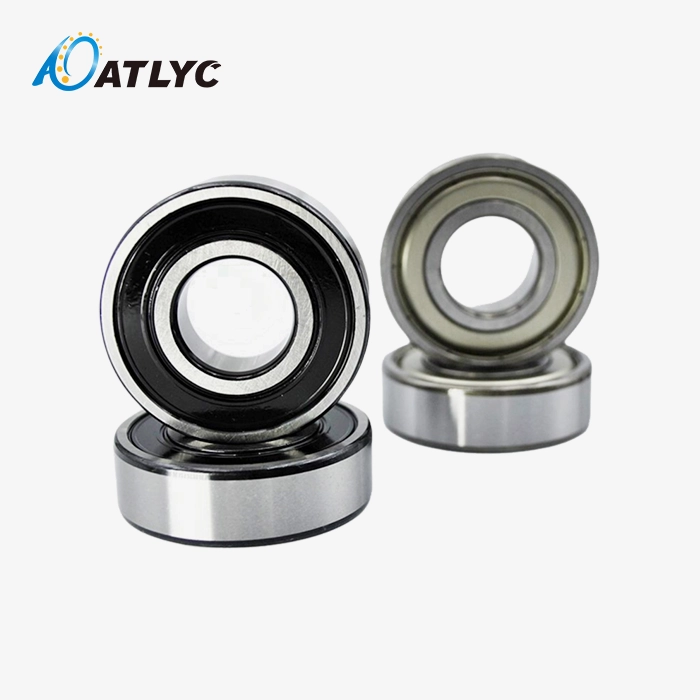
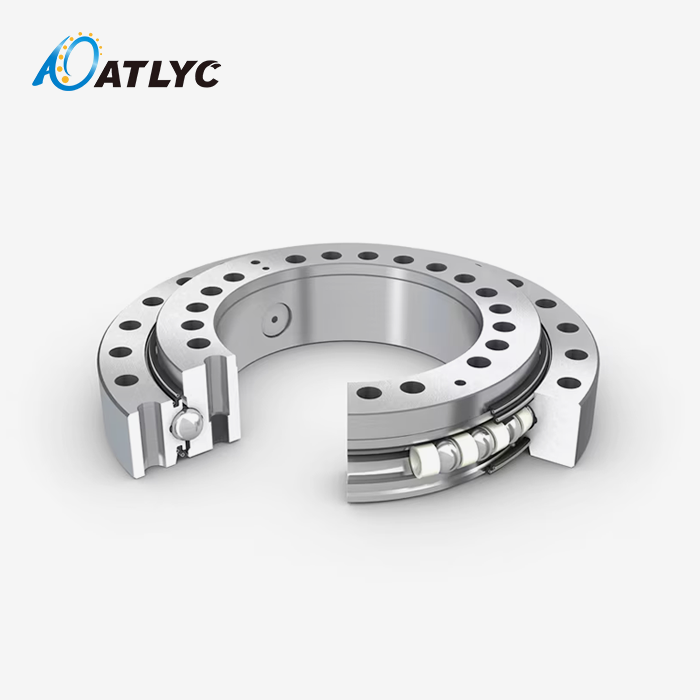
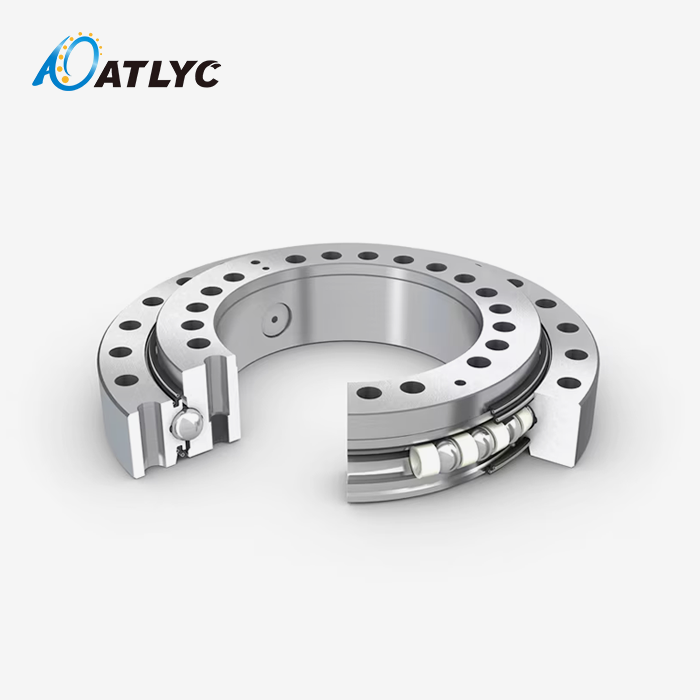
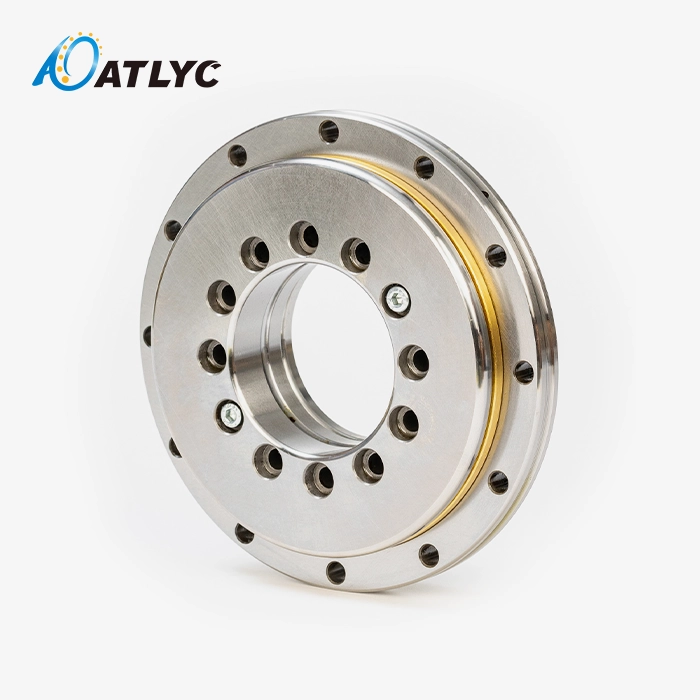
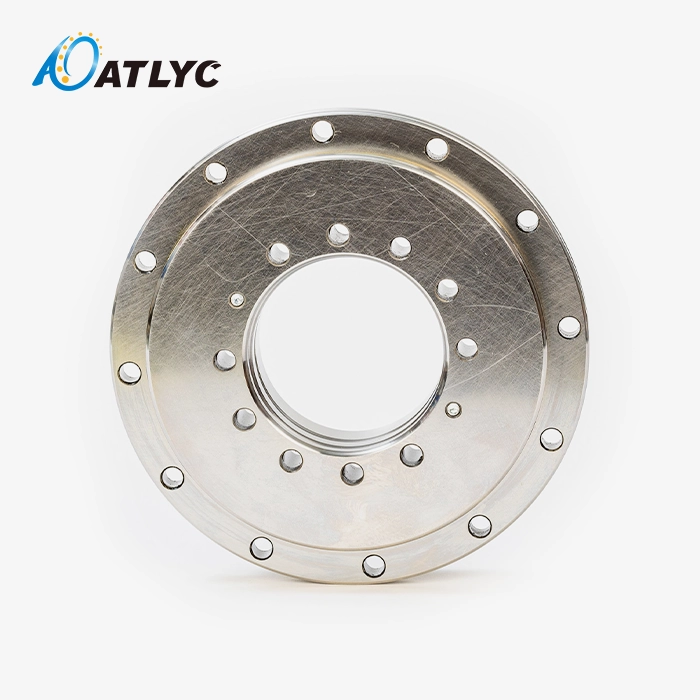
Several bearing designs are used in robotic applications based on load direction, speed, and accuracy requirements. Deep groove ball bearings are used when there are radial and mild axial stresses, where little friction is required, for example, in the joints of robot arms that must turn smoothly. High stiffness and moment capacity in a small area are required for turntables and rotary indexing systems. RB series cross roller bearings are the ideal solution. In applications on the vertical axis, thrust ball bearings are used for pure axial forces. Precision instrument bearings are used for precise tolerances, which are required for repeatability. Each kind has to fulfil quality standards. Bearings that regulate the motion of a robot arm must be manufactured to strict tolerance grades, frequently ABEC 7 or higher, to minimise backlash and assure positional precision to within micrometres. Vibration levels are closely related to surface finish, internal clearance, and load distribution, which influence the end-effector stability during high-speed operations.
Why Certification Matters
The certification authorities ensure that the production methods are such that the bearings produced always fulfil these strict specifications. The standards set by the ISO describe how to measure, the tolerances, and testing techniques that make sure that every batch of products being produced is the same. Even good brands are at risk of unpredictability that impacts robotic accuracy without authorised procedures. Environmental certifications ensure that materials meet worldwide limitations on lead, cadmium, and other dangerous compounds – good for the end user and the environment.
| Bearing Type | Primary Application | Key Quality Parameter | Relevant Certification |
|---|---|---|---|
| Deep Groove Ball Bearing | Robot arm joints, actuators | Low friction, tight radial tolerance | ISO 9001, IATF 16949 |
| Cross Roller Bearing (RB/RU series) | Turntables, indexing systems | High moment rigidity, compact design | ISO 9001, CE marking |
| Thrust Ball Bearing | Vertical axis loads, lift mechanisms | Axial load capacity, flatness | ISO 9001, RoHS |
| Precision Instrument Bearing | High-speed spindles, medical robots | ABEC 7+ tolerance, low vibration | ISO 9001, REACH |
Core Certifications to Look for When Procuring Industrial Robot Bearings
ISO 9001: Foundation of Quality Management
ISO 9001 accreditation indicates that a firm has a documented quality management system that covers design, manufacturing, inspection, and corrective measures. Suppliers with ISO 9001 have traceability records, perform frequent internal audits, and use techniques of continuous improvement. This methodical methodology minimises the rates of defective Industrial Robot Bearings and assures uniform performance of bearings in each shipment.
IATF 16949: Automotive-Grade Precision
IATF 16949 was established for the automotive supply chain and supplements ISO 9001 with industry-specific standards for defect avoidance, process capability assessments, and supplier development. Same requirements as any other application ( zero defect quality, statistical process control). The capabilities of manufacturers with IATF 16949 certification have been proven to fulfil demanding dimensional tolerances and reliability criteria that may be used straight to robot bearing manufacturing.
RoHS and REACH: Environmental Compliance
RoHS (Restriction of Hazardous Substances) restricts the use of lead, mercury, cadmium, and other hazardous substances used in electrical and electronic components. REACH ( Registration, Evaluation, Authorisation, and Restriction of Chemicals) is the European Union's chemical substances regulation. Manufacturers must report and restrict harmful chemicals. These standards apply to bearings used in robotics, which commonly interface with sensors, controls, and drive systems. Certified bearings provide assurance of compliance across your supply chain, helping you mitigate legal risk and gain entry to regulated markets.
CE Marking: European Market Entry
CE Marking is a certification mark indicating conformance with health, safety, and environmental protection regulations for products sold inside the European Economic Area. CE labelling is not a quality mark as such, but a designation indicating that bearings satisfy basic standards for mechanical qualities, material safety, and environmental impact. Suppliers lacking a CE certificate are subject to import restrictions and possible responsibility in European markets.
Comparing Certified vs. Non-Certified Industrial Robot Bearings
Operational Risks of Non-Certified Bearings
Bearings without valid certificates might have many failure mechanisms. Inconsistent material composition may lead to early fatigue cracking under cyclic loading. Variability in dimensions causes friction and backlash and reduces positional accuracy over time. Poor heat treatment lowers hardness and hence wears more quickly and needs more frequent replacement. These problems cause unscheduled downtime, extra maintenance labour, and even harm to neighbouring robotic components. Companies without certified quality systems may lack the right inspection equipment or the skilled people needed to find tiny problems. A single bad bearing in a robotic joint may bring a whole assembly line to its knees, resulting in output losses that dwarf the cost delta between certified and non-certified parts.
Long-Term Value of Certified Bearings
Certified bearings provide an expected service life based on recorded test results and statistical quality standards. ISO 9001 and IATF 16949 certified manufacturers perform regular process audits, capability assessments and failure mode analysis – methods that find and remove causes of defects before they reach consumers. This proactive strategy leads to fewer warranty claims, fewer field failures, and better technical assistance. Industrial Robot Bearings from reliable manufacturers also benefit from strict quality control processes, ensuring consistent performance in demanding automation applications. The total cost of ownership assessment frequently favours certified bearings even if they are more expensive upfront. Longer bearing life decreases replacement frequency and related downtime. Lower failure rates mean lower scrap and rework expenses. “Closer supplier relationships built on transparency and continuous improvement ensure better technical collaboration on tailored solutions.”
How to Choose Industrial Robot Bearings Based on Certifications
Matching Certifications to Application Requirements
ISO 9001 process controls verify that high-speed spindle applications need bearings with precise runout tolerances and balanced cage designs. Cleanroom robots must meet RoHS and REACH requirements to avoid contamination from outgassing or particle shedding. Heavy-duty material handling robots benefit from IATF 16949-certified bearings that have proven load ratings and fatigue testing. Certification criteria should be established by procurement managers early in the specification process. Together with the engineering teams, the important quality criteria, such as vibration limitations, temperature stability, or corrosion resistance, may be identified and mapped to the necessary certification requirements. Such alignment will save expensive specification modifications and supplier requalification at a later stage in the project.
Supplier Audit and Verification
This is merely the beginning of requesting certification paperwork. Fraudulent documents are mitigated by a certifying body database or third-party audit authentication. Site inspections disclose the real production capacity, calibration procedures of the inspection devices, and training programs for the staff – variables that have a direct correlation with the long-term quality consistency. If a provider is open and transparent about their certification paperwork, it’s an indication that they believe in their methods. Manufacturers that share audit reports, process capability data, and corrective action history show their commitment to continuous improvement and cooperation, rather than transactional interactions.
Leading Certified Bearing Manufacturers and ATLYC's Competitive Position
Global Benchmark Brands
Major bearing manufacturers, including SKF, NSK, FAG, Timken, and Schaeffler, have a wide variety of certifications throughout their product lines. They provide stable supply chains and substantial technical assistance based on decades of expertise in precision production and worldwide distribution networks. These brands are quality benchmarks, defining industry norms in dimensional precision, material purity and performance consistency.
ATLYC's Certified Manufacturing Excellence
Since its foundation in 2010, ATLYC has been founded on verified quality and scalable manufacturing. We are certified to ISO 9001 and IATF 16949, confirming our dedication to automotive-grade accuracy and rigorous quality control. Over 15 years, we’ve grown from one to six specialised manufacturing facilities for deep groove ball bearings, cross roller bearings, thrust bearings and precision instrument bearings for robotics, CNC machining, medical equipment and automotive applications, including advanced Industrial Robot Bearings designed to support high-precision robotic motion systems.
Our 120 professional-quality inspectors are educated in statistical process control and verified measuring procedures. We have calibrated inspection equipment that is traceable to international standards to ensure that dimensional tolerances, surface quality, and material qualities are constant throughout manufacturing batches and fulfil specification requirements. This infrastructure is the basis of our export agreements with clients in South Korea, the United States, Germany, Russia, Iran and Turkey – markets that need stringent compliance with international quality and environmental requirements. Our production process includes such capabilities as automated grinding, heat treatment monitoring, and ultrasonic cleaning, which provide us with tight tolerance control and surface cleanliness. Bearings developed for robot arm applications are given further vibration testing and preload verification to assure smooth, backlash-free motion. Cross roller bearing moment capacity testing confirms stiffness criteria important to turntable precision. These quality controls are established in our accredited management system and are verifiable proof of product conformance...
| Certification | Scope | Benefit to Customers | ATLYC Status |
|---|---|---|---|
| ISO 9001 | Quality management system | Consistent production quality, traceability | Certified since 2015 |
| IATF 16949 | Automotive quality standard | Zero-defect processes, statistical control | Certified since 2018 |
| RoHS | Hazardous substance restriction | Environmental compliance, market access | Fully compliant |
| REACH | Chemical substance regulation | Material safety, EU market entry | Fully compliant |
Real-World Application Success
Quantifiable performance benefits are seen in bearings for robot arms from recognised manufacturers. IATF 16949 bearing-based automated assembly lines are reporting service intervals that are 40% longer than those of non-certified bearings. Proven cross roller bearings with moment capacity are key to maintaining positioning accuracy within 5 arc-seconds over millions of indexing cycles in precision machining and semiconductor handling. For medical robotics applications, RoHS and REACH compliance is even more critical, as contamination hazards directly affect patient safety and regulatory clearances. Certified bearings remove the worry of material outgassing, particle production, or chemical leaching that could potentially contaminate sterile surroundings or sensitive instruments.

Conclusion
Certifications are not only statutory checkboxes but verifiable proof of manufacturing capacity, process discipline and quality dedication. ISO 9001 means you have a system of quality management in place. IATF 16949 means you have the ability to manufacture precisely. Environmental certifications mean you are responsible with your materials. These combined qualifications lower procurement risk, enhance operational dependability, and enable long-term relationship growth. Validated certifications enable procurement teams to tell the difference between vendors who provide true quality and those that make empty promises. As robotic applications become more advanced and quality requirements higher, certified Industrial Robot Bearings suppliers provide the consistency and traceability needed for competitive production processes.
FAQ
Do all robotic applications require ISO-certified bearings?
While not legally mandated in all jurisdictions, ISO certification provides practical assurance of consistent quality management. Applications involving safety-critical functions, regulated industries, or export markets typically specify ISO 9001 or IATF 16949 certification as procurement requirements. Even for less demanding applications, certified bearings offer better documentation, traceability, and supplier support.
How often do certification bodies audit bearing manufacturers?
ISO 9001 and IATF 16949 certifications require annual surveillance audits and full recertification every three years. Certification bodies review quality records, inspect production processes, and verify corrective action effectiveness. This regular oversight maintains system integrity and catches potential quality drift before it affects customers.
Can certified bearings still fail in service?
Certification validates manufacturing processes rather than guaranteeing individual product performance under all conditions. Bearings may still fail due to improper installation, inadequate lubrication, contamination, or loads exceeding design specifications. However, certified manufacturers provide clearer application guidelines, better technical support, and more transparent failure analysis—helping customers identify root causes and implement preventive measures.
Partner with ATLYC for Certified Bearing Solutions
Quality certifications demonstrate our capability, but customer partnerships prove our commitment. ATLYC combines ISO 9001- and IATF 16949-certified manufacturing with 15 years of export experience, serving precision-demanding industries across six continents. Our six specialized workshops produce high-precision bearings for robot arms, CNC turntables, medical equipment, and automotive components—backed by rigorous quality controls and comprehensive technical support. Whether you need deep groove ball bearings for actuator assemblies, cross roller bearings for indexing systems, or custom-engineered solutions for unique robotic applications, our team provides expert consultation, competitive pricing, and reliable delivery schedules. As an established bearing supplier with documented quality systems and global compliance credentials, we help procurement managers reduce risk and improve supply chain resilience. Contact our technical team to discuss your specific bearing requirements and certification needs. We provide detailed product specifications, certification documentation, and application engineering support to ensure optimal component selection. Reach out to ATLYC at auto@lyautobearing.com or visit our website at https://aotezhoucheng.aixdb.cn/ to explore our certified product portfolio and request a customized quotation today.
References
1. International Organization for Standardization, "ISO 9001:2015 Quality Management Systems — Requirements," Geneva, Switzerland, 2015.
2. International Automotive Task Force, "IATF 16949:2016 Quality Management System Requirements for Automotive Production and Relevant Service Parts Organizations," 2016.
3. European Commission, "Directive 2011/65/EU on the Restriction of the Use of Certain Hazardous Substances in Electrical and Electronic Equipment (RoHS)," Official Journal of the European Union, 2011.
4. European Chemicals Agency, "Understanding REACH: Guidance for Manufacturers and Importers of Articles," Helsinki, Finland, 2020.
5. Harris, T.A. and Kotzalas, M.N., "Rolling Bearing Analysis: Essential Concepts of Bearing Technology," CRC Press, 5th Edition, 2006.
6. Weck, M. and Brecher, C., "Werkzeugmaschinen: Konstruktion und Berechnung," Springer-Verlag, Berlin, 8th Edition, 2006.
Learn about our latest products and discounts through SMS or email