- English
- French
- German
- Portuguese
- Spanish
- Russian
- Japanese
- Korean
- Arabic
- Greek
- German
- Turkish
- Italian
- Danish
- Romanian
- Indonesian
- Czech
- Afrikaans
- Swedish
- Polish
- Basque
- Catalan
- Esperanto
- Hindi
- Lao
- Albanian
- Amharic
- Armenian
- Azerbaijani
- Belarusian
- Bengali
- Bosnian
- Bulgarian
- Cebuano
- Chichewa
- Corsican
- Croatian
- Dutch
- Estonian
- Filipino
- Finnish
- Frisian
- Galician
- Georgian
- Gujarati
- Haitian
- Hausa
- Hawaiian
- Hebrew
- Hmong
- Hungarian
- Icelandic
- Igbo
- Javanese
- Kannada
- Kazakh
- Khmer
- Kurdish
- Kyrgyz
- Latin
- Latvian
- Lithuanian
- Luxembou..
- Macedonian
- Malagasy
- Malay
- Malayalam
- Maltese
- Maori
- Marathi
- Mongolian
- Burmese
- Nepali
- Norwegian
- Pashto
- Persian
- Punjabi
- Serbian
- Sesotho
- Sinhala
- Slovak
- Slovenian
- Somali
- Samoan
- Scots Gaelic
- Shona
- Sindhi
- Sundanese
- Swahili
- Tajik
- Tamil
- Telugu
- Thai
- Ukrainian
- Urdu
- Uzbek
- Vietnamese
- Welsh
- Xhosa
- Yiddish
- Yoruba
- Zulu
What Is a Precision Bearing? OEM Buyer’s Guide
If you need important parts for high-performance machines, you need to know the details of precision bearings. A Precision Bearing Guide may assist OEM purchasers in wading through the complicated terrain of bearing selection and help ensure compliance with demanding applications. Precision bearings are components used for linear or rotational motion and are made to very close tolerances, usually within a few micrometres. They are intended to minimise friction and maximise load capacity and precision. These elements are not just regular bearings; they are subjected to rigorous quality control and crafted from premium materials that guarantee dependable performance in CNC machines, industrial robots, medical equipment, and aerospace systems. Choosing the correct precision bearing immediately affects machine uptime, product quality, and total cost of ownership across your business.

Key Considerations for OEM Buyers: Features, Materials, and Design
In making procurement selections for precision bearings, a number of technical aspects must be evaluated, which directly impact equipment performance and operating costs.
Design Principles for High-Performance Applications
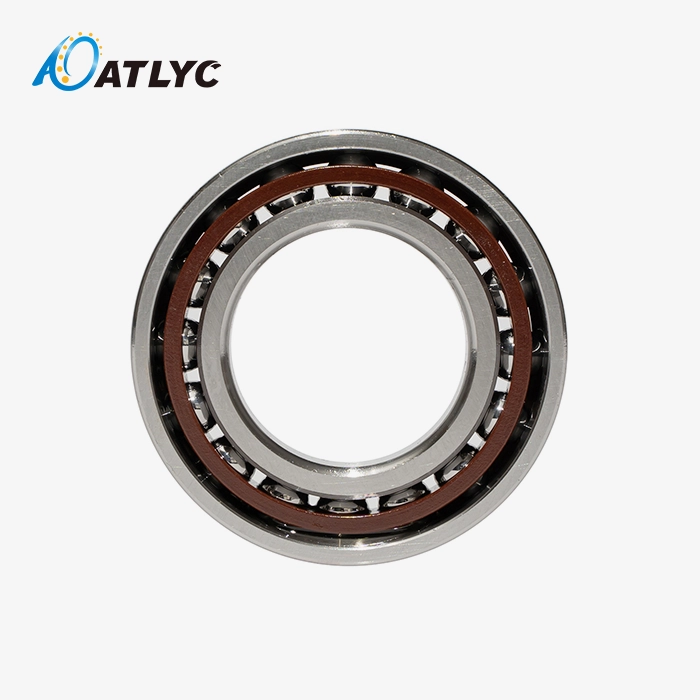
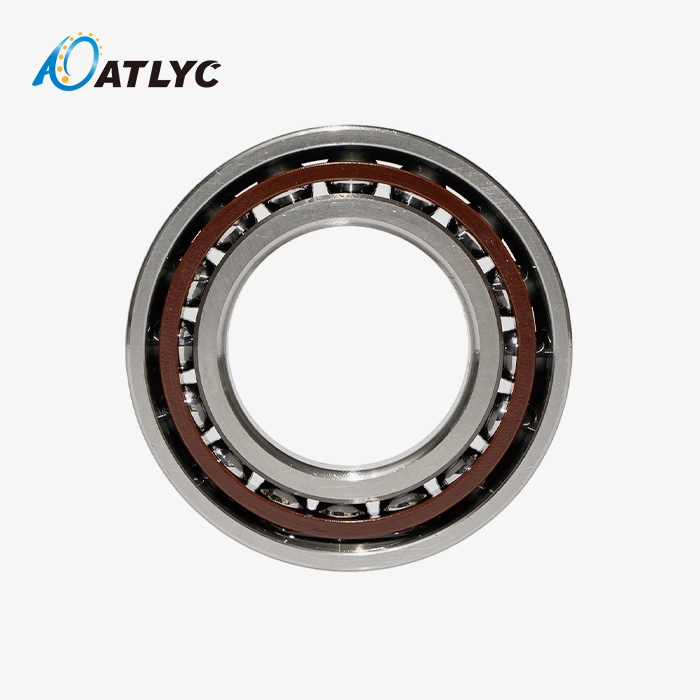
The reliability of precision bearings in harsh situations is based on a strict design technique. Tight control of tolerances guarantees the concentricity and perpendicularity of all bearing surfaces, avoiding early wear patterns that would reduce accuracy over time. In terms of machine tool applications, especially when cutting forces are supported by bearings, structural rigidity is critical – our 7220AC Super Precision Bearing offers the stiffness needed to keep tools in place when subjected to high stresses during milling. Another important design issue is preload application; our CC0 preload indication denotes negative internal clearance that minimises elastic movement under load, guaranteeing steady starting torque and repeatable positioning precision. In angular contact bearings, the contact angle is optimised to balance the axial and radial load distribution, with 15 degrees being suitable for high-speed applications and 25 degrees accommodating greater thrust loads. As a key Precision Bearing Guide, these design principles help engineers select and apply bearings that deliver consistent performance, durability, and accuracy in demanding operating environments.
Material Selection and Performance Implications
Material choice has a deep impact on bearing life, temperature tolerance, and cost-performance ratios. The GCr15 bearing steel is extensively used in the industry for its excellent combination of hardness (58-64 HRC), toughness, and machinability. As part of our quality control, we do a metallurgical study to make sure the distribution of the carbide is constant in this alloy. Ultra-high-speed spindles may be fitted with ceramic rolling elements (silicon nitride or zirconia) that minimise centrifugal forces and give excellent corrosion resistance for food processing equipment. Composite cage materials, for example, polyamide or PEEK, are more resistant to high temperatures and chemical exposure than conventional metal cages. Titanium nitride and other specialised coatings improve surface hardness and minimise friction coefficients, increasing maintenance intervals for machines in continuous operation. Material selection must take into consideration operating temperature ranges, exposure to contaminants, and lubricant compatibility to optimise overall bearing lifespan value.
Manufacturing Tolerances and Quality Implications
Understanding the tolerance parameters enables OEM purchasers to choose bearing precision classes that satisfy real application needs and avoid excessive expenses. The ISO 492 dimensional tolerance standards provide the acceptable variation in bore diameter, outer diameter, breadth, and raceway shape for different accuracy classes. 4 microns to fulfil the requirements of precision machine tools and industrial robotics. P4-grade bearings have a bore diameter tolerance. P2-grade components bring this down to 2 microns, required for ultra-precision grinding machines and semiconductor production equipment. Kia: Radial runout; Kea: Axial runout. These are measures of rotational precision to determine how smoothly a bearing spins; below 2.5 microns is considered good quality. Our quality control processes include S-curve vibration analysis and noise testing (V1-V4 grades) for micro-geometrical faults unseen to conventional examination. Even the tiniest variations in tolerances speed up wear and tear, increase energy consumption, and jeopardise product quality in your manufacturing processes.
| Tolerance Grade | Bore Diameter Deviation | Radial Runout (Kia) | Typical Applications |
|---|---|---|---|
| P0 (ABEC-1) | ±10 μm | <15 μm | General industrial machinery |
| P5 (ABEC-5) | ±5 μm | <5 μm | Machine tool spindles, pumps |
| P4 (ABEC-7) | ±4 μm | <2.5 μm | High-speed CNC equipment |
| P2 (ABEC-9) | ±2 μm | <1.5 μm | Ultra-precision grinding, metrology |
Comparison and Selection: How to Choose the Best Precision Bearing Guide
With so many choices of precision bearings, a methodical approach to evaluating technical criteria against application needs and supplier capabilities is required.
Structural and Functional Differentiation
While they seem identical, precision bearing guides and linear bearing guides have quite distinct motion requirements. Rotational motion along a fixed axis is enabled by precision rotary bearings such as deep groove ball bearings and angular contact types with load ratings optimised for radial and axial forces during spinning. Linear bearing guides use carriage assemblies that move on hardened rails to provide straight-line motion with position repeatability better than 5 microns across travel lengths of more than 2 meters. It is contingent upon the application. For example, a vertical machining center spindle needs angular contact precision bearings to manage cutting action force. The table traverse system needs linear guides for correct workpiece placement. Understanding these operational differences spares expensive specification mistakes that impair machine performance.
Load Capacity and Speed Performance Trade-offs
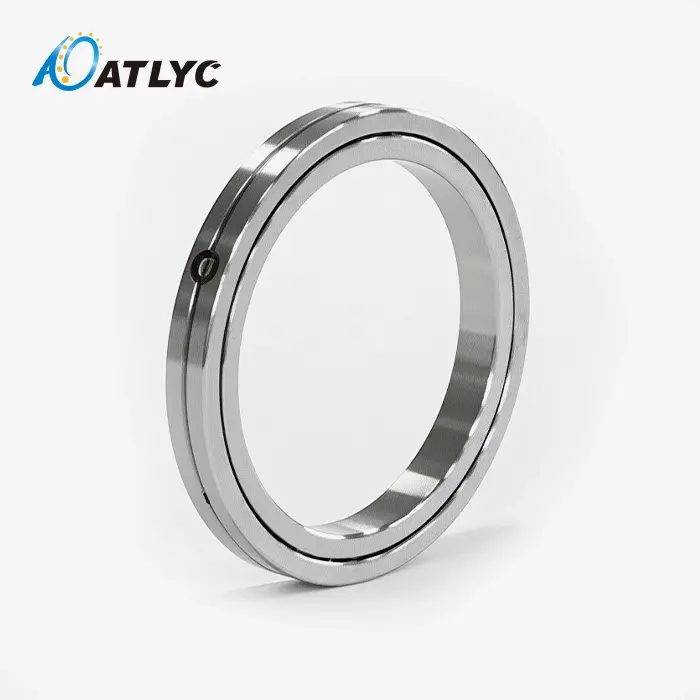
The bearing selection is a compromise of several performance characteristics, which are seldom optimised concurrently. Ball bearing systems are well suited for high-frequency spindle applications because they have lower rolling resistance and less centrifugal loading, which enable them to spin at speeds in excess of 25,000 RPM. The roller bearing arrangements, especially the cylindrical and tapered types, have 30-50 % more radial load. But the speed is limited to around 8000 rpm because of increased contact stresses. Two angular contact bearings may be replaced by one bearing assembly and yet provide good positioning accuracy. Our XSU080188UUCC0 cross roller bearing offers great moment rigidity. The accuracy adds to the challenge of component selection. P4 grade components are around 40% more expensive than their P5 counterparts, but the runout increase they provide is well worth the additional cost for precision grinding applications. When analysing premium precision grades, cost-benefit analysis should include the bearing life extension, lower maintenance frequency, and better product quality.
Supplier Evaluation and Brand Considerations
Selecting a reputable precision bearing manufacturer demands consideration of several capacity aspects beyond catalogue specs. Quality certificates, such as ISO 9001 and IATF 16949, represent systematic quality management and conformity with the automobile sector. This accreditation at Luoyang Auto Bearing Co., Ltd., shows our 15 years of devotion to uniform manufacturing standards in all six of our specialised production units. The ability to give technical support is also important. Good suppliers provide application engineering support, bespoke modification services and quick prototyping for specialised needs, including customized Precision Bearing Guide solutions for complex applications. Warranty terms and failure analysis support show the manufacturer's confidence in the product's dependability. THK, NSK, SKF, INA, Rexroth, and HIWIN are all global companies with decades of proven performance. But specialised producers may provide the same quality at a low price, with flexibility in customising. Our client base exists in South Korea, the United States, Germany, Russia, Iran, and Turkey, and bears witness to our worldwide reputation for dependable delivery, timely communication, and ongoing quality improvement.
Maintenance, Troubleshooting, and Longevity of Precision Bearing Guides
If a drop in performance is detected, preventive maintenance measures and structured diagnostic procedures must be implemented to extend the service life of precision bearings.
Recommended Maintenance Routines
Scheduled preventive maintenance greatly increases the service life of bearings and reduces unplanned production shutdowns. For continuous three-shift operation, visual inspections for contamination, seal integrity, and lubricant quality should be performed monthly. For intermittent-use equipment, inspections may be performed quarterly. Lubrication schedules must be strictly followed. Our sealed precise bearings are pre-lubricated with high-quality grease that lasts for 3,000-5,000 hours of operation. After that, they must be re-greased or replaced. Infrared thermography for temperature monitoring identifies anomalous heat production indicating inadequate lubrication or misadjusted preload before catastrophic failure. Vibration analysis sets baseline signatures upon commissioning, and frequent comparison may identify patterns of progressive deterioration. Effective sealing and filtered compressed air systems avoid contamination and the introduction of abrasive particles that speed up raceway wear. These regular processes maintain the precise tolerances that are the hallmark of precision bearing performance throughout long service intervals.
Common Failure Symptoms and Diagnostic Protocols
Recognizing early warning signs enables corrective action before bearing failure cascades into expensive machine damage. Increased operational noise—particularly high-frequency squealing or irregular grinding sounds—indicates lubricant breakdown or the presence. Elevated vibration amplitudes measured through accelerometers reveal raceway damage, cage wear, or rolling element defects. Loss of positioning accuracy in CNC equipment suggests bearing preload degradation or clearance development from wear. Temperature increases beyond normal operating ranges signal inadequate lubrication, excessive preload, or misalignment conditions. Troubleshooting protocols begin with non-destructive testing; ultrasonic inspection detects sub-surface fatigue cracks invisible externally, while eddy current analysis identifies raceway spalling. Our quality control experience implementing these diagnostic techniques across thousands of bearings enables rapid fault identification. Corrective actions range from lubrication replenishment and seal replacement for minor issues to complete bearing assembly replacement when raceway damage compromises accuracy tolerances.
Expected Operational Life and Replacement Planning
Bearing lifespan calculations help OEM maintenance managers budget for replacement components and schedule planned downtime effectively. The ISO 281 L10 life rating indicates the operating hours at which 10% of a bearing population develops fatigue failure under specified load and speed conditions. Our 7220AC Super Precision Bearing achieves L10 ratings exceeding 20,000 hours in typical CNC spindle applications operating at 60% of rated dynamic load. Environmental factors significantly influence actual service life; contaminated environments may reduce lifespan by 50-70% compared to clean conditions, while proper lubrication extends longevity 30-40% beyond calculated values. Temperature extremes accelerate lubricant degradation and dimensional changes that compromise precision tolerances. Procurement strategies should establish bearing inventory buffers based on criticality analysis—components supporting production bottleneck equipment warrant immediate replacement availability, while non-critical applications tolerate longer lead times. Our global distribution network serving customers across six continents ensures reliable supply continuity that supports your maintenance planning requirements.
Procurement and Logistics: Buying and Sourcing Precision Bearing Guides
Efficient procurement strategies balance immediate production needs with long-term supply chain resilience and cost optimization objectives.
Sourcing Channels and Bulk Purchasing Strategies
Modern B2B procurement leverages multiple sourcing channels to optimize availability and pricing. Direct manufacturer relationships—such as partnerships with specialized producers like Luoyang Auto Bearing Co., Ltd.—provide access to technical expertise, customization capabilities, and competitive pricing through the elimination of distributor markups. Our 120-person workforce dedicated to production, R&D, quality inspection, and assembly ensures manufacturing capacity scales with customer demand growth. Industrial distributor networks offer broad product availability and rapid fulfillment for standard configurations, valuable for emergency replacement situations. Online B2B platforms facilitate price comparison and supplier discovery, though quality verification becomes critical when evaluating unfamiliar manufacturers. Bulk purchasing strategies deliver significant cost advantages; volume commitments exceeding 500 units typically unlock 15-25% discounts while ensuring production priority during capacity constraints. Blanket purchase agreements with scheduled releases balance inventory carrying costs against price benefits and supply security. Import logistics complexity requires attention to customs classifications, duty rates, and documentation requirements—precision bearings and Precision Bearing Guide components typically fall under HS code 8482, with duty rates varying by destination country and trade agreement applicability.
Custom Manufacturing and Specification Collaboration
Standard catalog bearings address approximately 80% of industrial applications, while specialized requirements demand custom engineering solutions. Custom manufacturing becomes justified when unique dimensional constraints, extreme operating conditions, or proprietary designs prevent standard bearing adaptation. Effective collaboration with manufacturers begins with comprehensive application documentation—loading conditions, speed profiles, temperature ranges, contamination exposure, and accuracy requirements—which enables appropriate design recommendations. Our engineering team leverages 15 years of application experience to propose optimal configurations balancing performance requirements against manufacturing feasibility and cost efficiency. Prototype development validates design concepts before production commitments, with accelerated testing simulating extended operational lifecycles. Minimum order quantities for custom bearings typically range from 100-500 units depending on complexity, with lead times extending 8-14 weeks for tooling development and production setup. Intellectual property protection through non-disclosure agreements safeguards proprietary designs during collaboration. The investment in custom precision bearings delivers competitive advantages through optimized machine performance and differentiated product capabilities unavailable with standard components.
Price Considerations and Long-term Value Assessment

Precision bearing procurement decisions extend beyond the initial purchase price to encompass the total cost of ownership throughout operational lifecycles. Premium P4 and P2 grade bearings command 40-80% price premiums over P5 equivalents, yet deliver accuracy improvements that reduce scrap rates, enhance product quality, and extend maintenance intervals. Sealed bearing configurations cost 15-20% more than open designs but eliminate relubrication labor while protecting against contamination in harsh environments. Material upgrades—ceramic rolling elements or advanced cage materials—increase component costs by 50- 100% while enabling higher speeds, extended service life, or specialized operating conditions. Life cycle cost analysis should account for energy efficiency gains from reduced friction, maintenance labor savings, and production value protected through improved uptime reliability. Our competitive pricing structure reflects efficient manufacturing operations and optimized supply chain management rather than compromised quality standards. Establishing long-term strategic partnerships with reliable manufacturers provides pricing stability, priority allocation during supply shortages, and collaborative problem-solving that delivers value beyond transactional relationships.
| Cost Factor | Standard Bearing | Precision Bearing (P4) | Long-term Impact |
|---|---|---|---|
| Initial Unit Cost | Baseline | +40-80% | Higher upfront investment |
| Service Life | 5,000-8,000 hours | 15,000-25,000 hours | Reduced replacement frequency |
| Maintenance Frequency | Quarterly | Semi-annual | Lower labor costs |
| Energy Consumption | Baseline | -10-15% | Reduced operational expenses |
| Product Quality Impact | Standard | Superior accuracy | Decreased scrap rates |
Conclusion
Selecting appropriate precision bearings requires balancing technical specifications, quality certifications, supplier capabilities, and total lifecycle costs against your specific application demands. Throughout this precision bearing guide, we've explored fundamental working principles, critical material and design considerations, comparative selection criteria, maintenance best practices, and strategic procurement approaches that empower informed OEM purchasing decisions. The evolution of precision bearing technology continues to advance manufacturing capabilities across automotive components, industrial machinery, automation equipment, and specialized applications worldwide. At Luoyang Auto Bearing Co., Ltd., our 15-year journey from a single workshop to comprehensive six-category production capacity demonstrates our commitment to quality excellence and customer partnership. Leveraging ISO 9001 and IATF 16949 certifications alongside engineering expertise developed through global market experience, we deliver precision bearing solutions that combine international standards with competitive value propositions, supporting your operational success through reliable supply, technical collaboration, and continuous improvement dedication.
FAQ
What distinguishes precision bearings from standard linear guides in practical applications?
Precision rotary bearings facilitate spinning motion around a fixed axis with tolerance control measured in micrometers, optimized for applications like CNC spindles and rotary tables. Linear guides enable straight-line motion along hardened rails with positioning repeatability below 5 microns, suited for machine tool traverses and automated assembly systems. The fundamental motion difference—rotational versus translational—determines appropriate component selection based on your equipment kinematics.
How frequently should precision bearings undergo maintenance inspection in continuous industrial operations?
Continuous three-shift manufacturing environments demand monthly visual inspections for seal integrity, contamination presence, and temperature monitoring. Lubrication intervals depend on bearing type and operating conditions—sealed precision bearings typically require regreasing or replacement after 3,000-5,000 operating hours, while open configurations need quarterly attention. Vibration analysis at 6-month intervals detects gradual degradation before accuracy compromises production quality.
Can precision bearings be customized to meet specialized OEM dimensional or performance requirements?
Custom precision bearing development addresses unique application constraints that standard catalogs cannot accommodate. Our engineering team collaborates on specialized dimensions, material selections, sealing configurations, and preload specifications when production volumes justify tooling investment—typically a minimum of 100- 500 units depending on complexity. Custom solutions deliver optimized performance for proprietary machine designs, though lead times extend 8-14 weeks beyond standard product availability.
Partner with ATLYC—Your Trusted Precision Bearing Guide Supplier
ATLYC (Luoyang Auto Bearing Co., Ltd.) stands ready to support your precision bearing procurement requirements with ISO 9001- and IATF 16949-certified manufacturing excellence. Our 120-person technical team operates six specialized production workshops, delivering consistent quality across deep groove ball bearings, angular contact configurations, cross roller assemblies, and rotary table bearings trusted globally across South Korea, the United States, Germany, and beyond. Whether your application demands standard catalog components or custom-engineered solutions, we provide comprehensive technical support, competitive pricing structures, and reliable delivery schedules that strengthen your supply chain resilience. Request our detailed product catalog, discuss your specific application requirements, or obtain competitive quotations by contacting our export team directly at auto@lyautobearing.com. Experience the partnership advantage that transforms precision bearing sourcing from transactional procurement into strategic collaboration, positioning your operations for sustained competitive success through superior component quality and responsive manufacturer support.
References
1. Harris, T.A. and Kotzalas, M.N. (2006). Rolling Bearing Analysis: Essential Concepts of Bearing Technology (5th Edition). CRC Press, Taylor & Francis Group.
2. ISO 492:2014. Rolling bearings — Radial bearings — Geometrical product specifications (GPS) and tolerance values. International Organization for Standardization.
3. Hamrock, B.J., Schmid, S.R., and Jacobson, B.O. (2004). Fundamentals of Fluid Film Lubrication (2nd Edition). Marcel Dekker, Inc.
4. SKF Group. (2018). Rolling Bearings Catalogue: Technical Reference and Application Guide. SKF Motion Technologies AB.
5. Eschmann, P., Hasbargen, L., and Weigand, K. (1985). Ball and Roller Bearings: Theory, Design and Application (3rd Edition). John Wiley & Sons.
6. ANSI/ABMA Standard 20-1996. Radial Bearings of Ball, Cylindrical Roller and Spherical Roller Types — Metric Design. American Bearing Manufacturers Association.
Learn about our latest products and discounts through SMS or email