- English
- French
- German
- Portuguese
- Spanish
- Russian
- Japanese
- Korean
- Arabic
- Greek
- German
- Turkish
- Italian
- Danish
- Romanian
- Indonesian
- Czech
- Afrikaans
- Swedish
- Polish
- Basque
- Catalan
- Esperanto
- Hindi
- Lao
- Albanian
- Amharic
- Armenian
- Azerbaijani
- Belarusian
- Bengali
- Bosnian
- Bulgarian
- Cebuano
- Chichewa
- Corsican
- Croatian
- Dutch
- Estonian
- Filipino
- Finnish
- Frisian
- Galician
- Georgian
- Gujarati
- Haitian
- Hausa
- Hawaiian
- Hebrew
- Hmong
- Hungarian
- Icelandic
- Igbo
- Javanese
- Kannada
- Kazakh
- Khmer
- Kurdish
- Kyrgyz
- Latin
- Latvian
- Lithuanian
- Luxembou..
- Macedonian
- Malagasy
- Malay
- Malayalam
- Maltese
- Maori
- Marathi
- Mongolian
- Burmese
- Nepali
- Norwegian
- Pashto
- Persian
- Punjabi
- Serbian
- Sesotho
- Sinhala
- Slovak
- Slovenian
- Somali
- Samoan
- Scots Gaelic
- Shona
- Sindhi
- Sundanese
- Swahili
- Tajik
- Tamil
- Telugu
- Thai
- Ukrainian
- Urdu
- Uzbek
- Vietnamese
- Welsh
- Xhosa
- Yiddish
- Yoruba
- Zulu
What Industries Use XU100140UU Precision Cross Roller Bearing?
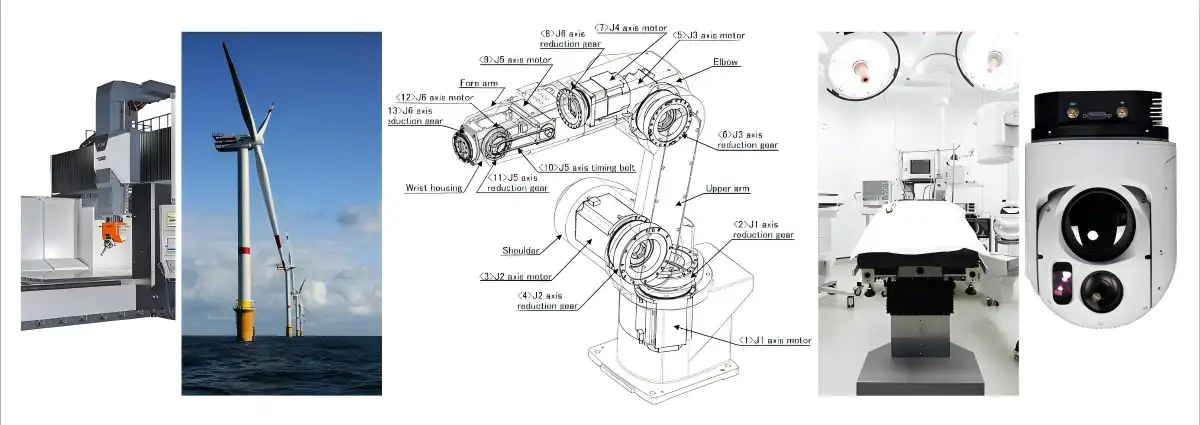
The XU100140UU Precision Cross Roller Bearing is used in robotics, medical equipment, semiconductor manufacturing, aerospace systems, and precision machining centers. It is used in places where engineers need high rigidity, the ability to handle loads in multiple directions, and a small installation size. As the need for integrated motion control solutions grows, this special type of bearing meets that need. It gets rid of the need for complicated mounting systems and keeps micron-level accuracy under combined pressure conditions.
Understanding the XU100140UU Precision Cross Roller Bearing
Technical Specifications and Design Features
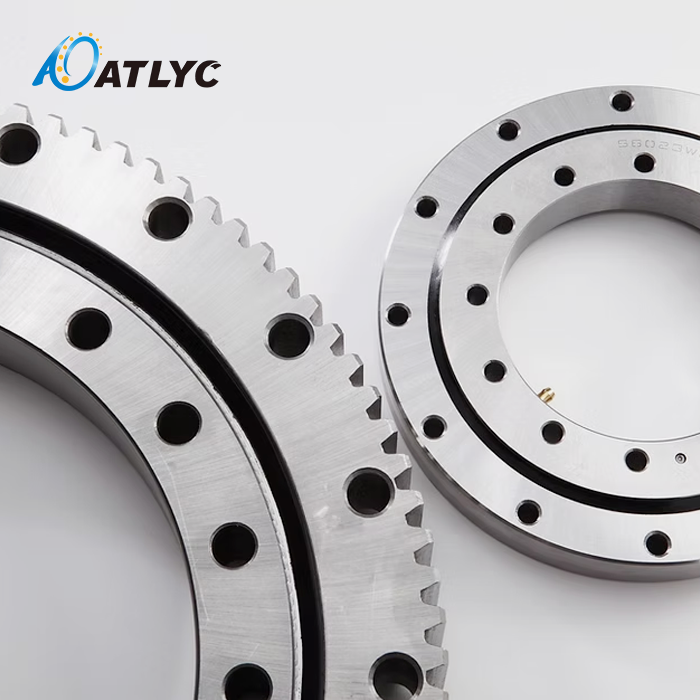
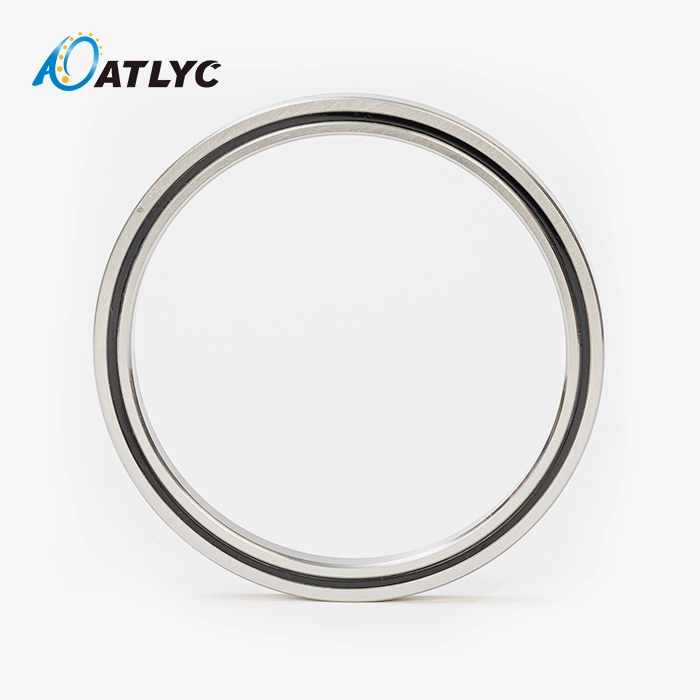
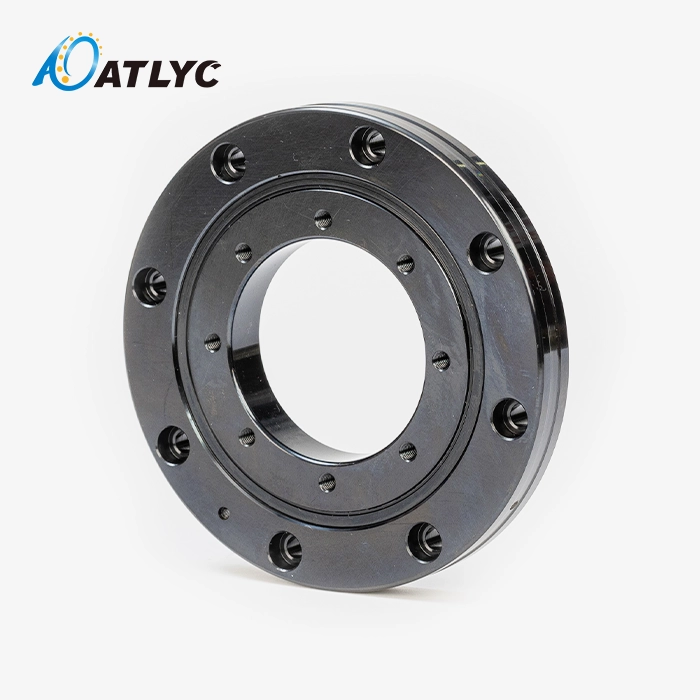
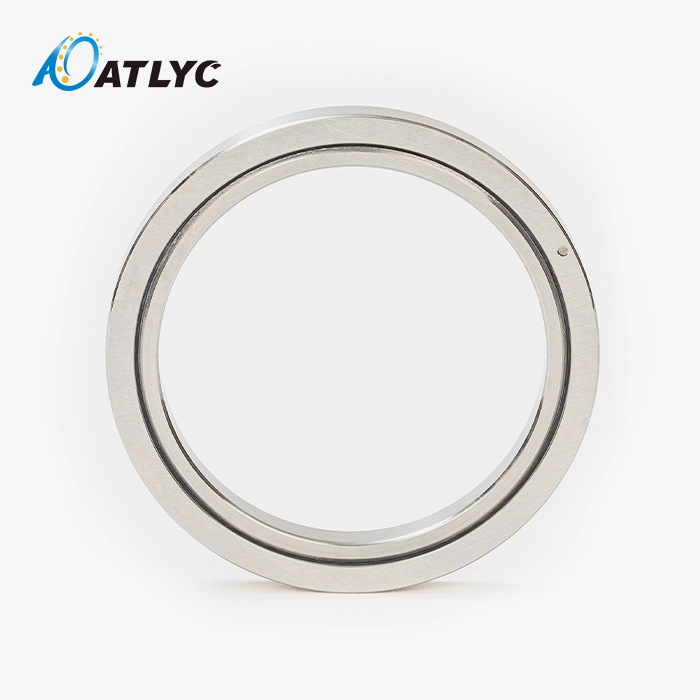
The XU100140UU Precision Cross Roller Bearing has an inner diameter of 100 mm, an outer diameter of 140 mm, and a width of 20 mm. Its small size makes it very load-bearing. The part is made from GCr15 or GCr15SiMn bearing steel that has been hardened to HRC 60–64. It can handle large radial, axial, and moment loads all at the same time in a single unit. It can work in more than one direction because it has a cross-roller arrangement, which has cylinder-shaped rollers set at right angles to V-shaped track surfaces.
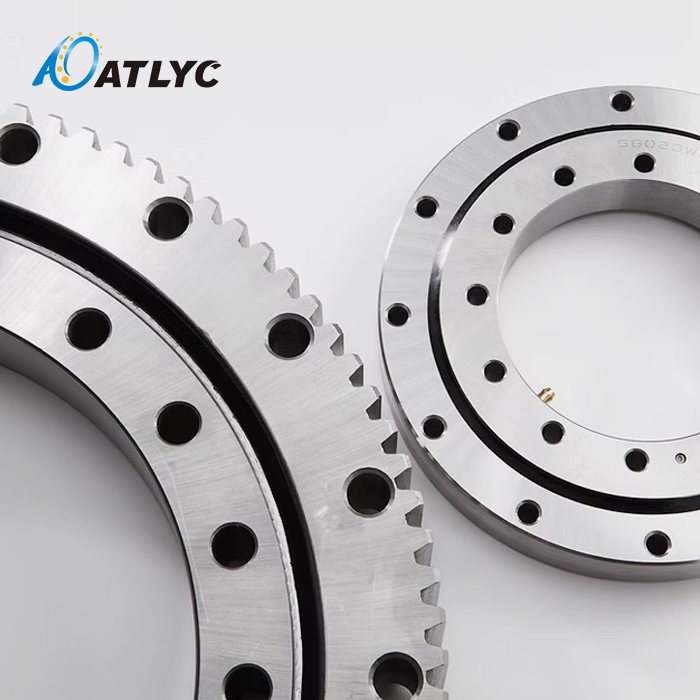
This bearing is different from others because the ring is built into the frame, instead of being separate. The inner and outer rings are both solid and unbroken, and the end faces are made with mounting holes that are already drilled and can be countersunk or threaded. By getting rid of the external clamping gear, this simplifies the building process and makes it more concentric. The "UU" label means that there are two synthetic rubber seals that keep the factory-applied grease in and keep out environmental contaminants. This keeps the internal parts safe in harsh working conditions.
Working Principle and Performance Advantages
Cross-roller bearings work in a way that is very different from how ball bearings do. Cylindrical rollers move back and forth in a straight direction. Spacer blocks between the rollers keep the spacing even and prevent rollers from touching. When compared to point-contact ball bearings, this design spreads loads over longer contact patches, making the structure three to four times stiffer. Engineers like this trait because it helps keep things in place when elastic displacement under load would otherwise make it less accurate.
The changing roller design in the bearing makes it strong against tilting moments without the need for matched bearing pairs or complicated preload setups. With low starting power and a low friction coefficient, rotation stays smooth over the whole 360-degree range. There are six different levels of accuracy—P6, P0, P5, P4, and P2—so that the specifications can be matched to the needs of the application. In the higher-precision classes, rotational runout is controlled within micrometer ranges. When compared to traditional bearing arrangements that need separate housings, this design saves up to 30% more installation room. This makes it especially useful when envelope dimensions limit mechanical design choices.
Major Industries Utilizing the XU100140UU Precision Cross Roller Bearing
Understanding how this XU100140UU Precision Cross Roller Bearing technology is used in the real world helps buying workers decide if it fits their business needs. Because they need to be very precise and have limited room, five industries have very strong demand trends.
Robotics and Industrial Automation
At the shoulder, elbow, wrist, and end-effector joints, industrial robots depend on fine bearings to move. The XU100140UU Precision Cross Roller Bearing layout solves a number of problems in the creation of robotic joints. Its built-in fixing holes let it connect directly to robot arm structures without the need for adapter plates in between. This cuts down on the joint width and the weight of the robot as a whole. This decrease in weight directly raises the loading capacity and moving speed while lowering the energy use.
When joint robots (cobots) work with humans, smooth, low-friction spinning makes things safer by letting the robots move more precisely and respond more quickly to force inputs. The two seals keep water splashes and metal chips from getting into the cell, which is common in cutting cells. When there isn't enough room in the joints for bigger standard bearing sets, especially in SCARA and compact six-axis articulated arms, automation system designers choose these bearings.
Medical Equipment and Imaging Systems
When making medical devices, makers have to deal with special rules that combine precise movements with keeping germs from spreading. CT scanner gantries keep turning during imaging processes, so they need bearings that keep them in the right place and don't make too much shaking that could hurt the quality of the images. Because it is very stiff around the edges, the XU100140UU Precision Cross Roller Bearing doesn't bend when heavy X-ray tubes and detector arrays are attached to spinning gantries.
Surgical robotic systems use the same benefits. Instrument manipulators need to be able to rotate smoothly and without blowback so that surgeons can precisely place tools inside patients. Because the bearing is already loaded, there is no internal space that could cause positioning lag or error. In radiation therapy equipment, these bearings are used in systems that move the treatment head and keep the beam aligned within very tight limits during many setting cycles. This is important for the patient's safety. The sealed design stops oil from moving into clean areas and biological contaminants from getting into the bearing raceways.
Semiconductor Manufacturing Equipment
The methods used to make chips put a lot of stress on motion control parts. Wafer handling robots move silicon plates from one process room to another in steps of tens of microns. Any difference in bearing runout or friction leads directly to chip misalignment, which could mean throwing away whole production lots worth millions of dollars. The P4 and P2 accuracy grades of the XU100140UU Precision Cross Roller Bearing give these uses the rotary accuracy they need.
Precision rotating stages are used by photolithography steppers to place wafers under projection mirrors. When these stages move in complicated ways that include both rotation and straight translation, they create loads that are higher than what ball bearings of the same size can handle. These complicated loads are handled by cross roller bearings, which keep the flatness requirements that are necessary to keep the focus on the chip surface. The dual seal design is good for clean rooms because it stops particles from forming from internal bearing wear and stops outside contamination that could lower chip yields.
Aerospace and Defense Applications
In the defense and aircraft industry, these bearings are used in places where dependability has a direct effect on task success. On observation planes, antenna positioning systems use precision bearings in gimbal units to keep an eye on targets while taking into account the plane's movement. The bearing has to stay accurate even when it is vibrating, the temperature changes, or it is used over and over again.
Another important use is for devices that launch solar panels from space. During launch, these devices are turned off, but they have to work perfectly when they are turned on in orbit. The sealed form of the bearing keeps out vacuum welding and dirt while it is being stored on the ground, and it makes sure that the bearing can rotate smoothly in space. Turret systems on military vehicles use these bearings because their small size and ability to handle moment loads make it possible to stabilize weapons on mobile platforms. The integrated mounting design makes upkeep easier in the field and makes transportation easier in operational settings.
Precision Machining Centers and Rotary Tables
XU100140UU Precision Cross Roller Bearings are used by machine tool builders in fourth and fifth-axis rotating tables to hold workpieces in place during multi-axis machining processes. Cutting forces that create both rotary and moment loads must be able to keep these tables in the right place. The high stiffness of the bearing keeps it from deflecting too much during roughing cuts, and its smooth spin lets you get a nice finish on the surface during finishing passes.
Manufacturers of measuring tools recommend these bearings for use in optical comparators and coordinate measuring machines (CMMs), where spinning stages move parts into place for checking their dimensions. Minimizing bearing runout, which shows up as false numbers in inspection results, is important for measuring accurately. The P5 accuracy class that is usually used for these tasks makes sure that the bearing's effect on measurement inaccuracy is very small compared to other types of system error. Manufacturers of grinding machines use similar bearings in systems that move the workhead. These bearings' ability to resist heat and pressure affects the end shape and finish of the part.
Comparing XU100140UU with Alternative Precision Bearings
Performance Characteristics Versus Standard Bearings
Standard single-row ball bearings are cheaper to buy at first, but they can't hold as much weight or be as rigid as cross roller types in the same envelope sizes. A normal deep groove ball bearing of the same size might be able to handle a radial load of 8–12 kN. On the other hand, an XU100140UU Precision Cross Roller Bearing setup can handle a radial load of 15–20 kN along with large axial and moment loads at the same time. Because of this load benefit, engineers can choose smaller bearings or make them last longer under the current load conditions.
When arranged in pairs, angular contact ball bearings have the same moment capacity as cross roller types, but they need more axial room and more accurate preload adjustment when they are installed. The combined XU design gets rid of these problems because it comes pre-assembled and with the best setting already set during production. Maintenance workers like how easy this makes installation—all that's needed is to tighten the bolts, instead of the shimming and measuring of space that's needed for normal bearing arrangements.
Selection Criteria for High-Precision Applications
When picking between different types of cross rollers, you have to look at certain application factors. The RA and RE series cross roller bearings have split rings that make installation easy but make the bearings less rigid. The XU series, on the other hand, is designed for straight mounting without separate housings. Choosing the right bearing size means finding the right mix between load capacity and space limitations. For example, the XU100140UU Precision Cross Roller Bearing's 100mm bore works well in mid-range robotic joints and machine tool applications where smaller bearings don't have enough load capacity and larger ones take up too much room.
Which accuracy grade to use varies on how accurate you need to be and how much it costs. The P0 grade is good for general industrial robotics where placement errors are bigger than 20 microns. P5 grade is used for measuring and cutting tools that need to be accurate within 5 to 10 microns. The P4 and P2 types are for semiconductor and measurement uses that need performance below the micron level. Each level of accuracy usually adds 15–25% to the unit cost. For cost efficiency, it is important to match precision to real needs. Choosing between GCr15 and GCr15SiMn affects how stable the dimensions are when the temperature changes. Silicon-manganese alloy steel is better for uses that go through a lot of temperature changes.
Procurement Insights for XU100140UU Precision Cross Roller Bearings
Supplier Evaluation and Quality Verification
Checking the qualifications of manufacturers is the first step in building reliable supply relationships. Certifications from ISO 9001 and IATF 16949 show that quality management systems have been in place for a while and meet world standards. ATLYC keeps both certifications up to date, which shows our dedication to consistent manufacturing processes and methods for ongoing growth. In our 15 years of manufacturing experience, we've met the high standards of South Korea, the US, and Germany, three places where quality is expected to be very high.
When considering sources, ask for records on dimensional inspections and material certifications for the XU100140UU Precision Cross Roller Bearing. Genuine makers give CMM inspection data that shows the real tolerances that were reached and how they compare to the limits set by the specification. Hardness testing papers show that bearing steel has been properly heat-treated, which has a direct effect on its service life and load capacity. If you buy fake or low-quality bearings, they might not be the right size or be hard enough, which can cause them to break down early and cost you a lot more in lost production time than the original cost saves.
Lead Times, Pricing, and Order Optimization
Standard store items usually ship in two to four weeks. Custom designs or non-standard accuracy grades, on the other hand, may take six to eight weeks to make. Planning the buying processes around these dates keeps production from being held up. There are cost savings when you order in bulk. Usually, discounts start at 50 units, and there are more discounts at 100 and 500-piece breaks. Setting up blanket buy orders with planned releases strikes a balance between the costs of keeping inventory, the price per unit, and the continuity of supply.
The ability to provide technical help sets capable sellers apart from commodity vendors. Having access to application engineering help makes choosing bearings and installing them better. We offer CAD models in standard file types, which makes it easier to integrate hardware design. Our expert team helps you choose the right lubrication based on the working conditions and the best preload specs. This help is especially helpful when making a new product, because the performance of the bearings has a direct effect on how well the prototype works and how long it takes to make.
Maintenance and Technical Support for XU100140UU Bearings
Installation Best Practices
How the parts are mounted directly affects how well they work and how long they last. Thoroughly clean the fastening surfaces, getting rid of any burrs or other things that might get in the way of full contact. When you install the XU100140UU Precision Cross Roller Bearing, make sure that the inner and outer rings are lined up correctly. Even a small mismatch can cause stress risers that speed up wear failure. Tighten the mounting bolts in a star design until the pressure values are met. This will make sure that the load is evenly spread around the mounting interface.
Factory-applied grease usually does a good job of lubricating things for the first time they are used, but how often they need to be oiled again depends on how they are used. If you run it at low speeds all the time, you might need to regrease it every 2,000 to 3,000 hours. If you run it on and off, the gaps get longer. Use only the types of grease that are suggested. Lubricants that don't work well together damage seals and change how friction works. Check the starting force every so often; rising resistance means that the grease or contamination is wearing down, which needs to be fixed before the whole thing breaks.
Troubleshooting Common Issues
Strange noises during operation are often a sign of contamination or not enough grease. Grinding sounds mean that particles are getting past the seals and need to be replaced in order to keep other parts from failing in a chain reaction. The temperature rise may be too high because of bad preload, imbalance, or not enough oil. Check the bearing temperature while it's working. If it's more than 20°C above atmospheric when the load is normal, the problem needs to be looked into.
Positioning mistakes that show up as accuracy issues could be caused by worn bearings or hardware that is too loose, not by problems with the control system. Check the tightness of the mounting bolts and look at the mounting surfaces for fretting rust, which shows that the bearing and housing are moving relative to each other. Our tech team helps with fixing by finding the root causes and suggesting ways to fix things. This help cuts down on downtime and stops wrong diagnoses that lead to replacing working parts that don't need to be replaced.
Conclusion
The XU100140UU Precision Cross Roller Bearing improves performance in robots, medical equipment, making semiconductors, aircraft systems, and precision machining, among other areas. Its combined mounting design, ability to handle loads in multiple directions, and small size make it useful in situations where regular bearing arrangements aren't enough. Procurement workers and design engineers can make smart decisions about where to get things that meet operational needs and quality standards when they understand these application settings. Partnering with well-known makers who have the right certifications and a track record of working with customers in other countries guarantees a steady supply of goods and expert help throughout the lifecycle of a product. The bearing's excellent performance in tough situations around the world proves its worth for precise motion control systems that need to be as flexible as possible while taking up as little room as possible.
FAQ
1. What does the XU100140UU designation indicate about this bearing?
The numerical code tells you about certain design features. "XU" stands for the integrated ring configuration of the XU100140UU Precision Cross Roller Bearing, which has fastening holes already drilled in both the inner and outer rings. This makes it different from split-ring configurations. The numbers "100140" tell us the sizes: the inner diameter is 100 mm, and the outer diameter is 140 mm. The "UU" suffix means that the bearing has two rubber seals that keep the internal grease in and keep the bearing sides clean. Using part numbers, this coding method makes it easy for engineers to quickly find out what kind of bearing it is and how big it is during the specification and buying processes.
2. How long does the XU100140UU typically last under normal operating conditions?
The working conditions, such as load size, speed, lubrication quality, and external factors, have a big impact on service life. If you load these bearings correctly and make sure they are well oiled and free of dirt and dust, they should last between 20,000 and 30,000 hours before they need to be replaced. Continuous spinning at low speeds tends to be near the top of this range, while high-load cycles that happen every so often may shorten life expectancy. Using temperature and vibration analysis to keep an eye on the state of bearings lets you do predictive maintenance, which means that bearings are replaced based on their real condition instead of at random times.
3. Can the XU100140UU replace standard bearings in existing rotary table designs?
Retrofitting relies on how the parts are mounted and how much room is available. Because they are small and have mounting holes built in, they can often be used directly instead of bearing housings in older designs. This could improve performance while making assembly easier. Make sure that the mounting hole patterns meet the current attachment points and that the load values are higher than what is needed for the application, taking into account the necessary safety factors. Our expert team helps with retrofit possibility analysis by checking for dimensional compatibility and verifying load calculations to make sure that the bearing replacement works without having to make a lot of changes to the design.
Partner with ATLYC for Reliable XU100140UU Precision Cross Roller Bearing Supply
ATLYC has real XU100140UU Precision Cross Roller Bearings that are made in ways that are ISO 9001 and IATF 16949 approved and are ready to meet your precision bearing needs. Over the course of 15 years, we've grown from a single workshop to six specialized production sites, giving us the technical know-how and production capacity to serve OEMs and wholesalers around the world. We know how important it is for your operations that your bearings work well in your production systems and that your supplies don't stop.
Our engineering team can help you choose the right bearings, install them correctly, and keep them in good shape by giving you application-specific advice. Contact us at auto@lyautobearing.com if you need expert advice on bearing sizing, bulk prices for production amounts, or custom configurations that meet specific size needs. Partnering with a dedicated supplier who is dedicated to quality, expert help, and reliable long-term supply will make a difference.
References
1. Harris, T.A., and Kotzalas, M.N., Advanced Concepts of Bearing Technology: Rolling Bearing Analysis, CRC Press, 2006.
2. Eschmann, P., Hasbargen, L., and Weigand, K., Ball and Roller Bearings: Theory, Design and Application, John Wiley & Sons, 1985.
3. Hamrock, B.J., Schmid, S.R., and Jacobson, B.O., Fundamentals of Fluid Film Lubrication, Marcel Dekker, 2004.
4. ISO 492:2014, Rolling Bearings - Radial Bearings - Geometrical Product Specifications and Tolerance Values, International Organization for Standardization.
5. Tallian, T.E., Failure Atlas for Hertz Contact Machine Elements, ASME Press, 1999.
6. Weck, M., and Brecher, C., Werkzeugmaschinen: Konstruktion und Berechnung, Springer-Verlag, 2006.
Learn about our latest products and discounts through SMS or email