- English
- French
- German
- Portuguese
- Spanish
- Russian
- Japanese
- Korean
- Arabic
- Greek
- German
- Turkish
- Italian
- Danish
- Romanian
- Indonesian
- Czech
- Afrikaans
- Swedish
- Polish
- Basque
- Catalan
- Esperanto
- Hindi
- Lao
- Albanian
- Amharic
- Armenian
- Azerbaijani
- Belarusian
- Bengali
- Bosnian
- Bulgarian
- Cebuano
- Chichewa
- Corsican
- Croatian
- Dutch
- Estonian
- Filipino
- Finnish
- Frisian
- Galician
- Georgian
- Gujarati
- Haitian
- Hausa
- Hawaiian
- Hebrew
- Hmong
- Hungarian
- Icelandic
- Igbo
- Javanese
- Kannada
- Kazakh
- Khmer
- Kurdish
- Kyrgyz
- Latin
- Latvian
- Lithuanian
- Luxembou..
- Macedonian
- Malagasy
- Malay
- Malayalam
- Maltese
- Maori
- Marathi
- Mongolian
- Burmese
- Nepali
- Norwegian
- Pashto
- Persian
- Punjabi
- Serbian
- Sesotho
- Sinhala
- Slovak
- Slovenian
- Somali
- Samoan
- Scots Gaelic
- Shona
- Sindhi
- Sundanese
- Swahili
- Tajik
- Tamil
- Telugu
- Thai
- Ukrainian
- Urdu
- Uzbek
- Vietnamese
- Welsh
- Xhosa
- Yiddish
- Yoruba
- Zulu
Where Is a Cross roller bearing RB series Commonly Used?
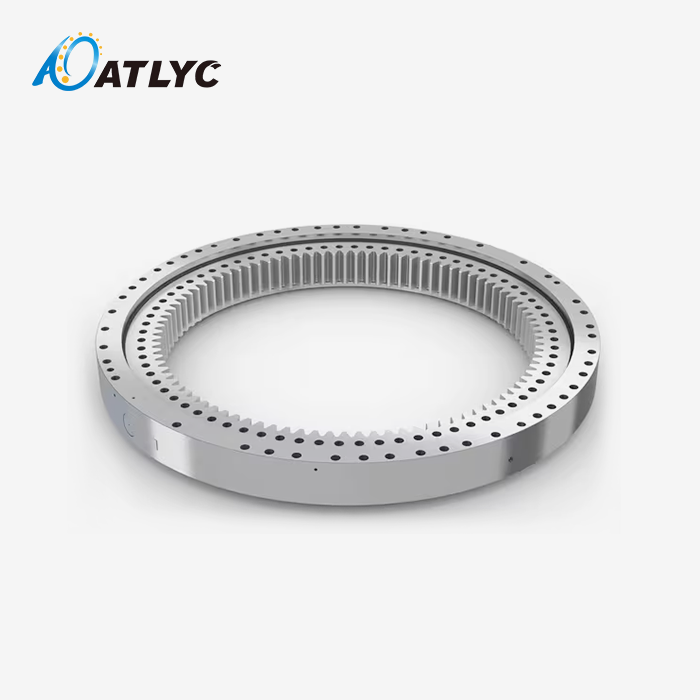
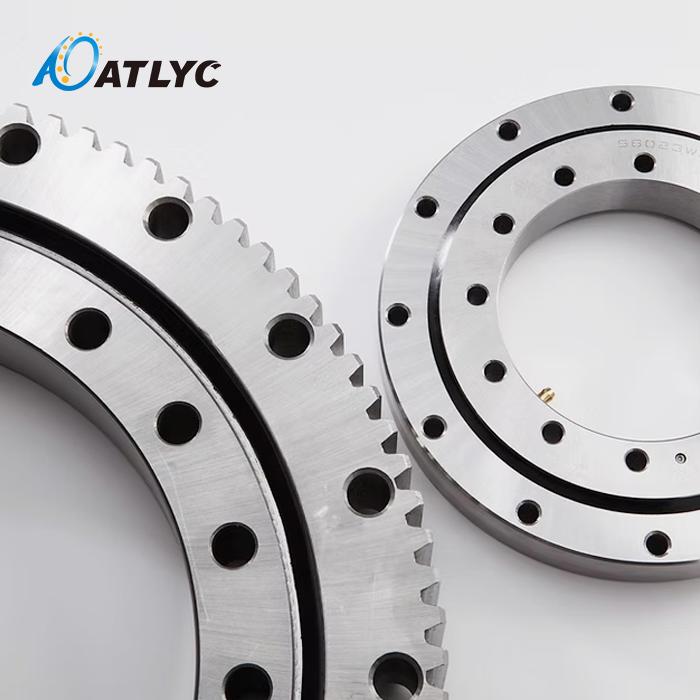
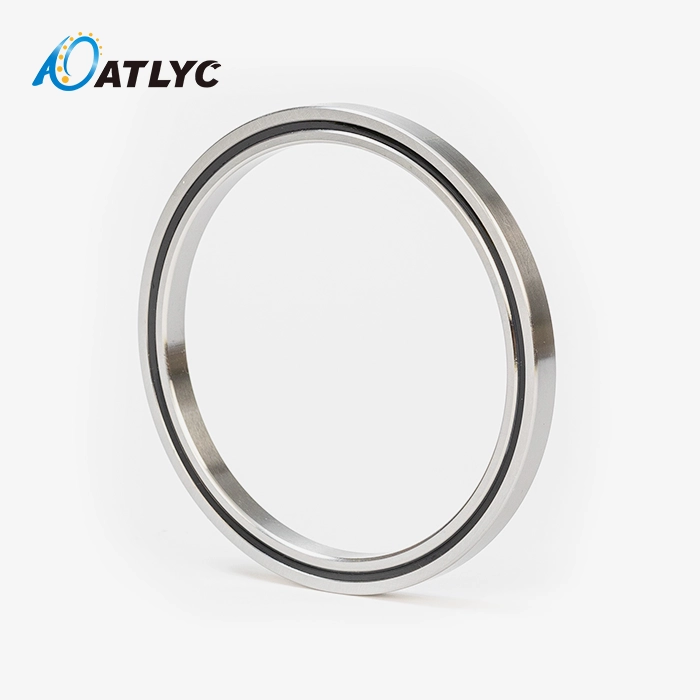
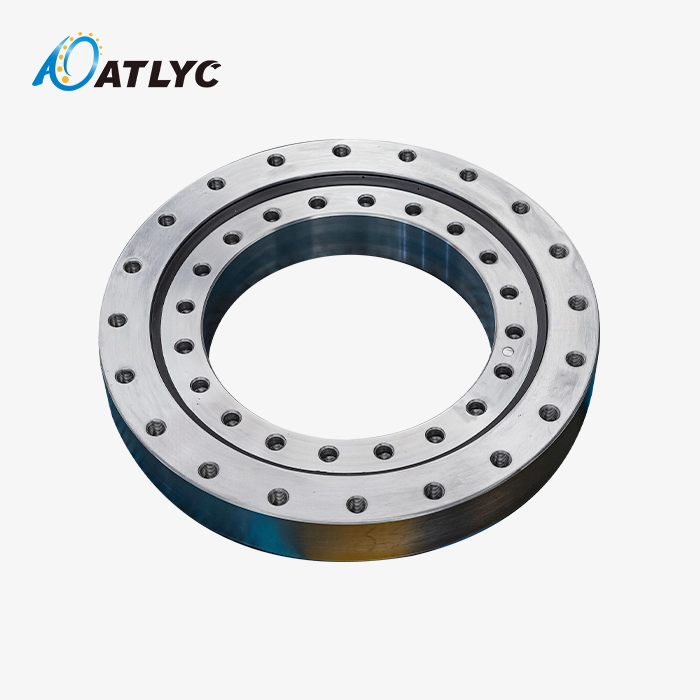
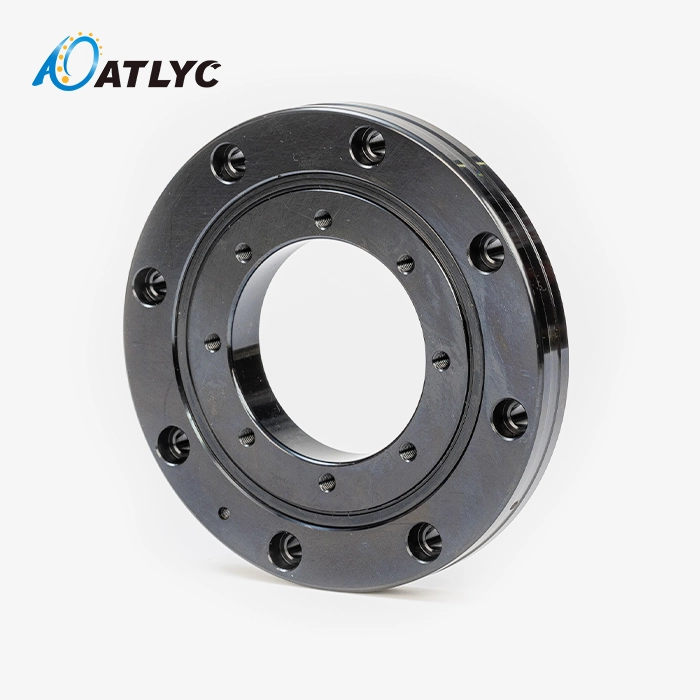
The Cross roller bearing RB series is commonly used in places that need high accuracy, stiffness, and the ability to carry loads in multiple directions while taking up little room. People can find these bearings in medical imaging equipment, on the spinning tables of CNC machines, at the joints of industrial robots, and in devices that make semiconductors. Because they have an integrated inner ring and a split outer ring with a plug design, you can trust them to work well and last a long time.

Understanding the Cross Roller Bearing RB Series
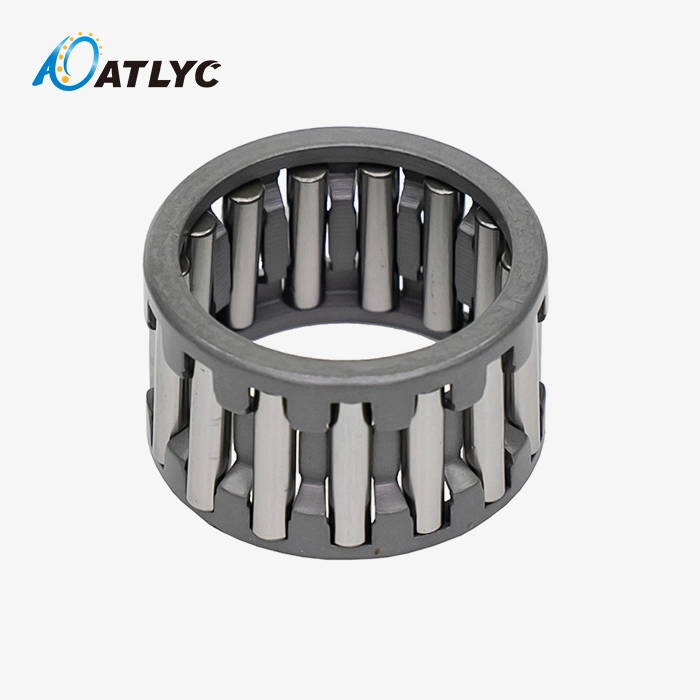
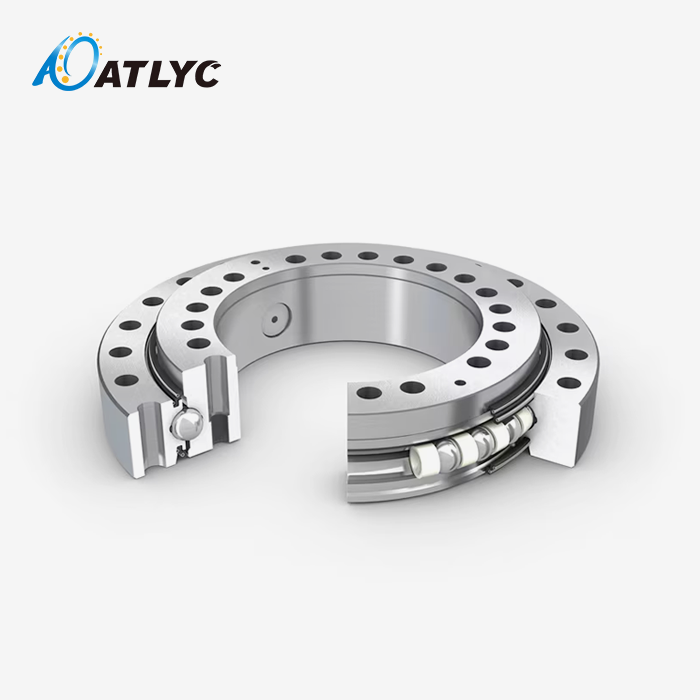
The RB series crossed roller bearing has a unique design on the inside. Inside a 90° V-groove track, cylindrical wheels are spaced out 90° apart and not touching each other. The inner ring stays whole, but the outer ring has a plug system built into it. This arrangement is what makes the bearing unique; it can handle radial, axial, and moment loads all at the same time through a single unit.
Structural Design and Materials
When compared to split-ring options, the combined inner ring is more rigid, and the outer ring plug system makes it easy to put together and fix in the field. The body of the bearing is made of GCr15 or GCr15SiMn high-carbon chromium bearing steel that has been heated and cooled until it is between 58 and 64 HRC. This choice of material reduces wear and deformation as much as possible, directly supporting long-term stability in dimensions under repeated load cycles.
Size Range and Accuracy Grades
For the goal of satisfying a broad variety of technical requirements, the RB series cross roller bearing is available in a number of different sizes. To accomplish the goal of fulfilling a wide variety of technical requirements, this is done in order to get the desired result. The goal of carrying out this step is to make certain that the customer is pleased with the service that they get that they have received.
| Parameter | Range |
|---|---|
| Inner Diameter | 20 mm – 1,100 mm |
| Outer Diameter | 70 mm – 1,500 mm |
| Width | 12 mm – 110 mm |
Accuracy grades available include P6, P0, P5, P4, and P2, allowing engineers to select the tolerance class appropriate for each application, from general industrial use up to the most precise measurement and semiconductor equipment.
Working Principle
Cross-arranged rollers distribute contact force evenly across the full raceway surface. Because each roller alternates direction at 90°, the load path shifts from point contact to line contact, which gives the RB crossed roller bearing approximately three to four times the rigidity of comparable angular contact ball bearings. This line-contact geometry also reduces stress concentration, extending fatigue life under heavy or fluctuating loads.
Where Is the Cross Roller Bearing RB Series Commonly Used?
The design properties described above translate directly into real-world performance advantages across multiple high-demand industries. Here is where you will encounter the Cross roller bearing RB series most often.
Industrial Robots and Automation Equipment
Robot joint bearings must carry large cantilevered loads while maintaining zero backlash for repeatable positioning. The RB series meets both requirements. At the waist and elbow joints of articulated robots, the bearing sustains rapid acceleration and deceleration without losing positional accuracy. In manipulator rotating parts and robotic wrist assemblies, the compact cross-section reduces total arm weight without sacrificing load capacity, which directly improves cycle speed and energy efficiency.
Precision Rotary Tables and Machining Centers
CNC machining centers rely on the RB series crossed roller bearing to keep the worktable planar and stable during cutting. High radial and moment loads from milling operations are absorbed by the single bearing assembly, eliminating the need for paired angular contact sets. Precision rotary indexing tables in multi-axis machining benefit from the P4 or P2 accuracy grades, where runout tolerances in the micron range translate into tighter part tolerances and reduced scrap rates.
Medical and Measuring Instruments
Medical CT scanner gantries rotate continuously at moderate speeds while demanding extremely smooth, low-vibration motion. Any mechanical deviation shows up directly in image quality. The crossed roller bearing's line-contact design and low friction coefficient support vibration-free rotation over long service cycles. Coordinate measuring machines and optical measuring instruments also depend on the bearing's runout accuracy to maintain measurement traceability to national standards.
Semiconductor and IC Manufacturing Devices
Wafer handling and photolithography stages require contamination-free, ultra-precise motion. The RB series bearing supports both linear-rotation combination stages and theta-axis alignment platforms used in IC manufacturing. Its smooth torque characteristics and fine preload control make it compatible with cleanroom environments where even minor mechanical vibration can compromise yield.
Comparison of Cross Roller Bearing RB Series with Other Bearing Types
It is smart for engineers to pick the right type of bearing. The table below compares the RB series to two other popular options.
| Feature | RB Series Crossed Roller | Standard Ball Bearing | Tapered Roller Bearing |
|---|---|---|---|
| Load direction | Radial + Axial + Moment | Radial + limited Axial | Radial + Axial |
| Contact type | Line contact | Point contact | Line contact |
| Rigidity | High | Moderate | Moderate–High |
| Runout accuracy | P2–P6 available | P0–P5 typical | P0–P6 typical |
| Compactness | Single unit replaces dual set | Requires paired arrangement | Larger axial footprint |
| Typical application | Robots, rotary tables, medical | General machinery | Gearboxes, wheel hubs |
Why Multi-Directional Load Handling Matters
Standard angular contact ball bearings are okay for varied loads, but they rely on the balls and raceways being in point contact with each other. Heavy moment loading leads to an increase in contact stress and thereby accelerates raceway wear. The Cross roller bearing RB series has line contact, i.e., the same moment load is distributed across a longer track. This decreases the contact pressure and extends the period between services and so reduces the downtime and cost of replacements in production.
Precision Tolerance Comparison
For precision levels P4 and P2, crossing roller bearings with integral inner rings are often superior to split-ring designs or regular roller bearings. The split ring creates a minor geometric break which is removed by the solid inner ring, providing tighter runout between the inner ring bore and face. This is critical for applications like CMM spindles and medical gantries where positioning mistakes of a few microns may cause substantial issues in imaging or measurement.
Application Suitability Summary
There is a perfect bearing for each kind of task. Deep groove ball bearings are suitable for most motor or conveyor applications. If huge loads, compact dimensions, and excellent precision are required, the RB series crossed roller bearing is the perfect option. Procurement engineers should ensure that new or replacement bearings are of the correct precision grade and preload class for the operating loads and speed requirements.
Procurement Considerations for Cross Roller Bearing RB Series
In order to choose the appropriate crossed roller bearing, it is not sufficient to just select one from a catalog; one must also take into account other aspects. There are a large variety of practical problems that may be split into many different categories, and these concerns have an impact on both the costs and the dependability of the supply.
Verification of Accuracy Grade and Clearance
The design for the preload class and the radial internal clearance. Most normal tasks can be done with the standard clearance (C0), but high-precision rotary tables are stiffer and have less preload. When teams buy things, they should ask for physical inspection records that show that the Kia (radial runout of the inner ring) and Sia (axial runout) measurements are correct to a certain accuracy grade, which could be P5, P4, or P2.
Material and Quality Certification
AISI 52100 and its silicon-manganese version, GCr15 and GCr15SiMn, are the same steels that are used to build the RB line. Suppliers will have permits and records of strength tests for the goods they sell you. Original equipment makers (OEMs) in the car industry need IATF 16949 approval at the production site for their clients. As part of ISO 9001 approval, there are supply lines for both general and industry tools.
Lead Time and Supply Planning
If the inside width is more than 500 mm, most wholesalers won't carry it. If you need big crossing roller bearings, the lead time is between six and twelve weeks. You can lower your risk on the production line and usually get better unit prices if you keep the sizes you use most on hand and place a blanket order with your supplier.

Conclusion
The Cross roller bearing RB series has to meet a very special and difficult technical requirement: it has to be very precise, be able to support loads in many directions, and last a long time, all in a small package. It has a built-in inner ring, a line-contact roller shape, and accuracy levels from P6 to P2. Because of these qualities, it is often used in robot joints, CNC spinning tables, medical imaging systems, and tools for making integrated circuits. To get the most out of this type of bearing, you need to pick the right accuracy grade and clearance class, as well as a professional source with good records that can be checked.
FAQ
1. What accuracy grades does the RB series crossed roller bearing offer?
You can get the RB series in accuracy grades P6, P0, P5, P4, and P2. P6 and P0 are good for general industrial uses, while P5, P4, and P2 are designed for medical equipment, precision spinning tables, and semiconductor manufacturing, where runout control at the micron level is needed.
2. What makes the RB series different from other crossed roller bearing types?
The RB series has a solid inner ring that is mated with a split outer ring that has a plug on it. This makes the inner ring bore more accurate in runout than split inner ring designs. This makes it better for uses where the inner ring rotates and positional accuracy is important.
3. What materials are used in the RB series bearing?
The bearing rings and rollers are made of GCr15 or GCr15SiMn high-carbon chromium bearing steel that has been heated and cooled until it is 58 to 64 HRC. These materials have the hardness, resistance to wear, and stress strength needed for heavy-load work that goes on all the time.
4. Can the RB series handle combined radial, axial, and moment loads simultaneously?
Yes. One of the main reasons the orthogonal roller arrangement is used instead of dual angular contact ball bearing arrangements in small machine designs is that it lets a single bearing handle radial, axial, and moment loads at the same time.
5. What size range is available?
The inner diameters run from 20 mm to 1,100 mm, the outer diameters from 70 mm to 1,500 mm, and the widths from 12 mm to 110 mm. These sizes can be used for a wide range of things, from small robotic wrist joints to large precision turntables with large diameters.
Request a Quote for Cross Roller Bearing RB Series — Contact ATLYC
Since 2010, ATLYC, which is part of Luoyang Auto Bearing Co., Ltd., has been making precision bearings. We have ISO 9001 and IATF 16949 certifications and six production sites where we make Cross roller bearing RB series goods for customers in the USA, Germany, South Korea, and other places. As a direct producer of the Cross roller bearing RB series, we can provide verified accuracy grades, full material traceability, and short lead times for both normal and large-diameter orders. To get a price right away, email your technical model or size requirements to auto@lyautobearing.com.
References
1. Harris, T. A., & Kotzalas, M. N. Rolling Bearing Analysis: Essential Concepts of Bearing Technology. Taylor & Francis, 2006.
2. SKF Group. SKF General Catalogue. SKF, 2018.
3. THK Co., Ltd. THK Technical Support — Cross Roller Ring Series Product Catalog. THK, 2020.
4. ISO. ISO 492: Rolling Bearings — Radial Bearings — Dimensional and Geometrical Tolerances. International Organization for Standardization, 2014.
5. Eschmann, P., Hasbargen, L., & Weigand, K. Ball and Roller Bearings: Theory, Design and Application. John Wiley & Sons, 1985.
6. Machinery's Handbook, 30th Edition. Industrial Press, 2016.
Learn about our latest products and discounts through SMS or email