- English
- French
- German
- Portuguese
- Spanish
- Russian
- Japanese
- Korean
- Arabic
- Greek
- German
- Turkish
- Italian
- Danish
- Romanian
- Indonesian
- Czech
- Afrikaans
- Swedish
- Polish
- Basque
- Catalan
- Esperanto
- Hindi
- Lao
- Albanian
- Amharic
- Armenian
- Azerbaijani
- Belarusian
- Bengali
- Bosnian
- Bulgarian
- Cebuano
- Chichewa
- Corsican
- Croatian
- Dutch
- Estonian
- Filipino
- Finnish
- Frisian
- Galician
- Georgian
- Gujarati
- Haitian
- Hausa
- Hawaiian
- Hebrew
- Hmong
- Hungarian
- Icelandic
- Igbo
- Javanese
- Kannada
- Kazakh
- Khmer
- Kurdish
- Kyrgyz
- Latin
- Latvian
- Lithuanian
- Luxembou..
- Macedonian
- Malagasy
- Malay
- Malayalam
- Maltese
- Maori
- Marathi
- Mongolian
- Burmese
- Nepali
- Norwegian
- Pashto
- Persian
- Punjabi
- Serbian
- Sesotho
- Sinhala
- Slovak
- Slovenian
- Somali
- Samoan
- Scots Gaelic
- Shona
- Sindhi
- Sundanese
- Swahili
- Tajik
- Tamil
- Telugu
- Thai
- Ukrainian
- Urdu
- Uzbek
- Vietnamese
- Welsh
- Xhosa
- Yiddish
- Yoruba
- Zulu
How to Choose the Best RA Series Crossed Roller Bearing
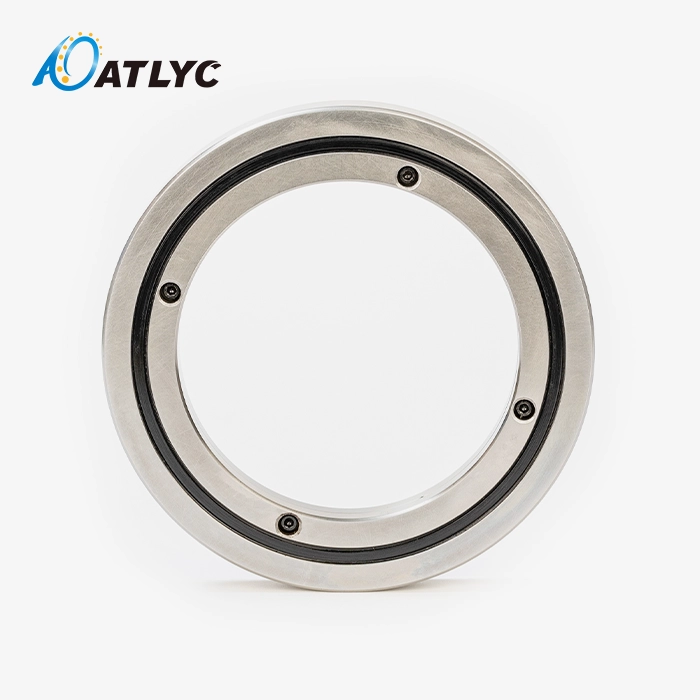
Choosing the right RA Series Crossed Roller Bearing starts with understanding your application's load direction, space envelope, and precision requirements. This bearing type features an outer ring separable design with inner ring rotation, where cylindrical rollers alternate at 90° angles across V-groove raceways. This geometry lets a single crossed roller bearing carry radial, axial, and moment loads simultaneously. Available in inner diameters from 20 mm to 350 mm and accuracy grades from P6 to P4, the RA series fits applications from robotic joints to precision rotary tables where compact size and rigidity both matter.

Understanding RA Series Crossed Roller Bearings: Specifications and Key Features
Dimensional Range and Size Selection
From 20 mm to 350 mm in diameter on the inside, 70 mm to 540 mm in diameter on the outside, and 12 mm to 45 mm in width, the RA line has it all. Because of this wide range, one family of products can be used for both a desktop measuring tool and a full-size machining center rotary table. First, make sure that the bearing bore matches the diameter of your shaft. Then, make sure that the housing's upper diameter and face width fit in the space you have.
Material Composition and Its Effect on Service Life
ATLYC makes RA Series Crossed Roller Bearings out of GCr15 and GCr15SiMn bearing steel. After being heated, GCr15 has a raceway hardness of 58–64 HRC, making it the usual choice for most industry uses. GCr15SiMn adds silicon and manganese, which makes it easier to harden in bigger cross-sections. This makes it better for bearings with a bore of more than 200 mm. Both grades don't go brinelling when they're shocked and keep their shape over a wide range of usual working temperatures.
Accuracy Grades and What They Mean for Your Machine
| Accuracy Grade | Typical Application | Runout Control Level |
|---|---|---|
| P6 / P0 | General machinery, rotary tables | Standard |
| P5 | Industrial robots, machine tools | Precision |
| P4 | Measuring instruments, IC equipment | High Precision |
Comparing RA Series Crossed Roller Bearings with Other Bearing Types
RA Series vs. Angular Contact Ball Bearings
To handle moment loads, angular RA Series Crossed Roller Bearings need to be mounted back-to-back or face-to-face, which means they need twice as much axial room. That paired set is replaced by a single crossed roller bearing, which cuts the length of the unit by a large amount. When a machining center table needs to stay in place while cutting, the line contact between the circular wheels and the raceway is more rigid than the point contact of ball bearings.
RA Series vs. Cylindrical Roller Bearings
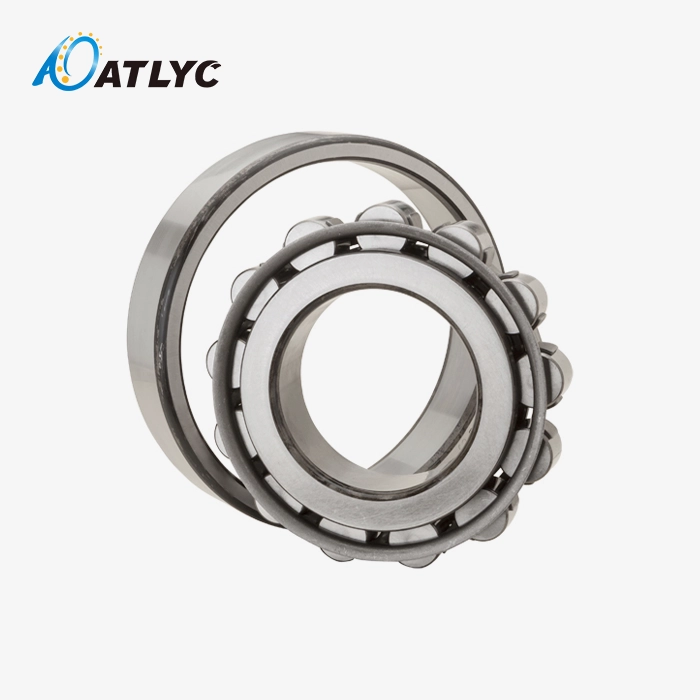
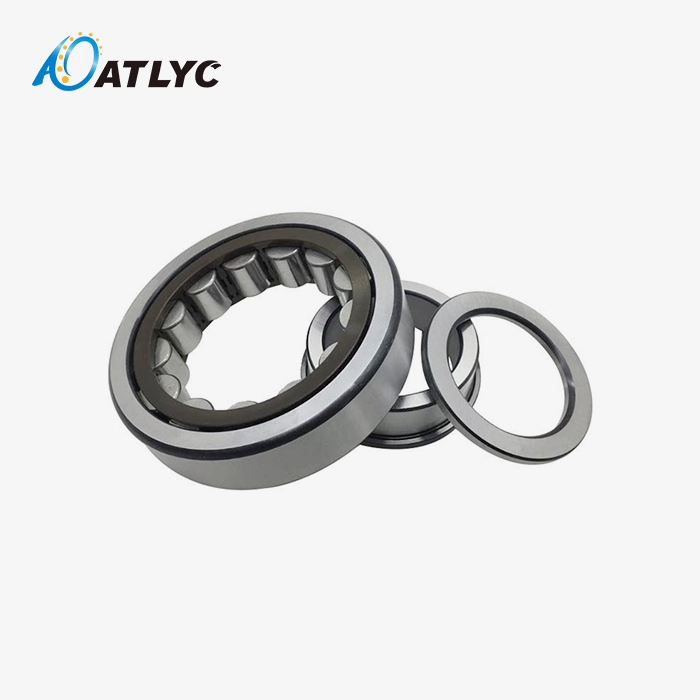
Standard cylindrical roller bearings can handle loads that move in a circle well, but they can't handle loads that move in a straight line. When engineers need to handle a joint load, they have to add thrust bearings, which increases the number of parts and the complexity of the assembly. With the RA series' 90° roller setup, you don't have to do that. This makes the shaft setup lighter, easier, and with fewer places where it could fail.
RA Series vs. Slewing Rings
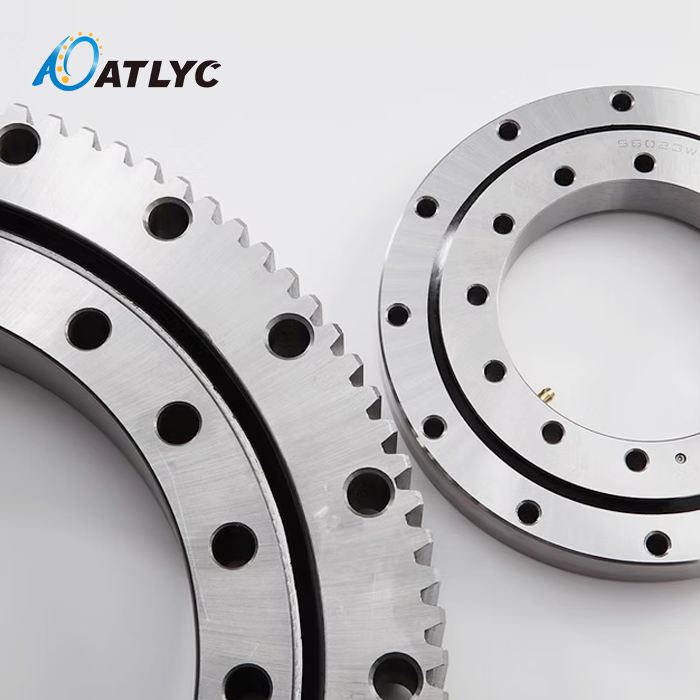
Slewing rings can hold a lot of moment loads, but they take up a lot more rotational room and weigh a lot more. When weight directly impacts motor size and energy use, like in a medical imaging gantry or a collaborative robot arm, a thin-wall crossed roller bearing is the better choice. The RA series bearings have a cross-section that is about 24–30% smaller than similar RB series bearings. This shows how much profile reduction is possible within the crossed roller bearing family.
How to Choose the Best RA Series Crossed Roller Bearing for Your Needs
To choose the right bearing, you have to weigh a lot of technical and economic factors. These factors cover the most common points where people have to make a choice:
Here are the main things that purchase engineers and OEM designers use to choose:
Load profile: Calculate peak radial, axial, and moment loads separately, then verify that the bearing's rated capacities exceed each value with an appropriate safety factor. Manufacturer load rating tables give static and dynamic values.
Precision grade alignment: Map your machine's positioning tolerance to a bearing accuracy grade. A P5 grade bearing with controlled Kia and Sia values suits most robot joints; IC manufacturing stages may require P4.
Material and environment: GCr15SiMn is preferable for larger bores or where thermal gradients are significant. For cleanroom or medical environments, request bearings pre-greased with low-outgassing or fluorine-based lubricant.
Housing design: Because the outer ring is separable, the housing or flange must be machined to precise tolerances to maintain circularity and correct preload after assembly.
Supplier certification: Source only from manufacturers holding ISO 9001 and IATF 16949 certification. These standards govern process control and traceability, which reduces the risk of receiving out-of-tolerance parts.
When these factors are used consistently, they stop the most common mistakes that happen when buying precision bearings.
Installation and Maintenance: Ensuring Longevity of RA Series Crossed Roller Bearings
Pre-Installation Checks
Before putting in a crossed roller bearing, check the surface finish and roundness of the housing hole and shaft seat. The thin outer ring is distorted by out-of-round bores, which moves the preload value away from what was planned. Clean all areas that touch, and make sure that the hardness and size limits are the same as what the RA Series Crossed Roller Bearing maker says should be used for the housing fit.
Step-by-Step Assembly of the Separable Outer Ring
The top ring can be taken off, which makes fitting easier, but it needs to be done carefully. First, put the inner ring piece on the shaft and make sure it is in the right place along the shaft. First, wrap the two outer ring halves around the roller set. Then, use a flat-faced pressing tool to press them evenly into the housing hole. To make the clamping force spread out evenly, tighten the flange bolts in a cross pattern to a certain torque. In RA series uses, early preload loss is most often caused by uneven tightness.
Lubrication and Inspection Schedule
There is lithium soap-based grease already on most RA series bearings when they are shipped. In normal conditions, re-lubrication happens every 2,000 to 3,000 hours of use. However, in high-speed or high-temperature environments, that interval is shortened. At every planned maintenance stop, listen for strange noises when turning slowly by hand, look for wear on the sealing lips, and make sure that the bolt torque values have not loosened. Keeping a simple maintenance log can help with warranty claims if there is a quality problem.
| Maintenance Item | Check Frequency | Action Threshold |
|---|---|---|
| Lubrication top-up | Every 2,000 hr | Grease depleted or discolored |
| Bolt torque check | Every 1,000 hr | Below specified torque value |
| Runout verification | Annually or after impact event | Exceeds grade tolerance |
| Seal inspection | Every 500 hr (harsh environments) | Visible wear or contamination ingress |
Procurement Tips for B2B Buyers: How to Secure the Best Deals on RA Series Crossed Roller Bearings
Verifying Supplier Qualifications
Ask for ISO 9001 and IATF 16949 certificates, and make sure that the scope of the certificate includes making bearings and not just a process that isn't related to the bearings. A reliable company that makes RA Series Crossed Roller Bearings will give you test results on the materials, info on how hard they are, and records of the measurements of each lot. Before placing a large order, ask to see inspection reports from recent production batches that you can look over.
Negotiating MOQ and Lead Times
When mid-sized to large OEMs buy in bulk, they have real power over price and lead time. It is often cheaper to deal with a single supplier for all of your bearing needs than to place orders with several different suppliers. In writing, confirm the factory's production capacity. Usually, a factory with multiple workshops and 120 or more dedicated production staff can stick to firm delivery windows without any problems, which is important for automotive assembly line schedules.
Long-Term Partnership Value
When you switch bearing providers in the middle of a program, it can be more expensive than it's worth in the short term. This is because you have to do re-qualification testing and line validation. A cheaper option that doesn't have a similar track record doesn't pose as much of a supply risk as a more expensive one that has been making bearings for 15 years, has a history of ongoing growth, and has exported to high-demand markets like Germany and South Korea.

Conclusion
There are four choices that must be made in order to choose the right RA Series Crossed Roller Bearing: size, accuracy grade, material grade, and source quality. The RA series is made for small, precise jobs that need a single bearing to carry multiple loads without taking up extra space. This bearing family is useful in robots, machine tools, and medical equipment because it is made of GCr15 and GCr15SiMn steel, has precision-ground V-groove raceways, and an outer ring that can be separated. You can lower both engineering risk and supply chain exposure over the life of the program if you pair those technical features with a qualified, experienced maker.
FAQ
1. What is the key structural difference between RA and RB series crossed roller bearings?
The RA series is lighter and takes up less space than the RB series because its cross-section is thinner. Its profile is about 24–30% lower. The two types of bearings both use alternate cylindrical rollers at 90° on V-groove raceways. However, the RA series is designed for uses where weight and radial area are limited.
2. Can one RA bearing replace a paired angular contact ball bearing set?
Yes. Because it can handle radial, axial, and moment loads all at once, the crossed roller arrangement is often used instead of back-to-back or face-to-face angular contact pairs. This makes the shaft design easier and cuts down on the length of the whole unit.
3. What lubrication is recommended for cleanroom applications?
Lithium soap-based grease is used in standard amounts. When you place your order, make sure to ask for low-outgassing or fluorine-based grease for chip or medical settings. Make sure the provider agrees to the grease specifications in writing before production begins.
4. How does the split outer ring affect housing design?
Tight roundness tolerances must be used to machine the housing bore, and the flange bolts must be torqued evenly. An inaccurate housing warps the outer ring and changes the preload, which lowers the accuracy of rotation and shortens the life of the part.
5. What accuracy grade suits industrial robot joints?
The P5 score is good for most joint teamwork and industrial robot tasks. P4 is only used for working with semiconductors and high-precision measuring tools that need to control runout to the submicron level.
Partner with ATLYC for Your RA Series Crossed Roller Bearing Supply
Luoyang Auto Bearing Co., Ltd. has been making precision bearings for 15 years and is ISO 9001/IATF 16949 certified. ATLYC sells RA Series Crossed Roller Bearings in all normal accuracy grades and hole sizes from 20 mm to 350 mm. We are a reliable RA Series Crossed Roller Bearing maker that works with OEMs in the US, Germany, South Korea, and other places. We offer engineering advice, low bulk prices, and on-time delivery. To get a price right away, email our team at auto@lyautobearing.com.
References
1. Harris, T. A., & Kotzalas, M. N. Essential Concepts of Bearing Technology (5th ed.). CRC Press, 2006.
2. ISO 492:2014. Rolling Bearings — Radial Bearings — Dimensional and Geometrical Tolerances. International Organization for Standardization, 2014.
3. IATF 16949:2016. Quality Management System Requirements for Automotive Production and Relevant Service Parts Organizations. IATF, 2016.
4. Hamrock, B. J., Schmid, S. R., & Jacobson, B. O. Fundamentals of Machine Elements (3rd ed.). CRC Press, 2014.
5. Bearing Technical Journal — Precision Bearing Selection for Robotic Applications. Machine Design, 2021.
6. ISO 9001:2015. Quality Management Systems — Requirements. International Organization for Standardization, 2015.
Learn about our latest products and discounts through SMS or email