- English
- French
- German
- Portuguese
- Spanish
- Russian
- Japanese
- Korean
- Arabic
- Greek
- German
- Turkish
- Italian
- Danish
- Romanian
- Indonesian
- Czech
- Afrikaans
- Swedish
- Polish
- Basque
- Catalan
- Esperanto
- Hindi
- Lao
- Albanian
- Amharic
- Armenian
- Azerbaijani
- Belarusian
- Bengali
- Bosnian
- Bulgarian
- Cebuano
- Chichewa
- Corsican
- Croatian
- Dutch
- Estonian
- Filipino
- Finnish
- Frisian
- Galician
- Georgian
- Gujarati
- Haitian
- Hausa
- Hawaiian
- Hebrew
- Hmong
- Hungarian
- Icelandic
- Igbo
- Javanese
- Kannada
- Kazakh
- Khmer
- Kurdish
- Kyrgyz
- Latin
- Latvian
- Lithuanian
- Luxembou..
- Macedonian
- Malagasy
- Malay
- Malayalam
- Maltese
- Maori
- Marathi
- Mongolian
- Burmese
- Nepali
- Norwegian
- Pashto
- Persian
- Punjabi
- Serbian
- Sesotho
- Sinhala
- Slovak
- Slovenian
- Somali
- Samoan
- Scots Gaelic
- Shona
- Sindhi
- Sundanese
- Swahili
- Tajik
- Tamil
- Telugu
- Thai
- Ukrainian
- Urdu
- Uzbek
- Vietnamese
- Welsh
- Xhosa
- Yiddish
- Yoruba
- Zulu
How to Choose the Best RA Crossed Roller Bearings for OEMs
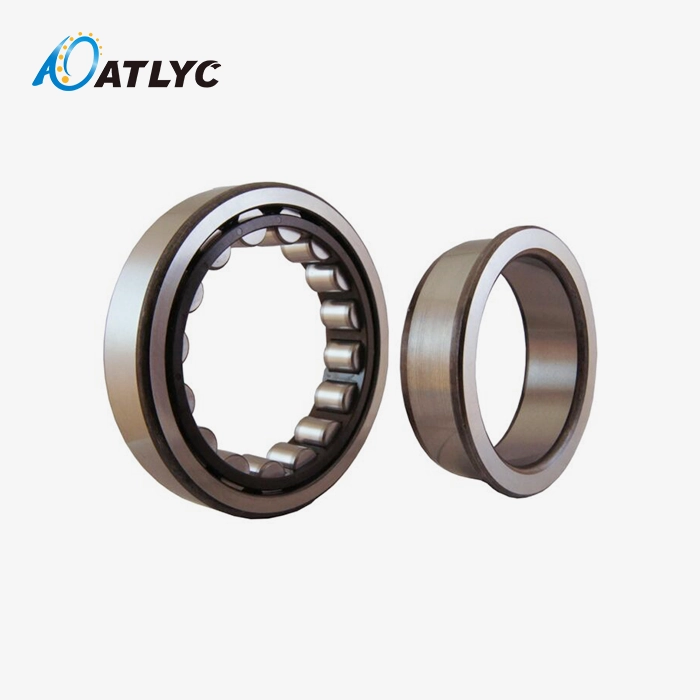
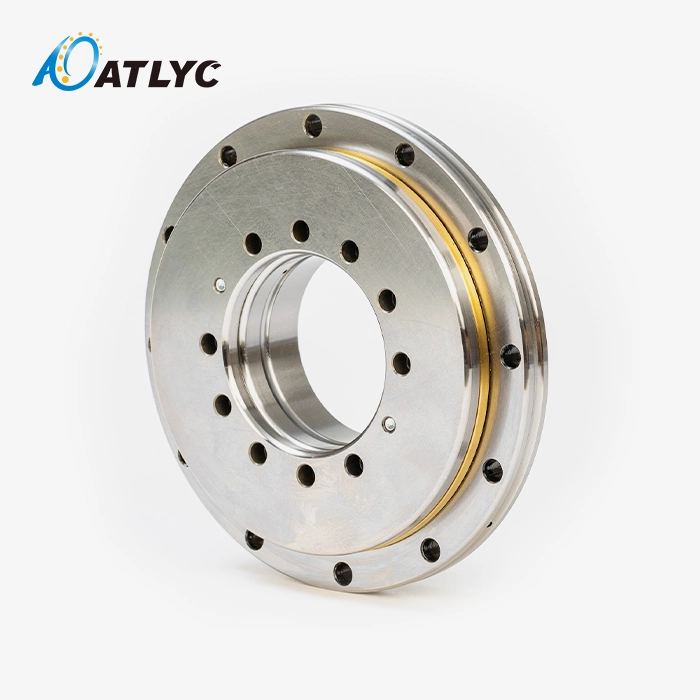
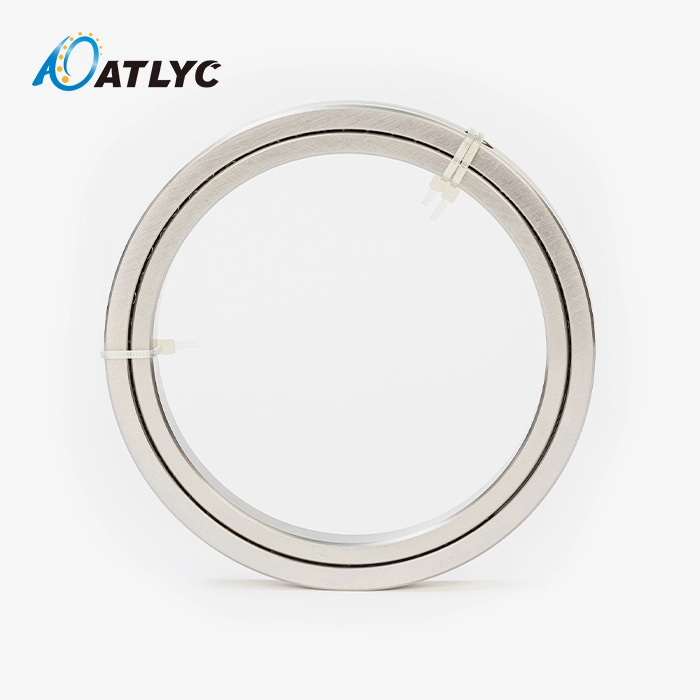
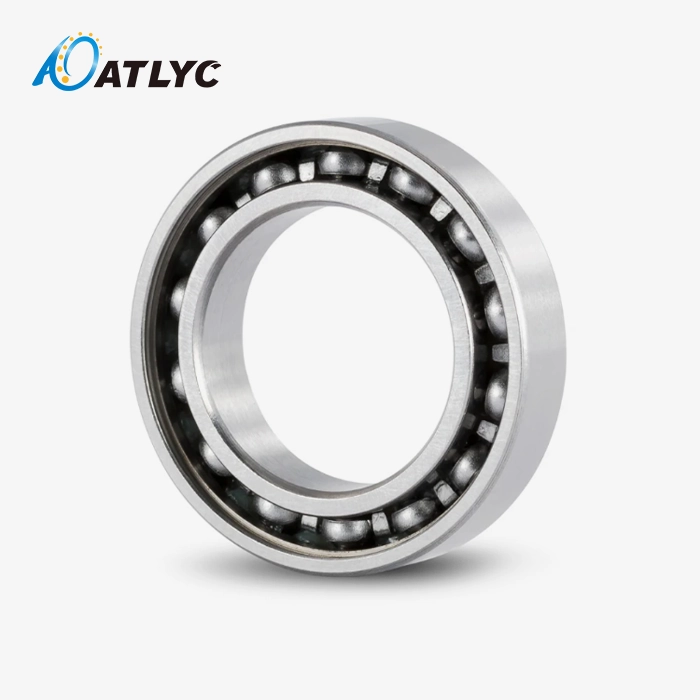
Understanding the Differences in RA Crossed Roller Bearings Will Help You Select the Right Bearing for Your OEM Application. The RA series design incorporates a separate outer ring and an inner ring combined with the cylindrical rollers, enabling them to be alternatively stacked at 90-degree angles inside a single raceway. This arrangement allows one bearing to carry the radial, axial, and moment loads simultaneously — minimizing assembly complexity while retaining nano-level accuracy. If you are a procurement manager purchasing crossed roller bearings for industrial robots, rotary tables, or automation equipment, choosing the proper specs can directly impact machine precision, service intervals, and total cost of ownership.

Understanding RA Crossed Roller Bearings: Design and Functionality
The Separable Outer Ring Design
The RA series has an outer ring that can be separated and an inner ring that is one piece. This structure makes it easier to put together and take apart for maintenance, and the solid inner ring keeps the rotational accuracy high. The system works as a single hard unit and doesn't lose its stiffness once it's been put together and clamped to the right size.
Cross-Roller Arrangement and Load Distribution
Within V-groove raceways, cylindrical wheels are placed one after the other at 90-degree angles. This setup sends force through line contact instead of point contact, which makes it much more capable of carrying weight. It used to take two separate bearings to handle different types of loads, but now only one RA bearing does it. The inner diameter is 20 mm to 350 mm, the outer diameter is 70 mm to 540 mm, and the width is 12 mm to 45 mm. The material is GCr15 or GCr15SiMn, and the accuracy classes are P6, P0, P5, P4, and P3.
Key Technical Specifications
| Parameter | RA Series Range |
|---|---|
| Inner Diameter | 20 mm – 350 mm |
| Outer Diameter | 70 mm – 540 mm |
| Width | 12 mm – 45 mm |
| Material | GCr15, GCr15SiMn |
| Accuracy Classes | P6, P0, P5, P4, P3 |
RA Crossed Roller Bearings have a thin-wall design that keeps the bearing area small without losing structural integrity. This is exactly what lightweight robotic arms and precision rotary tables need.
Key Criteria for Selecting RA Crossed Roller Bearings
Selecting the right crossed roller bearing type goes beyond matching bore size. Your application's load profile, speed range, precision requirement, and mounting constraints all influence which specification is appropriate.
Load Type and Capacity
RA crossed roller bearings are rated for combined radial, axial, and moment loads simultaneously. Before selecting a size, calculate your equivalent dynamic load, factoring in all three force directions. For robotic joints that carry cantilevered loads, moment load capacity is often the deciding variable — not just bore diameter.
Accuracy Class Selection
The accuracy class directly determines runout tolerance and positional repeatability. Here is a practical reference for matching accuracy class to application:
| Accuracy Class | Typical Application |
|---|---|
| P6 | General industrial equipment |
| P0 | Standard automation machinery |
| P5 | Precision rotary tables, CNC machines |
| P4 | Measuring instruments, medical devices |
| P3 | IC manufacturing, semiconductor stages |
For most OEM robotics and machining center applications, P5 or P4 class provides the right balance between cost and precision performance.
Dimensional Compatibility and Space Constraints
In compact automation designs, the thin-wall structure of RA bearings matters greatly. Always confirm that housing bore tolerances and shaft fit comply with bearing manufacturer specifications. Incorrect fits — especially with a separable outer ring — can reduce rigidity or cause fretting during operation.
Evaluating RA Crossed Roller Bearing Suppliers and Brands
Not all thin section crossed roller bearings are the same. Leading manufacturers like NSK, THK, IKO, and KOYO have their own qualities that make them more suited for various sorts of applications. These distinctions assist procurement teams in making better judgments about where to get products from.
Brand Comparison and Product Specialization
THK and IKO are believed by many to be the original manufacturers of crossed roller bearings. They offer a lot of scientific knowledge and assistance on how to use them. For OEM projects that need to conserve money and utilize standard sizing for a number of parts, NSK and KOYO are suitable choices. INA (Schaeffler Group) is engaged in medium-precision activities and has a wide range of products offered in European markets.
The most crucial aspects to check when choosing a Chinese crossed roller bearing manufacturer are ISO 9001 certification and IATF 16949 compliance. These two stamps prove that the company’s quality management systems fulfill the criteria for automotive and industrial usage. Luoyang Auto Bearing Co., Ltd. (ATLYC) was established in 2010 and has both certifications. It has been supplying precision bearings to OEM clients in the US, Germany, South Korea, and Turkey for 15 years.
Authorized Distribution and After-Sales Support
You may also obtain application tech assistance and safeguard your warranty terms when you purchase via recognized stores. If you are seeking a supplier of RA Crossed Roller Bearings, ask them about their testing method, failure rate statistics, and tracking records. These things will directly affect the efficiency of your manufacturing line.
Lead Time and Pricing Transparency
For big sales or custom-made sizes of crossed roller bearings, it's just as crucial to know the wait time as it is to know the unit pricing. Before negotiating a long-term supply arrangement with a supplier, make sure you acquire confirmation of their manufacturing capabilities and information on how successfully they've delivered in the past.
Installation, Maintenance, and Longevity Tips for Optimal Performance
Proper handling during installation is one of the most neglected issues in the service life of crossed roller bearings. Even a high-precision P4 class bearing will fail to do its job if it is not placed properly.
Precision Alignment During Installation
Before assembly, always clean the housing bores and shaft surfaces. For RA bearings with a removable outer ring, it is important that both ring pieces be seated uniformly before clamping force is applied. Misalignment during installation causes uneven roller contact and accelerated wear on the V-groove racetrack. Use calibrated torque tools. Use the interference fit tolerances stated by the manufacturer.
Lubrication and Contamination Control
The RA series bearings are normally supplied pre-greased with lithium soap-based grease. Specify low-dust or vacuum-compatible grease types for cleanroom conditions such as semiconductor wafer stages or medical imaging equipment. Never allow narrow raceways to run dry since fretting corrosion may occur fast on the crossing roller contact surfaces.
Proactive Maintenance Scheduling
Set inspection intervals based on machine duty cycles, not calendar time alone. Any increase in the rotational torque or decrease in the positioning precision is an early sign of preload loss in crossed roller bearings. Changing bearings before precision drops off saves very expensive downstream rework from product quality issues.
Making the Final Decision: Customized Solutions and Procurement Guidance
If typical catalog sizes don't satisfy your design needs, then bespoke crossed roller bearing solutions are required. Most reputable manufacturers may provide customized dimensions, unique accuracy classes, or sealing arrangements for a certain purpose.
Evaluating Customization Capability
Obtain tolerance charts, material certificates, and sample inspection reports to evaluate a supplier’s engineering staff. Generally, an assembly-only company won't be able to hold tolerances and turn out prototypes as rapidly as a firm that has in-house grinding and raceway finishing.
Decision Matrix for Supplier Selection
Assess each potential supplier on four dimensions: quality certification status, manufacturing capacity (workshops and CNC machines), application engineering assistance, and past delivery dependability. By weighting these elements according to the goals of your program, you will have a clearer rating than if you compared pricing alone.
Long-Term Partnership Value
For OEM operations needing precise bearings in yearly numbers, a long-term supply arrangement with a certified manufacturer will decrease procurement risk and save unit costs. The best partnerships are those that have open communication on design modifications, shared quality data, and agreed-upon escalation pathways for non-conformance occurrences.

Conclusion
ATLYC (Luoyang Auto Bearing Co., Ltd.) is an accredited firm. It has been manufacturing RA Crossed Roller Bearings for 15 years and has six production workshops. They are also ISO 9001 and IATF 16949 certified. Our crossed roller bearings are available in inner diameters from 20 mm to 350 mm and accuracy levels P6 to P3. They are utilized by OEMs in the U.S., Germany, South Korea, and others.
FAQ
1. What is the difference between RA and RB crossed roller bearings?
The RA series has a thinner outer ring wall compared to the RB series, making it the preferred choice when weight reduction and compact mounting are priorities. Both series use the same crossed roller arrangement, but the RA variant is specifically engineered for applications where space is tightly constrained.
2. Can RA crossed roller bearings handle high-speed continuous rotation?
No. Due to line contact between rollers and raceways, these bearings generate more heat than ball bearings at high speeds. They are designed for low-to-medium speed applications with high precision and stiffness requirements — typical in robotic joints, rotary tables, and measurement stages.
3. What accuracy class should I specify for a CNC rotary table?
P5 or P4 class is appropriate for most CNC machining center rotary tables. P3 class is reserved for semiconductor and optical instrument applications where nanometer-level repeatability is needed.
4. What are standard lead times for bulk orders?
Standard catalog sizes typically ship within 2–4 weeks. Custom dimensions or special accuracy classes may require 4–8 weeks depending on volume and complexity.
5. How do I verify a supplier's quality certifications?
Request copies of current ISO 9001 and IATF 16949 certificates with valid issue and expiry dates. Cross-reference the certification body against accredited registrar databases to confirm authenticity.
Partner with ATLYC for Precision RA Crossed Roller Bearings
The RA Crossed Roller Bearings have a thinner outer ring wall than the RB series. This makes it the better choice when mounting space is limited, and weight reduction is important. The crossed roller arrangement is the same in both types, but the RA version is designed to work in places with limited room. Email our engineering team at auto@lyautobearing.com right now to get a price or talk about making unique specs for your program.
References
1. Harris, T. A., & Kotzalas, M. N. Rolling Bearing Analysis: Essential Concepts of Bearing Technology. Taylor & Francis, 2006.
2. SKF Group. SKF Bearing Catalogue: Technical Reference for Rolling Bearings. SKF Publication, 2018.
3. NSK Ltd. Precision Machine Components Catalogue: Crossed Roller Bearings. NSK Technical Publication, 2020.
4. International Organization for Standardization. ISO 492: Rolling Bearings — Radial Bearings — Geometrical Product Specifications. ISO, 2014.
5. IATF. IATF 16949:2016 — Quality Management System Requirements for Automotive Production and Relevant Service Parts Organizations. IATF, 2016.
6. Hamrock, B. J., Schmid, S. R., & Jacobson, B. O. Fundamentals of Machine Elements. McGraw-Hill, 2005.
Learn about our latest products and discounts through SMS or email