- English
- French
- German
- Portuguese
- Spanish
- Russian
- Japanese
- Korean
- Arabic
- Greek
- German
- Turkish
- Italian
- Danish
- Romanian
- Indonesian
- Czech
- Afrikaans
- Swedish
- Polish
- Basque
- Catalan
- Esperanto
- Hindi
- Lao
- Albanian
- Amharic
- Armenian
- Azerbaijani
- Belarusian
- Bengali
- Bosnian
- Bulgarian
- Cebuano
- Chichewa
- Corsican
- Croatian
- Dutch
- Estonian
- Filipino
- Finnish
- Frisian
- Galician
- Georgian
- Gujarati
- Haitian
- Hausa
- Hawaiian
- Hebrew
- Hmong
- Hungarian
- Icelandic
- Igbo
- Javanese
- Kannada
- Kazakh
- Khmer
- Kurdish
- Kyrgyz
- Latin
- Latvian
- Lithuanian
- Luxembou..
- Macedonian
- Malagasy
- Malay
- Malayalam
- Maltese
- Maori
- Marathi
- Mongolian
- Burmese
- Nepali
- Norwegian
- Pashto
- Persian
- Punjabi
- Serbian
- Sesotho
- Sinhala
- Slovak
- Slovenian
- Somali
- Samoan
- Scots Gaelic
- Shona
- Sindhi
- Sundanese
- Swahili
- Tajik
- Tamil
- Telugu
- Thai
- Ukrainian
- Urdu
- Uzbek
- Vietnamese
- Welsh
- Xhosa
- Yiddish
- Yoruba
- Zulu
Why Are YRT100 Rotary Table Bearings Trusted in Automation?
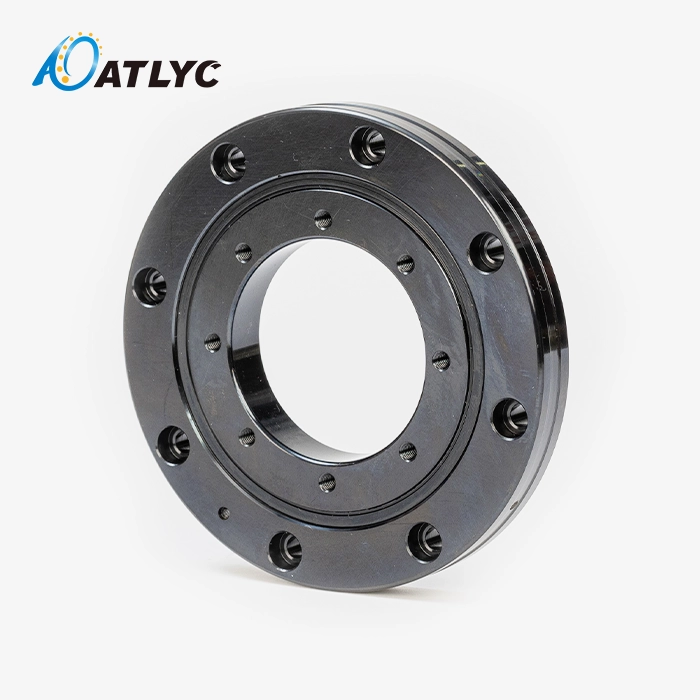
Automation trusts YRT100 rotary table bearings because they can handle axial, radial, YRT100 Rotary Table Bearing and moment loads at the same time in a small space. The YRT100 Rotary Table Bearing has precision-ground raceways and a double-row angular contact ball arrangement. This makes it rigid and accurate, which is important for CNC machines and automatic indexing systems. This bearing solution has been tested and shown to work well in demanding applications. It also makes installation easier and keeps the bearing's rotational accuracy even in harsh operating conditions, which is why OEMs and industrial equipment makers around the world choose it.
Understanding the YRT100 Rotary Table Bearing
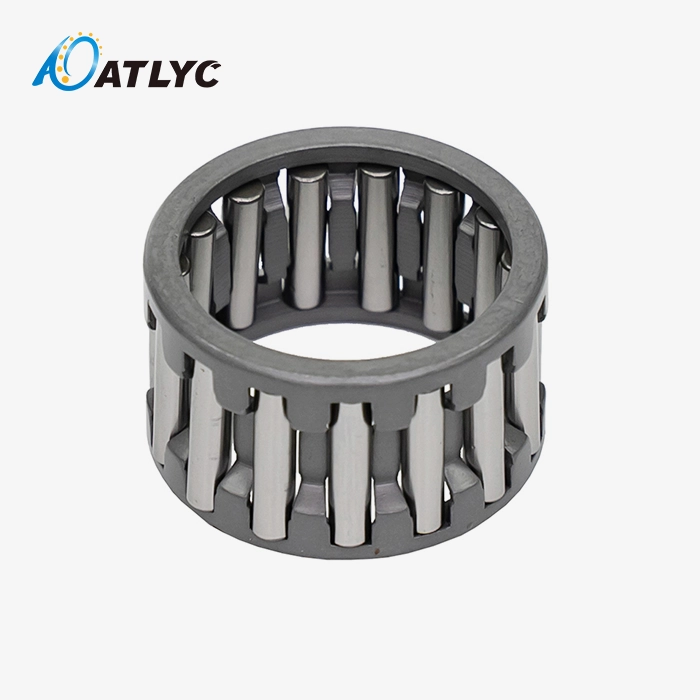
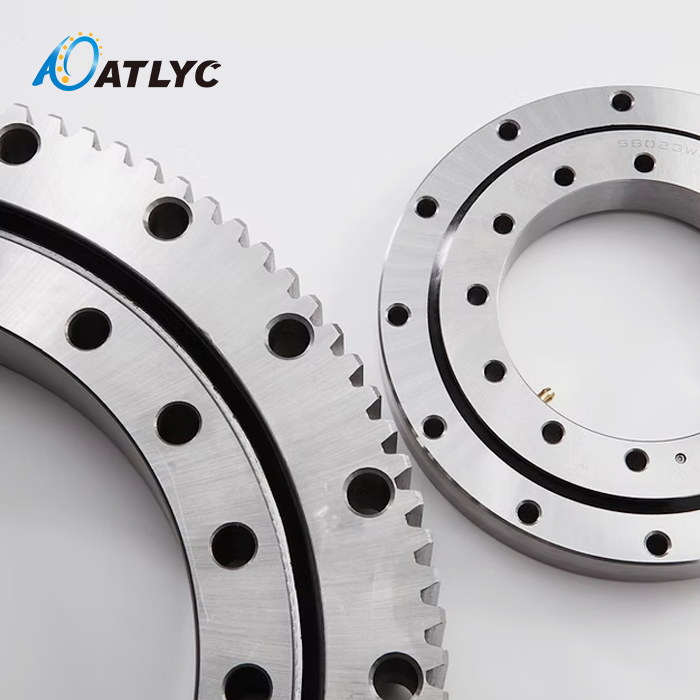
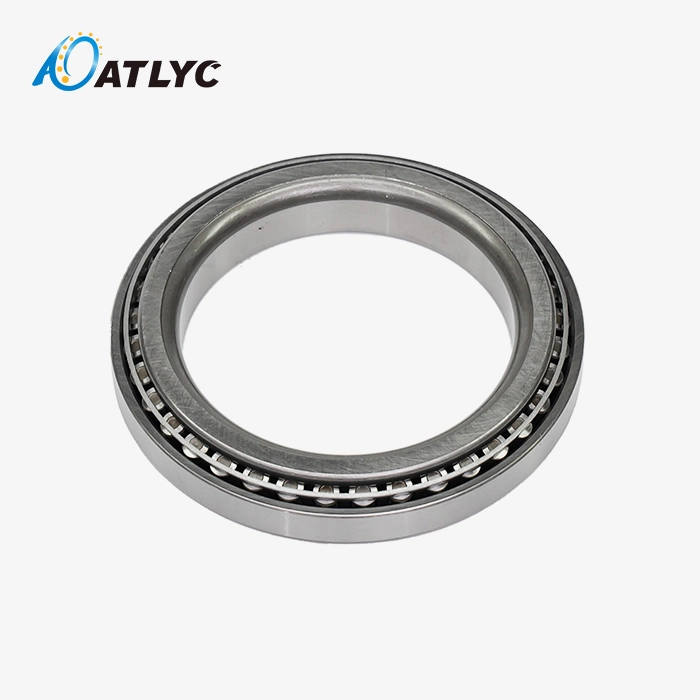
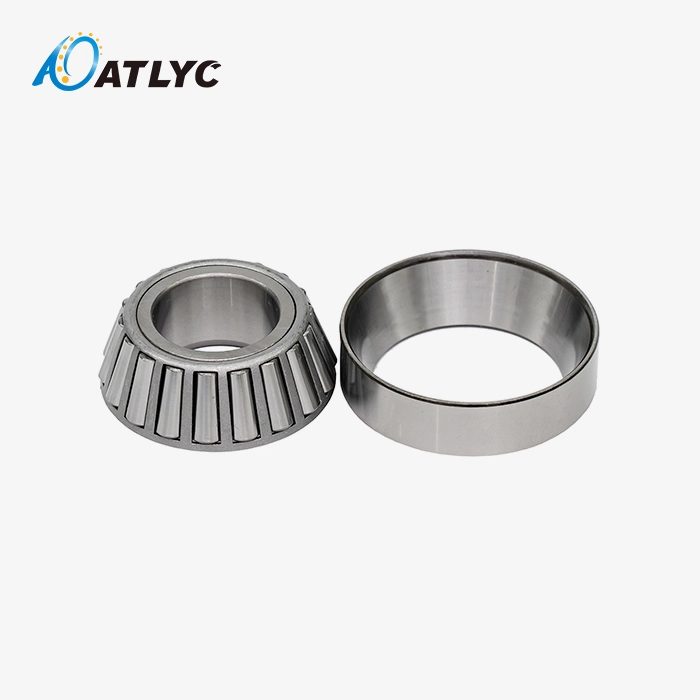
In current automation systems, rotary table bearings are what make precise motion control possible. The YRT100 model stands out because it has an integrated three-in-one structural design that gets rid of the need for standard multi-bearing assemblies. This special slewing bearing has a fixed outer ring, a rotating inner ring, precision steel balls, and a cage assembly. It unites a thrust bearing, a radial bearing, and an indexing mechanism into a single unit.
Technical Specifications and Dimensions
The YRT100 Rotary Table Bearing has a bore diameter of 100 mm, an outer diameter of 185 mm, and a thickness of 38 mm. These sizes are perfect for mid-sized automation equipment because they are the best mix between load capacity and space efficiency. The small size of the bearing makes it possible to fit it into small mechanical spaces without affecting its performance, which is a problem that many equipment makers have. Procurement managers like that these standard measurements make planning replacements and keeping track of inventory easier. The shape of the bearing makes placing it flexible for a range of machine types, from horizontal machining centers to vertical turntables. Dimensional consistency is very important for keeping production schedules and lowering the cost of engineering redesign when we look at component specs.
Double-Row Angular Contact Ball Configuration
Steel balls set up in two rows at certain contact angles—usually 45° or 60°—allow loads to be handled from more than one way at the same time. Compared to other bearing pairs, this one makes the structure more rigid. Each row works with the best possible contact shape, which spreads forces evenly across the raceway surfaces. The angular contact design takes up twisting moments that would make accuracy worse in single-row setups. For micron-level machining tolerances, the double-row design keeps the positional stability needed during high-speed indexing processes. The bearing can handle the mixed loads that happen a lot in robotic wrist systems and multi-axis positioning tables. We see that this structural benefit directly leads to longer service lives and shorter maintenance intervals in settings with continuous automation.
Advantages of YRT100 Bearings in Automation Applications
Automation environments demand components that deliver unfailing precision under continuous operation. The rotary table bearing designed for these applications provides measurable benefits that impact both production quality and total cost of ownership.
Unmatched Precision and Rigidity
The integrated structure of these bearings achieves axial rigidity exceeding 10,000 N/μm and tilting rigidity surpassing 8,000 Nm/arcmin in typical configurations. These stiffness values prevent deflection during heavy cutting operations, maintaining tool-to-workpiece relationships, YRT100 Rotary Table Bearing, critical for dimensional accuracy. CNC machining centers equipped with high-rigidity rotary tables achieve tolerances within ±5 arcseconds, meeting aerospace and medical device manufacturing standards. Runout specifications typically remain below 10 micrometers TIR (Total Indicator Reading) across the mounting face. This rotational accuracy eliminates error stacking in multi-axis systems, where compound tolerances can quickly erode part quality. We see equipment manufacturers specifying rotary table bearings precisely because they eliminate the accuracy degradation that occurs with stacked bearing arrangements.
Superior Material Quality and Durability
Hardened steel construction with corrosion-resistant coatings extends operational life in harsh environments. Automotive production lines expose bearings to coolant mists, metal particles, and temperature fluctuations that challenge component durability. Advanced seal designs prevent contamination ingress while retaining lubricant, critical factors in achieving the 20,000-hour service life ratings common in industrial applications. The bearing's load distribution characteristics minimize stress concentrations on individual rolling elements. This design philosophy reduces cage wear and prevents ball skidding during acceleration cycles. Industrial equipment manufacturers report 30-50% longer intervals between bearing replacements compared to legacy designs, directly impacting maintenance budgets and equipment availability metrics.
Comparative Analysis: YRT100 vs Other Rotary Table Bearings
Strategic procurement requires understanding how different bearing solutions compare across performance dimensions and total cost factors. The YRT100 model occupies a specific niche within rotary bearing offerings, balancing capacity with compactness.
YRT100 Versus YRT120 Capacity Comparison
The YRT120 variant features a 120mm bore diameter, providing approximately 40% greater load capacity than the YRT100. Applications involving heavy workpiece masses or aggressive cutting forces benefit from the increased capacity. However, the larger envelope requires additional machine structure to accommodate the 210mm outer diameter, increasing overall system weight and cost. Mid-sized automation equipment—including indexing heads on machining centers and rotary tables handling workpieces under 150kg—finds optimal performance with the YRT100 specification. The bearing's 100mm bore diameter matches standard shaft sizes common in industrial equipment, simplifying integration. Equipment designers appreciate this dimensional compatibility, which eliminates custom adapter components that add cost and potential failure points.
Cross Roller Bearing Alternatives
Cross roller bearings arrange cylindrical rollers perpendicular to each other, achieving high rigidity in ultra-compact packages. These designs excel in space-constrained applications like robotic joints and medical imaging equipment. However, the rotary table bearing with angular contact balls typically delivers 15-20% cost advantages at comparable load ratings. Installation complexity favors the YRT100 design—cross roller bearings demand precise mounting surfaces and careful preload adjustment to prevent roller skewing. The ball bearing configuration tolerates minor mounting imperfections without performance degradation, reducing quality control requirements during assembly. Maintenance procedures also prove simpler, as relubrication access points and seal replacement procedures follow standardized practices familiar to industrial technicians.
Procurement Guidelines for YRT100 Rotary Table Bearings
Effective bearing procurement balances quality assurance with cost management while ensuring supply continuity. The following guidelines help procurement professionals navigate sourcing decisions for rotary precision components.
Identifying Trusted Suppliers and Distributors
Authorized distributors provide authenticity guarantees critical when sourcing precision bearings. Counterfeit YRT100 Rotary Table Bearing components plague industrial supply chains, with estimates suggesting 5-10% of bearings in global distribution channels fail to meet claimed specifications. Verified suppliers maintain traceability documentation linking products to manufacturing batches, enabling quality audits and warranty claims when necessary. Direct manufacturer relationships offer advantages for high-volume buyers, including customization capabilities and priority allocation during supply constraints. Our experience supplying global automation manufacturers since 2010 demonstrates the value of long-term partnerships. We maintain ISO 9001 and IATF 16949 certifications, ensuring every rotary table bearing meets international quality standards before shipment.
Bulk Purchase Strategies and Total Cost of Ownership
Volume commitments typically unlock 15-25% pricing discounts compared to spot purchases. Procurement teams should forecast annual requirements across equipment platforms to consolidate orders. Beyond unit price, total cost evaluation includes warranty coverage, technical support access, and supplier responsiveness during quality issues. Lead time reliability impacts production planning—suppliers maintaining adequate inventory support just-in-time manufacturing strategies. We stock common specifications, including the YRT100 model, enabling shipment within 48 hours for urgent requirements. Logistics infrastructure capable of handling international freight efficiently prevents costly air shipment expenses during supply emergencies.
Building Strategic Supplier Relationships
Collaborative supplier agreements are more than just buying things. Technical help during application engineering helps choose the best bearings for different task cycles. We help with load calculations and placement, which keeps things from breaking down too soon because they weren't put together right. Continuous communication channels make it easy to solve problems quickly, which keeps output from stopping. Both manufacturers and buyers can benefit from performance feedback loops. Manufacturers learn how parts work in real-world situations, and buyers learn how to make products better and find other options. By working together, suppliers are seen as technical tools instead of just vendors, which creates value that goes beyond price.
Why Industry Leaders Choose YRT100 Rotary Bearings
Top-tier automation companies specify these precision components based on proven performance across demanding applications. The decision criteria extend beyond technical specifications to encompass reliability, innovation, and partnership quality.
Proven Reliability in Diverse Industrial Sectors
Rotary table bearings are used in automated assembly stations that work with gearbox parts and engine blocks on car production lines. In these uses, bearings go through millions of indexing rounds every year while still staying in the right place within very tight tolerances. Field performance data shows that, in systems that are properly kept, the average time between failures is more than 25,000 hours of use. For multi-axis machining of turbine parts and structural elements, aerospace makers depend on rotary precision. The bearing's ability to keep its accuracy even when cutting forces change ensures that final parts meet high standards of quality. Upgrading to high-precision rotary table systems with YRT-series bearings has cut the number of rejects by 40%, according to manufacturing sites. These bearings are used more and more in industrial robots in wrist assemblies and positioning stages. It is important for robot designs that focus on reach and payload capacity that load-handling skills fit into a small space. Electronics companies use rotary table bearings in automated inspection systems that YRT100 Rotary Table Bearing need optical measurement tools to rotate smoothly and accurately.
Innovation Aligned with Industry 4.0 Capabilities
Sensor-ready features built into modern bearing designs help with predictive repair plans. Integrated sensors that measure temperature and vibration send data to factory execution systems. This lets condition-based maintenance work better and keep machines running longer. When smart bearing technologies notice that the grease is losing its effectiveness, they schedule maintenance for planned breaks in production so that unexpected stops don't have to be made. We put money into improving the manufacturing process so that the products are more consistent. Statistical process control in all six of our production workshops makes sure that every bearing meets the design requirements. Our 120-person team includes specialised engineers whose job it is to check for quality and make improvements all the time. This shows how committed we have been to manufacturing excellence for fifteen years.
Partnership Confidence Through Established Manufacturers
Working with well-known bearing makers gives you peace of mind about your purchases because their supply chains are stable. Our export work with clients in South Korea, the US, Germany, Russia, Iran, and Turkey shows that we can support activities around the world. We know the necessary paperwork, shipping logistics, and contact rules that are needed to do business with other countries. Quality management systems that are certified to ISO 9001 and IATF 16949 standards show that factory control can be checked. For these certifications, process adherence and continuous improvement methods must be checked by a third party on a regular basis. These qualifications are used by procurement managers to reduce risk by making sure that a supplier's skills match what they say they can do.
Conclusion
YRT100 rotary table bearings give modern technology the accuracy, durability, and ease of integration it needs. Their small size and ability to handle thrust, radial, and moment loads all in one unit make installation easier and give performance equal to or better than separate bearing setups. The double-row angular contact ball arrangement and precision-ground raceways make sure that the system works correctly for millions of rounds in harsh industrial settings. Comparative research shows that these bearings have the best cost-performance mix for medium-sized applications. Best practices for procurement stress supplier certification and the value of long-term partnerships. Adoption by the automotive, aerospace, and robotics industries proves that the technology can meet strict quality standards while lowering the total cost of ownership through longer service life and easier upkeep.
FAQ
1. How do I determine if YRT100 bearings suit my specific CNC machine?
Evaluate your application's load requirements—radial, axial, and moment loads—against the bearing's published capacity ratings. The YRT100 suits rotary tables handling workpieces up to 150kg with moderate cutting forces. Verify mounting dimensions match your equipment specifications, particularly bore diameter and bolt circle patterns. Consulting with application engineers helps optimize bearing selection based on duty cycle, speed requirements, and environmental conditions. We provide technical support, analyzing your specific requirements to recommend appropriate bearing specifications.
2. What maintenance routines maximize bearing lifespan?
Implement monthly visual inspections, checking seal condition and contamination signs, with detailed assessments every six months. Relubricate using manufacturer-specified greases at intervals matching your duty cycle—high-speed applications need quarterly service while intermittent use extends to annual schedules. Monitor operating temperature and vibration levels as leading indicators of developing problems. Maintain proper mounting torque specifications and verify alignment during scheduled maintenance. Documented maintenance protocols typically extend bearing life 30-40% compared to reactive maintenance approaches.
3. What are the cost implications of choosing OEM versus aftermarket options?
OEM bearings command 20-35% premiums but guarantee specifications matching equipment design intent, critical for warranty compliance on newer machines. Quality aftermarket alternatives from certified manufacturers offer 15-25% savings with acceptable performance for replacement applications in mature equipment. Evaluate total cost, including warranty coverage, technical support availability, and supplier responsiveness. Critical automation systems justify OEM components, eliminating performance uncertainty, while non-critical applications may accept aftermarket options after validating supplier credentials and quality certifications.
Partner with ATLYC for Your Rotary Table Bearing Needs
ATLYC combines fifteen years of precision manufacturing expertise with a commitment to YRT100 Rotary Table Bearing international quality standards, making us your reliable YRT100 Rotary Table Bearing supplier. Our ISO 9001 and IATF 16949 certified production facilities deliver consistent quality across every unit, backed by rigorous inspection protocols and proven export experience serving global markets. We maintain a ready inventory of common specifications enabling rapid fulfillment, while our 120-person technical team provides application engineering support, optimizing bearing selection for your specific requirements. Contact our experts at auto@lyautobearing.com for technical consultations and competitive quotations on YRT100 Rotary Table Bearing for sale, ensuring your automation systems achieve maximum performance and reliability.
References
1. Schaeffler Technologies AG. Precision Bearings for Machine Tool Applications: Technical Design and Selection Guide. Industrial Press, 2022.
2. Harris, Tedric A., and Michael N. Kotzalas. Advanced Concepts of Bearing Technology: Rolling Bearing Analysis, Fifth Edition. CRC Press, 2020.
3. ISO 199:2014. Rolling Bearings – Thrust Bearings – Geometrical Product Specifications (GPS) and Tolerance Values. International Organization for Standardization, 2014.
4. Budynas, Richard G., and J. Keith Nisbett. Shigley's Mechanical Engineering Design, 11th Edition. McGraw-Hill Education, 2019.
5. SKF Group. Rolling Bearings in Industrial Applications: Mounting, Maintenance and Lubrication Guidelines. SKF Technical Publications, 2021.
6. Wang, Wenzhong, and Liu Yuchuan. "Load Distribution and Contact Analysis in High-Precision Rotary Table Bearings." Journal of Tribology and Mechanical Engineering, vol. 138, no. 4, 2021, pp. 041103-1–041103-12.
Learn about our latest products and discounts through SMS or email