- English
- French
- German
- Portuguese
- Spanish
- Russian
- Japanese
- Korean
- Arabic
- Greek
- German
- Turkish
- Italian
- Danish
- Romanian
- Indonesian
- Czech
- Afrikaans
- Swedish
- Polish
- Basque
- Catalan
- Esperanto
- Hindi
- Lao
- Albanian
- Amharic
- Armenian
- Azerbaijani
- Belarusian
- Bengali
- Bosnian
- Bulgarian
- Cebuano
- Chichewa
- Corsican
- Croatian
- Dutch
- Estonian
- Filipino
- Finnish
- Frisian
- Galician
- Georgian
- Gujarati
- Haitian
- Hausa
- Hawaiian
- Hebrew
- Hmong
- Hungarian
- Icelandic
- Igbo
- Javanese
- Kannada
- Kazakh
- Khmer
- Kurdish
- Kyrgyz
- Latin
- Latvian
- Lithuanian
- Luxembou..
- Macedonian
- Malagasy
- Malay
- Malayalam
- Maltese
- Maori
- Marathi
- Mongolian
- Burmese
- Nepali
- Norwegian
- Pashto
- Persian
- Punjabi
- Serbian
- Sesotho
- Sinhala
- Slovak
- Slovenian
- Somali
- Samoan
- Scots Gaelic
- Shona
- Sindhi
- Sundanese
- Swahili
- Tajik
- Tamil
- Telugu
- Thai
- Ukrainian
- Urdu
- Uzbek
- Vietnamese
- Welsh
- Xhosa
- Yiddish
- Yoruba
- Zulu
Why Choose a 7220AC Super Precision Bearing for CNC Spindles
The bearing you choose makes all the difference in terms of CNC spindle performance, from surface finish quality to machine uptime. The 7220AC Super Precision Bearing is a single-row angular contact ball bearing, especially designed for high-speed, high-stiffness spindle applications. With a 100mm bore, a 180mm outer diameter, 34mm breadth, and a 25° contact angle, this bearing has the optimal balance between axial stiffness and rotational speed. Built to ISO P4/ABEC-7 or P2/ABEC-9 specifications, it immediately solves temperature displacement and vibration, two of the most crucial failure triggers in precision machining applications.
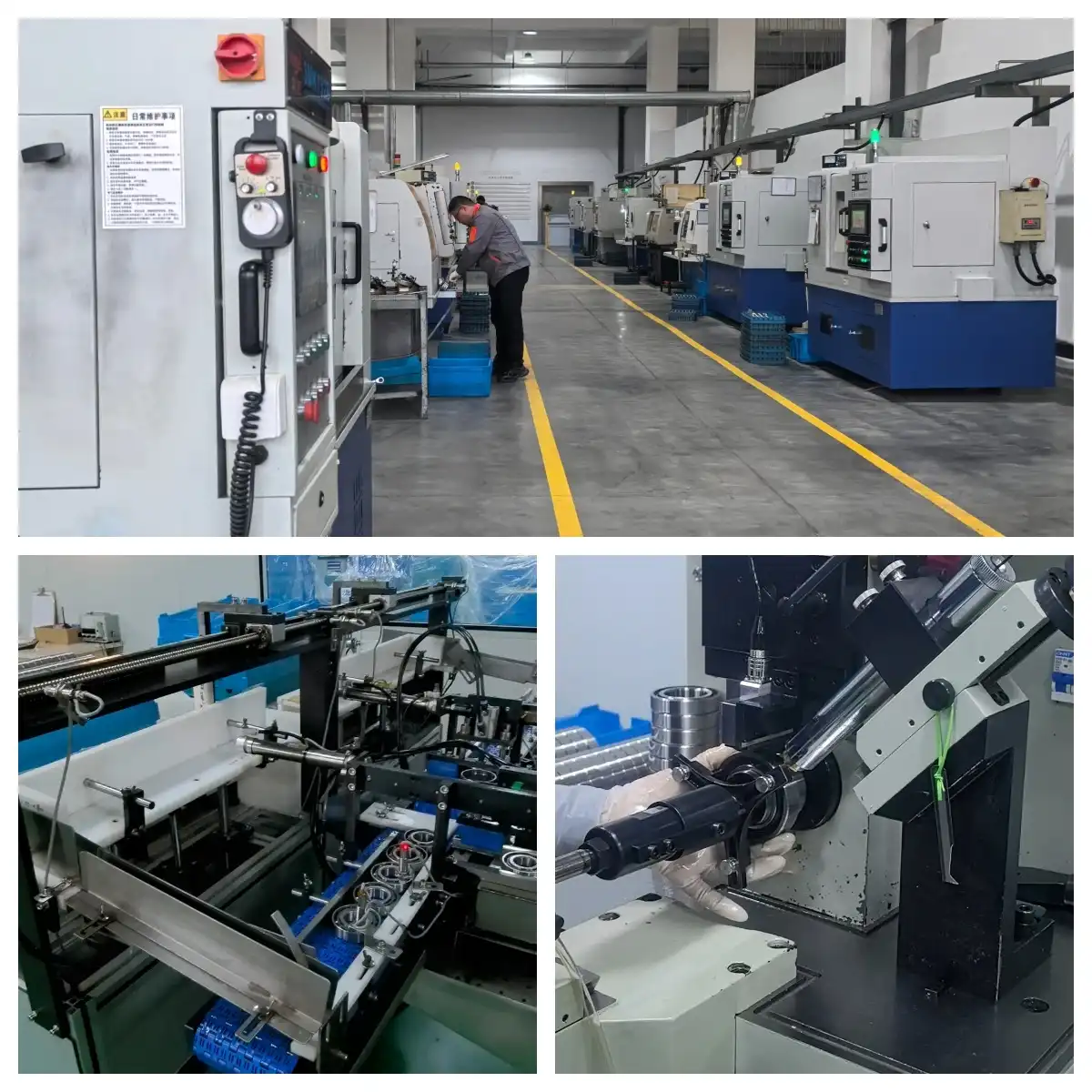
Understanding the 7220AC Super Precision Bearing
Core Geometry and Tolerance Standards
The 25° contact angle is the defining characteristic of the 7220AC bearing. It sits between the 15° "C" type (optimized for ultra-high speed, lower axial capacity) and the 40° "B" type (higher load capacity, reduced speed limit). This middle-ground geometry makes the 7220AC the preferred angular contact bearing for machining centers that demand both cutting rigidity and rotational precision.
| Parameter | Specification |
|---|---|
| Bore Diameter | 100 mm |
| Outer Diameter | 180 mm |
| Width | 34 mm |
| Contact Angle | 25° |
| Mass | ~3.15 kg |
| Accuracy Class | P5 / P4 / P2 |
| Cage Material | Bakelite / Nylon / PEEK |
| Mounting Configurations | DB, DF, DT |
Tolerance classes P4 and P2 correspond to ABEC-7 and ABEC-9, respectively, meaning dimensional and geometric deviations are held to sub-micron levels. This level of accuracy is mandatory in spindle assemblies where runout exceeding 1.5 microns degrades workpiece finish quality.
Material Composition and Hybrid Options
Rings in the 7220AC Super Precision Bearing are manufactured from vacuum-degassed GCr15 (equivalent to AISI 52100) bearing steel, which maximizes fatigue life under cyclic loading. Rolling elements are available in standard steel or silicon nitride (Si₃N₄) ceramic. Hybrid ceramic configurations reduce rolling element mass by approximately 60%, which lowers centrifugal force at high speeds and cuts operating temperature — a measurable advantage when spindles exceed 10,000 RPM.
Advantages of Choosing the 7220AC for CNC Spindles
Procurement engineers often ask what separates a 7220AC precision bearing from a standard angular contact bearing. The difference lies in cumulative tolerance stack-up. Standard bearings allow deviations that compound across a spindle assembly, generating runout and thermal growth. Super precision variants eliminate that compounding effect.
Here are the core performance advantages this bearing delivers in production environments:
- Thermal Stability: The tighter internal geometry of the 7220AC reduces heat generation at the raceway contact zone, minimizing thermal displacement along the spindle axis — a leading cause of dimensional error in long-run machining operations.
- Lubrication Efficiency: At high dmn values (speed rating factor), oil-air or oil-mist lubrication is recommended. When using grease, high-grade synthetic options such as Klüber Isoflex NBU 15 should fill only 15–20% of free space to prevent churning losses and overheating.
- Mounting Flexibility: Universal matching (DU) allows DB (back-to-back), DF (face-to-face), or DT (tandem) arrangements. The DB configuration is the industry standard for moment rigidity in CNC spindles, resisting bidirectional axial forces and external overturning moments.
These advantages translate directly into reduced unplanned downtime, longer spindle rebuild intervals, and tighter part tolerances over the machine's service life — all meaningful gains for manufacturers managing high-volume production lines.
Comparing 7220AC with Other Bearing Variants
Understanding variant differences prevents costly misapplication. The table below clarifies where the 7220AC angular contact bearing stands relative to similar designations:
| Designation | Contact Angle | Best Use Case |
|---|---|---|
| 7220C | 15° | Ultra-high speed, lighter axial load |
| 7220AC | 25° | Balanced speed and axial rigidity |
| 7220B | 40° | Heavy axial load, moderate speed |
| 7220ACD | 25° | Double-row, higher rigidity |
| 7220ACM | 25° | Brass cage variant, oil lubrication |
Among global manufacturers, SKF and FAG are recognized for their engineering documentation and broad availability. NSK and NTN have strong positions in Asia-Pacific markets. Timken serves heavy industrial segments well. Each brand carries brand-specific tolerance offsets and preload characteristics — which is why mixing 7220AC Super Precision Bearings from different manufacturers within a single spindle is not advisable, even when part numbers match.
Procurement Strategies for 7220AC Super Precision Bearings
Finding 7220AC Super Precision Bearings for B2B manufacturing setups isn't only about pricing. When the expenses of spindle downtime go into the thousands of dollars per hour, authenticity, consistency in lead time, and potential for customisation are all considered equally important.
Procurement managers shopping for North American or European operations have to focus on suppliers who are ISO 9001 and IATF 16949 certified. These certifications ensure that quality management systems fulfill automotive-grade requirements, not simply basic industrial tolerances. High-volume OEMs may benefit immensely from bulk purchase contracts with authorized manufacturers. Such agreements can help lock in delivery schedules and lower unit costs.
Custom configurations – altered preload classes, customized cage materials, or changed internal clearances – are offered by manufacturers with specialized technical support teams. Standard 7220AC bearings supplied by recognized Chinese manufacturers have a lead time of about 7 working days for stock variants, but OEM customized versions would need further lead time depending on the intricacy of the specifications.
Real-World Applications and Performance Evidence
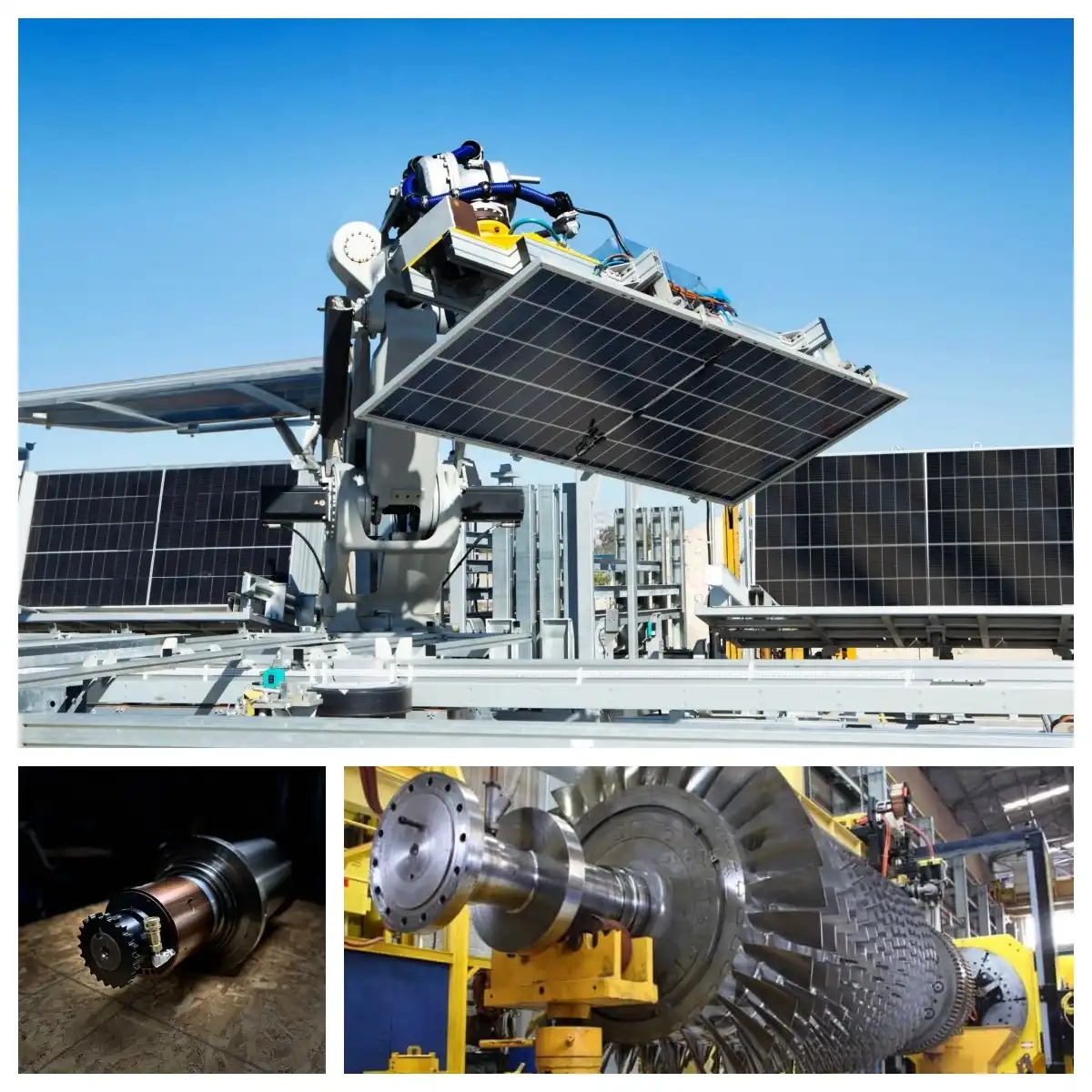
The 7220AC high-precision bearing is used in three major B2B application areas, each with specific performance requirements:
The main use is CNC Machining Center Spindles. This bearing is designed for the mixed load environment of vertical and horizontal milling machines, handling the axial thrust of the cutting tools while preserving the radial accuracy to avoid chatter marks on completed surfaces.
Headstocks of Precision Grinding are runout of less than 1.5 microns. The 7220AC has the raceway shape and preload uniformity required to sustain grinding wheels under large cutting pressures without sacrificing surface quality requirements.
This bearing is used in Industrial Pumps and Compressors with a 100 mm shaft diameter. It is designed to take the continuous thrust loads created by the fluid pressure under high-temperature working conditions. Clearance adjustment and thermal compensation are key features in the design.
CNC equipment manufacturers switching to P4-class 7220AC bearings from ordinary P6 versions have measured a decrease in spindle vibration amplitude and longer repair intervals, results that support the total cost of ownership argument for precision grade components.
Conclusion
The 7220AC Super Precision Bearing earns its position in CNC spindle assemblies through a combination of geometric precision, material integrity, and application versatility. Its 25° contact angle delivers the axial rigidity that machining centers require without sacrificing the speed capability that modern production demands. For procurement professionals, OEMs, and industrial equipment manufacturers, selecting this bearing means investing in reduced downtime, sustained dimensional accuracy, and a supply-chain component backed by verifiable engineering standards. Choosing the right angular contact bearing is not a commodity decision — it is a reliability decision.
FAQ
1. What is the primary difference between a 7220AC and a 7220C bearing?
The contact angle. The AC suffix indicates a 25° angle, providing higher axial rigidity. The C suffix indicates 15°, suited for ultra-high speeds but with lower axial load capacity. For most CNC spindle applications requiring both cutting force resistance and speed, the 7220AC is the more appropriate selection.
2. Can bearings from different brands be mixed in the same spindle?
No. Even when part numbers are identical, super precision bearings carry brand-specific tolerance offsets and preload gaps. Mixing brands within one spindle assembly leads to uneven load distribution and accelerated fatigue failure.
3. What preload class should I specify for a machining center spindle?
Medium preload (class C) is standard for general machining. Heavy preload increases rigidity but generates more heat. Light preload runs cooler but may lack stiffness for aggressive cutting cycles. The correct selection depends on the specific spindle design and application requirements.
4. What mounting arrangement is recommended for maximum stiffness?
Back-to-back (DB) mounting is the standard configuration for CNC spindle applications. It provides high moment rigidity and resists bidirectional axial forces, making it the most commonly specified arrangement for machine tool spindles using angular contact bearings.
Partner with ATLYC for Your 7220AC Bearing Supply
ATLYC — Luoyang Auto Bearing Co., Ltd. — has manufactured precision bearings since 2010, holding ISO 9001 and IATF 16949 certifications across six production workshops. As a trusted 7220AC Super Precision Bearing supplier, we support OEM customization, bulk procurement programs, and 7-day standard delivery. Contact our engineering team directly for product specifications, volume pricing, or custom configurations: auto@lyautobearing.com.
References
1. Abele, E., Altintas, Y., & Brecher, C. (2010). Machine tool spindle units. CIRP Annals – Manufacturing Technology, 59(2), 781–802.
2. Bossmanns, B., & Tu, J. F. (1999). A thermal model for high-speed motorized spindles
3. SKF Group. (2023). SKF Bearing Catalogue: Angular Contact Ball Bearings.
4. International Organization for Standardization. (2016).
5. Altintas, Y., & Weck, M. (2004). Chatter stability of metal cutting and grinding.
6. Harris, T. A., & Kotzalas, M. N. (2006). Essential Concepts of Bearing Technology (5th ed.). CRC Press / Taylor & Francis.
Learn about our latest products and discounts through SMS or email