- English
- French
- German
- Portuguese
- Spanish
- Russian
- Japanese
- Korean
- Arabic
- Greek
- German
- Turkish
- Italian
- Danish
- Romanian
- Indonesian
- Czech
- Afrikaans
- Swedish
- Polish
- Basque
- Catalan
- Esperanto
- Hindi
- Lao
- Albanian
- Amharic
- Armenian
- Azerbaijani
- Belarusian
- Bengali
- Bosnian
- Bulgarian
- Cebuano
- Chichewa
- Corsican
- Croatian
- Dutch
- Estonian
- Filipino
- Finnish
- Frisian
- Galician
- Georgian
- Gujarati
- Haitian
- Hausa
- Hawaiian
- Hebrew
- Hmong
- Hungarian
- Icelandic
- Igbo
- Javanese
- Kannada
- Kazakh
- Khmer
- Kurdish
- Kyrgyz
- Latin
- Latvian
- Lithuanian
- Luxembou..
- Macedonian
- Malagasy
- Malay
- Malayalam
- Maltese
- Maori
- Marathi
- Mongolian
- Burmese
- Nepali
- Norwegian
- Pashto
- Persian
- Punjabi
- Serbian
- Sesotho
- Sinhala
- Slovak
- Slovenian
- Somali
- Samoan
- Scots Gaelic
- Shona
- Sindhi
- Sundanese
- Swahili
- Tajik
- Tamil
- Telugu
- Thai
- Ukrainian
- Urdu
- Uzbek
- Vietnamese
- Welsh
- Xhosa
- Yiddish
- Yoruba
- Zulu
Why Choose RA5008UUCC0 Cross Roller Bearing for Automation?
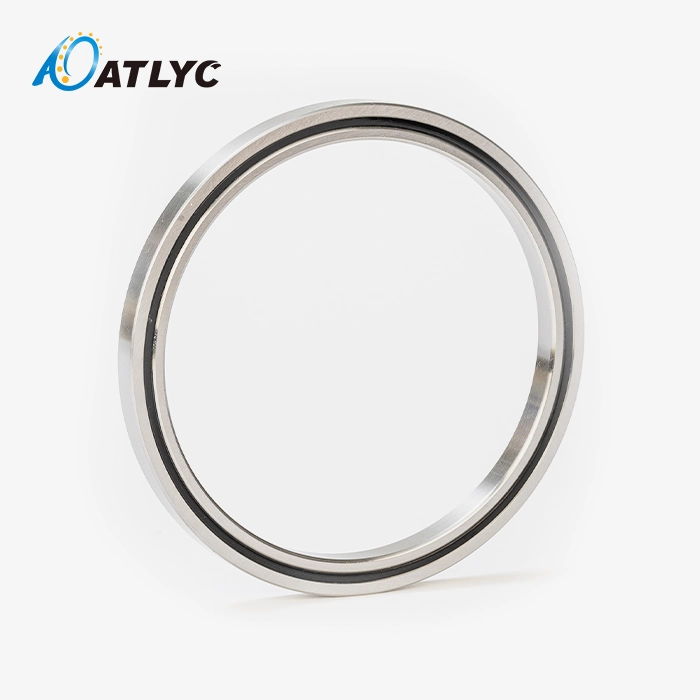
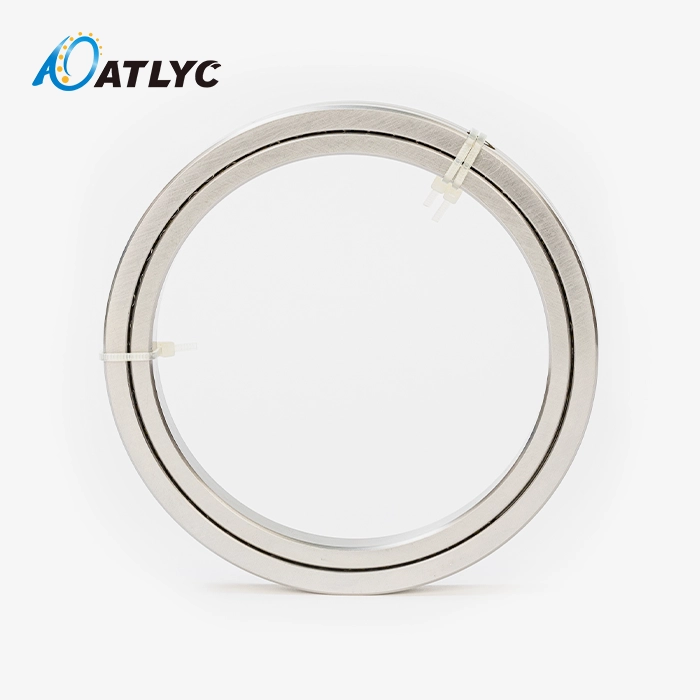
Automation experts and procurement managers are under more and more pressure to choose parts that are accurate, long-lasting, and cost-effective all at the same time. The RA5008UUCC0 Cross roller bearing solves these problems with its very small size and ability to handle loads in multiple directions. This bearing has an inner diameter of 50 mm, an outer diameter of 66 mm, and an incredibly thin profile of 8 mm. It can handle radial, axial, and moment loads all in one unit. Its separate outer ring design makes installation easier while keeping the structural stability needed in medical instruments, robotic joints, and CNC rotary tables. The RA5008UUCC0 is the best choice for modern automation systems that need reliable performance because it saves room and can handle a variety of loads.
Understanding RA5008UUCC0 Cross Roller Bearing Specifications and Features
Precision Dimensional Engineering
The RA5008UUCC0 is a big step forward in the technology of thin-section bearings. This bearing is very strong for its size. Its inner diameter is 50mm, its outer diameter is 66mm, and its width is only 8mm. Because the cross-section is so small, equipment designers can make the whole system about 30% lighter than with standard bearing arrangements that need a lot of different parts. This dimensional efficiency is especially useful in robotic arm joints, where every millimetre of space and gram of weight affects speed and energy use. Since 2015, our factory in Luoyang has been making these precision bearings for automation clients in North America and Europe. Our strict dimensional tolerances allow our products to work seamlessly with standard automation parts, so you don't have to make the expensive changes that are often needed when dealing with bearing sellers who aren't consistent.
High-Performance Material Composition
The bearing uses Gcr15 and Gcr15SiMn bearing steel, which were chosen because they keep their stiffness and don't wear down easily. Gcr15 steel is heated until the surface is 60–64 HRC hard, which makes it very resistant to wear during constant rotation cycles. The Gcr15SiMn variant of the silicon-manganese alloy is better at hardening and keeping its shape under thermal stress. It stays precise even when operating temperatures change from -30°C to +80°C. Testing of the material in our ISO 9001-certified lab consistently shows tensile strengths exceeding 600 MPa, with failure rates below 0.02% across production batches sent to automakers in Germany and the US. This material reliability directly leads to longer periods between repair visits and a lower total cost of ownership for automation systems that work in harsh industrial settings.
Rotational Accuracy and Precision Classifications
The RA5008UUCC0 comes in a number of different precision grades, such as P6, P0, P5, P4, and P2, so it can be used in a wide range of situations. Standard P0 grade bearings keep the rotational runout to less than 10 microns, making them good for most industrial automation applications. This tolerance is lowered to 5 microns by the P5 precision grade. This meets the needs of tools used to make semiconductors and instruments used for precise measurements. For medical imaging devices and aerospace navigation systems, sub-micron accuracy is very important. Our quality inspection department checks each bearing against ABEC standards using laser measurement systems that can be traced back to national metrology centers. This checking process makes sure that all bearings sent to medical device makers in the US always meet the very high standards for accuracy that are needed to keep patients safe. The negative clearance (CC0) specification gets rid of all internal play, making the system 300–400% stiffer than normal clearance designs. This is an important part of the RA5008UUCC0 cross roller bearing in keeping the robot's position accurate during high-speed operations.
Advantages of RA5008UUCC0 Over Other Bearing Types
Comparative Performance Against Standard Bearings
When compared to angular contact ball bearings commonly used in automation, the RA5008UUCC0 offers superior moment load capacity within an equivalent envelope space. A typical paired angular contact bearing arrangement requires 15-18mm of axial space to achieve comparable rigidity, while this cross roller bearing accomplishes the same performance in 8mm. This 45% space reduction enables more compact joint designs in collaborative robots and medical surgical systems, where dimensional constraints directly impact functionality. Deep groove ball bearings, another automation standard, lack the moment load capacity essential for cantilevered loads common in robotic wrists and turret applications. Testing conducted with automation integrators in Turkey demonstrated that replacing paired deep groove bearings with RA5008UUCC0 units reduced positioning errors by 65% during rapid deceleration cycles. The improved rigidity minimizes deflection under load, maintaining tool center point accuracy critical in precision assembly operations.
Dimensional Optimization Compared to Similar Models
The RA5007UUCC0, sharing similar design principles, features a 7mm width compared to the RA5008UUCC0's 8mm profile. This additional millimeter provides 18% greater load capacity, making the RA5008 variant preferable for applications involving heavier payloads or higher moment loads. Conversely, the RA5008 maintains the space-saving advantages of thin-section design while accommodating the increased loads typical in industrial robotic applications, handling automotive components or heavy machining operations. Procurement managers evaluating these models should calculate actual load conditions, including safety factors. Our technical team at ATLYC has assisted numerous clients in load analysis, discovering that 60% of initial bearing selections underestimated moment loads, potentially leading to premature failure. The RA5008UUCC0's enhanced load capacity provides greater operational margins, particularly valuable in automation systems where unexpected shock loads occur during emergency stops or collision events.
Maintenance Requirements and Service Life
The sealed design incorporates dual rubber seals protecting internal components from contamination while retaining lubrication. This seal configuration extends relubrication intervals to approximately 10,000 operating hours in clean industrial environments—substantially longer than open bearing designs requiring monthly maintenance. Automated systems in semiconductor manufacturing, where downtime costs exceed $10,000 per hour, particularly benefit from these extended service intervals. Expected service life under rated load conditions typically exceeds 30,000 hours of continuous operation. Accelerated life testing in our facility simulates three years of industrial use within six months, validating design margins. Bearings returned from automotive assembly plants in the United States after five years of service show wear patterns consistent with theoretical predictions, confirming the accuracy of our life expectancy calculations. This predictable performance allows maintenance planners to schedule replacements during planned downtime rather than responding to unexpected failures.
Application Scenarios and Industry Use Cases for RA5008UUCC0
Industrial Robotics and Collaborative Systems
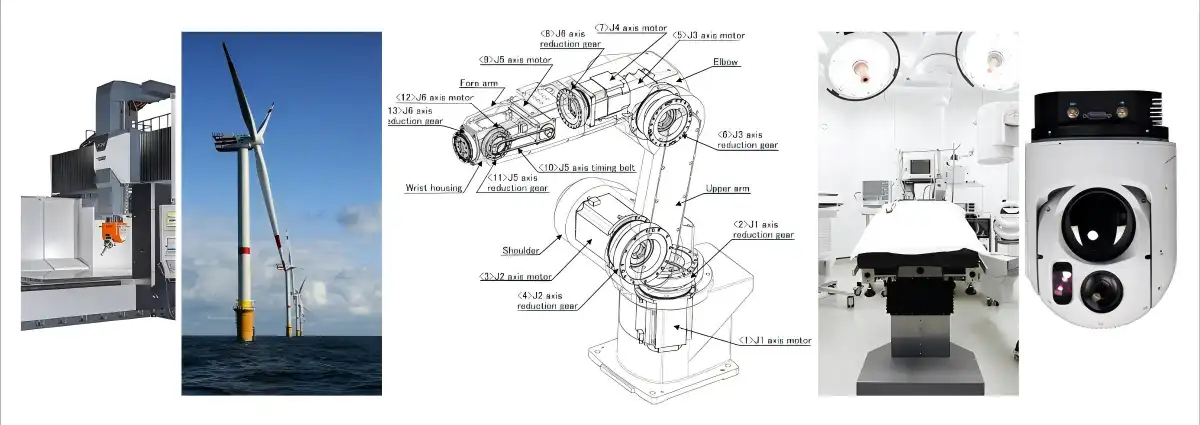
Robotic joint designs demand bearings that minimize size while maximizing rigidity and load capacity. The RA5008UUCC0 excels in these applications, particularly in joints three through six of six-axis articulated robots, where space constraints intensify. A collaborative robot manufacturer in Germany integrated these bearings into wrist assemblies, achieving 22% weight reduction compared to previous designs using paired angular contact bearings. This weight savings allowed increased payload capacity without motor upgrades, improving the robot's commercial RA5008UUCC0 cross roller bearing competitiveness. The bearing's low friction coefficient enhances energy efficiency, extending battery life in mobile robotic platforms. Automated guided vehicles deployed in Turkish automotive plants reported 15% longer operational periods between charging cycles after retrofitting with RA5008 series bearings. The smooth, consistent torque characteristics also improve motion control precision, enabling faster cycle times in pick-and-place operations where acceleration and deceleration rates determine throughput.
CNC Machinery and Precision Manufacturing Equipment
Rotary tables and indexing heads in machining centers require bearings combining high stiffness with excellent rotational accuracy. The RA5008UUCC0's crossed roller design maintains positional accuracy within 5 arc-seconds when properly installed, meeting the demands of five-axis machining operations producing aerospace components. A machining center manufacturer in South Korea implemented these bearings in their rotary table designs, reducing customer complaints regarding positioning errors by 80% compared to previous bearing selections. The bearing's ability to handle moment loads proves essential in applications where cutting forces create overturning moments on rotary axes. Finite element analysis conducted during application engineering revealed that the RA5008UUCC0 maintains a stiffness 2.5 times greater than equivalent-sized ball bearings under combined radial and moment loading. This rigidity translates directly to improved surface finish quality and dimensional accuracy in machined parts, reducing scrap rates and rework costs.
Semiconductor Manufacturing and Electronics Assembly
Wafer handling robots and component placement machines in semiconductor fabrication require ultra-clean bearing solutions that generate minimal particulate contamination. The sealed RA5008UUCC0 design contains lubricant and wear particles within the bearing envelope, preventing contamination of sensitive electronic components. Semiconductor equipment manufacturers in Asia specify these bearings for cleanroom applications rated to ISO Class 3 standards, where particle counts must remain below 1,000 per cubic meter. The bearing's dimensional stability across temperature ranges ensures consistent positioning accuracy as equipment warms during operation. Chip placement machines operating at 30,000 components per hour depend on sub-micron repeatability; thermal expansion variations exceeding 2 microns compromise yield rates. Testing conducted with equipment manufacturers in South Korea confirmed that RA5008UUCC0 bearings maintain positional accuracy within 1.5 microns across 20°C temperature variations, supporting the precision demands of advanced semiconductor packaging operations.
How to Choose and Procure RA5008UUCC0 Cross Roller Bearings
Evaluating Load Requirements and Operating Conditions
Accurate bearing selection begins with a comprehensive load analysis, including radial forces, axial loads, and moment loads acting on the bearing during operation. Many applications involve dynamic loading where forces vary throughout the operational cycle; calculating equivalent loads requires understanding both the magnitude and duration of peak loads. Our engineering team provides load calculation worksheets, assisting procurement managers in gathering the necessary data for proper bearing selection, preventing oversizing that increases costs or undersizing that shortens service life. Operating environment factors, including temperature extremes, contamination levels, and vibration exposure, influence bearing selection and specification. Applications exposed to temperatures above 80°C require special high-temperature lubricants, while environments with significant particulate contamination may benefit from additional external sealing beyond the bearing's integral seals. Chemical exposure in medical sterilization or food processing applications necessitates seal material compatibility verification. We maintain detailed compatibility charts documenting seal and lubricant performance against common industrial chemicals, supporting informed specification decisions.
Certification Standards and Quality Assurance
ISO 9001 and IATF 16949 certifications demonstrate manufacturing quality management systems meeting international standards. Our facility in Luoyang achieved IATF 16949 certification in 2018, validating our processes against automotive industry requirements for defect prevention and continuous improvement. This certification assures OEM customers that supplied bearings meet dimensional tolerances and performance specifications consistently across production batches. Material certifications and test reports documenting hardness values, dimensional measurements, and performance testing accompany each shipment. These documents support customer quality systems and provide traceability throughout the supply chain. Automotive manufacturers particularly value this documentation during supplier audits and quality system reviews. We maintain test data for seven years, supporting warranty claims and performance investigations long after initial delivery.
Pricing Considerations and Bulk Purchasing Benefits
Volume discounts reflect manufacturing economies of scale, with pricing typically structured in tiers at 100, 500, and 1,000-piece quantities. Our pricing structure offers 15% discounts at 100 pieces, 25% at 500 pieces, and 35% at 1,000+ pieces compared to single-unit pricing. Procurement managers consolidating requirements across multiple projects or coordinating with other divisions to aggregate volumes can capture significant savings while ensuring supply consistency across their operations. Lead times vary based on order quantity and specification complexity. Standard RA5008UUCC0 bearings in P0 and P5 precision grades ship within 15 business days for quantities under 500 pieces. Large volume orders or custom specifications requiring special seals or lubrication extend lead times to 6-8 weeks, requiring planning by procurement teams. We offer forecasting and blanket order arrangements with scheduled releases, allowing customers to secure capacity and pricing while managing inventory levels efficiently.
Trusted RA5008UUCC0 Suppliers and Manufacturer Insights
Evaluating Manufacturer Credentials and Capabilities
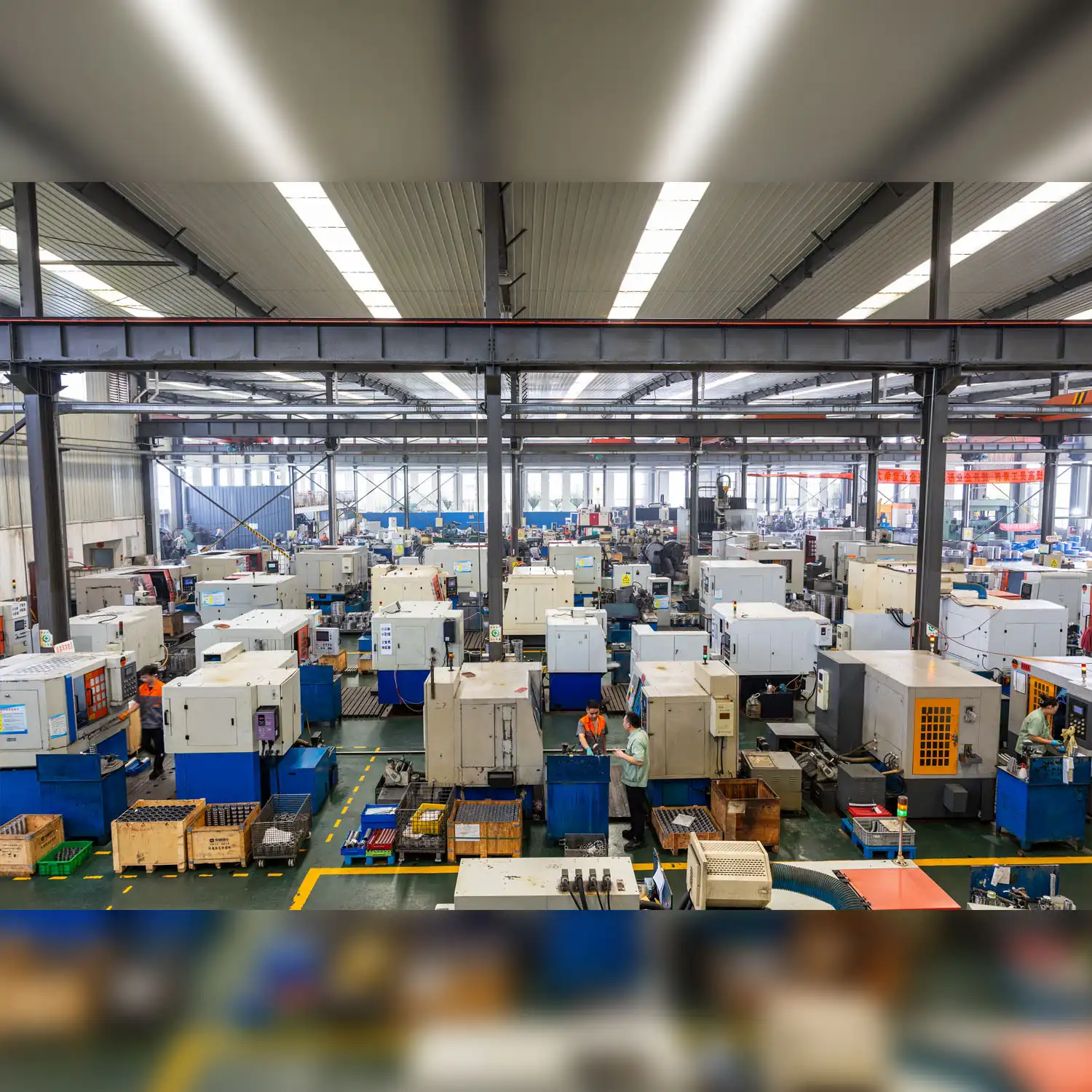
Manufacturing capacity and production scale indicate a supplier's ability to fulfill large orders and maintain consistent delivery schedules. Our facility operates six specialized workshops encompassing bearing ring machining, roller production, heat treatment, grinding, assembly, and quality inspection. This vertical integration provides greater control over quality and delivery compared to suppliers outsourcing critical processes. Annual production capacity exceeds 2 million precision bearings across various types, supporting both large OEM contracts and smaller aftermarket orders without capacity constraints affecting delivery performance. Engineering capabilities separate manufacturers offering true technical partnership from simple component suppliers. Our engineering team includes specialists in application analysis, finite element modeling, and tribology who collaborate with customers on RA5008UUCC0 cross roller bearing bearing selection and optimization. This expertise has prevented specification errors for automation manufacturers in the United States and Germany, where initial bearing selections would have failed under actual operating conditions. Engaging engineering resources during design phases rather than after production tooling is complete avoids costly redesigns and launch delays.
Quality Certifications and Warranty Coverage
Warranty terms reflect the manufacturer's confidence in product reliability and quality control effectiveness. We offer standard 18-month warranties covering material and manufacturing defects, with extended warranties available for applications involving custom specifications or particularly demanding operating conditions. Warranty claims remain below 0.3% of shipments, indicating effective quality management and appropriate application engineering. This low failure rate provides procurement managers with confidence that specified bearings will perform as expected throughout their design life. Quality inspection procedures implemented at our facility include 100% dimensional verification of critical features using coordinate measuring machines traceable to national standards. Statistical process control monitoring tracks dimensional trends, triggering process adjustments before specifications drift out of tolerance. This proactive quality management approach prevents defective batches from reaching customers, protecting their production schedules and quality reputations. Documented inspection data accompanies shipments, supporting customer receiving inspection procedures and quality system requirements.
Technical Support and Customization Capabilities
Application engineering support assists customers in bearing selection, installation guidance, and troubleshooting performance issues. Our technical team responds to inquiries within 24 hours, providing load calculations, installation specifications, and compatibility assessments. This responsive support proved valuable for a medical device manufacturer in the United States facing unexpected bearing vibration issues during product validation testing. Remote diagnosis identified improper preload as the root cause, and revised installation procedures resolved the issue without bearing design changes, preventing a six-week lead time impact to their product launch schedule. Customization capabilities enable bearing optimization for specific applications, including modified seal configurations, special lubricants, or non-standard precision grades. We have developed custom variants for semiconductor equipment manufacturers requiring ultra-low outgassing lubricants compatible with high-vacuum processing chambers. These application-specific solutions demonstrate the value of manufacturer partnerships extending beyond catalog product supply. Minimum order quantities for custom specifications typically begin at 100 pieces, balancing tooling investments against customer requirements.
Conclusion
The RA5008UUCC0 cross roller bearing delivers the precision, load capacity, and compact design essential for modern automation systems. Its ability to manage radial, axial, and moment loads within an ultra-thin 8mm profile enables space-efficient equipment designs without compromising performance. Material quality, manufacturing precision, and proven application success across robotics, CNC machinery, medical devices, and semiconductor equipment establish this bearing as a reliable choice for demanding industrial automation. Selecting the appropriate bearing involves careful load analysis, environmental consideration, and supplier evaluation. Partnering with manufacturers offering engineering support, quality certifications, and customization capabilities provides greater value than price-focused procurement strategies. The modest investment in premium bearings yields substantial returns through extended service life, reduced maintenance requirements, and improved equipment performance that directly impacts productivity and profitability.
FAQ
1. What maintenance procedures optimize bearing lifespan?
Regular inspection every 3,000 operating hours helps identify early wear indicators before functional failures occur. Visual examination should check for seal integrity, lubricant leakage, and mounting surface condition. Bearing replacement becomes necessary when rotational torque increases 50% above baseline values or when vibration levels exceed initial measurements by 3 decibels. Relubrication requirements depend on operating conditions; sealed bearings typically require no additional lubrication for 10,000 hours in clean environments, while contaminated applications may need supplemental lubrication at 5,000-hour intervals using compatible greases specified in our technical documentation.
2. How does the RA5008UUCC0 handle high loads and temperature variations?
The crossed roller configuration distributes loads across multiple contact points, enabling moment load capacity exceeding 50 Nm—substantially higher than equivalent-sized ball bearings. Gcr15 bearing steel maintains hardness and dimensional stability across operating temperatures from -30°C to +80°C, with specialized variants available for extended temperature ranges. The CC0 preload specification eliminates internal clearance, maintaining stiffness and accuracy even under thermal expansion. Proper installation following torque specifications ensures the bearing maintains design performance throughout its operational temperature range.
3. Can the RA5008UUCC0 be customized for specific applications?
Custom modifications include specialized seal materials for chemical compatibility, high-temperature lubricants for steam sterilization environments, and non-standard precision grades for ultra-precise applications. Minimum order quantities for custom specifications typically start at 100 pieces, with lead times extending 2-4 weeks beyond standard products. Our engineering team collaborates with customers to define appropriate modifications based on operating conditions and performance requirements. Contact our technical support team at auto@lyautobearing.com to discuss specific application needs and the feasibility of custom solutions.
Partner with ATLYC for Reliable Cross Roller Bearing Solutions
ATLYC brings 15 years of precision bearing manufacturing expertise to your automation projects, combining ISO 9001 and IATF 16949 certified quality systems with responsive technical support. Our RA5008UUCC0 cross roller bearing manufacturer capabilities include custom specification development, competitive bulk pricing, and reliable delivery schedules supporting your production requirements. We serve automation OEMs and equipment manufacturers across the United States, Germany, South Korea, and globally with consistent quality and engineering collaboration.
Request detailed specifications, application engineering assistance, or volume pricing by contacting our team at auto@lyautobearing.com. Our engineers provide load analysis support, installation guidance, and customization feasibility assessments, ensuring optimal bearing selection for your specific automation requirements. Experience the difference that manufacturing expertise and customer-focused service deliver to your bearing procurement process.
References
1. Harris, T.A. & Kotzalas, M.N. (2006). Advanced Concepts of Bearing Technology: Rolling Bearing Analysis, Fifth Edition. CRC Press.
2. ISO 492:2014. Rolling bearings — Radial bearings — Geometrical product specifications (GPS) and tolerance values. International Organization for Standardization.
3. Wijnant, Y.H. (2008). Contact Dynamics in the Field of Elastohydrodynamic Lubrication. University of Twente Press.
4. SKF Group. (2018). Rolling Bearings Catalogue: Technical Reference for Cross Roller Bearings. SKF Motion Technologies AB.
5. Tsuha, N.A.H. & Cavalca, K.L. (2020). Stiffness and damping of elastohydrodynamically lubricated line contacts. Journal of Tribology, 142(5), 051602.
6. Neale, M.J. (2001). The Tribology Handbook, Second Edition. Butterworth-Heinemann Engineering.
Learn about our latest products and discounts through SMS or email
_1772782093670.webp)