- English
- French
- German
- Portuguese
- Spanish
- Russian
- Japanese
- Korean
- Arabic
- Greek
- German
- Turkish
- Italian
- Danish
- Romanian
- Indonesian
- Czech
- Afrikaans
- Swedish
- Polish
- Basque
- Catalan
- Esperanto
- Hindi
- Lao
- Albanian
- Amharic
- Armenian
- Azerbaijani
- Belarusian
- Bengali
- Bosnian
- Bulgarian
- Cebuano
- Chichewa
- Corsican
- Croatian
- Dutch
- Estonian
- Filipino
- Finnish
- Frisian
- Galician
- Georgian
- Gujarati
- Haitian
- Hausa
- Hawaiian
- Hebrew
- Hmong
- Hungarian
- Icelandic
- Igbo
- Javanese
- Kannada
- Kazakh
- Khmer
- Kurdish
- Kyrgyz
- Latin
- Latvian
- Lithuanian
- Luxembou..
- Macedonian
- Malagasy
- Malay
- Malayalam
- Maltese
- Maori
- Marathi
- Mongolian
- Burmese
- Nepali
- Norwegian
- Pashto
- Persian
- Punjabi
- Serbian
- Sesotho
- Sinhala
- Slovak
- Slovenian
- Somali
- Samoan
- Scots Gaelic
- Shona
- Sindhi
- Sundanese
- Swahili
- Tajik
- Tamil
- Telugu
- Thai
- Ukrainian
- Urdu
- Uzbek
- Vietnamese
- Welsh
- Xhosa
- Yiddish
- Yoruba
- Zulu
XSU080168UUP5 Precision Crossed Roller Bearing Buying Guide
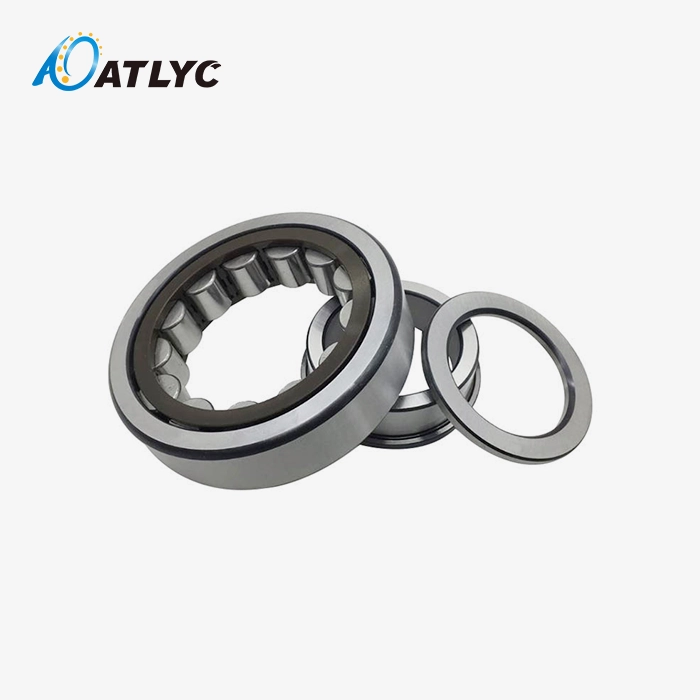
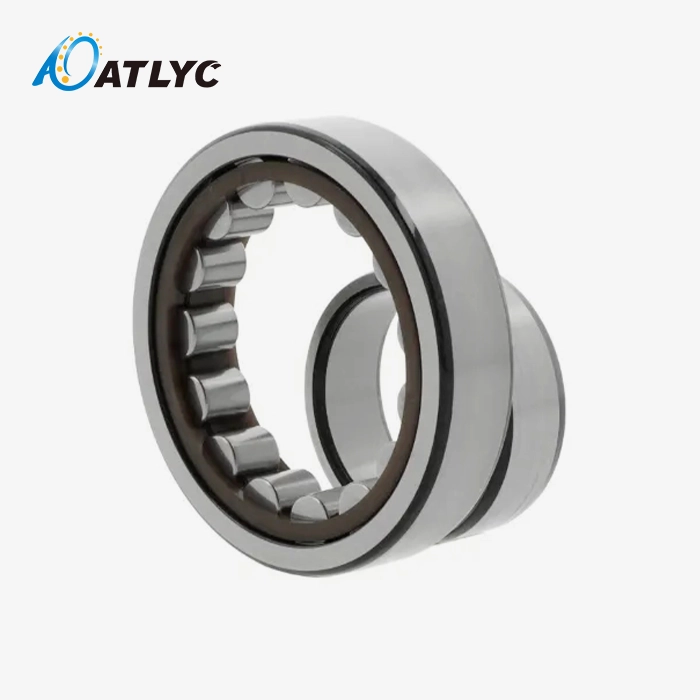
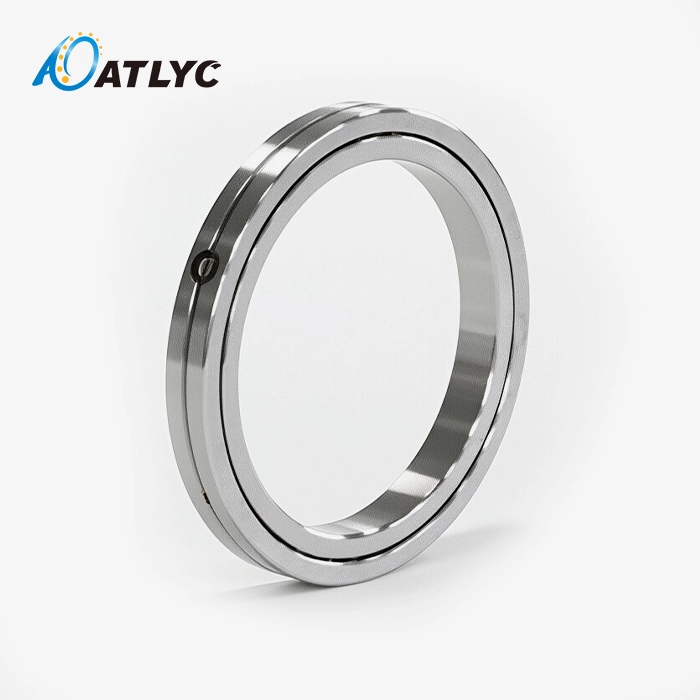
When obtaining key components for high-precision equipment, knowing the technical standards and application requirements is important. The XSU080168UUP5 precision crossed roller bearing is a unique answer for industrial makers that need excellent load-carrying capabilities and rotational accuracy in a small, integrated package. The crossed roller bearing has the mounting holes pre-drilled on both the inner and outer rings, eliminating the need for typical housing complications. This is especially useful in automated systems where installation efficiency directly affects production deadlines. 140mm inner diameter, 215mm outer diameter, 25.4mm breadth. This bearing balances space savings with strong performance in severe industrial applications.
Understanding XSU080168UUP5 Precision Crossed Roller Bearings
What Makes Crossed Roller Design Superior
Crossed roller bearings are different from a normal bearing system in the arrangement of the rollers. The XSU080168UUP5 Precision Crossed Roller Bearing has cylindrical rollers arranged at right angles to each other in alternate rows to provide an orthogonal load-carrying structure. This design enables the bearing to accommodate radial forces, axial thrust, and moment loads all in one unit. Previously, this necessitated the use of numerous bearing assemblies. This perpendicular mounting provides excellent stiffness over ball bearings of the same size. The crossing structure limits elastic deformation during the operation of equipment under combined loads to ensure accurate placement even in extreme situations. Such stiffness is crucial in those situations where the production quality and equipment dependability are determined by micron-level precision.
Core Technical Specifications
Knowing exactly what this crossed roller bearing is made of helps procurement teams decide if it will work for certain tasks:
| Parameter | Specification | Industrial Impact |
|---|---|---|
| Inner Diameter | 140mm | Accommodates substantial shaft sizes in robotics and rotary tables |
| Outer Diameter | 215mm | Compact footprint versus load capacity ratio |
| Width | 25.4mm | Space-efficient design for constrained assemblies |
| Material | GCr15, GCr15SiMn | High-carbon chromium steel with optimal hardness (HRC 58-64) |
| Accuracy Classes | P6, P0, P5, P4, P2 | P5 standard ensures micron-level runout control |
| Sealing | UU (Dual-sided) | Contamination protection with grease retention |
The GCr15 bearing steel goes through special heat treatments that make the hardness depth across the raceway surfaces the best it can be. This metal preparation stops premature spalling when loads are applied in cycles, which directly extends the product's useful life in continuous-duty situations.
Performance Advantages in Industrial Environments
The built-in ring structure with fixing holes makes the assembly process a lot easier. In traditional setups, bearing housings need to be carefully polished, aligned, and fastened with more than one system. The XSU080168UUP5 gets rid of these problems because mounting holes are machined directly into both rings during production, making sure that they are perfectly straight and centered. Another important benefit is that it is flexible when it comes to handling loads. Instead of two bearings, equipment makers can use a single crossed roller unit, which makes the system lighter and easier to understand mechanically. The perpendicular roller arrangement effectively transfers radial loads from rotating parts, axial forces from operations, and moment loads from positioning off-center. This is done without affecting the smoothness of rotation. The low friction coefficient that comes from the shape of the wheel contacts means that less energy is used during operation. Crossed roller setups make less heat and need less driving power than ball bearings that handle similar loads. This makes the system more efficient overall.
How to Select the Right Precision Crossed Roller Bearing: XSU080168UUP5 vs Alternatives
Essential Selection Criteria for Procurement Teams
When choosing precision bearings, you have to weigh a number of performance factors against the total cost of ownership. The most important thing to think about is the load capacity—bearings must be able to handle the maximum operational forces with enough safety margins. The XSU080168UUP5 Precision Crossed Roller Bearing can handle mixed stress situations that would be too much for single-function bearings. This gives engineers more design options. In automated systems, the accuracy of positioning is directly affected by the stiffness characteristics. Higher stiffness values keep things from deflecting when they're loaded, so they stay precisely aligned even when they're moving quickly or the working conditions change. When comparing stiffness to weight, crossed roller bearings are better than angular contact ball bearings. This makes them perfect for robotic joint applications where inertia slows down cycle times. Expected service life calculations must account for operational environments and maintenance intervals. Sealed bearings like the XSU080168UUP5 protect internal components from contaminants that accelerate wear, extending replacement cycles and reducing maintenance costs. The dual-sided sealing retains lithium-based grease while excluding particulate matter common in industrial settings.
Comparative Analysis Against Market Alternatives
There are a few things that make the XSU080168UUP5 different from standard crossed roller bearings and other well-known brands: Precision Class Availability: Many companies offer standard accuracy classes, but the XSU series has P2 and P4 precision grades that can be used in ultra-high-accuracy applications such as coordinate measuring machines and optical equipment. This gives purchasing teams the freedom to match the accuracy of the bearings to the needs of each application without making the parts too specific. Integrated Mounting Design: If you use a traditional crossed roller bearing, you may need to buy separate mounting parts or make your own housings. The integrated mounting hole design cuts down on the number of parts needed and the time it takes to put them together. This lowers the cost of installation work and the chance of mistakes happening during equipment builds. Material Grade Options: Both GCr15 and GCr15SiMn steel grades are available to meet a range of operational needs. GCr15SiMn makes it easier to harden bigger cross-sections, so the material qualities are the same all over the bearing structure, even tho the XSU080168UUP5 is quite big.
Optimal Applications for Robotics and Automation
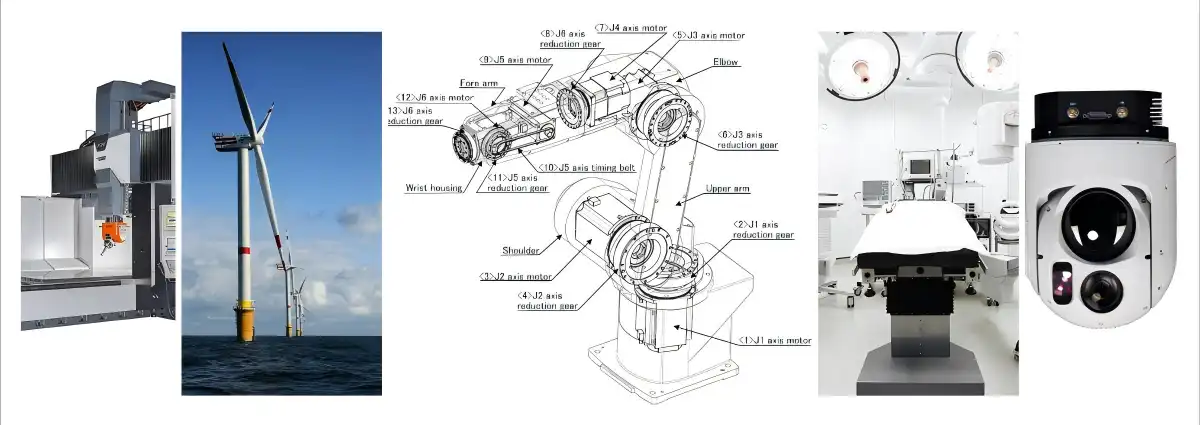
In industrial robotics, bearings must have zero backlash and be able to position themselves consistently over millions of cycles. The XSU080168UUP5 excels in articulated robot joints, where the loads from moving arms form complicated force directions. The bearing's ability to handle radial, axial, and moment loads at the same time makes joint design easier while keeping the placement accuracy needed for automatic welding, assembly, and material handling. Automated manufacturing systems benefit from the bearing's stable performance across wide speed ranges. Unlike some bearing types where accuracy varies with rotational velocity, crossed roller designs maintain precision throughout their operating envelope. This characteristic proves valuable in pick-and-place systems requiring smooth acceleration and deceleration cycles without compromising positional repeatability. The compact profile of crossed roller bearings enables lighter robotic arm designs, reducing moment loads on upstream joints and decreasing energy consumption during movement. This weight advantage becomes increasingly significant in collaborative robot applications where safety regulations limit system inertia.
Installation, Maintenance, and Handling of XSU080168UUP5 Bearings
Step-by-Step Installation Procedures
The performance and life of a bearing are directly affected by how well it is installed. The XSU080168UUP5 Precision Crossed Roller Bearing's integrated mounting design makes things easier, but you still need to pay attention to important parameters. Surface Preparation: The mounting surfaces must be flat within 0.02 mm of the full contact area. Any distortion moves to the bearing rings and causes stress inside them, which speeds up wear and lowers accuracy. Thoroughly clean the fixing surfaces, getting rid of any dirt, rust, or machining marks that could stop them from fitting properly. Bolt Selection and Torque: Use fasteners whose strength ratings are right for the loads they will be used for. For the bolt circle geometry to work, the load must be spread out evenly. To do this, apply torque in a star pattern, slowly increasing it until it meets the requirements, instead of fully tightening each bolt individually. This method keeps the ring from warping while it's being installed. The recommended torque values change depending on the size of the bolt. For exact needs based on how your equipment is set up, refer to the technical documentation. Alignment Verification: After the first tightening of the bolts, use precision measuring tools to make sure that the two parts that fit together are straight. When wheels are misaligned, the load is spread out unevenly, which shortens the life of the bearing. Rotational resistance should feel smooth and consistent all the way around. If it feels like it's binding, there are alignment problems that need to be fixed before the installation is complete.
Maintenance Strategies for Extended Service Life
This XSU080168UUP5 is easy to maintain because it has two sides that are sealed. Open bearing designs need to be re-oiled often, but sealed units keep their grease integrity for the whole time they're working under regular conditions. This feature cuts down on the work needed for upkeep and eliminates the risk of contamination that comes with relubrication in workplace settings. Periodic Inspections: Set inspection times based on how important the operation is. Keep an eye out for strange noises, vibrations, or temperature rises while the equipment is working. These signs often point to problems that are starting to happen before they become catastrophic. Thermal imaging can find areas of high heat that could mean that there isn't enough lubrication or that there is too much preload. Lubrication Management: For normal use, factory-sealed units come with grease that lasts a lifetime. However, in extreme situations, extra upkeep may be needed. For long periods of time, settings with high temperatures or contaminated air can weaken seals. Visually checking the state of the seals during regular maintenance checks can help find problems before they damage the internal bearing parts. Load Monitoring: Using equipment with loads that are higher than what it was designed to handle speeds up wear by a factor of ten. Set up tracking systems that keep an eye on the real operating forces. This is especially important for automated systems where programming mistakes could cause them to go beyond what was intended. Crossed roller bearings can handle loads that are applied in more than one direction, which gives them big safety margins. However, sticking to the rated capacities means that service intervals are always predictable.
Troubleshooting Common Operational Challenges
Unusual noise during operation typically indicates contamination breaching seal protection or inadequate lubrication reaching roller-raceway interfaces. Increased rotational resistance suggests misalignment issues or excessive preload conditions. Temperature elevation beyond normal operating ranges points to lubrication breakdown or overloading scenarios. Addressing these challenges requires systematic diagnosis. Disassembly and inspection reveal internal conditions—contamination appears as scoring on raceways, while inadequate lubrication manifests as discoloration from heat exposure. Misalignment creates asymmetric wear patterns visible on roller surfaces.
| Symptom | Probable Cause | Corrective Action |
|---|---|---|
| Grinding noise | Contamination ingress | Inspect seals; verify environmental protection |
| Excessive resistance | Mounting misalignment | Check perpendicularity; verify surface flatness |
| Elevated temperature | Overloading or lubrication failure | Review operational loads; inspect grease condition |
| Vibration | Raceway damage or wear | Measure runout; consider replacement if beyond tolerance |
Procurement Insights: Buying XSU080168UUP5 Precision Crossed Roller Bearings
Identifying Qualified Suppliers and OEM Partners
Sourcing high-precision bearings requires partnering with manufacturers demonstrating consistent quality standards and production capabilities. Quality management certifications provide initial screening criteria—ISO 9001 and IATF 16949 compliance indicate established process controls and a commitment to continuous improvement. The XSU080168UUP5 Precision Crossed Roller Bearing procurement requires evaluating manufacturing capacity beyond just production rate. Suppliers must show that their businesses can grow to handle both initial orders and long-term volume growth as your sales of equipment rise. Investing in production equipment shows how committed a manufacturer is. For example, precision grinding technology and specialized heat treatment systems are big purchases that set established bearing manufacturers apart from marginal suppliers. Technical support capabilities often determine supplier value beyond component pricing. Engineering teams should provide application assistance, helping optimize bearing selection for specific operational requirements. Customization capabilities address unique design challenges—modifications to mounting hole patterns, seal configurations, or accuracy grades expand design possibilities without requiring completely custom bearing development.
Understanding Pricing Structures and Volume Considerations
Precision bearing pricing reflects multiple cost factors beyond basic materials. Manufacturing complexity increases with tighter accuracy grades—achieving P4 or P2 precision requires additional grinding operations and more rigorous quality verification procedures. These requirements legitimately increase unit costs compared to standard precision grades. Volume commitments typically unlock favorable pricing structures. Manufacturers optimize production efficiency through longer manufacturing runs, reducing setup time proportions and allowing those savings to transfer to customers. Discussing projected annual requirements during initial negotiations establishes frameworks for volume-based pricing that benefit both parties. Comparing competitive offerings requires evaluating total cost of ownership rather than simply unit prices. Extended service life, reduced maintenance requirements, and lower installation labor costs often justify premium pricing for superior bearing designs. The integrated mounting configuration of the XSU080168UUP5 delivers measurable installation savings that offset any initial cost differences versus traditional bearing arrangements.
Managing Lead Times and International Logistics
When you use global sourcing, it makes it harder to keep track of delivery dates and coordinate logistics. Standard product availability varies between manufacturers. For example, established bearing series with steady demand tend to keep inventory on hand for shorter lead times, while production scheduling is needed for specialized configurations. Precision bearings can be made in anywhere from 4 to 8 weeks, based on how complicated the order is and how deep the production queue is. Rush orders can be used to meet pressing needs, but they usually cost more to make up for the changes to the production plan. Planning procurement cycles around predictable equipment build schedules keeps costs down and makes sure that the availability of parts matches the timelines for assembly. International shipping considerations include customs clearance procedures, import duties, and transportation insurance. Experienced bearing suppliers assist with documentation requirements and shipping arrangements, streamlining cross-border transactions. Packaging quality protects precision components during transit—proper cushioning and moisture barriers prevent damage that might compromise bearing performance.
Warranty Coverage and After-Sales Support
Comprehensive warranty programs demonstrate manufacturer confidence in product quality. Coverage should address manufacturing defects and material failures under normal operating conditions. Understanding warranty limitations prevents misunderstandings—damage from improper installation, operation beyond rated capacities, or environmental conditions exceeding specifications typically fall outside standard warranty coverage. After-sales technical support provides valuable resources during equipment commissioning and troubleshooting scenarios. Responsive engineering teams assist with application questions, helping optimize bearing performance within your specific operational context. This support proves particularly valuable during new equipment development, where design iterations benefit from manufacturer expertise.
Case Studies and User Reviews of XSU080168UUP5 Bearings
Performance Validation in Automated Assembly Systems
An average-sized company that makes parts for cars put the XSU080168UUP5 Precision Crossed Roller Bearing into robotic welding equipment to replace a two-bearing setup that often had alignment problems. Compared to the old setup, the combined mounting design made installation easier and cut the time it took by 35%. Operational data gathered over 18 months showed that it was very reliable. During three shifts of constant operation, the equipment kept its placement accuracy within ±0.005mm, which met the strict limits needed for welding body panels. Maintenance times were greatly increased because the sealed bearing design got rid of the need for weekly lubrication, which used to stop production plans. Thermal performance exceeded expectations in the demanding welding environment. Temperature tracking showed that the working temperatures stayed stable even tho they were exposed to radiant heat from welding. This proved that the bearing could handle tough industrial conditions.
User Perspectives from Precision Machining Operations
A machining center manufacturer serving the aerospace industry adopted crossed roller bearings for rotary table applications requiring exceptional accuracy and load capacity. Feedback from engineers pointed out a number of performance benefits while the equipment was being built and put into use in the field. The zero-backlash characteristics enabled repeatable positioning accuracy that maintained calibration over extended production runs. Operators reported smooth, consistent rotation throughout the speed range, contributing to superior surface finish on machined components. The compact bearing profile allowed more generous work envelopes within the machine footprint, adding competitive advantage to the equipment design. Procurement managers appreciated transparent communication during the quoting and ordering process. Technical documentation provided comprehensive specifications supporting design calculations, while responsive customer service addressed application questions efficiently. Delivery schedules met commitments consistently, supporting predictable equipment build timelines.
Comparative Performance Under Demanding Conditions
Field tests comparing the XSU080168UUP5 to well-known bearing names showed that it was more competitive in some situations. The integrated mounting design regularly cut down on installation time. This was especially helpful during equipment repair, when quick replacements kept production running as normally as possible. Seal effectiveness proved superior in contaminated environments common to metalworking operations. Equipment operating in atmospheres containing coolant mist and metal particulates maintained performance without premature seal degradation, validating the robust protection provided by the dual-sided sealing configuration.
Conclusion
Selecting precision bearings for industrial automation and manufacturing equipment requires careful evaluation of technical specifications, application requirements, and supplier capabilities. With its integrated mounting design, ability to handle loads in multiple directions, and high level of accuracy, the XSU080168UUP5 Precision Crossed Roller Bearing is a great choice for demanding uses in robotics, machine tools, and medical equipment. Crossed roller design offers performance benefits such as high rigidity, small size, and high operating efficiency that make it worth considering over other bearing options. A good buying process weighs the immediate costs of parts against the total costs of ownership, taking into account how well the parts are installed, how much upkeep they need, and how long they are expected to last under real-world working circumstances.
FAQ
What differentiates the XSU080168UUP5 from standard crossed roller bearings?
This bearing is different from others because it has a fixing hole that is built in. Other designs need separate housing components. Both the inner and outer rings have precisely machined bolt circles that allow direct mounting to equipment structures. This eliminates the need for alignment problems and speeds up the installation process. The two-sided sealing protects against contamination better than open bearing designs, which means that in industrial settings, service intervals can be longer. Being available in several precision grades (P6 through P2) gives you the freedom to match the quality of the bearing to the needs of your particular application.
Is this bearing suitable for high-speed robotic applications?
The crossed roller design keeps its accuracy over a wide range of speeds, which makes it a good choice for robotic systems that need to move quickly. At high speeds, the low friction coefficient keeps heat from being generated, and the sealed design keeps the lubricant well. It depends on the load and the environment what the operational speed limits are. Check the technical specifications and application engineering resources to make sure they meet your speed needs.
What operational lifespan can be expected under standard industrial conditions?
The amount of load, speed, operating environment, and maintenance habits affect how long something will last. Precision crossed roller bearings usually last between 20,000 and 30,000 hours of use under rated load conditions with proper installation and environmental protection. Most of the time, sealed configurations like the XSU080168UUP5 go above and beyond these basic expectations because they keep the lubrication consistent and stop contamination from getting in, which speeds up wear in open bearing designs.
Partner With ATLYC for Your Precision Bearing Requirements
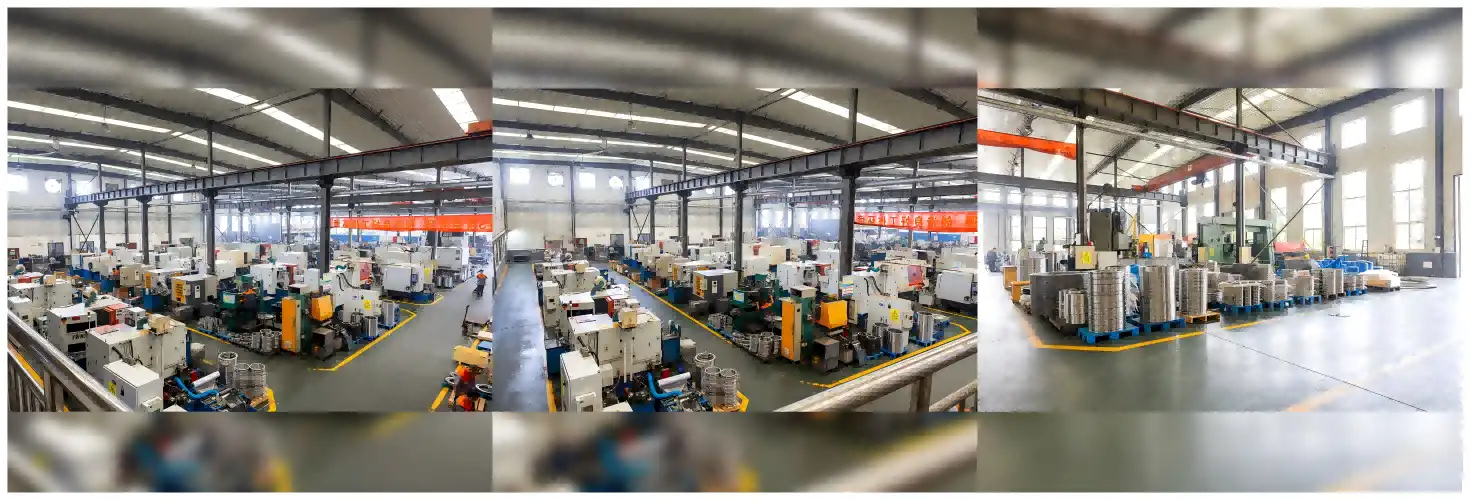
ATLYC has been making precision crossed roller bearings for 15 years and uses cutting-edge rolling technology and strict quality systems that are approved to ISO 9001 and IATF 16949 standards. Our engineering team can support OEM customization needs by changing mounting arrangements and accuracy levels to fit the designs of your equipment. We are a well-known company that makes XSU080168UUP5 Precision Crossed Roller Bearings, and we keep our production capacity high so that we can meet the needs of both prototypes and large-scale production schedules. We also offer reliable lead times and competitive pricing so that we can build long-term supply partnerships. Our 120-person team includes dedicated quality inspection specialists ensuring every bearing meets dimensional tolerances and performance specifications before shipment. We serve automotive component manufacturers, industrial machinery builders, and automation equipment producers across North America with technical support throughout product selection, application engineering, and after-sales service. Contact our bearing specialists at auto@lyautobearing.com to discuss your precision bearing requirements and receive detailed quotations tailored to your procurement volume and delivery schedule.
References
1. Harris, T.A., and Kotzalas, M.N. (2006). Advanced Concepts of Bearing Technology: Rolling Bearing Analysis, Fifth Edition. CRC Press, Boca Raton, Florida.
2. Wensing, J.A. (1998). On the Dynamics of Ball Bearings. Doctoral Dissertation, University of Twente, Enschede, Netherlands.
3. ISO 492:2014. Rolling bearings — Radial bearings — Geometrical product specifications (GPS) and tolerance values. International Organization for Standardization.
4. Xu, H., and Wang, P. (2019). "Performance Analysis of Crossed Roller Bearings in Precision Machine Tools." Journal of Manufacturing Science and Engineering, Vol. 141, Issue 8.
5. Genta, G., and Delprete, C. (2017). "Some Considerations on the Experimental Determination of Moments of Inertia." Mechanism and Machine Theory, Vol. 109, pp. 187-206.
6. ANSI/ABMA Standard 12.1-2017. Instrument Ball Bearings — Metric Design. American Bearing Manufacturers Association, Washington D.C.
Learn about our latest products and discounts through SMS or email