- English
- French
- German
- Portuguese
- Spanish
- Russian
- Japanese
- Korean
- Arabic
- Greek
- German
- Turkish
- Italian
- Danish
- Romanian
- Indonesian
- Czech
- Afrikaans
- Swedish
- Polish
- Basque
- Catalan
- Esperanto
- Hindi
- Lao
- Albanian
- Amharic
- Armenian
- Azerbaijani
- Belarusian
- Bengali
- Bosnian
- Bulgarian
- Cebuano
- Chichewa
- Corsican
- Croatian
- Dutch
- Estonian
- Filipino
- Finnish
- Frisian
- Galician
- Georgian
- Gujarati
- Haitian
- Hausa
- Hawaiian
- Hebrew
- Hmong
- Hungarian
- Icelandic
- Igbo
- Javanese
- Kannada
- Kazakh
- Khmer
- Kurdish
- Kyrgyz
- Latin
- Latvian
- Lithuanian
- Luxembou..
- Macedonian
- Malagasy
- Malay
- Malayalam
- Maltese
- Maori
- Marathi
- Mongolian
- Burmese
- Nepali
- Norwegian
- Pashto
- Persian
- Punjabi
- Serbian
- Sesotho
- Sinhala
- Slovak
- Slovenian
- Somali
- Samoan
- Scots Gaelic
- Shona
- Sindhi
- Sundanese
- Swahili
- Tajik
- Tamil
- Telugu
- Thai
- Ukrainian
- Urdu
- Uzbek
- Vietnamese
- Welsh
- Xhosa
- Yiddish
- Yoruba
- Zulu
YRT 150 High Precision Rotary table bearing Buying Guide
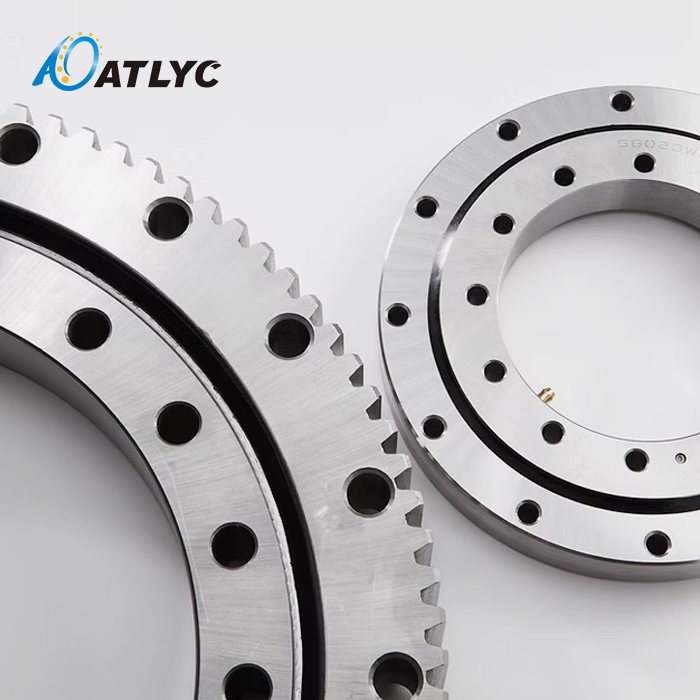
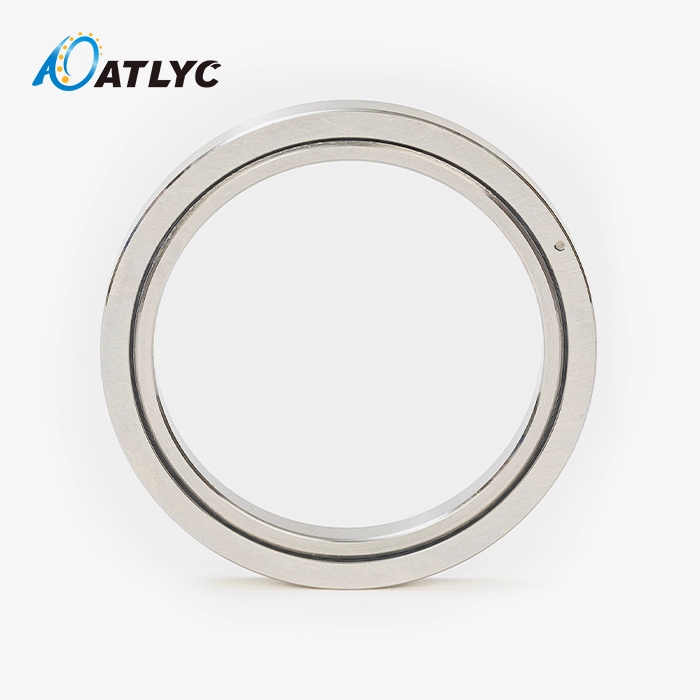
The YRT 150 High Precision Rotary table bearing is an axial-radial bearing built for applications where tilting rigidity and positioning accuracy are non-negotiable. With dimensions of 150mm (ID) × 240mm (OD) × 40mm (Width), this integrated unit handles radial loads, axial loads, and tilting moments simultaneously—without the complexity of multi-bearing assemblies. Whether you are sourcing for CNC machining centers, indexing heads, or automation equipment, this guide walks you through specifications, comparisons, procurement strategies, and maintenance to help you make a confident purchasing decision.
Understanding YRT 150 Rotary Table Bearing Specifications and Features
Core Dimensions and Load Parameters
The YRT 150 High Precision Rotary table bearing can hold between 400 and 500 kN of steady load in the axial direction and between 150 and 200 kN in the radial direction. Because it needs a lot of preload, its top speed is usually limited to 200 to 250 RPM. The bearing is made of GCr15 (100Cr6) bearing steel that has been heated to 58–62 HRC to make it resistant to wear and pitting rust when the machine is moving back and forth.
Precision Class and Runout Accuracy
According to ISO standards, this bearing is either P4 or P2. Coordinate Measuring Machines (CMM) and Taylor Hobson roundness instruments show that the axial runout stays within 3–5 micrometers. A very important part of quality control is making sure that the mounting holes are centered on the raceways. Because of these tolerances, the YRT 150 High Precision Rotary table bearing is often used when accuracy down to the micron level is needed.
Material Integrity and Surface Finish
Both the inner and outer raceways are precision ground and given a super-finish. During production, surface roughness (Ra) tests must be done to stop micro-pitting and keep the grease film intact. Metallographic analysis and HRC tests prove the depth of the heat treatment, which stops the material from deforming too quickly when tilted for a long time. This amount of material testing is what sets a real precision bearing apart from a cheap copy.The YRT 150 has an inner diameter of 150 mm, an outer diameter of 240 mm, a width of 40 mm, an axial static load capacity of 400–500 kN, and a radial static load capacity of 150–200 kN. Its limiting speed is 200–250 RPM, and its axial runout is ≤ 3–5 μm. It is made of GCr15/100Cr6 and its hardness is 58–62.
| Specification | YRT 150 |
|---|---|
| Inner Diameter | 150 mm |
| Outer Diameter | 240 mm |
| Width | 40 mm |
| Axial Static Load Capacity | 400–500 kN |
| Radial Static Load Capacity | 150–200 kN |
| Limiting Speed | 200–250 RPM |
| Precision Class | P4 / P2 (ISO) |
| Axial Runout | ≤ 3–5 μm |
| Material | GCr15 / 100Cr6 |
| Hardness (HRC) | 58–62 |
Comparing YRT 150 with Other Rotary Table Bearings for CNC and Industrial Use
YRT 150 vs. YRT 130 and YRT 160
The YRT 130 has the same combined design idea, but its bore is smaller (130mm), so it works better with lighter-duty or smaller rotary tables. With a 160mm bore, the YRT 160 can handle bigger tilting moments and is often chosen for heavy-duty 5-axis cutting. When it comes to 4th and 5th axis applications, the YRT 150 High Precision Rotary table bearing is right in the middle. It has a small footprint and can hold a lot of weight.
YRT 150 vs. Standard Cross Roller Bearings
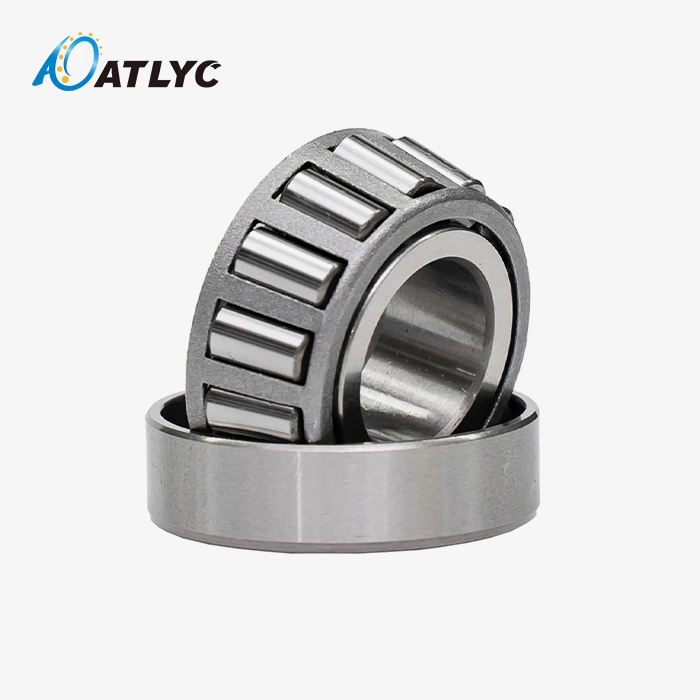
Cross roller bearings that are standard have alternating roller arrangements and are often found in lighter rotary positioning systems. The YRT 150 rotary table bearing has a double-row angular contact ball setup (45°–60°), which makes it more stable when tilted and better able to handle composite loading conditions that cross roller units have trouble with when cutting strongly. This structural difference has a direct effect on the steadiness of the workpiece's position during milling operations on CNC machining centers.
YRT 150 vs. NSK and SKF Equivalent Models
NSK and SKF both make similar rotary table bearing types that meet the same precision standards. The main things that set qualified Chinese manufacturers apart are their cost-performance ratio and their ability to be flexible with wait times. The YRT 150 High Precision Rotary table bearing is made in accordance with ISO 9001 and IATF 16949 standards. It has the same geometric tolerances as other bearings on the market, but it costs less. It can be made to accommodate both small special orders and big OEM supply deals.
Procurement Insights: How to Buy Genuine YRT 150 Rotary Table Bearings
Identifying Certified Suppliers
Not every bearing that is sold as a YRT 150 High Precision Rotary table bearing meets the P4/P2 runout requirements. Buyers should ask for proof of ISO 9001 and IATF 16949 approval, inspection records with CMM data, and test results for starting torque. These papers prove that the preload is always the same, which is a good sign of the quality of the raceway. The most traceable supply chains come from authorized manufacturers who can do their own grinding and quality checks.
Pricing, Lead Times, and Bulk Orders
The cost of precise rotary table bearings depends on the level of accuracy, the number of bearings ordered, and any customization needs. Lead times from certified Chinese manufacturers are usually between 3 and 6 weeks for stocked items, and longer for custom bore or preload specifications.
| Comparison Criteria | YRT 130 | YRT 150 | YRT 160 |
|---|---|---|---|
| Inner Diameter | 130 mm | 150 mm | 160 mm |
| Application Scale | Compact tables | Mid-range 4th/5th axis | Heavy-duty 5-axis |
| Tilting Rigidity | Moderate | High | Higher |
| Typical Use | Light indexing heads | CNC machining centers | Aerospace/heavy milling |
| Cost Level | Lower | Mid | Higher |
International Shipping and Customs Compliance
To get goods through customs in the USA, Germany, South Korea, and other export markets, buyers must have the right HS code classification and export paperwork. A trustworthy company that sells YRT 150 High Precision Rotary table bearings will give you business bills, packing lists, and certificates of origin. If you choose a supplier with experience in international business-to-business logistics, you can be sure that your shipments will arrive on time and without any problems.
Maintenance and Longevity: Keeping Your YRT 150 Bearing at Peak Performance
Lubrication Protocols
The YRT 150 High Precision Rotary table bearing works with a lot of preload, which makes the contact areas very hot. The type of grease you choose should match the temperature range and speed of rotation. In precision rotary table uses, lithium-complex or polyurea-based greases are often used. The amount of time between relubrications depends on the load cycles and the surroundings, but makers usually suggest checking the lubrication every 500 to 1,000 hours of operation.
Routine Inspection and Early Fault Detection
One of the most useful ways to tell if a bearing is healthy is to measure its starting torque. More mechanical moment means that the raceways are wearing down or the grease is breaking down. Using vibration analysis and thermal images while the machine is running can find uneven loads before they damage the structure. These ways of tracking help repair teams plan their work so that it gets done before there is unplanned downtime.
Troubleshooting Common Wear Patterns
Micro-pitting on the surfaces of raceways usually means that there isn't enough lubrication film or that the surface is dirty. Fretting corrosion happens when the bearing moves back and forth without the right film protection, which is a problem that often comes up in indexing applications. You can avoid both types of failure by using the right grease, making sure the bearing is sealed properly, and following the manufacturer's instructions for controlled preload settings.
Making the Right Choice: Criteria for Selecting the Best Rotary Table Bearing
Technical Specification Alignment
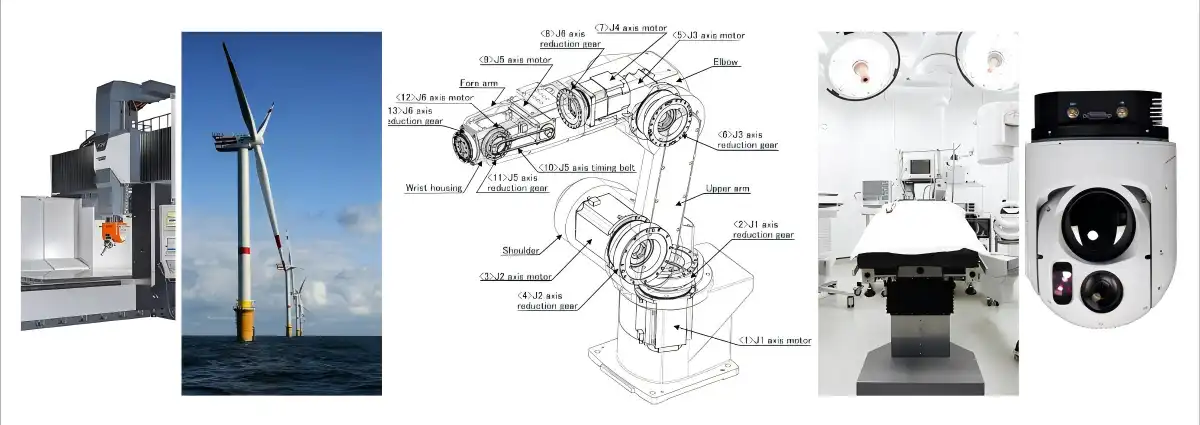
Before choosing a rotary table bearing, engineering teams should make sure they know the application's highest tilting moment, runout limit, and duty cycle. Most of the time, the YRT 150 High Precision Rotary table bearing works best in medium to large CNC machining centers, precision indexing heads, and medical or metrology equipment where output quality is directly affected by axial runout below 5 micrometers.
Supplier Capability and Long-Term Partnership Value
Aside from the bearing itself, procurement managers should look at the supplier's production scale, ability to customize, and quality control methods. A company with IATF 16949 certification shows that their process discipline meets the needs of automotive and industrial OEMs. Long-term supply deals with makers whose output can be relied on greatly lower sourcing risk.
Cost-Performance Evaluation Framework
When choosing a seller, these are the most important things to think about:
- Precision Class Documentation: Confirm P4 or P2 class with actual CMM inspection records, not just catalog claims. This protects against receiving bearings that fall outside tolerance after installation.
- Preload and Starting Torque Verification: Request test data showing frictional moment consistency across batch samples. Inconsistency here indicates roller sizing or raceway defects that will shorten service life.
- Certification Validity: Cross-check ISO 9001 and IATF 16949 certificate numbers through the issuing body's registry. Certificates should be current and specific to bearing manufacturing processes.
Check the issuing body's registry for both ISO 9001 and IATF 16949 certificate numbers to make sure they are still valid. Certificates should be up-to-date and relevant to the methods used to make bearings.
Conclusion
It is easy to understand what the YRT 150 High Precision Rotary table bearing is and how it works: it has a 150mm bore, a P4/P2 precision class, an axial static capacity of 400–500 kN, and an integrated mounting design. If buyers match their sourcing process with these technical benchmarks, check the certifications of suppliers, and set up preventative maintenance plans, this bearing will work well for a long time. Just as important as the bearing specification is the right supplier partnership.
FAQ
What makes the YRT 150 different from a standard angular contact bearing?
The YRT 150 High Precision Rotary table bearing integrates thrust bearing, radial bearing, and indexing functions into a single preloaded unit. A standard angular contact bearing handles primarily axial or radial loads, not composite tilting moments simultaneously. This structural difference makes the YRT 150 rotary table bearing the correct choice for 4th and 5th axis CNC applications.
How do I verify the precision class of a bearing before purchase?
Ask the supplier for CMM inspection reports showing actual inner and outer ring runout values. P4 class bearings should show axial runout within 5 micrometers. Starting torque test data across the production batch is a secondary indicator of manufacturing consistency.
What lubrication type works best for this bearing?
Lithium-complex or polyurea-based greases rated for the operating temperature range of your application are most commonly specified. Avoid overpacking—excess grease increases operating temperature under high preload conditions.
Can this bearing be customized for non-standard applications?
Yes. Manufacturers with sufficient grinding and inspection capacity can adjust preload class, sealing configuration, and surface coating. Confirm customization capability during the supplier qualification process.
What precision class should I specify for aerospace or metrology use?
P2 class is recommended for applications requiring axial runout below 3 micrometers, such as large-scale measuring machines or medical tomography equipment. P4 class is adequate for most CNC machining center applications.
Partner with ATLYC for Your YRT 150 High Precision Rotary Table Bearing Supply
ATLYC works with Luoyang Auto Bearing Co., Ltd., a company that has been making bearings for 15 years and has ISO 9001 and IATF 16949 certifications. They offer the YRT 150 High Precision Rotary table bearing, which has full inspection documentation, verified P4/P2 precision, and scalable production across six workshops. Get in touch with our engineering team right away if you need a trial order or a long-term OEM supply agreement. To get a quote from a reliable YRT 150 High Precision Rotary table bearing maker, email us at auto@lyautobearing.com.
References
1. ISO 492:2014 — Rolling Bearings: Radial Bearings — Tolerances. International Organization for Standardization, 2014.
2. Weck, M., & Brecher, C. — Werkzeugmaschinen: Konstruktion und Berechnung. Springer, 2006.
3. Harris, T. A., & Kotzalas, M. N. — Rolling Bearing Analysis: Essential Concepts of Bearing Technology. CRC Press, 2006.
4. SKF Group — Rolling Bearings Technical Handbook. SKF, 2018.
5. IATF 16949:2016 — Quality Management System Requirements for Automotive Production and Relevant Service Part Organizations. IATF, 2016.
6. Hamrock, B. J., Schmid, S. R., & Jacobson, B. O. — Fundamentals of Machine Elements. McGraw-Hill, 2005.
Learn about our latest products and discounts through SMS or email