- English
- French
- German
- Portuguese
- Spanish
- Russian
- Japanese
- Korean
- Arabic
- Greek
- German
- Turkish
- Italian
- Danish
- Romanian
- Indonesian
- Czech
- Afrikaans
- Swedish
- Polish
- Basque
- Catalan
- Esperanto
- Hindi
- Lao
- Albanian
- Amharic
- Armenian
- Azerbaijani
- Belarusian
- Bengali
- Bosnian
- Bulgarian
- Cebuano
- Chichewa
- Corsican
- Croatian
- Dutch
- Estonian
- Filipino
- Finnish
- Frisian
- Galician
- Georgian
- Gujarati
- Haitian
- Hausa
- Hawaiian
- Hebrew
- Hmong
- Hungarian
- Icelandic
- Igbo
- Javanese
- Kannada
- Kazakh
- Khmer
- Kurdish
- Kyrgyz
- Latin
- Latvian
- Lithuanian
- Luxembou..
- Macedonian
- Malagasy
- Malay
- Malayalam
- Maltese
- Maori
- Marathi
- Mongolian
- Burmese
- Nepali
- Norwegian
- Pashto
- Persian
- Punjabi
- Serbian
- Sesotho
- Sinhala
- Slovak
- Slovenian
- Somali
- Samoan
- Scots Gaelic
- Shona
- Sindhi
- Sundanese
- Swahili
- Tajik
- Tamil
- Telugu
- Thai
- Ukrainian
- Urdu
- Uzbek
- Vietnamese
- Welsh
- Xhosa
- Yiddish
- Yoruba
- Zulu
Why Source XU200250UU/P4 Crossed Roller Slewing Bearing from China?
If your operation depends on precision rotary motion, sourcing the right bearing partner matters as much as the bearing itself. The XU200250UU/P4 Crossed Roller Slewing Bearing is a P4-grade, integrated-mount crossed roller bearing measuring 200mm bore × 250mm OD × 32mm width. Chinese manufacturers now produce this component to ISO 9001 and IATF 16949 standards, combining GCr15 steel quality, micron-level runout accuracy, and factory-direct pricing. For OEMs and industrial distributors in the US, Germany, and South Korea, China represents the most practical sourcing address for this product today.
Understanding the XU200250UU/P4 Crossed Roller Slewing Bearing
Core Dimensional Specifications
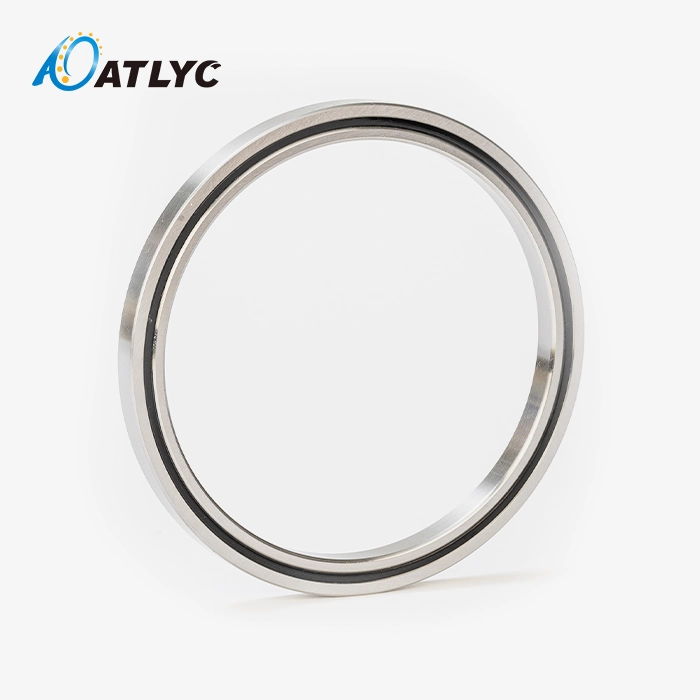
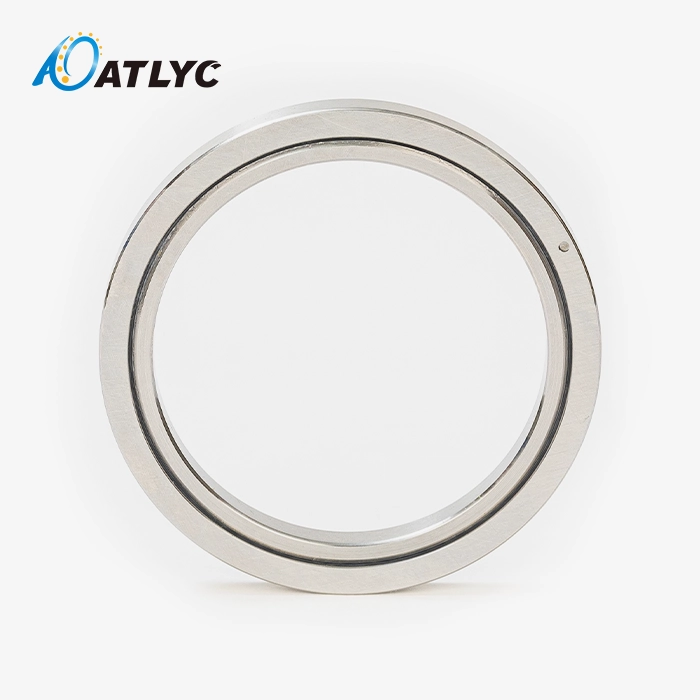
The bearing has an inside diameter of 200 mm, an outside diameter of 250 mm, and a narrow width of 32 mm. This profile fits into small assembly areas where regular multi-bearing setups would make things taller or heavier than they need to be. This ring doesn't have any flanges or separate housings, so it cuts down on the number of parts needed and the time it takes to put them together. The inner diameter is 200 mm, the outer diameter is 250 mm, and the width is 32 mm. The precision grade is P4 (ISO, which is similar to ABEC-7) and the material is GCr15/GCr15SiMn. The raceway hardness is 58–64 HRC, and the seal type is UU (dual-sided rubber contact seal). The available accuracy grades are P6, P0, P5, P4, and P2.
| Parameter | Value |
|---|---|
| Inner Diameter | 200 mm |
| Outer Diameter | 250 mm |
| Width | 32 mm |
| Precision Grade | P4 (ISO, comparable to ABEC-7) |
| Material | GCr15 / GCr15SiMn |
| Raceway Hardness | 58–64 HRC |
| Seal Type | UU (dual-sided rubber contact seal) |
| Available Accuracy Grades | P6, P0, P5, P4, P2 |
Roller and Raceway Design
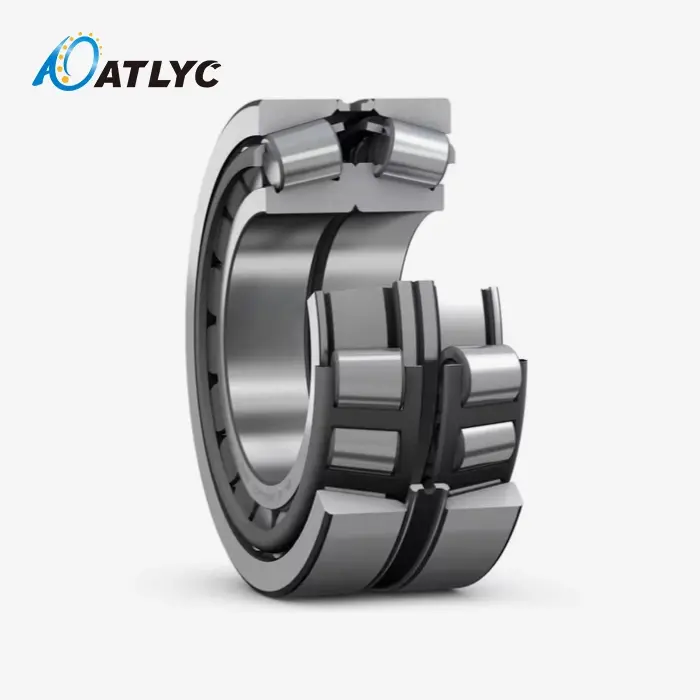
Inside V-groove raceways, cylindrical wheels sit at different 90-degree angles. This cross arrangement turns something that would normally need two or three separate bearings into a single, small unit. There are spacer blocks between each roller that stop them from tilting and lower the variation in friction. This keeps the output torque fixed over all full spin cycles.
Integrated Ring Structure and Mounting
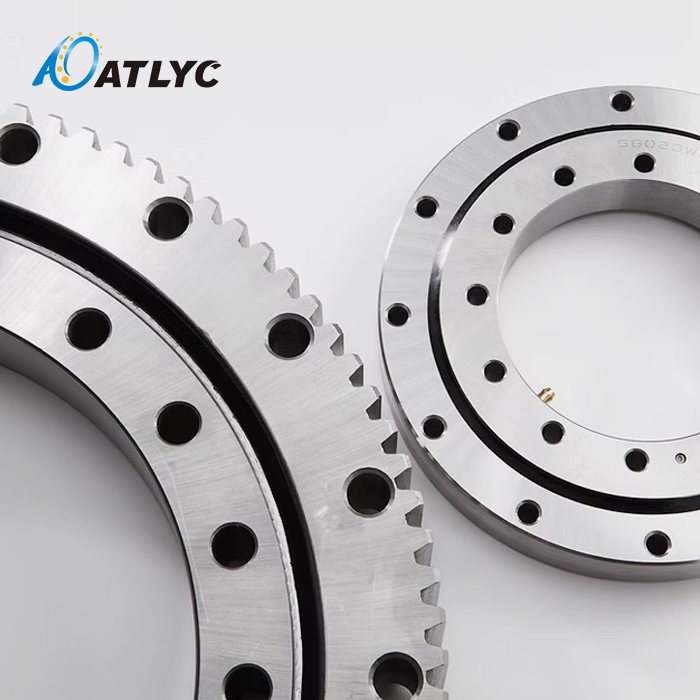
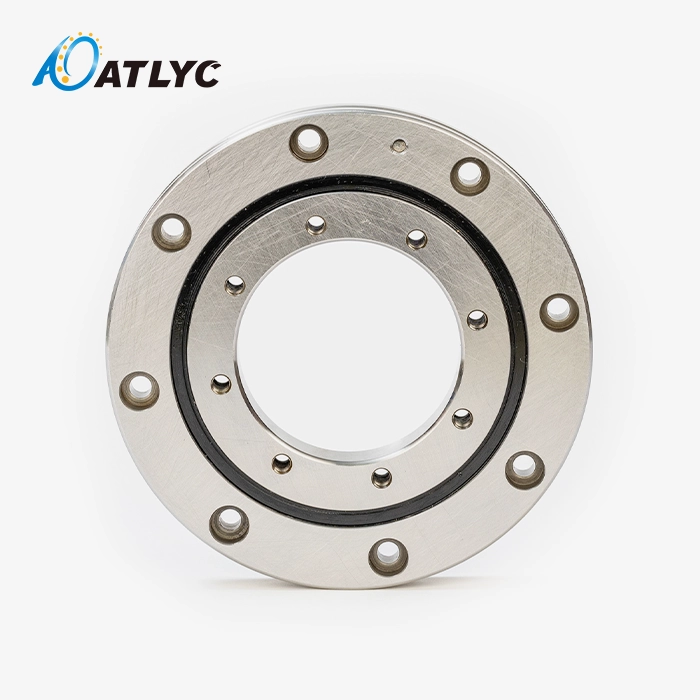
Both the inner and outer rings are made from a single piece of metal. This one-piece design doesn't bend as easily when tilted heavily compared to split-ring designs. Engineers can bolt each ring face directly to the rotary table or machine base because it has pre-drilled countersunk or threaded mounting holes. This eliminates the need for intermediate supports and lowers the overall height of the assembly.
Comparing XU200250UU/P4 with Other Slewing Bearing Options
P4 vs. P5 Precision Grade
The XU200250UU/P4 Crossed Roller Slewing Bearing uses the P4 tolerance class, which comes from ISO 492 and sets stricter limits for measurement and rotational runout than P5. Sum of the angular errors from a P5 bearing can be two to three times the number found from a P4 unit in CNC indexing tables or robotic joint uses. When part tolerances are less than ±5 µm, P4 is the lowest level that can be used.
Crossed Roller Bearing vs. Standard Slewing Ring
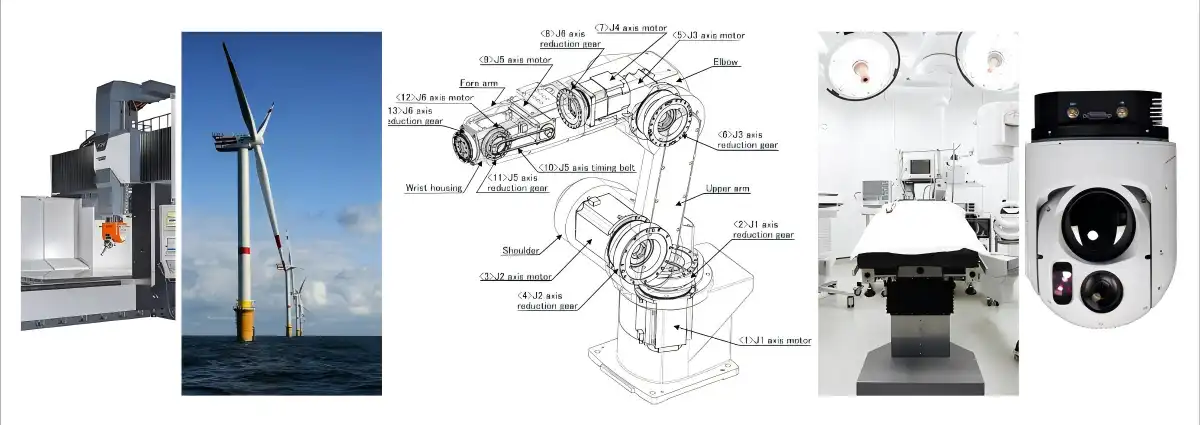
Balls are used in standard four-point contact slewing rings, which work well for large-diameter, low-speed uses like crane tracks. In the XU series, on the other hand, the crossed roller layout makes line contact instead of point contact, which increases the useful load area. This means that the material is more stiff and can hold more moment loads per unit of cross-section. This is an important benefit for robot joints and medical equipment that needs to be precise.
Total Cost of Ownership Consideration
The table below shows the differences in ownership costs for a P4 crossed roller unit and a standard angular contact bearing arrangement for the same use case. The cross-roller unit has two bearings, a spacer, and a housing. The number of components is one bearing unit, two bearings, and a housing. The assembly time is low, moderate, or high, depending on the preload set. The runout accuracy is P4 (ABEC-7), and it depends on the preload set. The replacement process is either a single unit swap or multi-part disassembly. The price per assembly is moderate to high, depending on the number of parts.
| Factor | XU200250UU/P4 Crossed Roller | Dual Angular Contact Arrangement |
|---|---|---|
| Number of Components | 1 bearing unit | 2 bearings + spacer + housing |
| Assembly Time | Low | Moderate to high |
| Runout Accuracy | P4 (ABEC-7) | Depends on preload set |
| Replacement Complexity | Single unit swap | Multi-part disassembly |
| Price per Assembly | Moderate | Higher (multiple parts) |
Getting rid of some parts lowers the cost of inventory, the work that goes into putting things together, and the chance of making mistakes when doing maintenance in the field.
Sourcing from China: Benefits for Global B2B Buyers
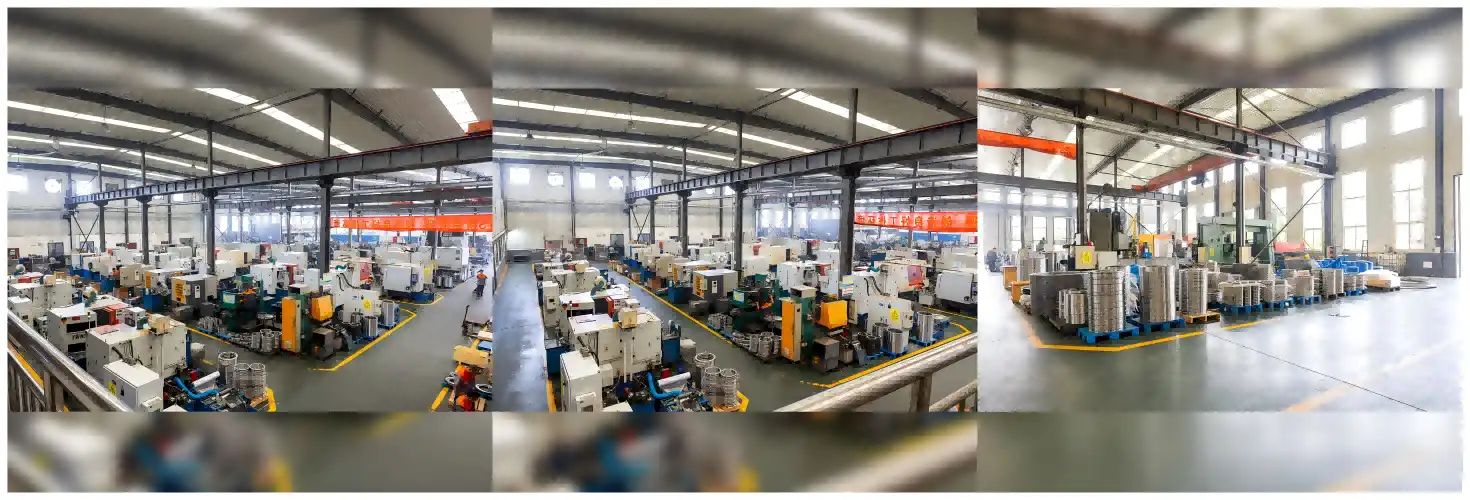
China makes a lot of bearings these days. In Luoyang, the country's ancient center for making bearings, the supply chain for precision crossing roller bearings is especially well developed.Here are the main benefits of buying from an OEM that experienced buyers keep bringing up:
- Factory-direct access to P4-grade production: Chinese manufacturers hold ISO 9001 and IATF 16949 certifications, meaning their quality systems are audited to the same standards your own facilities likely follow. Buyers in the US and Germany receive SGS inspection reports, CMM dimensional records, and material certificates as standard documentation with each shipment.
- Scalable order volumes with competitive unit pricing: Factory-direct channels remove distributor markups. For recurring OEM programs requiring hundreds of units per quarter, this pricing structure materially affects landed cost compared to sourcing through European or North American intermediaries.
- Flexible lead times and global logistics support: Established Chinese bearing exporters maintain buffer inventory for standard XU series dimensions, reducing average lead times to four to six weeks for volume orders. Air freight, sea freight, and express courier options give procurement teams real scheduling flexibility.
These benefits help mid-sized to large manufacturers with the main problems they have with managing their bearing supply: stable prices, complete documentation, and knowing when to expect deliveries. When you work directly with an experienced Chinese crossed roller bearing supplier, your supply chain has fewer links, and engineering conversations happen closer to where the bearings are being made, including products such as the XU200250UU/P4 Crossed Roller Slewing Bearing.
Ensuring Quality and Reliability in Your Procurement Process
Verifying Supplier Credentials
Ask for ISO 9001 and IATF 16949 certificates and check with the organization that issued them to make sure they are still valid. Ask for a recent report from a third party that inspects the XU200250UU/P4 model in question. Suppliers you can trust give you CMM reports with the bore, OD, width, and runout values for every production batch.
Maintenance Best Practices
The version that is sealed with UU comes pre-greased with lithium soap-based grease. Every six to twelve months, re-grease the bearing through its grease nipple when it is used continuously. At each service interval, look for an unusual rise in torque. This could mean that pollution is getting in or the oil is wearing out. Keep units that haven't been used flat and in their original package, away from moisture and shaking.
Post-Purchase Support Expectations
A good provider gives you more than just a product. When people ask about sizes, engineering teams should be able to answer them, offer ways to change things like different hole shapes or non-standard precise grades, and keep extra parts on hand in case someone needs them after the sale. Suppliers who have exported to both the US and European markets know what paperwork is needed and can quickly send out business bills, packing lists, and certificates of origin.
Making the Right Decision: Why Choose This Crossed Roller Bearing from China?
When OEMs look for precision slewing bearings, they have to choose between performance that meets their needs and the cost of buying them. When it comes from a verified Chinese manufacturer, the XU200250UU/P4 takes care of both sides of that problem. The P4's accuracy level is the same as or better than that of similar guns made in Japan and Europe with this bore size. Also, the factory-direct price is usually 20–35% less than the price of similar Western-branded guns.Since 2010, Luoyang Auto Bearing Co., Ltd. has been making bearings. It started out as a single workshop and now has six production facilities and 120 employees who work in production, research and development, quality control, and assembly. Customer bases in South Korea, the US, Germany, Russia, Iran, and Turkey, as well as ISO 9001 and IATF 16949, are served by the business. Their XU series crossed roller bearing line has accuracy grades from P6 to P2, and OEM projects can get unique hole shapes or changes to the dimensions.
Conclusion
OEMs and industrial wholesalers can get the XU200250UU/P4 Crossed Roller Slewing Bearing from China, which has P4-grade rotary accuracy, monolithic ring stiffness, and dual-seal contamination protection. The production is ISO-certified, and the prices are factory-direct. Buyers can be sure of consistent quality, full documentation, and quick engineering support from verified suppliers in Luoyang's well-established bearing manufacturing cluster. Crossed roller bearings made in China are a good long-term choice for buying teams looking for their next bearing source because they meet precise specifications and are cost-effective.
FAQ
What is the practical difference between P4 and P5 accuracy for this bearing?
ISO 492 says that P4 requires tighter runout and size tolerances than P5. In precise CNC indexing or robotic arm applications, P4 cuts the total amount of rotational positioning error by about 40–60% compared to P5. This is important when making parts for airplanes or semiconductors with tolerances of less than 10 µm.
Does the XU200250UU/P4 require a separate housing?
Not at all. On both the inside and outside of the XU series rings, fixing holes have already been drilled. Because you bolt the bearing directly to the machine base and the spinning table, you don't need any flanges or external housings. This also lowers the height of the unit.
What are typical lead times for bulk orders from China?
Most well-known Chinese bearing suppliers say that large orders will take four to six weeks for standard XU200250UU sizes. Suppliers who keep a backup stock can fill smaller orders more quickly. During your first inquiry, make sure that buffer stock is available.
Can I order a custom precision grade or modified hole pattern?
Yes. For the XU200250UU series, manufacturers like Luoyang Auto Bearing offer grades P6, P0, P5, P4, and P2. They can also make custom countersunk or threaded hole configurations to match your assembly drawings.
How do I verify that a Chinese bearing supplier is legitimate?
Before placing your first order, make sure you get the original ISO 9001 and IATF 16949 certificates and check them with the organization that issued them. You should also ask for a third-party CMM inspection report for the specific model.
Request a Quote for the XU200250UU/P4 Crossed Roller Slewing Bearing from ATLYC
ATLYC sells the XU200250UU/P4 Crossed Roller Slewing Bearing with full ISO 9001 and IATF 16949 paperwork, factory-direct prices, and flexible OEM order support. Luoyang Auto Bearing has been approved to make precision products for 15 years. We answer technical questions within 24 hours because we are a reliable source for XU200250UU/P4 Crossed Roller Slewing Bearings in the US, Germany, and South Korea. To get a price right away, email your picture or list of requirements to auto@lyautobearing.com.
References
1. Bearing Technical Journal — Rolling Bearing Accuracy and Preload Standards, 2022
2. Industrial Machinery Digest — Slewing Ring and Crossed Roller Bearing Selection Guide, 2021
3. ISO 492:2014 — Rolling Bearings: Radial Bearings — Dimensional and Geometrical Tolerances, International Organization for Standardization, 2014
4. Motion System Design Magazine — Crossed Roller Bearings in Precision Automation, 2020
5. IATF 16949:2016 — Quality Management System Requirements for Automotive Production, International Automotive Task Force, 2016
6. Asian Bearing Industry Report — China Bearing Exports: Precision Grades and Global Market Competitiveness, 2023
Learn about our latest products and discounts through SMS or email