- English
- French
- German
- Portuguese
- Spanish
- Russian
- Japanese
- Korean
- Arabic
- Greek
- German
- Turkish
- Italian
- Danish
- Romanian
- Indonesian
- Czech
- Afrikaans
- Swedish
- Polish
- Basque
- Catalan
- Esperanto
- Hindi
- Lao
- Albanian
- Amharic
- Armenian
- Azerbaijani
- Belarusian
- Bengali
- Bosnian
- Bulgarian
- Cebuano
- Chichewa
- Corsican
- Croatian
- Dutch
- Estonian
- Filipino
- Finnish
- Frisian
- Galician
- Georgian
- Gujarati
- Haitian
- Hausa
- Hawaiian
- Hebrew
- Hmong
- Hungarian
- Icelandic
- Igbo
- Javanese
- Kannada
- Kazakh
- Khmer
- Kurdish
- Kyrgyz
- Latin
- Latvian
- Lithuanian
- Luxembou..
- Macedonian
- Malagasy
- Malay
- Malayalam
- Maltese
- Maori
- Marathi
- Mongolian
- Burmese
- Nepali
- Norwegian
- Pashto
- Persian
- Punjabi
- Serbian
- Sesotho
- Sinhala
- Slovak
- Slovenian
- Somali
- Samoan
- Scots Gaelic
- Shona
- Sindhi
- Sundanese
- Swahili
- Tajik
- Tamil
- Telugu
- Thai
- Ukrainian
- Urdu
- Uzbek
- Vietnamese
- Welsh
- Xhosa
- Yiddish
- Yoruba
- Zulu
CRBC Series Crossed Roller bearing for Industrial Robots
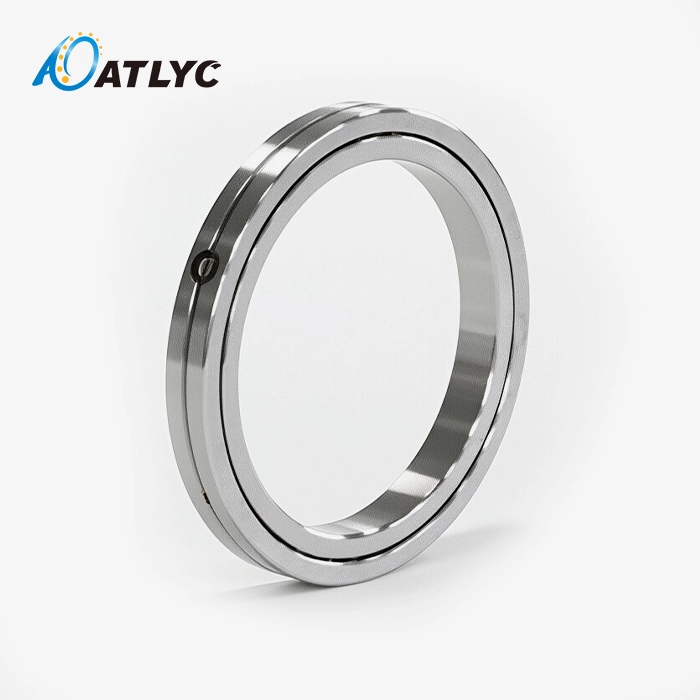
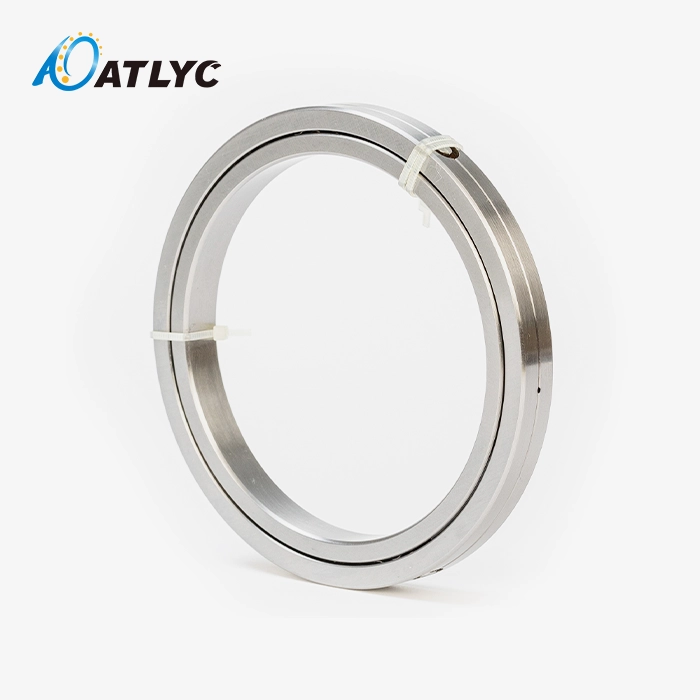
When precision matters in industrial robotics, the bearing you choose can determine whether your entire assembly performs at its peak or falls short under load. The CRBC Series Crossed Roller bearing addresses this challenge directly. Engineered with an integral inner and outer ring structure, it handles radial, axial, and moment loads simultaneously within a single compact unit. With precision grades reaching P4/P2 and rigidity increased by 20–30% over split-ring designs, this bearing is the technical answer to what modern robotic joints demand.
Understanding CRBC Series Crossed Roller Bearings
How the Design Works
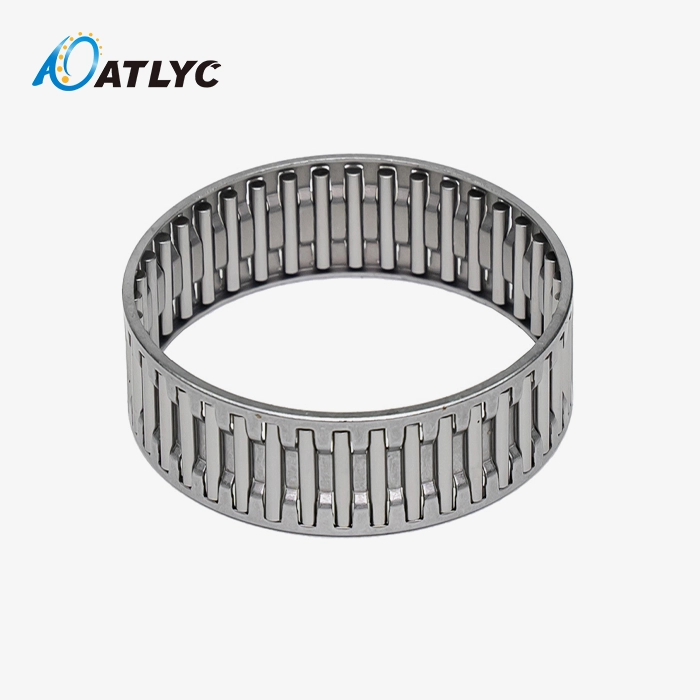
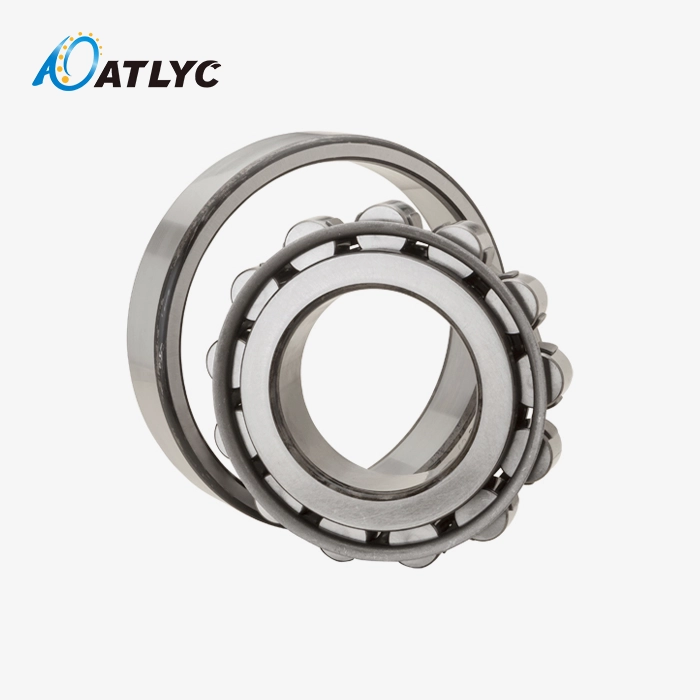
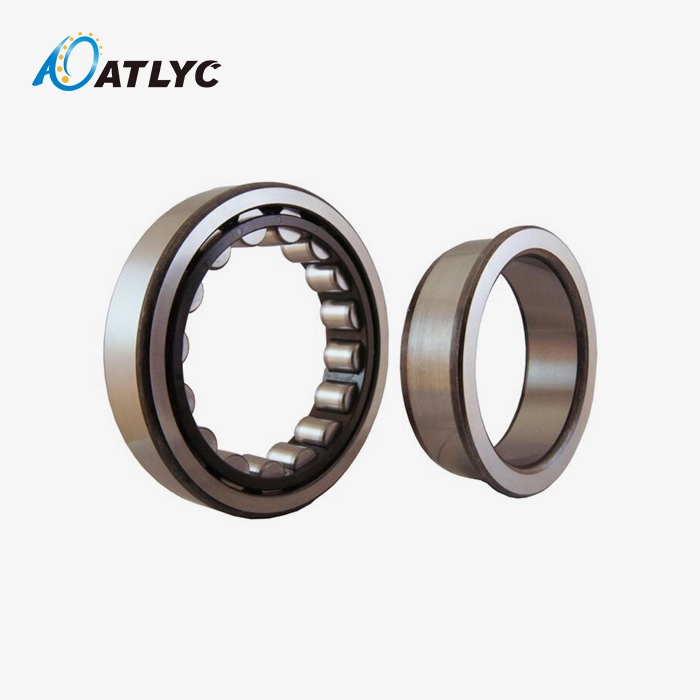
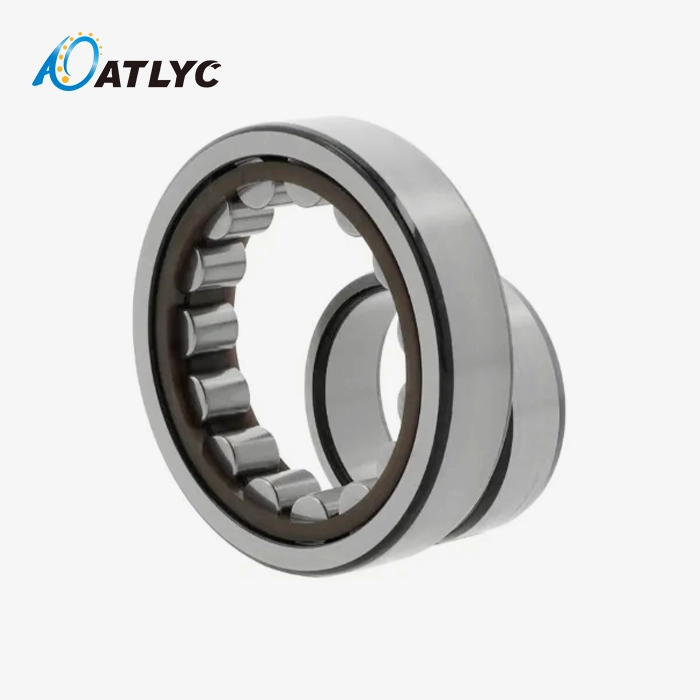
The CRBC Series Crossed Roller bearing has spherical rollers that are positioned at right angles to the inner and outer raceways, making a 90° angle. This layout makes the rollers face opposite directions, which is something that regular ball bearings can't do on their own. The integral ring structure gets rid of the assembly gap that split-ring designs have by nature. This makes a unit that stays geometrically stable even when stressed over and over again.
Material and Precision Standards
All of the raceways are made from GCr15/SUJ2 high-carbon chromium bearing steel that has been heated until the surface is 58–64 HRC hard. It meets ISO and JIS standards for precision at grades P5, P4, and P2. Its runout tolerances are measured in microns. Before being sent out, ATLYC makes sure that every batch of products meets the quality standards set by ISO 9001 and IATF 16949.
Load Capacity and Service Life
| Specification | CRBC Series |
|---|---|
| Precision Grade | P5 / P4 / P2 |
| Operating Temperature | Up to 120°C (metal cage) |
| Rigidity Increase vs. CRB | 20%–30% |
| Contact Angle | 45° (equal radial & axial) |
| Cage Material | Brass or Steel |
This is the CRBC Series specification sheet. The precision grade is P5, P4, or P2. The operating temperature is up to 120°C (metal cage). The rigidity increase compared to the CRB is 20% to 30%. The contact angle is 45° (equal radial and axial). The cage material is brass or steel.
Advantages of CRBC Crossed Roller Bearings in Industrial Robots
Positioning Accuracy and Vibration Control
Joint accuracy in six-axis flexible robots depends on how strong the bearings are. The CRBC Series Crossed Roller bearing's integral ring design gets rid of deflection points that can add up to positional error. Crossed roller geometry provides three to four times the rigidity of angular contact ball bearings because the rollers contact each other along a line instead of a point. This means that there will be less vibration, smoother operation, and better accuracy at every joint. When it comes to industrial robotics, these are the main benefits:
- Space efficiency: The single-unit construction replaces what would otherwise require two paired angular contact bearings, reducing axial length by a significant margin and freeing design space in compact robot arm joints.
- High-temperature stability: The brass or steel metal cage maintains dimensional integrity at temperatures up to 120°C, which is necessary in robotic welding cells where ambient heat is a persistent factor.
- Long service intervals: The labyrinth seal combined with grease injection holes keeps lubricant in place over extended periods, reducing how frequently maintenance teams need to service each joint.
These benefits help OEMs and companies that make automation equipment with a practical problem: they cut down on unplanned breaks on production lines where robots work 24 hours a day.
Real-World Application Fields
The CRBC Series Crossed Roller bearing works well in heavy-duty CNC machining machines, large-scale precision indexing tables, and robotic welding arms used in the automobile industry. Equipment makers in Europe and the US have started using this bearing in high-rigidity situations where split-ring alternatives weren't stable enough over time.
How to Choose the Right CRBC Crossed Roller Bearing for Your Industrial Robot
Matching Load and Dimensional Requirements
Before you choose a crossed roller bearing, make sure you know the highest moment load that your robot joint will be under when the arm is fully extended. The most common mistake in purchasing is getting a bearing that is too small. Compare the bore diameter, outer diameter, and width to the joint housing drawing. Next, make sure that the rated dynamic load capacity is higher than the estimated peak.
Comparing CRBC Against Competing Brands
Both NSK and THK make good crossed roller bearings, and comparing them directly helps buying managers make choices that are fair. The NSK crossed roller series has a well-known brand name and is widely available. However, at the same precision grades, it costs 30–45% more than ATLYC's CRBC Series. THK mainly makes goods for linear motion. Their rotary crossed rollers are more expensive and should only be used in situations where brand specifications are legally needed. When you place a mid-level order of ATLYC's CRBC crossing roller bearing, you can get P4/P2 precision grades, competitive lead times, and OEM customization at numbers that NSK and THK usually can't handle.
OEM and Volume Procurement Options
| Order Type | Lead Time | Customization | MOQ |
|---|---|---|---|
| Standard Stock | 7–15 days | No | 1 pc |
| OEM Custom | 20–35 days | Yes (dimensions, seals, cage material) | Negotiable |
| Bulk Contract | Per agreement | Full spec control | 500+ pcs |
ATLYC helps businesses buy things from each other by offering flexible quote systems, bulk discounts, and CRBC Series Crossed Roller bearing logistics planning for just-in-time delivery in the US, Germany, South Korea, and other places.
Installation and Maintenance Guide for CRBC Series Crossed Roller Bearings
Installation Procedure
Before installing, make sure the housing bore and shaft seat are very clean. When you bolt the bearing into the housing, use a calibrated torque wrench and make sure you follow the manufacturer's instructions for how to tighten the bolts. On the ring face, you should never use direct hammer force. Use a number indicator to line up the bearing axially; an error greater than 0.01 mm can greatly shorten the rated life.
Lubrication Best Practices
For the CRBC line, EP (Extreme Pressure) lithium-based grease is the best lube. Because crossed rollers have a line contact shape that makes contact pressure higher than with ball bearings, regular grease may wear out faster. Use the grease filling spots that are built into the labyrinth seal system to apply it. The frequency of relubrication depends on the operating temperature and load cycle, but for most robotic applications, once every 500 to 1,000 hours is a good starting point.
Routine Inspection and Troubleshooting
At regular times, listen for strange noises or vibrations in the CRBC Series Crossed Roller bearing. High starting force or irregular spinning is usually a sign of dirt or broken grease, not a failed bearing. During each planned repair window, check the integrity of the labyrinth seal. If the runout goes beyond what was originally planned, check the housing bore for wear before deciding that the bearing is broken.
Where and How to Buy CRBC Series Crossed Roller Bearings
Purchasing Channels
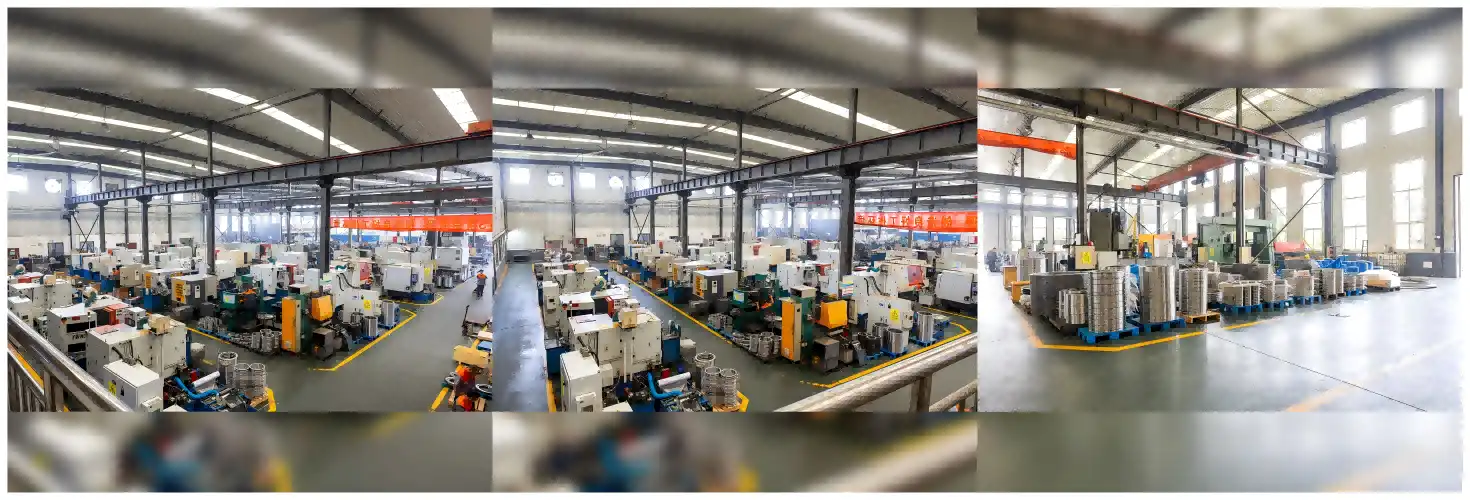
ATLYC, which stands for Luoyang Auto Bearing Co., Ltd., was established in 2010 and now has six production workshops with 120 specialists working there in areas like manufacturing, research and development, quality control, and assembly. Over the past 15 years, ATLYC has built direct export relationships with South Korea, Russia, Iran, the US, and Turkey. These relationships include distributors and OEM buyers. When you buy directly from ATLYC, you can be sure that the product is real and get expert help from the factory. You can also see the certification paperwork.
Warranty, After-Sales, and Technical Support
Each package from ATLYC comes with a batch traceability record, material certificates, and dimensional inspection reports. After-sales support includes talking to an expert about installation questions and getting help with a new bearing if it doesn't work as planned. For big purchases, there is specialized account management to help with planning ahead and reserving stock.

Conclusion
The CRBC Series Crossed Roller bearing is a well-developed technology that can be used in industrial robots, CNC machine centers, and indexing systems for precise spinning tasks. It works better in harsh, high-temperature conditions thanks to its metal cage, integral ring structure, and P4/P2 precision grades. ATLYC has been making this line of bearings for 15 years, has ISO 9001 and IATF 16949 certifications, and has direct export experience. This makes it a trusted source for manufacturers and procurement experts looking at long-term supply deals.
FAQ
Why does the CRBC Series use an integral ring instead of a split outer ring?
The installation gap that comes with split-ring designs is gone with this design because the inner and outer rings are built in. This makes the whole thing 20–30% stiffer and gets rid of a possible source of deflection that could make positional accuracy worse when moment loads are applied.
How does a crossed roller bearing compare to angular contact ball bearings in rigidity?
Crossed roller bearings are three to four times stiffer than angular contact ball bearings, which depend on point contact. This is because the roller and raceway are in line contact with each other. This is very important for computer joints because hardness directly affects how often something can be done.
What lubrication should I use for CRBC bearings?
EP lithium-based grease is what most people suggest. Due to the high contact pressure from line-contact rollers, extreme pressure additives must be added to the grease to keep metal from touching metal during heavy load cycles.
Can CRBC bearings handle combined loads?
Yes. The bearing can handle radial, axial, and moment loads all at the same time because of its 45° contact angle design.
What precision grades are available?
ATLYC makes the CRBC Series Crossed Roller bearing in ISO precision grades P5, P4, and P2. CMM inspection equipment checks the runout tolerances at the micron level.
Request a Quote for CRBC Series Crossed Roller Bearing — Contact ATLYC Today
ATLYC has been selling high-precision crossed roller bearings to original equipment makers (OEMs) and companies that make industrial equipment in the US and around the world for 15 years. As a dedicated producer of CRBC Series Crossed Roller bearings, we can provide certified production, OEM customization, and reliable delivery times. Get in touch with our sales and engineering team to talk about your application needs and get a competitive quote. To begin, email us at auto@lyautobearing.com or go to https://aotezhoucheng.aixdb.cn/.
References
1. Harris, T. A., & Kotzalas, M. N. — Rolling Bearing Analysis, Taylor & Francis, 2006.
2. SKF Group — SKF General Catalogue, SKF, 2018.
3. ISO — ISO 492: Rolling Bearings — Radial Bearings — Dimensional and Geometrical Tolerances, International Organization for Standardization, 2014.
4. NSK Ltd. — NSK Precision Machine Components Catalogue, NSK Technical Report, 2020.
5. Hamrock, B. J., Schmid, S. R., & Jacobson, B. O. — Fundamentals of Machine Elements, McGraw-Hill, 2005.
6. IFR — World Robotics 2023: Industrial Robots, International Federation of Robotics, 2023.
Learn about our latest products and discounts through SMS or email