- English
- French
- German
- Portuguese
- Spanish
- Russian
- Japanese
- Korean
- Arabic
- Greek
- German
- Turkish
- Italian
- Danish
- Romanian
- Indonesian
- Czech
- Afrikaans
- Swedish
- Polish
- Basque
- Catalan
- Esperanto
- Hindi
- Lao
- Albanian
- Amharic
- Armenian
- Azerbaijani
- Belarusian
- Bengali
- Bosnian
- Bulgarian
- Cebuano
- Chichewa
- Corsican
- Croatian
- Dutch
- Estonian
- Filipino
- Finnish
- Frisian
- Galician
- Georgian
- Gujarati
- Haitian
- Hausa
- Hawaiian
- Hebrew
- Hmong
- Hungarian
- Icelandic
- Igbo
- Javanese
- Kannada
- Kazakh
- Khmer
- Kurdish
- Kyrgyz
- Latin
- Latvian
- Lithuanian
- Luxembou..
- Macedonian
- Malagasy
- Malay
- Malayalam
- Maltese
- Maori
- Marathi
- Mongolian
- Burmese
- Nepali
- Norwegian
- Pashto
- Persian
- Punjabi
- Serbian
- Sesotho
- Sinhala
- Slovak
- Slovenian
- Somali
- Samoan
- Scots Gaelic
- Shona
- Sindhi
- Sundanese
- Swahili
- Tajik
- Tamil
- Telugu
- Thai
- Ukrainian
- Urdu
- Uzbek
- Vietnamese
- Welsh
- Xhosa
- Yiddish
- Yoruba
- Zulu
Are 7206AC Angular Contact Bearings Right for CNC Machines?
Angular contact bearings 7206AC represent a specialised solution for CNC machining environments where precision, speed, and load versatility converge. These single-row ball bearings, measuring 30mm bore, 62mm outer diameter, and 16mm width with a 25° contact angle, are specifically engineered to handle simultaneous radial and axial loads in high-speed spindle applications. Their suitability for CNC machines stems from a balanced design that delivers exceptional rigidity, thermal stability, and operational longevity—making them an excellent choice when your machining demands consistent precision under combined loading conditions.
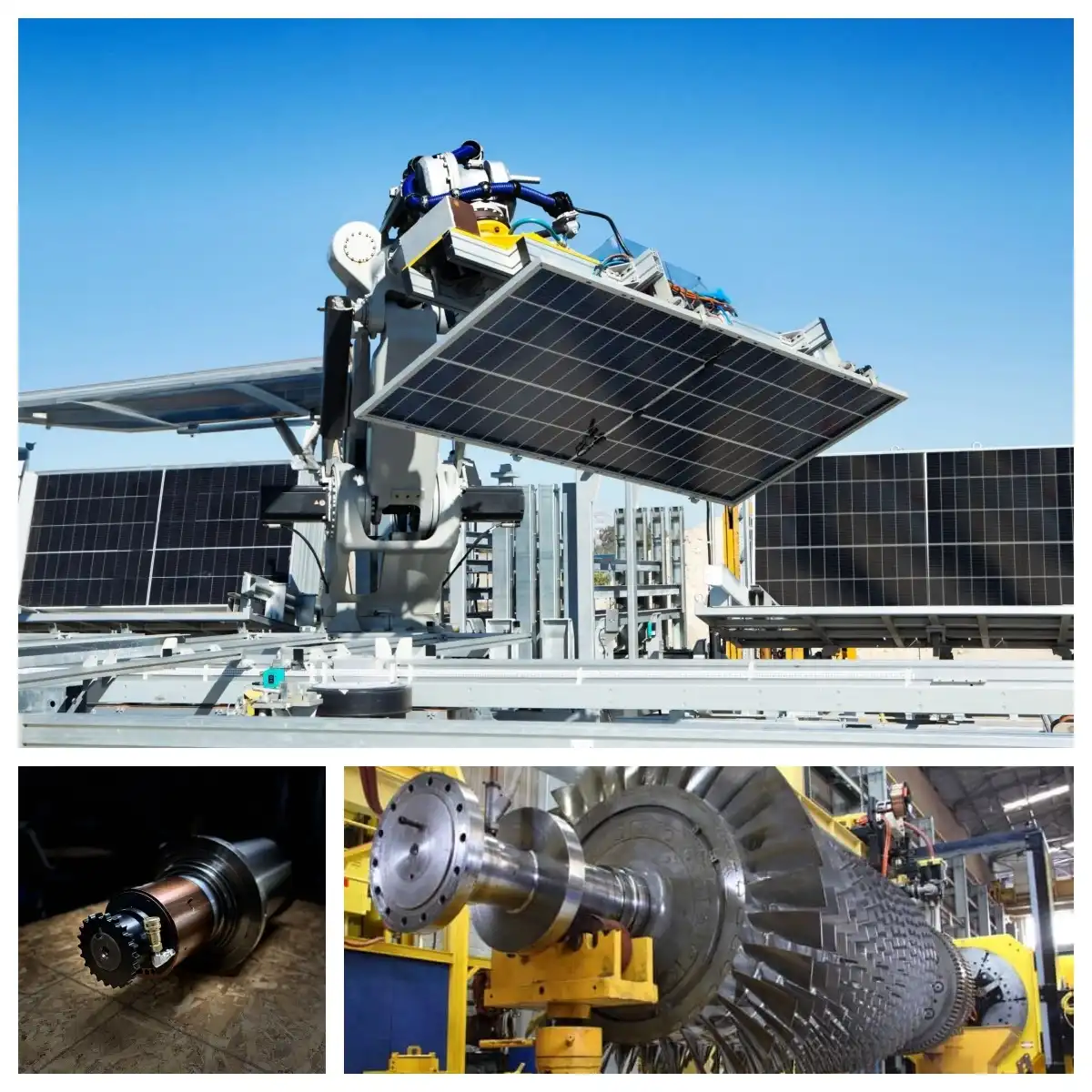
Understanding Angular Contact Bearings 7206AC and Their Applications in CNC Machines
Angular contact bearings are designed with the guiding principle of producing an inherent contact angle that dictates load distribution by offsetting the inner and outer ring raceways along the bearing axis. When it comes to combined forces, the 7206AC structure is head and shoulders above deep groove ball bearings, which are designed to handle radial loads. An optimal technical compromise, the 25° contact angle is steeper than 15° variations for more axial capacity and shallower than 40° designs for better high-speed performance. This part's heat treatment of GCr15 bearing steel gives it the dimensional stability and hardness retention needed for long-term CNC spindle use. Choosing materials that can withstand wear from constant high-speed rotation while still retaining precision under heat cycling is a major challenge.
Core Design Features
Angular Contact Bearings 7206AC employ raceway geometry that distributes loads across optimised contact ellipses. This configuration reduces stress concentrations compared to point-contact designs, directly extending service life in demanding applications. The 7206AC model incorporates this principle with precision grinding processes that achieve P5, P4, or P2 tolerance classes—specifications that determine vibration levels and rotational accuracy in finished assemblies.
Why Do CNC Machines Demand This Bearing Type?
Quick acceleration, constant high-speed rotation, changes in cutting force, and control of thermal expansion are some of the specific operational issues that CNC spindles encounter. These competing demands are too much for standard bearings to handle. Angular contact bearings employ several techniques to resolve these challenges. With their preload capability, they eliminate internal clearance, which means that balls won't skid even when the spindle accelerates quickly. The contact angle geometry can support the thrust loads produced by cutting operations without the need for separate thrust bearing systems. The robust spindle support systems created by paired arrangements, such as back-to-back (DB), face-to-face (DF), or tandem (DT) configurations, resist deflection during heavy cuts and maintain workpiece tolerances and surface finish quality.
CNC machines that use 7206AC bearings include those that handle interrupted cuts, variable thrust loads on turning centres, and grinding machines that require extremely accurate rotational accuracy. The bearing's dimensional compliance with conventional spindle housing designs makes retrofitting and maintenance processes easier. This, in turn, reduces downtime during bearing replacement cycles.
Performance and Technical Advantages of 7206AC Bearings in CNC Machines
Understanding load ratings clarifies bearing selection for specific CNC applications. The 7206AC model handles combined loading scenarios through its contact angle geometry. While exact load values vary by manufacturer specification, the 25° angle typically supports moderate to heavy axial loads alongside substantial radial forces—a combination frequently encountered in CNC machining operations.
High-Speed Operational Characteristics
The contact angle directly influences thermal generation during rotation. At high speeds, the 25° design generates controlled heat buildup, enabling sustained operation without thermal expansion issues that compromise spindle precision. This thermal stability addresses a critical pain point in production environments where maintaining dimensional accuracy across extended machining cycles determines part quality consistency. Speed limitations—expressed through the DN factor (bearing bore diameter multiplied by rotational speed)—determine operational boundaries. Angular contact bearings with proper lubrication systems achieve high DN values suitable for modern CNC spindle speeds. Oil-air or oil-mist lubrication extends these limits by minimising churning resistance compared to grease-lubricated configurations.
Material Engineering and Surface Treatments
Raceway surfaces are resistant to deformation under rolling contact pressures because GCr15 bearing steel is heat treated to hardness values between HRC 60 and 64. This hardness criterion preserves the dimensional integrity of the bearing throughout its operational life and prevents precise degradation that could impact machining accuracy. The material choices for the cage affect the performance qualities. The low bulk and low friction qualities of bakelite make it ideal for ultra-high-speed precision applications. Nylon cages are quiet and can withstand temperatures up to 120 degrees Celsius. To keep the CNC spindle from overheating and vibrating, the cage regulates the distance between the balls.
Service Life and Maintenance Considerations
Considerations such as load magnitude, rotational speed, lubrication adequacy, and pollution levels are incorporated into the bearing life calculation in accordance with ISO 281. In CNC spindle settings that are well-maintained, with the right amount of preload and lubrication, angular contact bearings can reach service intervals that are predictable, which helps with scheduling maintenance. Maintenance procedures directly affect the operating life. Monitoring vibration signatures through accelerometer data can detect developing raceway faults before a catastrophic collapse occurs. Abnormal temperature rises detected by thermography inspection can indicate lubrication breakdown or changes in preload. Preventing unanticipated downtime and possible spindle damage, oil analysis tools detect metallic wear particles, allowing for proactive bearing replacement.
Periods between lubrications are conditionally dependent. It is essential to constantly monitor the supply when operating oil-air systems with high-speed spindles. Relubrication of grease-lubricated components is required at regular intervals determined by the total number of operation hours. To avoid bearing failure due to heat deterioration or insufficient film thickness, it is important to choose lubricants that match the operating temperatures and speeds.
Comparing 7206AC with Alternative Bearings for CNC Applications
Selecting optimal bearing configurations requires understanding design variations within the 7206 series and comparing angular contact bearings against alternative types. These distinctions impact performance, cost, and application suitability.
Contact Angle Variations: 7206AC, 7206B, and 7206C
Distinct variations in contact angles, denoted by the suffix, significantly impact load capacity and speed parameters. With a contact angle of 15 degrees, the 7206C model excels at high speeds while still providing modest axial load support. This setup is ideal for high-speed grinding or light-duty milling spindles when rotating speed is more important than axial load capacity. Maximum axial load capacity at reduced speed capabilities is specified by the 7206B designation, which is based on a 40° contact angle. Vertical machining centres, which generate strong axial loading from both cutting and gravitational pressures, are examples of heavy-duty applications that benefit from this design's high thrust forces. When compared to 25° versions, the steeper angle restricts rotational velocity due to higher contact stresses and thermal accumulation at high speeds. The 7206AC model keeps these two extremes under control. In comparison to 15° designs, its 25° angle handles axial loads better, and it outperforms 40° arrangements in terms of high-speed characteristics. For general-purpose CNC machining processes that deal with varying loading circumstances, its adaptability makes it a suitable solution.
Angular Contact Versus Deep Groove Ball Bearings
Similar to other sizes of deep groove ball bearings, the 6206 has a radial load capacity of only a few millimetres and an outer diameter of sixty-two millimetres. Their reduced thrust load support and poorer rigidity when mounted in paired configurations are caused by their raceway geometry, which does not have the axial displacement that is typical of angular contact designs. CNC applications that require minimising spindle deflection benefit from angle contact bearings. The tool position accuracy is maintained by use of the preloaded paired configurations, which, when subjected to cutting pressures, form rigid support systems that resist deflection. Due to their inability to attain the same level of stiffness, deep groove bearings are not recommended for use in precision machining processes that demand extremely tight tolerances. Deep groove bearings, on the other hand, are better suited to uses that involve mostly radial loads and have less stringent precision requirements. Outside of CNC machining settings, they have significant advantages in industrial machinery, such as simplified mounting methods and restricted bidirectional axial capacity.
Procurement Considerations Across OEM Brands
An angular contact bearing from a major bearing manufacturer (such as SKF, NSK, FAG, NTN, Timken, Nachi, or Koyo) will have comparable dimensions and will use the same proprietary materials and production methods. Cost, performance, and supply reliability are all factors that procurement decisions take into account. Thanks to superior metallurgy, more stringent manufacturing tolerances, and extensive technical support, premium brands are able to charge higher prices. Bearing failure generates costly downtime and possibly workpiece scrap in important CNC spindle applications; hence, these concerns justify the cost surcharges. Affordable options that fulfil ISO criteria are offered by mid-tier manufacturers. These are good for less important uses or when you need to replace them aftermarket.
Procurement managers should check for ISO 9001 and IATF 16949 certificates when purchasing angular contact bearings for CNC machines. These certifications ensure that the quality system is compliant. You can verify that component quality meets application requirements by requesting material certificates, dimensional inspection reports, and vibration test data. In addition to getting technical information that helps with bearing selection and troubleshooting, working with authorised distributors makes sure that items are genuine OEM.
Installation and Maintenance Best Practices for 7206AC Bearings in CNC Machines
Proper installation procedures directly impact bearing performance and service life. Angular contact bearings require specific mounting techniques accounting for their directional load capacity and preload requirements.
Spindle Preparation and Mounting Procedures
Remove any debris or contaminants from the spindle housing bores and shafts that could lead to stress concentrations or impede correct seating. Check for any damage to the mounting surfaces and ensure that they are perpendicular and within the specified dimensional tolerances. For precision spindle applications, Ra values below 0.8 micrometres are often required by surface finish criteria. By causing the inner ring to expand due to heat, bearings heated to 80-100°C make mounting easier. Applying too much force can damage an installation, but this method stops it. To avoid damaging material qualities due to overheating, specialised induction heaters provide consistent, controlled heating. The correct seating against the shaft shoulders is ensured by cooling fittings that keep alignment during thermal contraction.
Preload Application Techniques
Paired angular contact bearing arrangements require preload to eliminate internal clearance and establish optimal rigidity. Preload methods include spring-loaded systems providing constant force across temperature variations and fixed-position arrangements using precision spacers or locknut adjustment. Excessive preload generates unnecessary heat and accelerates wear, while insufficient preload allows detrimental vibration and reduces spindle rigidity. Measuring preload requires specialised equipment, including spring scales or torque measurement devices. Manufacturers specify optimal preload values based on application parameters. Following these specifications prevents common installation errors that compromise bearing performance.
Common Installation Pitfalls
Several mistakes frequently occur during angular contact bearing installation. Mixing bearings from different manufacturing lots creates preload inconsistencies from dimensional variations. Contamination introduction during assembly accelerates wear and causes premature failure. Improper alignment generates edge loading that concentrates stresses and reduces service life. Using incorrect mounting tools damages bearing components, particularly cages that are vulnerable to distortion. Each of these issues is preventable through proper training and adherence to manufacturer installation guidelines.
Lubrication Best Practices
Selecting appropriate lubricants matching operational conditions ensures adequate film thickness, preventing metal-to-metal contact. High-speed CNC spindles typically employ oil-air or oil-mist systems that deliver precise quantities of lubricant, minimising churning resistance. Lower-speed applications suit grease lubrication using lithium complex or polyurea formulations rated for bearing operational temperatures. Lubrication quantity affects performance. Excessive grease fills internal voids, creating churning resistance that generates heat and limits speed capability. Manufacturers typically recommend a 30-40% fill rate for grease-lubricated angular contact bearings 7206AC. Oil systems require flow rates sufficient for heat removal without excessive turbulence.
Routine Maintenance and Inspection Protocols
Implementing scheduled inspection intervals enables early defect detection. Vibration monitoring through ISO 10816 standards establishes baseline signatures and alarm thresholds indicating developing problems. Temperature monitoring identifies lubrication issues or preload changes before failure occurs. Visual inspection during scheduled maintenance reveals contamination ingress or seal deterioration requiring corrective action. Bearing replacement becomes necessary when vibration or temperature trends exceed acceptable limits despite corrective maintenance. Planning replacement during scheduled downtime prevents catastrophic failures causing collateral damage to expensive spindle components.
Procurement Guide: How to Source Quality 7206AC Bearings for CNC Machines?
Strategic bearing procurement balances cost management with quality assurance and supply reliability. CNC machine operations depend on consistent bearing availability matching exacting performance specifications.
Selecting Reputable Suppliers
Authorised distributors of major bearing manufacturers provide assurance of genuine products meeting published specifications. These relationships include access to technical support resources assisting with bearing selection, installation guidance, and troubleshooting expertise. Counterfeit bearings present significant risks in precision CNC applications, potentially causing catastrophic failures and expensive equipment damage. When evaluating suppliers, request documentation that confirms authorisation status. Verify quality certifications, including ISO 9001 compliance, demonstrating systematic quality management. IATF 16949 certification indicates automotive-grade quality systems, particularly relevant for manufacturers serving that sector.
Quality Verification Procedures
Demanding inspection reports accompanying bearing shipments verify dimensional accuracy, material properties, and vibration characteristics. These documents should reference specific manufacturing lots, enabling traceability if performance issues emerge. Incoming inspection protocols verify critical dimensions and surface finish quality before installation, preventing defective components from entering production equipment.
Pricing Negotiation Strategies
Volume purchasing leverages economies of scale, reducing per-unit costs for large bearing orders. Long-term supply agreements establish predictable pricing while securing inventory availability. Bulk purchasing requires careful demand forecasting to avoid excess inventory carrying costs while preventing stockouts that halt production. Comparing pricing across multiple qualified suppliers ensures competitive rates without compromising quality standards. However, sourcing decisions should weigh the total cost of ownership, including reliability, technical support access, and warranty coverage, rather than focusing exclusively on the initial purchase price.
Lead Time Management and Logistics
Understanding supplier lead times enables production planning that maintains adequate bearing inventory without excessive capital tied up in stock. Standard bearing sizes, including 7206AC, typically offer shorter lead times than custom configurations. Establishing strategic inventory levels balanced against supply reliability prevents production disruptions from bearing unavailability. International sourcing from manufacturers in China, Japan, Europe, or North America requires logistics coordination accounting for shipping duration and customs clearance. Selecting freight methods that match urgency and cost constraints optimises supply chain efficiency. Air freight suits urgent replacement needs, while ocean shipment provides cost-effective solutions for planned inventory replenishment.
ATLYC: Your Trusted Angular Contact Bearing Supplier
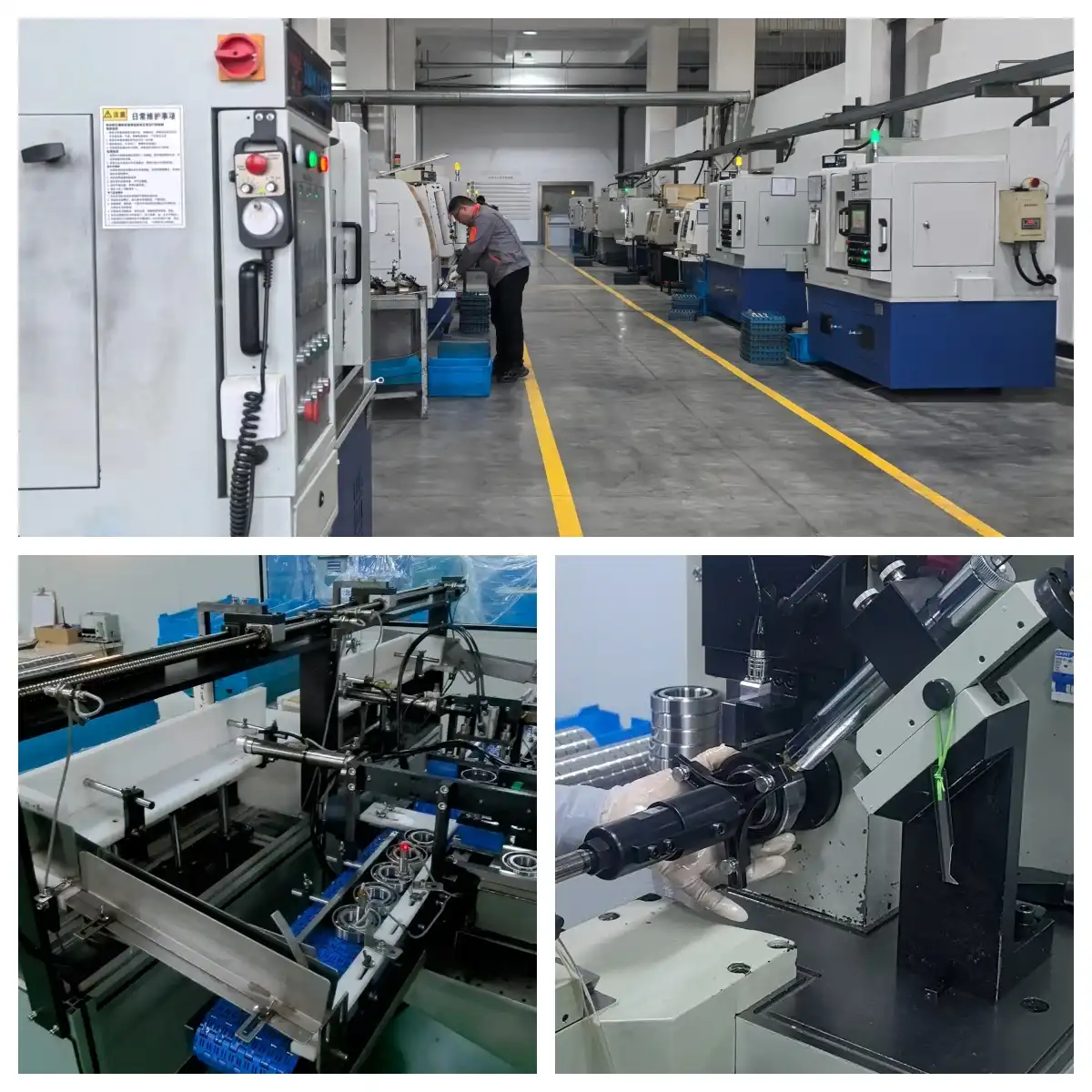
Luoyang Auto Bearing Co., Ltd., operating as ATLYC, brings 15 years of specialised manufacturing experience to bearing production. Since establishing our automated deep groove ball bearing workshop in 2010, we have expanded to six manufacturing facilities covering comprehensive bearing categories. Our 120 skilled professionals manage production, research and development, quality inspection, and assembly operations, ensuring consistent product quality. Our ISO 9001 and IATF 16949 certifications demonstrate commitment to international quality standards critical for CNC bearing applications. We manufacture angular contact bearings to P5, P4, and P2 precision grades using GCr15 bearing steel with advanced heat treatment processes. Standard delivery timeframes of seven working days support rapid procurement needs, while OEM and customisation capabilities address specialised application requirements.
ATLYC serves global markets including South Korea, the United States, Germany, Russia, Iran, and Turkey, supporting automotive manufacturers, industrial equipment producers, and bearing distributors. Our technical team provides application engineering support, assisting with bearing selection, installation guidance, and performance optimisation. Competitive pricing combined with reliable supply chain management makes ATLYC an ideal partner for organisations seeking dependable bearing sources without compromising quality standards.
Conclusion
Angular contact bearings 7206AC deliver the precision, load capacity, and thermal stability CNC machining operations demand. Their 25° contact angle balances axial load support with high-speed capability, while GCr15 steel construction and precision grinding to P5, P4, or P2 tolerances ensure consistent performance. Proper selection comparing contact angle variants, correct installation applying appropriate preload, and systematic maintenance maximise bearing service life. Strategic procurement from certified suppliers guarantees component quality and supply reliability, which are essential for minimising production disruptions. Understanding these factors enables informed decisions optimising CNC spindle performance.
FAQ
What service life can I expect from 7206AC bearings in CNC spindles?
Service life depends on operational parameters, including load magnitude, rotational speed, lubrication quality, and contamination levels. Under properly maintained conditions with appropriate preload and effective lubrication, angular contact bearings typically achieve thousands of operating hours before requiring replacement. Monitoring vibration and temperature trends enables predictive maintenance scheduling, maximising useful life while preventing unexpected failures.
Can I replace 7206AC bearings with 7206B or 7206C variants?
While these bearings share identical dimensional envelopes, their different contact angles alter load capacity and speed characteristics. Substituting 7206C (15° angle) reduces axial load capacity, potentially causing premature failure under heavy thrust loads. Installing 7206B (40° angle) limits maximum speed capability and increases thermal generation. Replacement bearings should match original contact angle specifications unless application engineering analysis confirms the suitability of alternative designs.
What maintenance practices prevent premature bearing failure?
Systematic vibration monitoring detects developing raceway defects, enabling proactive replacement. Maintaining proper lubrication through scheduled regreasing or continuous oil system operation prevents inadequate film thickness. Protecting bearings from contamination through effective sealing extends service life. Verifying preload remains within specifications during maintenance intervals prevents performance degradation from loosening or excessive tightening.
Partner with ATLYC for Reliable Angular Contact Bearings 7206AC Supply
ATLYC specialises in manufacturing precision angular contact bearings meeting the demanding requirements of CNC machine applications. Our ISO 9001 and IATF 16949-certified facilities produce bearings to P5, P4, and P2 tolerance grades with seven-day standard delivery supporting your production schedules. As an experienced angular contact bearing 7206AC manufacturer serving global OEMs and distributors, we provide technical consultation to help with bearing selection, customisation capabilities to meet unique application requirements, and competitive pricing structures for volume procurement. Contact our engineering team at auto@lyautobearing.com to discuss your specific CNC bearing needs and receive detailed quotations. We deliver the quality consistency, supply reliability, and technical expertise your precision machining operations require.
References
1. Harris, T.A. & Kotzalas, M.N. (2006). Advanced Concepts of Bearing Technology: Rolling Bearing Analysis, Fifth Edition. CRC Press, Taylor & Francis Group.
2. Weck, M. & Brecher, C. (2006). Machine Tools Production Systems 2: Design and Calculation, Volume 2. Springer-Verlag Berlin Heidelberg.
3. International Organisation for Standardisation. (2007). ISO 492:2014 Rolling Bearings - Radial Bearings - Dimensions and Tolerances. Geneva: ISO Standards.
4. Eschmann, P., Hasbargen, L. & Weigand, K. (1985). Ball and Roller Bearings: Theory, Design and Application, Second Edition. John Wiley & Sons Ltd.
5. Tlusty, J. (2000). Manufacturing Processes and Equipment. Prentice Hall, Upper Saddle River, New Jersey.
6. Shigley, J.E. & Mischke, C.R. (2001). Mechanical Engineering Design, Seventh Edition. McGraw-Hill Higher Education, New York.
Learn about our latest products and discounts through SMS or email