- English
- French
- German
- Portuguese
- Spanish
- Russian
- Japanese
- Korean
- Arabic
- Greek
- German
- Turkish
- Italian
- Danish
- Romanian
- Indonesian
- Czech
- Afrikaans
- Swedish
- Polish
- Basque
- Catalan
- Esperanto
- Hindi
- Lao
- Albanian
- Amharic
- Armenian
- Azerbaijani
- Belarusian
- Bengali
- Bosnian
- Bulgarian
- Cebuano
- Chichewa
- Corsican
- Croatian
- Dutch
- Estonian
- Filipino
- Finnish
- Frisian
- Galician
- Georgian
- Gujarati
- Haitian
- Hausa
- Hawaiian
- Hebrew
- Hmong
- Hungarian
- Icelandic
- Igbo
- Javanese
- Kannada
- Kazakh
- Khmer
- Kurdish
- Kyrgyz
- Latin
- Latvian
- Lithuanian
- Luxembou..
- Macedonian
- Malagasy
- Malay
- Malayalam
- Maltese
- Maori
- Marathi
- Mongolian
- Burmese
- Nepali
- Norwegian
- Pashto
- Persian
- Punjabi
- Serbian
- Sesotho
- Sinhala
- Slovak
- Slovenian
- Somali
- Samoan
- Scots Gaelic
- Shona
- Sindhi
- Sundanese
- Swahili
- Tajik
- Tamil
- Telugu
- Thai
- Ukrainian
- Urdu
- Uzbek
- Vietnamese
- Welsh
- Xhosa
- Yiddish
- Yoruba
- Zulu
How Does RE2508UUCC0 Enhance Machine Performance?
The RE2508UUCC0 cross roller bearing enhances machine performance by delivering exceptional multi-directional load capacity within a remarkably compact footprint. Its unique crossed roller design handles radial, axial, and moment loads simultaneously while maintaining zero backlash through controlled preload. The dual-sealed construction protects internal components from contamination, and the split inner ring architecture ensures precise alignment during operation. This combination results in smoother motion, reduced vibration, extended component lifespan, and improved positioning accuracy—all critical factors that directly translate to higher productivity and lower maintenance costs in precision manufacturing environments.

Introduction
Precision under pressure is more important than simple rotation for today's industrial machines. The bearing at the core of the mechanism dictates whether the machine meets or falls short of its performance requirements when robotic arms place components within microns or when machining centres conduct complex multi-axis cuts. When traditional bearings fail to satisfy the three interrelated requirements of high rigidity, high precision, and small footprint, the RE2508UUCC0 Cross roller bearing steps in as a tailored solution.
This crossed roller model of precision bearings greatly improves machine performance by reducing friction and guaranteeing smooth operation even under complicated and heavy loads. By distributing forces across several contact points, cross roller arrangements allow equipment to withstand combined stresses without the need for numerous bearing assemblies. This is in contrast to standard ball bearings, which are excellent at handling loads in a single direction. In order to make well-informed purchasing decisions that meet industrial demands, this guide provides B2B procurement experts, engineers, and OEMs with practical knowledge about requirements, comparative advantages, and real-world applications.
For fifteen years, we at ATLYC have perfected the art of producing bearings with the utmost precision. Consistent quality and adherence to international standards are demonstrated by our ISO 9001 and IATF 16949 certifications. Because we know that choosing the correct bearing affects the dependability of your whole production line, we're providing you with this detailed analysis of how the RE2508UUCC0 improves performance.
Understanding RE2508UUCC0 Cross Roller Bearing Specifications and Working Principles
Technical Dimensions and Construction
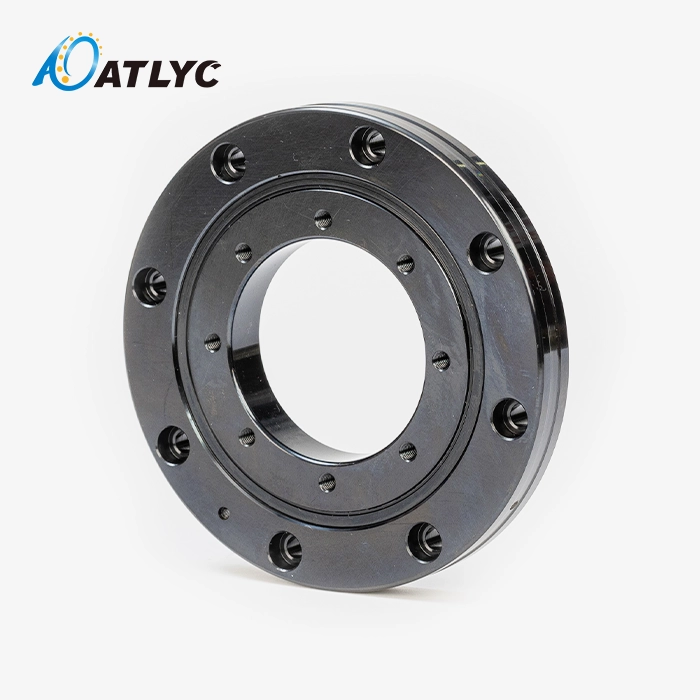
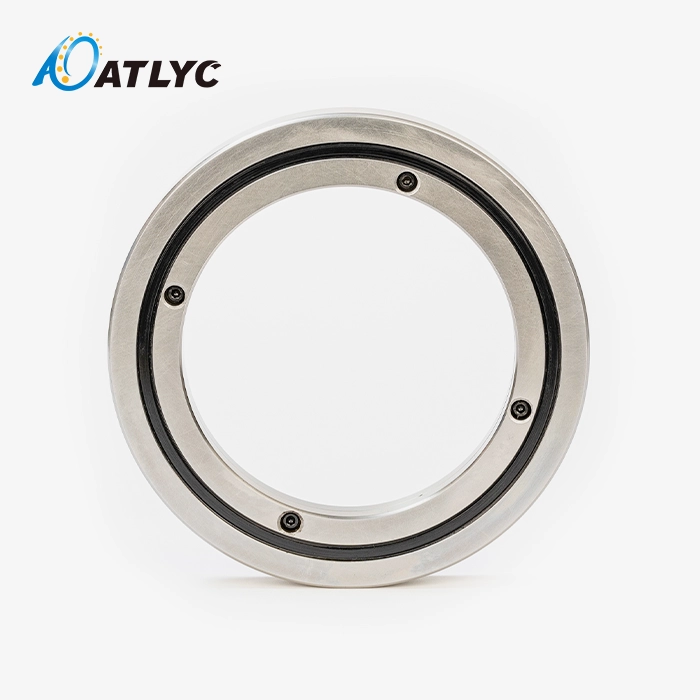
With dimensions of 25 mm on the inside, 41 mm on the outside, and 8 mm on the breadth, the RE2508UUCC0 has a narrow profile that makes the most of its weight capacity while minimising its footprint during installation. In its parts, the designation is as follows: "RE" for a series with an integrated outer ring and split inner ring; "2508" for the dimensional parameters; "UU" for dual rubber seals on both sides; and "CC0" for a controlled negative clearance specification that eliminates backlash through precise preload.
Within the bearing's precision-ground V-groove raceways, you'll find cylindrical rollers spaced at right angles to one another. Operating without compromising structural integrity, the split inner ring design makes installation around permanent shafts a breeze. After assembly, the housing or holding mechanism holds the two inner ring parts together, making them work as one unit. This design is perfect for uses where the housing revolves around a fixed shaft since the incorporated outer ring gives better rotational accuracy while acting as the rotating element.
Material Composition and Quality Standards
The parts are heat treated to a hardness range of 58 to 64 HRC after being made from high-carbon chromium-bearing steel, more precisely GCr15 or GCr15SiMn. The fatigue life is enhanced under the cyclic loading circumstances that are common in industrial automation because of this material choice. The consistent performance throughout temperature fluctuations and sustained operational cycles is contributed to by the steel's grain structure and fine carbide distribution.
P6, P0, P5, P4, and P2 grades of precision tolerances are available, with P5 grades and above providing runout accuracy that exceeds ISO Class 5 standards. Engineers can weigh performance demands against cost factors within this range to choose the right level of precision for their applications. Applications like semiconductor production equipment require higher accuracy ratings because even small vibrations might ruin the outcome.
Operational Mechanics
When compared to ball bearings of the same size, the crossed roller arrangement's increased surface area for load distribution is due to the increased number of contact points between the rollers and the raceways. The set of perpendicular rollers engages when axial force is applied; the set of diagonal rollers activates when moment loads are applied; and half of the rollers support the load when radial force is applied. This multi-directional capability eliminates the necessity for complicated bearing combinations, reduces system weight, and simplifies assembly operations.
To eliminate internal play between components, the CC0 negative clearance specification establishes a controlled preload condition, usually between -0.002 mm and -0.008 mm. For applications requiring precise placement, where dimensional error might result from any deformation under load, this preload is essential for increasing the system's stiffness. In contaminated environments, the dual sealing system ensures smooth operation by using synthetic rubber seals to prevent particulate entry without considerably increasing rotating torque.
Proper maintenance significantly prolongs service life. Relubrication intervals are governed by operating speed and load conditions, although for conventional applications, high-quality lithium-based grease should be used for lubrication. Early warning signs of possible problems include changes in temperature, unexpected noise development, and seal integrity, all of which should be monitored on inspection schedules. To maintain the efficacy of the seal and the lubricating qualities, it is recommended that operating temperatures stay below 100°C.
Comparing RE2508UUCC0 to Other Bearing Types for Informed Procurement
Cross-roller Versus Ball-bearing Configurations
Traditional deep groove ball bearings excel in high-speed rotation with moderate radial loads but require pairing with thrust bearings when significant axial forces are present. The RE2508UUCC0 eliminates this complexity by handling combined loads through a single unit. Load capacity comparisons reveal that crossed roller designs support three to four times the load of equivalently sized ball bearings, particularly under moment loading conditions. This characteristic proves valuable in robotic joint applications where the arm's weight creates substantial moment forces on each articulation point.
Angular contact ball bearings, arranged in pairs with appropriate preload, can approach the rigidity of cross roller designs but at the cost of increased axial length and installation complexity. The RE2508UUCC0's 8mm width delivers comparable stiffness characteristics within a significantly more compact envelope. Space-constrained applications—such as medical surgical robots, where every millimetre of joint diameter affects the range of motion—benefit substantially from this dimensional efficiency.
RE2508UUCC0 Versus RE2508UU Variant
The primary distinction between these models lies in the clearance specification. Standard RE2508UU bearings typically feature slight positive clearance or zero clearance, suitable for applications with moderate precision requirements. The RE2508UUCC0's controlled negative clearance provides enhanced rigidity and eliminates backlash, making it preferable for positioning systems where dimensional accuracy directly impacts product quality. Machining centre rotary tables, which must maintain angular positioning within arcseconds, require the zero-backlash performance the CC0 specification delivers.
Application Suitability Analysis
Slewing ring bearings handle heavier loads and larger diameters but lack the precision characteristics needed for high-accuracy applications. When equipment specifications call for load capacity measured in tonnes and rotational accuracy measured in degrees rather than arc seconds, slewing rings are appropriate. Conversely, when positioning accuracy dominates design requirements, and loads remain within several hundred kilograms, the RE2508UUCC0 provides optimal performance. Understanding these distinctions enables procurement specialists to select bearing types aligned with actual operational requirements rather than over-specifying components. A precision rotary table benefits from the RE2508UUCC0's accuracy characteristics, while a construction equipment turntable requires the load capacity of a slewing ring bearing. Matching bearing characteristics to application demands optimises both performance and cost-effectiveness.
Practical Applications and Performance Benefits of RE2508UUCC0
Industrial Robotics Joint Mechanisms
Articulated robots depend on precise joint rotation to position end-effectors accurately. The RE2508UUCC0's ability to handle complex moment loads while maintaining zero backlash directly translates to improved repeatability—the robot's capacity to return to the same position across thousands of cycles. In automotive assembly operations, where welding robots must position electrodes within 0.1mm tolerances, the bearing's rigidity ensures consistent weld quality despite varying payload weights as the arm moves through its working envelope. The compact design enables lighter robot arm construction. Reducing moving mass decreases inertia, allowing faster acceleration and deceleration cycles that shorten overall cycle times. A production line that gains even two seconds per cycle realises substantial throughput improvements across three-shift operations. Component manufacturers serving the automation sector recognise this performance advantage, making precision cross roller bearings a preferred specification.
Machining Centre Rotary Tables
Multi-axis machining centres utilise rotary indexing tables to position workpieces for complex operations. Angular positioning accuracy directly affects the geometric tolerances achievable on finished parts. The RE2508UUCC0 maintains its positioning accuracy under cutting forces that vary throughout the machining process. When a milling cutter engages material, cutting forces create moment loads on the rotary table; the bearing's preloaded configuration resists deflection, preventing dimensional errors in the workpiece. Vibration reduction represents another critical benefit. Cutting tool chatter—high-frequency vibration between tool and workpiece—degrades surface finish and accelerates tool wear. The bearing's high rigidity damps vibration transmission, contributing to superior surface finishes and extended cutting tool life. Manufacturing operations that measure productivity by cost per part recognise these operational benefits through reduced scrap rates and lower tooling expenses.
Medical Imaging and Surgical Equipment
Diagnostic imaging systems, particularly CT scanners and surgical C-arms, require smooth, vibration-free rotation of heavy X-ray sources and detectors around the patient. Any vibration during image acquisition degrades image quality, potentially affecting diagnostic accuracy. The RE2508UUCC0's low friction coefficient ensures smooth rotation even at varying speeds, while the sealed design prevents contamination from affecting performance in medical environments where cleanliness is paramount. Surgical robots demand even higher performance standards. When a robotic arm manipulates instruments inside a patient's body, positioning accuracy becomes a safety-critical parameter. The zero-backlash characteristic ensures that commanded positions match actual positions without mechanical play that could compromise surgical precision. Medical device manufacturers specify components like the RE2508UUCC0 cross roller bearing to meet stringent regulatory requirements and patient safety standards.
Semiconductor Manufacturing Equipment
IC bonding machines and wafer handling systems operate in cleanroom environments with strict particulate control requirements. The dual-sealed configuration prevents internal lubricant migration that could contaminate the production environment. High-speed oscillating motions subject bearings to rapid acceleration forces; the preloaded design maintains contact between rollers and raceways, preventing skidding that would generate wear particles and compromise the cleanroom environment. Positioning accuracy at the micron level is non-negotiable in semiconductor production. The bearing's runout accuracy—the variation in radial position during rotation—remains below 2 microns in P5 precision grades, ensuring that die placement meets the tight tolerances required for modern integrated circuits. As chip geometries shrink, manufacturing equipment performance requirements become more stringent, driving demand for ultra-precision components.
Procurement Considerations: Where and How to Buy RE2508UUCC0 Bearings?
Supplier Selection Criteria
Sourcing precision bearings requires careful supplier evaluation beyond simple price comparison. Certification verification should be the initial step—confirm that potential suppliers maintain ISO 9001 and IATF 16949 certifications through independent audit records rather than relying solely on website claims. These certifications indicate established quality management systems that consistently produce components meeting specification requirements. Manufacturing capacity assessment reveals whether a supplier can meet your volume requirements with consistent lead times. A supplier operating at maximum capacity may struggle to accommodate rush orders or volume increases as your production scales. At ATLYC, our six production workshops provide the capacity flexibility that growing manufacturers require, with 120 skilled employees dedicated to production, quality inspection, and assembly operations.
Authenticity and Counterfeit Prevention
The precision bearing market contains counterfeit products that appear legitimate but fail prematurely due to substandard materials or inadequate heat treatment. Purchasing from authorised distributors or directly from manufacturers reduces the risk of counterfeits. Request material certifications and dimensional inspection reports that document compliance with published specifications. Legitimate manufacturers provide traceability documentation linking individual bearing lots to production batch records and inspection data. Price points significantly below market averages should raise concerns about product authenticity. Manufacturing precision bearings to proper specifications requires investment in quality materials and controlled production processes. Suspiciously low pricing often indicates compromised quality that will manifest as premature failure in your equipment, ultimately costing far more than the initial savings through production downtime and warranty claims.
Bulk Purchasing and Inventory Optimisation
Volume pricing structures typically offer cost reductions at specific quantity thresholds. Procurement managers should analyse usage patterns to identify optimal order quantities that balance volume discounts with inventory carrying costs. Components with predictable consumption rates suit bulk purchasing, while specialised variants with uncertain demand may warrant smaller, more frequent orders. Delivery flexibility becomes critical when managing global supply chains. Suppliers offering consolidated shipments, customised packaging, and flexible scheduling help minimise inventory investment while ensuring component availability. We've developed logistics partnerships that provide reliable delivery to customers in the United States, Germany, Russia, Iran, Turkey, and South Korea—markets where our clients depend on consistent supply to maintain their production schedules.
Technical Support and Customisation Capability
Standard catalogue products address common applications, but specialised machinery often requires modified specifications. Suppliers with engineering capability can adapt standard designs to meet unique requirements, such as modified sealing configurations for harsh environments, alternative materials for temperature extremes, or custom preload specifications for specific rigidity targets. Technical support should extend beyond order processing to application engineering assistance that helps optimise bearing selection for your specific operating conditions.

Conclusion
The RE2508UUCC0 cross roller bearing delivers measurable performance improvements in precision machinery through its unique combination of multi-directional load capacity, compact dimensions, and zero-backlash operation. Its crossed roller configuration handles complex loading conditions that would require multiple traditional bearings, simplifying machine design while improving reliability. Applications spanning industrial robotics, machining centres, medical equipment, and semiconductor manufacturing benefit from the enhanced accuracy, reduced vibration, and extended service life this bearing provides. Procurement decisions should prioritise supplier certification, manufacturing capacity, and technical support capability alongside pricing considerations to ensure consistent component quality that meets your operational requirements and production schedules.
FAQ
What distinguishes the RE series from the RB series cross roller bearings?
The structural difference lies in ring configuration. RE series bearings feature a split inner ring with an integrated outer ring, optimised for applications where the outer ring rotates around a stationary shaft. RB series bearings have a split outer ring with an integrated inner ring, suited for inner ring rotation scenarios. Application requirements determine which configuration provides optimal performance and installation convenience.
Does the CC0 preload specification affect installation procedures?
The controlled negative clearance requires careful installation to avoid excessive preload that would increase friction and heat generation. The split inner rings must be aligned properly and secured uniformly to prevent stress concentrations. A brief break-in period at reduced speed allows lubricant distribution and thermal stabilisation, though the zero-backlash characteristic remains constant throughout the bearing's service life.
Can this bearing operate continuously at high speeds?
Cross roller bearings are designed primarily for oscillating motion or low-to-medium continuous rotation speeds. The sliding contact inherent in the crossed arrangement generates friction that limits speed capability compared to ball bearings. Applications requiring continuous high-speed operation may require oil lubrication systems rather than the standard grease-packed in sealed variants. Consult application engineering resources to verify speed ratings for your specific operating conditions.
How do I properly install the split inner ring design?
Installation requires securing both inner ring halves to the shaft or housing using the equipment's structural components or dedicated retaining rings. Careful alignment prevents ring misalignment that could cause binding or uneven load distribution. Mounting surfaces must be flat and perpendicular to the bearing axis within specified tolerances. Detailed installation instructions specific to your equipment design should be followed to ensure proper performance.
Partner with ATLYC for Your Precision Bearing Requirements
ATLYC combines fifteen years of manufacturing expertise with comprehensive quality management systems certified to ISO 9001 and IATF 16949 standards. Our production capacity has expanded from a single workshop to six specialised facilities serving automotive, industrial machinery, and automation equipment manufacturers globally. We maintain consistent supply reliability for clients requiring high-precision cross roller bearings like the RE2508UUCC0, with technical support throughout the specification, procurement, and application phases. Contact our engineering team at auto@lyautobearing.com to discuss your specific requirements. As an established RE2508UUCC0 cross roller bearing supplier, we provide competitive pricing on volume orders, customised logistics solutions, and the manufacturing scalability that growing operations demand. Request your detailed quotation today to discover how our precision components enhance your equipment's performance and reliability.
References
1. Harris, T.A. and Kotzalas, M.N. (2006). Advanced Concepts of Bearing Technology: Rolling Bearing Analysis, Fifth Edition. CRC Press, Taylor & Francis Group.
2. Eschmann, P., Hasbargen, L., and Weigand, K. (1985). Ball and Roller Bearings: Theory, Design and Application, Second Edition. John Wiley & Sons.
3. ISO 199:2014. Rolling Bearings – Thrust Bearings – Geometrical Product Specifications (GPS) and Tolerance Values. International Organisation for Standardisation.
4. Hamrock, B.J., Schmid, S.R., and Jacobson, B.O. (2004). Fundamentals of Fluid Film Lubrication, Second Edition. Marcel Dekker.
5. SKF Group. (2018). Rolling Bearings Catalogue: Technical Product Information and Application Guidelines. SKF Group Technical Publications.
6. Nguyen-Schäfer, H. (2015). Rotordynamics of Automotive Turbochargers, Second Edition. Springer International Publishing.
Learn about our latest products and discounts through SMS or email