- English
- French
- German
- Portuguese
- Spanish
- Russian
- Japanese
- Korean
- Arabic
- Greek
- German
- Turkish
- Italian
- Danish
- Romanian
- Indonesian
- Czech
- Afrikaans
- Swedish
- Polish
- Basque
- Catalan
- Esperanto
- Hindi
- Lao
- Albanian
- Amharic
- Armenian
- Azerbaijani
- Belarusian
- Bengali
- Bosnian
- Bulgarian
- Cebuano
- Chichewa
- Corsican
- Croatian
- Dutch
- Estonian
- Filipino
- Finnish
- Frisian
- Galician
- Georgian
- Gujarati
- Haitian
- Hausa
- Hawaiian
- Hebrew
- Hmong
- Hungarian
- Icelandic
- Igbo
- Javanese
- Kannada
- Kazakh
- Khmer
- Kurdish
- Kyrgyz
- Latin
- Latvian
- Lithuanian
- Luxembou..
- Macedonian
- Malagasy
- Malay
- Malayalam
- Maltese
- Maori
- Marathi
- Mongolian
- Burmese
- Nepali
- Norwegian
- Pashto
- Persian
- Punjabi
- Serbian
- Sesotho
- Sinhala
- Slovak
- Slovenian
- Somali
- Samoan
- Scots Gaelic
- Shona
- Sindhi
- Sundanese
- Swahili
- Tajik
- Tamil
- Telugu
- Thai
- Ukrainian
- Urdu
- Uzbek
- Vietnamese
- Welsh
- Xhosa
- Yiddish
- Yoruba
- Zulu
Are Angular Contact Bearings 7206AC Sealed or Open?
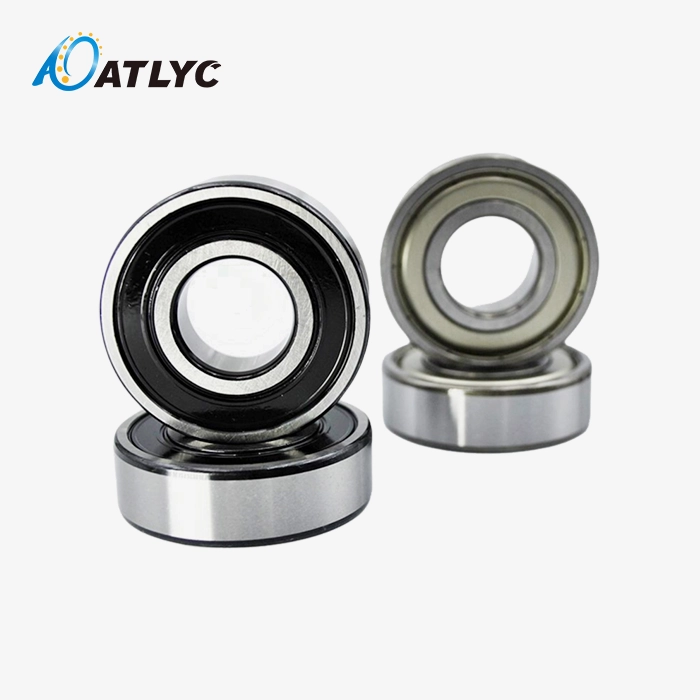
The Angular Contact Bearings 7206AC are typically manufactured in an open configuration as the standard design. This means they do not come with integrated seals or shields in their default form, allowing direct access to the rolling elements and raceways. The open design offers advantages in applications requiring field lubrication control, higher speed capabilities, and lower friction generation. However, manufacturers including ATLYC also produce sealed (suffix 2RS or 2RZ) and shielded (suffix Z or ZZ) variants to meet specific environmental protection needs. Understanding which configuration suits your operational requirements directly impacts bearing performance, maintenance schedules, and total cost of ownership in precision machinery applications.

Understanding Angular Contact Bearings 7206AC: Sealed vs Open
Angular contact ball bearings represent specialized precision components engineered to handle combined radial and axial loads simultaneously. The 7206AC designation identifies a bearing with a 30mm bore diameter, 62mm outer diameter, and 16mm width, featuring a 25° contact angle that balances speed capability with load capacity.
What Defines an Open Bearing Configuration
Open bearings don't have any caps that protect the interior ball complement and raceways. This way of thinking about design puts practical freedom first. Since there are no seals, there is no friction from rubbing contact. This lets the spinning speed go up, and the heat production go down during ongoing operation. Engineers usually choose open setups when the working area is clean or when special lubrication systems provide a steady flow of oil.
The open design makes it easier to do a full check during maintenance periods. Without taking the machine apart, technicians can look at the state of the raceways, find early signs of wear, and make sure that the right amount of oil is covering them. This openness is useful for important machines that break down unexpectedly and have big effects on production.
Sealed Bearing Characteristics and Protection Levels
For sealed versions, elastomeric or metal covers are attached to the outer ring and make light contact with the shoulder of the inner ring. These contact seals make a barrier that keeps contaminants out while keeping the grease that was applied by the factory. This arrangement is shown by the suffixes 2RS (for rubber seals on both sides) or 2RZ (for low-friction seals).
The main trade-off has to do with speed limits. Seal contact causes heat and friction, which usually lowers the fastest speed allowed by 20 to 30 percent compared to open designs. But sealed bearings get rid of the need for external sealing systems and lower the number of times that maintenance needs to be done in dirty places like food processing equipment, agricultural machinery, or outdoor uses that get dust and moisture.
Shielded Variants as a Middle Ground
Instead of contact sealing, shielded bearings (marked Z or ZZ) use metal plates with a small gap between them. This design doesn't make contact with anything, so it keeps most of the speed of open bearings while offering some safety against large particle contamination. The gap lets some lubricant move, which means shields can be used in situations where re-lubrication is needed, but fine dust or liquid contaminants are not a big problem.
Below is a comparison highlighting the operational distinctions:
| Configuration | Speed Capability | Contamination Protection | Maintenance Frequency | Typical Applications |
|---|---|---|---|---|
| Open (7206AC) | Highest (18,000+ RPM) | Minimal - requires external seals | Regular lubrication needed | Machine tool spindles, precision motors |
| Sealed (7206AC-2RS) | Moderate (12,000 RPM) | Excellent - grease retention | Extended intervals | Conveyor systems, pumps, agricultural equipment |
| Shielded (7206AC-Z) | High (16,000 RPM) | Good against coarse particles | Periodic re-greasing | Electric motors, gearboxes |
Procurement teams must evaluate these characteristics against specific operational parameters. The open 7206AC configuration remains standard inventory for most manufacturers due to its versatility across diverse mounting arrangements including back-to-back (DB), face-to-face (DF), and tandem (DT) configurations commonly used in precision spindle assemblies.
Technical Insights Into 7206AC Bearing Design and Performance
The engineering design of the Angular Contact Bearings 7206AC comes from decades of research into the best way for things to touch each other. Buying managers and maintenance engineers can better predict performance limits and failure modes when they understand these technical foundations.
Internal Geometry and Contact Angle Significance
The contact angle of 25° shows how the ball contact line fits into a plane that is not parallel to the bearing axis. This angle is the best of both worlds: angles below 20° are good for high-speed operation but lose axial capacity, and angles above 30° handle thrust loads better but slow down the engine and make it hot.
When radial loads push on the bearing, forces move through ground contact ellipses on the inner and outer raceways. The 25° angle spreads these pressures over enough touch areas to keep the surface from wearing down too quickly. This design is very important in places like gear reducers where helical gear thrust and shaft radial loads come together.
Precision-grade GCr15 bearing steel balls that have been heated to a surface hardness of 60–64 HRC are used in the single-row ball design. This material standard makes sure that the dimensions stay the same at temperatures up to 150°C, and the track stays intact through millions of load cycles.
Load Capacity and Speed Performance Metrics
The 7206AC has different performance traits depending on how the seals are set up. When lubricated with oil, the limiting speeds for open versions reach 18,000 RPM, and the dynamic load ratings are about 15.9 kN radial and 10.2 kN axial. In high-speed printing machines and CNC cutting centers, where shaft displacement must stay within microns, these numbers help with tough tasks.
Because of seal pressure, sealed versions lose about 25% of their speed. The constant rubbing action between the seal lip and the inner ring creates heat that is related to the speed of spinning. When the speed goes above 12,000. This heat buildup can damage seal elastomers and make grease less thick, which can cause the lubrication to fail too soon.
Common Operational Challenges Linked to Sealing
There are three primary failure modes that correlate directly with sealing decisions:
Contamination-Induced Wear: When open bearings are in a dusty area, abrasive particles get inside them. Tiny pieces of metal, silica dust, or process waste get stuck in the raceways and cause stress lifters that cause spalling to start. Every 500 to 1000 hours of operation, regular inspections must be done.
Lubrication Starvation: Sealed bearings depend on factory-filled oil alone. Once this oil runs out because of rust or wear and tear, it can't be replaced. Operators need to keep track of how long bearings last and plan to replace them before a lack of lubrication causes a catastrophic seizure.
Thermal Expansion Mismatch: When used in high-temperature situations above 100°C, seal elastomers get hard and stop closing well. On the other hand, open bearings with external labyrinth seals keep things safe over a wider temperature range by choosing the right seal design.
Understanding these technical realities enables procurement professionals to specify appropriate configurations during initial equipment design or replacement sourcing, minimizing total cost of ownership through optimized maintenance strategies.
Buying Guide: Selecting the Right 7206AC Angular Contact Bearing
Systematically evaluating practical factors is needed to match the Angular Contact Bearings 7206AC configuration to the needs of the application. This organized method stops mistakes that cost a lot of money and make tools less reliable.
Assessing Your Operating Environment
Temperature differences have a big effect on the choices you can make about sealing. Standard sealed bearings work well in environments that stay the same between 0°C and 80°C. Open configurations with high-temperature greases chosen based on specific operating profiles are needed in places that are hotter than 100°C or that go through a lot of thermal cycling.
Protection needs are set by the amount of contamination that is present. Grinding operations and other manufacturing environments that make fine metal particles need sealed or shielded designs, even though they slow things down. On the other hand, open bearings with housing-level sealing are best for clean-room applications or enclosed gearboxes.
The speed limits set clear limits. All types of seals can be used on shafts moving slower than 10,000 RPM. Shielded or open designs work best at speeds between 10,000 and 15,000 RPM. When the speed goes above 15,000 RPM, only open bearings keep enough safety limits against heat failure.
Comparative Analysis: 7206AC vs Related Models
The bearing identification method helps you understand how designs can be different. If you see the number 7206 without the suffix, it means that the contact angle is 15°, which is best for higher speeds but lower thrust capacity. The suffix "7206B" indicates a 40° contact angle, which changes the performance traits so that it can handle more axial load at slower speeds.
The 7206AC is the best answer for all problems because it has an AC ending that means it has a 25° angle. Because it can be used in so many different situations, it is widely used in many fields, from car gears to industrial pumps. Procurement teams gain from the model's wide supply and low prices that come from making a lot of them.
| Model Designation | Contact Angle | Primary Advantage | Ideal Application |
|---|---|---|---|
| 7206 | 15° | Maximum speed capability | Ultra-high RPM spindles |
| 7206AC | 25° | Balanced load and speed | General precision machinery |
| 7206B | 40° | Maximum axial load capacity | Heavy thrust applications |
Supplier Credibility and Quality Standards
Quality differences between makers have a big effect on how well bearings work and how long they last. Certifications like ISO 9001 and IATF 16949 show that a company uses systematic quality management that meets the standards of the automotive industry. These certifications show that the company is able to keep the same tolerances for size and material specifications across all production batches.
The manufacturing tolerances for precision grades P5, P4, and P2 get tighter over time. Standard industrial uses work well with P5 precision, which provides accurate measurements that are good for most electric motors and gears. Machine tool spindles that need very little runout should use P4 grade. Ultra-precision uses, like coordinate measuring tools, need P2 grade, but the cost per unit usually doubles with this standard.
Bearing companies like SKF, NSK, FAG, Timken, and NTN have been around for a long time and have a lot of technical knowledge and quality control. Modern production tools and strict process control have helped Chinese companies like ATLYC reach similar quality standards. They can offer cost savings of up to 30–40% while still meeting ISO certification requirements and keeping P5/P4 precision capabilities.
Procurement and Transaction Considerations for 7206AC Bearings
Strategic sourcing decisions extend beyond initial purchase price to encompass supply chain reliability, technical support, and lifecycle costs. Experienced procurement professionals evaluate multiple factors when establishing supplier relationships for Angular Contact Bearings 7206AC.
Identifying Authentic Distribution Channels
Authorized distributors work directly with manufacturers to make sure the products they sell are real and that the warranties they offer are valid. These partnerships give people access to technical documents, help with application building, and priority when there aren't enough supplies. OEMs that need to commit to large orders and be able to make changes will benefit from having direct relationships with manufacturers.
Online industrial marketplaces are convenient, but sellers' credentials need to be checked. About 10 to 15 percent of the world's market is made up of fake bearings, which are dangerous because they are made with low-quality materials and aren't heat-treated properly. To stop fake goods from getting in, it's important to ask for mill test certificates, check incoming items for dimensional tolerances, and make sure trademarks are real.
ATLYC is a direct manufacturer with ISO 9001 and IATF 16949 certifications. This means that there are no markups for distribution and quality is always guaranteed. Over the past 15 years, we've been making parts for automakers and companies that make industrial equipment in North America, Europe, and Asia. This shows that we can consistently deliver high-quality parts and depend on our suppliers.
Price Analysis Between Configurations
Because they are easy to make, open 7206AC bearings usually set the base price. Sealed versions cost 15–25% more because they require extra steps in the manufacturing process to place the seal and fill it with grease. Costs per unit go up by another 10 to 15 percent for premium seal materials that can handle chemicals or high temperatures.
Buying in bulk has a big effect on how much something costs. As long as you commit to buying more than 1,000 units a year, you can get deals that go all the way down to 20–30% below list prices. Long-term supply agreements protect prices against changes in raw materials and make sure that production capacity is allocated during times of high demand.
Lead Times and Supply Chain Planning
Standard open versions usually ship within 7 business days from well-known makers who keep a deep inventory. When made as custom items, sealed versions may add two to three weeks to the wait time. Custom specs, like cage materials that aren't standard or special grease formulas, need 4 to 6 weeks to plan production and make sure the quality is good.
Strategic buyers keep a safety stock of enough goods to last for 60 to 90 days, just in case a bearing fails and production has to stop. This store buffer guards against supply problems and lets you order in bulk, which is more cost-effective. Working with makers that offer flexible minimum order amounts and reliable delivery cuts down on the costs of keeping inventory.
Maintenance Tips and Troubleshooting for 7206AC Angular Contact Bearings
Proper installation and maintenance practices directly determine Angular Contact Bearings 7206AC service life. Even premium-quality bearings fail prematurely when subjected to improper handling or inadequate lubrication management.
Installation Best Practices
Clean handling procedures keep contamination from getting into the mounting process. Technicians have to wear gloves that don't have lint on them and work in clean areas so that they don't get dirt and moisture on precise surfaces from touching their skin. Mounting tools should never touch the bearing raceways; interference fits need a hydraulic press or a way to heat the ring faces and apply even force to them.
Most of the time, the 7206AC works in preset matched sets. Back-to-back (DB) mounting gives precision spindles the most rigid support. Face-to-face (DF) arrangements work well when there are axial loads coming from both directions. With tandem (DT) configurations, the axial capacity can be increased to handle heavy thrust loads. For P5 grade bearings, the right preload change is usually between 20 and 50 N. This can be confirmed by measuring the axial movement or keeping an eye on the torque.
Lubrication Protocols for Open Configurations
Open bearings need to be oiled on a regular basis or all the time depending on the working conditions. For high-speed uses above 10,000 RPM, oil-air or oil-mist devices are needed that give small amounts of lubricant to keep the film thickness at a good level. Lower-speed machinery works well with grease lubrication applied at regular times based on the temperature of operation and the amount of dirt that is exposed.
Choosing the right grease affects the limits of efficiency. NLGI grade 2 lithium complex greases can be used in a wide range of situations from -20°C to 120°C. Synthetic polyurea greases can be used at temperatures up to 150°C and are better at resisting rust. Application engineers have to match the features of the grease to the way the machine will be used, taking into account the speed factor (DN value: bearing bore width in mm × RPM) and the amount of load.
Detecting Early Degradation Signs
Vibration tracking lets you know ahead of time when a bearing is wearing out. Trending analysis is possible with baseline vibration signatures set up during the initial commissioning. When velocity measurements are 25% higher than the baseline, it means that defects are developing and need to be looked into. Frequency analysis can pinpoint specific fault modes: flaws in the outer raceway produce frequencies at 0.4× shaft speed, flaws in the inner raceway produce frequencies at 0.6× shaft speed, and flaws in the ball create higher frequency signatures.
When the temperature goes up, it means that the oil isn't working right or that damage is starting to form. The working temperature of a bearing should stay 20 to 40°C above room temperature. Sudden temperature rises above 80°C require immediate inspection and shutdown to avoid catastrophic failure and damage to nearby parts.
The practical maintenance comparison below illustrates key differences:
Open Bearing Maintenance Checklist:
- Every 200 to 500 hours of use, make sure there is enough oil.
- Check for pollution every time you do upkeep.
- In important uses, check vibration trends once a month.
- Replace external seals that are damaged or worn out.
- Do a raceway check once a year or as directed by the maker.
Sealed Bearing Maintenance Checklist:
- Watch the working temperature to make sure the seal is still intact.
- Compare the number of hours worked to the expected working life.
- If vibrations or noises get worse, you should replace the whole bearing assembly.
- Make sure that the drainage in the housing keeps water from building up around the seals.
- Every three months, look for damage to the seal or grease leaks.
Equipment operators maintaining detailed service records optimize bearing replacement timing, balancing reliability assurance against premature replacement costs. This data-driven approach typically extends machinery uptime by 15-20% compared to reactive maintenance strategies.

Conclusion
Selecting between open and sealed configurations of the Angular Contact Bearings 7206AC requires balancing operational requirements against maintenance capabilities and cost considerations. Open designs deliver maximum speed potential and inspection accessibility, making them ideal for controlled environments with established lubrication programs. Sealed variants provide contamination protection and extended maintenance intervals, justifying their application in harsh environments despite performance limitations. Procurement professionals must evaluate temperature ranges, contamination exposure, speed requirements, and maintenance resources when specifying bearing configurations. Working with certified manufacturers maintaining consistent quality standards and offering technical support ensures reliable performance throughout the bearing's service life. The 7206AC's proven 25° contact angle design continues serving diverse industrial applications from precision spindles to heavy-duty pumps, demonstrating the versatility that has established angular contact bearings as essential machine elements across global manufacturing operations.
FAQ
1. Can I convert an open 7206AC bearing to a sealed configuration after purchase?
Retrofitting seals to open bearings remains technically possible but rarely practical. The process requires precision machining of seal grooves in bearing rings, specialized tooling, and seal selection matching dimensional constraints. Labor costs typically exceed purchasing factory-sealed equivalents. Additionally, field-installed seals rarely achieve the contamination protection or operational reliability of factory-integrated designs where seal geometry optimizes during initial engineering. Purchasing the appropriate configuration during initial procurement proves more cost-effective and ensures performance reliability. Manufacturers like ATLYC offer both configurations with similar lead times, eliminating retrofit necessity.
2. How do sealed bearings impact total machine maintenance costs?
Sealed bearings reduce direct maintenance labor through eliminated re-lubrication requirements but introduce replacement cost considerations. The sealed design extends intervals between servicing from hundreds to thousands of operating hours. However, sealed bearings require complete replacement when lubricant depletes, while open bearings allow indefinite service life through proper lubrication management. Total cost analysis must account for labor rates, downtime expenses, and bearing unit costs across the expected equipment lifecycle. Industries with expensive maintenance labor typically realize cost advantages from sealed designs despite higher component prices.
3. What speed limitations apply to sealed versus open 7206AC bearings?
When oiled with oil, open 7206AC bearings can only go as fast as about 18,000 RPM. This is because of rotational forces acting on the balls and the strength of the cage. This limit is lowered to about 12,000 RPM for sealed versions with rubber contact seals because the friction between the seals creates heat. Some speed can be recovered with low-friction seal designs up to about 15,000 RPM. Rates of speed are based on the assumption that the motor is properly mounted, cooled, and preloaded. Going over the stated limits could cause thermal failure, seal degradation, or cage breaking. Application engineers should keep operating speeds between 70 and 80% of the stated limits to make sure there are enough safety margins and the service life is increased.
Partner with ATLYC for Reliable Angular Contact Bearing Solutions
ATLYC stands as your dependable angular contact bearings 7206AC supplier, combining 15 years of precision manufacturing expertise with ISO 9001 and IATF 16949 certified quality systems. Our six specialized production workshops deliver consistent bearing quality meeting P5, P4, and P2 precision grades for demanding automotive and industrial applications. We support both open and sealed configurations with 7-day delivery for standard specifications and full OEM customization capabilities, including cage material selection and special lubrication requirements. Technical support from our 120-person engineering team ensures proper bearing specification for your unique operating conditions. Request your quotation today at auto@lyautobearing.com and experience the manufacturing reliability that has earned trust across North American, European, and Asian markets.
References
1. Harris, T.A. and Kotzalas, M.N. (2006). "Rolling Bearing Analysis: Essential Concepts of Bearing Technology," 5th Edition. CRC Press, Taylor & Francis Group.
2. SKF Group (2018). "Rolling Bearings Catalogue: Technical Product Information and Engineering Data." SKF Corporate Publications.
3. Eschmann, P., Hasbargen, L., and Weigand, K. (1985). "Ball and Roller Bearings: Theory, Design and Application," 2nd Edition. John Wiley & Sons.
4. ISO 15243:2017. "Rolling Bearings – Damage and Failures – Terms, Characteristics and Causes." International Organization for Standardization.
5. Tallian, T.E. (1992). "Simplified Contact Fatigue Life Prediction Model: Ball Bearings." ASME Journal of Tribology, Volume 114, Issue 2.
6. NSK Ltd. (2020). "Angular Contact Ball Bearings: Technical Reference Guide and Application Engineering Manual." NSK Corporate Technical Documentation.
Learn about our latest products and discounts through SMS or email