- English
- French
- German
- Portuguese
- Spanish
- Russian
- Japanese
- Korean
- Arabic
- Greek
- German
- Turkish
- Italian
- Danish
- Romanian
- Indonesian
- Czech
- Afrikaans
- Swedish
- Polish
- Basque
- Catalan
- Esperanto
- Hindi
- Lao
- Albanian
- Amharic
- Armenian
- Azerbaijani
- Belarusian
- Bengali
- Bosnian
- Bulgarian
- Cebuano
- Chichewa
- Corsican
- Croatian
- Dutch
- Estonian
- Filipino
- Finnish
- Frisian
- Galician
- Georgian
- Gujarati
- Haitian
- Hausa
- Hawaiian
- Hebrew
- Hmong
- Hungarian
- Icelandic
- Igbo
- Javanese
- Kannada
- Kazakh
- Khmer
- Kurdish
- Kyrgyz
- Latin
- Latvian
- Lithuanian
- Luxembou..
- Macedonian
- Malagasy
- Malay
- Malayalam
- Maltese
- Maori
- Marathi
- Mongolian
- Burmese
- Nepali
- Norwegian
- Pashto
- Persian
- Punjabi
- Serbian
- Sesotho
- Sinhala
- Slovak
- Slovenian
- Somali
- Samoan
- Scots Gaelic
- Shona
- Sindhi
- Sundanese
- Swahili
- Tajik
- Tamil
- Telugu
- Thai
- Ukrainian
- Urdu
- Uzbek
- Vietnamese
- Welsh
- Xhosa
- Yiddish
- Yoruba
- Zulu
What Cage Material Is Best for Angular Contact Bearings 7206AC?
When selecting precision components for high-performance machinery, the cage material in your bearing assembly directly determines operational reliability and service life. For Angular Contact Bearings 7206AC, the optimal cage material depends on your specific application parameters, with Bakelite and nylon emerging as the preferred choices for their proven balance of strength, thermal management, and cost-effectiveness in small electric motors, gear reducers, and printing machinery transmission systems where combined radial and axial loads demand consistent precision.

Understanding Angular Contact Bearings 7206AC and Their Cage Materials
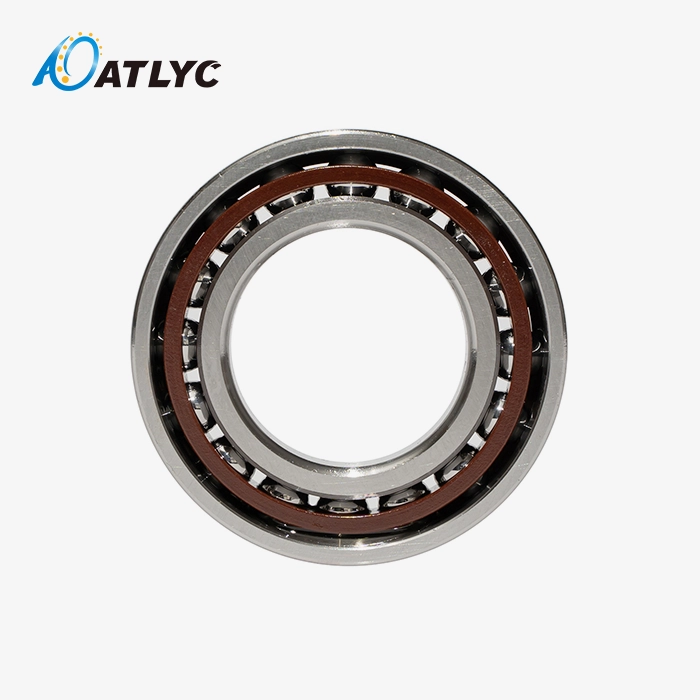
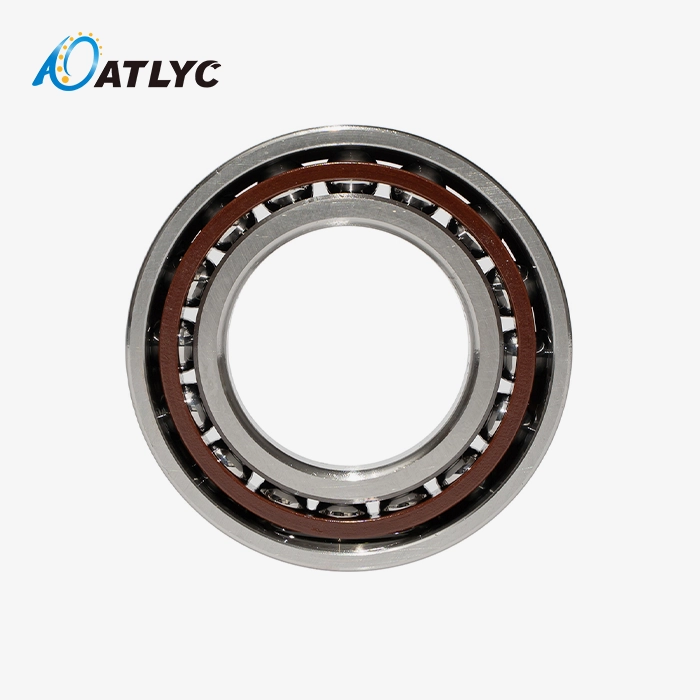
Angular Contact Bearings 7206AC are a unique technical answer for situations where radial and axial loads need to be handled at the same time. These single-row ball bearings have an inner diameter of 30 mm, an outer diameter of 62 mm, and a width of 16 mm. They have a precisely manufactured 25° contact angle that makes it possible for them to hold loads.
The Critical Function of Cage Materials in Bearing Performance
The cage part is often forgotten when people talk about buying something, but it is very important for the mission. It keeps the balls at the right distance apart during rotation cycles, stops balls from touching each other, which causes friction and heat, and makes sure that the load is spread evenly across the raceway. Even a high-quality GCr15 bearing steel design can't do what it's supposed to do without the right cage material.
The choice of cage material affects the friction coefficients, the working temperature ranges, the vibration properties, and the total life of the bearing. If you use the wrong cage material in precision applications like CNC machine tool spindles or industrial compressors, the dimensions may not be accurate, or the material may fail too soon from heat stress.
How Contact Angle Geometry Interacts with Cage Material
Because 7206AC bearings have a 25° contact angle, the cage materials must be able to handle certain mechanical conditions. This rotational movement between the inner and outer raceways creates contact forces that are spread out in load zones that can be predicted. The cage has to stay the same size under these force directions and work in temperatures ranging from room temperature to 150°C for long periods of time.
The structure is made of GCr15 bearing steel that has been heated to an HRC 60–64 hardness to make it resistant to wear. But the material of the cage determines how well the bearing handles dynamic stresses when the speed goes up and down and when it runs at a high speed for a long time with centrifugal forces acting on the ball elements.
Comparative Analysis of Common Cage Materials for Angular Contact Bearings 7206AC
Knowing the properties of a material helps procurement managers match up technical requirements with real-world conditions. In some situations, steel and brass cages are useful, but in most commercial settings, Bakelite and nylon are the most common choices for Angular Contact Bearings 7206AC.
Steel Cages: Traditional Strength with Thermal Challenges
Steel cages, which are usually made from low-carbon steel stampings, are very strong mechanically. Their stiff structure doesn't bend under shock loads, and they keep balls in place reliably in heavy-duty situations. Even more accuracy is possible with machined steel cages, which have tighter limits on their dimensions and can handle P4 or P2 accuracy classes.
Specifically, heat growth is the main problem. The coefficient of thermal expansion of steel is very similar to that of bearing steel, but the heat conductivity of the material can cause temperature differences in certain areas when it is being used at high speeds. Because of this, steel cages work better in situations where load capacity is more important than spinning speed. These situations are usually outside the normal operating range of 7206AC bearings.
Brass Cages: Corrosion Resistance with Weight Considerations
The combination of mechanical strength and better rust resistance in brass cages makes them useful in places where chemicals or water are present. Because the material is naturally lubricious, there is less friction between the cage and the ball elements. This helps keep the operating temperatures low in moderate-speed situations.
When things are moving quickly, weight becomes an issue. Because brass is dense, it raises inertial forces when it accelerates, which means that supporting parts need to be stronger. Because of the cost of the material, brass cages are more expensive than synthetic options. This changes the total cost of ownership estimates for large purchases.
Bakelite Cages: High-Temperature Phenolic Performance
Bakelite is a phenolic resin material that has become well-known in high-speed precision bearing uses that need to be stable. The material is very good at keeping its shape over a wide range of temperatures, even when it goes through thermal cycling. Because it is molded, it is possible to make complex geometries that make the ball pocket design better so there is less friction.
Bakelite stands out in challenging situations because of its superior thermal performance. The material can handle steady temperatures of up to 150°C without breaking down much, which means it can be used in motors and reducers that are constantly under load. Because the material lubricates itself, it doesn't need to be oiled from the outside, which is especially helpful in sealed bearing configurations.
Because of its mechanical qualities, Bakelite can be ground precisely to achieve P5 or P4 tolerance classes, which is necessary for keeping the accuracy of industrial equipment's spindles. The material doesn't creep when it's under load, so the cage shape stays the same for the life of the bearing.
Nylon Cages: Lightweight Engineering with Acoustic Benefits
Nylon (polyamide) cages are the lightest choice, which lowers rotational forces when the cage is spinning quickly. This feature makes it possible for higher limiting speeds than metal options. This is especially useful in electric motor uses where rotor balance affects performance and noise level.
Anderometry tests show that the material's vibration damping qualities cut down on bearing noise by a large amount, meeting V3 or V4 standards for silence. Manufacturers of equipment that needs to be low-noise can use nylon's natural soundproofing benefits without adding any extra noise barriers.
Because of temperature limits, applications need to be carefully thought out. Standard nylon types stay the same size up to about 120°C of constant use, and they can only go up to 140°C at their highest point. When there are higher heat loads, either better polyamide formulations or different cage materials are needed.
Because of its cost-effectiveness, nylon is a good choice for mass production. When hundreds or thousands of bearings are used in OEM uses or as replacements in the aftermarket, the cost of materials and the molding methods make them affordable.
| Cage Material | Maximum Operating Temperature | Weight (Relative) | Acoustic Performance | Cost Factor |
|---|---|---|---|---|
| Steel | 200°C | 1.0 (starting point) | Moderate | Medium |
| Brass | 180°C | 1.15 | Good | High |
| Bakelite | 150°C | 0.45 | Excellent | Medium |
| Nylon | 120°C | 0.30 | Excellent | Low |
How to Choose the Best Cage Material for Your Angular Contact Bearings 7206AC
To choose the right materials for a cage, you need to carefully compare the working factors with the material's capabilities. Instead of making a standard choice, this technical choice should be based on the unique needs of your program.
Load and Speed Relationship Assessment
The 25° contact angle in Angular Contact Bearings 7206AC makes it easier to handle combined loads, but the cage material affects the fastest speeds that can be reached. Find the speed factor for your application (bearing bore diameter in mm × RPM) and compare it to the limited numbers for the material. In moderate-temperature situations, nylon cages usually support higher speed factors than Bakelite. On the other hand, Bakelite expands capabilities in situations that require high temperatures.
Environmental Conditions and Contamination Factors
The operating environment has a direct effect on how long cage material lasts. Paper dust, ink mist, and cleaning liquids are often present in places where printing machines are used. Nylon is resistant to most industrial fluids, but strong acids or bases need to be tested to make sure they won't damage the material.
Different problems arise when moisture is present in gear reducers or when they are used outside. Properly sealed bearings protect internal parts, but cage materials have to be able to handle some moisture getting in. Even after being exposed to water, Bakelite keeps its shape, but some grades of nylon may slightly swell, which can change clearances.
Lubrication Strategy Integration
The choice of cage material is linked to the way of lubrication. Bearings that use grease benefit from nylon's ability to keep the grease in the cage pockets, which means they don't need to be oiled as often. Both Bakelite and nylon work well with oil mist or circulating oil systems. However, Bakelite's higher temperature tolerance makes it better for uses with synthetic oils that work at high temperatures.
Some equipment designs call for very little lubrication to keep nearby parts from getting dirty. Bakelite's ability to self-lubricate is helpful in these situations because it reduces friction without needing to be re-oiled often, which would increase the cost of upkeep work.
Precision Requirements and Tolerance Classes
For P5, P4, and P2 accuracy classes, the cages must be made with the same level of precision. Because Bakelite can be shaped and finished, it can meet the tighter standards needed for P4 and P2 bearings that are used in measuring tools or precision cutting machines. Temperature changes don't change these limits because the material is dimensionally stable. This keeps the accuracy from dropping, which would mean replacing the bearings too soon.
Nylon cages save money without sacrificing performance for applications that can handle P5 or P6 accuracy classes. Small electric motors and standard gear reducers usually work well within P5 tolerances. This makes nylon a cheap choice that meets working needs while lowering total purchase costs.
Maintenance Tips and Performance Optimization for Bearings with Different Cage Materials
When precision bearings are maintained properly, they last as long as possible and don't break down at inconvenient times, which can throw off production schedules. The material of the cage affects certain checking and upkeep rules.
Lubrication Protocols Tailored to Cage Materials
When used with lithium-based greases made for high-temperature uses, Bakelite cages work best. Fill 30 to 40 percent of the bearing's free room with grease. Be careful not to use too much grease, which causes too much spinning friction. Depending on speed and load, Bakelite-cage bearings in continuous-duty motors usually need to be oiled every 4,000 to 6,000 hours of operation.
Nylon cages can handle a wider range of grease chemicals, such as lithium complex, polyurea, and synthetic hydrocarbon mixtures. Because the material works at a lower temperature, normal greases that meet NLGI Grade 2 or Grade 3 standards can be used. Because nylon keeps lubricant in, relubrication times may be extended to 8,000 hours in good working conditions.
Inspection Techniques for Early Wear Detection
Vibration research shows the state of the cage before it fails catastrophically. During commissioning, set standard vibration signatures and then look for frequency peaks that match cage flaws. When pockets wear down, Bakelite cages show clear patterns, which usually show up as sidebands around ball pass frequencies on spectrum analysis.
Monitoring temperature is another way to help prevent problems. Temperature sensors on the surface or infrared scanning can pick up on unusual temperature rises that mean the cage is breaking down or there isn't enough lubrication. As the material in nylon cages starts to soften, the temperature slowly rises, giving a warning before the whole thing fails.
Testing for acoustic emission picks up sound signals that are made when worn cage surfaces rub against ball elements. This method finds early signs of failure in precision applications where vibration analysis might not be sensitive enough.
Operational Limits and Installation Best Practices
When installed correctly, cage damage that hurts bearing function is avoided. To get even temperature expansion for interference fits, use the right heating methods, like induction heaters or oil baths. Do not heat nylon or Bakelite over an open flame, as this can damage the materials' qualities.
When mounting bearings in preloaded positions, use spring scales or torque specifications from technical documentation to find the preload values. Too much loading creates heat that speeds up the breakdown of cage materials. This is especially a problem for nylon cages that are getting close to their temperature limits.
Tolerances in the shaft and case have a direct effect on how well the bearing works. Make sure that the fitting measurements are in line with the ISO 286 tolerances for your accuracy class. When things are out of spec, they cause imbalance, which loads the cage unevenly and leads to early wear patterns.
| Maintenance Activity | Bakelite Cage | Nylon Cage | Frequency |
|---|---|---|---|
| Vibration Analysis | Bandwidth plus envelope | A look at the spectrum | Quarterly |
| Temperature Monitoring | Surface: up to 130°C | Surface: up to 100°C | Continuous |
| Lubrication Inspection | Visual and consistent | Visual and consistent | Semi-annually |
| Relubrication | 4,000 to 6,000 hours | 6,000 to 8,000 hours | As specified |
Supplier Insights and Procurement Best Practices for Angular Contact Bearings 7206AC
Choosing where to get Angular Contact Bearings 7206AC has a big effect on how reliable it is in the long run and how much it costs to own everything. Strategic buying is more than just comparing unit prices. It also looks at how well suppliers can do things like making sure quality is stable and supplies don't run out.
Evaluating Manufacturing Quality Standards
Certifications like ISO 9001 and IATF 16949 provide basic quality assurance, but procurement professionals should check the level of implementation. Ask for proof of the statistical process control measures that were used for important factors such as grinding the raceways, heat treatment processes, and checking the dimensions of the cage.
Manufacturers should show that their coordinate measuring machines (CMMs) can check the accuracy of the 25° contact angle and make sure that the dimensions are within the error classes that were set. To get accurate measurement results, facilities that make P4 or P2 accuracy bearings need climate-controlled measuring rooms that stay at 20°C ±1°C.
The way that cage materials are sourced affects uniformity. Suppliers who use approved polymer compounds from trusted chemical companies make sure that each batch is the same. Ask for certifications of the materials that show their glass transition temperatures, tensile strength, and thermal expansion coefficients that meet the requirements of the design.
Production Capacity and the Dependability of the Supply Chain
Mid-sized to large companies that make cars and industrial equipment need suppliers that can increase production volumes while keeping quality standards high. You should not only look at the ideal maximum output of production capacity, but also at the realistic sustained production rates that take into account things like quality control, the supply of materials, and the stability of the workforce.
How well lead times are met has a direct effect on production schedules. Suppliers who offer seven-working-day shipping for normal setups give you more inventory options and make it less necessary to keep large amounts of safety stock on hand, which can tie up your working capital. Check that the lead times given are based on realistic production plans and not overly hopeful predictions that throw off planning.
Geographic diversity in the bearing supply base lowers the risk of problems happening in different areas. Exporting to South Korea, Germany, and the US, among other places, shows that the supplier knows how to handle logistics like international shipping, customs paperwork, and meeting quality standards in a variety of regulatory settings.
Technical Support and the Ability to Make Changes
Support for engineering is what sets strategic partners apart from commodity suppliers. Check how well the providers can give you application-specific advice on choosing the right cage material, how to mount it, and how to grease it. Suppliers that offer OEM customization can change standard designs to fit your specific needs, which could lead to better performance or lower costs.
Changing dimensions isn't the only thing that can be customized. Specialized cage materials, custom heat treatments, or unique retaining features can be helpful in some situations. These needs are better met by suppliers with their own engineering teams and testing labs for materials, rather than distributors who just sell basic goods from manufacturers.
Making strategic partnerships that last for a long time
Supply chain resilience is affected by the depth of relationships. Suppliers who see customers as long-term partners put time and effort into learning about your applications, alerting you when products become obsolete, and working with you on continuous improvement projects. These ties are valuable for reasons other than transactional price.
Reviewing business with key suppliers on a regular basis gives you a chance to talk about quality trends, planning for capacity, and new technologies. When suppliers share improvements to the production process or new materials, it gives your equipment designs a competitive edge.
The way contracts are set up should strike a mix between competitive prices and supply security. When capacity is limited, volume agreements may allow you to negotiate prices while still ensuring your placement priority. When both parties share the risk, payment terms that reflect this work better than hostile talks that only focus on minimum unit costs to improve partnerships.

Conclusion
Choosing the right cage material for Angular Contact Bearings 7206AC is a big engineering decision that affects how well the equipment works, how much it costs to maintain, and how reliable it is in the field. For demanding uses, Bakelite cages offer better thermal stability and precision retention. For normal working conditions, nylon cages offer cost-effective options with great acoustic qualities. Instead of choosing a standard material, you should think about the speed, temperature, load factors, and weather conditions that are specific to your application. Working with qualified bearing manufacturers who have ISO 9001 and IATF 16949 certifications guarantees consistent quality and supply reliability, which is necessary to keep production going.
FAQ
1. Can I use different cage materials when replacing bearings in existing equipment?
When changing cage materials, it's important to carefully look at how the machine is being used. If you switch from Bakelite to nylon, you might save money, but if your product gets too hot, it might not work. On the other hand, switching from nylon to Bakelite gives you more temperature cushion without any bad effects. Always make sure that the temperature, speed, and load capacities of a new bearing meet or go beyond what the original equipment manufacturer says they should be.
2. How does cage material affect bearing noise levels?
The material of the cage has a big effect on how the equipment sounds. Both nylon and Bakelite cages are very good at reducing vibrations, usually meeting V3 standards that are good for precision applications. Due to metal-to-metal touch resonances, steel cages make more noise. Polymer cage materials are good for uses that need to have low sound pollution.
3. What quality inspections should I require from bearing suppliers?
Comprehensive quality plans should include measuring dimensions with a CMM, checking the hardness (HRC 60–64 range), analyzing vibrations across a range of frequencies, and measuring contact angles. Ask for certificates that show compliance with the P5, P4, or P2 accuracy class, depending on what you need. Suppliers of cage polymers should show material certificates that prove their thermal and mechanical qualities.
Partner with ATLYC for Reliable Angular Contact Bearings 7206AC Supply
Through 15 years of precision manufacturing quality, ATLYC has become a reputable company that makes Angular Contact Bearings 7206AC. Our production facilities are ISO 9001 and IATF 16949 certified, so you can be sure of consistent quality with P5, P4, and P2 accuracy classes. This meets your needs for high-precision parts. We offer seven-working-day delivery and full OEM customization. Our six specialized workplaces and 120 skilled workers are devoted to production, quality inspection, and engineering support. We have exported to South Korea, the US, Germany, and other challenging markets, working with car and industrial equipment makers. This shows that we are committed to meeting international quality standards. Email us at auto@lyautobearing.com to talk to experienced technical advisors about your bearing needs.
References
1. Harris, T.A., Kotzalas, M.N. "Advanced Concepts of Bearing Technology: Rolling Bearing Analysis, Fifth Edition." CRC Press, 2006.
2. Eschmann, P., Hasbargen, L., Weigand, K. "Ball and Roller Bearings: Theory, Design and Application, Third Edition." John Wiley & Sons, 1985.
3. ISO 492:2014. "Rolling bearings — Radial bearings — Geometrical product specifications (GPS) and tolerance values." International Organization for Standardization.
4. Hamrock, B.J., Schmid, S.R., Jacobson, B.O. "Fundamentals of Fluid Film Lubrication, Second Edition." Marcel Dekker, 2004.
5. SKF Group. "Rolling Bearings Catalogue: 17000 EN." SKF Group Technical Documentation, 2018.
6. Palmgren, A., translated by Lundberg, G. "Ball and Roller Bearing Engineering, Third Edition." SKF Industries Inc., 1959.
Learn about our latest products and discounts through SMS or email