- English
- French
- German
- Portuguese
- Spanish
- Russian
- Japanese
- Korean
- Arabic
- Greek
- German
- Turkish
- Italian
- Danish
- Romanian
- Indonesian
- Czech
- Afrikaans
- Swedish
- Polish
- Basque
- Catalan
- Esperanto
- Hindi
- Lao
- Albanian
- Amharic
- Armenian
- Azerbaijani
- Belarusian
- Bengali
- Bosnian
- Bulgarian
- Cebuano
- Chichewa
- Corsican
- Croatian
- Dutch
- Estonian
- Filipino
- Finnish
- Frisian
- Galician
- Georgian
- Gujarati
- Haitian
- Hausa
- Hawaiian
- Hebrew
- Hmong
- Hungarian
- Icelandic
- Igbo
- Javanese
- Kannada
- Kazakh
- Khmer
- Kurdish
- Kyrgyz
- Latin
- Latvian
- Lithuanian
- Luxembou..
- Macedonian
- Malagasy
- Malay
- Malayalam
- Maltese
- Maori
- Marathi
- Mongolian
- Burmese
- Nepali
- Norwegian
- Pashto
- Persian
- Punjabi
- Serbian
- Sesotho
- Sinhala
- Slovak
- Slovenian
- Somali
- Samoan
- Scots Gaelic
- Shona
- Sindhi
- Sundanese
- Swahili
- Tajik
- Tamil
- Telugu
- Thai
- Ukrainian
- Urdu
- Uzbek
- Vietnamese
- Welsh
- Xhosa
- Yiddish
- Yoruba
- Zulu
Are CRBC Series Crossed Roller bearing Worth It?
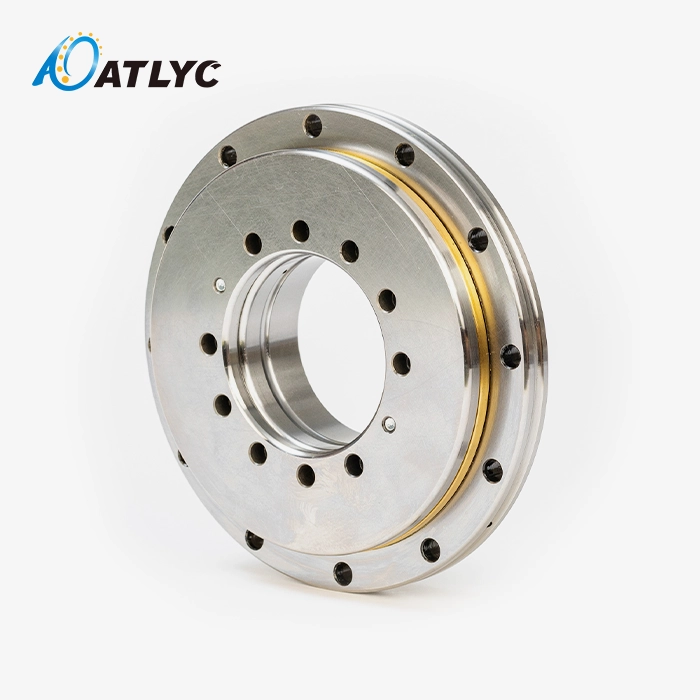
If you’re in precision manufacturing or industrial equipment procurement, you’ve certainly asked this question at some point. The simple answer is yes. CRBC Series Crossed Roller bearings are worth it for applications that need high stiffness, compact design, and long-term dimensional stability. The crossed roller bearings have an integrated inner and outer ring construction, have 20-30% more overall stiffness than split-ring equivalents, can withstand radial, axial, and moment loads concurrently, and work reliably at temperatures up to 120°C. They are a good cost-performance investment for OEMs and distributors sourcing high-precision rotary components.

Introduction
Precision machinery cannot accept any compromise. When you are designing a robotic welding arm, a heavy-duty CNC machining center, or a large-scale indexing table, the bearing you pick will directly affect the quality of your output, your machine uptime, and your overall lifetime cost. Thus, the CRBC Series Crossed Roller bearings have been given substantial attention by the procurement teams in the United States, Germany, and South Korea.
This document outlines the technical differences between these crossed roller bearings, how they compare to traditional options, and what procurement professionals need to consider before committing to a supplier. This breakdown is designed exclusively for you, whether you are an OEM producer, a bearing distributor, or an end-user handling precise equipment.
Understanding CRBC Series Crossed Roller Bearings
Integral Ring Structure: The Core Distinction
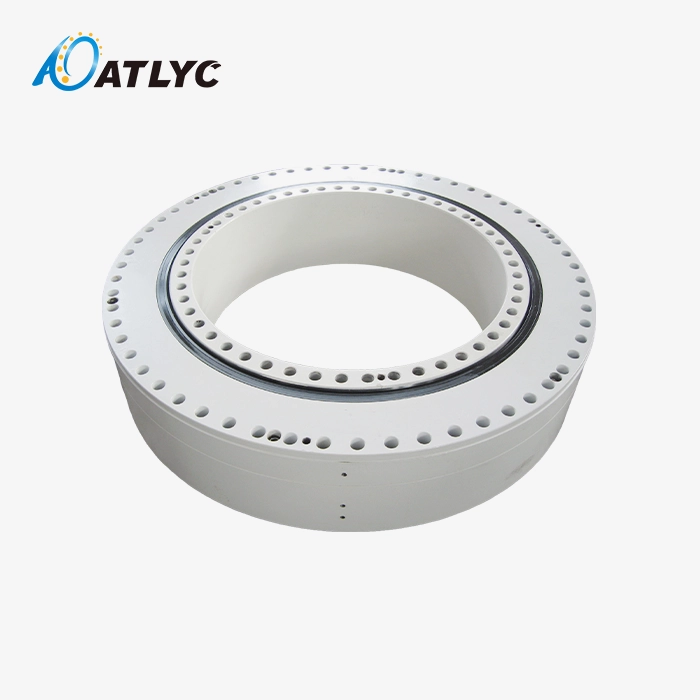
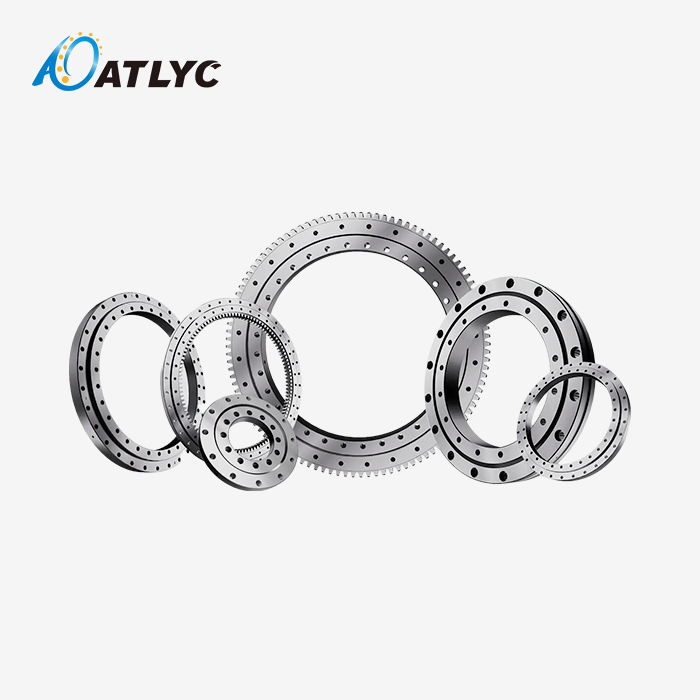
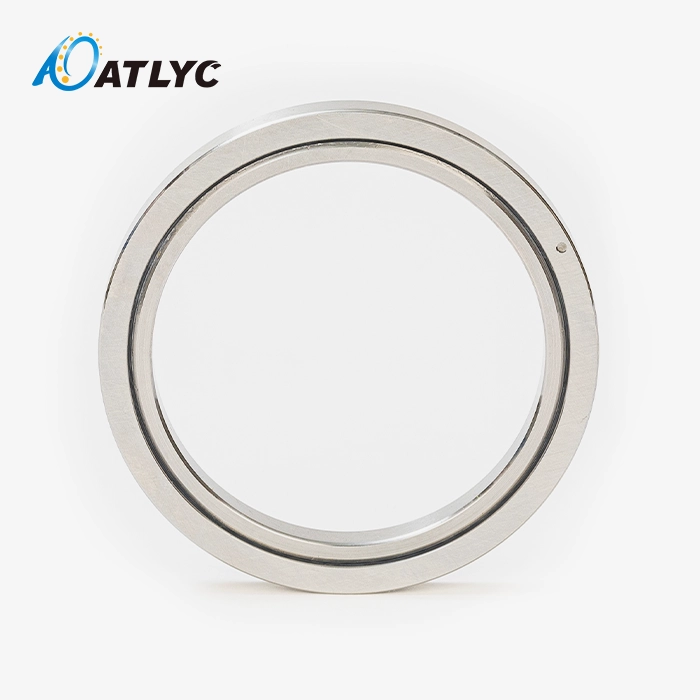
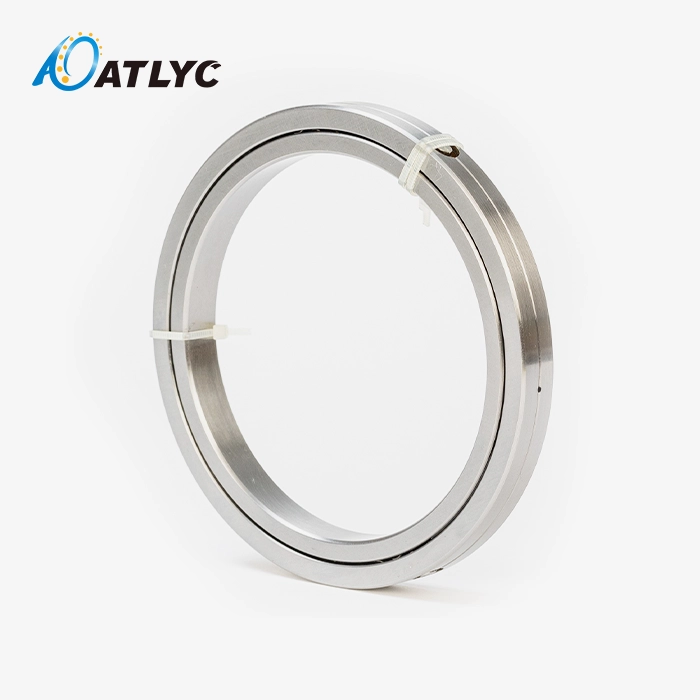
The CRBC series utilizes a completely integrated inner and outer ring structure, unlike the CRB series that has a divided outer ring. The two rings are machined as a continuous one piece; therefore, there are no micro-gaps as with split-ring assemblies. The result is a bearing with much greater structural stiffness – up to 30% over similar CRB-type designs – and less deflection under combined load situations.
The raceway is slightly curved in profile so as to enhance the contact of the cylindrical rollers with the surface of the racetrack. Such a shape distributes stress more uniformly and increases fatigue life. Especially in situations where the CRBC Series Crossed Roller bearing is subjected to prolonged or cyclically variable loads.
| Specification | CRBC Series | Standard CRB Series |
|---|---|---|
| Ring Structure | Integral (one-piece) | Split outer ring |
| Rigidity Increase | 20–30% higher | Baseline |
| Operating Temp. | Up to 120°C | Up to 100°C (plastic cage) |
| Cage Material | Brass or steel | Plastic or metal |
| Precision Grade | P5 / P4 / P2 | P5 / P4 |
| Sealing Type | Labyrinth + grease ports | Standard |
The CRBC series uses precision-manufactured metal cages fabricated from brass or steel. Metal cage construction sustains dimensional integrity under both elevated temperatures and heavy shock loads — conditions that tend to degrade plastic cage variants over time. The labyrinth sealing system, combined with built-in grease injection ports, simplifies maintenance scheduling without compromising contamination resistance.
Material and Precision Standards
The bearing steel used is high-carbon chromium alloy (GCr15/SUJ2), heat-treated to 58–64 HRC surface hardness. Precision grades reach P4 and P2 per ISO/JIS classification, with radial runout tolerances held at the micron level. These grades align directly with the requirements of IATF 16949 and ISO 9001 manufacturing environments — a practical consideration for any OEM supplier audit process.
Comparing CRBC Series Crossed Roller Bearings with Alternatives
Procurement teams frequently ask how crossed roller bearings stack up against angular contact ball bearings and competing crossed roller products. The comparison deserves an honest assessment.
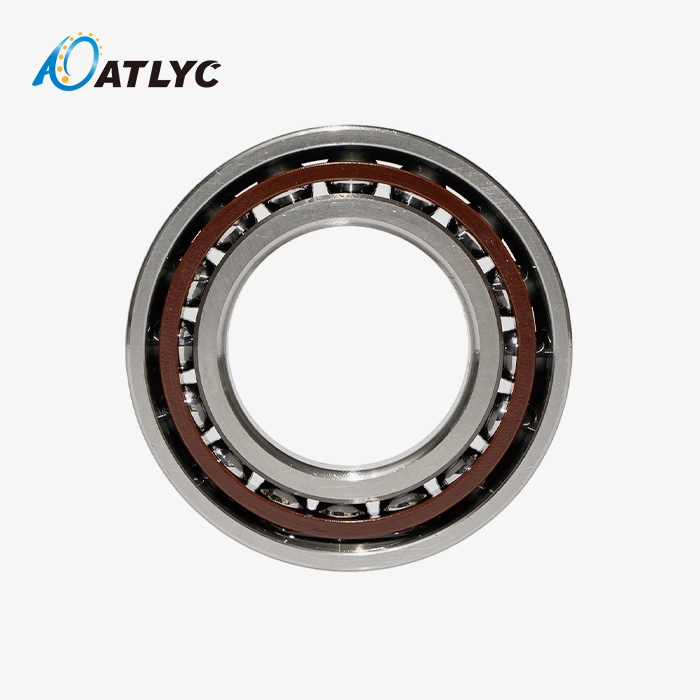
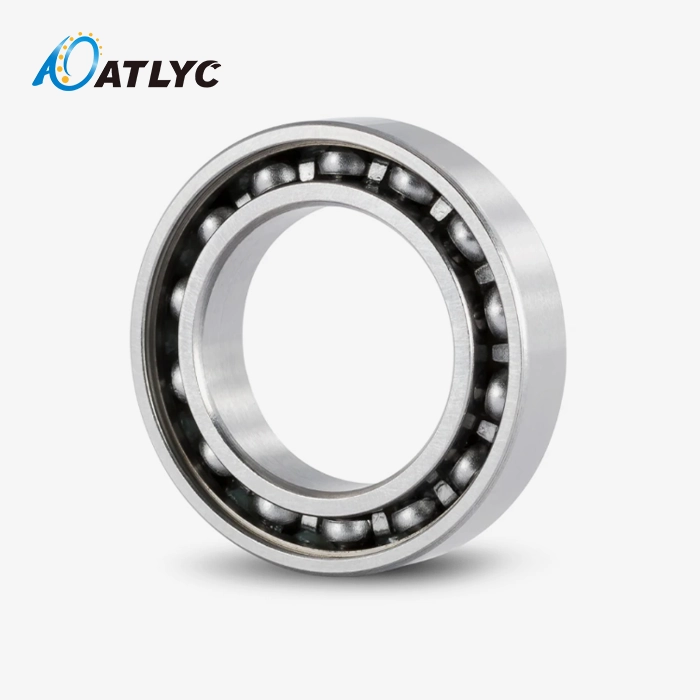
Angular contact ball bearings offer lower unit cost and are adequate for moderate-load rotary applications. However, they rely on point contact between balls and raceways. The CRBC design uses line contact across each cylindrical roller, which provides approximately 3 to 4 times the rigidity of paired angular contact ball bearings under equivalent preload conditions. This difference becomes significant in precision indexing or direct-drive applications where micro-deflection translates directly into dimensional error.
| Performance Parameter | CRBC Crossed Roller | Angular Contact Ball | NSK/KOYO Crossed Roller |
|---|---|---|---|
| Rigidity | Very High | Moderate | High |
| Moment Load Capacity | Excellent | Limited | Excellent |
| Operating Temperature | Up to 120°C | Up to 120°C | Up to 120°C |
| Precision Grade | P5–P2 | P5–P4 | P5–P2 |
| Unit Cost | Moderate–High | Low–Moderate | High |
| Customization Availability | Yes | Limited | Limited |
Crossed roller bearings from prominent Japanese manufacturers like NSK and KOYO also have great brand awareness. They are designed to tight tolerances and are extensively documented. Lead times for customized sizes and unique combinations, however, might extend significantly, and pricing at high precision grades reflects a premium position. For volume buyers or those requiring application-specific geometry modifications, a certified Chinese CRBC Series Crossed Roller bearing supplier with ISO 9001 and IATF 16949 certification is a viable choice if they also offer traceability, documented quality inspection, and a track record of successful exports.
When not to use CRBC bearings: Low-load, high-speed spindle applications where angular contact ball bearings operate cooler and with less torque. If the application doesn't need moment load resistance or compact combined-load management, a simpler bearing type might be more cost-efficient.
Key Considerations for Procurement and Deployment
Sourcing decisions for precision CRBC Series Crossed Roller bearings involve more than unit price. Here are the core procurement factors worth examining:
- Certification verification: Any CRBC Series Crossed Roller bearing supplier you engage should hold current ISO 9001 and IATF 16949 certifications. Request audit documentation, not just certificate images. These standards govern process control, traceability, and corrective action frameworks.
- Precision grade documentation: Confirm that the supplier provides CMM (Coordinate Measuring Machine) inspection reports and hardness test certificates with each production batch. Runout tolerances at P4/P2 grades must be verified instrument-by-instrument, not assumed.
- Lead time and logistics: For U.S.-based procurement teams, standard production lead times from verified Chinese manufacturers typically range from 3 to 6 weeks for catalog sizes, with custom configurations requiring additional engineering review time. Air freight options exist for urgent orders.
- After-sales support: Technical assistance for installation torque specifications, preload setting, and grease selection (EP lithium-based grease is standard for line-contact roller applications) should be accessible from your supplier's engineering team.
These factors collectively determine whether a supplier relationship will support long-term production continuity or introduce recurring supply disruptions.
Real-World Applications and Case Studies
CRBC crossed roller bearings have shown their reliability in a number of demanding industries. This is where they always provide demonstrable value:
The integrated ring construction ensures positional precision throughout the long cutting cycle in heavy-duty CNC machining centers. This single bearing assembly replaces a dual ball bearing configuration, lowering axial footprint and simplifying housing design.
In robotic welding arms, especially in 6-axis articulated types, the moment stresses on the base and waist rotation joints are large while extending the reach. Crossed roller bearings at these joints, which provide zero-backlash rotation and directly affect weld path repeatability.
Precision-grade CRBC bearings rotate smoothly and with little vibration in medical imaging equipment such as CT scanners, which helps provide clear images. Contamination requirements of medical device settings are met by sealed labyrinth systems in clean-room-compliant versions.
European and North American makers of high-end equipment have requested CRBC-type bearings more and more in situations where lengthy service intervals and high positioning stiffness justify the per-unit cost premium over typical ball bearing arrangements.
Making the Decision: Are CRBC Series Crossed Roller Bearings the Right Choice?
It is contingent upon your application needs and supply chain objectives. When your equipment requires the combination of load handling, compact housing geometry, and precision-grade operation over long duty cycles, these crossed roller bearings give quantifiable performance benefits that lesser-cost alternatives just cannot match.
Precision indexing tables or robotic joints built by OEM manufacturers should be specified for P4 or P2 grade with metal cage construction. Placed against premium Japanese goods, CRBC-series bearings can help underpin a viable value offer for distributors servicing the aftermarket replacement sector, especially if supported by comprehensive certification paperwork and technical assistance.
The best cost-performance ratio is for high-cycle, high-accuracy applications where bearing failure has considerable downstream implications. Simpler designs may provide better overall economics in lower-precision, lower-load situations.

Conclusion
CRBC Series Crossed Roller bearings earn their place in demanding industrial environments. The integral ring design, metal cage construction, and achievable P2 precision grades make them a technically sound choice for CNC machining, robotics, and medical equipment applications. Procurement professionals evaluating crossed roller bearing suppliers should weigh certification rigor, inspection transparency, and application engineering capability alongside unit pricing. When those factors align, these bearings represent a durable, high-rigidity solution with a clear return on investment across their service life.
FAQ
1. What makes the CRBC series different from the CRB series?
The CRBC series uses an integral one-piece inner and outer ring, while the CRB series has a split outer ring. This structural difference gives the CRBC series 20–30% higher overall rigidity and eliminates potential assembly gaps that can cause deflection under load.
2. Can CRBC bearings handle moment loads?
Yes. The orthogonal roller arrangement creates an effective load span larger than the bearing width, providing strong resistance to tilting moment loads. This makes them well-suited for robotic joints and rotary table applications.
3. What lubrication does the CRBC series require?
EP (Extreme Pressure) lithium-based grease is standard for line-contact roller configurations. The labyrinth sealing structure and built-in grease injection ports simplify maintenance and sustain lubrication integrity over extended operating periods.
4. How does rigidity compare to angular contact ball bearings?
The CRBC crossed roller design delivers approximately 3 to 4 times the rigidity of angular contact ball bearings under comparable preload, due to the line-contact geometry of the cylindrical rollers versus the point-contact of balls.
5. What precision grades are available?
The CRBC series is available in P5, P4, and P2 precision grades per ISO/JIS standards, with P4 and P2 suitable for high-accuracy continuous operation in CNC and robotics applications.
Request a Quote from ATLYC — Your Trusted CRBC Series Crossed Roller Bearing Supplier
ATLYC (Luoyang Auto Bearing Co., Ltd.) has manufactured precision bearings since 2010, holding both ISO 9001 and IATF 16949 certifications across six production workshops. Our CRBC Series Crossed Roller bearing inventory supports OEM and distributor requirements at scale, with full CMM inspection documentation and application engineering support available. Contact our team directly at auto@lyautobearing.com to request specifications, samples, or bulk order pricing.
References
1. International Organization for Standardization. (2016). ISO 9001:2015 Quality Management Systems — Requirements. ISO. https://www.iso.org/standard/62085.html
2. IATF. (2016). IATF 16949:2016 — Quality Management System Requirements for Automotive Production and Relevant Service Parts Organizations. IATF. https://www.iatfglobaloversight.org/iatf-169492016/
3. Harris, T. A., & Kotzalas, M. N. (2006). Essential Concepts of Bearing Technology (5th ed.). CRC Press / Taylor & Francis. https://www.routledge.com/Essential-Concepts-of-Bearing-Technology/Harris-Kotzalas/p/book/9780849381805
4. NSK Ltd. (2023). Crossed Roller Bearings — Product Catalog. NSK Global. https://www.nsk.com/products/precision/crossed-roller-bearings/
5. Machinery Lubrication. (2021). Selecting the Right Grease for Rolling Element Bearings. Noria Corporation. https://www.machinerylubrication.com/Read/31768/grease-selection-rolling-bearings
6. Weck, M., & Brecher, C. (2006). Werkzeugmaschinen — Konstruktion und Berechnung (8th ed.). Springer. https://link.springer.com/book/9783540225829
Learn about our latest products and discounts through SMS or email