- English
- French
- German
- Portuguese
- Spanish
- Russian
- Japanese
- Korean
- Arabic
- Greek
- German
- Turkish
- Italian
- Danish
- Romanian
- Indonesian
- Czech
- Afrikaans
- Swedish
- Polish
- Basque
- Catalan
- Esperanto
- Hindi
- Lao
- Albanian
- Amharic
- Armenian
- Azerbaijani
- Belarusian
- Bengali
- Bosnian
- Bulgarian
- Cebuano
- Chichewa
- Corsican
- Croatian
- Dutch
- Estonian
- Filipino
- Finnish
- Frisian
- Galician
- Georgian
- Gujarati
- Haitian
- Hausa
- Hawaiian
- Hebrew
- Hmong
- Hungarian
- Icelandic
- Igbo
- Javanese
- Kannada
- Kazakh
- Khmer
- Kurdish
- Kyrgyz
- Latin
- Latvian
- Lithuanian
- Luxembou..
- Macedonian
- Malagasy
- Malay
- Malayalam
- Maltese
- Maori
- Marathi
- Mongolian
- Burmese
- Nepali
- Norwegian
- Pashto
- Persian
- Punjabi
- Serbian
- Sesotho
- Sinhala
- Slovak
- Slovenian
- Somali
- Samoan
- Scots Gaelic
- Shona
- Sindhi
- Sundanese
- Swahili
- Tajik
- Tamil
- Telugu
- Thai
- Ukrainian
- Urdu
- Uzbek
- Vietnamese
- Welsh
- Xhosa
- Yiddish
- Yoruba
- Zulu
Best RA Cross Roller Bearing for CNC and Robotics
This guide gives engineers and purchasing managers everything they need to identify the finest RA Cross Roller Bearing for robotic and CNC applications. Each part includes the practical knowledge you need to make intelligent buying decisions, from fundamental technical facts and selecting materials to judging suppliers and keeping up with emerging trends. Whether you’re a first-time buyer or you’re looking at your present supply chain, this article will aid you with your production demands.
Understanding RA Cross Roller Bearings and Their Role in CNC and Robotics
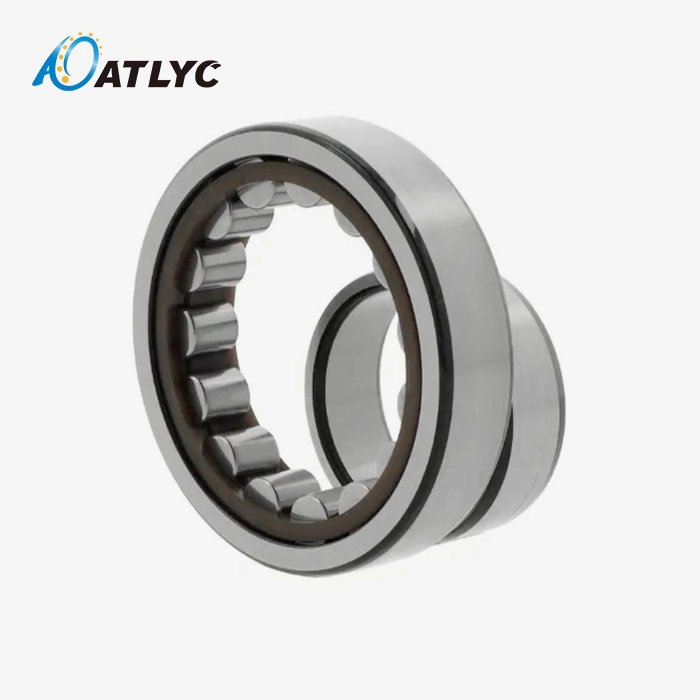
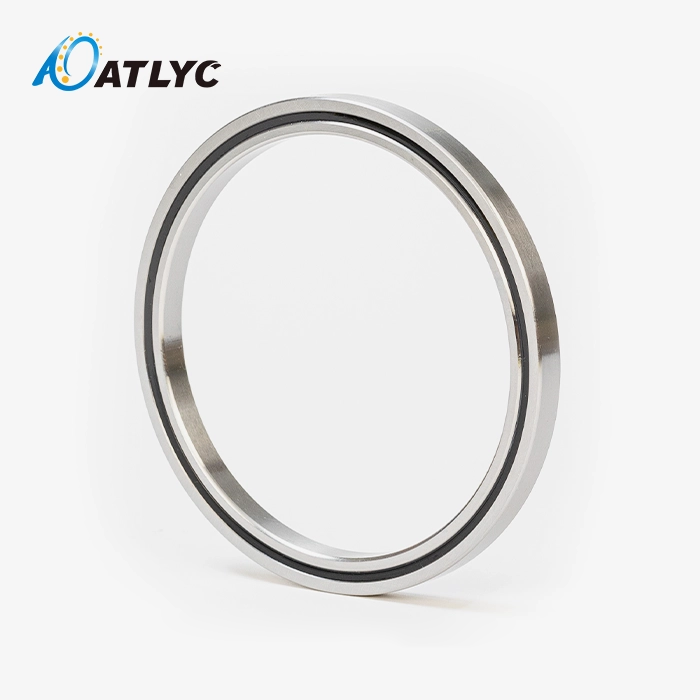
When space is limited, and precision is a must, the RA cross roller bearing does what ordinary bearings can’t. The cylindrical rollers are in a V-groove raceway at 90-degree angles and have spacers between them. With most traditional bearing types, this is not possible — one bearing may sustain radial, axial, and moment loads simultaneously with this design.
The “RA” designation refers to an ultra-thin wall series having a smaller cross-sectional height than the ordinary RB series. The inner ring has a monolithic integrated construction, while the outer ring is removable, which is useful when the inner ring demands great precision in rotation. Because it eliminates the necessity for double-bearing mounting arrangements, it is exactly this shape that makes this bearing type the darling of robotic joint designers.
Use in CNC Rotary Tables
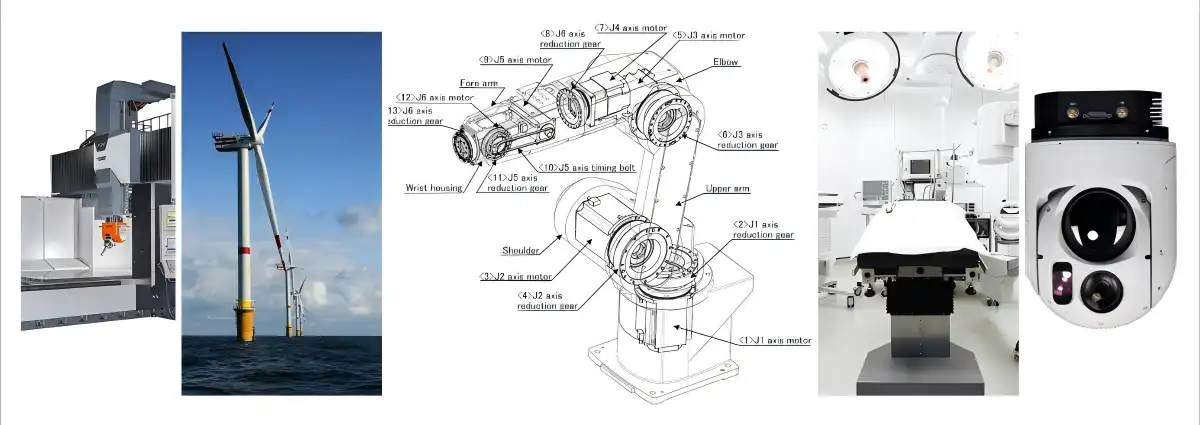
CNC rotary tables need to be able to position to sub-arc-minute precision. The crossed roller design gives the stiffness to retain position under severe milling loads, while the small profile keeps the table compact. With this kind of bearing, manufacturers claim positional repeatability within ±2 arc-seconds.
Use in Robotic Arm Joints
In collaborative robots and light manipulators, reduction of the joint inertia directly influences the cycle speed and energy consumption. The RA series removes dead weight at every joint while preserving the structural stiffness necessary for payload precision. This immediately increases the robot's payload-to-weight ratio.
Use in Semiconductor and Medical Equipment
Zero-clearance accuracy is critical for wafer handling robots and for swivel units in portable CT scanners. The ultra-thin profile is perfect for tight housings, and specific low-outgassing lubricants maintain these surroundings clean. Laparoscopic surgery uses surgical robots with this kind of bearing for vibration-free movement.
RA Cross Roller Bearing vs Other Bearing Types: Making the Right Choice
A crossed roller solution isn't always the best choice. When procurement teams know when to choose an RA series bearing over other options, they can avoid over-engineering or under-specifying. Different types of bearings have different load directions, compactness, moment loads, and best uses.
| Bearing Type | Load Direction | Compactness | Moment Load Capacity | Best For |
|---|---|---|---|---|
| RA Cross Roller | Radial + Axial + Moment | Very High | Excellent | Robotics, CNC tables |
| Deep Groove Ball | Radial primary | High | Low | General machinery |
| Tapered Roller | Axial + Radial | Medium | Moderate | Heavy-duty gearboxes |
| Slewing Ring | All directions | Low | High | Large cranes, turntables |
| Angular Contact Ball | Axial + Radial | Medium | Low-Moderate | High-speed spindles |
This comparison shows that the RA Cross Roller Bearing fills a specific need: it can handle high-precision loads in multiple directions while being small. Ball bearings can go faster, but they can't match the moment stiffness. Heavy loads can be moved by slewing rings, but they are too big for robotic joints.
When to Choose RA Over Ball Bearings
Even though ball bearings can turn faster, they are not very strong when loads are added together. When a joint needs to fight both axial push and bending force at the same time, the crossed roller layout is much stiffer per unit volume than ball bearings.
When to Choose RA Over Tapered Roller Bearings
To handle force going in both directions, tapered roller bearings need to be mounted in pairs. The RA series does all of this in a single small unit, which saves space and time on assembly, which is a big cost factor in automation production that makes a lot of things.
When RA May Not Be the Right Fit
Other kinds of bearings might work better in big industrial gears with very heavy radial loads or for continuous spinning at very high speeds (above the bearing's maximum speed). The RA series is made for rigidity and accuracy, not for the fastest rotational speed.
Design, Material, and Maintenance: Ensuring Longevity and Performance
Crossed roller bearings work very differently depending on the type of steel they are made of, how they are heated and cooled, the design of their cages, and how they are oiled.
High-carbon chromium bearing steel (GCr15 or equivalent to AISI 52100) is used in most high-quality RA Cross Roller Bearings. This steel gets a surface hardness of HRC 60–64 after being heat-treated. This amount of roughness is what keeps the line-contact rollers from wearing out after being loaded and unloaded many times. A reliable bearing has raceways that are precisely ground to P4 or P5 accuracy grades. A bearing that drifts under load does not.
The following are the most important maintenance issues that every procurement team should talk about with their engineering counterparts:
Lubrication selection: Lithium soap-based grease with EP (extreme pressure) additives is standard for industrial robotic joints. Fluorine-based low-outgassing grease is required for cleanroom or vacuum environments.
Re-lubrication intervals: Under normal operating conditions, re-grease every 1,000–2,000 operating hours. Heavy shock loads or high temperatures shorten this interval.
Installation practice: The separable outer ring must be clamped with a precision flange to correct any ovality. Improper installation is the leading cause of early bearing failure in this series.
Inspection protocol: Check for abnormal noise, temperature rise above 30°C over ambient, and vibration signatures. These are early indicators of wear before visible damage occurs.
When done regularly, these maintenance steps directly increase the life of the machine and lower unplanned downtime.
| Maintenance Task | Recommended Interval | Key Indicator |
|---|---|---|
| Grease replenishment | 1,000–2,000 hours | Temperature rise |
| Raceway inspection | 6 months | Vibration signature |
| Clearance verification | Annually | Positioning drift |
| Flange torque check | At installation | Outer ring ovality |
Procurement Guide: How to Source the Best RA Cross Roller Bearing for Your Business
It's not always about price when choosing where to get quality RA Cross Roller Bearings. Consistent lead times, certification status, and the ability to make changes are all important for the long-term health of the supply chain.
Certifications That Matter
Suppliers who are certified by both ISO 9001 and IATF 16949 have shown that they have quality management systems that work every time and meet the needs of automotive and industrial OEMs. IATF 16949 talks about defect avoidance, process control, and tracking in detail, which is something that generic providers often can't do.
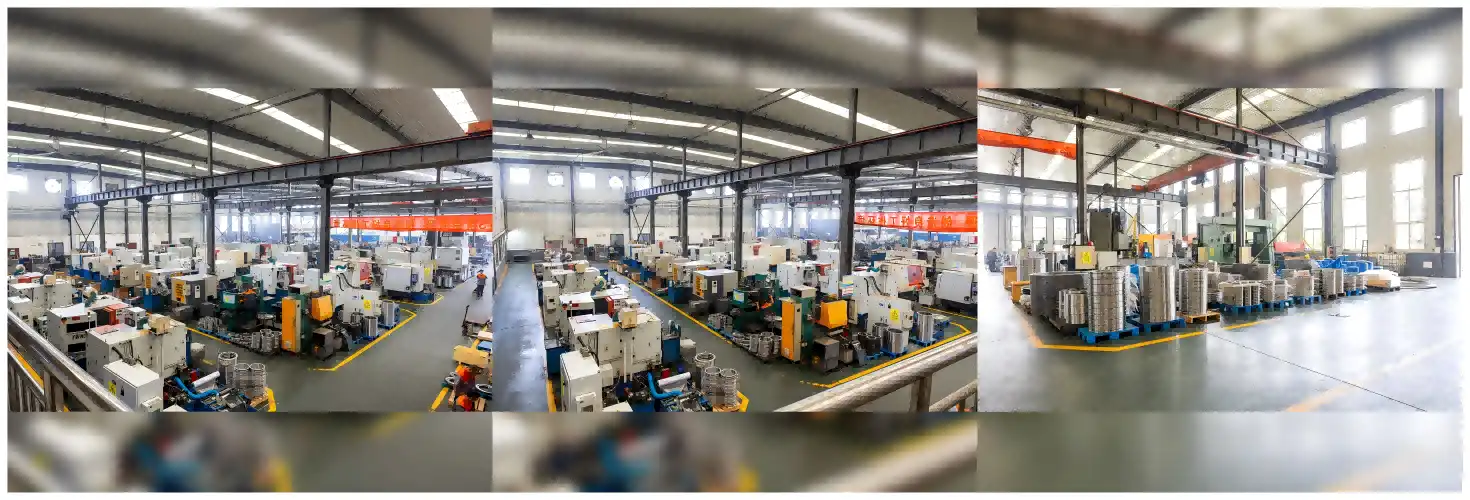
Luoyang Auto Bearing Co., Ltd. (ATLYC), which has been around since 2010, is certified by both ISO 9001 and IATF 16949. ATLYC used to only make one type of deep groove ball bearing, but now it has 120 trained workers spread out over six production workshops. It makes six main types of bearings, such as precision crossed roller bearings for CNC and automation uses. In addition to the US, Germany, South Korea, Russia, Iran, and Turkey, people buy their goods.
Evaluating Supplier Capacity
Spot sales are handled by a seller who runs one workshop. A provider with six workshops and specialized R&D, quality inspection, and assembly teams can handle increased production and orders for custom sizes. When looking at a crossed roller bearing provider, find out what their minimum order amounts are, how long it takes to make a prototype, and how they handle reports of nonconformance.
Pricing and Lead Time Benchmarks
Prices for RA series bearings bought in bulk on the market depend on the bore diameter, accuracy grade, and number of orders. People who buy more than 500 units at a time often can get 10–20% off the list price. Standard lead times for off-the-shelf sizes from well-known Chinese manufacturers are 15 to 30 days, while special configurations take 4 to 8 weeks.
Performance Optimization and Future Trends in RA Cross Roller Bearings for CNC and Robotics
There's more to it than the bearing. The precise specifications don’t always translate into actual machine performance, depending on how it fits into the overall picture.
One element that purchasing teams frequently overlook is the preload setting. Proper preloading of an RA Cross Roller Bearing eliminates the internal clearance. The bearing is more rigid, and the repeatability of position is improved. Overloading heats the part, therefore shortening its life. Bearings with good engineering support have preload settings recommended by the manufacturer depending on the number of load cycles.
Two significant breakthroughs in technological trends are altering the way purchasers think about purchasing bearings. First, ceramic hybrid rollers with silicon nitride rolling elements within steel rings are being fitted to precision bearings. They make the car lighter, quicker, and less prone to rust in damp or chemically exposed places. Second, there is a transition of IoT-based condition monitoring from large industrial motors to small joints. This allows maintenance personnel to examine vibration, temperature, and load data in real time, moving maintenance from predefined time windows to actual condition-based service.
What does this imply for procurement managers negotiating a supply agreement for the future? Well, the connection with the supplier should be more than just order fulfillment. It should also be technological cooperation.
Conclusion
The RA Cross Roller Bearing is a precise part that has a direct effect on the accuracy of the CNC and the performance of the robot. Not just unit price, but also load specifications, accuracy grades, material quality, and supplier capabilities must be taken into account when choosing the right bearing. To get the bearing to last as long as it's supposed to, both proper maintenance and fitting are very important. As the need for automation grows in all manufacturing areas, it is important to have a certified, reliable bearing supplier with a lot of engineering knowledge.
FAQ
1. How does the RA series differ from the RB series?
The RA series features a thinner outer ring cross-section than the RB series. It is specifically designed for applications requiring weight reduction and housing downsizing, while the RB series is the standard model.
2. Can RA cross roller bearings handle high-speed rotation?
These bearings prioritize rigidity and accuracy. Their limiting speed is lower than ball bearings due to spacer sliding contact and preload design. They perform best in intermittent, oscillating, or moderate-speed precision applications.
3. What lubrication is correct for robotic joints?
Lithium soap-based grease with EP additives is standard. In cleanroom or vacuum environments, fluorine-based low-outgassing grease is required to prevent contamination.
4. How is service life calculated for this bearing type?
Life is calculated using the basic dynamic load rating (C) and equivalent radial load (Pc), adjusted for the load factor (fw). The formula is L10 = (C/Pc)^(10/3), which differs from the ball bearing formula due to line contact geometry.
5. What causes premature failure?
Improper installation—specifically failing to clamp the separable outer ring with a precision flange—is the most common cause. Insufficient lubrication and incorrect preload setting are the next most frequent issues.
Partner with ATLYC for Your RA Cross Roller Bearing Supply
Since 2010, ATLYC has been making precision RA Cross Roller Bearings. Every unit we ship is backed by our ISO 9001 and IATF 16949 certifications. We help B2B buyers in the US, Germany, South Korea, and other places as a trusted RA Cross Roller Bearing manufacturer with six production workshops and 120 experts. Get in touch with our tech team right away to talk about specs, sample requests, or prices for large orders. You can email us at auto@lyautobearing.com to get in touch with us.
References
1. Harris, T. A., & Kotzalas, M. N. — Essential Concepts of Bearing Technology, CRC Press, 2006.
2. Hamrock, B. J., Schmid, S. R., & Jacobson, B. O. — Fundamentals of Machine Elements, McGraw-Hill, 2014.
3. ISO 281 — Rolling Bearings — Dynamic Load Ratings and Rating Life, International Organization for Standardization, 2007.
4. Bhushan, B. — Introduction to Tribology, Wiley, 2013.
5. International Federation of Robotics — World Robotics Report: Industrial Robots, IFR Statistical Department, 2023.
6. Weck, M., & Brecher, C. — Machine Tools: Production Systems, Springer, 2006.
Learn about our latest products and discounts through SMS or email