- English
- French
- German
- Portuguese
- Spanish
- Russian
- Japanese
- Korean
- Arabic
- Greek
- German
- Turkish
- Italian
- Danish
- Romanian
- Indonesian
- Czech
- Afrikaans
- Swedish
- Polish
- Basque
- Catalan
- Esperanto
- Hindi
- Lao
- Albanian
- Amharic
- Armenian
- Azerbaijani
- Belarusian
- Bengali
- Bosnian
- Bulgarian
- Cebuano
- Chichewa
- Corsican
- Croatian
- Dutch
- Estonian
- Filipino
- Finnish
- Frisian
- Galician
- Georgian
- Gujarati
- Haitian
- Hausa
- Hawaiian
- Hebrew
- Hmong
- Hungarian
- Icelandic
- Igbo
- Javanese
- Kannada
- Kazakh
- Khmer
- Kurdish
- Kyrgyz
- Latin
- Latvian
- Lithuanian
- Luxembou..
- Macedonian
- Malagasy
- Malay
- Malayalam
- Maltese
- Maori
- Marathi
- Mongolian
- Burmese
- Nepali
- Norwegian
- Pashto
- Persian
- Punjabi
- Serbian
- Sesotho
- Sinhala
- Slovak
- Slovenian
- Somali
- Samoan
- Scots Gaelic
- Shona
- Sindhi
- Sundanese
- Swahili
- Tajik
- Tamil
- Telugu
- Thai
- Ukrainian
- Urdu
- Uzbek
- Vietnamese
- Welsh
- Xhosa
- Yiddish
- Yoruba
- Zulu
How to Select the Right RE Series Crossed Roller Bearing?
To choose the proper RE Series Crossed Roller Bearing, you must first evaluate your load profile, the accuracy class you need, and your working environment. This kind of bearing comprises a split inner ring and an integrated outer ring. It is very accurate and is suitable for situations where the outer ring rotates. RE crossed roller bearings are available in inner diameters from 20 to 1100 mm, and in accuracy ratings P6, P0, P5, P4, and P3, to accommodate radial, axial, and moment loads in one compact unit, reducing the need for multi-bearing assemblies in precision equipment.

Understanding the RE Series Crossed Roller Bearing
What Makes It Structurally Different
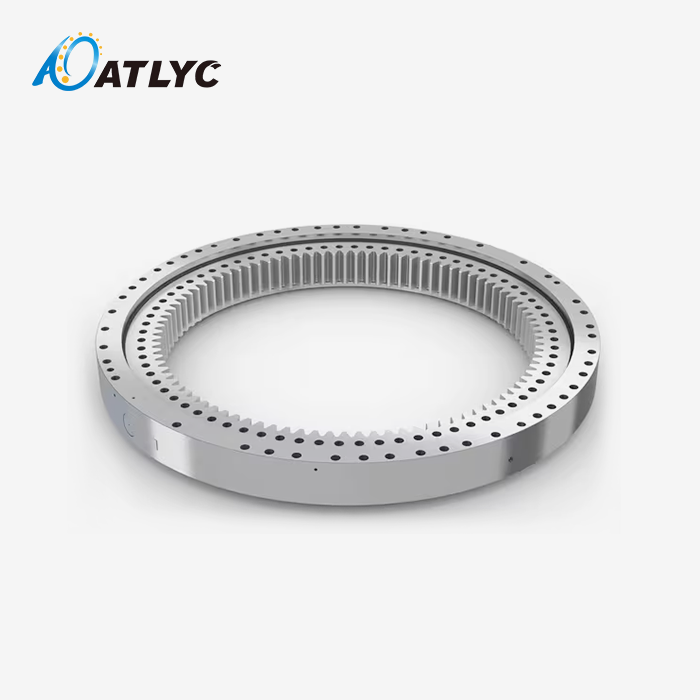
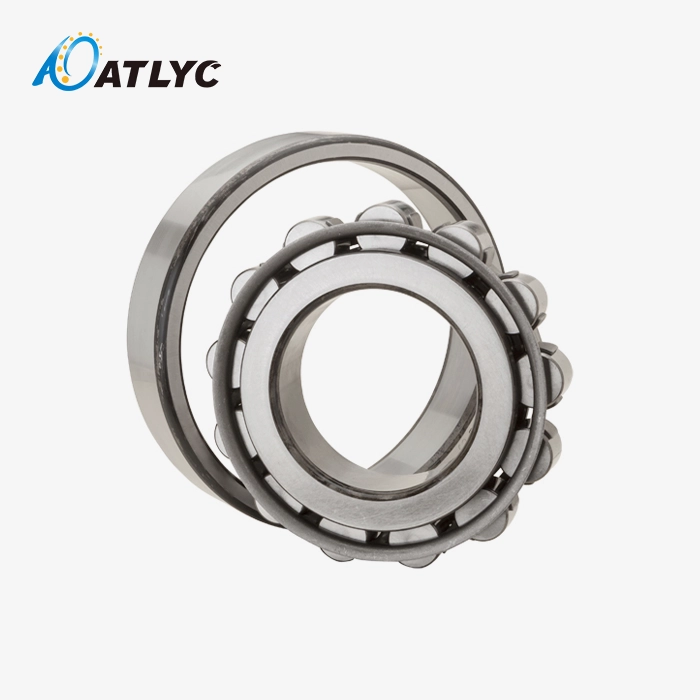
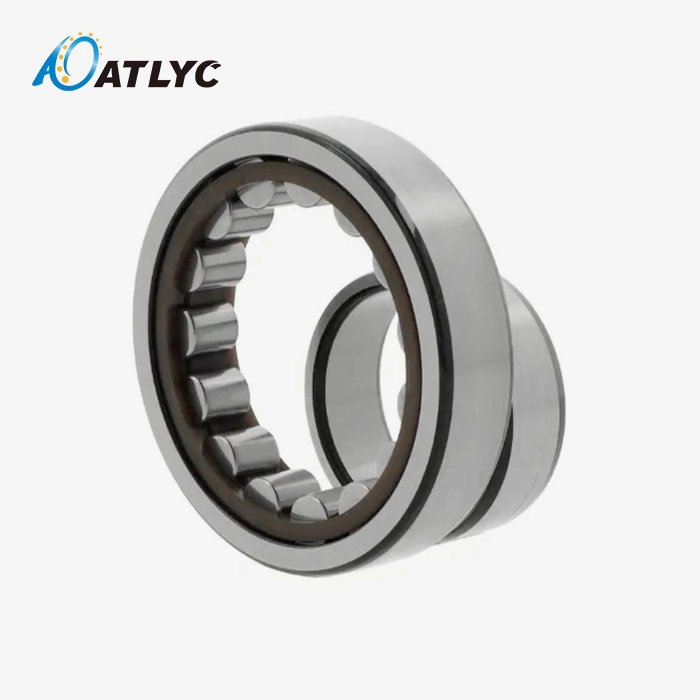
The outer ring of the RE crossed roller bearing is monolithic, while the inner ring is formed of two independent sections that are disassemblable. Cylindrical rollers are arranged in a line, one after the other, at 90-degree angles inside the precision-ground V-groove raceways. This unusual structure means the bearing can take loads in more than one direction in a single, compact unit. This is not something that a normal deep groove ball bearing can achieve.
Core Technical Specifications
| Parameter | Specification |
|---|---|
| Inner Diameter | 20 – 1,100 mm |
| Outer Diameter | 70 – 1,500 mm |
| Width | 12 – 110 mm |
| Material | GCr15, GCr15SiMn |
| Accuracy Grades | P6, P0, P5, P4, P3 |
| Friction Coefficient | 0.002 – 0.004 |
| Raceway Surface Roughness | Ra 0.2 or better |
Precision and Runout Performance
When the preload settings are just right, the running accuracy is within 5 to 10 micrometers. With a friction rate between 0.002 and 0.004, drive motors need less torque to start up, which directly cuts down on energy use in automatic systems. Precision-molded spacers between each roller keep them from touching each other. This keeps the bearing rotating smoothly and consistently for its entire life.
Key Factors to Consider When Selecting an RE Series Crossed Roller Bearing
Load Type and Magnitude
You need to know if your application creates radial loads, axial loads, moment loads, or a mix of these before you choose a crossed roller bearing. The RE Series Crossed Roller Bearings are made to handle all three at the same time. The axial load capacity is usually 70% of the radial rating, and the radial load capacity can be up to 85% higher than a ball bearing of the same size. This type of bearing means that secondary support structures are not needed at all for cantilevered designs with large moment loads.
Precision Grade Matching
Selecting the correct accuracy class for your purposes is one of the most essential decisions you will make in the selection process. Below is a helpful approach to picking grades:
P6: Industrial equipment for general-purpose use with modest precision requirements. Ideal for mild automation and regular rotating tables.
P0: Typical accuracy on most machine center rotary tables and medium workload manipulators.
P5: Better control of runout for high-precision robotics joints and measurement devices.
P4: Tight dimensional tolerances in semiconductor production equipment and medical equipment.
P3: The top grade, for IC fabrication equipment, laser systems and aerospace-grade instrumentation.
If you choose a higher grade of precision than your application demands, you will spend more without any further advantages. If the slope is selected too low, then the positioning mistakes will accumulate, and the duration between equipment maintenance breaks will be reduced.
Environmental and Supplier Factors
The choice of bearing is influenced by operating temperature, contaminant exposure, and compatibility of lubrication. GCr15 steel is suitable for the usual temperature range of industry, while GCr15SiMn steel has superior hardness at higher temperatures. On the supplier side, ensure that the manufacturer has ISO 9001 and IATF 16949 certifications, has written quality control records, and can provide consistent lead times supported by manufacturing capacity.
How to Match RE Series Bearings to Your Specific Industry Needs
Robotics and Automation Equipment
Space and weight limits have a direct effect on cycle time and cargo capacity in industrial robot joints and manipulator moving parts. Because they take up up to 60% less room than dual-bearing setups, RE crossed roller bearings are the usual choice for 6-axis robot arm joints. A negative clearance preload setting on a P4 or P5 grade bearing gets rid of backlash and provides the stiffness needed for repeated placement.
Machining Centers and Precision Rotary Tables
Machine center rotary tables are required to withstand a high number of moment loads and have a runout precision of less than 5 micrometers. The outer ring is built-in, so the RE design structure is not damaged by cutting pressures. The GCr15SiMn material hardened to HRC 58–64 is able to maintain the integrity of the raceway after repeated loading and unloading. This implies the table lasts longer than with normal angular contact configurations.
Medical and Measurement Instruments
Medical imaging equipment and coordinate measuring devices need to be clean and operate with little vibration. In cleanrooms, RE series bearings with precision ratings P4 or P3 and specific grease that does not give off much gas are needed. The roller design with spacers between them prevents torque spikes that would otherwise screw with delicate measurement equipment.
The table below outlines the essential elements that a RE Series Crossed Roller Bearing supplier must have to be considered.
Procurement Strategies for RE Series Crossed Roller Bearings
Evaluating Supplier Capabilities
The following table summarizes the key criteria for qualifying a crossed roller bearing supplier:
| Evaluation Criteria | Minimum Requirement |
|---|---|
| Quality Certifications | ISO 9001 + IATF 16949 |
| Precision Grade Range | P6 through P3 |
| Size Coverage | ID 20mm to 1,100mm |
| Material Options | GCr15 and GCr15SiMn |
| Customization Capability | Yes — drawings accepted |
| Lead Time Transparency | Confirmed before order |
| After-Sales Technical Support | Available |
Pricing Factors and Bulk Purchasing
Unit pricing is influenced by material grade, accuracy class, and bore size. The longest grinding and inspection time is for large diameters for P3-grade bearings, which means the greatest cost. Buyers with repeated bulk purchases should arrange blanket purchase agreements that guarantee price for a rolling 12-month period. This safeguards against raw material price changes in bearing steel and guarantees priority manufacturing slots.
Building a Long-Term Supply Relationship
A good crossed roller bearing provider should not be merely a parts seller, but a technical partner. Get application review assistance before completing specs. Manufacturers with technical teams in-house may specify preload settings, grease kinds, and housing tolerances that directly impact bearing performance. With this backing in place, Luoyang Auto Bearing Co., Ltd. (ATLYC), founded in 2010 and accredited to ISO 9001 and IATF 16949, serves OEM clients in the US, Germany, South Korea, and other important markets.
Maintaining and Maximizing the Lifespan of Your RE Series Bearings
Installation Best Practices
Never use direct force on rolling components during installation. Use a press flange to disperse the load uniformly along the face of the ring. Before fitting, inspect the mating housing bore and shaft shoulder for surface imperfections. Even a minor burr may affect the bearing’s running profile and cause the raceways to wear out sooner than they should. Check that the preload settings comply with the hardening and speed requirements of your application before completing the assembly.
Lubrication and Inspection Schedule
Most RE series bearings are already filled with lithium soap-based grease (e.g., Alvania EP2). Low outgassing options are available for vacuum or cleanroom applications. The re-greasing interval is dependent upon speed, load, and temperature, but a decent rule of thumb for an industrial inspection cycle is every 2,000 hours of operation. Every so often, listen for unexpected sounds, vibrations, or temperature changes.
Early Fault Detection
Crossed roller bearings should be examined when rotational torque increases, noisy abnormalities occur during rotation, or the runout exceeds the stipulated tolerance band. If you catch these signals early enough, before they grow worse, you can stop harm elsewhere and prevent production from halting without meaning to.

Conclusion
The process of choosing the proper RE Series Crossed Roller Bearing has to be done systematically. You need to know your load profile, choose the right precision grade for your application, consider your operating environment, and team up with a supplier whose qualifications and technical depth meet your quality requirements. The RE bearing is excellent for robots, machining centers, medical equipment, and measuring instruments because it has a continuous outer ring, is composed of GCr15 or GCr15SiMn, and comes in precision ratings from P6 to P3. Correct installation, correct lubrication, and frequent inspection mean extended service life and consistent machine performance from that technical expertise.
FAQ
1. What is the difference between RE and RB series crossed roller bearings?
The RE series features an integral outer ring and a split inner ring, making it optimal for applications where the outer ring rotates. The RB series reverses this arrangement—it has a split outer ring and an integral inner ring—which suits applications requiring high inner ring rotational accuracy.
2. Can a single RE bearing handle moment loads?
Yes. The orthogonal roller arrangement creates a large effective load span within the bearing's single-unit structure, allowing it to carry radial, axial, and moment loads at the same time without requiring additional bearing rows.
3. What precision grade should I specify for a robot joint?
P4 or P5 is standard for industrial robot joints and precision rotary tables. P3 is reserved for the most demanding applications, such as semiconductor equipment and high-accuracy measurement systems.
4. What lubrication does the RE series require?
Standard pre-packing uses lithium soap-based grease. For cleanroom or vacuum environments, specify low-outgassing grease at the time of order.
5. How do I confirm the correct size for my application?
Provide your bore diameter, housing outer diameter, available width, load values, and target precision grade. ATLYC's engineering team can verify fit and recommend the appropriate model from the available range of 20–1,100mm inner diameters.
Get a Direct Quote from ATLYC — Your RE Series Crossed Roller Bearing Supplier
ATLYC (Luoyang Auto Bearing Co., Ltd.) has been making precision bearings since 2010 in six production workplaces. Each shipment is backed by ISO 9001 and IATF 16949 certificates. We are a reliable company that makes RE Series Crossed Roller Bearings for OEMs and dealers in the US, Germany, South Korea, and other places. You can email our engineering team at auto@lyautobearing.com to get details, samples, or a personalized quote.
References
1. Harris, T. A., & Kotzalas, M. N. Rolling Bearing Analysis: Essential Concepts of Bearing Technology. Taylor & Francis, 2006.
2. SKF Group. SKF General Catalogue. SKF, 2018.
3. ISO. ISO 492: Rolling Bearings — Radial Bearings — Dimensional and Geometrical Tolerances. International Organization for Standardization, 2014.
4. NSK Ltd. NSK Technical Report: Precision Crossed Roller Bearings for Robotics Applications. NSK, 2019.
5. THK Co., Ltd. THK Crossed Roller Bearing Product Catalogue. THK, 2020.
6. American Bearing Manufacturers Association (ABMA). ABMA Standard 20: Radial Bearings of Ball, Cylindrical Roller and Spherical Roller Types. ABMA, 2011.
Learn about our latest products and discounts through SMS or email