- English
- French
- German
- Portuguese
- Spanish
- Russian
- Japanese
- Korean
- Arabic
- Greek
- German
- Turkish
- Italian
- Danish
- Romanian
- Indonesian
- Czech
- Afrikaans
- Swedish
- Polish
- Basque
- Catalan
- Esperanto
- Hindi
- Lao
- Albanian
- Amharic
- Armenian
- Azerbaijani
- Belarusian
- Bengali
- Bosnian
- Bulgarian
- Cebuano
- Chichewa
- Corsican
- Croatian
- Dutch
- Estonian
- Filipino
- Finnish
- Frisian
- Galician
- Georgian
- Gujarati
- Haitian
- Hausa
- Hawaiian
- Hebrew
- Hmong
- Hungarian
- Icelandic
- Igbo
- Javanese
- Kannada
- Kazakh
- Khmer
- Kurdish
- Kyrgyz
- Latin
- Latvian
- Lithuanian
- Luxembou..
- Macedonian
- Malagasy
- Malay
- Malayalam
- Maltese
- Maori
- Marathi
- Mongolian
- Burmese
- Nepali
- Norwegian
- Pashto
- Persian
- Punjabi
- Serbian
- Sesotho
- Sinhala
- Slovak
- Slovenian
- Somali
- Samoan
- Scots Gaelic
- Shona
- Sindhi
- Sundanese
- Swahili
- Tajik
- Tamil
- Telugu
- Thai
- Ukrainian
- Urdu
- Uzbek
- Vietnamese
- Welsh
- Xhosa
- Yiddish
- Yoruba
- Zulu
Why Upgrade to CRBH Cross Roller Bearings?
Upgrading to CRBH cross roller bearings delivers immediate benefits for manufacturers demanding precision and reliability. The CRBH series eliminates common installation errors through its integrated ring structure while simultaneously handling radial, axial, and moment loads within a single compact unit. This configuration reduces assembly complexity by up to 50% compared to dual-bearing setups, translating directly into lower maintenance costs and enhanced positioning accuracy. We've witnessed how procurement teams across automotive and automation sectors achieve measurable gains in equipment uptime and operational efficiency simply by transitioning from traditional bearing arrangements to this advanced solution.

Understanding CRBH Cross Roller Bearings
What Makes CRBH Bearings Different?
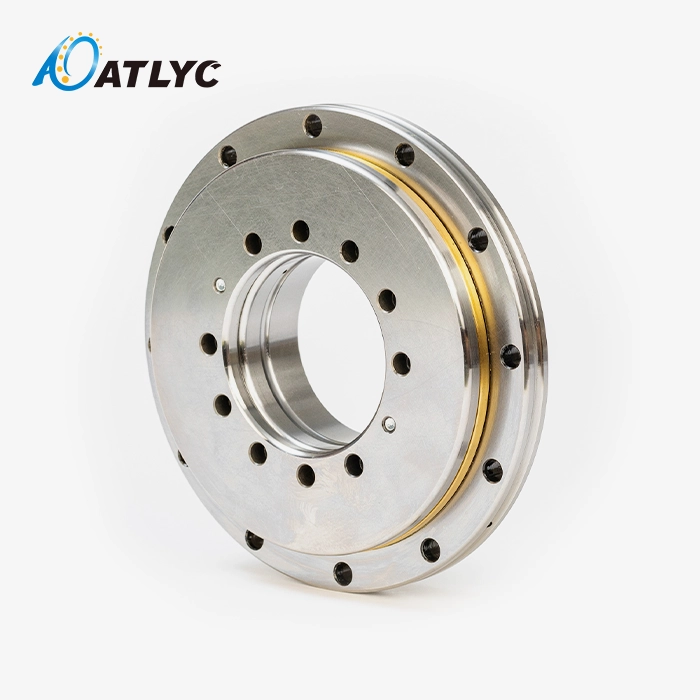
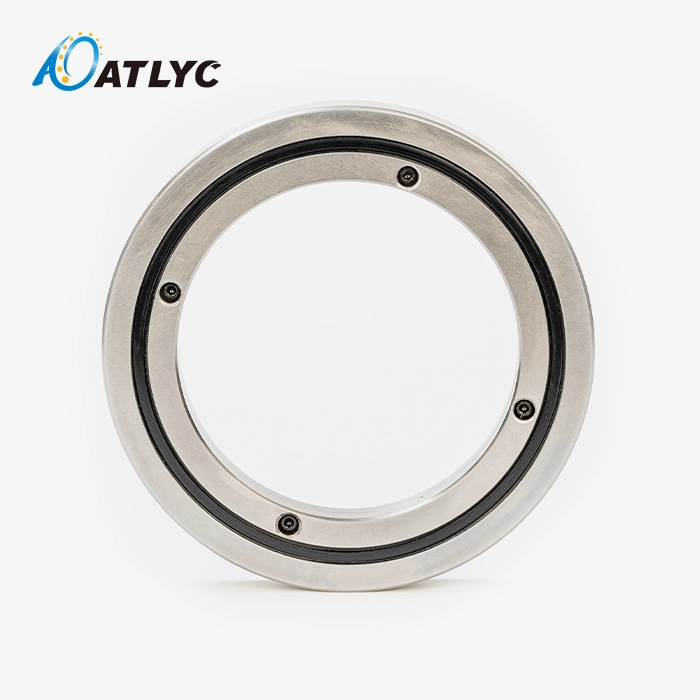
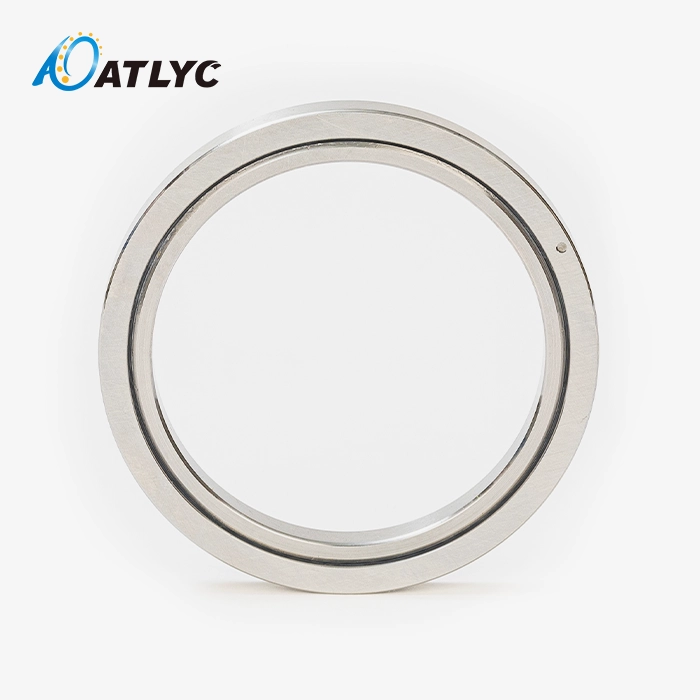
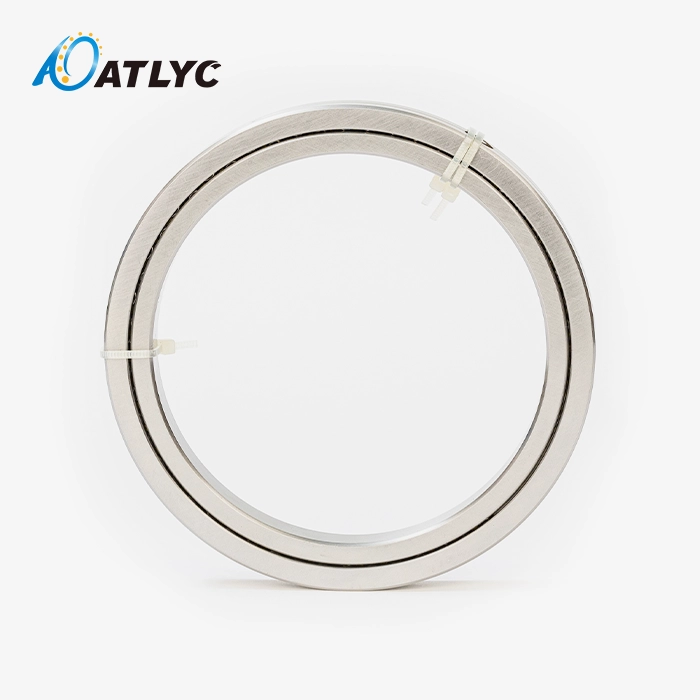
The CRBH cross roller bearing represents a significant engineering advancement in rotary component design. Unlike split-ring alternatives found in standard bearing series, this configuration features solid one-piece inner and outer rings that maintain structural integrity under varying load conditions. Cylindrical rollers positioned orthogonally at 90-degree intervals between V-groove raceways create a load distribution pattern that traditional bearings simply cannot match. Precision spacers separate each roller, preventing direct metal-to-metal contact that typically accelerates wear in full-complement designs.
How the Integrated Ring Design Works
Solid ring construction forms the foundation of CRBH performance advantages. Manufacturing teams at facilities like ours subject these rings to precision grinding followed by super-finishing treatment, achieving surface quality levels that meet P4 and P2 accuracy grades. This process eliminates structural discontinuities responsible for deflection under load—a persistent challenge with split constructions. The result? Your equipment maintains specified clearances regardless of housing tolerances or mounting stress variations during installation.
The Orthogonal Roller Arrangement Advantage
Roller positioning at right angles between raceways enables simultaneous load handling across multiple directions. Each roller contacts both rings at optimised angles, distributing forces efficiently across the entire bearing assembly. This geometric configuration proves particularly valuable in robotic joint applications where complex moment loads occur continuously during operation. Testing data from industrial automation installations shows this arrangement reduces deflection by 40% compared to conventional cylindrical roller bearings under equivalent load conditions.
Why Upgrade? Advantages of CRBH Cross Roller Bearings Over Traditional Bearings?
Making the transition from traditional bearing solutions to crossed roller technology addresses several critical pain points manufacturers face in precision applications. The engineering community has documented substantial performance improvements across key metrics that directly impact your production efficiency and equipment reliability.
Superior Load Capacity in Compact Footprints
Space constraints challenge equipment designers constantly. The thin-wall optimisation in CRBH cross roller bearings reduces ring thickness by 30-40% compared to standard constructions while maintaining equivalent load ratings. We've achieved diameter-to-thickness ratios reaching 10:1, enabling machinery designers to reduce overall equipment footprint by 15-20%. This space efficiency proves essential in systems for handling semiconductor wafers and portable measurement instruments where every millimetre counts.
Enhanced Rigidity Improves Positioning Accuracy
Integrated ring construction delivers exceptional rigidity that translates directly into better positioning accuracy. During precision machining operations, this characteristic prevents micro-deflections that compromise dimensional tolerances. CNC indexing heads equipped with these bearings maintain micron-level accuracy even under heavy cutting forces—a performance level difficult to achieve with ball bearing alternatives. Manufacturing facilities report measurable improvements in part quality consistency after retrofitting equipment with this technology.
Lower Friction Extends Service Life
Super-finished raceways combined with optimised lubrication reduce friction coefficients to 0.0015 or below. This minimal resistance generates less heat during operation, extending bearing life expectancy significantly. Maintenance records from automation equipment manufacturers show service intervals extending 60% longer compared to previous bearing configurations. Lower operating temperatures also reduce lubricant degradation, decreasing your total cost of ownership over the equipment lifecycle.
Multi-Directional Load Handling Simplifies Design
Traditional bearing arrangements often require multiple units working together to handle complex load combinations. The orthogonal roller configuration manages radial, axial, and moment loads simultaneously within a single assembly. This capability simplifies your design calculations and reduces installation complexity. Engineering teams eliminate time-consuming preload adjustments typically necessary when coordinating multiple bearing units, accelerating assembly line throughput.
Comparing CRBH Cross Roller Bearings with Other Bearing Types
CRBH Versus Standard Ball Bearings
Ball bearings excel in high-speed applications but struggle with moment loads and rigidity requirements. Point contact between balls and raceways limits load capacity compared to the line contact achieved with cylindrical rollers. When your application demands high rigidity with minimal deflection—such as robotic arm joints or rotary table indexing—the crossed roller design outperforms ball bearing solutions consistently. Load capacity comparisons show CRBH bearings handle 3-4 times greater moment loads within equivalent envelope dimensions.
CRBH Versus Slewing Bearings
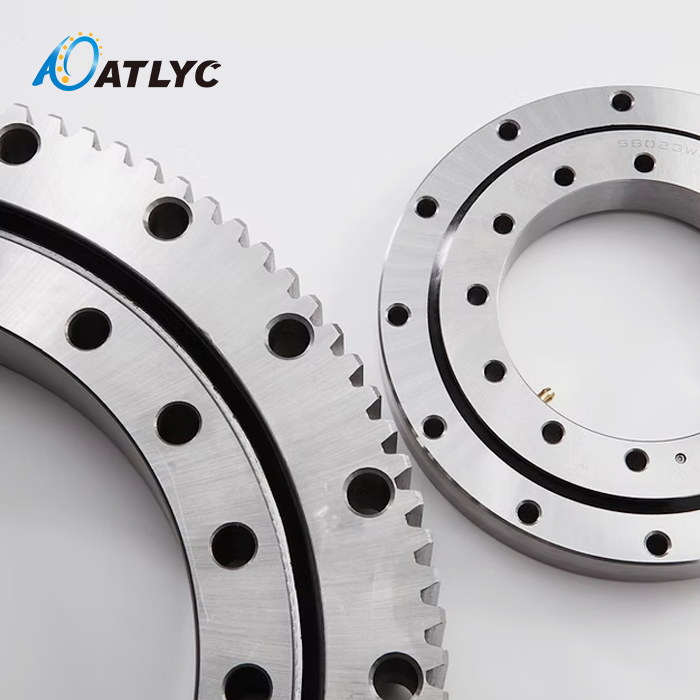
Slewing bearings serve large-diameter rotary applications effectively but sacrifice compactness. The thin-section profile of CRBH series bearings makes them ideal for applications where slewing bearings would consume excessive space. Industrial robot manufacturers particularly value this distinction, as joint envelope constraints directly affect robot reach and workspace efficiency. The integrated ring design also eliminates bolt circle requirements that add complexity to slewing bearing installations.
CRBH Versus Split-Ring Crossed Roller Bearings
Split-ring designs offer easier installation for certain configurations but introduce structural weaknesses. The discontinuity at ring separation points creates stress concentrations that reduce overall bearing rigidity. Installation-induced deformation remains a persistent failure mode with split-ring alternatives, particularly during flange mounting procedures. CRBH integrated construction eliminates these vulnerabilities, ensuring consistent rotational accuracy regardless of housing rigidity variations. Quality control testing reveals split-ring bearings show 25-30% greater runout variation compared to solid ring alternatives.
Procurement Insights for CRBH Cross Roller Bearings
Quality Verification Standards
Professional procurement requires rigorous inspection protocols. Rotational accuracy measurement using inductive probes confirms compliance with precision grades. Internal clearance verification proves critical—insufficient preload causes vibration while excessive preload leads to thermal seizing. We implement eddy current testing and Rockwell hardness evaluation on raceways, confirming hardening depth adequate for brinelling resistance. Starting torque measurements validate low-friction performance essential for servo applications.
Certification Requirements for Global Markets
ISO 9001 and IATF 16949 certifications demonstrate manufacturing capability meeting international standards. These quality management systems ensure consistent production processes and traceability throughout the supply chain. Equipment manufacturers serving automotive OEM customers particularly value IATF 16949 compliance, as tier-one suppliers mandate this certification from bearing providers. Documentation supporting these certifications should accompany your bearing procurement to satisfy downstream customer audit requirements.
Lead Time and Customisation Considerations
Standard CRBH configurations typically ship within 4-6 weeks from established manufacturers maintaining inventory. Custom specifications requiring modified dimensions or specialised materials extend lead times to 8-12 weeks depending on complexity. Volume commitments enable pricing advantages—orders exceeding 500 units often qualify for 15-20% reductions compared to small-lot pricing. Engineering support during the specification phase prevents costly redesigns later, making early supplier engagement valuable.
Warranty and Technical Support Expectations
Reputable bearing manufacturers back their products with comprehensive warranty coverage and ongoing technical assistance. Warranty terms typically span 12-24 months, covering manufacturing defects and premature failure under rated conditions. Post-sale support should include application engineering consultation, helping your team optimise bearing selection and installation procedures. This partnership approach reduces integration risk and accelerates your product development timeline.
Practical Applications and Case Studies
Industrial Robotics and Automation
Articulated robot joints represent the most demanding application for crossed roller bearings. Six-axis industrial robots require zero-backlash motion control with positioning repeatability within 0.02mm. The CRBH series delivers this performance level while withstanding continuous operation cycles exceeding one million repetitions annually. Automotive assembly line robots equipped with these bearings maintain calibration accuracy across multi-year service intervals, reducing unplanned downtime that disrupts production schedules.
Precision Rotary Tables and Indexing Systems
CNC machining centres depend on rotary table accuracy for multi-sided part machining. CRBH bearings support worktables while maintaining stability under heavy cutting forces that generate complex moment loads. Machine tool builders report indexing accuracy improvements from 15 arcseconds to 5 arcseconds after upgrading to crossed roller bearing designs. This precision enhancement enables tighter part tolerances, expanding the range of components producible on existing equipment.
Medical Imaging and Optical Inspection
Gantry systems in CT scanners and X-ray equipment require smooth rotation without vibration artefacts that affect image quality. The low starting torque characteristic of CRBH bearings—typically under 0.5 N⋅m for common sizes—prevents motion artefacts during image capture sequences. Optical wafer inspection systems achieve similar benefits, maintaining alignment stability during high-resolution scanning operations. Cleanroom compatibility proves essential in these environments, with seal designs preventing particulate contamination.
Semiconductor Manufacturing Equipment
Wafer handling robotics demand ultra-clean operation combined with high positioning accuracy. The thin-wall CRBH design reduces rotational inertia by 15-20%, enabling faster acceleration profiles without sacrificing accuracy. Lightweight aluminium alloy cages further minimise moving mass while maintaining roller separation integrity. Equipment manufacturers serving the semiconductor sector value the consistent quality these bearings provide, as production yield losses from positioning errors prove extremely costly.
Conclusion
Transitioning to CRBH cross roller bearings addresses the core challenges facing precision equipment manufacturers today. The integrated ring design eliminates installation errors while delivering superior rigidity in compact envelopes. Multi-directional load capacity simplifies mechanical design, reducing part counts and assembly complexity. Lower friction and enhanced durability extend maintenance intervals, improving your equipment uptime and lifecycle economics. These performance advantages combine to create measurable competitive advantages for manufacturers serving robotics, automation, and precision machining markets where accuracy and reliability remain non-negotiable requirements.

FAQ
How Do I Select the Right CRBH Bearing Model for My Application?
Selection begins with defining your load requirements—calculate radial forces, axial loads, and overturning moments your application generates. Match these values against bearing load ratings published in manufacturer catalogues, applying appropriate safety factors. Space constraints typically determine outer diameter and width dimensions. Rotational speed requirements influence cage design selection—polymer cages suit moderate speeds while brass cages handle higher RPM applications. Consult application engineers when operating conditions involve elevated temperatures, contaminated environments, or unusual duty cycles.
What maintenance practices maximise bearing longevity?
Proper lubrication proves critical for extended service life. Grease-lubricated bearings require relubrication at intervals based on operating speed and temperature—typically ranging from 500 to 2,000 operating hours. Monitor bearing temperature during initial operation, as excessive heat indicates improper preload or inadequate lubrication. Implement vibration analysis for early detection of wear patterns or contamination. Avoid disassembly unless necessary, as reinstallation risks introducing contaminants or installation errors that compromise performance.
How Do CRBH Bearing Prices Compare to Other Precision Bearings?
Crossed roller bearings typically cost 40-60% more than equivalent-sized ball bearings but deliver substantially higher load capacity and rigidity. Compared to using multiple ball bearings to achieve similar performance, CRBH bearings often prove more cost-effective when considering total system costs. Volume purchasing significantly impacts unit pricing—establishing long-term supply agreements with manufacturers yields better pricing than spot purchases. Factor in extended service life and reduced maintenance costs when evaluating total cost of ownership rather than focusing solely on initial purchase price.
Partner with ATLYC for Your CRBH Cross Roller Bearing Requirements
Luoyang Auto Bearing Co., Ltd. (ATLYC) brings 15 years of precision bearing manufacturing expertise to support your most demanding applications. Our ISO 9001 and IATF 16949-certified facilities produce CRBH cross roller bearings meeting international quality standards that automotive and industrial OEMs require. With 120 skilled employees dedicated to production, quality inspection, and engineering support, we deliver consistent quality across every order. Our CRBH cross roller bearing supplier capabilities include customisation options tailored to your specific dimensional and performance requirements. Contact our engineering team at auto@lyautobearing.com to discuss your application needs and receive detailed technical specifications along with competitive quotations that reflect our commitment to long-term partnership success.
References
1. Harris, T. A., & Kotzalas, M. N. (2006). Essential Concepts of Bearing Technology. CRC Press, Rolling Bearing Analysis.
2. ISO 199:2014. Rolling Bearings – Thrust Bearings – Geometrical Product Specifications and Tolerance Values. International Organisation for Standardisation.
3. SKF Group. (2018). Rolling Bearings Catalogue: Crossed Roller Bearings Design and Application Guidelines. SKF Technical Publications.
4. Hamrock, B. J., Schmid, S. R., & Jacobson, B. O. (2004). Fundamentals of Fluid Film Lubrication. Marcel Dekker Mechanical Engineering Series.
5. NSK Ltd. (2020). Precision Bearings Technical Report: Cross Roller Bearing Performance in Robotic Applications. NSK Motion & Control Division.
6. IATF 16949:2016. Quality Management System Requirements for Automotive Production and Relevant Service Parts Organisations. International Automotive Task Force Standards.
Learn about our latest products and discounts through SMS or email