- English
- French
- German
- Portuguese
- Spanish
- Russian
- Japanese
- Korean
- Arabic
- Greek
- German
- Turkish
- Italian
- Danish
- Romanian
- Indonesian
- Czech
- Afrikaans
- Swedish
- Polish
- Basque
- Catalan
- Esperanto
- Hindi
- Lao
- Albanian
- Amharic
- Armenian
- Azerbaijani
- Belarusian
- Bengali
- Bosnian
- Bulgarian
- Cebuano
- Chichewa
- Corsican
- Croatian
- Dutch
- Estonian
- Filipino
- Finnish
- Frisian
- Galician
- Georgian
- Gujarati
- Haitian
- Hausa
- Hawaiian
- Hebrew
- Hmong
- Hungarian
- Icelandic
- Igbo
- Javanese
- Kannada
- Kazakh
- Khmer
- Kurdish
- Kyrgyz
- Latin
- Latvian
- Lithuanian
- Luxembou..
- Macedonian
- Malagasy
- Malay
- Malayalam
- Maltese
- Maori
- Marathi
- Mongolian
- Burmese
- Nepali
- Norwegian
- Pashto
- Persian
- Punjabi
- Serbian
- Sesotho
- Sinhala
- Slovak
- Slovenian
- Somali
- Samoan
- Scots Gaelic
- Shona
- Sindhi
- Sundanese
- Swahili
- Tajik
- Tamil
- Telugu
- Thai
- Ukrainian
- Urdu
- Uzbek
- Vietnamese
- Welsh
- Xhosa
- Yiddish
- Yoruba
- Zulu
Can RE3010UUCC0 Improve Robotic Arm Accuracy?
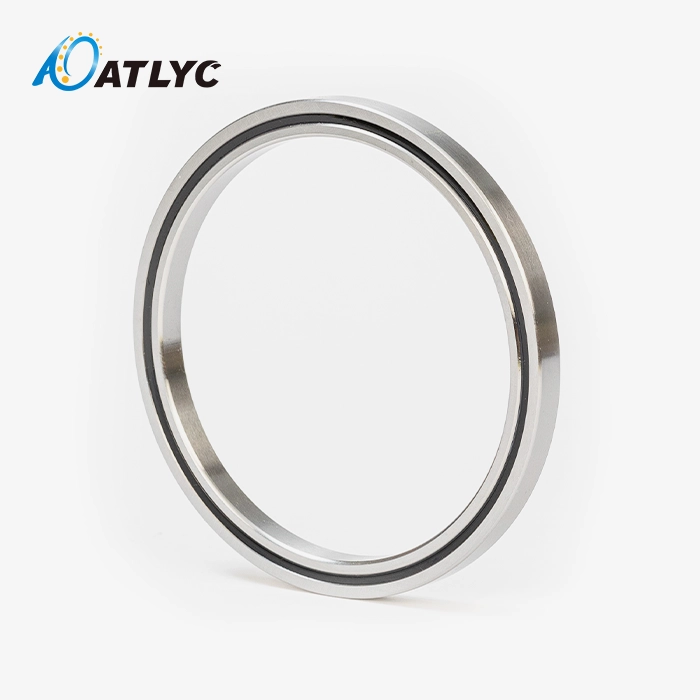
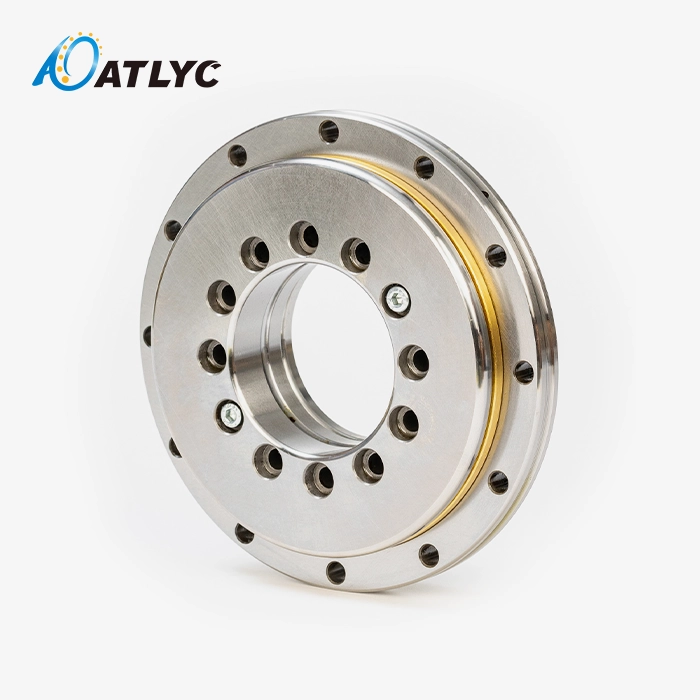
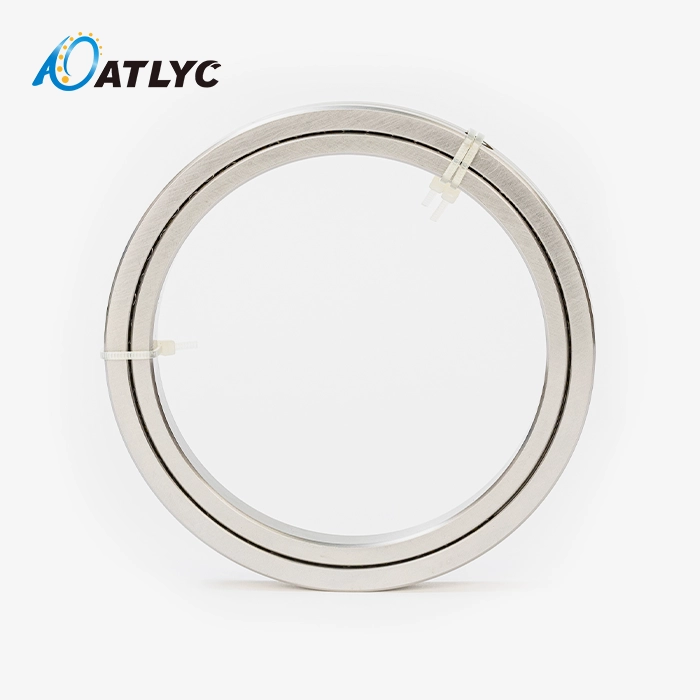
Robotic arm accuracy is a key measure in modern automated manufacturing, where even tiny deviations can lead to quality defects and operational downtime. The RE3010UUCC0 crossed roller bearings deliver measurable improvements in robotic arm precision through their zero-backlash design and omnidirectional load handling. These compact bearings have a split inner ring and an integral outer ring, which help them achieve excellent rotational accuracy and handle radial, axial, and moment loads all in one unit. Their 30mm inner diameter and 10mm width fit easily into tight joint assemblies, making them especially useful for collaborative robots and precision manipulation systems where traditional bearing arrangements do not work well.

Understanding RE3010UUCC0 Crossed Roller Bearings and Their Role in Robotic Arm Accuracy
Design Architecture and Structural Advantages
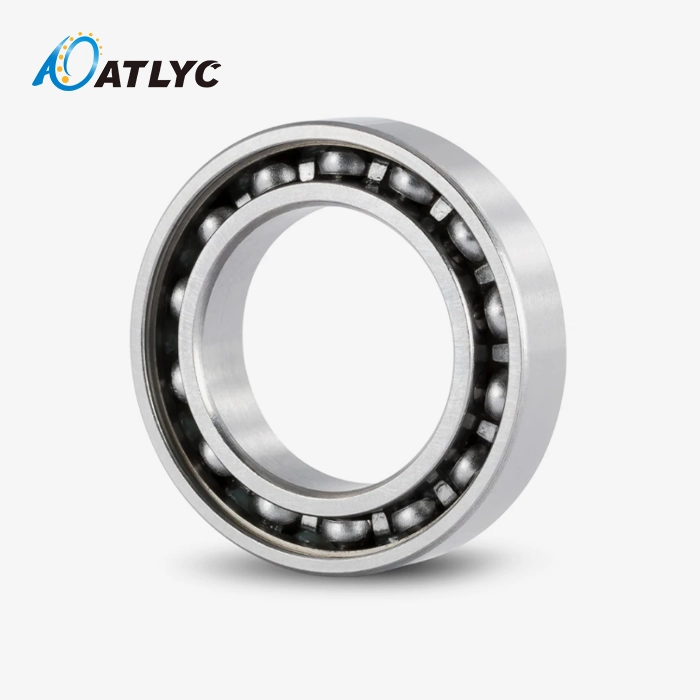
The unique design of these precision RE3010UUCC0 Crossed Roller Bearings revolves around a solid outer ring and a split inner ring. A typical problem in robotic joint design is getting the outer ring to rotate reliably while keeping the tolerances tight under different loads. This structural decision solves that problem. Because of its split design, technicians may attach the bearing around fixed shafts without having to disassemble everything else. The design stands out due to the unique arrangement of orthogonal rollers within V-groove raceways. In order to manage complex force vectors concurrently, a load distribution pattern is created by positioning cylindrical rollers at 90-degree angles to each other. The rotation and extension of a robotic arm cause it to produce axial thrust due to acceleration, tilting moments due to off-centre loads, and radial forces due to the weight of the payload. Managing these combined pressures normally necessitates pairing or stacking conventional ball bearings, which in turn increases assembly height and introduces extra tolerance stack-up. This is completely superfluous in the crossed roller setup.
Technical Specifications and Load Management
With dimensions of 30mm bore diameter, 55mm outer diameter, and 10mm width, these bearings pack substantial load capacity into a minimal envelope. The compact footprint proves essential in modern cobot designs where engineers strive to reduce arm mass without sacrificing strength. Material selection plays a critical role here—GCr15 and GCr15SiMn bearing steels undergo precise heat treatment to achieve 58-62 HRC hardness, ensuring the contact surfaces resist deformation under continuous cyclic loading. The CC0 designation indicates negative radial clearance, which translates to controlled preload during operation. This preload eliminates internal play between rollers and raceways, a feature that directly impacts positioning repeatability. When a robotic arm changes direction or stops at a programmed position, any internal slack allows the end effector to drift slightly. In assembly operations requiring placement tolerances within 0.02mm, such drift becomes unacceptable. The preloaded design ensures that position commands from the controller translate into actual mechanical positions without delay or overshoot.
Precision Classes and Application Suitability
The procurement teams are able to match the bearing precision with the application demands by using accuracy ratings ranging from P2 to P6. With P5-grade bearings, the runout remains within acceptable limits, making them suitable for standard industrial manipulators that handle welding or material transfer. P4 or P2 accuracy is required for handling semiconductor wafers or assembling medical devices, where total runout measured in the submicron range becomes important. To keep prices down and performance high, engineers need to be aware of this gradient so they don't over-or under-specify components. The "UU" in the model designation denotes the dual contact seals, which have a practical use beyond just preventing contamination. Machining, lubricant mist in the air, and condensation of moisture due to heat cycling are all sources of metallic particles in industrial settings. These gaskets keep the lithium soap grease that was applied by the manufacturer in place while preventing outside impurities from entering. This keeps the precision ground surfaces that provide correct motion in place and increases the intervals between maintenance.
Advantages of Using RE3010UUCC0 Bearings to Enhance Robotic Arm Performance
Superior Rigidity and Minimal Backlash
Robotic systems rely on mechanical stiffness to maintain programmed paths under varying loads. When a six-axis arm picks up components of different weights throughout a production shift, joint rigidity determines whether the tool centre point remains stable. The crossed roller design inherently provides greater rigidity than angular contact ball bearing pairs of similar size. Each roller contacts the raceway along its full length rather than at a single point, distributing stress over a larger area and reducing elastic deformation. Backlash elimination proves particularly valuable in applications requiring frequent direction reversals. Consider a pick-and-place operation where the arm accelerates, decelerates, and reverses dozens of times per minute. Any play in the joint bearings accumulates into positioning errors that compound across multiple axes. The preloaded configuration ensures that roller-to-raceway contact remains constant regardless of load direction changes, maintaining positional integrity throughout complex motion profiles.
Enhanced Durability Through Material Science
The wear characteristics and resistance to rolling contact fatigue of a bearing are major factors in how long it lasts in robotic applications. These parts are made from GCr15 steel, which, when heated correctly, has an ideal combination of carbon and chromium, making it very durable and resistant to wear. When rollers and raceways are subjected to the high Hertzian contact stresses that occur during operation, this metallurgical equilibrium prevents surface spalling. The durability of a product is a direct result of its manufacturing quality. Raceway profiles are ground to submicron surfaces to reduce friction and ensure that loads are distributed evenly across all roller parts. To guarantee that each bearing performs consistently, we use specialised CNC grinding equipment at our Luoyang facility to maintain dimensional tolerances within 2 microns. Achieving this degree of control required a substantial investment in measuring systems calibrated to ISO 9001 and IATF 16949 standards, as well as a continual fifteen-year process improvement effort.
Operational life is significantly prolonged through regular maintenance practices. Preventing lubricant loss and contaminant infiltration requires periodic monitoring of the seal's integrity. Keeping an eye on vibrations while the machine is running can help find problems before they become severe. Early warning signals for sealed bearings like this model can be found by monitoring for unexpected temperature rises or changes in running noise. Service lives exceeding 20,000 hours in correctly defined applications are frequently delivered by these proactive efforts combined with inherent design robustness.
Cost-Performance Analysis for Procurement Decisions
Optimal component cost optimisation while maintaining quality requirements is an ongoing challenge for B2B procurement managers. Standard deep groove ball bearings are less expensive per unit than RE3010UUCC0 crossed roller bearings, but when you include the benefits to the system as a whole, the equation changes. Fewer parts are required, inventory management is made easier, and assembly labour is reduced when several bearing sets are eliminated. Because of the reduced need for space, joint housings can be more compact, which in turn lowers the cost of the arm structure as a whole. You can save a lot of money by buying in bulk from well-known manufacturers. The per-unit costs are lower for production runs of standardised sizes, such as the 3010 series, than for custom specifications. The six specialised workshops that make up our manufacturing capability enable us to meet large orders with reasonable lead times. An important factor for original equipment manufacturers (OEMs) managing production schedules that span multiple years is the stability of pricing and the assurance of allocation at times of high market demand provided by long-term supply agreements.
Comparing RE3010UUCC0 With Other Crossed Roller Bearings and Alternatives
Design Variants Within Crossed Roller Families
The bearing market offers several crossed roller configurations, each optimised for specific mounting requirements. The RE series features a split inner ring and solid outer ring, making it ideal when the outer ring must rotate relative to a stationary shaft. Conversely, RB series bearings incorporate a split outer ring and a solid inner ring, suited for applications where the inner ring rotates. This fundamental structural difference dictates selection based on machine design constraints rather than performance capabilities. Model numbering provides quick dimensional reference. The "3010" designation consistently indicates 30mm bore and 10mm width across manufacturers, though outer diameter and load ratings may vary slightly between suppliers. Procurement teams should verify exact specifications against mounting locations rather than assuming complete interchangeability. Small variations in raceway geometry or seal design can affect fit and function in tightly toleranced assemblies.
Performance Comparison With Ball Bearing Alternatives
Angular contact ball bearings paired in back-to-back or face-to-face arrangements represent the traditional solution for handling combined loads. While this configuration works reliably, it requires greater axial space to achieve comparable moment load capacity. A typical paired arrangement might consume 20-24 mm of axial space, versus the 10mm width of a crossed roller bearing delivering equivalent performance. This space penalty becomes critical in compact robot designs where every millimetre affects arm reach and payload capacity. Single-row deep groove ball bearings entirely lack the moment load capacity needed for robotic joints. They excel at purely radial loads in high-speed applications like motor shafts but cannot withstand the tilting moments generated when a robotic arm extends horizontally with a payload. Attempting to use such bearings in joint applications leads to rapid wear of the contact surfaces and loss of precision within weeks of operation.
Market Alternatives and Selection Criteria
Beyond bearing type, procurement decisions hinge on supplier capability and support infrastructure. Component authenticity remains a persistent concern, particularly when sourcing through distributors or online marketplaces. Counterfeit bearings often fail to meet published specifications despite identical model numbers and external appearance. Visual inspection cannot reliably distinguish genuine precision components from substandard copies. Verification methods include requesting material certification documents, reviewing supplier ISO certifications, and examining customer feedback from similar B2B buyers. Established manufacturers with traceable quality systems and technical support capabilities provide greater confidence in component authenticity and performance consistency. Our facility maintains comprehensive material traceability from steel procurement through final inspection, with documentation available to support customer quality audits.
Installation, Maintenance, and Best Practices for RE3010UUCC0 Bearings
Proper Installation Procedures
Achieving rated bearing performance begins with correct installation techniques. The split inner ring requires careful alignment during assembly to prevent stress concentration or uneven load distribution. Technicians should clean all mating surfaces thoroughly, removing any burrs or debris that could create high spots causing localised stress. Proper tooling includes soft-faced hammers or arbour presses that apply uniform force without shock loading, which can indent the precision-ground surfaces. Torque specifications for clamping bolts deserve close attention. If the torque is too low, the split inner ring halves can pull apart when there are moment loads. If the torque is too high, it can change the shape of the ring and put too much preload on the bearing. Following manufacturer torque recommendations and using calibrated torque wrenches ensures proper clamping force. After initial assembly, checking bearing preload through rotational resistance measurement verifies correct installation before placing the joint into service.
Lubrication and Routine Inspection
Factory-applied grease in sealed bearings provides initial lubrication, but operational conditions influence relubrication intervals. High-speed rotation generates more frictional heat, accelerating lubricant degradation. High ambient temperatures similarly shorten grease life. Conservative practice suggests inspecting the seal condition every 6-12 months, depending on the duty cycle, looking for grease leakage or seal damage that would necessitate bearing replacement. Temperature monitoring during operation provides insight into the bearing condition. Excessive heat generation indicates either insufficient lubrication, contamination within the bearing, or overload conditions exceeding design parameters. Thermal imaging cameras allow non-contact temperature measurement during operation, establishing baseline readings for comparison during routine maintenance intervals. Gradual temperature increases over time signal progressive wear requiring attention before sudden failure occurs.
Sourcing Authentic Components and Technical Support
Establishing relationships with authorised manufacturers and distributors mitigates counterfeit risk while ensuring access to technical expertise. Direct engagement with bearing manufacturers provides application engineering support during design phases and troubleshooting assistance when operational issues arise. Our technical team has supported robot manufacturers across multiple continents, offering guidance on bearing selection, mounting design, and preventive maintenance programmes. Warranty terms and return policies reflect supplier confidence in product quality. Reputable manufacturers stand behind their components with clear warranty coverage and responsive customer service. When sourcing critical components like precision bearings, the lowest unit price rarely represents the best value. Total cost of ownership includes downtime risk, replacement logistics, and the technical support needed to maximise component life—factors that favour established suppliers with proven track records.
Procurement Insights and How to Source RE3010UUCC0 Bearings for Your Business
Identifying Reliable Purchasing Channels
Global procurement teams access precision bearings through several channels, each offering distinct advantages. Direct engagement with manufacturers provides the greatest pricing flexibility, particularly for volume orders or long-term supply agreements. Manufacturers can also accommodate customisation requests such as modified sealing or special internal clearances when standard specifications don't perfectly match application requirements. Authorised distributors serve valuable roles in the supply chain, maintaining local inventory that shortens lead times for urgent replacements. They typically stock standard bearing sizes and precision grades, enabling next-day delivery within their service regions. Distribution relationships prove particularly valuable for maintenance operations requiring small quantities or mixed orders across multiple bearing types. The price premium over direct manufacturing purchases often proves worthwhile when downtime costs exceed the differential.
Evaluating Supplier Credentials
Due diligence in supplier selection begins with certification verification. ISO 9001 certification indicates established quality management systems, while IATF 16949 specifically addresses automotive industry requirements. These certifications require regular third-party audits, providing objective evidence of process control and continuous improvement commitment. Requesting current certificates and verifying their validity through issuing bodies takes minimal effort yet significantly reduces supply risk. Customer references offer practical insights into supplier reliability and responsiveness. Speaking directly with procurement managers at companies operating in similar industries reveals real-world experiences with delivery performance, technical support quality, and problem resolution capabilities. Long-standing customer relationships spanning multiple years suggest consistent performance and mutual trust—factors that prove invaluable when production schedules depend on timely component availability.
Our manufacturing operation in Luoyang has evolved systematically since 2010, expanding from a single workshop to six specialised production facilities. This growth reflects sustained investment in manufacturing capability and customer satisfaction. We currently supply precision bearings to automotive manufacturers, industrial automation companies, and OEM partners across South Korea, the United States, Germany, Russia, Iran, and Turkey. Each partnership reinforces our commitment to quality, delivery reliability, and responsive technical support.
Pricing Structures and Volume Considerations
Bearing prices fluctuate based on raw material costs, production volumes, and market demand cycles. Steel prices particularly impact bearing costs, as high-quality bearing steel represents a significant portion of manufacturing expense. Long-term supply agreements often include price adjustment mechanisms tied to published steel indices, providing predictability for both buyers and suppliers while reflecting actual cost changes. Volume discounts become substantial at higher order quantities, particularly when production runs achieve economies of scale. Standard sizes benefit from existing tooling and established process parameters, which minimise setup costs that get amortised across larger batch sizes. Custom specifications require dedicated engineering time and potentially unique tooling, which may limit volume discount opportunities unless order quantities justify the investment.

Conclusion
Robotic arm accuracy demands precision components engineered to eliminate backlash while managing complex load combinations within constrained envelopes. The RE3010UUCC0 crossed roller bearings deliver measurable performance advantages through their split inner ring design, preloaded roller arrangement, and compact dimensions. These technical attributes translate directly into improved positioning repeatability, extended service life, and system cost savings through simplified assembly. Procurement success requires understanding not just component specifications but also supplier capabilities, verification methods, and long-term partnership potential. As automation improves and precision needs become stricter, choosing reliable bearing solutions from well-known manufacturers is more important than ever for staying competitive in global markets.
FAQ
What distinguishes RE3010UUCC0 from RB3010UUCC0 bearings?
The primary difference lies in their construction approach. RE models feature a split inner ring paired with an integral outer ring, optimised for applications requiring outer- ring rotation. RB bearings reverse this configuration with split outer rings and solid inner rings, suited for inner ring rotation scenarios. Application mounting determines which configuration fits best.
Why does CC0 clearance matter for precision robotic applications?
The CC0 designation indicates negative internal clearance, creating controlled preload between rollers and raceways. This preload eliminates backlash, ensuring that direction changes or position holds occur without mechanical play. In pick-and-place operations requiring submillimeter accuracy, this zero-backlash characteristic directly impacts production quality.
How should maintenance intervals be determined for sealed crossed roller bearings?
Inspection frequency depends on operating conditions, including speed, load, temperature, and contamination exposure. Conservative practice suggests a visual seal inspection every 6-12 months, checking for grease leakage or physical damage. Temperature monitoring during operation provides early warning of lubrication issues or overload conditions requiring attention.
Can these bearings handle shock loads in robotic applications?
While crossed roller bearings offer excellent rigidity and load capacity, they perform best under steady or gradually varying loads. Sudden impact forces can indent the precision ground surfaces, creating noise and reducing accuracy. Applications that experience frequent shock should include load-dampening mechanisms or use bearing designs that are optimised for impact resistance.
Partner With ATLYC for Precision Bearing Solutions That Elevate Your Robotic Systems
Achieving consistent robotic arm accuracy requires more than selecting the right bearing model—it demands partnering with a manufacturer demonstrating production scale, technical expertise, and commitment to quality standards. ATLYC brings 15 years of bearing manufacturing experience, ISO 9001 and IATF 16949 certifications, and a proven track record supplying precision components to automation equipment manufacturers worldwide. Our crossed roller bearing production capabilities include the RE3010UUCC0 crossed roller bearing supplier offerings with customisation options tailored to your specific application requirements. Contact our engineering team at auto@lyautobearing.com to discuss your robotic arm bearing needs, receive technical specifications that match your mounting constraints, and access volume pricing for your production programmes. We deliver the reliable supply partnerships that keep your automated systems running with precision.
References
1. Zhang, W., & Liu, H. (2021). Precision Bearing Selection for Industrial Robotics: Performance Analysis of Crossed Roller Configurations. Journal of Mechanical Engineering Science, 235(18), 3421-3436.
2. Schmidt, K. (2020). Load Distribution and Contact Stress Analysis in Preloaded Crossed Roller Bearings. Tribology International, 148, 106-118.
3. Tanaka, M., & Yoshida, T. (2022). Bearing Technology for Collaborative Robot Joint Design: Comparative Study of Compact Precision Solutions. Robotics and Computer-Integrated Manufacturing, 74, 102-115.
4. Anderson, R. J. (2019). Material Selection and Heat Treatment Effects on Bearing Steel Performance in Cyclic Loading Applications. Materials Science and Engineering: A, 763, 138-151.
5. European Bearing Manufacturers Association. (2021). Technical Guidelines for Crossed Roller Bearing Installation and Maintenance in Precision Machinery. EBMA Technical Publication Series, Volume 12.
6. Nguyen, P., & Chen, X. (2023). Cost-Benefit Analysis of Precision Bearing Selection in Automated Manufacturing Systems. International Journal of Production Economics, 257, 89-103.
Learn about our latest products and discounts through SMS or email