- English
- French
- German
- Portuguese
- Spanish
- Russian
- Japanese
- Korean
- Arabic
- Greek
- German
- Turkish
- Italian
- Danish
- Romanian
- Indonesian
- Czech
- Afrikaans
- Swedish
- Polish
- Basque
- Catalan
- Esperanto
- Hindi
- Lao
- Albanian
- Amharic
- Armenian
- Azerbaijani
- Belarusian
- Bengali
- Bosnian
- Bulgarian
- Cebuano
- Chichewa
- Corsican
- Croatian
- Dutch
- Estonian
- Filipino
- Finnish
- Frisian
- Galician
- Georgian
- Gujarati
- Haitian
- Hausa
- Hawaiian
- Hebrew
- Hmong
- Hungarian
- Icelandic
- Igbo
- Javanese
- Kannada
- Kazakh
- Khmer
- Kurdish
- Kyrgyz
- Latin
- Latvian
- Lithuanian
- Luxembou..
- Macedonian
- Malagasy
- Malay
- Malayalam
- Maltese
- Maori
- Marathi
- Mongolian
- Burmese
- Nepali
- Norwegian
- Pashto
- Persian
- Punjabi
- Serbian
- Sesotho
- Sinhala
- Slovak
- Slovenian
- Somali
- Samoan
- Scots Gaelic
- Shona
- Sindhi
- Sundanese
- Swahili
- Tajik
- Tamil
- Telugu
- Thai
- Ukrainian
- Urdu
- Uzbek
- Vietnamese
- Welsh
- Xhosa
- Yiddish
- Yoruba
- Zulu
Cost-Effective Single Row Tapered Roller Bearing 30211 Solutions
When sourcing precision components for automotive manufacturing or industrial machinery, the Single Row Tapered Roller Bearing 30211 represents an optimal balance between performance, reliability, and cost efficiency. This metric-series bearing handles combined radial and axial loads through its engineered tapered geometry, making it indispensable for wheel hubs, gearboxes, and machine tool spindles. With standardized dimensions of 55mm bore diameter, 100mm outer diameter, and 21mm width, this component delivers consistent performance across demanding applications while maintaining competitive procurement costs for OEMs and distributors seeking long-term supply partnerships.
Understanding the Single Row Tapered Roller Bearing 30211
The engineering behind tapered roller bearings solves one of the most important problems in spinning machinery: how to handle forces coming from different directions at the same time. The Single Row Tapered Roller Bearing 30211 features a conical design that spreads stress across both radial and axial lines, unlike ball bearings, which mostly handle radial loads.
Core Structure and Geometry
The bearing is made up of four main parts that can be taken apart and put back together again. The inner ring, which is sometimes called the cone, has a raceway that moves the rollers. The outer ring or cup can be mounted on its own, which makes installation easier in small spaces. Precision-ground tapered rollers between these rings move loads through line contact instead of point contact, which greatly increases the load capacity. A cast steel or metal cage keeps the rollers at the right distance apart and keeps them from touching while the machine is turning. This form that can be taken apart is especially useful for repair work. Technicians can check or replace individual parts without taking the whole bearing assembly apart. This cuts down on downtime in production settings. When the contact angle is between 10° and 30°, all the force lines meet at one point on the axis of the shaft. This makes sure that the load is spread out evenly.
Material Specifications and Precision Grades
Quality of manufacturing has a direct effect on how well bearings work and how long they last. The Single Row Tapered Roller Bearing 30211 is made of high-carbon chromium steel alloys that are specially made for use with rolling elements. The inner and outer rings are made of GCr15 or GCr15SiMn steel, which is very strong and doesn't break down easily. In situations where wear strength needs to be increased, 20Cr2Ni4A alloy steel can be used in rollers. Controlled heat treatments are used on these materials to make the surfaces hard (58–64 HRC) while keeping the cores tough. Precision grades decide how accurate the dimensions are and how much space there is inside. The usual P0 grade is good for general industry uses with normal conditions. The P6 grade has tighter tolerances for things like car transmissions that need to have low vibration levels. The highest level of precision is P5, which is used for machine tool spindles where the quality of the finished product is directly affected by how accurately they rotate. As the level of precision goes up, stricter production controls and inspection processes are added, which is mirrored in the prices.
| Specification | Parameter | Application Impact |
|---|---|---|
| Inner Diameter | 55mm | Shaft sizing compatibility |
| Outer Diameter | 100mm | Housing bore requirements |
| Width | 21mm | Axial space constraints |
| Contact Angle | 10°-30° | Axial load capacity |
| Temperature Range | -40°C to 150°C | Operating environment suitability |
Operating Principles and Load Management
The bearing works on the idea that surfaces that are curved make convergent geometry. Radial loads push the rollers against both the cone and cup raceways while the machine is running. Some of this radial force is turned into axial force by the narrowing angle. Because of this, single-row tapered bearings can't be used alone when radial loads are the most important. They need a second bearing set up to balance axial forces. The slightly domed logarithmic roller shape along its length stops edge loading even when the shaft bends a little. This profile design puts most of the contact stress in the middle of the raceway, not at the edges, where material loss could cause it to break. If you install and grease the bearing correctly, it should last more than 20,000 hours in most automotive hub applications. However, the actual service life will depend on how it is used.
Comparing 30211 with Other Tapered Roller Bearings: Making the Right Choice
To choose the right bearing, you need to know how the Single Row Tapered Roller Bearing 30211 stacks up against other bearings of the same type and nearby sizes. This information helps people who work in procurement match parts to specific load needs and space limitations.
Dimensional Variations: 30211 vs 30212 vs 30311
The Single Row Tapered Roller Bearing 30211 is in a normal metric series. The first two digits show the type of series, and the last two digits show the bore diameter in millimetres divided by five. The 30212 model is in the same series as the Single Row Tapered Roller Bearing 30211, but its bore is 60mm instead of 55mm, so it can fit slightly larger shafts. In a straight line, the outside diameter grows to 110 mm, and the width grows to 22.75 mm. This range of sizes lets engineers increase or decrease the load-carrying ability while keeping the fastening methods the same. The 30311 bearing is from a different series. It has the same 55mm bore, but a 120mm outer diameter and a width of 31.5mm. With this bigger envelope, the load ratings are much higher—about 35% higher than the Single Row Tapered Roller Bearing 30211 radial capacity. The bigger size, on the other hand, needs more room in the housing and makes the unit heavier. When load estimates show that the Single Row Tapered Roller Bearing 30211 is getting close to its rating limits, machinery makers choose the 30311. However, the 30311 costs about 40–50% more to buy because it has more material in it.
Single Row vs Double Row Configurations
Double-row tapered roller bearings are made up of two bearing assemblies that work together as one unit to handle thrust loads going in either direction. Compared to paired single-row setups, this layout makes installation easier and takes up less space for assembly. A double-row version of the Single Row Tapered Roller Bearing 30211 would have a similar bore diameter but a much wider width to fit two sets of rollers. The pros and cons of each configuration depend on the needs of the application. Single-row bearings, like the Single Row Tapered Roller Bearing 30211, let you make adjustments while they're being installed. By controlling the axial position of one bearing in relation to its partner, mechanics can set the internal clearance very exactly. This ability to be adjusted is very useful in situations where heat expansion changes the gaps or where optimising the preload makes the stiffness better.
Tapered Rollers vs Ball Bearings in Heavy-Duty Applications
When speed and light load are important, and friction needs to be kept to a minimum, ball bearings work best. Point contact between the balls and the raceways creates less friction, but it also limits how much weight can be put on them. When loads are higher than normal, balls experience stress concentrations that speed up the failure due to wear. This problem is fixed by the Single Row Tapered Roller Bearing 30211, which has straight contact between the rollers and the raceways. A tapered roller bearing has a contact area that is about ten times bigger than a ball bearing of the same size. This bigger contact zone spreads the loads over more material, which lowers the highest amounts of stress. Because of this, tapered roller bearings are better at handling shock loads, which is why they are chosen for wheel hubs that get hit by curbs and bumps. Similar benefits exist for agricultural gearboxes, since work in the field creates unpredictable impact loads due to uneven terrain.
Brand Reliability and Cost Analysis
Bearing makers around the world have built their names on decades of reliable quality. SKF, which is based in Sweden, charges high prices because it has strong quality control methods and a lot of engineering help. Timken has a long history of developing tapered roller bearings, which makes their expertise very valuable in heavy industrial settings. Japanese companies NTN and NSK offer great quality-to-cost rates, which makes them popular with automakers who need to balance performance needs with cost goals. The German company FAG, which is now part of the Schaeffler Group, has a strong presence in European markets and provides a lot of technical information.
| Brand Category | Typical Price Range | Quality Certification | Technical Support | Best Application |
|---|---|---|---|---|
| Premium (SKF, Timken) | $25-$40 per unit | ISO 9001, IATF 16949, OEM approvals | Extensive engineering resources | Critical equipment, prototype development |
| Mid-tier (NTN, NSK, FAG) | $18-$28 per unit | ISO 9001, IATF 16949 | Regional technical teams | Production equipment, automotive OEM |
| Qualified Generic (ATLYC) | $12-$20 per unit | ISO 9001, IATF 16949 | Application engineering support | High-volume production, cost-sensitive projects |
Cost-Effective Procurement Strategies for Single Row Tapered Roller Bearing 30211
To get the best deals on the Single Row Tapered Roller Bearing 30211, you have to balance more than just unit price. Logistics costs, keeping supplies, quality risk, and possible downtime from broken parts are all part of the total cost of ownership.
Supplier Evaluation and Selection Criteria
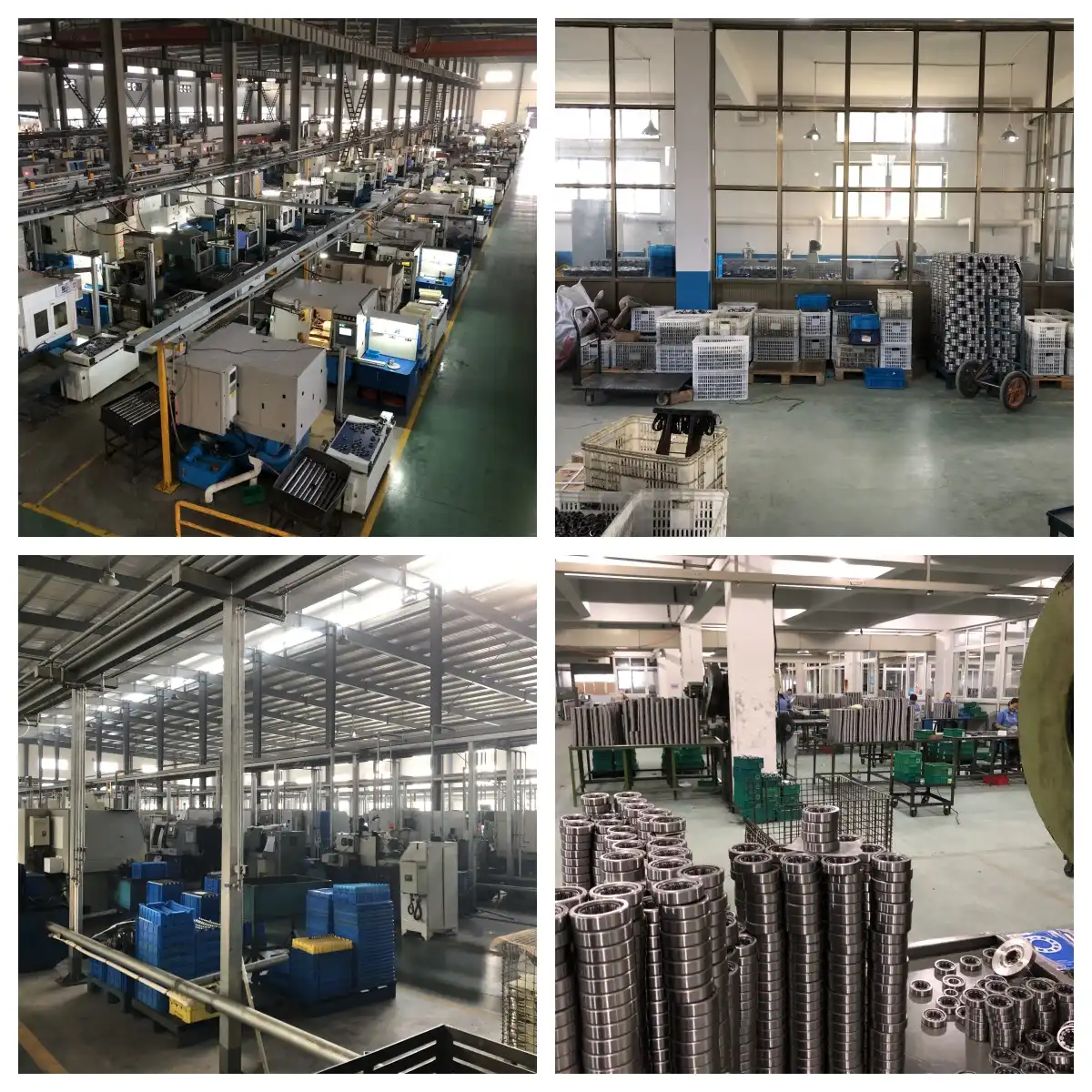
Verification of production capabilities is the first step in a good source evaluation. A provider that makes more than one type of bearing might not be as good at specialisation as one that only makes tapered roller bearings. Over the past fifteen years, Luoyang Auto Bearing has grown from a single workshop to six specialised production facilities. This shows that the company can grow and improve its processes. This growth path shows stable finances and ongoing investments to make things better. Standardised rating criteria are provided by quality management systems. ISO 9001 certification makes sure that key processes are controlled by written procedures, from receiving materials to final inspection. In IATF 16949, these standards are expanded with controls that are special to the automotive industry. These controls cover processes for approving production parts, analysing measurement systems, and figuring out what went wrong. Suppliers who have both certificates show that they can meet the needs of demanding car customers, which suggests that their processes meet strict standards that can be used across all industries.
Bulk Ordering Economics and MOQ Negotiation
Due to setup costs, distribution, and the effectiveness of transportation, bearing prices go down a lot as the number of orders goes up. A single-piece Single Row Tapered Roller Bearing 30211 might cost 150% more than the high-volume price to cover the costs of making the order. Prices usually reach 80% of high-volume levels when 100 units are bought. When an order goes over 1,000 units, the price approaches the "floor," and further discounts become less significant. The minimum order amounts show the smallest batches that are cost-effective for production. Setting up bearing production lines takes the same amount of time whether they are making 100 or 1,000 units. This time includes calibrating the machines, installing the tools, and checking the quality of the work. When setup costs per unit are low enough, suppliers set minimum order quantities (MOQs). Most of the time, 200 to 500 pieces are needed to meet the MOQ for metric tapered roller bearings, but this can change based on size and complexity.
OEM Customization and Value Engineering
Catalogue bearings like the Single Row Tapered Roller Bearing 30211 work well in most situations, but if you can make changes, you can often lower the total cost of the system. Integrated seals get rid of the need for separate seal parts and installation steps, which are common in farming equipment that gets wet and dusty. Changing the cage materials from steel to brass improves performance in situations where there isn't much oil, which is common in some gearbox uses. For these changes to happen, the buyer and the supplier need to work together on engineering. Luoyang Auto Bearing has 120 employees, some of whom are technical specialists who look at application needs and suggest ways to make things better. Before series production starts, the customisation process usually includes making a prototype, testing it to make sure it works, and getting approval for the production part.
Maintenance and Performance Optimization for 30211 Tapered Roller Bearings
With proper care, the Single Row Tapered Roller Bearing 30211 lasts a lot longer than what is calculated theoretically. Field studies constantly show that installations that are properly oiled and cleaned have three times the service life of installations that are not properly cared for.
Lubrication Requirements and Schedules
To keep the moving elements and raceways from touching metal, tapered roller bearings need a constant lubricant film between them. Because it is easy to use and seals well, grease is a good lubricant for most Single Row Tapered Roller Bearing 30211 applications. Extreme pressure additives in lithium-based greases handle the contact stresses that are common in these bearings. NLGI Grade 2 consistency gives the right flow qualities and stays in place during shutdowns while rearranging during operation. When you first grease the bearing during installation, 30 to 40 percent of its free volume should be filled. When speeds are high, too much grease causes spinning and heat production. If there isn't enough grease, the oil can run out between cycles. Because open bearings need housing seals to keep grease in, choosing the right seals is very important for how well they lubricate.
Inspection Protocols and Wear Detection
Regular inspections find problems as they start to happen before they become too big to fix. During re-greasing times, a visual inspection shows clear problems, such as discoloured grease that means the machine is burning, moisture that makes the grease milky, or particles that mean the machine is wearing out. These signs need to be looked at right away, even if there are no practical symptoms. A vibration study gives a quantitative picture of the state. When rollers pass through a tapered roller bearing at certain speeds, the bearings produce unique vibration patterns. Handheld vibration meters or sensors that are permanently placed can pick up amplitude rises that show flaws are starting to form. Early-stage spalling creates clear patterns that let you plan for maintenance instead of reacting to emergencies.
Troubleshooting Common Issues
Most of the time, fitting mistakes, contamination, or lubricating issues cause bearings to fail before they should, rather than manufacturing flaws. Fixing problems is based on understanding how they happen. Spalling, which is when material flakes off of raceways or rollers, is a sign of wear caused by too much load or not enough lubricant. If the loads match the design calculations, look at how the bearings are oiled and how contamination is controlled. If the flaking is mostly at the ends of the rollers, it means that the shaft and housing are not lined up correctly, which causes edge loading even though the bearing has a crowned shape. Smearing shows up as streaks along the raceways where surface material moved while sliding instead of rolling. This kind of damage happens when bearings slip during fast acceleration or braking, which can happen when gaps are too big or preload isn't enough. Fixing the way you put things generally stops it from happening again.
Making the Smart Choice: Why 30211 Tapered Roller Bearings Are Ideal for Your Business Needs
Bearing choice affects how reliable equipment is, how much it costs to maintain, and, in the end, how competitive a company is. The Single Row Tapered Roller Bearing 30211 is perfect for mid- to large-sized manufacturers who want reliable performance without having to pay a lot.
Design Advantages Addressing Operational Demands
The separate design makes maintenance easier in the field. When technicians need to get to wheel hubs or gears, they can remove the outer ring on their own and check for wear without upsetting parts that are mounted on the shaft. This feature cuts down on the time needed for regular checks, which is especially helpful when the equipment is in a remote area where the cost of travel for a worker is higher than the cost of parts. The Single Row Tapered Roller Bearing 30211 works well in designs with limited room because it has a high load capacity for its outer size. The 100mm outer diameter bearing can handle dynamic loads that are similar to those of bigger ball bearings, which lets housing designs be more compact. When tapered rollers are used instead of ball bearings in key places, machinery makers can get higher power density, which means more force in smaller packages.
Total Cost of Ownership Analysis
When you only look at the purchase price of bearing options, you miss the economics of the long term. When you add up the costs of labour, downtime, and waste, a $15 bearing that needs to be replaced every 12,000 hours costs more than a $22 bearing that lasts 20,000 hours.To figure out the total cost of ownership, you have to guess how long the service will last under real-world conditions. Bearing makers offer ways to figure out how long a bearing will last that take into account things like load, speed, temperature, and the quality of the grease. Based on these figures, L10 life is found. This is the number of running hours after which 10% of bearings will have failed while 90% will still be working. When installed and maintained correctly, actual life goes well beyond L10 grades.
Partnership Value with Certified Manufacturers
When problems arise, buyers who only have transactional relationships with bearing suppliers don't have any resources to turn to. Good manufacturers offer technical support for the whole lifecycle of a product, from the initial design to fixing problems in the field. Support like this is very helpful when making new products or changing old tools to work in new ways. Manufacturers who have more than one certification show that they are committed to systematic quality management. For IATF 16949 certification, process controls must be checked every year to make sure they are still working. Buyers can be sure that quality standards will stay high after the initial approval because of this ongoing oversight. Luoyang Auto Bearing has been in business for fifteen years, serving tough foreign markets. This shows that they have always done a good job.

Conclusion
With its strong construction and designed ability for combined loads, the Single Row Tapered Roller Bearing 30211 performs reliably in both automotive and industrial settings. It's important to look at more than just price when evaluating a provider. You should also look at quality certifications, professional assistance, and the total cost of ownership. Manufacturers like Luoyang Auto Bearing, which has ISO 9001 and IATF 16949 certifications and offers competitive prices, offer good alternatives to expensive brands for people who want to save money. When you install, lubricate, and maintain bearings correctly, they last longer. Choosing the right bearings and working with the right provider can affect how reliable your equipment is and how much it costs to run throughout its lifecycle.
FAQ
The following information addresses common technical queries regarding the Single Row Tapered Roller Bearing 30211 and its application in industrial environments.
What are the exact dimensions of the 30211 tapered roller bearing?
The inner diameter of the Single Row Tapered Roller Bearing 30211 is 55 mm, the outer diameter is 100 mm, and the width is 21 mm. Manufacturers who follow ISO standards can use these metric measurements to make things that are interchangeable. The contact angle is usually between 10° and 30°, which changes the vertical load capacity. Before placing an order, buyers should compare the measurements to the shapes of the housing and shaft.
How can I verify authentic SKF or Timken bearings versus counterfeits?
Genuine brand-name bearings have full part numbers, manufacturing codes, and the country of origin laser-etched on them. Holographic security stickers and thorough instructions are on the packaging. The best way to be sure of authenticity is to buy from authorised dealers. Generic options from approved manufacturers like ATLYC offer proven quality without the high costs of brand-name products, making them a good choice when brand specifications aren't required by contract.
What factors most significantly affect bearing lifespan?
Quality of lubrication determines how long a bearing lasts. Industry studies show that 70% of early failures are caused by contamination from particles or moisture. When the operating temperature is above 150°C, the oil breaks down faster. Correct preload setting and proper installation keep things from being out of alignment and greatly increase life. As long as the load is within the rated capacity and the speed ranges are right, the expected service intervals will happen.
Partner with ATLYC for Reliable Single Row Tapered Roller Bearing 30211 Solutions
ATLYC, which does business as Luoyang Auto Bearing Co., Ltd., makes reliable Single Row Tapered Roller Bearing 30211 units using quality systems that are ISO 9001 and IATF 16949 certified and fifteen years of experience in manufacturing. Our specialised manufacturing facilities consistently provide high-quality products at reasonable prices to original equipment makers (OEMs) of cars and heavy equipment in the US and around the world. We keep standard configurations in stock as a qualified manufacturer, and we can also make custom configurations for unique uses. Our engineering team can help you with technical questions about your specific load needs, environmental conditions, and integration problems. For volume quotes, detailed specs, and to talk about forming a relationship, please email our procurement experts at auto@lyautobearing.com. Experience how guaranteed quality from a trustworthy Chinese bearing provider can lower your total cost of ownership while still meeting the needs of your equipment's performance standards.
References
1. Harris, Tedric A. and Kotzalas, Michael N. "Advanced Concepts of Bearing Technology: Rolling Bearing Analysis, Fifth Edition." CRC Press, 2006.
2. Eschmann, Paul, Hasbargen, Ludwig, and Weigand, Karl. "Ball and Roller Bearings: Theory, Design and Application, Third Edition." John Wiley & Sons, 1985.
3. ISO 492:2014. "Rolling bearings — Radial bearings — Geometrical product specifications (GPS) and tolerance values." International Organization for Standardization, 2014.
4. Tallian, Tibor E. "Failure Atlas for Hertz Contact Machine Elements." ASME Press, 1999.
5. Budynas, Richard G. and Nisbett, J. Keith. "Shigley's Mechanical Engineering Design, Tenth Edition." McGraw-Hill Education, 2015.
6. SKF Group. "Rolling Bearings Catalogue: Technical and Application Guide." SKF Motion Technologies AB, 2018.
Learn about our latest products and discounts through SMS or email