- English
- French
- German
- Portuguese
- Spanish
- Russian
- Japanese
- Korean
- Arabic
- Greek
- German
- Turkish
- Italian
- Danish
- Romanian
- Indonesian
- Czech
- Afrikaans
- Swedish
- Polish
- Basque
- Catalan
- Esperanto
- Hindi
- Lao
- Albanian
- Amharic
- Armenian
- Azerbaijani
- Belarusian
- Bengali
- Bosnian
- Bulgarian
- Cebuano
- Chichewa
- Corsican
- Croatian
- Dutch
- Estonian
- Filipino
- Finnish
- Frisian
- Galician
- Georgian
- Gujarati
- Haitian
- Hausa
- Hawaiian
- Hebrew
- Hmong
- Hungarian
- Icelandic
- Igbo
- Javanese
- Kannada
- Kazakh
- Khmer
- Kurdish
- Kyrgyz
- Latin
- Latvian
- Lithuanian
- Luxembou..
- Macedonian
- Malagasy
- Malay
- Malayalam
- Maltese
- Maori
- Marathi
- Mongolian
- Burmese
- Nepali
- Norwegian
- Pashto
- Persian
- Punjabi
- Serbian
- Sesotho
- Sinhala
- Slovak
- Slovenian
- Somali
- Samoan
- Scots Gaelic
- Shona
- Sindhi
- Sundanese
- Swahili
- Tajik
- Tamil
- Telugu
- Thai
- Ukrainian
- Urdu
- Uzbek
- Vietnamese
- Welsh
- Xhosa
- Yiddish
- Yoruba
- Zulu
CRBH Cross Roller Bearing Applications in CNC Machines
When micro-level accuracy is needed under heavy loads for precision cutting, CRBH cross roller bearings give CNC machines the rotational support they need. These high-rigidity parts combine radial, axial, and moment load capacity into a single, small unit. This gets rid of the need for multiple bearing setups, which makes assembly harder and can cause alignment problems. The solid construction of the inner and outer rings guarantees constant performance on rotary tables, turning centers, and multi-axis setups where small differences in size have a direct effect on the quality of the product and the speed of production.
Understanding CRBH Cross Roller Bearings in CNC Machines
What Makes CRBH Cross Roller Bearings Unique
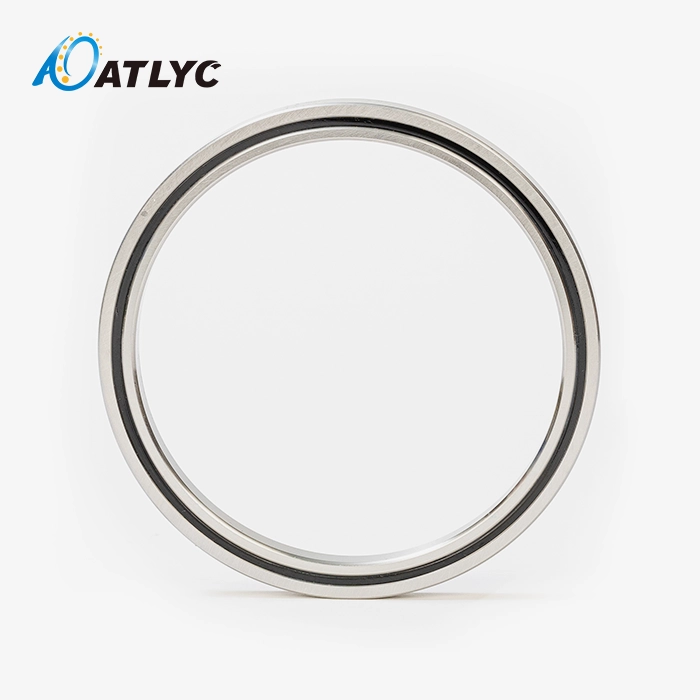
CRBH cross roller bearings are unique because they have a combined ring frame. In contrast to the split-ring designs found in RB or RE series bearings, the solid one-piece construction doesn't have any structural breaks that could cause the bearing to bend when the load changes. In V-groove raceways, cylindrical rollers are placed orthogonally at 90° intervals. Precision gaps keep the rollers from touching directly. This design solves three important production problems: it can handle complex combined loads at the same time, it gets rid of the errors that come from split rings deforming during mounting, and it replaces paired angular contact ball bearing setups, which take up a lot more space.
How the Orthogonal Roller System Works
Inside every CRBH cross roller bearing, the circular rollers move back and forth at right angles to the V-groove raceways. This set-up lets each roller touch both the inner and outer rings at the best angle, spreading the force over many contact points. Within a small space, the design can handle radial forces that push perpendicular to the shaft, axial forces that push along the shaft, and moment loads that try to tilt the spinning part. The carefully made separators keep the spacing even, which lowers the friction coefficients to ≒0.0015 and allows turning speeds good for CNC indexing tasks.
Load Distribution and Rigidity Benefits
After being super-finished, the raceways are ground until the surface roughness is less than Ra 0.2 μm. This amount of finish, along with the orthogonal layout of the rollers, makes the load spread evenly across the contact surfaces of the bearing. During five-axis machining, cutting forces can come from different directions on the CRBH cross roller bearings of a rotating table. The crossed roller bearing keeps the setting accuracy within microns. The design of the integrated ring makes it very stiff—usually 40% more rigid than similar split-ring setups. This means that the tool will bend less during heavy, irregular cuts or when working with hardened materials.
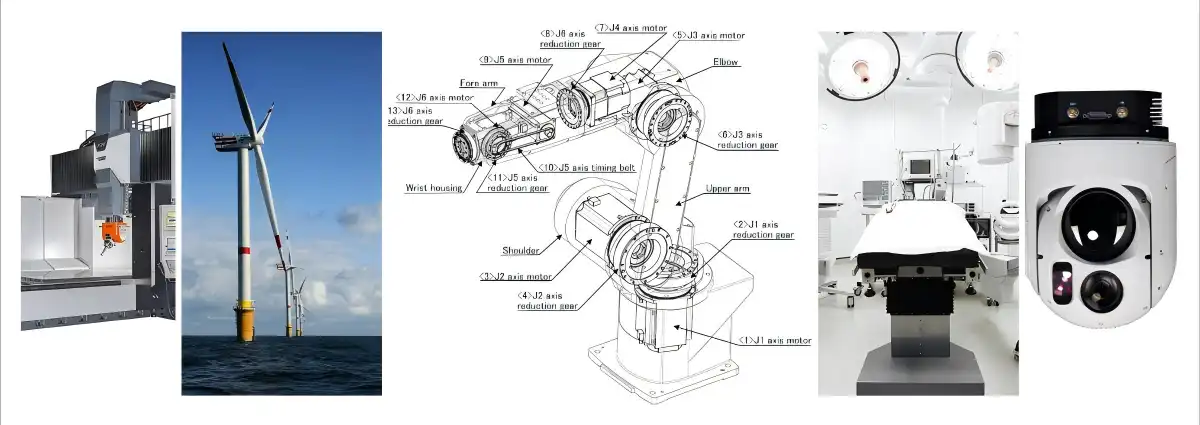
Core Applications of CRBH Cross Roller Bearings in CNC Machines
Rotary Tables and Indexing Heads
In horizontal machining centers and vertical turning lathes, rotary tables with CRBH cross roller bearings make it possible to precisely place parts at any angle while they are being machined. When cutting forces create torque that is perpendicular to the spinning line, the bearing's ability to handle moment loads becomes very important. When heavy milling is done on aerospace parts or car transmission housings, the crossed roller bearing keeps the zero-backlash motion that is needed for multi-sided cutting without making mistakes when moving the workpiece. From working with OEMs in both Germany and the US, we know that these bearings always give positioning repeatability within ±3 arc-seconds, even after millions of indexing cycles.
Multi-Axis CNC Configurations
CRBH cross roller bearings are used in both the rotary table (C-axis) and turning head (A-axis) systems of five-axis machining centers. Because the shape is small, designers can keep the distance between the tool tip and the center of the bearing as short as possible. This lowers the moment arm effects that make placement mistakes worse. When working on turbine blades or medical implants that need to move in more than one way at the same time, the low starting torque of the bearing—usually less than 0.5 Nm for 150mm hole sizes—ensures smooth motion control without stick-slip behavior that damages the surface finish. The thin-wall design lowers spinning friction by 15 to 20 percent, which lets the machine speed up and slow down more quickly during continuous contouring operations.
Turning Centers and Precision Lathes
CRBH cross roller bearings are used in the main spindles and sub-spindles of Swiss-type CNC lathes and precise turning centers. Radial runout has a direct effect on the cylinder's smoothness and the finish of the surface. The combined design of the bearing gets rid of the need to change the preload, like with paired angular contact bearings. This makes assembly easier and lowers the cost of production. When making a lot of car shafts or hydraulic parts, the super-finished raceways keep their friction properties stable over time. This stops thermal growth that leads to dimensional slip. Our ISO 9001 and IATF 16949-certified production methods make sure that the runout specifications of the bearings stay within 2 μm of the total indicator reading for the life of the product. These uses show why buying managers at medium to large equipment makers choose crossed roller bearings when part quality and machine uptime have a direct effect on profits. The right mix of accuracy, load capacity, and space economy solves the problems our customers are having when they need to increase output while keeping tolerances tight.
Comparing CRBH Cross Roller Bearings with Alternative Solutions
CRBH Versus Traditional Ball Bearing Pairs
Back-to-back or face-to-face CRBH cross roller bearings and angular contact ball bearing setups are used in a lot of old CNC systems to handle joint loads. This method works, but it needs exact spacer grinding to get the right preload, which adds to the time it takes to put together and makes mistakes more likely. The CRBH cross roller bearing doesn't need any preload changes because its orthogonal roller layout makes it stiff in all load directions. By comparing sizes, we can see that a single CRBH unit can replace two ball bearing sets while cutting the axial length by up to 50%. By saving space, machines can be made smaller or have longer trip ranges while still taking up the same amount of room.
Performance Against Slewing Ring Bearings
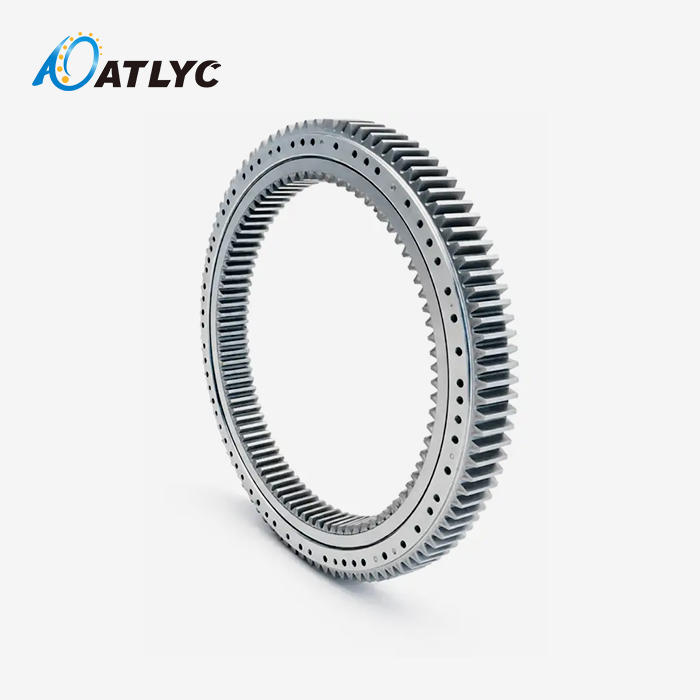
Slewing bearings can hold a lot of weight, but they are less accurate when rotating because of the way their gear teeth fit together and their wider size limitations. Slewing rings can't be used in situations where positioning accuracy needs to be better than ±10 arc-seconds. The CRBH crossed roller bearing has an accuracy of ±3 arc-seconds and a reasonable price range for bore sizes between 70mm and 300mm, which is the range that CNC rotating tables usually use. When you consider that the precision-ground raceways don't need to be adjusted for gear mesh or backlash compensation code, the cost-performance ratio is even better.
Material and Manufacturing Quality Differences
Not all crossed roller bearings are up to the high standards needed for CNC machines to keep running. Lower-tier providers often use through-hardened rings that warp during heat treatment, making the surfaces of the raceways uneven. At Luoyang Auto Bearing, we use case-hardened alloy steel that goes through controlled carburizing levels, a cold treatment, and several stages of grinding. This makes the dimensions stable at temperatures ranging from -20°C to +80°C, which is very important for places that don't have climate control. Our quality control methods make sure that every batch is checked with a coordinate measuring machine before it is sent to South Korea, Russia, Iran, and Turkey.
Procurement and Maintenance Guide for CRBH Cross Roller Bearings
Selecting the Right Bearing Specifications
To choose the right bearings, you must first accurately calculate the load. The engineering teams should figure out the highest radial load, axial load, and moment load that happens at the same time during the hardest grinding cycle. The dynamic load value of the CRBH cross roller bearing must be higher than the estimated equivalent loads with the right safety factors, which are usually 1.5 for continuous operation. When choosing a bore size, you have to weigh the load capacity against the room you have for putting it. The type of seal (contact or non-contact) you use depends on whether the application will be exposed to coolant or will be inside. Our technical support team helps customers with FEA-based load analysis and figuring out how long a bearing will last using ISO 281 methods that have been changed to work with crossed roller shapes.
Supply Chain Considerations and Lead Times
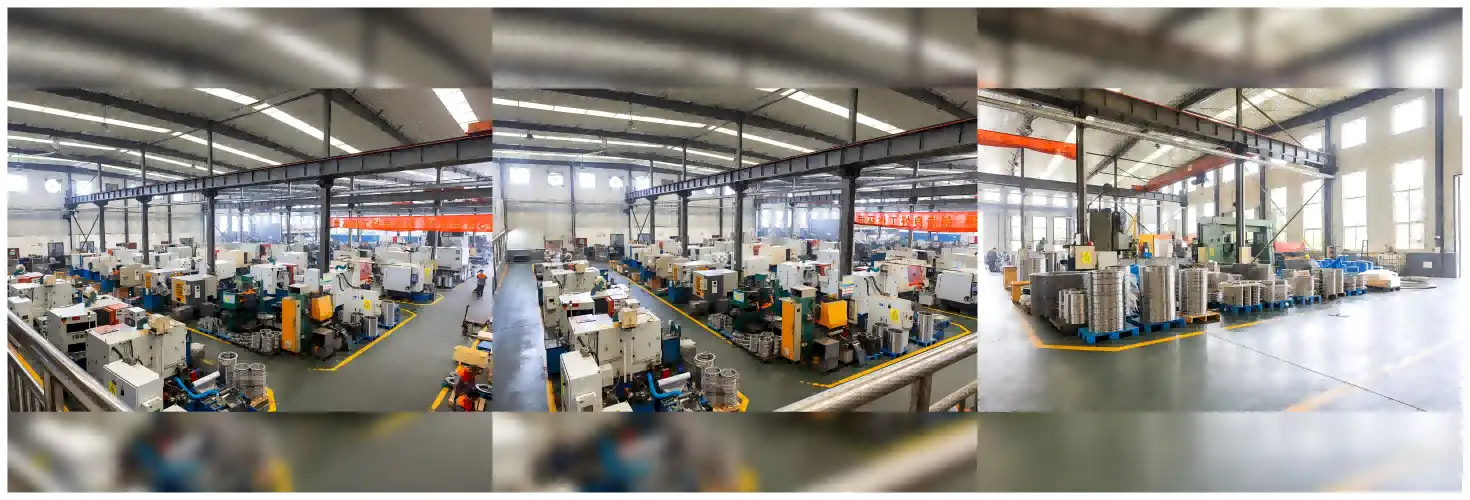
For projects that need to commit to a certain amount of production, building ties with producers that can show production scale becomes important. Our six workshops make crossed roller bearings with hole lengths ranging from 25 mm to 500 mm. Each month, they can make more than 15,000 units across all product lines. Standard CRBH setups ship in two weeks for orders of less than 100 units. Custom changes, like nonmagnetic versions for medical uses or special seal materials for semiconductor equipment, add four to six weeks to the wait time. When you buy in bulk and commit to a certain amount every three months, you can lower the cost per unit by 12 to 18% and guarantee priority production spots during times of high demand.
Maintenance Protocols for Maximum Service Life
Proper lubrication times keep bearings from breaking down too soon and maintain the accuracy of spinning. For general CNC use, we suggest applying lithium-based greases with EP ingredients every 1,500 hours of use or every six months, whichever comes first. Synthetic oils supplied through minimal quantity lubrication systems are good for bearings that work in high-speed or high-temperature settings. As part of the inspection process, the starting torque (increases mean pollution or poor greasing) and rotational play (excessive clearance means wear and needs replacement) should be measured. Predictive maintenance strategies that avoid unplanned downtime are made possible by maintenance logs that keep track of these factors. This is especially important for car parts manufacturers who use CRBH cross roller bearings for work lights-out shifts. Metal chips and liquid leftovers that speed up wear can be removed by cleaning regularly. Abrasive particles don't get embedded when you use compressed air with inner moisture filters and solvent-soaked lint-free cloths. When compared to split-ring designs, where dirt and dust can get stuck in the holes between the rings, CRBH bearings' combined ring construction makes cleaning them easier. These simple upkeep steps lower the total cost of ownership and make sure the bearing lasts as long as it is supposed to, which is usually 30,000 hours or more under normal conditions.
Future Trends and Innovations in CRBH Bearings for CNC Machines
Smart Bearing Integration
Precision mechanics and sensor technology are coming together, which makes it possible to measure the state directly in bearing assemblies. The outer ring structure of prototype CRBH cross roller bearings now has thin-film temperature sensors and vibration accelerometers built in. These sensors send data wirelessly to machine control systems. This lets you find out about strange working conditions in real time, like not enough grease or contamination, before they hurt the quality of the part. Predictive maintenance algorithms that look at cutting factors and bearing health data are helpful for Industry 4.0 implementations. These algorithms schedule service for planned breaks in production rather than waiting for breakdowns to happen.
Advanced Materials and Coatings
Material science studies are still going on to find ways to make bearing steels that are harder to break and stay the same size over a wider range of temperatures. During accelerated tests, vacuum-induction-melted metals with better carbide distributions show a 25% increase in their rolling contact fatigue life. New developments in surface engineering include diamond-like carbon coatings that lower friction coefficients to 0.001 and protect against rust in harsh coolant conditions. Manufacturers who want to cut down on cycle times without losing precision value these coatings because they allow operation at higher speeds and increase the time between relubrication.
Sustainability and Circular Economy Initiatives
Environmental concerns are becoming more and more important to producers who are thinking ahead. Crossed roller bearings help the environment because they last longer, which means they don't need to be replaced as often and create less waste. The small size cuts down on the amount of material needed for production, and the lack of setup devices gets rid of the need for adjustment steps that create scrap spacers. Bearing steel will be collected by future recycling programs so that it can be remelted. This will close the material loop. When equipment designers choose CRBH bearings, they show that they care about using resources efficiently, which can help them get contracts with automakers who are following company's sustainability guidelines.
Conclusion
When CRBH cross roller bearings are added to CNC machines, they make setting more accurate, can hold more weight, and use space more efficiently. The solid ring design and orthogonal roller arrangement get rid of the alignment problems and installation mistakes that come with other bearing setups. The small size also lets machine designers make machines that work as well as possible within limited space. For buying managers and engineering teams at companies that make cars and industrial equipment, these bearings are tried-and-true options that meet important criteria for decisions, such as quality certifications, reliable supply, expert support, and low long-term costs. As factories move toward using Industry 4.0 and being more environmentally friendly, the basic accuracy and dependability of crossed roller bearings are still very important for CNC operations to stay competitive.
FAQ
1. What bore sizes are available in CRBH cross roller bearings?
The standard CRBH cross roller bearing set has bore sizes ranging from 70mm to 300mm, which is wide enough to fit most CNC rotary table and indexing head needs. Any size outside of this range can be made to order for specific pieces of equipment, and engineers can help you figure out the best measurements based on load conditions and space limitations.
2. How do I calculate the required bearing load rating?
To choose the right load rate, you need to find the corresponding dynamic load (P) using the formula: P = (X × Fr) + (Y × Fa) + (M / D), where Fr is the radial load, Fa is the axial load, M is the moment load, and D is the bearing pitch diameter. The estimated dynamic load capacity (C) of the bearing should be higher than P times a safety factor that is right for the application, which is usually 1.5 to 2.0 for constant use. For important uses, our engineering team helps with calculations and FEA proof.
3. What maintenance intervals do you recommend?
We suggest checking and re-greasing CRBH bearings every 1,500 hours of use, or every six months, if they are used on a normal CNC machine with the right seals and the temperature outside stays below 60°C. Applications that run quickly or places with a lot of dirt and dust may need service more often. During routine maintenance, keeping an eye on starting torque and rotational play helps find wear patterns before they hurt the machine's performance.
Partner with ATLYC for Reliable CRBH Cross Roller Bearing Supply
ATLYC, which works as Luoyang Auto Bearing Co., Ltd., has been making precision bearings for 15 years and can help you with your CNC machine projects. Our ISO 9001 and IATF 16949-certified factories make high-quality CRBH cross roller bearings that meet the strict requirements of OEMs of cars and heavy machines all over the world. We have a stable supply chain that meets your production plan needs. We have six specialized workshops, 120 trained workers, and a history of reliable supply across South Korea, the US, Germany, Russia, Iran, and Turkey. Technical support teams can help you choose the right bearings, figure out how much load they can handle, and make changes that are specific to your application. Get in touch with our bearing experts at auto@lyautobearing.com to talk about the details of your project and see for yourself why established makers trust our quality-performance relationship.
References
1. Harris, T.A., and Kotzalas, M.N. "Advanced Concepts of Bearing Technology: Rolling Bearing Analysis, Fifth Edition." CRC Press, Taylor & Francis Group, 2006.
2. Weck, M., and Brecher, C. "Werkzeugmaschinen-Fertigungssysteme 2: Konstruktion, Berechnung und messtechnische Beurteilung." Springer-Verlag Berlin Heidelberg, 2006.
3. ISO 281:2007 "Rolling bearings — Dynamic load ratings and rating life." International Organization for Standardization, 2007.
4. Budynas, R.G., and Nisbett, J.K. "Shigley's Mechanical Engineering Design, Tenth Edition." McGraw-Hill Education, 2015.
5. Schmitt, R., and Pfeifer, T. "Qualitätsmanagement: Strategien – Methoden – Techniken." Carl Hanser Verlag München, 2015.
6. Tlusty, J. "Manufacturing Processes and Equipment." Prentice Hall, 2000.
Learn about our latest products and discounts through SMS or email