- English
- French
- German
- Portuguese
- Spanish
- Russian
- Japanese
- Korean
- Arabic
- Greek
- German
- Turkish
- Italian
- Danish
- Romanian
- Indonesian
- Czech
- Afrikaans
- Swedish
- Polish
- Basque
- Catalan
- Esperanto
- Hindi
- Lao
- Albanian
- Amharic
- Armenian
- Azerbaijani
- Belarusian
- Bengali
- Bosnian
- Bulgarian
- Cebuano
- Chichewa
- Corsican
- Croatian
- Dutch
- Estonian
- Filipino
- Finnish
- Frisian
- Galician
- Georgian
- Gujarati
- Haitian
- Hausa
- Hawaiian
- Hebrew
- Hmong
- Hungarian
- Icelandic
- Igbo
- Javanese
- Kannada
- Kazakh
- Khmer
- Kurdish
- Kyrgyz
- Latin
- Latvian
- Lithuanian
- Luxembou..
- Macedonian
- Malagasy
- Malay
- Malayalam
- Maltese
- Maori
- Marathi
- Mongolian
- Burmese
- Nepali
- Norwegian
- Pashto
- Persian
- Punjabi
- Serbian
- Sesotho
- Sinhala
- Slovak
- Slovenian
- Somali
- Samoan
- Scots Gaelic
- Shona
- Sindhi
- Sundanese
- Swahili
- Tajik
- Tamil
- Telugu
- Thai
- Ukrainian
- Urdu
- Uzbek
- Vietnamese
- Welsh
- Xhosa
- Yiddish
- Yoruba
- Zulu
How to Select the Right CRBH Cross Roller Bearing?
To choose the right CRBH Cross roller bearing, you need to think about the type of load you're putting on it, how precise you need it to be, and how much room you have available. These integrated-ring bearings are great at handling radial, axial, and moment loads at the same time in small spaces. This makes them perfect for artificial joints, medical imaging systems, and precision spinning tables. It's important to make sure that the bearing's rated capacity, rigidity, and dimensional shape all meet the needs of your application. You should also make sure that the seller keeps their ISO 9001 and IATF 16949 certifications to make sure that the quality and dependability of the product stay high throughout its lifecycle.
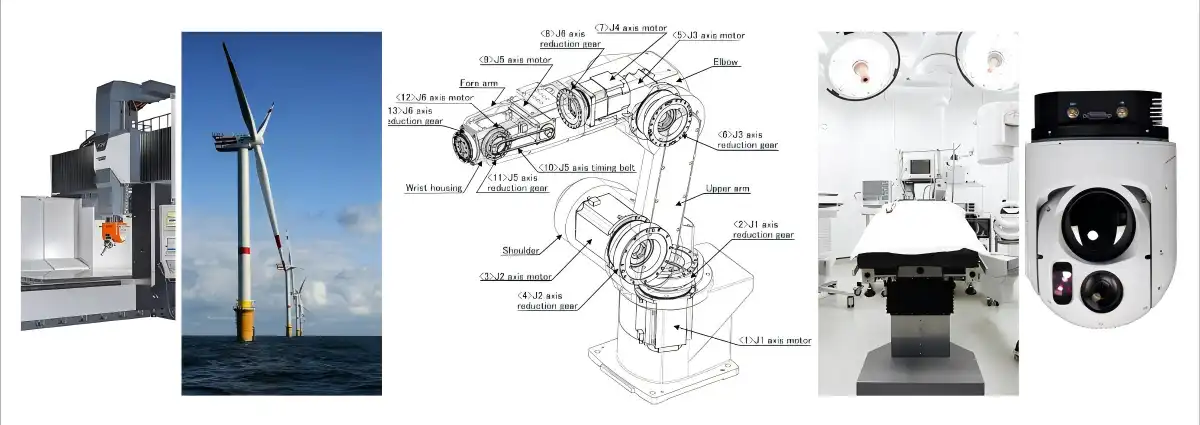
Understanding CRBH Cross Roller Bearings: Design and Benefits
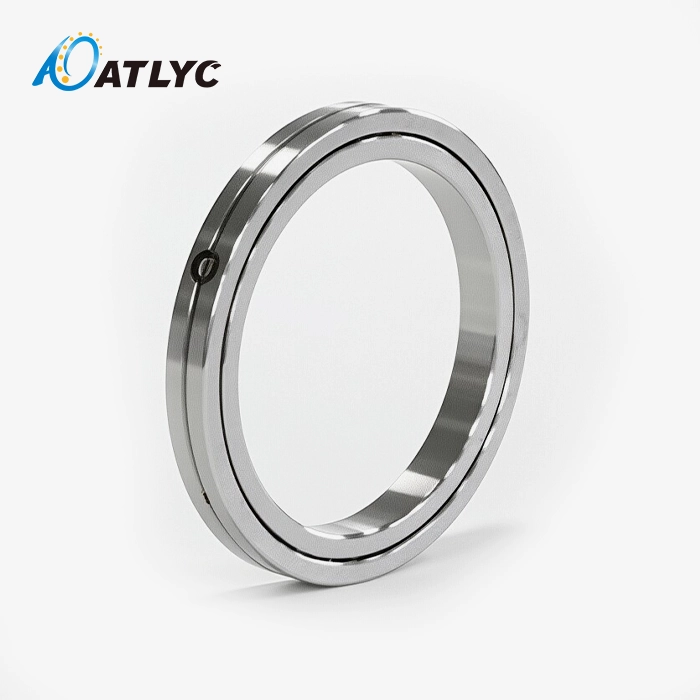
The CRBH Cross roller bearing is a unique option for engineers who have to deal with complicated, multidirectional loading in tight spaces. In contrast to usual bearing designs that need multiple units, this one combines radial, axial, and moment load capacities into a single, small system that works very well and is very reliable.
Integrated Ring Architecture
This bearing is different from split-ring options like the RB or RE series because both the inner and outer rings are made of a single piece. This unified method gets rid of the breaks in the structure that usually cause it to bend under heavy loads. In the manufacturing process, precise grinding is followed by a super-finishing treatment that reduces the surface roughness to a level below 0.0015. This careful preparation of the surface has a direct effect on operating efficiency. It lowers the amount of heat produced during continuous spinning cycles and increases the service life of bearings beyond 20,000 hours in well-maintained industrial settings.
Orthogonal Roller Configuration
Between V-groove raceways, cylindrical rollers are placed alternately at 90-degree intervals. This makes a cross-pattern arrangement that spreads loads across multiple contact points at the same time. Each roller stays at the best contact position with both rings, so the load is spread out as evenly as possible, no matter which way the force is coming from. Precision-made gaps separate wheels that are next to each other. This keeps metals from touching directly, which would cause too much friction and wear prematurely. In normal setups, this separator system allows speeds of up to 1,000 rpm while keeping positional accuracy within 0.001mm tolerances. These are very important requirements for CNC machining machines and tools used to handle semiconductor wafers.
Core Performance Benefits
There are direct practical benefits for production CRBH Cross roller bearing sites from the engineering advantages. Rigidity levels are 40–60% higher than split-ring designs, which means they provide more accurate placement under a range of load situations. When you look at the installation areas side by side, it's easy to see how space optimization works: a single CRBH Cross roller bearing replaces two angular contact ball bearing setups, cutting the axial length in half while keeping the same load ratings. This small size is especially helpful in robotic joint systems, where weight and space limitations directly affect how much can be carried and how the robot moves. Low-friction operation emerges from the combination of super-finished raceways and improved lube systems that work together to make low-friction running possible. Operating temperatures stay 15-20°C lower than similar bearing types when the load conditions are the same. This lowers problems with thermal expansion that can affect accuracy in temperature-sensitive applications. The built-in ring design stops bending caused by installation, keeping the right gaps even if mounting methods cause stress concentrations or housing tolerances aren't exactly what's needed.
Key Factors to Evaluate When Selecting a CRBH Cross Roller Bearing
When buying precision bearings, it's important to carefully compare the technical specs with the needs of the product. If you get this match right, your machinery will be able to reach its goal accuracy and meet the expected service times between repair rounds.
Load Capacity Analysis
Knowing your real working loads is the first step in choosing the right CRBH Cross roller bearing. Find the total loads that are acting on the part by adding up the radial forces caused by its weight, the axial thrusts caused by the machining processes, and the moment loads caused by the eccentric placement. Different sizes of the CRBH Cross roller bearing series can handle dynamic loads from 8,500N to 45,000N, and bigger types can handle static loads of up to 120,000N. Safety factors should take into account shock loads when the equipment is first turned on and rare overloads, which usually mean that the rated capacity needs to be 1.5 to 2 times higher than the estimated steady-state loads. Using ISO 281 guidelines to calculate fatigue life helps figure out when repair needs to be done. Quality crossing roller bearings have an L10 life of more than 30,000 hours when used continuously at 500 rpm with modest loads. In situations with intermittent motion or lighter loads, this number goes up a lot, and it's common for it to last 50,000 hours or more before the statistical failure chance hits 10%. These numbers for life are based on the assumption that the machines are kept clean and oiled properly.
Material Quality and Certification Standards
The makeup of the material directly affects how long the bearing lasts and how much weight it can hold. After being heated, high-carbon chromium steel (GCr15 or an equivalent) is the usual material for rings and rollers. It has a hardness value of 58 to 62 HRC. This level of hardness protects against wear while still being tough enough to keep the material from breaking when it's suddenly loaded. Certification compliance checks that the manufacturing process is consistent and that quality control is strict. The ISO 9001 certification shows that quality management is carried out in a planned way throughout all production steps, and the IATF 16949 certification talks about the needs of the automobile industry for preventing defects and always getting better. Manufacturers with both certificates usually keep their defect rates below 50 PPM, while uncertified providers' rates are usually between 200 and 500 PPM. When getting parts for OEM use or aftermarket sale, making sure they are certified keeps the quality from changing in ways that make equipment less reliable.
Precision Grade Requirements
The possible level of positioning accuracy and spinning smoothness is determined by the bearing accuracy classes. For general manufacturing machines with tolerances of more than 0.01mm, standard precision (Class 0) is enough. For tools that need to be more precise, like coordinate measuring machines or optical inspection systems, Class 5 or Class 4 precision is needed. These levels of accuracy allow for measurement tolerance control within 0.002mm and runout values below 0.003mm. Higher precision grades usually cost 30 to 60 percent more than normal grades, but they are worth it when the accuracy of the application needs to be on the micron level.
Installation and Maintenance Considerations
How the bearings are mounted has a big effect on how well they work and how long they last. The integrated ring design of CRBH Cross roller bearing types makes installation easier than split-ring options. It cuts setup time by about 40% and gets rid of the alignment mistakes that often happen with multi-piece systems. For installation to go correctly, the mounting surfaces must be clean and free of burrs or other dirt. The press-fit tolerances must also be controlled to match the manufacturer's requirements, and the right pressure must be applied when required. Regular cleaning with recommended grease types should be part of maintenance plans. For general uses, lithium-based formulas with NLGI Grade 2 consistency are best. Relubrication times rely on how the machine is being used, but for continuous running, they are usually between 1,000 and 3,000 hours. Monitoring vibrations finds early signs of wear or contamination, allowing replacement before a major failure throws off production plans.
Procurement Insights: Buying CRBH Cross Roller Bearing with Confidence
To find your way around global bearing supply networks, you need to know how the products are distributed, check the skills of potential suppliers, and set up quality control measures to stop fake goods or poor manufacturing.
Authorized Supplier Verification
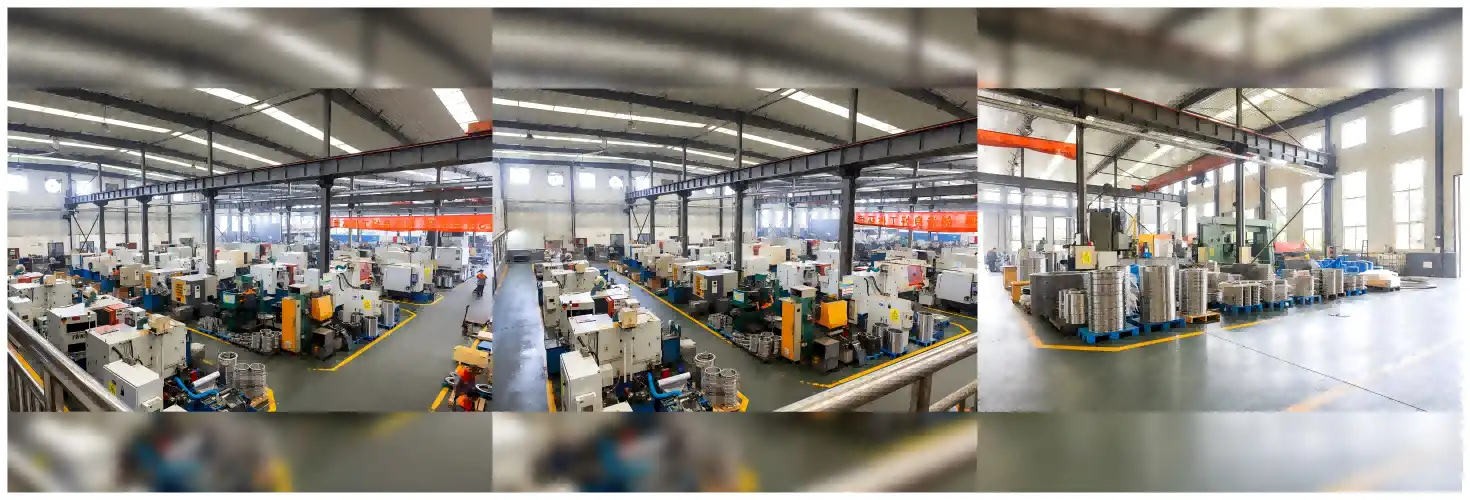
Having direct ties with certified makers ensures that the products are real and of high quality. Luoyang Auto Bearing Co., Ltd. is an example of a well-established company that has been specializing in this area for 15 years and has ISO 9001 and IATF 16949 certifications. This shows that they have the production capacity and quality processes needed for a stable, long-term supply. Manufacturing operations that span six workshops and hire 120 trained workers show the level of scale needed to provide consistent quality products and quick customer service. As a reliable CRBH Cross roller bearing maker, we serve customers in the US, Germany, South Korea, and other places.
Pricing Structure and Lead Time Evaluation
Costs for bearings change a lot depending on the grade of precision, the size, and the number of orders. Standard, precise units in common sizes usually cost between $150 and $400 per unit in small numbers. For orders of 100 or more units, bulk discounts cut unit costs by 20 to 35 percent. The extra grinding and inspection steps needed for high-precision grades mean that they cost 40–70% more than normal models. Lead times from reliable manufacturers are usually between 4 and 8 weeks for stock items, and between 10 and 14 weeks for items that are made to order or aren't standard sizes. If you need something quickly, you can choose expedited production, but it usually costs 25–40% more than the normal price. Keeping a strategic inventory for important uses balances the costs of bringing them with the risk of production stopping because of unexpected CRBH Cross roller bearing failures.
Warranty and Technical Support Services
A full guarantee shows that the maker trusts the quality of the product. Standard guarantees usually cover 12 to 18 months from the date of delivery or 12 months from the date of installation, whichever comes first. They protect against flaws in the production process or early failure in normal use. For a higher price, you may be able to get choices with longer warranties, especially for big jobs that involve expensive equipment. Superior sellers are different from commodity vendors because they can provide technical help. Having access to application experts who can help with choosing bearings, installation, and fixing problems is very helpful throughout the duration of a product. Customization services from manufacturers, like changing the way the seals are set up, adding special coatings, or not following standard measurements, make it possible to find the best solutions for specific uses that standard stock goods can't fully meet.
Quality Assurance and Inspection Protocols
Having incoming checking processes in place keeps bad parts from getting into production. Basic checking should use calibrated measuring tools to make sure that important features are the right size, that the machine is properly oiled, and that the surface is free of any flaws or contamination. Statistical sample plans based on AQL (Acceptable Quality Level) standards are a cost-effective way to check the quality of big orders without having to inspect them all the way through. Traceability systems that connect specific CRBH Cross roller bearing units to production runs make it easy to quickly figure out what went wrong if something fails in the field. Manufacturers who keep detailed quality records can find process differences that affect certain production runs and take corrective actions that stop them from happening again, while having the least possible effect on installations that are already in place.
Practical Decision-Making Framework: Matching Bearings to Your Project Needs
Systematic review methods help purchasing teams and CRBH cross-roller bearing engineering departments match the specs of parts with the needs of operations, all while getting the best cost-performance rates over the whole life of the equipment.
Application Parameter Assessment
Start by writing down the working conditions, such as the speed of rotation, the duty cycle, the temperature range of the surroundings, and the amount of contamination exposure. Allowable runout tolerances, positional repeatability needs, and accepted deflection angles under maximum pressure conditions should all be spelled out in the precision requirements. Things in the environment, like the amount of vibration, the frequency of shock loads, and chemical contact, affect the choice of material and the sealing needs. Load tracking records all of the different loads that your equipment is put through. Peak loads during starting or emergency stops may be 200–400% higher than steady-state values. This means that there needs to be room in the bearing capacity to avoid damage from overloading during rapid circumstances. When there are changing workpiece masses or cutting forces, dynamic loading patterns mean that fatigue life estimates need to take into account how the load is distributed across operating cycles.
Specification Matching Process
Compare the written requirements with the manufacturer's instructions for possible CRBH Cross roller bearing types. Dynamic load ratings must be higher than the estimated loads by the right amount to ensure safety. Usually, this is 1.5 times for steady conditions and 2.5 times for situations where there is shock loading or bad lubrication. Static load capacity is very important for machines that will be standing still for a long time while they are under load, because damage from brinelling can happen if there aren't enough safety limits. Most of the time, basic bearing selection is based on limitations in size. Check the available room for installing the bearing by measuring its radial thickness, axial width, and the shape of its mounting surfaces. When adding precision parts to old machinery that was made with less-capable bearing technologies, the space-saving benefits of crossed roller designs become even more valuable.
Implementation Best Practices
Whether bearings work as well as they can depends on how well they are installed. Clean building practices keep contaminants from getting into the system during the mounting process. Controlled press fits with precise hydraulic tools make sure that stress is spread evenly around the bearing surfaces. This keeps stress from building up in one place, which can lead to failure before it's supposed to. By following the torque specs for fastening screws, you can avoid overloading that can damage bearing rings or add preload that wasn't meant to be there. The choice of lubrication fits the thickness to the range of speeds and temperatures that will be used. Specific grease mixes for CRBH Cross roller bearing have additives that stop fretting rust at the roller-raceway junction and keep the film's strength even when high contact pressures are applied. Automatic lubrication systems make sure that important production equipment is oiled at regular times. This eliminates the chance of human mistakes that come with doing maintenance by hand. Performance monitoring through vibration analysis, temperature tracking, and regular inspections can find problems before they become catastrophic. Setting up standard readings during the initial commissioning process gives you data to use for trend analysis, which shows how things are slowly breaking down and needing upkeep. When compared to reactive maintenance methods, predictive maintenance strategies based on condition tracking cut down on unplanned downtime by 40 to 60%.
Conclusion
To choose the right CRBH Cross roller bearing, you have to weigh the technical specs against the needs of the operation, your budget, and your hopes for long-term dependability. Compared to other bearing configurations, the integrated ring design is more rigid and easier to install. This makes it perfect for accurate uses in robots, medical devices, and advanced manufacturing equipment. Partnering with certified manufacturers who can show stable quality systems, enough output capacity, and full expert help is key to successful procurement. By carefully comparing manufacturer specs to load conditions, precision needs, and environmental factors, engineering teams can choose parts that improve machine performance while keeping total ownership costs low over long service lives.
FAQ
1. What maintenance practices extend service life?
Regularly applying the grease that is suggested by the manufacturer keeps protective films between the rollers and raceways. This keeps metals from touching each other, which speeds up wear. Depending on speed, load, and weather, relubrication should be done every 1,000 to 3,000 hours of operation. Abrasive particles that cause early failure can be stopped by good seals and clean working conditions that control contamination. Monitoring vibrations finds early signs of wear and tear, allowing replacement before major damage happens.
2. How do precision grades affect application performance?
Higher precision grades have better control over dimensions and less runout, which directly improves the accuracy of position in precise machinery. Class 5 bearings are accurate enough for most industry equipment, but Class 4 or better bearings are needed for coordinate measuring machines, optical systems, and semiconductor manufacturing, where accuracy down to the micron level is key to making high-quality products. The extra cost for better grades is between 30 and 60% more, but it's worth it when the accuracy of the application is very important.
3. Can CRBH bearings accommodate customization requests?
Reliable makers give customization choices such as different sealing setups, special coatings for corrosion protection, non-standard size requirements, and different lubrication rules. Custom solutions need in-depth application advice, and there are usually minimum order numbers of 50 to 100 units, along with longer wait times of 10 to 14 weeks. Can the CRBH cross roller bearing handle calls for changes? Customization lets you get the best performance for specific needs that normal catalog goods can't fully meet.
Partner with ATLYC for Your Precision Bearing Solutions
ATLYC has been making high-precision bearings for 15 years through Luoyang Auto Bearing Co., Ltd. These bearings meet the strict needs of OEMs and industrial equipment makers around the world. Our production facilities, which are ISO 9001 and IATF 16949 approved, are made up of six specialized workshops managed by 120 skilled professionals who are devoted to providing consistent quality with defect rates below 50 PPM. As a reliable CRBH Cross roller bearing maker, we serve customers in the US, Germany, South Korea, and other places. We offer affordable prices, quick lead times, and full expert support.
Email our tech team at auto@lyautobearing.com to talk about the needs of your particular application. We offer thorough specification advice, the ability to customize products to meet particular operational needs, and quality assurance procedures that make sure every bearing meets the highest performance standards. You can get product catalogs, technical data sheets, or sample units to see how our precision bearing solutions can improve the performance of your gear while lowering the total cost of ownership by making it last longer and needing less upkeep.
References
1. Harris, T.A. & Kotzalas, M.N. (2006). Essential Concepts of Bearing Technology: Rolling Bearing Analysis, 5th Edition. CRC Press, Taylor & Francis Group.
2.ISO 281:2007. Rolling Bearings - Dynamic Load Ratings and Rating Life. International Organization for Standardization, Geneva, Switzerland.
3. Wensing, J.A. (1998). On the Dynamics of Ball Bearings. Doctoral Dissertation, University of Twente, Enschede, Netherlands.
4. SKF Group. (2018). Rolling Bearings Catalog: Cross Roller Bearings Technical Reference Manual. SKF Group Publications, Gothenburg, Sweden.
5. Budynas, R.G. & Nisbett, J.K. (2015). Shigley's Mechanical Engineering Design, 10th Edition, Chapter 11: Rolling-Contact Bearings. McGraw-Hill Education.
6. Hutchings, I.M. & Shipway, P. (2017). Tribology: Friction and Wear of Engineering Materials, 2nd Edition, Chapter 8: Rolling Contact. Butterworth-Heinemann, Elsevier.
Learn about our latest products and discounts through SMS or email