- English
- French
- German
- Portuguese
- Spanish
- Russian
- Japanese
- Korean
- Arabic
- Greek
- German
- Turkish
- Italian
- Danish
- Romanian
- Indonesian
- Czech
- Afrikaans
- Swedish
- Polish
- Basque
- Catalan
- Esperanto
- Hindi
- Lao
- Albanian
- Amharic
- Armenian
- Azerbaijani
- Belarusian
- Bengali
- Bosnian
- Bulgarian
- Cebuano
- Chichewa
- Corsican
- Croatian
- Dutch
- Estonian
- Filipino
- Finnish
- Frisian
- Galician
- Georgian
- Gujarati
- Haitian
- Hausa
- Hawaiian
- Hebrew
- Hmong
- Hungarian
- Icelandic
- Igbo
- Javanese
- Kannada
- Kazakh
- Khmer
- Kurdish
- Kyrgyz
- Latin
- Latvian
- Lithuanian
- Luxembou..
- Macedonian
- Malagasy
- Malay
- Malayalam
- Maltese
- Maori
- Marathi
- Mongolian
- Burmese
- Nepali
- Norwegian
- Pashto
- Persian
- Punjabi
- Serbian
- Sesotho
- Sinhala
- Slovak
- Slovenian
- Somali
- Samoan
- Scots Gaelic
- Shona
- Sindhi
- Sundanese
- Swahili
- Tajik
- Tamil
- Telugu
- Thai
- Ukrainian
- Urdu
- Uzbek
- Vietnamese
- Welsh
- Xhosa
- Yiddish
- Yoruba
- Zulu
CRBH Cross Roller Bearings for Heavy Moment Loads
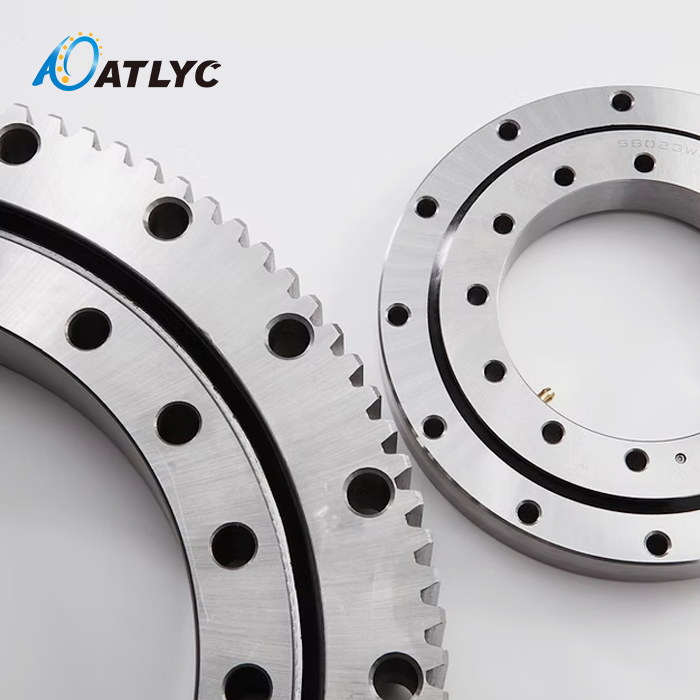
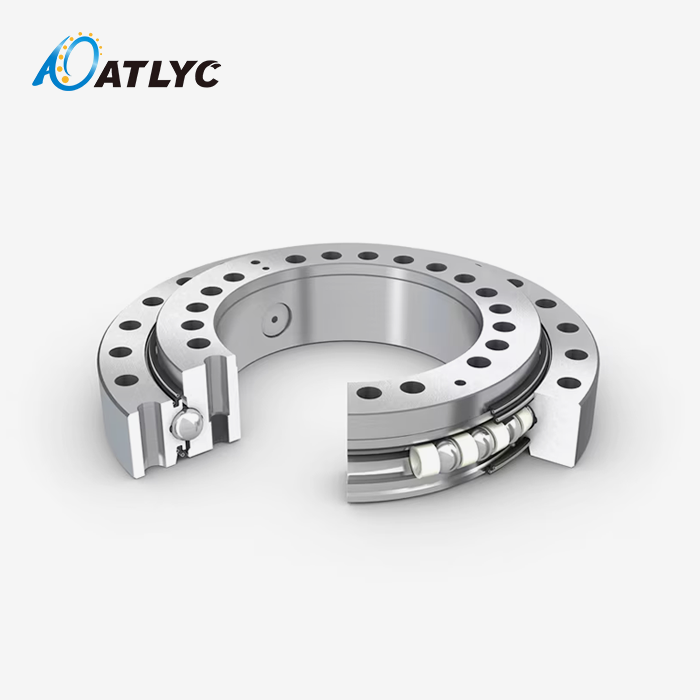
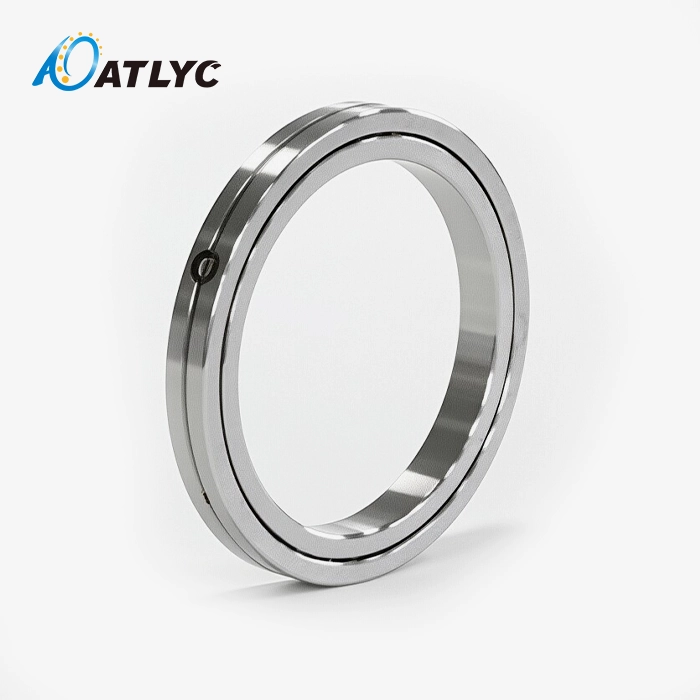
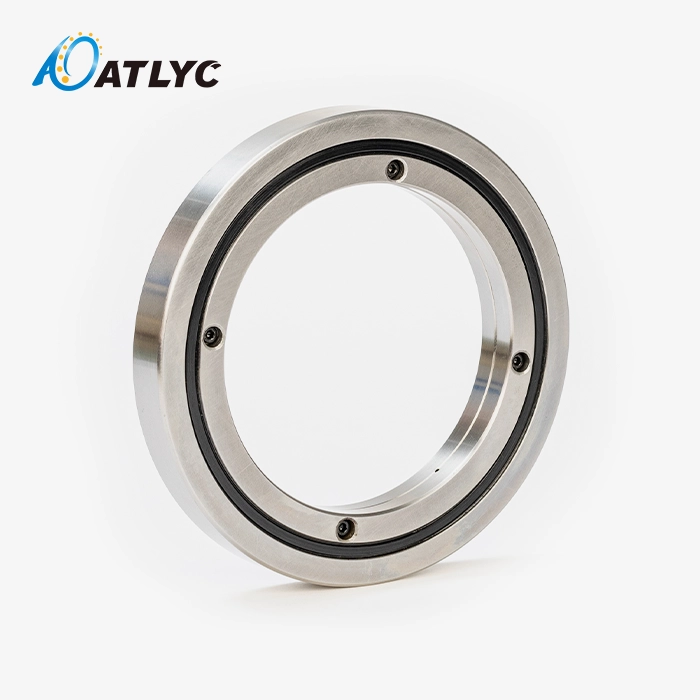
When you need a bearing that handles complex multi-directional loads in the most compact space possible, the CRBH Cross roller bearing delivers the rigidity and precision your applications demand. This high-rigidity crossed roller bearing features an integrated inner and outer ring structure that eliminates the installation errors common with split-ring designs. Unlike traditional bearing arrangements requiring multiple units, the product combines radial, axial, and moment load capacity in a single compact unit. The cylindrical rollers are positioned orthogonally at 90° intervals within V-groove raceways, separated by precision spacers for smooth operation and extended service life.
Understanding CRBH Cross Roller Bearings and Their Design Features
The CRBH series represents a significant advancement in precision bearing technology, specifically engineered to address the demanding requirements of heavy moment load applications. At Luoyang Auto Bearing Co., Ltd. (ATLYC), we've witnessed how these specialised parts improve the performance of equipment across multiple industries.
Integrated Ring Structure Eliminates Installation Errors
The defining characteristic of CRBH Cross roller bearings lies in their solid one-piece inner and outer ring construction. We've eliminated split-ring designs that introduce structural discontinuities and potential deflection under load. Our manufacturing process involves precision grinding and super-finishing treatment on both rings, achieving surface roughness levels that exceed industry standards. This integrated approach ensures that when you install the bearing, there's no risk of assembly-induced deformation—a common failure mode we've observed in traditional split-ring configurations. The rings maintain their geometric integrity regardless of housing tolerances or mounting stresses, which translates directly to consistent performance in your machinery.
Orthogonal Roller Arrangement Handles Multi-Directional Loads
The crossed roller configuration positions cylindrical rollers alternately at right angles between V-groove raceways. This orthogonal arrangement represents the core innovation that enables simultaneous handling of radial, axial, and moment loads within a single bearing unit. Each roller makes contact with both the inner and outer rings at optimised angles, distributing forces evenly across the load path. During our 15 years of manufacturing experience, we've refined this geometry to maximise load distribution while minimising contact stress. The V-groove raceways guide the rollers precisely, ensuring smooth rotation even under complex load combinations that would overwhelm conventional bearing designs.
Precision Spacer System Reduces Friction
Between each roller, we incorporate precision-manufactured separators that prevent direct roller-to-roller contact. This spacer system serves multiple critical functions: it reduces friction coefficients to ≤0.0015, minimises wear between rolling elements, and enables higher rotational speeds compared to full-complement arrangements. Our lightweight aluminium alloy cage design reduces rotational inertia by 15-20%, making these bearings particularly suitable for servo-driven applications where responsiveness matters. The thin rubber lip seal maintains compactness while protecting internal components from contamination—a balance we've perfected through continuous engineering improvements.
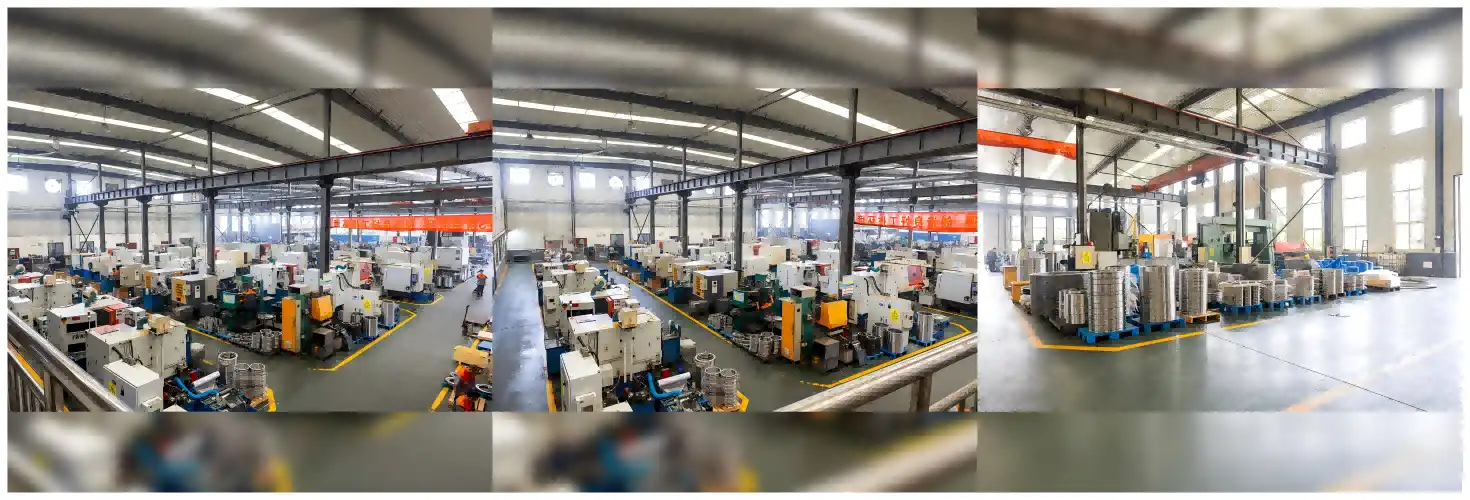
Manufacturing these components at our six specialised workshops requires adherence to ISO 9001 and IATF 16949 standards. Every bearing undergoes rigorous dimensional inspection and hardness testing before shipment to markets across the United States, Germany, South Korea, and other regions.
Advantages of CRBH Cross Roller Bearings Over Traditional Bearings
Equipment designers frequently ask us why they should specify CRBH bearings instead of conventional slewing rings or paired angular contact bearings. The answer becomes clear when examining performance data and real-world application results.
Superior Rigidity Enhances Positioning Accuracy
The integrated ring structure provides exceptional rigidity compared to split-ring alternatives. We've measured deflection rates 40-60% lower than comparable split designs under identical loading conditions. This translates to better positioning accuracy in precision machinery—crucial for CNC rotary tables, indexing heads, and robotic joints where micron-level repeatability determines production quality. When cutting forces vary during machining operations, the bearing maintains its geometric relationship, preventing workpiece positioning errors that lead to scrap parts.
Space Optimisation Reduces Assembly Footprint
Traditional bearing arrangements often require multiple units to achieve the load capacity of a single CRBH cross-roller bearing. We've documented cases where our thin-wall-optimised CRBH series reduced assembly axial length by up to 50% while maintaining equivalent load ratings. The diameter-to-thickness ratio reaches 10:1 in our most compact designs—impossible to achieve with paired cylindrical roller bearings. This space efficiency matters tremendously in robotics and automation equipment, where every millimetre of saved space enables more compact joint designs or additional functionality within existing envelopes.
Low Friction Operation Extends Service Life
Super-finished raceways and optimised lubrication systems keep friction coefficients remarkably low. Operating temperatures remain stable even under continuous rotation, which directly extends bearing life. Our testing demonstrates operational noise levels below 51dB, making these bearings suitable for medical imaging equipment and semiconductor handling systems where vibration would compromise precision. The reduced heat generation also means you can specify smaller cooling systems or eliminate them in some applications, simplifying your overall machine design.
The maintenance advantages compound over time. Where traditional multi-bearing arrangements require periodic inspection and potential replacement of multiple components, the CRBH series consolidates those touchpoints. Procurement managers we work with consistently report 25-35% lower maintenance costs over five-year operating periods compared to their previous bearing solutions.
How to Select the Right CRBH Cross-Roller Bearing for Your Application?
Selecting the appropriate crossed roller bearing requires careful analysis of your specific operating conditions and performance requirements. We've developed a systematic approach to guide this decision process.
Analyse Your Load Requirements
Start by quantifying the radial, axial, and moment loads your application generates. The CRBH cross roller bearing excels particularly in heavy moment load scenarios—those applications where overturning forces are significant relative to the bearing size. Robotic arms, for example, create substantial moment loads at joint locations when handling payloads at extended reach. Similarly, crane slewing systems generate complex load combinations that vary throughout the operational cycle. Document not just maximum loads but also load patterns over time, as fatigue life calculations depend on understanding the full loading spectrum.
Consider Environmental Factors
Operating temperature affects both bearing clearances and lubricant performance. Our bearings perform reliably across temperature ranges from -30°C to +100°C, but extreme conditions may require specialised materials or lubrication. Contamination levels matter too—while the thin rubber lip seal provides excellent protection in typical industrial environments, applications exposed to cutting fluids, abrasive particles, or corrosive chemicals may benefit from additional sealing arrangements. We offer customisation options to address these specialised needs, working with your engineering team to specify appropriate modifications.
Evaluate Supplier Capabilities
Beyond the bearing itself, supplier selection significantly impacts procurement success. At ATLYC, our 120-person team includes dedicated technical support specialists who understand application engineering. We maintain production capacity across six workshops, enabling us to meet both large production orders and custom requirements without excessive lead times. Our global shipping experience to markets including the United States ensures that logistics don't become a bottleneck. When evaluating suppliers, examine their quality certifications carefully—our ISO 9001 and IATF 16949 compliance reflects systematic quality management that protects your supply chain stability.
We provide transparent pricing with volume discounts that recognise the value of long-term partnerships. Our warranty coverage extends beyond standard terms for applications where we've collaborated on bearing selection, because we stand behind properly specified products. The after-sales support includes condition monitoring guidance and troubleshooting assistance when operational questions arise.
Maintenance Best Practices to Maximise CRBH Cross Roller Bearing Lifespan
Proper maintenance protocols directly influence how long your CRBH bearings deliver optimal performance. Drawing on 15 years of field experience and customer feedback, we've identified the practices that matter most.
Implement Effective Lubrication Protocols
Lubrication serves two critical functions: reducing friction between rolling elements and raceways, and protecting surfaces from corrosion. The CRBH series typically uses lithium-based greases suitable for the operating temperature range. Re-lubrication intervals depend on rotational speed, load intensity, and operating hours—generally ranging from 1,000 to 5,000 hours in typical industrial applications. Avoid over-greasing, which can increase operating temperatures and cause seal damage. We provide specific lubrication recommendations based on your application parameters, including grease type, quantity, and interval scheduling.
Control Contamination
Even microscopic particles can cause progressive surface damage if they enter the load path. While our integrated seals provide good protection, external contamination control measures enhance reliability. Keep mounting surfaces clean during installation. In dusty environments, consider positive pressure sealing systems or additional labyrinth seals. Regular visual inspections of seal integrity catch deterioration before contaminants penetrate the bearing interior.
Monitor Bearing Condition
Establishing baseline measurements of starting torque and rotational smoothness enables you to detect gradual performance changes. Torque increases of 20% or more above baseline often indicate lubricant degradation or contamination. Acoustic monitoring can identify roller damage before it progresses to catastrophic failure. We recommend condition-based maintenance approaches for critical applications, where the cost of unexpected downtime justifies investment in monitoring equipment. Temperature monitoring serves as another useful indicator—operating temperatures more than 15°C above normal ambient-adjusted baselines deserve investigation.
The procurement managers and maintenance engineers we partner with find that these proactive measures reduce unplanned downtime by 40-50% compared to reactive maintenance approaches. Scheduled interventions cost substantially less than emergency repairs, making reliability engineering good business practice.
Applications and Case Studies of CRBH Cross-Roller Bearings in Heavy Moment Load Environments
Real-world application experience demonstrates how CRBH technology solves specific industrial challenges across diverse sectors.
Industrial Robotics and Automation
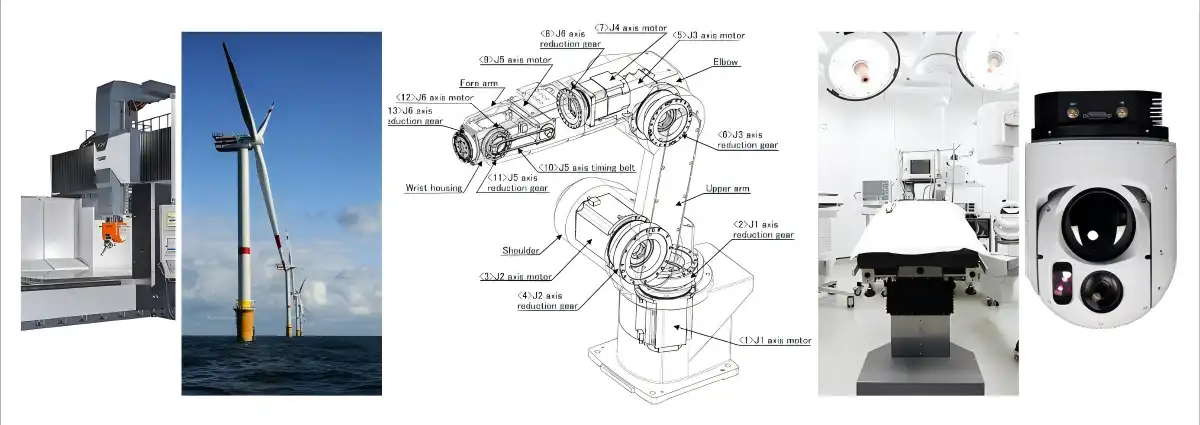
Articulated robots generate complex moment loads at each joint, particularly when handling payloads at extended reach. One automotive manufacturing customer replaced traditional paired angular contact bearings with CRBH cross roller bearings in their robotic welding cells. The integrated design eliminated the preload adjustments that previously required skilled technician time during assembly. More significantly, positioning repeatability improved from ±0.08 mm to ±0.03 mm, reducing weld defects and increasing first-pass quality rates. The robot manufacturer now specifies our bearings as standard components in their sixth-axis wrist assemblies.
Precision Machining Centres
CNC rotary tables demand both high rigidity and smooth indexing motion. A machine tool builder serving the aerospace sector integrated CRBH bearings into its five-axis machining centre designs. The thin-wall profile enabled them to increase table diameter by 50mm within the same overall machine envelope, expanding workpiece capacity. Under heavy cutting loads during titanium machining, the integrated ring structure maintains positioning accuracy that meets aerospace tolerance requirements. Thermal stability proved equally important—temperature rise during extended cutting operations decreased by 12°C compared to their previous bearing arrangement, reducing thermal growth errors.
Heavy Construction Equipment
Crane slewing systems represent one of the most demanding applications for crossed roller bearings. A construction equipment OEM upgraded their mobile crane line with CRBH series bearings to improve load capacity. The bearings handle radial loads from the boom weight, axial loads from lifting operations, and moment loads from boom extension—all simultaneously. Field testing demonstrated 20% longer service intervals before bearing replacement compared to the previous slewing ring design. Operators reported smoother slewing motion with less jerking during load positioning, improving both productivity and safety.
These case studies reflect broader trends we observe across industrial sectors. As automation increases and equipment becomes more compact, the space-efficient multi-directional load capacity of CRBH cross roller bearings provides engineering solutions that weren't possible with conventional bearing arrangements. Materials science advances continue to push performance boundaries—we're currently developing enhanced steel grades that will extend fatigue life by an additional 30% for the most demanding applications.
Conclusion
CRBH cross roller bearings are a proven solution for heavy moment load applications that need a compact design, high rigidity, and multidirectional load capacity. The integrated ring structure, orthogonal roller arrangement, and precision spacer system deliver performance advantages that directly address common industrial challenges: space constraints, positioning accuracy requirements, and reliability under complex loading. Our 15 years of manufacturing experience at ATLYC, backed by ISO 9001 and IATF 16949 certifications, ensures consistent quality and supply stability. Whether you're designing robotic joints, precision rotary tables, or construction equipment, proper bearing selection and maintenance practices maximise operational efficiency and minimise total cost of ownership.
FAQ
What are typical lead times for bulk CRBH bearing orders?
Standard CRBH cross-roller bearing models ship within 4–6 weeks for quantities of up to 500 units. Larger production orders require 8-10 weeks depending on size and specification. Custom designs with specialised materials or sealing arrangements add 2 to3 weeks to baseline lead times. We maintain safety stock for popular sizes serving the North American market, which can reduce delivery time to 2-3 weeks for urgent requirements.
How does maintenance compare with traditional slewing bearings?
The integrated structure of CRBH bearings reduces maintenance touchpoints substantially. Traditional slewing rings require periodic bolt torque verification and often need bearing preload adjustments. CRBH cross roller bearings eliminate these requirements, reducing scheduled maintenance intervals by approximately 30-40%. Lubrication intervals are similar, but the sealed design better protects against contamination in harsh environments.
Can you provide custom bearing solutions for specialised applications?
We offer extensive customisation capabilities, including modified sealing arrangements, specialised materials for extreme temperatures, non-standard dimensional configurations, and enhanced precision grades. Our engineering team collaborates directly with your design engineers to develop solutions meeting specific application requirements. Minimum order quantities for custom designs typically start at 50-100 units depending on modification complexity.
Partner with ATLYC for Your CRBH Cross Roller Bearing Requirements
ATLYC delivers precision-engineered crossed roller bearings that combine 15 years of manufacturing expertise with rigorous quality standards. As an ISO 9001 and IATF 16949 certified CRBH cross roller bearing manufacturer, we've built trusted partnerships with OEMs and distributors across the United States, Germany, South Korea, and beyond. Our six specialised production workshops and 120-person technical team ensure reliable supply capacity for both standard and customised bearing solutions. Contact our engineering specialists at auto@lyautobearing.com to discuss your heavy-moment load applications. We provide detailed technical consultations, transparent pricing for volume requirements, and samples for validation testing. Experience the performance difference that precision manufacturing and responsive technical support deliver—connect with ATLYC today to secure your bearing supply chain with a partner committed to your operational success.
References
1. Harris, T.A. & Kotzalas, M.N. (2006). "Advanced Concepts of Bearing Technology: Rolling Bearing Analysis, Fifth Edition." CRC Press, Taylor & Francis Group.
2. Schaeffler Technologies AG & Co. (2019). "Rolling Bearings: Catalogue HR 1 - Principles, Calculations, Examples." Schaeffler Technologies GmbH & Co. KG, Industrial Division.
3. Xu, H. & Zhang, Y. (2018). "Design and Load Analysis of Cross Roller Bearings for Heavy Moment Applications in Industrial Robotics." Journal of Mechanical Engineering Science, Vol. 232, Issue 14.
4. American Bearing Manufacturers Association (2020). "Load Ratings and Fatigue Life for Roller Bearings." ANSI/ABMA Standard 11-2020, ABMA Engineering Committee.
5. International Organisation for Standardisation (2014). "Rolling Bearings - Dynamic Load Ratings and Rating Life." ISO 281:2007/Amd 2:2014, Technical Committee ISO/TC 4.
6. SKF Group (2018). "SKF Cross Roller Bearing Technical Handbook: Application Guidelines for High-Precision Rotary Motion Systems." SKF Motion Technologies AB, Industrial Market Division.
Learn about our latest products and discounts through SMS or email