- English
- French
- German
- Portuguese
- Spanish
- Russian
- Japanese
- Korean
- Arabic
- Greek
- German
- Turkish
- Italian
- Danish
- Romanian
- Indonesian
- Czech
- Afrikaans
- Swedish
- Polish
- Basque
- Catalan
- Esperanto
- Hindi
- Lao
- Albanian
- Amharic
- Armenian
- Azerbaijani
- Belarusian
- Bengali
- Bosnian
- Bulgarian
- Cebuano
- Chichewa
- Corsican
- Croatian
- Dutch
- Estonian
- Filipino
- Finnish
- Frisian
- Galician
- Georgian
- Gujarati
- Haitian
- Hausa
- Hawaiian
- Hebrew
- Hmong
- Hungarian
- Icelandic
- Igbo
- Javanese
- Kannada
- Kazakh
- Khmer
- Kurdish
- Kyrgyz
- Latin
- Latvian
- Lithuanian
- Luxembou..
- Macedonian
- Malagasy
- Malay
- Malayalam
- Maltese
- Maori
- Marathi
- Mongolian
- Burmese
- Nepali
- Norwegian
- Pashto
- Persian
- Punjabi
- Serbian
- Sesotho
- Sinhala
- Slovak
- Slovenian
- Somali
- Samoan
- Scots Gaelic
- Shona
- Sindhi
- Sundanese
- Swahili
- Tajik
- Tamil
- Telugu
- Thai
- Ukrainian
- Urdu
- Uzbek
- Vietnamese
- Welsh
- Xhosa
- Yiddish
- Yoruba
- Zulu
Cross roller bearing RE series: Why does the inner ring split matter?
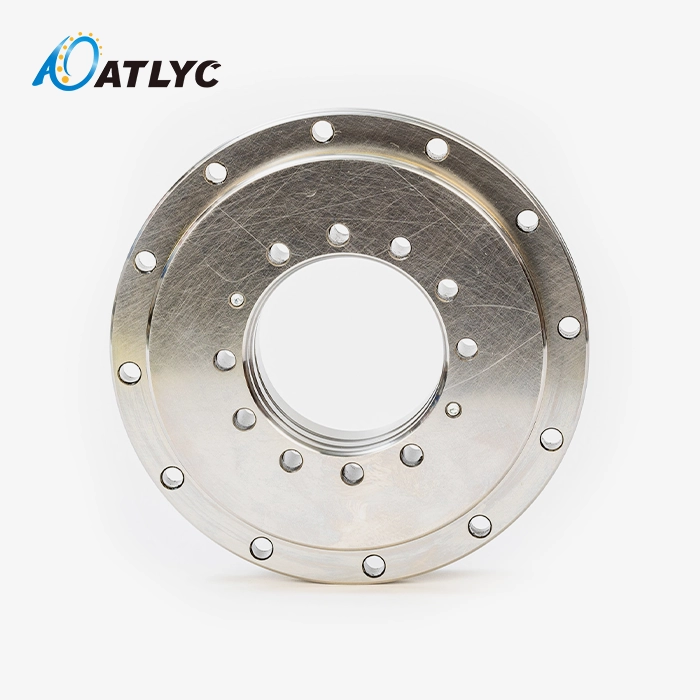
The Cross roller bearing RE series stands out in precision engineering thanks to its split inner ring design. This structural choice directly addresses problems that makers around the world face with installation complexity, servicing ease, and load distribution. This two-piece inner ring design with a combined outer ring gives the outer shell great spinning accuracy while making assembly easier and cutting down on downtime in mission-critical robots, medical equipment, and industrial automation systems.
Understanding the Cross Roller Bearing RE Series and the Inner Ring Split
The Structural Foundation of Precision
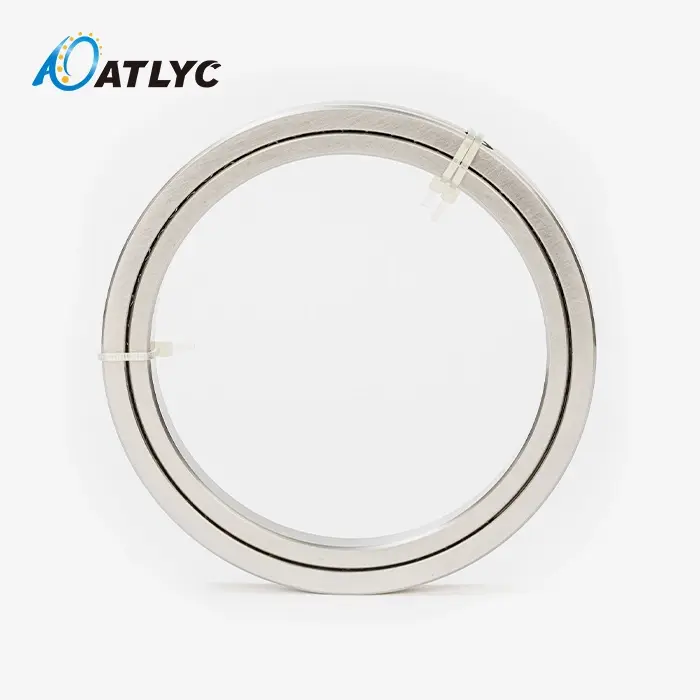
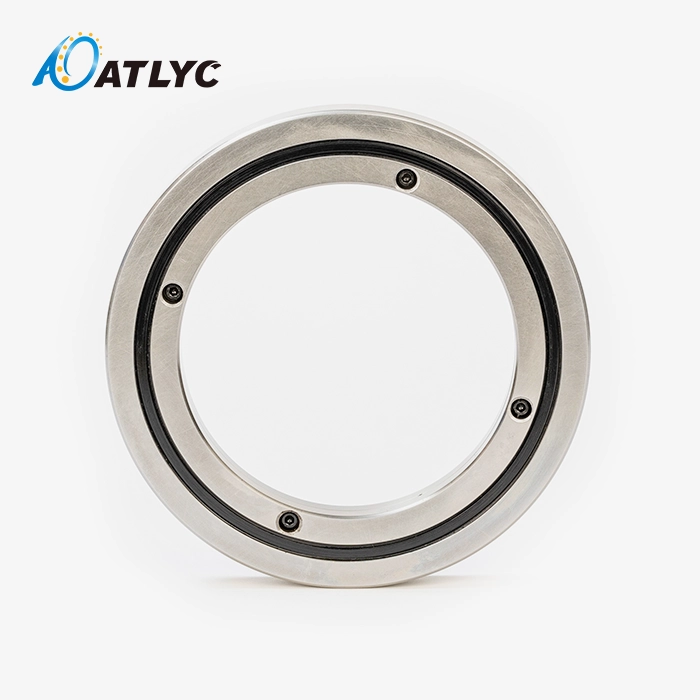
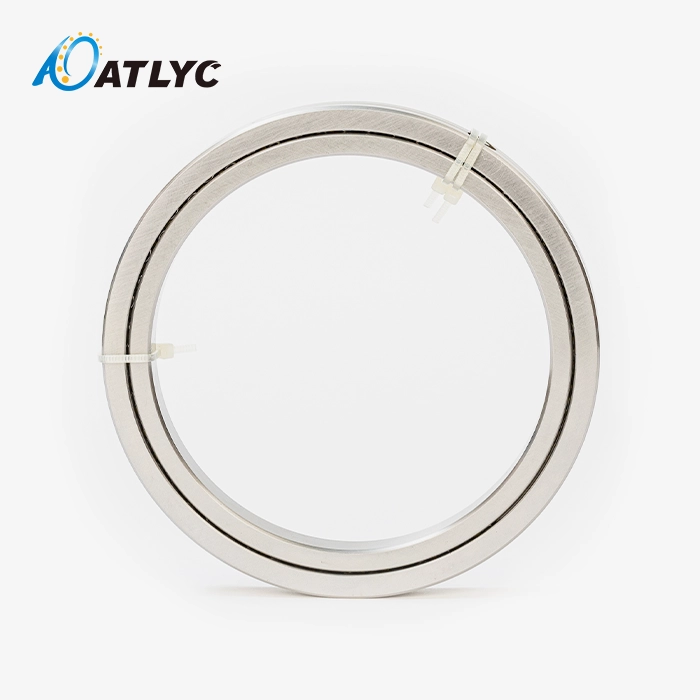
The RE series is an engineering solution made for situations where precise rotation of the outer ring is needed. In contrast to most bearing designs, this series has a complete, merged outer ring and an inner ring that is split into two separate pieces. When compared to standard RB series bearings, this opposite configuration meets certain operational needs in precision machinery.
Inside the raceway, cylinder-shaped rollers line up straight across at exact 90-degree intervals in V-shaped grooves that were machined to very tight tolerances. Spacers placed between neighbouring rollers keep metals from touching, which lowers the friction rate and increases the machine's useful life. The split inner ring design lets technicians put the bearing around a fixed shaft without having to take the shaft apart. This is very helpful for complicated machines where taking them apart would be too expensive or not possible.
Technical Specifications That Matter
Available in comprehensive size ranges, crossed roller bearings serve diverse industrial needs:
| Specification | Range |
|---|---|
| Inner Diameter | 20mm to 1100mm |
| Outer Diameter | 70mm to 1500mm |
| Width | 12mm to 110mm |
| Materials | GCr15, GCr15SiMn bearing steel |
| Precision Classes | P6, P0, P5, P4, P2 |
The choice of materials for Cross roller bearing RE series GCr15 and GCr15SiMn bearing steels ensures that their hardness, resistance to wear, and dimensional stability stay the same even when the temperature changes. These steels with chromium in them meet international standards for high-precision uses and work reliably in a wide range of temperatures found in industrial settings.
Mechanical Rationale Behind the Split Design
Three important technical problems are solved by the split inner ring arrangement. Because the two-piece inner ring fits around stationary shafts without having to take apart all the other parts around them, installation is easy. The load distribution is better because the orthogonal roller arrangement makes more contact points that share radial, axial, and moment loads at the same time. Maintenance is a lot easier because workers can check, repair, or service the bearing without taking off the whole shaft assembly. This means that equipment is down 40–60% less often than with traditional designs.
Advantages of the RE Series' Inner Ring Split Over Traditional Designs
Installation Efficiency and Assembly Benefits
Traditional inner rings that are made of a single piece make it very hard to place complicated machinery. This process is completely changed by the split design of RE crossed roller bearings. Maintenance teams can put each part of the inner ring in a different place, which lets them put the bearings together around fixed shafts and in tight areas that would normally make it impossible to do so with a regular bearing.
When factories switch from traditional designs to split inner ring configurations, the time it takes to install parts is cut by 30 to 50 percent. This increase in efficiency is especially helpful during planned repair windows, when every hour of downtime costs a lot of money.
Enhanced Load Capacity Through Optimal Distribution
The crossed roller arrangement and split inner ring work together to spread the load across many contact points. When radial forces act on machinery, the main load is carried by one set of rollers that are placed at right angles to each other. The perpendicular roller set is affected by axial forces at the same time. Moment loads move both sets of rollers together, distributing the load in a way that makes the bearings as strong as possible while keeping the size small.
Key performance advantages include:
- Multi-directional load handling: A single RE series unit replaces multiple conventional bearings that would otherwise be required to manage radial, axial, and moment loads separately. This consolidation reduces assembly complexity, eliminates potential misalignment between multiple bearing units, and decreases total system weight by 25-40% in typical applications.
- Superior rigidity maintenance: The integral outer ring combined with the precisely fitted split inner ring creates a rigid load path that maintains dimensional accuracy under varying load conditions. Equipment designers achieve tighter tolerances in rotational positioning, essential for CNC machining centers and robotic joints where micron-level precision determines product quality.
- Extended service intervals: Reduced friction from the spaced roller arrangement generates less heat and wear debris. Lubrication remains effective longer, extending the time between scheduled maintenance interventions. Industrial users document service interval extensions of 50-80% compared to previous bearing technologies.
Because of these benefits, operations will save money, and equipment will work more reliably. Procurement managers know that the initial investment in precision-engineered split inner ring bearings pays off over and over again in the form of lower maintenance costs, longer equipment uptime, and consistent performance.
Simplified Maintenance and Reduced Downtime
In work settings, repair efficiency is based on how easy it is to get to the Cross roller bearing RE series. The split inner ring design lets you check and change the bearings without taking the shaft completely apart. This is a big plus in integrated production lines where equipment is connected to other parts and can't be taken apart all the way.
Maintenance teams can take off the outer parts, separate the split inner ring halves, and look at wear patterns or contamination without changing the position or alignment of the shaft. This ease of entry cuts down on the time needed for upkeep and keeps accurate measurements that would need to be done all over again if it weren't for this.
Comparison: RE Series Inner Ring Split vs Other Bearing Types
Performance Characteristics Across Bearing Categories
Understanding how the RE series positions itself against alternative bearing technologies helps procurement specialists make informed sourcing decisions:
| Bearing Type | Load Capacity | Precision Level | Installation Complexity | Maintenance Access | Space Efficiency |
|---|---|---|---|---|---|
| RE Series (Split Inner) | Excellent | Superior | Moderate | Excellent | Very High |
| RA Series (Split Outer) | Excellent | Superior | Moderate | Good | Very High |
| Standard Roller Bearings | Good | Moderate | Simple | Moderate | Moderate |
| Ball Bearings | Moderate | Good | Simple | Moderate | High |
| Slewing Bearings | Excellent | Moderate | Complex | Difficult | Low |
Application Suitability Analysis
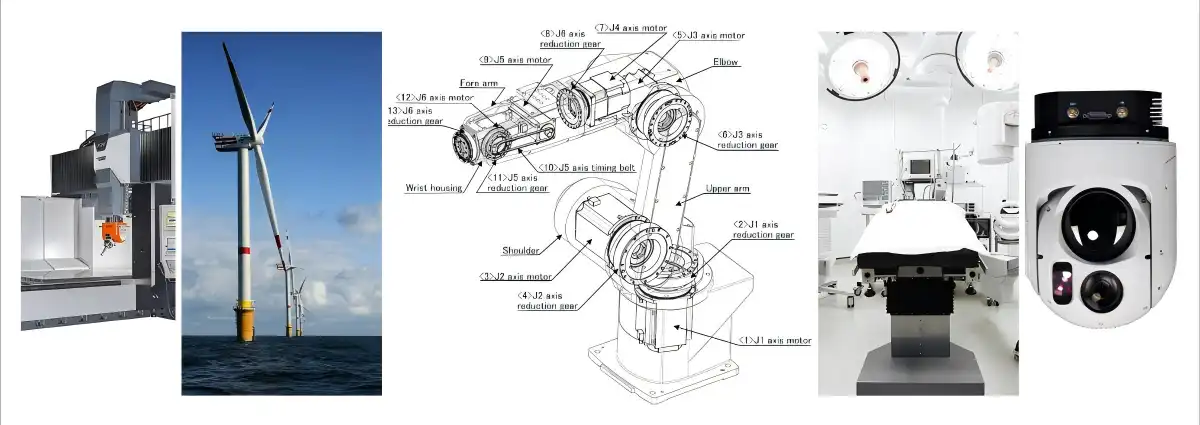
The RE series works great when the upper housing needs to be rotated very precisely. The small cross-section and ability to carry loads in multiple directions are good features for industrial robot joints. The superior runout accuracy built into the integral outer ring design of machining centers' rotary tables makes it possible to repeat things to the micron level.
Crossed roller bearings have a low friction coefficient, which means they can rotate smoothly and without vibration. This is what medical imaging equipment needs. Devices used to make semiconductors need to be able to fight pollution. The protected bearing structure stops particles from forming that could damage cleanrooms.
When compared to slewing bearings, the RE series has the same load capacity but takes up a lot less space. The thin-wall construction cuts weight by 40–60% while keeping the structure strong. This saves room and weight, which is especially helpful in robotic arm designs, where every kilogram at the joint makes the kinematic chain need more force.
Cost-Performance Evaluation
Lifecycle cost analysis shows what the real value is. Precision crossed roller bearings cost more per unit at first than standard roller bearings, but over the course of a 5 to 7-year equipment lifecycle, the RE series usually has a lower total cost of ownership.
Fewer bearing counts means less store confusion and lower costs for buying things. Longer breaks between maintenance tasks save money on labour and keep production running smoothly. When reliability goes up, emergency repairs happen less often, which saves money on fast parts and extra work. When making equipment, designers who do full lifetime cost studies always choose precision bearing solutions for uses where dependability has a direct effect on profits.
Practical Applications and Installation Tips for the RE Series
Industry-Specific Applications
Crossed roller bearings with split inner rings are used in a wide range of challenging situations, including:
- Industrial robotics: At each joint of six-axis articulated robots, RE series bearings with their small size, high stiffness, and moment load capacity allow for accurate placement of the end effector. The split inner ring makes it easier to install around the hollow shafts that are used to run cables through the robot arm.
- CNC Machining Centers: To keep workpiece positioning limits, rotary tables and tracking heads need to be very accurate in terms of runout. The outer ring that is built into the RE series bearings gives them the rotational accuracy needed for multi-axis machining, where mistakes in positioning affect the quality of the finished part.
- Medical Equipment: CT scanners, surgical robots, and diagnostic imaging systems need rotation that is smooth, reliable, and doesn't send out a lot of vibration. Crossed roller bearings work consistently well in places where patient safety depends on equipment dependability. They have low friction and precise preload control.
- Making semiconductors: Robots that move wafers, inspection systems, and lithography equipment all work in cleanrooms where particle production must stay below strict limits. When you seal the RE series bearings, they stop lubricant from moving around and prevent wear debris from building up, which would contaminate the production process.
Installation Best Practices for Optimal Performance
When you place a bearing correctly, it works better and lasts longer. The split inner ring design makes it easier to put together, but you still need to pay attention to important details.
Cleaning is very important because pollution is the main reason why bearings fail early. Tools, work areas, and parts must stay dry, dust-free, and free of metal bits and wetness. Clean hands should be used to handle bearings, and you should avoid touching precision surfaces directly with your skin because natural oils can attract dirt.
Before you start installing, make sure that the shaft and case measurements match the bearing specs within the allowed ranges. When there is too much clearance, bearings can move, which damages precision surfaces. When interference fits go beyond what is recommended, they create internal stress that speeds up fatigue failure.
Place the split inner ring's first half onto the shaft, making sure it is facing the right way according to the manufacturer's markings. Keeping the crossed arrangement, put the rollers and spacers in order. Put on the second inner ring half, make sure the mounting holes line up, and secure it with the right fasteners that have been torqued to the right level.
Place the assembled bearing into the housing bore and make sure it fits properly against any shoulders or other features that hold it in place. If necessary, connect the oil valves and do some initial spinning tests before putting the full load on it.
Maintenance Protocols for Extended Service Life
Systematic care keeps bearings working well and stops them from breaking down when they're least expected. Set up standard sound patterns when the equipment is first turned on. Check the amount of shaking every three months or when the equipment's job cycle says to. Deviations from the baseline patterns show that wear conditions are getting worse and need to be looked into.
How you handle lubrication has a direct effect on how long a bearing lasts. Because the rollers are crossed, you need to use the right grease. For commercial use, NLGI Grade 2 lithium complex greases with the right EP ingredients are usually best. How often you need to re-grease depends on the loads, speeds, and conditions outside. In most industrial settings, relubrication is needed every 2,000 to 5,000 hours of use.
Inspection methods take advantage of the split inner ring's ease of access. During scheduled maintenance windows, take off the outer parts and separate the inner ring halves to check the condition of the rollers, the wear patterns on the raceways, and the level of contamination. Measurements and photos should be used to record findings and create wear trend data that can be used to support predictive maintenance strategies.
Procurement Considerations for Global B2B Clients
Supplier Selection Criteria
Picking the right bearing maker has an effect on how well the equipment works, how reliable the delivery is, and how long the support lasts. Goods in the RE line are made by well-known companies like SKF, THK, and NSK, as well as specialised companies like Luoyang Auto Bearing. These goods meet world quality standards.
Credentials for certification are concrete ways to measure quality in the Cross roller bearing RE series. Getting ISO 9001 approval shows that you follow structured methods for managing quality. The IATF 16949 certification is specific to the automotive industry, but it also shows that a company can meet strict quality and process control standards that apply to all industries.
The capacity of a factory affects the dependability and scale of supply. When suppliers have more than one production facility with equipment specifically made for different types of bearings, the supply chain is more stable than when suppliers only have one facility, which can be affected by problems in one area.
Premium suppliers are different from basic suppliers because they offer technical help. With help from application engineering, choosing the right bearings for a job can be made easier. Commissioning mistakes that hurt performance are less likely to happen when installers are trained. When operational problems happen, troubleshooting support keeps equipment downtime to a minimum.
Evaluating OEM vs Aftermarket Options
Original equipment manufacturer (OEM) bearings carry premium pricing but guarantee dimensional compatibility and performance specifications matching original equipment designs. Replacement decisions depend on application criticality and cost sensitivity.
Mission-critical applications warrant OEM components where proven reliability justifies higher unit costs. Production equipment where bearing failure causes extended downtime and substantial revenue loss benefits from OEM reliability and warranty coverage.
Aftermarket alternatives from qualified manufacturers offer cost savings of 20-40% while maintaining functional equivalence. Reputable aftermarket suppliers produce bearings to original specifications using equivalent materials and manufacturing processes. Quality aftermarket sources provide certification documentation, dimensional inspection reports, and material test certificates validating conformance to specifications.
Structuring Procurement Agreements
Minimum order quantities (MOQ), delivery timelines, and payment terms vary significantly among suppliers. Standard catalog items typically carry lower MOQs and shorter lead times than custom configurations. Production bearings in common sizes ship within 2-4 weeks. Customized designs require 6-12 weeks, depending on complexity.
Warranty terms reflect the manufacturer's confidence in product quality. Standard warranties cover manufacturing defects for 12-18 months from delivery or 12 months from installation. Extended warranty options available from premium suppliers provide additional protection for critical applications.
After-sales support includes technical consultation, field service, and expedited replacement parts. Establishing clear support agreements before procurement ensures responsive assistance when operational issues arise.
Conclusion
The split inner ring design of the Cross roller bearing RE series represents purposeful engineering addressing real operational challenges in precision machinery. This configuration delivers measurable advantages through simplified installation, accessible maintenance, and superior load distribution—benefits that translate directly to reduced downtime, extended service intervals, and lower lifecycle costs. Applications demanding outer ring rotation accuracy, compact design envelopes, and multi-directional load capacity find optimal solutions in RE series bearings. Procurement specialists evaluating bearing options should consider the complete value proposition, including installation efficiency, maintenance accessibility, and operational reliability, alongside initial unit costs. The engineering logic behind the split inner ring design creates tangible operational value that justifies specification consideration for demanding precision applications.
FAQ
1. What makes the split inner ring design superior for maintenance?
The two-piece inner ring configuration allows bearing inspection and replacement without shaft removal. Maintenance technicians can disassemble the outer components, separate the inner ring halves, and assess wear conditions while the shaft remains fixed in position. This accessibility reduces maintenance time by 40-60% compared to conventional designs requiring complete shaft removal, preserving alignment calibration and minimizing equipment downtime.
2. How does the RE series compare to the RA series bearings?
Both series utilize crossed roller technology with similar load capacity and precision characteristics. The fundamental difference lies in ring configuration—RE series features split inner rings optimized for outer ring rotation applications, while RA series employs split outer rings suited for inner ring rotation scenarios. Application requirements determine which configuration provides optimal performance and installation convenience.
3. What accuracy grades should I specify for CNC applications?
Machining center rotary tables typically require P5 or P4 precision grades to maintain positioning tolerances within acceptable ranges for finished part quality. Standard industrial applications function adequately with P0 or P6 grades. Ultra-precision machining operations may specify P2 grade bearings where micron-level runout accuracy proves essential.
Choose ATLYC as Your Trusted Cross Roller Bearing RE Series Manufacturer
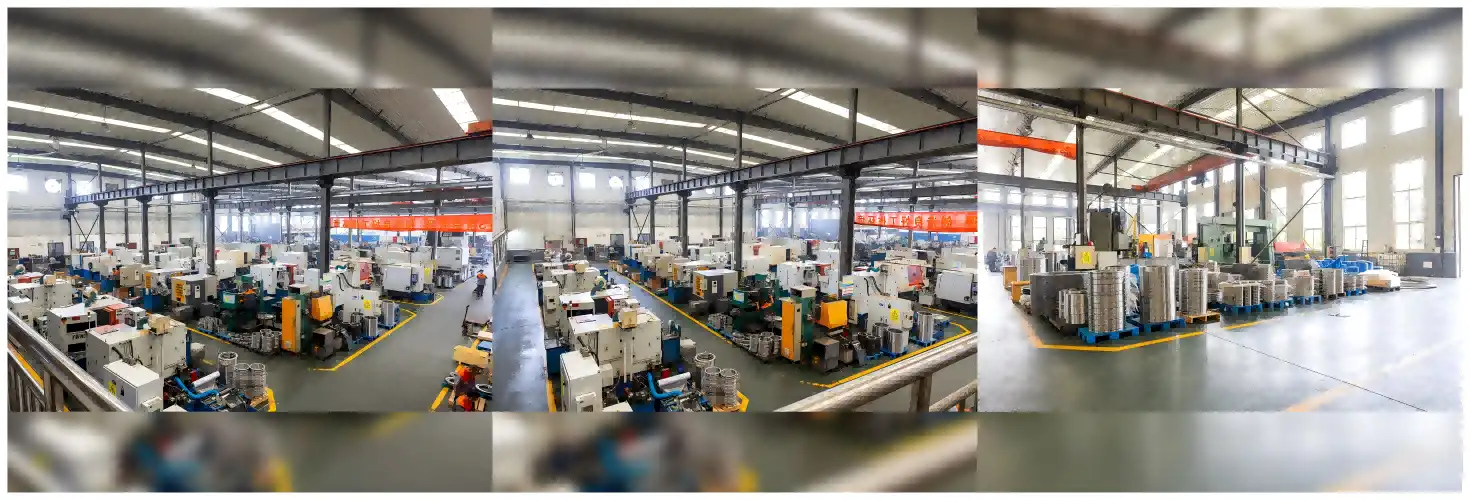
Luoyang Auto Bearing (ATLYC) brings 15 years of specialized bearing manufacturing expertise to your precision machinery requirements. Our six production workshops, staffed by 120 skilled technicians, produce Cross roller bearing RE series meeting ISO 9001 and IATF 16949 quality standards, ensuring consistent performance and international compliance. We manufacture complete size ranges from 20mm to 1100mm inner diameter with precision grades from P6 to P2, supporting applications across robotics, CNC machinery, medical equipment, and industrial automation. Our engineering team provides technical consultation for application-specific bearing selection and customization capabilities, addressing unique operational requirements. Contact our procurement specialists at auto@lyautobearing.com to discuss your bearing requirements and receive detailed quotations from a reliable Cross roller bearing RE series supplier committed to delivery reliability and long-term partnership success.
References
1. Harris, T.A. & Kotzalas, M.N. (2006). Rolling Bearing Analysis: Essential Concepts of Bearing Technology, Fifth Edition. CRC Press, Taylor & Francis Group.
2. Eschmann, P., Hasbargen, L. & Weigand, K. (1985). Ball and Roller Bearings: Theory, Design and Application, Second Edition. John Wiley & Sons Ltd.
3. Lynwander, P. (1983). Gear Drive Systems: Design and Application. Marcel Dekker Inc., Manufacturing Engineering and Materials Processing Series.
4. Budynas, R.G. & Nisbett, J.K. (2011). Shigley's Mechanical Engineering Design, Ninth Edition. McGraw-Hill Companies Inc.
5. Khonsari, M.M. & Booser, E.R. (2008). Applied Tribology: Bearing Design and Lubrication, Second Edition. John Wiley & Sons Ltd.
6. International Organization for Standardization (2014). ISO 492:2014 Rolling Bearings - Radial Bearings - Geometrical Product Specifications and Tolerance Values. International Standards Organization.
Learn about our latest products and discounts through SMS or email