- English
- French
- German
- Portuguese
- Spanish
- Russian
- Japanese
- Korean
- Arabic
- Greek
- German
- Turkish
- Italian
- Danish
- Romanian
- Indonesian
- Czech
- Afrikaans
- Swedish
- Polish
- Basque
- Catalan
- Esperanto
- Hindi
- Lao
- Albanian
- Amharic
- Armenian
- Azerbaijani
- Belarusian
- Bengali
- Bosnian
- Bulgarian
- Cebuano
- Chichewa
- Corsican
- Croatian
- Dutch
- Estonian
- Filipino
- Finnish
- Frisian
- Galician
- Georgian
- Gujarati
- Haitian
- Hausa
- Hawaiian
- Hebrew
- Hmong
- Hungarian
- Icelandic
- Igbo
- Javanese
- Kannada
- Kazakh
- Khmer
- Kurdish
- Kyrgyz
- Latin
- Latvian
- Lithuanian
- Luxembou..
- Macedonian
- Malagasy
- Malay
- Malayalam
- Maltese
- Maori
- Marathi
- Mongolian
- Burmese
- Nepali
- Norwegian
- Pashto
- Persian
- Punjabi
- Serbian
- Sesotho
- Sinhala
- Slovak
- Slovenian
- Somali
- Samoan
- Scots Gaelic
- Shona
- Sindhi
- Sundanese
- Swahili
- Tajik
- Tamil
- Telugu
- Thai
- Ukrainian
- Urdu
- Uzbek
- Vietnamese
- Welsh
- Xhosa
- Yiddish
- Yoruba
- Zulu
Deep Groove Ball Bearing 60 series: Cost and MOQ Guide
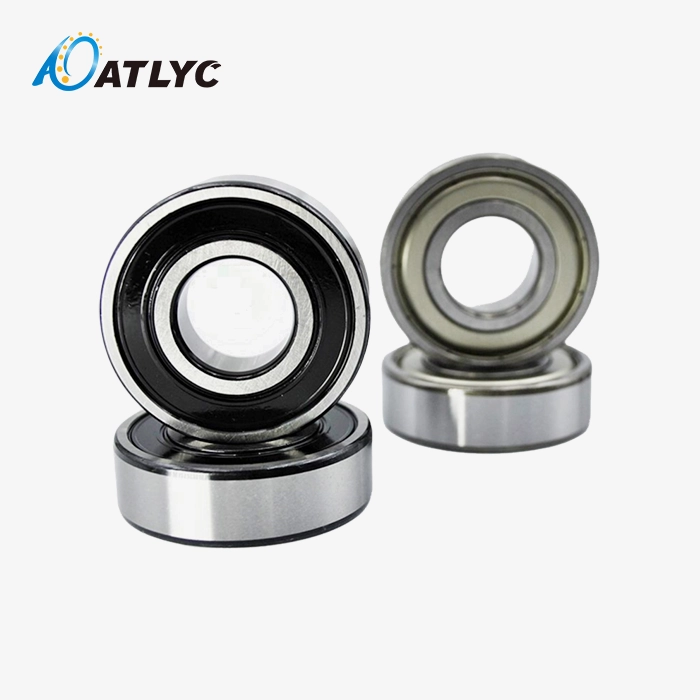
The Deep Groove Ball Bearing 60 series is worth your attention whether you are sourcing bearings for automotive assembly, industrial machinery, or automation equipment. These single-row radial ball bearings are rated under ISO Dimension Series 10 as an “Extra Light” metric series and offer a reduced cross-section compared to the bore diameter. This makes them the go-to option when radial space is restricted yet rotational speed and durability are non-negotiable. This article demystifies the true cost drivers, MOQ frameworks, and procurement techniques that can help your team make wiser, quicker sourcing choices.
What Is the Deep Groove Ball Bearing 60 Series?
Design Classification and Industry Role
The 60 series deep groove ball bearings belong to the “light” category of loads, with the 62 (medium) and 63 (heavy) series. The 60 series has a considerably smaller outside diameter and narrower breadth for a given bore diameter. This optimized design means lower rotational inertia, less friction torque, and greater limiting speeds – benefits of huge consequence in high-precision electric motors, robotic joints, and compact machine tool spindles.
Key Technical Specifications
Understanding the technical envelope of this bearing series helps procurement engineers match components to application demands with confidence.
| Parameter | Specification |
|---|---|
| Bore Diameter Range | 10 mm – 150 mm (standard metric sizes) |
| Precision Class | ISO P0 (ABEC-1) to P5/P4 (ABEC-5/7) |
| Internal Clearance | C2 (tight), CN (standard), C3/C4 (loose) |
| Material (Rings & Balls) | GCr15 / SAE 52100 Chrome Steel; AISI 440C Stainless Steel for corrosive environments |
| Ring Hardness | HRC 60–64 (post heat treatment) |
| Cage Options | Pressed steel, brass, or polyamide (nylon) |
| Sealing Options | Open, ZZ (metal shield), 2RS (rubber contact seal) |
These parameters define the operational ceiling for each variant. For high-speed applications exceeding 10,000 RPM — such as HVAC blower motors or servo drives — engineers typically select C3 clearance and a polyamide cage to accommodate thermal expansion and reduce cage wear.
Cost Factors for the 60 Series Deep Groove Ball Bearing
Material and Design Configuration
The biggest cost lever is choosing the right material. GCr15 chrome steel bearings are the most cost-effective choice for the great majority of automotive and industrial usage cases. AISI 440C stainless variations are much more expensive owing to raw material cost and more stringent heat treatment processes — yet they provide real benefit in food processing, marine, or chemical exposure settings.
The sealing design also shifts the pricing needle. Open bearings are the cheapest per unit and are used when there is already an external lubrication system in place. ZZ (metal shield) versions are more expensive, but they keep out coarse particulates. The 2RS rubber contact seal version is the most expensive per unit price in the series, but offers greater protection against moisture and dust and is the most suitable for industrial automation sealed-for-life applications.
Here is a representative unit price reference for standard GCr15 steel Deep Groove Ball Bearings 60 series bearings at commercial grade (P0):
| Bearing Size | Open (Est. USD/pc) | ZZ (Est. USD/pc) | 2RS (Est. USD/pc) |
|---|---|---|---|
| 6000 (10×26×8 mm) | $0.35 – $0.60 | $0.40 – $0.70 | $0.45 – $0.80 |
| 6004 (20×42×12 mm) | $0.65 – $1.10 | $0.75 – $1.25 | $0.85 – $1.40 |
| 6008 (40×68×15 mm) | $1.20 – $2.00 | $1.40 – $2.30 | $1.60 – $2.60 |
| 6012 (60×95×18 mm) | $2.50 – $4.00 | $2.80 – $4.50 | $3.20 – $5.00 |
Prices are indicative FOB China and vary with order volume, precision grade, and supplier.
Brand Tier and Volume Pricing
Premium European and Japanese brands — SKF, NSK, FAG, Timken — charge 3x to 5x costs above identical Chinese-manufactured bearings of the same accuracy grade. That premium is in brand equity, worldwide distribution infrastructure, and warranty support mechanisms. For high-volume production lines where the bearing is not a safety-critical single point of failure, OEMs may find appealing cost-performance alternatives in certified Chinese manufacturers working under IATF 16949 and ISO 9001 quality standards.
You always get tiered pricing when you buy in bulk. Most manufacturers provide significant savings at 1,000 pcs, 5,000 pcs, and 10,000 pcs per SKU levels. Consolidating orders for several bearing sizes with one supplier, instead of spreading them among numerous suppliers, builds negotiation power (and frequently better lead time predictability).
MOQ Structures and Practical Procurement Strategies
Typical MOQ Ranges
MOQ rules are driven by the economics of manufacturing runs and logistics. Generally, Chinese producers of generic 60 series deep groove ball bearings open and ZZ versions usually have MOQ structures of 100 to 500 units per size. Custom configurations (non-standard seals, unusual cage materials, higher accuracy grades P5/P4) often have larger minimum order quantities, 500 to 2000 pieces, because of the expense of setup and inspection.
There are various practical ways for mid- to big OEMs' procurement managers to negotiate MOQ flexibility. Blanket purchase orders with planned releases help suppliers with production planning and customers with inventory management. Consolidated SKU purchases combine numerous bearing sizes into one shipment, which reduces per-piece logistics expenses and sometimes results in reduced per-unit price. By creating a clear rolling forecast, suppliers also get the production insight needed to provide better terms.
Lead Times and Logistics Planning
Standard Deep Groove Ball Bearing 60 series sizes in GCr15 steel at P0 precision typically carry lead times of 15 to 30 days from certified Chinese manufacturers with adequate inventory buffers. Elevated precision grades (P5/P4) or non-standard materials may extend to 45–60 days. For international shipments to the US, Germany, or South Korea, sea freight adds 20–35 transit days; air freight compresses that window significantly at higher cost. Planning procurement cycles around these lead times prevents production downtime — a risk no OEM scheduling department wants to manage reactively.
Selecting the Right Bearing Variant for Your Application
The 60 series suits applications where shaft diameter is fixed but housing space is constrained. Here are the core selection criteria your engineering team should evaluate before finalizing a specification:
- Speed requirement: The 60 series supports 15–20% higher limiting speeds than an equivalent bore 62 series bearing due to reduced rolling element mass. For motor applications above 3,000 RPM, pair the 60 series with C3 clearance.
- Load profile: This series handles radial loads efficiently and moderate axial loads (approximately 25–50% of radial capacity). Heavy purely axial loads call for thrust or angular contact bearings instead.
- Environmental exposure: Sealed 2RS variants pre-lubricated with NLGI Grade 2 lithium grease (30–40% free space fill) serve sealed-for-life applications well. Open bearings need compatible external lubrication systems.
- Noise sensitivity: Precision grades P5 and P4 achieve Z3/V3 or Z4/V4 noise and vibration quality levels — essential for electric motor applications where acoustic performance is a customer-facing specification.
These criteria ensure the selected bearing variant delivers its rated service life rather than failing prematurely from a mismatched application condition. Partnering with a supplier offering application engineering support adds a further safeguard against costly specification errors.
Installation and Maintenance Essentials
Correct installation protects the bearing's designed service life. Press-fitting should apply force only to the ring being fitted — never through the rolling elements. Induction heating or bearing mounting kits allow controlled, damage-free installation for interference-fit inner rings.
Lubrication intervals depend on speed, temperature, and contamination exposure. Sealed 2RS units require no re-lubrication in normal service. Open bearings in industrial machinery typically require re-greasing at 2,000–4,000 operating hour intervals, adjusted for elevated temperatures or contaminated environments.
Conclusion
The Deep Groove Ball Bearing 60 series deep groove ball bearing is an uncommon product in the bearing world; small, quick, and adaptable enough to work in electric motors, robotic joints, and automobile assembly all at the same time. The procurement selections in this category are influenced by material grade, sealing configuration, accuracy class, and qualification of the provider. For OEMs and distributors in the US who are buying in volume, a certified Chinese manufacturer with IATF 16949 credentials and verified production capacity is a smart supply chain decision.
FAQ
1. What makes the 60 series different from the 62 series?
The 60 series carries a smaller outer diameter and narrower width for the same bore size, making it lighter and faster but with lower load capacity than the 62 (medium) series. Choose the 60 series when housing space is the binding constraint.
2. When should I specify C3 clearance?
C3 clearance suits high-speed applications (electric motors above 3,000 RPM) or elevated operating temperatures where thermal expansion of steel rings could otherwise reduce internal clearance to a damaging level.
3. Is MOQ negotiable with Chinese bearing manufacturers?
Yes. Blanket orders, multi-SKU consolidations, and transparent rolling forecasts all provide practical leverage for negotiating flexible MOQ terms with qualified suppliers.
4. What is the difference between 2RS and ZZ sealing?
2RS uses rubber contact seals — superior moisture and dust protection but slightly higher friction. ZZ uses non-contact metal shields — lower friction and higher speed capability but less protection against fine particulates or liquids.
Partner with ATLYC for Reliable Deep Groove Ball Bearing 60 Series Supply
ATLYC — Luoyang Auto Bearing Co., Ltd. — has been manufacturing precision bearings since 2010 across six production workshops with 120 skilled employees, holding both ISO 9001 and IATF 16949 certifications. As a trusted Deep Groove Ball Bearing 60 series supplier, we offer competitive pricing, flexible MOQ options, and application engineering support for OEMs and distributors in the US, Germany, South Korea, and beyond. Send your specifications to auto@lyautobearing.com to request a quote today.
References
1. SKF Group. (2023). Rolling Bearings Catalogue. SKF.
2. ISO. (2020). ISO 15:2017 — Rolling Bearings — Radial Bearings — Boundary Dimensions, General Plan.
3. NSK Ltd. (2022). Deep Groove Ball Bearings Technical Guide. NSK.
4. Bearing News. (2023). Global Bearing Market Trends and Procurement Strategies.
5. ABMA (American Bearing Manufacturers Association). (2022). ABMA Standard 9 — Load Ratings and Fatigue Life for Ball Bearings.
6. Schaeffler Group / FAG. (2023). FAG Deep Groove Ball Bearings Product Overview.
Learn about our latest products and discounts through SMS or email