- English
- French
- German
- Portuguese
- Spanish
- Russian
- Japanese
- Korean
- Arabic
- Greek
- German
- Turkish
- Italian
- Danish
- Romanian
- Indonesian
- Czech
- Afrikaans
- Swedish
- Polish
- Basque
- Catalan
- Esperanto
- Hindi
- Lao
- Albanian
- Amharic
- Armenian
- Azerbaijani
- Belarusian
- Bengali
- Bosnian
- Bulgarian
- Cebuano
- Chichewa
- Corsican
- Croatian
- Dutch
- Estonian
- Filipino
- Finnish
- Frisian
- Galician
- Georgian
- Gujarati
- Haitian
- Hausa
- Hawaiian
- Hebrew
- Hmong
- Hungarian
- Icelandic
- Igbo
- Javanese
- Kannada
- Kazakh
- Khmer
- Kurdish
- Kyrgyz
- Latin
- Latvian
- Lithuanian
- Luxembou..
- Macedonian
- Malagasy
- Malay
- Malayalam
- Maltese
- Maori
- Marathi
- Mongolian
- Burmese
- Nepali
- Norwegian
- Pashto
- Persian
- Punjabi
- Serbian
- Sesotho
- Sinhala
- Slovak
- Slovenian
- Somali
- Samoan
- Scots Gaelic
- Shona
- Sindhi
- Sundanese
- Swahili
- Tajik
- Tamil
- Telugu
- Thai
- Ukrainian
- Urdu
- Uzbek
- Vietnamese
- Welsh
- Xhosa
- Yiddish
- Yoruba
- Zulu
Spindle Bearing 71906C: Is It Right for High-Speed Machining?
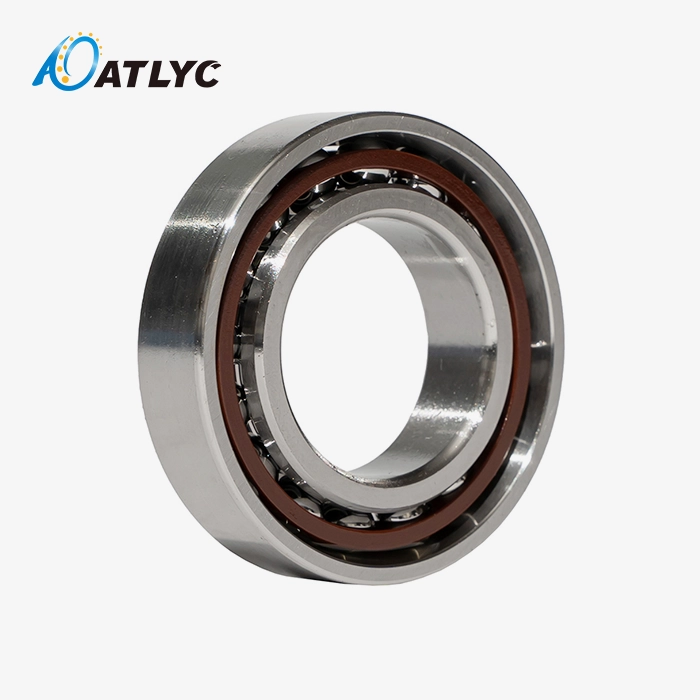
If you are looking for angular contact ball bearings for a high-speed spindle application, the Spindle Bearing 71906C is one candidate to consider seriously. This precise tool is designed for CNC grinding, PCB drilling, and other activities that regularly surpass 30,000 RPM, with a 15° contact angle and ISO P4/P2 tolerance class. Its Series 19 thin-section design offers radial stiffness without adding to your housing envelope. For industrial distributors and machine tool manufacturers who need to buy high-precision components in volume, the 71906C is a technically solid and practically feasible option that is worth a closer look by OEMs.
Understanding Spindle Bearing 71906C: Specifications and Technical Details
Core Dimensional and Material Properties
71906C Angular Contact Ball Bearing, 30mm bore x 47mm OD x 9mm wide. The suffix "C" indicates a 15° contact angle that reduces gyroscopic moments in high-speed rotation and provides more radial rigidity than the 25° "AC" version. The rolling elements are usually made of Vacuum Degassed Chrome Steel (100Cr6), but in hybrid designs, named HC71906C, Silicon Nitride (Si₃N₄) ceramic balls are used, which are about 60% lighter than steel, significantly reducing centrifugal force and internal heat generation at high speeds.
The cage materials include Phenolic Resin (TA) or PEEK (T85) with outer-ring guidance, which provide dimensional stability at extreme operating temperatures. These material selections are not random; they are the result of decades of tribological study proving that deformation of the cage during temperature cycling is one of the primary reasons for premature spindle failure.
Performance Benchmarks and Installation Notes
Here are the core performance parameters procurement engineers should verify before specifying this bearing:
- Tolerance class: ISO P4 (ABEC 7) or P2 (ABEC 9); radial runout of inner/outer ring must remain within 2.5 microns for P4 class
- Speed capability: NDM speed factor up to 2,000,000 mm·rpm with oil-air lubrication
- Universal pairing: Ground for universal matching (DU), enabling Back-to-Back (DB), Face-to-Face (DF), or Tandem (DT) mounting without shimming
- Lubrication: Spindle-grade grease (e.g., Klüber Isoflex) up to 70% of the limiting speed; oil-air systems mandatory near the rated speed ceiling
- Preload selection: Light (L) preload for maximum RPM and minimum heat; Medium (M) or Heavy (H) preload for cutting rigidity in milling operations
These parameters directly impact spindle accuracy and service life. Installers should never mix brands within a single bearing stack — internal geometry, oscillation ratios, and preload offset values differ between manufacturers such as SKF, FAG, and NSK, and mismatching leads to uneven load distribution and accelerated wear.
| Parameter | 71906C (Steel) | HC71906C (Hybrid Ceramic) |
|---|---|---|
| Bore × OD × Width | 30×47×9 mm | 30×47×9 mm |
| Contact Angle | 15° | 15° |
| Tolerance Class | P4 / P2 | P4 / P2 |
| Max ndm (oil-air) | ~1,500,000 | ~2,000,000 |
| Ball Material | 100Cr6 Chrome Steel | Si₃N₄ Ceramic |
| Typical Preload Options | L / M / H | L / M / H |
Comparing Spindle Bearing 71906C with Alternatives: Which Fits Your Application?
Spindle Bearing 71906C is commonly compared with 71905C (25*42*9 mm) or 71908C (40*62*12 mm) by customers. The 71905C is better for lower shaft diameters but has less radial load capability. The 71908C is capable of higher loads and is suited to medium-duty machining centers, but the larger cross-section adds rotational inertia that reduces spindle response at extremely high speeds.
Sometimes people would suggest replacing it with the common 6306 deep groove ball bearing to save money. This contrast seldom stands up to investigation. The 6306 does not have the angular contact geometry to handle combined axial-radial loads in a spindle stack. Its interior clearance is designed for general-purpose usage, not for sub-micron surface finish tolerances. Sub-micron-level surface roughness (Ra) is needed in the high-speed CNC grinding of automobile fuel injector bores, which can only be done with a matched pair of 71906C bearings to get the required raceway geometry.
| Bearing Type | Bore (mm) | Contact Angle | Speed Suitability | Primary Use Case |
|---|---|---|---|---|
| 71905C | 25 | 15° | Very High | Small precision spindles |
| 71906C | 30 | 15° | Very High | CNC grinding, PCB drilling |
| 71908C | 40 | 15° | High | Medium machining centers |
| 6306 | 30 | N/A (radial) | Moderate | General industrial machinery |
Ceramic ball variants add an important dimension to this comparison. Si₃N₄ balls extend grease service life by two to three times versus steel equivalents, reduce electrical conductivity risks in servo-driven spindles, and lower operating temperature rise — measurable advantages that justify the price premium in demanding production environments.
Procurement Guide: How to Source Spindle Bearing 71906C Efficiently
As it pertains to the supplier landscape of precision spindle bearings, it’s not just about unit pricing. Counterfeit bearings continue to be a known concern in the worldwide aftermarket – physically indistinguishable from authentic parts but not possessing the raceway shape and material integrity that characterize performance.
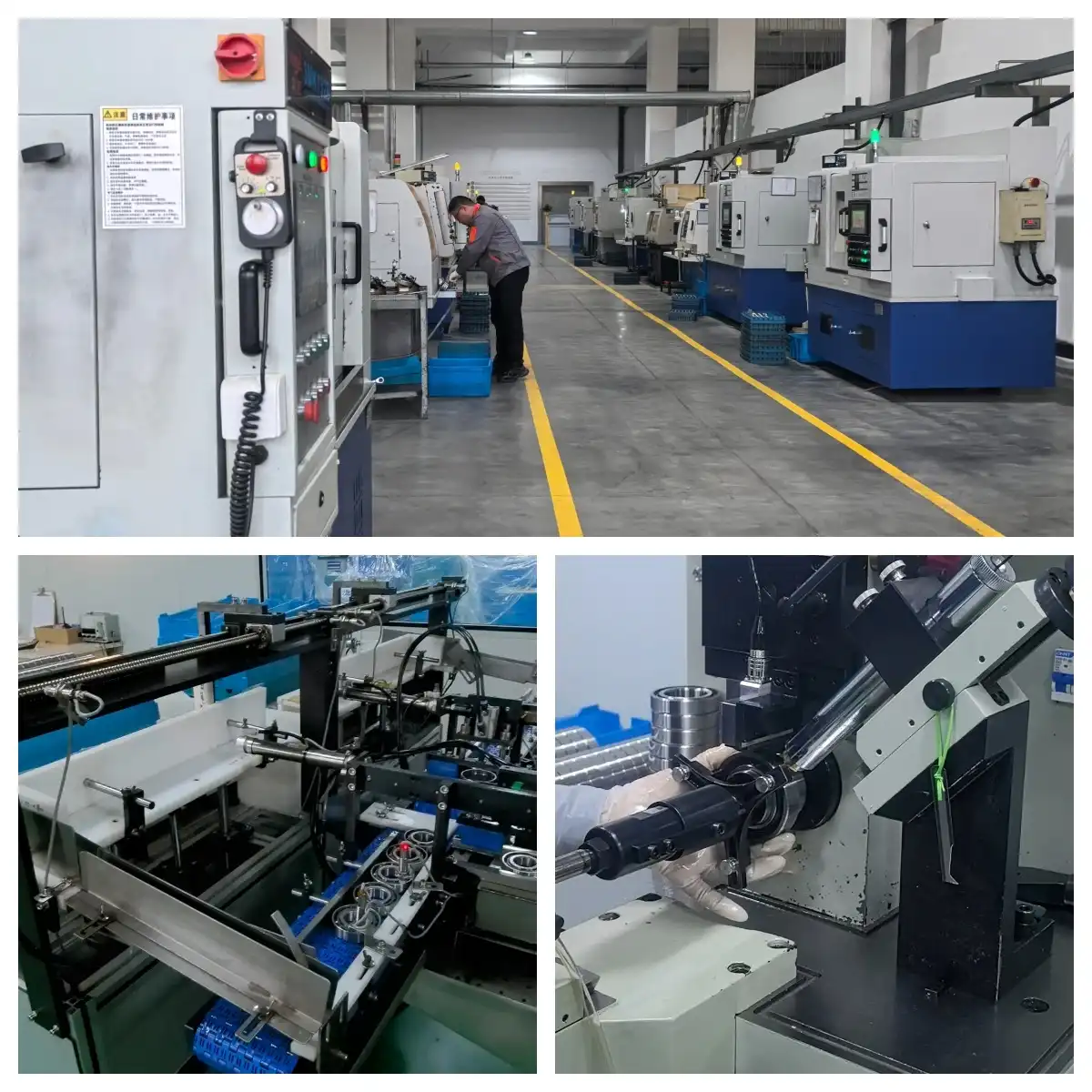
Reliable procurement is based on three verifiable criteria. Suppliers must be ISO 9001 and IATF 16949 certified, meaning every step of the manufacturing process is under quality control systems. Inspection records should contain Anderon meter vibration test findings at low, middle, and high frequency bands. High-frequency anomalies often reveal raceway micro-scratches or ball flaws unseen to the human eye. Bore deviation (Δdmp) and contact angle deviation (within 15° ±1°) should be traceable to each batch documentation.
OEM-authorized wholesalers and independent aftermarket channels have very different MOQ structures and lead times. Bulk wholesalers servicing automotive Tier 1 suppliers are often able to deliver competitive pricing on quantities beyond 500 units per SKU, while retaining quicker replenishment cycles via regional stocking programs.
Leading Brands and Supplier Insights for Spindle Bearing 71906C
NSK, FAG (Schaeffler), SKF, Timken, KOYO, and NTN each bring established reputations to the Spindle Bearing 71906Cdesignation. NSK is widely recognized for its ROBUSTLINE spindle bearing series, which incorporates proprietary steel grades and cage designs. FAG (Schaeffler) offers the B71906C.T.P4S.UL variant with optimized preload consistency for paired mounting. SKF positions its high-speed angular contact bearings around their SEAL-free, grease-packed configurations suited for retrofit markets.
Premium branded bearings carry correspondingly higher pricing, typically 3–5× the cost of certified Chinese-manufactured equivalents of comparable tolerance class. This gap has narrowed meaningfully as manufacturers operating under IATF 16949 quality frameworks have closed the precision manufacturing gap that existed a decade ago. Purchasing managers at global OEMs increasingly evaluate certified Chinese suppliers not as a fallback but as a strategic option for scale and supply continuity.
Is Spindle Bearing 71906C the Optimal Choice for Your High-Speed Machining Needs?
If you want shaft diameters in the vicinity of 30mm, speeds above 20,000 RPM, and surface polish requirements that allow no tolerance for spindle runout, then the 71906C bearing is the right bearing for your application. The combination of stiffness, speed capacity, and small cross-section of this bearing is hard to match with alternatives in high-value applications such as CNC internal grinding of automobile components, PCB router spindles, and robotic surgical joint actuators.
Where the 71906C may not be best suited: Heavy interrupted cut milling operations that create prolonged high axial stresses are better suited to the 71906AC (25° contact angle) or a paired 71908C configuration. In the end, it is a matter of the ratio of radial to axial load, the desired RPM range, and the permissible heat budget inside the spindle housing.
Conclusion
The Spindle Bearing 71906C delivers a well-defined technical value proposition for high-speed precision machining. Its 15° contact angle, thin-section geometry, and compatibility with ceramic ball variants make it a credible specification choice for CNC spindle designers and procurement teams sourcing angular contact bearings at volume. When specified correctly, installed as matched pairs, and maintained with appropriate lubrication, it reliably supports operations that demand micron-level accuracy over extended service intervals. Confirm tolerance class, preload designation, and cage material before ordering — these details determine whether the bearing meets your specific production environment.
FAQ
1. What is the difference between 71906C and 71906AC?
The "C" suffix indicates a 15° contact angle, which optimizes radial stiffness and high-speed performance. The "AC" suffix indicates a 25° contact angle, which handles greater axial loads but reduces the maximum allowable rotational speed. Use the C variant for high-speed finish grinding; select AC for heavier-duty milling where axial cutting forces dominate.
2. When should I choose hybrid ceramic balls for this bearing?
Hybrid ceramic (Si₃N₄) balls are the right choice when operating speeds exceed 30,000 RPM, when electrical insulation is required in servo spindle systems, or when extending re-lubrication intervals is a maintenance priority. Ceramic balls reduce internal heat generation and extend grease life by two to three times versus all-steel configurations.
3. How do I select the correct preload class?
Light preload maximizes rotational speed and minimizes heat generation — suitable for high-speed grinding spindles. Medium or heavy preload increases stiffness to resist cutting forces — appropriate for milling centers where tool deflection must be minimized, accepting a reduced RPM ceiling in exchange.
4. Can I mix bearing brands within one spindle stack?
No. Internal geometries, oscillation ratios, and preload offset grinding values differ between manufacturers. Mixing brands within a single spindle stack produces uneven load distribution, accelerated raceway wear, and potentially catastrophic spindle failure during precision operations.
Partner with ATLYC for Reliable Spindle Bearing 71906C Supply
ATLYC — Luoyang Auto Bearing Co., Ltd. — has manufactured precision bearings since 2010, holding both ISO 9001 and IATF 16949 certifications across six production workshops. As a trusted Spindle Bearing 71906C manufacturer, we serve OEMs and distributors in the US, Germany, South Korea, and beyond. Contact our engineering team today at auto@lyautobearing.com to request specifications, samples, or volume pricing.
References
1. NSK Ltd. (2022). Super Precision Bearings — Technical Catalog. NSK Global.
2. Schaeffler Group (FAG). (2023). Spindle Bearings: Design and Application. Schaeffler Technical Publications.
3. SKF Group. (2021). High-Speed Angular Contact Ball Bearings — Application Engineering Guide. SKF Publications.
4. International Organization for Standardization. (2014). ISO 492: Rolling Bearings — Radial Bearings — Dimensional and Geometrical Tolerances.
5. IATF (International Automotive Task Force). (2016). IATF 16949:2016 — Quality Management System Requirements for Automotive Production.
6. Timken Company. (2020). Precision Bearings Catalog — Angular Contact Ball Bearings. Timken Engineering Catalog.
Learn about our latest products and discounts through SMS or email