- English
- French
- German
- Portuguese
- Spanish
- Russian
- Japanese
- Korean
- Arabic
- Greek
- German
- Turkish
- Italian
- Danish
- Romanian
- Indonesian
- Czech
- Afrikaans
- Swedish
- Polish
- Basque
- Catalan
- Esperanto
- Hindi
- Lao
- Albanian
- Amharic
- Armenian
- Azerbaijani
- Belarusian
- Bengali
- Bosnian
- Bulgarian
- Cebuano
- Chichewa
- Corsican
- Croatian
- Dutch
- Estonian
- Filipino
- Finnish
- Frisian
- Galician
- Georgian
- Gujarati
- Haitian
- Hausa
- Hawaiian
- Hebrew
- Hmong
- Hungarian
- Icelandic
- Igbo
- Javanese
- Kannada
- Kazakh
- Khmer
- Kurdish
- Kyrgyz
- Latin
- Latvian
- Lithuanian
- Luxembou..
- Macedonian
- Malagasy
- Malay
- Malayalam
- Maltese
- Maori
- Marathi
- Mongolian
- Burmese
- Nepali
- Norwegian
- Pashto
- Persian
- Punjabi
- Serbian
- Sesotho
- Sinhala
- Slovak
- Slovenian
- Somali
- Samoan
- Scots Gaelic
- Shona
- Sindhi
- Sundanese
- Swahili
- Tajik
- Tamil
- Telugu
- Thai
- Ukrainian
- Urdu
- Uzbek
- Vietnamese
- Welsh
- Xhosa
- Yiddish
- Yoruba
- Zulu
How Are CRBC Series Crossed Roller bearing Tested?
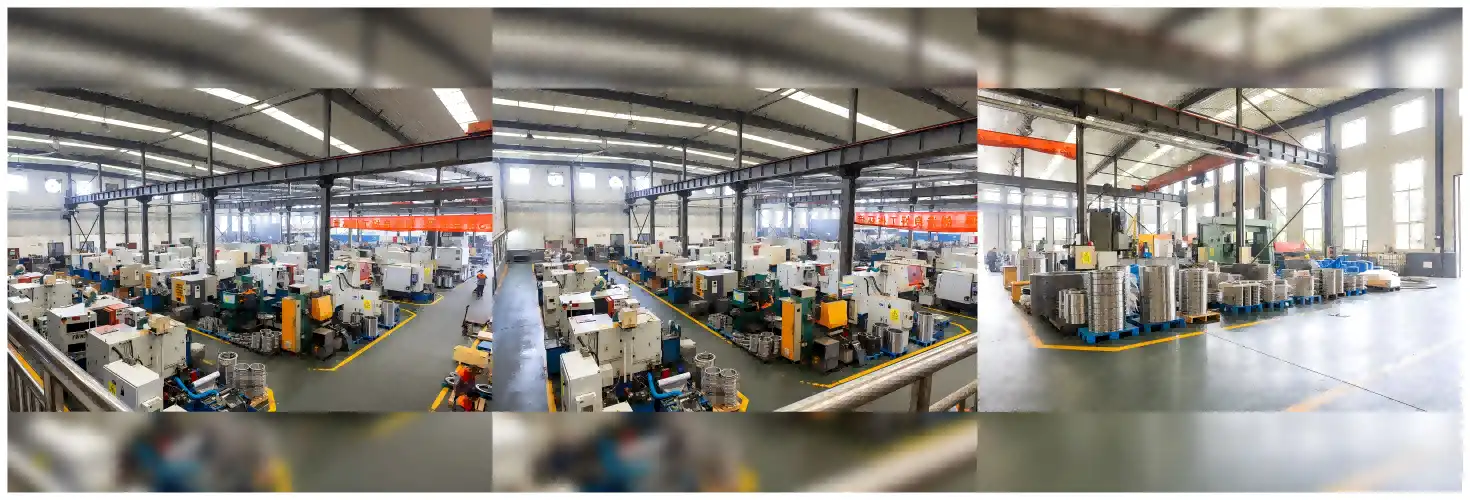
When obtaining precise bearings for demanding industrial applications, it’s as important to know how a product is tested before it reaches your site as it is to know the specification sheet itself. CRBC Series Crossed Roller bearings are subjected to a thorough multi-level testing process. This includes dimensional correctness, load performance, rotational accuracy, thermal endurance, and long-term durability. The design of each test is meant to verify that the integrated ring structure, the metal cage, and the labyrinth sealing system are reliable under the specific loads encountered in heavy-duty CNC machining machines, robotic welding arms, and high-precision indexing tables.
Understanding the Testing Objectives for CRBC Series Crossed Roller Bearings
Precision machinery leaves no margin for bearing underperformance. When a robotic welding arm carries a moment load through thousands of cycles per shift, or a CNC rotary table demands micron-level runout stability over months of continuous operation, the bearing at the joint must behave exactly as engineered. That is why testing objectives for crossed roller bearings are defined before a single unit leaves the production floor.
Key KPIs for bearing validation of CRBC include radial and axial runout tolerance, static and dynamic load capacity, vibration amplitude, acoustic emission levels, consistency of starting torque, and thermal stability up to 120°C. The metrics are precisely aligned with the quality management criteria of ISO 9001 and IATF 16949, both of which Luoyang Auto Bearing Co., Ltd. is certified to. Verifying each KPI methodically gives procurement teams the confidence that each item in a manufacturing batch is working within the same tight tolerance band, with no deviation to cascade into machine downtime.
Detailed Testing Procedures Applied to CRBC Series Bearings
Testing a high-rigidity crossed roller bearing is not a single-pass inspection. It is a sequential validation process where each stage builds on the previous one, narrowing the acceptable population to only those units that meet or exceed benchmark requirements.
Dimensional and Surface Inspection
All CRBC Bearings are subjected to first dimensional testing using Coordinate Measuring Machines (CMMs). Integral inner and outer rings are machined from GCr15/SUJ2 high CRBC Series Crossed Roller bearing steel and heat treated to 58–64 HRC and are measured to design tolerances on a micron level. Profilometers check raceways for surface roughness to validate the modest curvature profile for maximum roller-to-raceway contact area. To avoid abnormalities in spacing that might lead to torque variation during operation, individual verification of the roller geometry is performed before cage assembly.
Load and Rotational Accuracy Testing
After dimensional clearance, each unit enters load simulation. Test rigs apply axial, radial, and combined moment loads replicating real service conditions in robotic joints and precision indexing tables. Rotational accuracy is then measured using laser interferometry systems capable of detecting runout deviations at the sub-micron scale. The table below summarizes the standard test parameters applied at this stage.
| Test Parameter | Method | Acceptance Criterion |
|---|---|---|
| Radial runout (inner ring) | CMM + laser interferometry | ≤ P4/P2 tolerance per ISO 492 |
| Axial runout | CMM measurement | ≤ P4/P2 tolerance per ISO 492 |
| Starting torque | Torque sensor at rated preload | Within specified preload class |
| Dynamic load capacity | Rig simulation at rated Cr | No raceway deformation after test |
| Moment load resistance | Combined load test fixture | No measurable tilt deviation |
Vibration, Noise, and Thermal Endurance Testing
Vibration and acoustic emission testing is performed to ISO/ANSI bearing noise guidelines. The bearing is rotated under mild radial strain, and sensors measure vibration amplitude in low, medium, and high frequency bands. Units with abnormal signatures are rejected. Then the bearings are put through thermal cycling tests, exposed to continuous temperatures of up to 120°C at lengthy duty cycles. This validates that the brass or steel metal cage maintains dimensional stability, and that the labyrinth sealing system maintains lubrication integrity throughout. The objective of this stage is to show the benefit of the CRBC design over plastic cage alternatives that might distort due to extended exposure to heat.
Comparative Analysis: CRBC Series Testing vs. Industry Benchmarks
Understanding where CRBC testing stands relative to established players like NSK and THK helps procurement managers evaluate value with greater clarity. NSK and THK both publish rigorous testing documentation; however, their standard product lines typically target general-purpose precision applications. The CRBC integral ring configuration addresses a specific gap—applications requiring 20–30% greater rigidity than split-ring crossed roller designs—and the testing protocol reflects that specialization.
The table below compares selected testing dimensions across categories.
| Testing Dimension | CRBC Series (ATLYC) | Typical Split-Ring CR Bearing |
|---|---|---|
| Ring structure tested | Integral (no assembly gap) | Split outer ring assembly |
| Operating temperature validation | Up to 120°C (metal cage) | Typically up to 80°C (plastic cage) |
| Precision grade certified | P4 / P2 | P5 / P4 (varies by brand) |
| Certification framework | ISO 9001 + IATF 16949 | ISO 9001 (IATF varies) |
| Application-specific load test | Robotic + heavy CNC profiles | General industrial profiles |
The IATF 16949 certification held by Luoyang Auto Bearing Co., Ltd. is particularly relevant here. Originally developed for the automotive supply chain, IATF 16949 demands process control and defect prevention at a level that exceeds standard ISO 9001 requirements alone. For OEMs and industrial equipment manufacturers sourcing CRBC Series Crossed Roller bearings, this dual certification signals a quality system geared toward zero-defect production rather than detection-based correction.
Maintenance Implications Derived from Testing Results
Testing data does not expire at the factory gate. The wear patterns, thermal signatures, and torque drift profiles recorded during endurance testing directly inform predictive maintenance intervals for field-deployed units. Engineering teams working with CRBC bearings can use these baselines to schedule lubrication replenishment through the bearing's dedicated grease injection holes before degradation begins, rather than reacting to failure signals.
Here are the core maintenance practices supported by CRBC test findings:
- Lubrication interval calibration: Thermal endurance data indicates that EP lithium-based grease replenishment through the labyrinth seal's injection ports should be scheduled based on cumulative operating hours at rated temperature, not fixed calendar intervals. This prevents both under-lubrication and over-packing, which can elevate cage stress.
- Torque verification at installation: Starting torque test results establish the preload class reference. Technicians should verify that installation torque applied to mounting bolts matches manufacturer specifications to preserve the preload condition that was validated during testing.
- Alignment tolerance monitoring: Rotational accuracy test data defines the maximum allowable shaft and housing misalignment before runout exceeds P4/P2 class limits. In heavy CNC machining environments, periodic alignment checks using dial indicators help maintain this boundary.
These practices translate directly into extended service life and reduced unplanned downtime—outcomes that lower the total cost of ownership far below what the unit price alone suggests.
Procurement Insights: What Testing Means for Buyers of CRBC Series Bearings
Test documentation for a crossing roller bearing provider as a procurement tool, not merely an engineering artifact for worldwide B2B customers. Quality engineers may do technical due diligence before physical samples are available, using available test reports with CMM data, load simulation results, and thermal endurance records. This visibility, in turn, speeds certification times.
Testing rigor also impacts supply planning. All CRBC bearings go through the whole sequence before being released; therefore, lead times are based on actual manufacturing readiness, not wishful thinking scheduling. Minimum order quantities are tiered to allow for prototype review and volume production runs, providing procurement teams flexibility in their sourcing approach. When considering the overall cost of ownership, such as verified service life, shorter maintenance intervals, and the cost avoidance of fewer unscheduled shutdowns, buyers regularly find that precision grades P4 and P2 CRBC bearings generate tangible returns throughout their operational life.
Conclusion
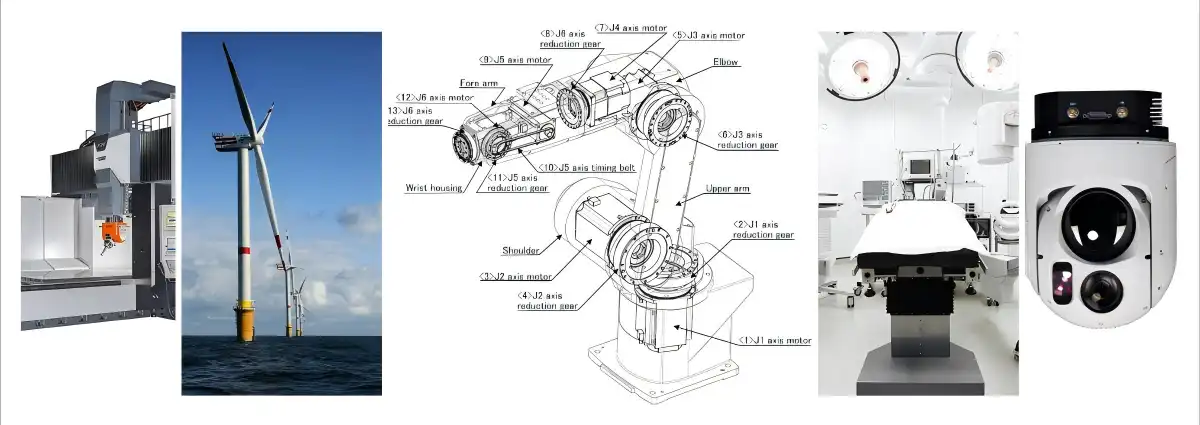
The testing process used on CRBC Series Crossed Roller bearings includes all the dimensions that are important to industrial and OEM procurement teams: dimensional precision, multi-axis load capability, rotational accuracy, thermal stability, and long-term durability. The integrated ring structure, the metal cage technology, and the labyrinth sealing system are qualified in dedicated test phases and not by general inspection processes. For producers of heavy CNC machining centers, robotic welding lines, or precision indexing systems, this specified validation process turns a bearing specification into a quantitative performance guarantee. Working with an ISO 9001 and IATF 16949 certified company provides an additional level of trust in their processes, which encourages confidence in the supply chain over the long run.
FAQ
1. Are CRBC bearings tested individually or by batch sampling?
At Luoyang Auto Bearing Co., Ltd., dimensional and surface inspections are conducted on every unit, while load simulation, vibration, and thermal endurance tests follow statistically validated sampling plans aligned with ISO 9001 process control requirements. Critical precision grades P4 and P2 receive more intensive individual verification given their tolerance sensitivity.
2. Can buyers obtain test reports for technical due diligence?
Yes. Full CMM dimensional reports, rotational accuracy records, and load test certificates are available upon request. These documents support engineering qualification processes and regulatory compliance reviews in markets including the US, Germany, and South Korea.
3. What failure modes does endurance testing most commonly reveal?
Thermal endurance and sustained load cycles most frequently surface premature cage wear in units where material or heat treatment deviates from specification. The CRBC metal cage—brass or steel—was specifically selected to eliminate the cage deformation mode that accounts for a significant share of crossed roller bearing field returns in high-temperature applications.
4. How does the integral ring structure affect testing compared to split-ring designs?
Because the CRBC integral ring eliminates assembly gaps, dimensional validation focuses on the ring as a single machined component rather than a bolted assembly. This removes a variable that can introduce runout deviation in split-ring designs and simplifies the CMM inspection sequence.
Source CRBC Series Crossed Roller Bearings from ATLYC — Request a Technical Consultation Today
ATLYC, operated by Luoyang Auto Bearing Co., Ltd., has delivered precision crossed roller bearings to OEMs and industrial distributors across the US, Germany, South Korea, and beyond since 2010. Our CRBC Series Crossed Roller bearing supplier capabilities include P4/P2 precision grades, full ISO 9001 and IATF 16949 certification, and documented test reports for every production batch. Whether you are qualifying a new bearing source or scaling an existing supply arrangement, contact our engineering team at auto@lyautobearing.com to request samples and technical documentation.
References
1. International Organization for Standardization. (2023). ISO 492: Rolling bearings — Radial bearings — Dimensional and geometrical tolerances.
2. International Organization for Standardization. (2016). ISO 9001:2015 Quality management systems — Requirements.
3. IATF. (2016). IATF 16949:2016 — Quality management system requirements for automotive production and relevant service parts organizations. IATF.
4. NSK Ltd. (2022). Rolling Bearing Technical Report: Crossed Roller Bearings for Precision Applications. NSK Technical Journal.
5. THK Co., Ltd. (2023). Crossed Roller Ring Technical Catalog. THK. https://www.thk.com/?q=en/node/3783
6. Brändlein, J., Eschmann, P., Hasbargen, L., & Weigand, K. (1999). Ball and Roller Bearings: Theory, Design and Application (3rd ed.).
Learn about our latest products and discounts through SMS or email