- English
- French
- German
- Portuguese
- Spanish
- Russian
- Japanese
- Korean
- Arabic
- Greek
- German
- Turkish
- Italian
- Danish
- Romanian
- Indonesian
- Czech
- Afrikaans
- Swedish
- Polish
- Basque
- Catalan
- Esperanto
- Hindi
- Lao
- Albanian
- Amharic
- Armenian
- Azerbaijani
- Belarusian
- Bengali
- Bosnian
- Bulgarian
- Cebuano
- Chichewa
- Corsican
- Croatian
- Dutch
- Estonian
- Filipino
- Finnish
- Frisian
- Galician
- Georgian
- Gujarati
- Haitian
- Hausa
- Hawaiian
- Hebrew
- Hmong
- Hungarian
- Icelandic
- Igbo
- Javanese
- Kannada
- Kazakh
- Khmer
- Kurdish
- Kyrgyz
- Latin
- Latvian
- Lithuanian
- Luxembou..
- Macedonian
- Malagasy
- Malay
- Malayalam
- Maltese
- Maori
- Marathi
- Mongolian
- Burmese
- Nepali
- Norwegian
- Pashto
- Persian
- Punjabi
- Serbian
- Sesotho
- Sinhala
- Slovak
- Slovenian
- Somali
- Samoan
- Scots Gaelic
- Shona
- Sindhi
- Sundanese
- Swahili
- Tajik
- Tamil
- Telugu
- Thai
- Ukrainian
- Urdu
- Uzbek
- Vietnamese
- Welsh
- Xhosa
- Yiddish
- Yoruba
- Zulu
Tapered Roller Bearing 30305 for Automotive and Industrial Use
If your operation requires dependable load control in both radial and axial directions, the tapered roller bearing 30305 is worth careful consideration. This metric single-row bearing is developed to meet ISO 355 and DIN 720 requirements and provides dependable performance for automobile gearboxes, industrial reducers, and agricultural equipment. 15 years of experience producing quality bearings for OEMs, distributors, and industrial equipment manufacturers in the US, Germany, South Korea, and across the world. ATLYC (Luoyang Auto Bearing Co., Ltd.) This guide takes you through what you need to know before you purchase.
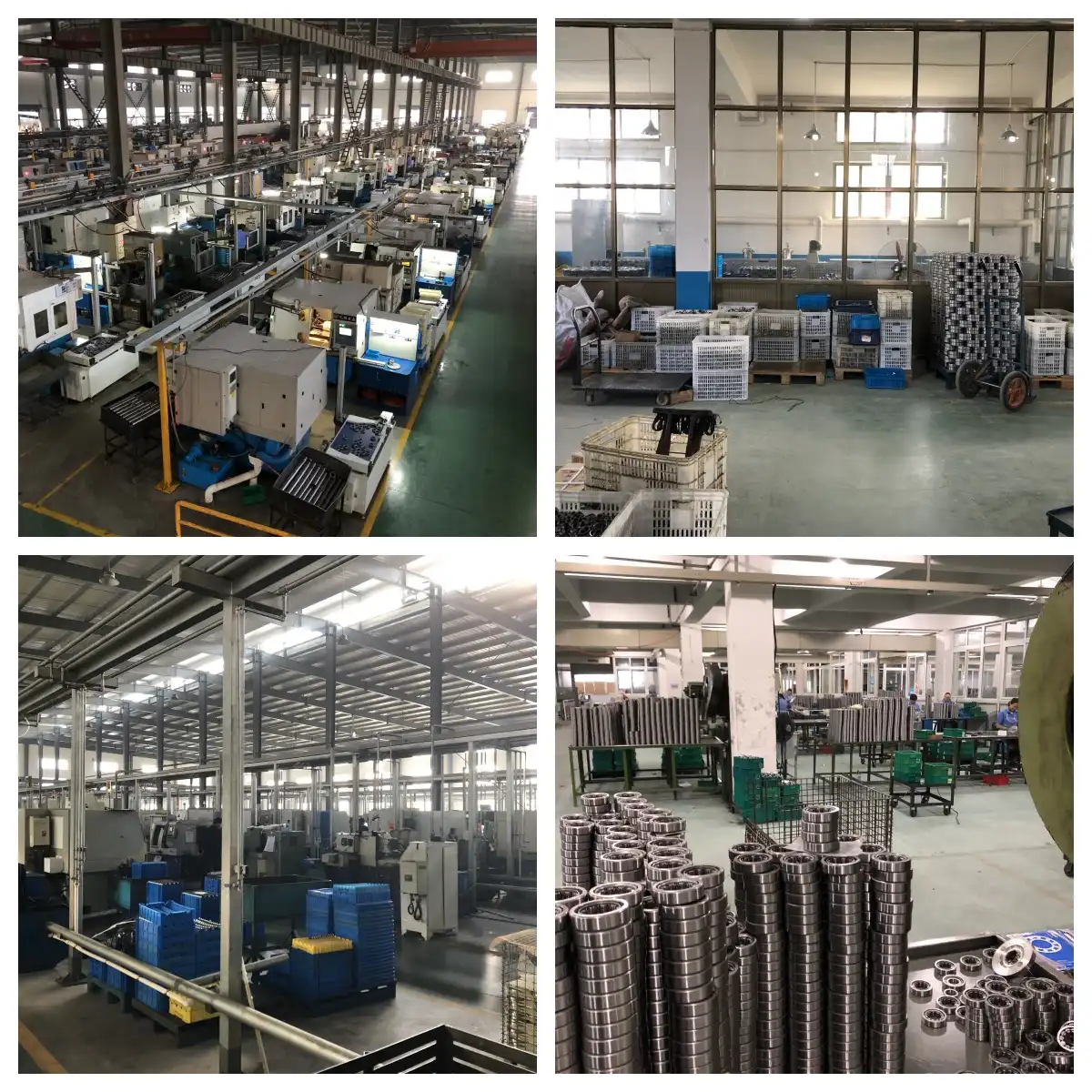
Understanding the 30305 Bearing: Specifications and Dimensions
The 30305 bearing is built around a separable cup-and-cone design. The inner ring assembly (cone) and the outer ring (cup) mount independently, which solves real assembly challenges in tight automotive transmission housings where preload adjustment is non-negotiable.
Here are the key dimensional and material parameters that define this bearing:
| Parameter | Value |
|---|---|
| Bore Diameter (d) | 25 mm |
| Outer Diameter (D) | 62 mm |
| Assembly Width (T) | 18.25 mm |
| Basic Dynamic Load Rating (Cr) | ~46.5 kN |
| Static Load Rating (Cor) | ~36.5 kN |
| Operating Temperature Range | -30°C to +120°C |
| Material | SAE 52100 (GCr15) vacuum-degassed chrome steel |
| Hardness | HRC 60–64 |
| Cage Type | Pressed steel (J-type) |
The raceways are super-finished to a surface roughness below Ra 0.2 µm. This assists the generation of the hydrodynamic lubrication layer and greatly eliminates metal-to-metal contact. The logarithmic raceway design provides for uniform Hertzian contact stress distribution over the whole roller length. This feature eliminates edge loading in case of small shaft misalignment, a common cause of early failure in high-torque gearboxes.
GCr15 chrome steel core is vacuum degassed to reduce non-metallic impurities. The after-heat-treatment hardness is HRC 60-64, providing the bearing with excellent fatigue resistance under cyclical stress. For applications over 120°C, specific stabilizing treatments (coded S0 to S4) are available to avoid dimensional instability.
Comparing the 30305 with Related Bearing Models and Types
Buyers frequently ask how the tapered roller bearing 30305 compares to nearby series or alternative bearing types. Here's a direct comparison that cuts through the confusion.
| Model | Bore (mm) | OD (mm) | Width (mm) | Relative Load Capacity |
|---|---|---|---|---|
| 30305 | 25 | 62 | 18.25 | High |
| 30205 | 25 | 52 | 16.25 | Moderate |
| 30306 | 30 | 72 | 20.75 | Higher |
| 32305 | 25 | 62 | 25.25 | Higher axial capacity |
The 30305 has a much bigger OD than the 30205: 62 mm vs 52 mm. This means it can carry much greater loads at the same bore size. The 32305 has the same boundary dimensions in bore and OD but has greater breadth and better axial load capability; hence, it is desirable in situations where thrust loads are prominent.
Tapered Roller vs. Ball Bearings: Which Fits Your Application?
Ball bearings are good for carrying pure radial loads and may run faster with less friction. Tapered roller bearings work better when the load is a combination of radial and thrust loads, for example, the pinion shaft in a differential. The cone-guided roller shape provides the 30305 with a structural advantage that no deep groove ball bearing can match under strong combined loads.
Brand Landscape for 30305 Procurement
Timken and SKF continue to be the worldwide standard for tapered roller bearings, especially in tough OEM applications. NSK achieves a high degree of dimensional uniformity across its product range. For instance, Chinese manufacturers such as ATLYC work toward ISO 9001 and IATF 16949 certifications; they offer competitive cost-performance ratios with proven dimensional accuracy. A growing choice for distributors who need to manage total procurement cost without compromising quality standards.
Installation, Maintenance, and Troubleshooting
Proper installation is where bearing life is often won or lost. The cup and cone must be mounted separately with the correct interference fit. Mixing cups and cones from different manufacturers is inadvisable — even when boundary dimensions match ISO standards, internal geometry variations in contact angles and roller profiles can create mismatched bearing assemblies.
Setting Preload Correctly
Preload adjustment is critical for this bearing type. Insufficient preload causes vibration and shaft float; excessive preload generates heat and accelerates raceway wear. Endplay typically ranges from 0.025 mm to 0.075 mm depending on application. Always verify this against the OEM specification rather than relying on general estimates.
Lubrication and Routine Inspection
Lithium-complex grease or mineral oil lubricants are chemically compatible with the standard GCr15 material. Replenishment intervals depend on operating temperature, speed, and contamination exposure. For bearings in agricultural disc harrows or conveyor systems operating in dusty environments, shorter re-lubrication intervals and compatible sealing solutions are strongly recommended. Regular oil analysis helps detect spalling — the most common failure mode — before catastrophic damage occurs.
Procurement Guide: Sourcing a Reliable 30305 Supplier
Buying the right bearing is only half the equation. Sourcing it from a credible supplier protects your supply chain from quality inconsistencies, counterfeit components, and delivery disruptions. Here are the core checkpoints every procurement team should validate:
- Certification Verification: Demand ISO 9001 and IATF 16949 certificates. These are non-negotiable for automotive-grade components. ATLYC holds both, with manufacturing practices validated across six workshop categories.
- Dimensional Tolerance Compliance: Confirm the supplier tests to ISO 492 Class Normal or P6 tolerance. Bore, OD, and width must meet strict verification thresholds to guarantee interchangeability and proper interference fits.
- Vibration and Noise Testing: 100% vibration screening using Anderon meters (Low, Medium, and High bands) should be standard practice, not optional — it screens out raceways with waviness or chatter marks resulting from grinding process deviations.
- Material Traceability: Ask for microstructure analysis reports confirming non-metallic inclusion levels and retained austenite content aligned with ASTM A295 standards.
These checkpoints reduce Total Cost of Ownership by catching quality problems at the source rather than on your production floor. Procurement professionals who evaluate suppliers on these criteria build more resilient supply chains and negotiate from a position of informed confidence.
Advantages of the 30305 in Automotive and Industrial Applications
The tapered roller bearing 30305 earns its place in demanding applications because of genuine engineering merit, not just price. Here is where it consistently outperforms alternatives:
- Automotive Transmissions and Differentials: The bearing handles intense axial thrust from helical gears while maintaining shaft alignment under rapidly shifting torque loads. This directly mitigates gear tooth wear and reduces transmission overhaul frequency.
- Agricultural Machinery Hubs: In disc harrows and seeder hubs, the bearing absorbs severe static and shock loads on uneven terrain. Its compatibility with robust sealing systems makes it viable in high-contamination field environments where abrasive ingress is persistent.
- Industrial Reducers and Conveyor Systems: Deployed in back-to-back or face-to-face paired arrangements, the 30305 maintains the rigidity heavy-duty belt conveyor rollers require under sustained radial belt tension and vibration.
These advantages translate directly to reduced unplanned downtime, lower maintenance intervals, and a favorable return on investment over the bearing's full service life. For global distributors and OEMs managing multi-market supply programs, these operational characteristics make the 30305 a dependable specification choice.

Conclusion
The tapered roller bearing 30305 combines proven dimensional standards, superior load-handling geometry, and broad application compatibility. Whether you're sourcing for automotive OEM programs, industrial machinery builds, or aftermarket replacement supply, understanding the specifications, installation requirements, and supplier evaluation criteria outlined here protects both product quality and supply chain continuity. With 15 years of verified manufacturing experience, ATLYC brings precision, certification, and scalable production capacity to every procurement relationship.
FAQ
1. How does the 30305 differ from the 30205 bearing?
Both share a 25 mm bore, but the 30305 has a larger outer diameter (62 mm vs. 52 mm) and greater width (18.25 mm vs. 16.25 mm), yielding significantly higher load ratings and longer service life in heavier-duty applications.
2. Is preload setting mandatory during installation?
Yes. Correct preload or endplay setting is critical to optimize rigidity and bearing life. Loose settings cause vibration; excessive preload causes overheating and accelerated wear.
3. Can the 30305 operate above 150°C continuously?
Standard GCr15 bearings are dimensionally stable up to 120°C. Continuous operation above 150°C requires heat stabilization treatments (S0–S4 codes) and high-temperature compatible grease.
4. What is the most frequent failure mode?
Spalling of the raceways, caused by insufficient lubrication or incorrect preload, is the most common failure mode. Periodic oil analysis effectively predicts lifecycle end before visible damage occurs.
5. Are cups and cones interchangeable between brands?
ISO boundary dimensions allow full-assembly interchangeability, but mixing cups and cones from different manufacturers is not recommended due to internal geometry variations in profiling and contact angles.
Partner with ATLYC for Your 30305 Tapered Roller Bearing Supply
ATLYC has served OEMs and distributors across the US, Germany, South Korea, and beyond since 2010, backed by ISO 9001 and IATF 16949 certifications. As a verified tapered roller bearing 30305 manufacturer, we combine precision manufacturing with scalable production across six workshops and 120 skilled professionals. Request a quote or technical consultation today — reach our team directly at auto@lyautobearing.com to explore our full product catalog.
References
1. Palmgren, A. (1945). Ball and Roller Bearing Engineering. SKF Industries. Referenced in the section on logarithmic raceway profiles and edge loading prevention.
2. ISO 355:2019. Rolling Bearings — Tapered Roller Bearings — Boundary Dimensions and Series Designations. International Organization for Standardization.
3. Tallian, T. E. (1992). Failure Atlas for Hertz Contact Machine Elements. ASME Press. Referenced in the lubrication and spalling failure mode discussion.
4. ABMA Standard 13 (2013). Measurement of Vibration on Antifriction Bearings. American Bearing Manufacturers Association.
5. IATF 16949:2016. Quality Management System Requirements for Automotive Production and Relevant Service Parts Organizations. IATF.
6. Timken Company (2021). Bearing Failure Analysis. The Timken Company Engineering Manual.
Learn about our latest products and discounts through SMS or email