- English
- French
- German
- Portuguese
- Spanish
- Russian
- Japanese
- Korean
- Arabic
- Greek
- German
- Turkish
- Italian
- Danish
- Romanian
- Indonesian
- Czech
- Afrikaans
- Swedish
- Polish
- Basque
- Catalan
- Esperanto
- Hindi
- Lao
- Albanian
- Amharic
- Armenian
- Azerbaijani
- Belarusian
- Bengali
- Bosnian
- Bulgarian
- Cebuano
- Chichewa
- Corsican
- Croatian
- Dutch
- Estonian
- Filipino
- Finnish
- Frisian
- Galician
- Georgian
- Gujarati
- Haitian
- Hausa
- Hawaiian
- Hebrew
- Hmong
- Hungarian
- Icelandic
- Igbo
- Javanese
- Kannada
- Kazakh
- Khmer
- Kurdish
- Kyrgyz
- Latin
- Latvian
- Lithuanian
- Luxembou..
- Macedonian
- Malagasy
- Malay
- Malayalam
- Maltese
- Maori
- Marathi
- Mongolian
- Burmese
- Nepali
- Norwegian
- Pashto
- Persian
- Punjabi
- Serbian
- Sesotho
- Sinhala
- Slovak
- Slovenian
- Somali
- Samoan
- Scots Gaelic
- Shona
- Sindhi
- Sundanese
- Swahili
- Tajik
- Tamil
- Telugu
- Thai
- Ukrainian
- Urdu
- Uzbek
- Vietnamese
- Welsh
- Xhosa
- Yiddish
- Yoruba
- Zulu
RB3510: How a 35 mm Bearing Delivers 7.64 kN Dynamic Load
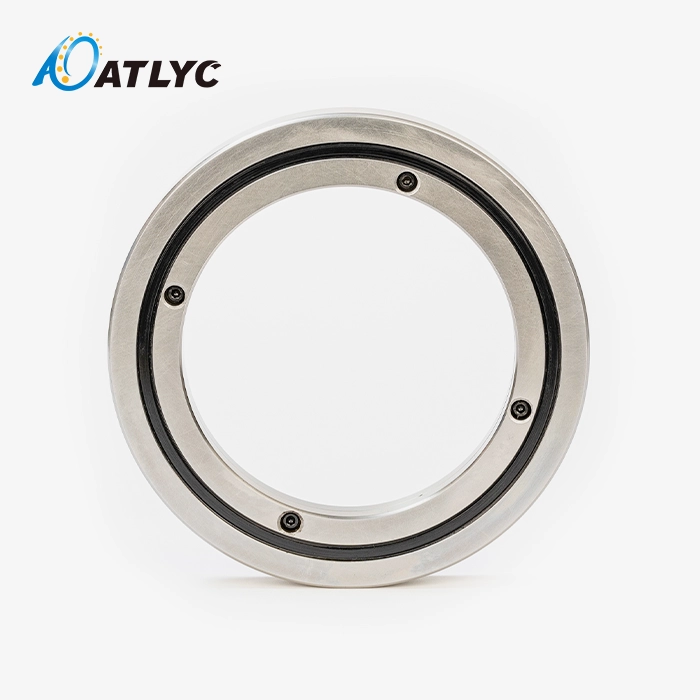
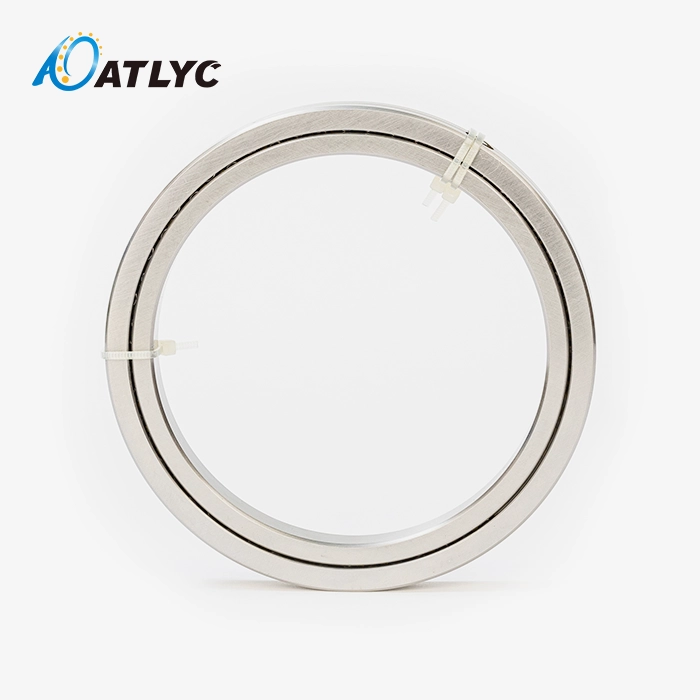
The RB3510 represents a critical solution for demanding industrial applications where space constraints meet high-performance requirements. This 35 mm cross roller bearing achieves an impressive 7.64 kN dynamic load rating through its unique crossed-roller configuration, making it ideal for robotic joints, precision rotary tables, and automated manufacturing systems. The compact footprint combined with exceptional load-handling capability addresses the persistent challenge faced by equipment designers: delivering maximum performance within minimal installation space while maintaining the rigidity and accuracy required for precision positioning tasks.

Understanding the RB3510 Bearing and Its Specifications
Core Design Architecture
The RB3510 is a cross roller bearing in the RB series. It has an outer ring plug design and an inner and outer ring that are both solid. This structural approach has a number of operational benefits. The integrated ring design gets rid of the weak spots that often appear in split-ring designs. The plug system makes fitting easy and allows for effective oil management throughout the bearing's lifetime.Inside the 35 mm envelope, there are cylinder-shaped rollers that are set up 90 degrees apart and perpendicular to each other. This crossed arrangement makes the best contact geometry because it spreads radial, axial, and moment loads over many contact points at the same time. The physics behind this arrangement explains how such a small bearing can handle a dynamic load of 7.64 kN, a level of performance that would normally require bigger bearing sets in regular designs.
Material Specifications and Manufacturing Standards
Choosing the right materials is the first step to making great products. Premium Gcr15 and Gcr15SiMn bearing steels are used in the RB3510. These steels were chosen because they are very hard and don't wear down easily. Specialized heat treatment methods make sure that the ring and roller parts have the right amount of stiffness all over them, and precise grinding processes get the surface finish quality needed for low-friction operation.Cross roller bearing efficiency depends a lot on how accurate the dimensions are. Our manufacturing skills regularly meet P4-level specifications for the RB3510. It comes in accuracy grades range from P6 to P4. This level of accuracy means that there should be very little runout variation during rotation. This is very important for applications like IC manufacturing equipment and precision measuring instruments, where accurate positioning has a direct effect on the quality of the product.
Dynamic Load Performance Characteristics
The 7.64 kN dynamic load number tells you how much force the bearing can handle while it's rotating and still have a good service life. Knowing this specification helps people who work in procurement match the bearing's capabilities to the needs of the application. In real life, this load capacity works for medium-duty automation equipment, robotic manipulators that move middling loads, and machine center rotary tables that work with standard workpieces. Operating conditions have a big effect on how well a bearing works. The RB3510 works best when the temperature stays between -20°C and +80°C, but short-term temperature changes up to +120°C are okay as long as the right lubricant is used. The maximum rotational speed depends on the load and the way the bearings are oiled, but most uses only need speeds up to 500 rpm, which is where the crossed-roller design continues to be more efficient.
Comparing RB3510 to Other Industry Bearings: Making the Right Choice
Performance Differentiation Analysis
In order to choose the right cross roller bearing, you need to know how the different types relate in key areas. The following table shows where the RB3510 fits in relation to other commonly ordered RB series bearings:
| Model | Outer Diameter (mm) | Dynamic Load (kN) | Static Load (kN) | Weight (kg) | Primary Application Focus |
|---|---|---|---|---|---|
| RB2011 | 28 | 4.21 | 6.30 | 0.08 | Light-duty precision instruments |
| RB3011 | 35 | 5.92 | 8.85 | 0.12 | Compact robotics, measurement devices |
| RB3510 | 42 | 7.64 | 11.45 | 0.18 | Medium-duty automation, rotary tables |
| RB450 | 55 | 10.30 | 15.40 | 0.35 | Heavy-duty machining centers |
| RB4011 | 65 | 13.85 | 20.70 | 0.52 | Industrial robots, large rotary systems |
This comparison shows that the RB3510 is a well-balanced option. Models such as the RB2011 and RB3011 are smaller, but they can't hold as much weight, so they're mostly good for lighter-duty precision work. On the other hand, the RB450 and RB4011 can handle more weight, but they take up a lot more space and make assemblies heavier.
Cost-Performance Considerations
The economic value proposition goes beyond the price of the original buy. Costs per unit go up as bearing size and load capacity go up, but to figure out the total cost of ownership, you have to look at how hard it is to install, how much upkeep it needs, and how long it lasts. It's nice that the RB3510 strikes a good mix between load capacity and size efficiency without having to charge more than bigger models.A lot of procurement professionals say that the RB3510 is the best value for money in situations where the designers of the equipment have managed to get the most performance out of the space they had. Because the bearing can handle different loads in a single unit, it removes the need for various bearing arrangements. This cuts down on the cost of parts and the difficulty of putting the assembly together. Because it helps with consolidation, the RB3510 is often the better choice, even when smaller bearings might work fine for rotational loads only.
Real-World Application Feedback
Feedback from the industry consistently points out a number of performance traits. People who use robotics like the low friction coefficient because it means that actuators don't need as much power, which saves energy. Manufacturers of machining centers like how accurate the runout is and how consistent the placement of workpieces is when compared to other bearing configurations. Maintenance teams say that longer service intervals are possible because the bearing is well-made and keeps the oil in well. Regular relubrication can be done without taking the machine apart thanks to the outer ring plug design. This cuts down on planned downtime. When replacing parts in the aftermarket, the RB3510's dimensional interchangeability with competing products makes updating projects easier. Upgrading to higher-performance bearings can help with equipment failure issues.
Why Choose RB3510? The Value Proposition for Procurement and Engineering Teams
Engineering Excellence in Design and Manufacturing
Precision manufacturing and strict quality control are what make bearings work so well. ATLYC has been making precision bearings for 15 years, and our production method is based on that experience. Our factory follows the quality standards set by ISO 9001 and IATF 16949, which require systematic process controls and methods for ongoing growth. The process of making each RB3510 unit includes a number of precise steps. Raceways are shaped to exact specs by computer-controlled grinding equipment that achieves surface finishes measured in micrometers. For roller production, special cylindrical grinding methods are used to keep the tolerances for size within the P4 accuracy standards. Assembly work is done in controlled settings with rules in place to keep things clean and protect the quality of the bearings. At key points in the production process, our three-level quality control system checks for performance. The makeup of the steel and its heat treatment qualities are checked when the material is brought in. During machining activities, measures taken during the process prove that the dimensions are correct. There are twelve different performance markers that each unit must meet before it can be shipped. These are vibration analysis, rotational torque measurement, and runout proof.
Operational Reliability and Equipment Uptime
With a dynamic load capacity of 7.64 kN, the RB3510 has real-world operational benefits. Take the example of automated production lines, where robots work nonstop during different times. When bearings fail in these kinds of settings, production has to stop, which costs a lot. The costs of the downtime often exceed the cost of replacing the bearings by a large amount. Unexpected failure risks are kept to a minimum with the RB3510's strong construction and consistent quality. This helps keep production schedules and delivery commitments. Improvements in equipment uptime show up in a number of ways. The low friction coefficient lowers the amount of heat that is produced during operation. This keeps thermal expansion effects to a minimum, which can affect the accuracy of placement. Better runout properties keep the bearing's performance stable over its entire service life, so it doesn't lose accuracy over time and need to be replaced too soon in precision applications. The crossed-roller configuration is naturally rigid, so it doesn't bend when it's loaded. This keeps the alignment accurate even when the equipment is moving heavy or light pieces.
Maintenance Cost Reduction Strategies
Increasing the service life of bearings directly lowers the costs of maintenance and inventory. The RB3510 is designed with features that allow it to work for longer periods of time when used with the right upkeep methods. The seamless ring design gets rid of the failure modes that come with rings coming apart or fasteners becoming loose, which are common problems in other designs. Precision manufacturing makes sure that the load is spread evenly across all rollers, which stops wear patterns that shorten the service life of parts. Managing lubrication has a big effect on how long a bearing lasts. The outer ring plug makes it easy to re-grease, so maintenance teams can get the oil working again without having to take the bearings out. Recommended lubrication intervals depend on the conditions of use, but in most industrial settings, lithium-based greases rated for bearing applications allow for 6,000 to 10,000 hours of use before they need to be serviced.
Purchasing and Supply Chain Insights: How to Procure RB3510 Bearings Efficiently
Sourcing Authentic Components Through Authorized Channels
Integrity in the supply chain starts with choosing the right suppliers. There are a lot of distributors and resellers in the global bearing market, but only buying from authorized channels guarantees that the product is real and the quality is always the same. There are direct ties between ATLYC and approved dealers in key markets like the US, Germany, South Korea, and other places where our precision bearings are used by industrial users. People who work in procurement benefit from working with well-known suppliers who know how to meet technical needs and keep enough inventory on hand. Standard configurations are in stock in our delivery network and can be shipped right away. Customized versions with specific accuracy grades or material specs, on the other hand, usually need 3–4 weeks to be made, based on the number of orders and the current production schedules. Verifying the permission of suppliers stops fake or low-quality goods from getting into supply lines. Authorized wholesalers provide proof that the products are real, such as material approvals, dimensional inspection records, and information that connects each bearing to its production batch. These quality records meet the needs of an audit and help with finding the root cause of any operating problems that may arise.
Pricing Transparency and Bulk Purchase Advantages
Bearing prices are based on a number of cost factors, such as the cost of materials, the difficulty of production, the cost of quality control, and where the bearing fits in the market. The table below shows general pricing information for various order quantities, which helps procurement teams make accurate budget projections:
| Order Quantity (Units) | Approximate Unit Price (USD) | Total Investment (USD) | Lead Time (Business Days) | Volume Discount (%) |
|---|---|---|---|---|
| 1-10 | 185-205 | 185-2,050 | 7-10 | - |
| 11-50 | 165-180 | 1,815-9,000 | 10-15 | 11-12% |
| 51-200 | 145-160 | 7,395-32,000 | 15-20 | 21-22% |
| 201-500 | 130-145 | 26,130-72,500 | 20-25 | 30-31% |
| 500+ | Contact for quote | Custom pricing | 25-30 | 35%+ |
Volume savings are a result of economies of scale in planning production and making transportation run more smoothly. Larger orders call for specialized production runs that cut down on setup times and the cost of making each unit. Strategic buyers take advantage of these pricing structures by combining needs from multiple sites or timing purchases with planned maintenance on equipment.
Logistics Coordination and Delivery Reliability
For supply chain management to work well, production plans, shipping methods, and customer service needs must all be coordinated. When it comes to B2B operations, ATLYC has a number of shipping choices that are tailored to your needs. These options balance low costs with fast delivery. Standard freight forwarding works well for regular restocking orders because the two-to-three-week transit times work with the planning cycles for inventory. Express shipping services are useful for when you need a replacement right away or have a project deadline that needs delivery quickly. International orders come with the right export paperwork, help with customs compliance, and the ability to watch the package so that you can see where it is at all times. Our logistics team works with freight forwarders who know how to handle precision parts. They make sure that the right packaging and handling methods are used to protect the quality of the bearings while they are being shipped.
Troubleshooting and Maintaining Your RB3510 Bearing for Long-Term Performance
Performance Monitoring and Wear Indicators
Preventative maintenance programs find problems before they get so bad that the equipment breaks down. RB3510 bearings need to be inspected or serviced when a number of operating signs appear. Noise patterns that don't make sense during rotation are often a sign of poor lubrication or contamination, both of which speed up the wear process. If the spinning resistance goes up, it means that the grease is wearing out or the rollers are damaged and need to be fixed right away. If the temperature rises above normal operating ranges, it means that there is too much friction, which could be caused by misaligned preload or breakdown of lubrication. Systematic troubleshooting steps make it easier for maintenance teams to find the root causes quickly. Start by making sure there is enough lubrication and that the grease is in good shape. This will fix the most common performance problem. Check the mounting surfaces to make sure they are flat and straight. Installation mistakes often show up as runout issues or wear that happens too soon. Check that the bearing preload stays within the suggested ranges by measuring it and making any necessary adjustments to get the internal clearances back to where they should be.
Maintenance Best Practices for Extended Service Life
Regular maintenance keeps bearings working well and stops them from breaking down without warning. Set up lubrication plans that work for your working conditions, taking into account things like the speed of spin, the amount of load, and the surroundings. Applications that run at low speeds and in clean settings usually get 8,000 to 10,000-hour intervals. But applications that run in harsh conditions may need service more often, every 4,000 to 6,000 hours.When installing and removing a bearing, it's important to follow the right handling steps to keep its precision. When installing something, you should always use the right tools that put force on the right ring and stay away from impact loads that can damage the raceways or rollers. Before fitting, make sure that the mounting surfaces are completely clean. Get rid of any dirt or debris that could make it harder for the bearings to sit properly or introduce rough particles. Keep extra bearings in their original packaging in a controlled environment. This will keep them safe from wetness and temperature changes that can damage the lubricant. By doing regular checks, problems can be found early on before they get worse. Set up regular checks to look at the smoothness of the spinning, the patterns of the temperatures, and any strange noises. During commissioning, write down baseline measures of performance to use as a point of comparison during later checks. This method is based on data, which lets condition-based maintenance plans make the most of service gaps while keeping reliability.

Conclusion
The RB3510 cross roller bearing is a great choice for industrial applications that need to handle heavy loads while keeping their size small. Precision engineering and high-quality manufacturing gave it a 7.64 kN dynamic load capacity that meets the needs of modern automation equipment, robotic systems, and precision machinery. ISO 9001 and IATF 16949 certifications show that ATLYC is dedicated to producing high-quality products. This ensures consistent quality that supports long-term operational reliability. Partnering with a maker that has proven knowledge, scalable production capacity, and a commitment to customer success across global markets is good for procurement professionals and engineering teams.
FAQ
Which Industries Benefit Most from RB3510 Specifications?
The RB3510's smooth performance makes it useful in a wide range of industries. These bearings are used by companies that make automation equipment in robotic manipulators and parts of assembly lines where space efficiency and mild load needs are important. The RB3510 is used by companies that make precision machinery in rotary tables, tracking devices, and pointing systems that need very accurate runout. The low friction properties are used in medical equipment to make imaging systems and surgical robots run smoothly and quietly.
How Does RB3510 Pricing Compare to Alternative 35 mm Bearings?
When comparing prices, you need to look at the total cost of ownership, not just the purchase price. Conventional ball bearings may be cheaper at first, but the RB3510's ability to handle combined loading in a single unit means that complicated bearing arrangements are not needed. This consolidation lowers the cost of assembly, makes maintenance easier, and boosts system reliability. These benefits usually justify the bearing's higher price compared to basic alternatives.
What Support Services Accompany RB3510 Purchases?
ATLYC offers full technical support for the entire lifecycle of a product. Before you buy, getting help from an engineer can help you choose the right bearing setups for your needs. After the purchase, support includes installation instructions, help with fixing problems, and maintenance suggestions that make the bearing work better. The warranty covers your investment, and the terms depend on how it is used and how it is maintained.
Partner with ATLYC for Reliable RB3510 Cross Roller Bearing Supply
ATLYC has been making precision bearings for 15 years and is dedicated to making sure its customers are successful. Our production skills for the RB3510 give OEMs and distributors the constant quality and stable supply they need to stay ahead of the competition. As a well-known RB3510 manufacturer that sells to customers all over the world, we know what the automotive, industrial machinery, and automation sectors need in terms of technical specifications and supply chain expectations. Get in touch with our expert team at auto@lyautobearing.com to talk about your unique bearing needs. We give you thorough quotes, technical specs, and big discounts that are based on what you need. Our engineering support helps you choose the best bearings for your needs, and our well-established distribution network makes sure that your orders get to facilities in the US and other countries on time. With ISO 9001 and IATF 16949 certifications, you can be sure of the quality of your products, and our manufacturing capacity can grow with your business.
References
1. Harris, T.A. & Kotzalas, M.N. (2006). Rolling Bearing Analysis: Essential Concepts of Bearing Technology. CRC Press, Taylor & Francis Group.
2. Japanese Industrial Standards Committee (2016). JIS B 1559: Rolling Bearings - Crossed Roller Bearings. Japanese Standards Association.
3. Eschmann, P., Hasbargen, L. & Weigand, K. (1985). Ball and Roller Bearings: Theory, Design and Application. John Wiley & Sons.
4. International Organization for Standardization (2014). ISO 5593: Rolling Bearings - Vocabulary. ISO Standards Catalogue.
5. Palmgren, A. (1959). Ball and Roller Bearing Engineering. SKF Industries Inc., Burbank Publishing.
6. Neale, M.J. (1993). The Tribology Handbook: Section on Rolling Element Bearings. Butterworth-Heinemann Engineering Publishers.
Learn about our latest products and discounts through SMS or email