- English
- French
- German
- Portuguese
- Spanish
- Russian
- Japanese
- Korean
- Arabic
- Greek
- German
- Turkish
- Italian
- Danish
- Romanian
- Indonesian
- Czech
- Afrikaans
- Swedish
- Polish
- Basque
- Catalan
- Esperanto
- Hindi
- Lao
- Albanian
- Amharic
- Armenian
- Azerbaijani
- Belarusian
- Bengali
- Bosnian
- Bulgarian
- Cebuano
- Chichewa
- Corsican
- Croatian
- Dutch
- Estonian
- Filipino
- Finnish
- Frisian
- Galician
- Georgian
- Gujarati
- Haitian
- Hausa
- Hawaiian
- Hebrew
- Hmong
- Hungarian
- Icelandic
- Igbo
- Javanese
- Kannada
- Kazakh
- Khmer
- Kurdish
- Kyrgyz
- Latin
- Latvian
- Lithuanian
- Luxembou..
- Macedonian
- Malagasy
- Malay
- Malayalam
- Maltese
- Maori
- Marathi
- Mongolian
- Burmese
- Nepali
- Norwegian
- Pashto
- Persian
- Punjabi
- Serbian
- Sesotho
- Sinhala
- Slovak
- Slovenian
- Somali
- Samoan
- Scots Gaelic
- Shona
- Sindhi
- Sundanese
- Swahili
- Tajik
- Tamil
- Telugu
- Thai
- Ukrainian
- Urdu
- Uzbek
- Vietnamese
- Welsh
- Xhosa
- Yiddish
- Yoruba
- Zulu
How to Choose RA8008UUCC0 Crossed Roller Bearing for Precision?
Choosing the right crossed roller bearing demands attention to multiple technical parameters and operational requirements. When selecting an RA8008UUCC0 Crossed Roller Bearing, engineers should evaluate dimensional constraints, load capacity, accuracy class, operating environment, and supplier credentials. This compact precision component features an 80mm inner diameter, 96mm outer diameter, and 8mm cross-section designed to deliver exceptional rigidity in space-limited applications. The crossed roller configuration handles combined radial, axial, and moment loads simultaneously, making it ideal for robotics, semiconductor equipment, and precision rotary tables. Sourcing from ISO 9001 and IATF 16949-certified manufacturers ensures consistent quality and reliable supply chain support essential for critical industrial operations.
Understanding RA8008UUCC0 Crossed Roller Bearing Specifications
Precision bearings form the backbone of automated manufacturing systems, and understanding their specifications determines operational success. The RA series represents a specialized category optimized for applications demanding maximum performance within minimal envelope dimensions.
Core Design Principles
The RA8008UUCC0 Crossed Roller Bearing has an outer ring structure that can be separated and an inner ring structure that is built in. This arrangement makes installation easier in tight spaces while keeping the accuracy of the manufacturing process throughout the geometry of the bearing. Cylindrical rollers placed at right angles to each other every 90 degrees inside V-groove raceways spread loads across many contact points, making them better at carrying weight than regular ball bearings. The spacer-separated roller design keeps metal rollers from touching each other, which lowers friction and greatly increases the operating lifetime.
Material Composition and Heat Treatment
These parts are made from GCr15 or GCr15SiMn high-carbon chromium-bearing steel and are heated in a special way to make them HRC 58–64 hard. This metalworking process makes a surface that doesn't wear down easily and can survive millions of operating cycles while keeping its shape. The high carbon content of the material makes it very resistant to fatigue. This is especially important for uses that will be loaded and unloaded over and over again, like robotic systems and automated machinery.
Dimensional Accuracy Standards
The bearing can achieve precision classes from P6 to P2. For high-precision applications, P5 and P4 specifications are most common. These grades of accuracy keep the differences in size within the shape of the part under control, so you can be sure of how it will rotate when it's loaded. The 8mm width is an extremely thin profile that cuts the weight of assemblies by about half compared to normal bearing series while still keeping the structural integrity needed to handle complex load combinations.
| Specification | Value |
|---|---|
| Inner Diameter | 80mm |
| Outer Diameter | 96mm |
| Width | 8mm |
| Material | GCr15, GCr15SiMn |
| Accuracy Classes | P6, P0, P5, P4, P2 |
| Preload | CC0 (-2 to -5 microns) |
Preload Configuration and Its Impact
The number CC0 means that the negative clearance must be carefully controlled and be between -2 and -5 microns. As a result of this preload, there is no internal play, which is necessary for precision tracking systems in medical imaging devices and tools used to make semiconductors. This preload slightly raises the starting torque, but it provides great rotational stiffness that stops location drift when loads are extended. Engineers can predict the effects of thermal expansion and choose the right mounting configurations when they know how preload affects the behaviour of bearings.
Evaluating RA8008UUCC0 Bearing Performance Against Alternatives
Comparing bearing technologies reveals distinct advantages that justify specification choices for certain uses necessary. Crossed roller bearings are different from angular contact roller bearings and cylindrical roller bearings in a special way.
Comparison with Standard RA8008UU Bearings
The RA8008UUCC0 Crossed Roller Bearing is different from the RA8008UU because it has a CC0 base standard. Standard RA8008UU versions have a small amount of internal clearance that makes them good for uses that can handle some play. This clearance is gone completely in the CC0 preload form, making a rigid spinning unit that is perfect for precise placement and indexing jobs. This difference is very important in robotic wrist joints, where the accuracy of positioning affects the performance and repeatability of the end effector.
Advantages Over Angular Contact Ball Bearings
To handle moment loads properly, angular contact bearings need to be mounted in pairs, which makes the system more complicated and takes up more room. The crossed roller design combines these functions into a single unit, which cuts down on the number of parts and makes the design of the housing easier. Spreading the load across cylindrical rollers instead of point contacts lets more weight be carried in the same space. According to test results, crossed roller bearings keep their accuracy 30 to 40 percent better than angular contact pairs when the moment loads are the same.
Performance Comparison with Cylindrical Roller Bearings
Standard cylindrical roller bearings are great for rotational loads, but they need separate thrust bearings to handle axial forces. The crossed roller arrangement can handle both lines of load at the same time and adds a lot of moment load capability. This ability to work in more than one way is especially useful in rotary table settings where cutting forces cause complicated loading patterns. When compared to cylindrical roller setups, equipment that uses crossing roller bearings has less structural deformation and better machining accuracy.
The following comparison clarifies technical differences across bearing categories commonly evaluated during procurement processes:
| Bearing Type | Radial Load | Axial Load | Moment Load | Space Efficiency | Accuracy Potential |
|---|---|---|---|---|---|
| RA8008UUCC0 Crossed Roller | Excellent | Excellent | Excellent | Very High | ISO P4/P5 |
| Angular Contact Ball (Pair) | Good | Good | Good | Moderate | ISO P5 |
| Cylindrical Roller | Excellent | Poor | None | Moderate | ISO P6 |
| Standard Deep Groove Ball | Good | Fair | Poor | High | ISO P6 |
Real-World Application Performance
When makers of collaborative robots switch from angular contact pairs to crossed roller configurations, joint deflection drops by 35%. Because crossed roller bearings make positioning more accurate, semiconductor wafer handling systems can go through cycles 15% faster. When used in medical imaging equipment, these parts make images more stable, especially when continuous rotation protocols are used. These measured benefits show that precision stepped roller technology is worth the money for uses where performance has a direct effect on quality or productivity.
Key Criteria for Choosing RA8008UUCC0 Bearings in B2B Procurement
To choose the right bearings, you need to carefully compare the needs of the activity with the skills of the parts. When making purchases, people should think about both the short-term technology needs and the long-term supply chain issues.
Defining Application Parameters
Load analysis is the first step in choosing the right bearings. Engineers have to figure out the highest radial, axial, and moment loads that will be present during operation. These loads must include dynamic forces from cycles of speeding up and slowing down. Operating speed affects how much grease is needed and how much heat is produced. Depending on the preload and the way of lubrication, the RA8008UUCC0 Crossed Roller Bearing can usually handle constant speeds of up to 1000 RPM. Environmental factors like temperature changes, pollution exposure, and shaking levels affect the choice of seals and how they should be maintained.
Load Capacity and Service Life Calculations
The load grade of the bearing tells you how long it will last under certain situations. Manufacturers post basic dynamic load rates that can be used to figure out L10 life, which is the number of hours that a bearing can be used before 10% of its population fails due to fatigue. When engineers are working on precision applications, they often set L50 life targets that need low load factors. Because the crossed roller design spreads the load better, it is estimated that it will last 2-3 times longer than ball bearings in the same situations. When you do accurate load calculations, you can avoid early failures that throw off output plans and raise the total cost of ownership.
Dimensional Compatibility Assessment
Mounting connections need to be able to fit the bearing's size and provide enough support for the structure. The tolerances for the housing bore are set by ISO, and k6 or m6 fits are common for installing the outer ring. For proper inner ring retention, shaft tolerances usually say that a j5 or k5 fit is needed. The form of the outer ring being able to be separated makes fitting easier in situations where removing the shaft is not possible. Engineers should make sure that the fastening surfaces have the right fillet radii to avoid stress peaks that shorten the life of bearings.
Material Selection for Specific Environments
In normal temperature ranges, standard GCr15 steel works well for most industrial uses. GCr15SiMn variants offer better dimensional stability for uses that go through a lot of thermal cycling. In some places, stainless steel or protection coatings may be needed, but these options change the cost and load capability. Knowing the limits of what is possible keeps you from making mistakes in the specifications that hurt stability or cost too much.
Total Cost of Ownership Analysis
The purchase price is only one part of bearing economics. Total purchase costs are affected by how often maintenance is done, how much lube costs, and how long the machine might be down while it's being replaced. Even though they cost more at first, premium bearings with better accuracy and longer service lives often have lower total costs. This fact about the economy is especially important when replacing bearings involves taking apart a lot of equipment or stopping production. By adding up the costs of replacement labour, missed output value, and upkeep materials, you can accurately compare the costs of different bearing options.
Supplier Evaluation Framework
A supplier's skills are just as important as the product specs when it comes to successful buying. Getting ISO 9001 and IATF 16949 certifications shows that you are dedicated to quality management systems, which are necessary for consistent production. As your business grows, your production capacity affects both lead times and your ability to handle more work. Technical help is needed for application engineering to work right, especially when there are special needs or difficult working circumstances. After-sales support, such as warranty terms, the availability of replacement parts, and quick contact, builds trust in long-term supply relationships.
Where and How to Procure RA8008UUCC0 Crossed Roller Bearings
Finding trustworthy places to get precision bearings protects expensive equipment and keeps operations running smoothly. Strategic purchasing includes more than just comparing prices; it also includes building relationships with suppliers.
Manufacturer Direct Sourcing Advantages
Mid-sized to big equipment makers can get a lot out of working directly with bearing makers. Since there are no markups for distributors, unit costs drop by 15–25% on large orders when there are direct relationships. Manufacturers give customers access to technical tools that can help them fix problems and make their applications run better. Customisation options become available, such as non-standard sizes, special materials, or setup specs that are changed to fit specific needs. Direct communication about production schedules makes it easier to see lead times, which leads to better inventory planning and lower safety stock needs.
Authorized Distributor Networks
Distributors are very helpful for businesses that need smaller amounts or things right away. Established wholesalers keep stock on hand so that orders can be delivered faster than when ordered directly from the maker. Their wider range of products makes buying easier by combining multiple sources of parts. Reliable distributors offer technical support and application help, which is especially helpful for businesses that don't have their own bearing experts. When it comes to warranty service and returns, dealing with local distributors is often more efficient than talking to manufacturers in other countries.
Evaluating Supplier Credentials
Quality certifications are concrete proof of the ability to make things and the rules that are in place for the process. ISO 9001 certification shows that quality control methods have been put in place for the design, production, and testing processes. IATF 16949 certification is specific to the needs of the automotive industry and shows that a company can make a lot of precise products under strict quality standards. Evaluations of production facilities show how much can be made, how complex the equipment is, and how much the process is automated. These factors affect how consistent the product is and how it can be scaled up.
Pricing Structures and Volume Discounts
Bearing prices are usually set in tiers based on how many are ordered. Small lot purchases (10–50 units) cost more per unit because of the costs of setting up and moving the goods. Orders of 100 to 500 units get first-tier savings, which cut costs by 20 to 30 percent. When you commit to buying 1000 units or more, you can discuss prices and save more than 40% compared to small lot rates. Annual purchase agreements keep prices stable and make sure that supplies are prioritised when capacity is limited. Misunderstandings about shipping costs, duties, and insurance can be avoided by having clear price paperwork that includes Incoterms clarification.
International Shipping and Logistics
When you buy things around the world, you have to pay attention to the logistics that affect shipping times and prices. Container shipping is good for large sales because it takes 4 to 6 weeks to get goods from Asian makers to North American destinations. Air freight is the fastest way to get things that need to be delivered quickly, but it costs more and is only good for business emergencies. Shipping damage can be avoided by properly packaging the item; this is especially important for delicate parts that are easily damaged by handling impacts. Harmonised tariff codes, country of origin certificates, and quality test results are all examples of import paperwork that makes it easier to get goods through customs and get the best tariffs for your RA8008UUCC0 Crossed Roller Bearing procurement.
Initiating Supplier Inquiries Effectively
Detailed question specs speed up the accuracy of quotes and cut down on the time it takes to communicate. Describe all the dimensions you need, the level of accuracy you want, the ranges of quantities you want, and when you'd like them delivered. Give details about the application, such as load conditions, working speeds, and environmental factors, so that providers can confirm that it is suitable and suggest ways to make it work better. Ask for quality proof like material certificates, records on measurement inspections, and data from performance tests. Make it clear what the minimum order quantities are, how much the tools will cost, how to pay, and what the warranty covers. Structured questions show that buying is expert and lay the groundwork for good relationships with suppliers.
Maximizing RA8008UUCC0 Bearing Performance and Longevity
Whether bearings last as long as they are supposed to depends on how well they are installed and maintained. Systematic approaches to bearing care protect investments in equipment and keep it from breaking down when you least expect it.
Precision Installation Procedures
Before installing a bearing, the mounting surfaces must be carefully cleaned to get rid of dirt, old oil waste, and rust. For housing bores and shaft journals, it's necessary to check the sizes to make sure they meet the design requirements. For press-fit installation to work, the right tools must be used to apply controlled force evenly across all bearing faces. Hydraulic mounting methods are better for bigger bearings because they use controlled heating or cooling to make a difference in thermal expansion, which lets the bearings fit together without using mechanical force. Verifying alignment with runout measurements stops edge loading, which speeds up wear and lowers operating accuracy.
Lubrication Strategy Development
When you see the UU seal, it means that the factory filled it with lithium soap-based grease that works well in most situations. How much and how often you lubricate something for the first time depend on the speed, load, and temperature of the machine. Precision applications with low speeds (less than 500 RPM) usually work well with the lubrication that was applied by the factory at the start and for a long time afterward. In places with high speeds or temperatures, sealed bearings may need to be re-oiled on a regular basis using special methods that work with their designs. Choosing the right lubricant can change the way friction works. Synthetic greases are better in places with high temperatures or clean rooms. By taking samples of the lube on a regular basis, you can find degradation before it affects performance.
Preventive Maintenance Protocols
Setting up routines for condition monitoring lets you find problems early, before they become too big to fix. Through characteristic frequency signatures, vibration analysis finds problems with bearing wear, misalignment, and contamination. Temperature tracking finds situations where there isn't enough lubrication or too much preload, which cause working temperatures to rise. Regular checking of the sizes of important parts that are close to each other finds wear in systems that are connected and affects the loading on bearings. Recording and tracking data creates performance baselines that allow trend analysis that estimates how much longer the service will last. Scheduling maintenance based on condition assessment instead of random time intervals makes the best use of resources and cuts down on actions that aren't needed.
Common Issues and Corrective Actions
Premature bearing failure is usually caused by clear problems that can be fixed. When cleaning isn't done right, the working temperature rises, and high-frequency vibrations become noticeable. When abrasive particles get into a system, they cause wear that can be seen by more clearing and less smooth spinning. If the rollers aren't lined up correctly, they will wear unevenly, which shows that the edges are being loaded. Too much preload leads to high torque and temperature, so the preload needs to be lowered or the heat needs to be drained better. Damage from corrosion caused by water or chemicals needs better protection or new materials. Systematic root cause analysis stops failures from happening again and helps designers make better products.
Professional Support Resources
During the installation and commissioning steps, maker technical support is helpful for complex uses. Technical service teams help with important installations, checking dimensions, and making sure the system works well on-site. Maintenance workers are taught how to properly handle, install, and keep an eye on precision crossed roller bearings through training programs. Failure analysis services look at returned bearings to find out what went wrong and give thorough studies with suggestions for how to fix the problem. Having access to these resources improves operational reliability and speeds up the learning process for businesses that are new to using the RA8008UUCC0 Crossed Roller Bearing.
| Maintenance Activity | Low-Speed Applications (<300 RPM) | High-Speed Applications (>500 RPM) | Critical Precision Applications |
|---|---|---|---|
| Visual Inspection | Quarterly | Monthly | Monthly |
| Vibration Measurement | Semi-annually | Quarterly | Monthly |
| Temperature Monitoring | Continuous/Quarterly | Continuous/Monthly | Continuous |
| Relubrication | 2-3 years | Annually | 18 months |
| Dimensional Verification | Annually | Semi-annually | Quarterly |
Conclusion
To choose crossed roller bearings for precise machinery, you need to carefully look at the technical details, the needs of the operation, and the supplier's abilities. The RA8008UUCC0 Crossed Roller Bearing performs very well in apps with limited room that need to handle a lot of different loads at the same time. When engineers know about a part's structural design, material qualities, and preload traits, they can choose the best one for robotic systems, semiconductor equipment, and precision machinery. A successful procurement process includes more than just choosing the right products. It also includes building partnerships with suppliers and manufacturers that show they have quality certifications, production capacity, and technical support resources. When you install something correctly by following precise mounting methods and doing preventative maintenance based on condition tracking, the bearings will last longer, and the equipment will work better. With these many things to think about, buying bearings goes from being a simple matter of buying things to making strategic choices that have an impact on business performance and long-term competitiveness.

FAQ
What distinguishes the RA8008UUCC0 from similar crossed roller bearings?
This bearing is different from standard clearance versions because it has a CC0 preload specification. This managed negative clearance gets rid of internal play, which is necessary for precision positioning systems to work with zero pushback. The UU designation means that two synthetic rubber seals keep out dirt and keep the lithium soap grease that was applied by the factory.
Can this bearing operate in clean room environments?
Because it is protected, it can work in controlled conditions like those used to make semiconductors. In ISO Class cleanrooms, the UU plugs stop grease from escaping and particles from forming. For each facility's needs, it's important to make sure that the materials are compatible with normal cleanroom chemicals.
What factors most significantly impact bearing service life?
Calculating lifespan is mostly based on the load size compared to the bearing capacity. Maintenance of the right lubrication, accurate fitting alignment, and control of the working temperature are the next most important factors. When other factors stay the same, operating speeds below 1000 RPM usually allow for longer repair times.
How do I verify bearing authenticity from suppliers?
Ask for quality proof like material certificates, records on measurement inspections, and data from performance tests. Check the ISO 9001 and IATF 16949 certifications of your suppliers using the databases of certification bodies. If you look closely at the package, the quality of the markings, and the finish on the parts, you can tell the difference between real precision bearings and cheaper replacements.
Partner with ATLYC for Reliable Crossed Roller Bearing Supply
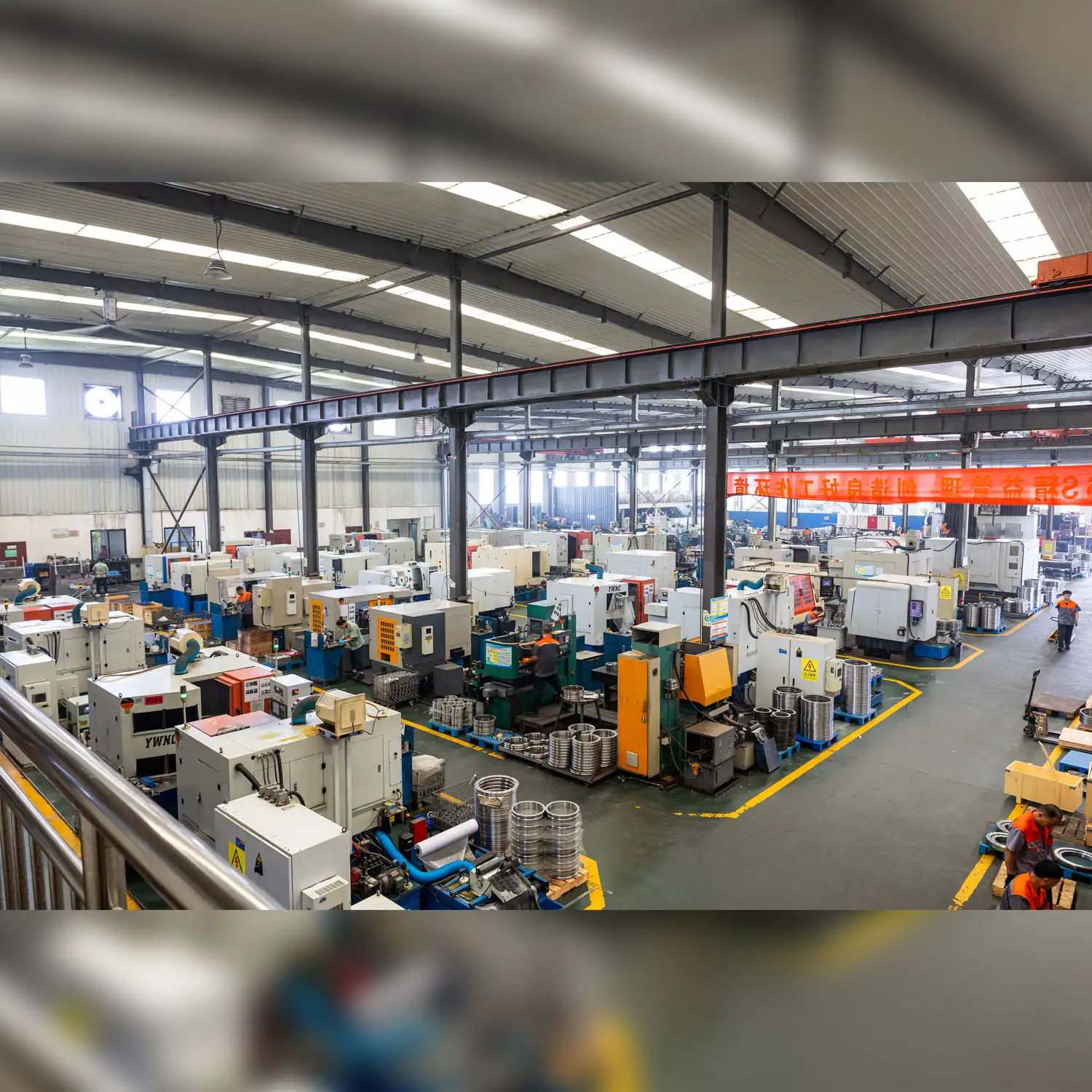
ATLYC has been making things for 15 years, which makes us a reliable supplier of crossed roller bearings that are dedicated to precision engineering and meeting international quality standards. Our ISO 9001 and IATF 16949-certified factories have six specialised workshops with 120 skilled workers who make sure that every RA8008UUCC0 Crossed Roller Bearing meets exact performance and size requirements. We offer consistent quality, competitive prices, and reliable lead times to automakers, industrial equipment OEMs, and precision machinery manufacturers in North America, Europe, and Asia. We have a professional support team that can help with application building, customisation, and full after-sales service for all of your equipment's operating lifecycle. Feel free to email us at auto@lyautobearing.com to talk about your precision bearing needs, get more information, or get a personalised quote for your next purchase.
References
1. Harris, T. A., & Kotzalas, M. N. (2006). Advanced Concepts of Bearing Technology: Rolling Bearing Analysis (5th ed.). CRC Press.
2. Eschmann, P., Hasbargen, L., & Weigand, K. (1985). Ball and Roller Bearings: Theory, Design and Application (2nd ed.). John Wiley & Sons.
3. ISO 492:2014. Rolling Bearings — Radial Bearings — Geometrical Product Specifications (GPS) and Tolerance Values. International Organization for Standardization.
4. Hamrock, B. J., Schmid, S. R., & Jacobson, B. O. (2004). Fundamentals of Fluid Film Lubrication (2nd ed.). Marcel Dekker.
5. SKF Group. (2018). Rolling Bearings Catalogue: Technical Reference Guide for Engineers. SKF Publications.
6. Tallian, T. E. (1992). Failure Atlas for Hertz Contact Machine Elements. ASME Press.
Learn about our latest products and discounts through SMS or email