- English
- French
- German
- Portuguese
- Spanish
- Russian
- Japanese
- Korean
- Arabic
- Greek
- German
- Turkish
- Italian
- Danish
- Romanian
- Indonesian
- Czech
- Afrikaans
- Swedish
- Polish
- Basque
- Catalan
- Esperanto
- Hindi
- Lao
- Albanian
- Amharic
- Armenian
- Azerbaijani
- Belarusian
- Bengali
- Bosnian
- Bulgarian
- Cebuano
- Chichewa
- Corsican
- Croatian
- Dutch
- Estonian
- Filipino
- Finnish
- Frisian
- Galician
- Georgian
- Gujarati
- Haitian
- Hausa
- Hawaiian
- Hebrew
- Hmong
- Hungarian
- Icelandic
- Igbo
- Javanese
- Kannada
- Kazakh
- Khmer
- Kurdish
- Kyrgyz
- Latin
- Latvian
- Lithuanian
- Luxembou..
- Macedonian
- Malagasy
- Malay
- Malayalam
- Maltese
- Maori
- Marathi
- Mongolian
- Burmese
- Nepali
- Norwegian
- Pashto
- Persian
- Punjabi
- Serbian
- Sesotho
- Sinhala
- Slovak
- Slovenian
- Somali
- Samoan
- Scots Gaelic
- Shona
- Sindhi
- Sundanese
- Swahili
- Tajik
- Tamil
- Telugu
- Thai
- Ukrainian
- Urdu
- Uzbek
- Vietnamese
- Welsh
- Xhosa
- Yiddish
- Yoruba
- Zulu
What Applications Need RU Series Cross Roller Bearing?
If you are engaged in the manufacture of precision equipment, you are probably aware that the choice of bearings has a direct effect upon machine accuracy, service life, and overall operating cost. The RU Series Cross Roller Bearing meets the need for compact, multi-directional load capacity in a single unit. This bearing type has a combined inner and outer ring construction with mounting holes on both sides. No flanges or housings are required. If you are sourcing bearings for robotic joints, CNC rotary tables, or medical imaging systems, knowing where and why this bearing shines can refine your procurement options.

Understanding RU Series Cross Roller Bearings
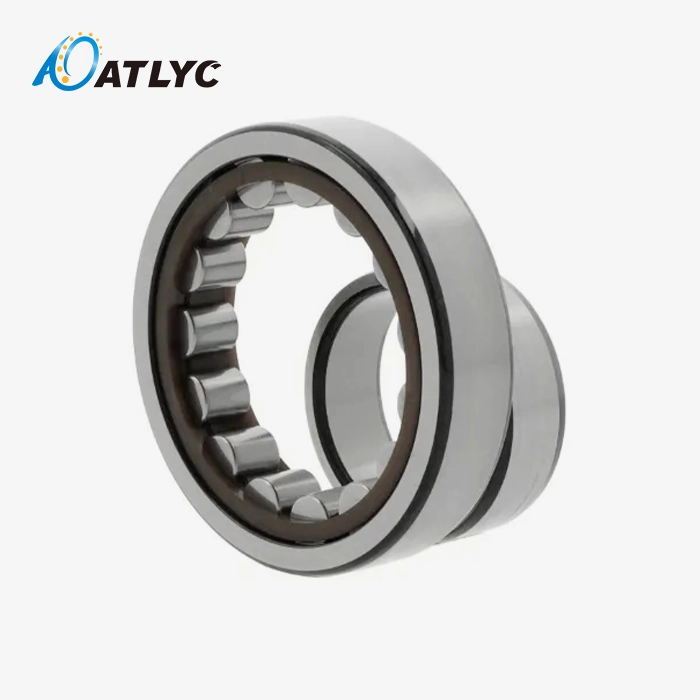
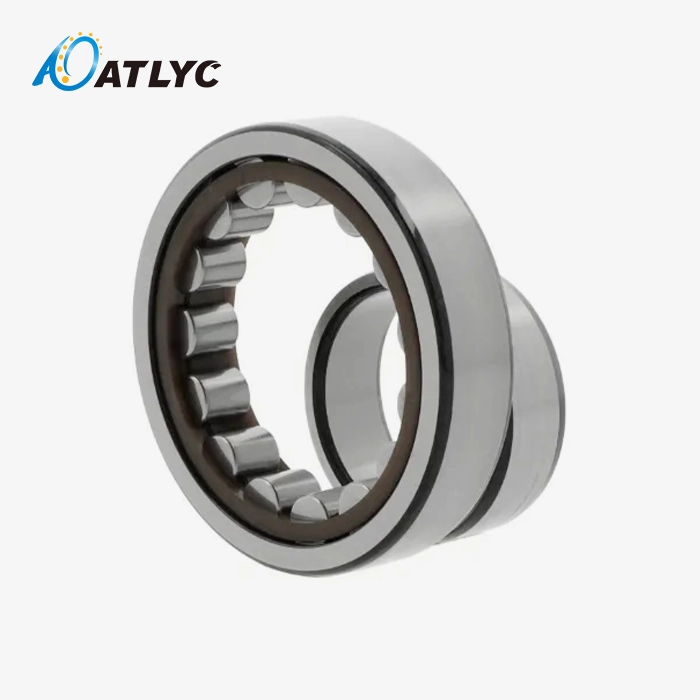
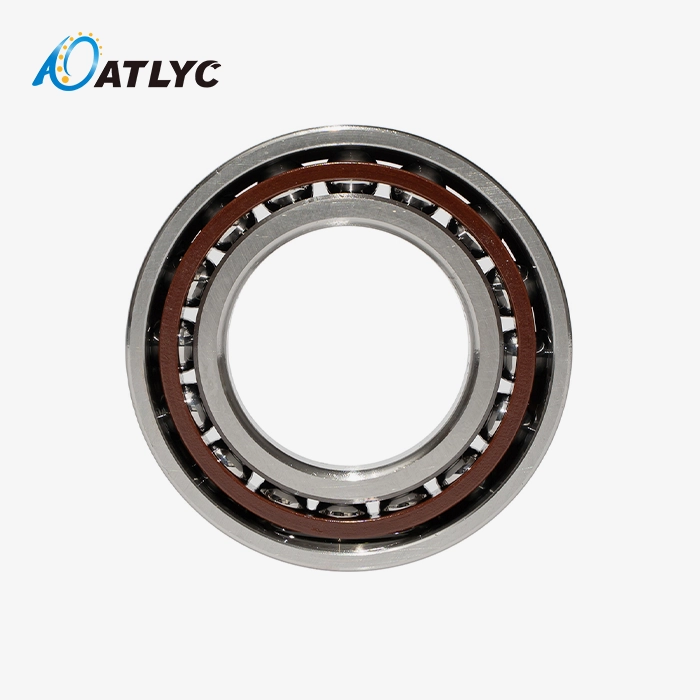
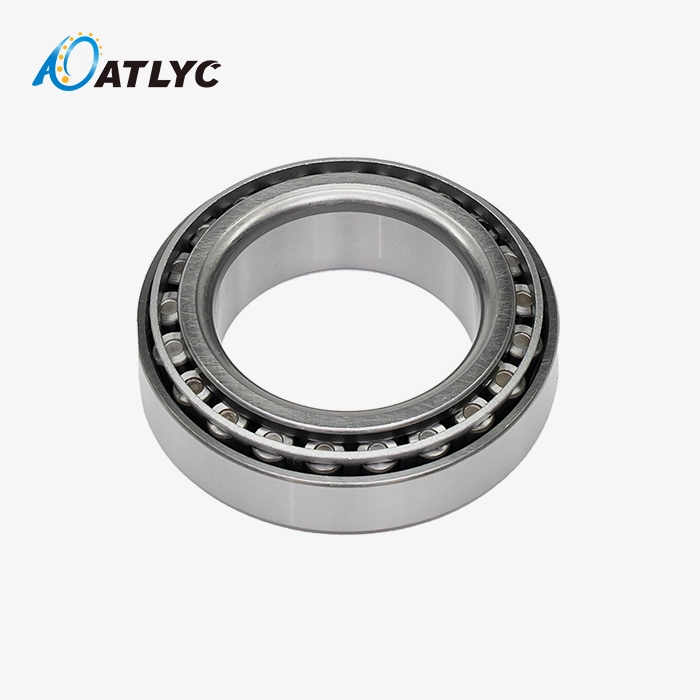
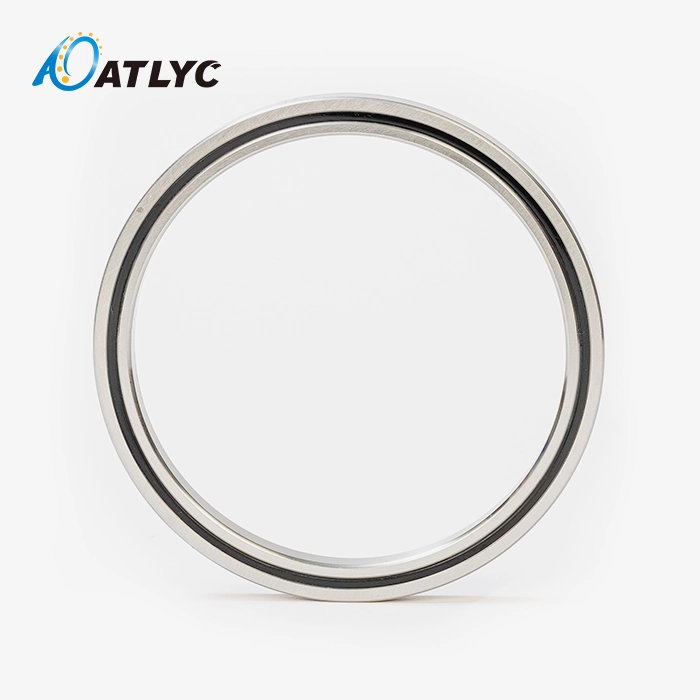
The RU Series Cross Roller Bearing includes V-groove raceways and cylindrical rollers arranged in a 90-degree cross pattern. Each roller sits immediately across from its neighbor in a straight line, while precise spacers prevent the rollers from hitting each other directly, keeping the weight uniformly distributed. Due to its form, this bearing can carry radial, axial, and moment loads simultaneously, which would ordinarily need more than one bearing unit.
Integrated Ring Structure
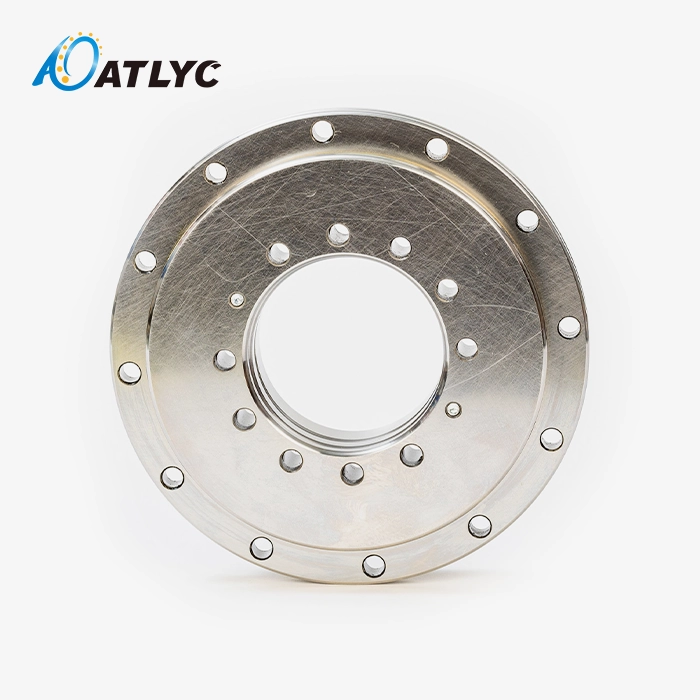
The inner and outer rings are constructed as one piece, and the attaching holes are already drilled in it. The bearing bolts directly to the mating surfaces without any supplementary housings or retaining flanges. This speeds up the assembly and reduces the likelihood of geometric mistakes accumulating at each interaction.
Technical Specifications at a Glance
A condensed list of the typical qualities that are associated with the RU Series Cross Roller Bearing is shown in the following:
The inner diameter may range anywhere from 20 to 1,100 millimeters, the exterior diameter can range anywhere from 70 to 1,500 millimeters, and the breadth can range anywhere from 12 to 110 millimeters. However, the inner diameter is the most common measurement. P6, P0, P5, P4, and P3 are the grades of precision that are being used, and the material that is being utilized is either GCr15 or GCr15SiMn.
It is possible to utilize these measures for a wide variety of machine sizes, ranging from lightweight robotic wrist joints to enormous machining centers with high-accuracy rotary tables. They include anything from the tiniest equipment to the most massive ones.
Why the Crossed-Roller Design Matters
Standard angular contact ball bearings mostly support loads that move in one direction or the other. When moment loads come into play, as they do in cantilevered robot arms or spindles that hang over the edge, normal bearing arrangements need to be changed, or extra support structures need to be added. Crossed-roller configuration spreads contact pressures over a bigger roller surface area, making the assembly stiffer and more accurate to within a micron, all without adding length along the axis.
Core Applications That Benefit from RU Series Cross Roller Bearings
Precision-driven industries utilize this kind of bearing, since it is both robust and compact. If you are seeking RU Series Cross Roller Bearings in this arrangement, here are the key industries that use them.
Industrial Robot Joints and Manipulator Arms
For the acceleration or deceleration of a 6-axis articulated robot, complicated moment loads are acting on the waist, shoulder, and elbow axes. The RU Series Cross Roller Bearing retains minimal backlash under different loads. This directly supports the precision needs of electronics assembly lines and welding lines, often to ±0.02 mm or greater. By 2022, more than 500,000 robots will be deployed every year throughout the globe, predicts the International Federation of Robotics. In terms of bearing precision, sub-millimeter placement is an issue.
CNC Machining Centers and Precision Rotary Tables
On a 5-axis machine center, the accuracy of a rotary table relies on the strength of the table bearing. Cross roller bearings should be P4 or P5 precision grade for high-feed grinding to keep the dimensions within acceptable limits. The bearing has mounting holes that allow it to be bolted directly to the table casting, thereby reducing stacking tolerances that would be present if a separate ring and housing were used.
Medical Imaging and Measuring Instruments
CT scanner gantries can spin massive detector arrays up to four times a second while maintaining the pictures aligned within a few millimeters. The RU cross roller bearing spins with little friction, allowing it to operate silently and properly position angles. Also, the bearings are employed in coordinate measuring machines (CMMs) and equipment for making integrated circuits (ICs) since the runout errors lead to inaccurate measurements or operations.
Comparing RU Series Cross Roller Bearings with Other Bearing Solutions
When picking between bearing groups, you need to think about the load conditions, the available room, and the level of accuracy you need. The table below shows how the RU Series Cross Roller Bearing stacks up against two common options.
| Feature | RU Series Cross Roller | Standard Ball Bearing | Double-Row Angular Contact |
|---|---|---|---|
| Multi-directional load | Yes (radial + axial + moment) | Axial or radial, not both equally | Axial + radial, limited moment |
| Mounting interface | Integrated holes, no housing | Requires housing or retaining ring | Requires housing |
| Runout accuracy | Sub-micron (P4/P3 grade) | Moderate | Moderate |
| Compact footprint | High | Moderate | Moderate |
| Typical application | Robotics, precision tables, medical | General machinery | Spindles, gearboxes |
Standard ball bearings are cheaper per unit, but when engineers need to fit a lot of weight into a small space, they often ask for two or more ball bearing units. This makes the total cost higher and the building process more difficult. The RU Series has one bearing that can handle all three lines of load. This often lowers the cost of materials and makes the design of the housing easier.
Stiffness Under Moment Load
When it comes to moment load stiffness, crossed-roller design works better than double-row angular contact bearings. The 90-degree roller arrangement evens out the force, which means the bearing keeps its shape even when it is loaded in an irregular way. This quality makes it the best choice for robot joints where the arm moves and the center of gravity changes all the time while the robot is working.
Cost-Performance Ratio Over the Machine Lifecycle
At the component level, a higher purchase price is often balanced out by less downtime and shorter replacement intervals. Service teams spend less time checking the position of the RU Series Cross Roller Bearing because it can handle combined loads without having to be preloaded. This means that maintenance intervals are usually longer.
Procurement Considerations for RU Series Cross Roller Bearings
There is real supply chain risk when looking for precision bearings for equipment that is essential to production. Before you place an order, here are some things you should look at for the RU Series Cross Roller Bearing.
Certification and Quality Standards
If you work with a seller, they should have both ISO 9001 and IATF 16949 on their records. Throughout the production chain, these standards control the process, make sure that things can be tracked, and stop mistakes from happening. Both awards are held by Luoyang Auto Bearing Co., Ltd. Since 2010, the company has sold bearings to companies in the US, Germany, South Korea, and other foreign markets.
Accuracy Grade Selection
When you match the accuracy grade to the application, you avoid both over-specification (which costs more) and under-specification (which doesn't work well). P6 or P0 scores are good enough for general-purpose rotating tables. P4 or P3 grades are good for tools used to check semiconductors or for medical imaging. Asking for a grade-specific inspection certificate with every shipment makes sure that your quality records are ready for an audit.
Lead Times and Inventory Planning
It's not always easy to find precision bearings with tight standards at every step of the supply chain. Before committing to a seller, talk about their minimum order amounts, normal wait times, and sample availability. Suppliers you can trust will give you firm delivery dates and let you know about any problems with the production schedule before they become your problem.
Maintenance and Longevity Tips for RU Series Cross Roller Bearings
If you do maintenance in the proper manner, you will be able to protect your investment and prolong the amount of time that the RU Series Cross Roller Bearing will continue to function. This will allow you to keep the bearing in operation for a longer length of time. Because of this, you will have the ability to extend the amount of time that the bearing will continue to provide its services to you.
Lubrication Schedule
Factory-filled bearings are filled with a lithium soap-based grease. Under mild load, room temperature, and occasional rotation, a re-lubrication time of 6 to 12 months applies for working conditions. In hot or heavily loaded locations, this time is shortened. Instead of removing the bearing apart, use the oil hole on the inner or outer ring to replenish the bearing.
Installation Surface Flatness
The mounting surface must be flat within the IT5 to IT7 range. If the mating face is not correct, the bolt tightening force causes the integrated rings to deflect somewhat. This alters the raceway shape and increases the runout error. Before final assembly, examine the surface for flatness using a dial indicator.
Early Wear Detection
Any abnormal noise, increase in rotational torque, or noticeable increase in runout during routine examinations are all indicators of raceway wear or introduction of contaminants. If you take care of these indicators straight away, you’ll be able to prevent damage to the shaft and case again and unscheduled machine downtime.

Conclusion
Radial, axial, and moment loads are all handled by the same RU Series Cross Roller Bearing in one tiny unit. It has a built-in ring structure and mounting holes so that it is easy to assemble and maintains the precision of the geometry. This kind of bearing always satisfies the precision and service life targets that contemporary machines need in robotics, CNC machining, medical equipment, and measurement instruments. The three key elements for long-term success are selecting the correct accuracy grade, ensuring the provider has the appropriate certifications, and performing regular maintenance.
FAQ
1. What is the difference between RU and RB series cross roller bearings?
There are mounting holes built into both the inner and outer rings of the RU Series Cross Roller Bearing, so you don't need presser flanges. For the RB series, the rings are held in place by separate presser flanges, which makes the case design more complicated.
2. Can RU series bearings handle continuous high-speed rotation?
This type of bearing is made for irregular, oscillating, or slow to moderate spinning. The dmn number is limited by standard grease lubrication. For some uses, oil-mist lubrication can increase speed, but the main goal of the design wasn't for continuous high-speed use.
3. How do I select the right accuracy grade?
P5 or P4 grades are often used for artificial joints and precision spinning tables. When making semiconductors or medical measuring tools, P3 is the right choice. For most workplace rotating tasks, grades P6 or P0 work well. Before you decide on the grade, look at the load-torque curve for each model size.
4. What material are RU series bearings made from?
They are made from GCr15 or GCr15SiMn steel, which is high-carbon chromium bearing steel that has been heated to 58–64 HRC to make it resistant to fatigue and wear.
5. Is customization available for non-standard sizes?
Yes. Inner diameters of the RU Series Cross Roller Bearing range from 20 mm to 1,100 mm, and outer diameters range from 70 mm to 1,500 mm. Widths range from 12 mm to 110 mm, giving engineers a lot of room to make the bearings fit perfectly.
Reach Out to ATLYC — Your RU Series Cross Roller Bearing Supplier
ATLYC offers high-quality RU Series Cross Roller Bearings to makers in the US and around the world. Luoyang Auto Bearing Co., Ltd. has been making these bearings for 15 years and has ISO 9001 and IATF 16949 certifications. Our engineering team is ready to help you whether you need regular stock, custom sizes, or expert advice. You can email us at auto@lyautobearing.com to get samples or a price quote for buying in bulk right now.
References
1. International Federation of Robotics. World Robotics Report: Industrial Robots. IFR Press, 2023.
2. American Bearing Manufacturers Association. Bearing Technical Reference Guide. ABMA Standards, 2021.
3. ISO. ISO 9001:2015 Quality Management Systems — Requirements. International Organization for Standardization, 2015.
4. IATF. IATF 16949:2016 Quality Management System Requirements for Automotive Production. International Automotive Task Force, 2016.
5. Eschmann, P., Hasbargen, L., & Weigand, K. Ball and Roller Bearings: Theory, Design, and Application. John Wiley & Sons, 1985.
6. Harris, T. A., & Kotzalas, M. N. Essential Concepts of Bearing Technology. CRC Press, 2006.
Learn about our latest products and discounts through SMS or email