- English
- French
- German
- Portuguese
- Spanish
- Russian
- Japanese
- Korean
- Arabic
- Greek
- German
- Turkish
- Italian
- Danish
- Romanian
- Indonesian
- Czech
- Afrikaans
- Swedish
- Polish
- Basque
- Catalan
- Esperanto
- Hindi
- Lao
- Albanian
- Amharic
- Armenian
- Azerbaijani
- Belarusian
- Bengali
- Bosnian
- Bulgarian
- Cebuano
- Chichewa
- Corsican
- Croatian
- Dutch
- Estonian
- Filipino
- Finnish
- Frisian
- Galician
- Georgian
- Gujarati
- Haitian
- Hausa
- Hawaiian
- Hebrew
- Hmong
- Hungarian
- Icelandic
- Igbo
- Javanese
- Kannada
- Kazakh
- Khmer
- Kurdish
- Kyrgyz
- Latin
- Latvian
- Lithuanian
- Luxembou..
- Macedonian
- Malagasy
- Malay
- Malayalam
- Maltese
- Maori
- Marathi
- Mongolian
- Burmese
- Nepali
- Norwegian
- Pashto
- Persian
- Punjabi
- Serbian
- Sesotho
- Sinhala
- Slovak
- Slovenian
- Somali
- Samoan
- Scots Gaelic
- Shona
- Sindhi
- Sundanese
- Swahili
- Tajik
- Tamil
- Telugu
- Thai
- Ukrainian
- Urdu
- Uzbek
- Vietnamese
- Welsh
- Xhosa
- Yiddish
- Yoruba
- Zulu
How to Install YRT 150 High Precision Rotary table bearing?
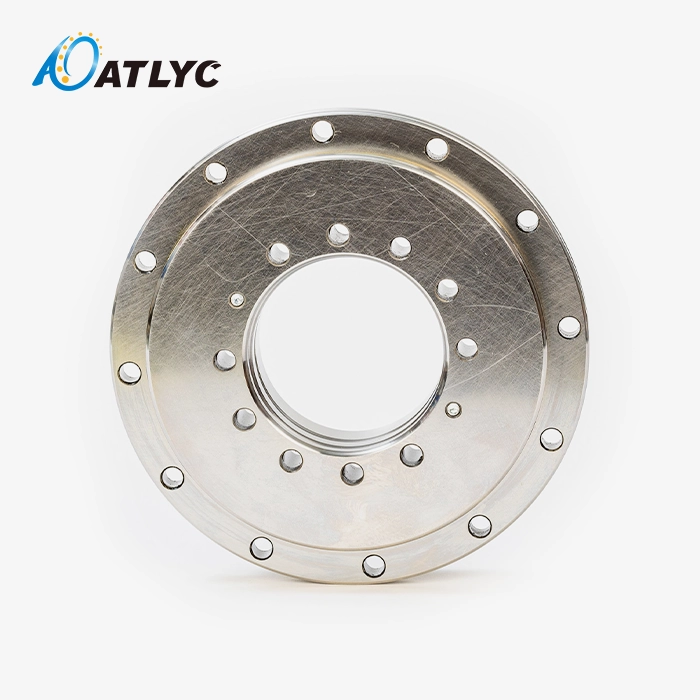
Installing a YRT 150 High Precision Rotary Table Bearing correctly is the single most important factor in achieving long-term positional accuracy and load stability. This bearing — with dimensions of 150mm (ID) × 240mm (OD) × 40mm (Width) — integrates thrust, radial, and indexing functions into one compact unit. To install it properly, you must prepare a clean environment, verify housing geometry, seat the outer ring flush, torque mounting bolts in a cross pattern to specification, apply the correct lubricant volume, then run a no-load rotation test to confirm smooth, noise-free operation.
Understanding YRT 150 High Precision Rotary Table Bearings
Before they use a wrench, every engineer and procurement manager needs to know what this bearing is and how it works differently than a normal axial-radial unit.
What Makes the YRT 150 Different From Standard Bearings
The YRT 150 High Precision Rotary Table Bearing is a cylindrical roller bearing that can handle axial loads from both directions, radial loads, and tilting moments all at the same time, without the need for extra clamping devices. It can handle pressure from multiple directions in a single preloaded assembly, which is different from standard deep-groove or tapered roller bearings. This is why makers of CNC rotary tables choose it for 4th- and 5th-axis uses.
Core Structural Design and Technical Specifications
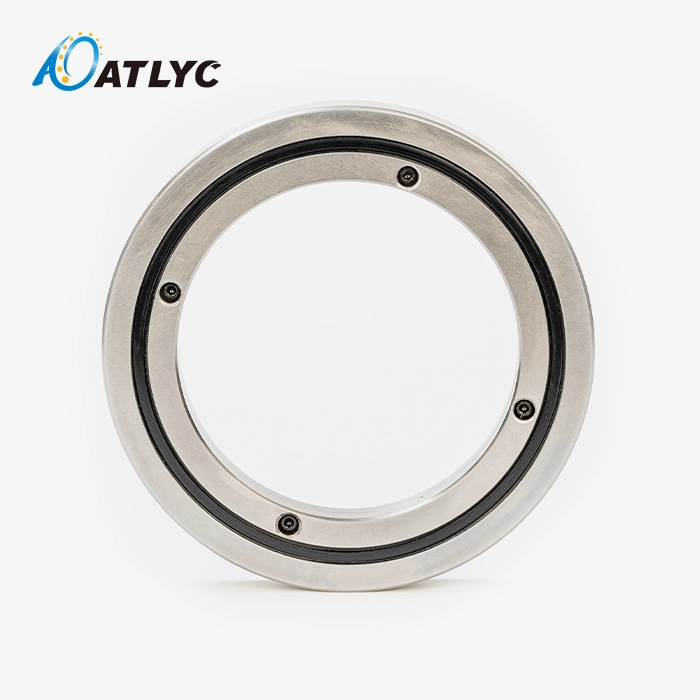
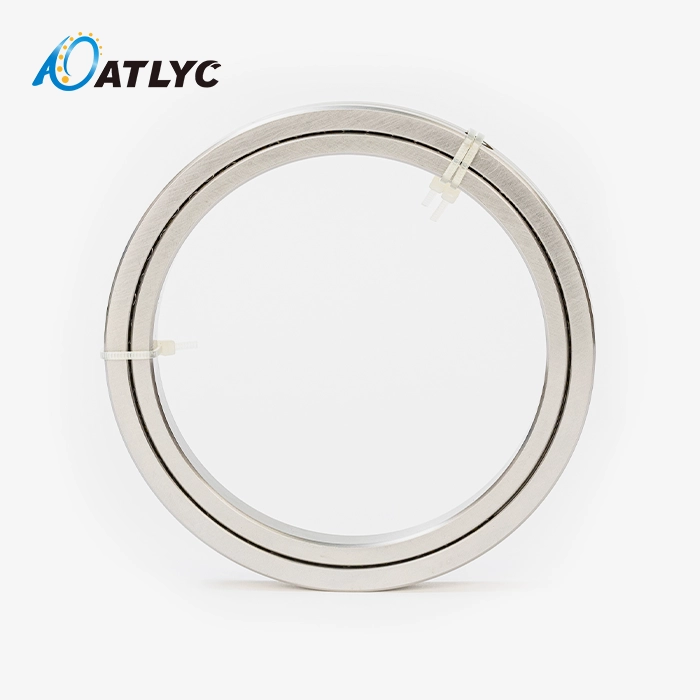
The bearing is made up of a fixed outer ring, a rotating inner ring, precision steel balls, and a cage that are all built into one unit. When the two rows of angled contact balls are set to 45° or 60° contact angles, the total load is spread out evenly across both rows. Its raceways are precision-ground and super-finished to reduce surface roughness, which lowers friction and increases service life. The YRT 150 High Precision Rotary Table Bearing specification lists the following dimensions: inner diameter of 150 mm, outer diameter of 240 mm, width (height) of 40 mm, axial static load capacity of 400–500 kN, and radial static load capacity of 150–200 kN. It also lists the following precision classes: P4 (ISO) and P2 (GCr15/100Cr6).
Key Performance Advantages
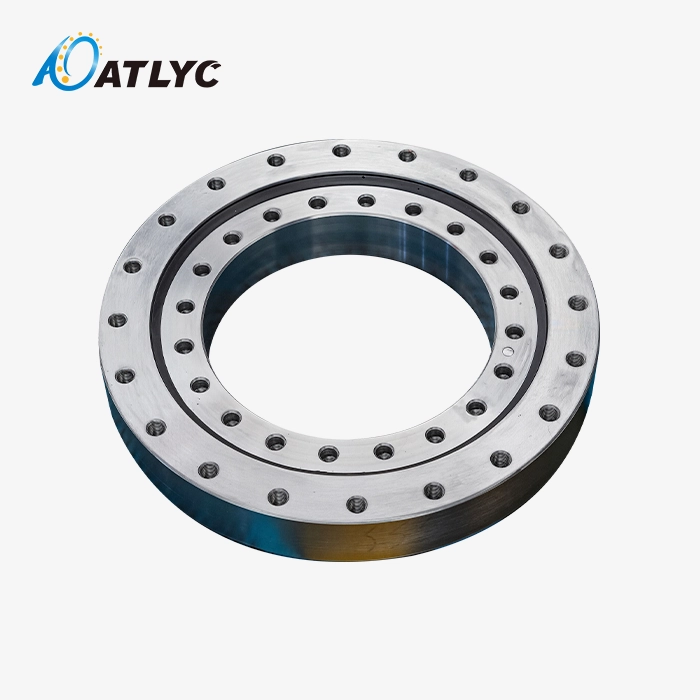
The mounting holes that are built into both the inner and outer rings are a useful feature that engineers really like. Because they don't need a separate bearing housing support, they take less time to put together and take up less space. Factory preload gets rid of the internal clearance at the source, so the unit has no backlash built in from the start. This is a property that can't be skipped in medical tomography scanners, large-scale metrology equipment, and precision indexing heads. Here are the main ways this bearing improves performance:
- High stiffness in multiple directions: The double-row arrangement stops tilting moments that would bend a normal bearing assembly, so even during rough milling passes, the positional error stays within microns.
- Zero-backlash positioning from day one: Factory preload means the bearing starts out in service with no internal play, so the accuracy of the angular tracking is maintained from the very first turn.
- Lower assembly complexity: Engineers spend less time setting up and more time checking the quality of the parts because the designs come with fixing holes already built in.
Problems with CNC machining centers and heavy-duty automation equipment can be fixed directly by these benefits of the YRT 150 High Precision Rotary table bearing. With these tools, even a 5-micron positional error can cause a finished part to be outside of tolerance.
Preparing for Installation: Key Considerations and Tools
Most early failures of rotary table bearings are caused by poor preparation. Because the preloaded raceway system can't handle much particle ingress, contamination that happens during installation is especially bad.
Environmental and Surface Preparation
Work in a place that is clean, dry, and air-conditioned. Use lint-free cloths and a solvent that doesn't leave behind any residue to clean the housing bore and shaft seat. Use a calibrated bore gage to check the diameter of the housing hole and make sure it fits the diameter of the bearing's outer ring within the allowed interference or clearance fit. If the housing bore is out of round by more than 3 μm, the error will go straight to the raceway and affect the accuracy of the runout.
Required Tools and Lubricants
- Force wrench that has been calibrated (range that covers the bolt force)
- Dial display and magnetic base (with a precision of less than 1 μm)
- Bore gage and measuring tool for the outside measurement
- A bearing installation press or a tool with a soft face
- High-temperature lithium-complex grease or the lubricant recommended by the OEM
The lube you choose is important. A lithium-complex grease with an NLGI Grade 2 consistency works well for most CNC rotary table tasks at temperatures up to 150 °C. Mixing different kinds of grease can damage the oil film because the thickeners may not work well together.
Safety and Handling Precautions
The YRT 150 High Precision Rotary Table Bearing is quite heavy, and its finely ground raceways are easy to scratch. Never lift it without clean cotton gloves on. Keep it in the box it came in until you're ready to put it. Do not use impact loading. One hit from a steel hammer can cause the track to be brinelled, which can be felt as vibrations when the machine is running.
Step-by-Step Installation Guide for YRT 150 Bearings
Once you're ready, do these steps in the order given. By skipping or rearranging them, misalignment and uneven preload distribution happen most of the time.
Step 1 — Align the Bearing on the Rotary Table
Put the YRT 150 High Precision Rotary Table Bearing on the surface that fits. Use the fixing holes in the outer ring to help you line things up. Place a clock indicator on the face of the inner ring and slowly turn the whole thing by hand. Move the unit until the total indicated runout (TIR) reading is within the P4 range of that unit. For P4-class bearings, you should aim for an axial runout of less than 3 μm before moving on.
Step 2 — Torque Mounting Bolts to Specification
Tighten all of the fixing bolts with your finger first. Then tighten them three times, first to 30% of the goal force, then to 70%, and finally to 100%. This will make a star (cross) pattern. This keeps the outer ring from cocking in the frame, which would make the load on the track uneven. Check the torque measurement table provided by the bearing provider. Overtorquing is just as bad as undertorquing because it changes the shape of the ring in an elastic way.
Step 3 — Apply Lubrication and Seal
Put the amount of grease that was given into the lubrication port. For the YRT 150 High Precision Rotary Table Bearing, don't put too much grease in it; too much grease can raise the working temperature and break the seal. After filling, put the dust covers or caps on according to the equipment plan. Before you use power, slowly turn the table all the way around a few times by hand to spread the grease evenly across both rows of rollers.
Maintenance Tips to Maximize YRT 150 Bearing Lifespan
A fixed rotary table bearing still needs an organized maintenance plan to work as long as it should.
| Maintenance Activity | Recommended Interval |
|---|---|
| Visual inspection for contamination | Every 500 hours of use |
| Grease replenishment | Every 1,000 to 2,000 hours, depending on the application |
| Torque check on mounting bolts | Every 2,000 hours |
| Vibration and temperature monitoring | Every 500 hours, checked by hand |
| Full bearing replacement assessment | Every 3 to 5 years, or as needed |
Condition Monitoring and Early Fault Detection
Unusual vibrations, a rise in working temperature, or more noise are all early signs of pollution or wear. Vibration analysis tools that find the frequency fingerprints of raceway flaws let maintenance teams know about problems before they become too big to fix. If a bearing's temperature is more than 20 °C above its usual baseline, it needs to be looked into right away.
Troubleshooting Common Issues
If you find a lot of axial play after installation, it's possible that the mounting bolt torque procedure wasn't followed correctly. Use the star design to re-torque. If noise starts to appear during low-speed spinning, make sure the grease isn't running low or is dirty. If there are spikes in vibrations that come and go, check to see if the housing bore is out of round.
After-Sales Support and OEM Servicing
If you buy replacement units from the original manufacturer or an authorized distributor, you can be sure that they will be the same size, have the right heat treatment depth (58–62 HRC), and be certified precision class. Third-party replacements might have the same nominal sizes, but they don't always have the right P4-level raceway geometry for the application.
Comparing YRT 150 to Other Rotary Table Bearings: Why Choose High Precision?
In many cases, engineering teams want to know if the YRT 130 or a standard cross-roller ring can be used instead of the YRT 150 High Precision Rotary Table Bearing.
Load Capacity and Precision Comparison
The YRT 130 can only hold 300–380 kN of steady load in one direction, so it works best with smaller rotating tables. When the table width is more than 130 mm and the tilting moment loads are large, like in a 5-axis machining center, the YRT 150 High Precision Rotary Table Bearing is the better choice because it is more rigid and has a bigger contact shape. Cross-roller rings are stiff in the radial direction, but they can't hold as much weight as the YRT series when the tilting load is very heavy.
Application Scenarios Where YRT 150 Excels
That's why the YRT 150 High Precision Rotary Table Bearing is the usual choice for large-scale coordinate measuring machines, high-precision tracking heads for making turbine parts, and both vertical and horizontal CNC machining centers (4th and 5th axis). When there is no impact and runout accuracy down to the micron level, part quality is directly protected, and the rate of scrap is lowered.
Supplier Selection and Genuine Parts
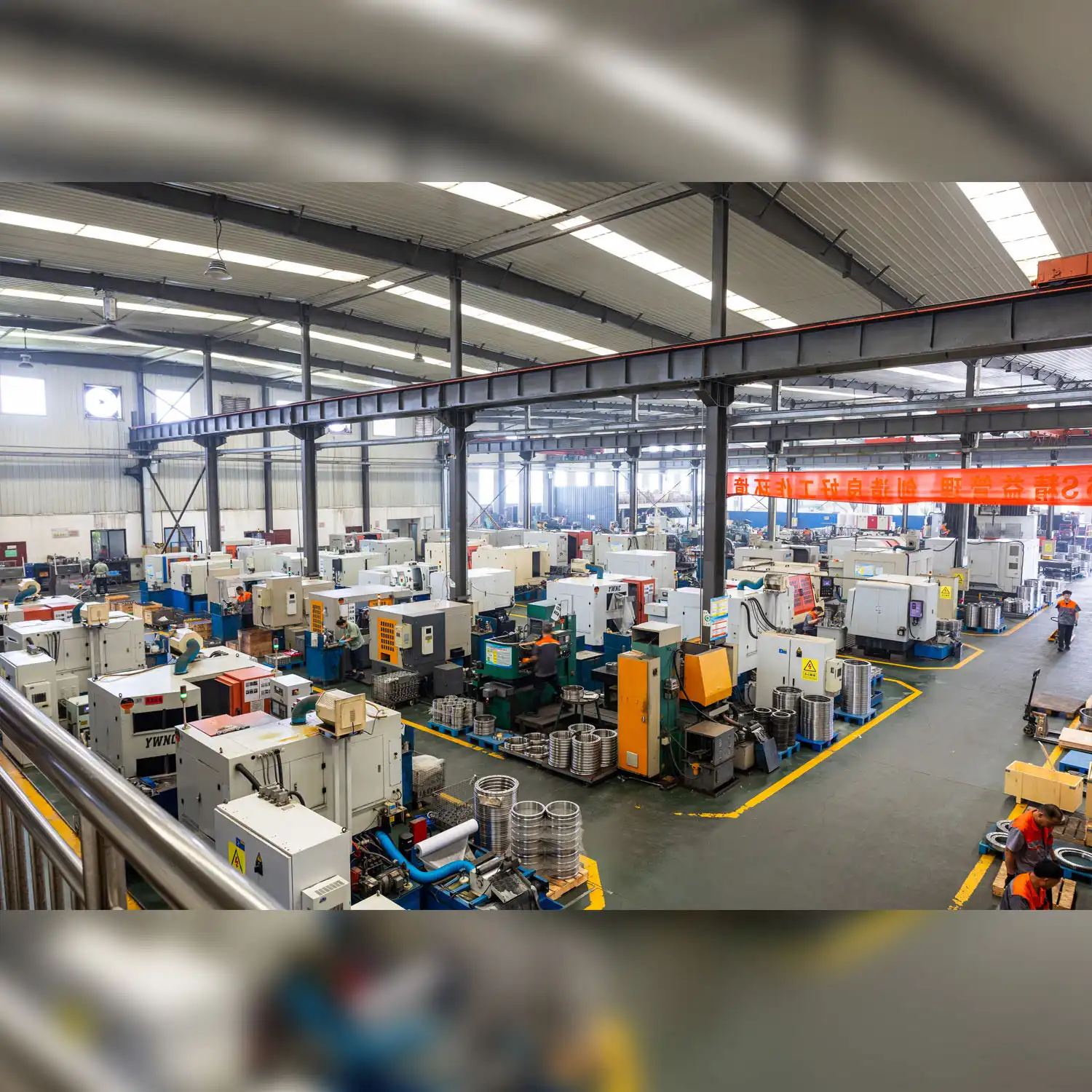
If you buy from a company that has both ISO 9001 and IATF 16949 certifications, you can be sure that the maker checks the dimensions, hardness, and runout standards during production. Luoyang Auto Bearing Co., Ltd. (ATLYC), which was founded in 2010, has been serving industrial customers in the US, Germany, South Korea, and other places for 15 years. It has six production workshops that are solely dedicated to making high-precision bearings.

Conclusion
To properly install a YRT 150 High Precision Rotary Table Bearing, the surfaces must be clean, the bearing must be precisely aligned, the torque sequence must be correct, and the correct amount of grease must be used. Its unique three-in-one structure—which combines thrust, radial, and tracking functions—sets it apart from other bearing options and requires an installation process that is accurate to the micron level. If you install this axial-radial bearing correctly and follow a structured maintenance schedule, it will keep its positional accuracy for thousands of hours. When precise runout and rigid turning are required, the YRT 150 High Precision Rotary Table Bearing is still the best option from a scientific point of view.
FAQ
What causes YRT 150 bearing installation failure most often?
The most common reason is pollution that comes from handling, followed by the wrong order of torquing the bolts. Even very small metal particles on the surface of the housing can put stress on the finely ground raceway and speed up wear.
How often should I grease the bearings in my YRT 150 rotary table?
How often you need to add grease depends on the speed, load, and temperature of the machine. For most CNC tasks, a period of 1,000 to 2,000 hours is fine. That time is cut shorter by high activity rates or high temperatures.
Can the YRT 150 bearing operate in high-temperature environments?
If you use the right high-temperature lithium-complex grease, the bearing can work continuously at temperatures of up to 150 °C. When that level is reached, the grease thickener breaks down, and the bearings don't last as long.
Is the YRT 150 interchangeable with cross-roller ring bearings?
Cross-roller rings with similar sizes may fit the same frame, but they can't handle the combined axial, radial, and rotating load capacity of the YRT 150 High Precision Rotary Table Bearing design. Substituting without a technical study could cause the replacement to fail too soon.
How do I verify bearing precision class before installation?
Ask the supplier for the inspection certificate. The axial runout test data for a P4-class bearing should be within 3–5 μm. For producers who are IATF 16949-certified, this paperwork goes with every package.
Request a Quote for YRT 150 High Precision Rotary Table Bearing — ATLYC
ATLYC has been making and selling precision bearings for 15 years. Their six production workshops are certified by both ISO 9001 and IATF 16949. We are a reliable source for YRT 150 High Precision Rotary Table Bearings, and we offer checked P4/P2 precision-class units, inspection documents, and quick expert support. To get a quote and set up a stable, long-term supply partnership, please email our engineering team at auto@lyautobearing.com.
References
1. Hamrock, B. J., Schmid, S. R., & Jacobson, B. O. (2004). Fundamentals of Fluid Film Lubrication. Marcel Dekker.
2. Harris, T. A., & Kotzalas, M. N. (2006). Rolling Bearing Analysis: Essential Concepts of Bearing Technology (5th ed.). CRC Press.
3. International Organization for Standardization. (2015). ISO 9001:2015 Quality Management Systems — Requirements. ISO.
4. International Automotive Task Force. (2016). IATF 16949:2016 Quality Management System Requirements for Automotive Production. IATF.
5. Eschmann, P., Hasbargen, L., & Weigand, K. (1985). Ball and Roller Bearings: Theory, Design, and Application. Wiley.
6. Weck, M., & Brecher, C. (2006). Werkzeugmaschinen: Konstruktion und Berechnung [Machine Tools: Design and Calculation] (8th ed.). Springer.
Learn about our latest products and discounts through SMS or email