- English
- French
- German
- Portuguese
- Spanish
- Russian
- Japanese
- Korean
- Arabic
- Greek
- German
- Turkish
- Italian
- Danish
- Romanian
- Indonesian
- Czech
- Afrikaans
- Swedish
- Polish
- Basque
- Catalan
- Esperanto
- Hindi
- Lao
- Albanian
- Amharic
- Armenian
- Azerbaijani
- Belarusian
- Bengali
- Bosnian
- Bulgarian
- Cebuano
- Chichewa
- Corsican
- Croatian
- Dutch
- Estonian
- Filipino
- Finnish
- Frisian
- Galician
- Georgian
- Gujarati
- Haitian
- Hausa
- Hawaiian
- Hebrew
- Hmong
- Hungarian
- Icelandic
- Igbo
- Javanese
- Kannada
- Kazakh
- Khmer
- Kurdish
- Kyrgyz
- Latin
- Latvian
- Lithuanian
- Luxembou..
- Macedonian
- Malagasy
- Malay
- Malayalam
- Maltese
- Maori
- Marathi
- Mongolian
- Burmese
- Nepali
- Norwegian
- Pashto
- Persian
- Punjabi
- Serbian
- Sesotho
- Sinhala
- Slovak
- Slovenian
- Somali
- Samoan
- Scots Gaelic
- Shona
- Sindhi
- Sundanese
- Swahili
- Tajik
- Tamil
- Telugu
- Thai
- Ukrainian
- Urdu
- Uzbek
- Vietnamese
- Welsh
- Xhosa
- Yiddish
- Yoruba
- Zulu
Why Choose 7220AC Super Precision Bearing for CNC Spindles?
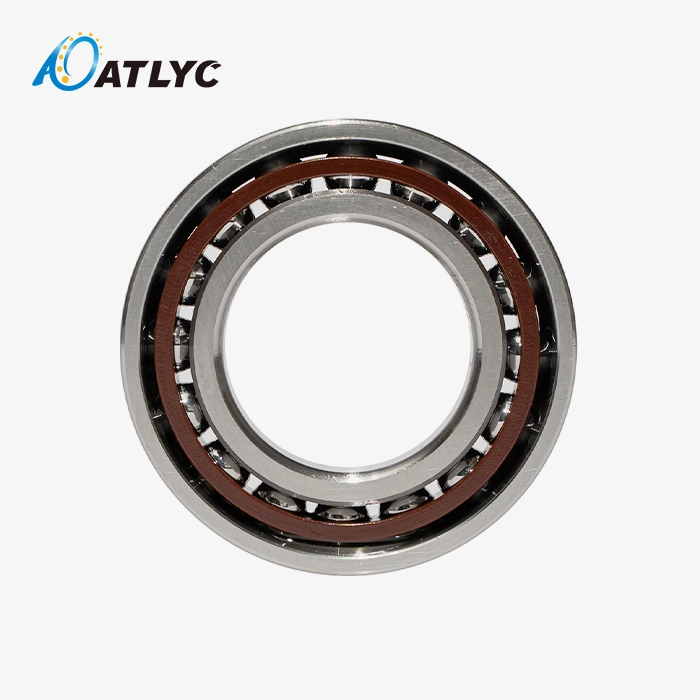
If you run CNC machining operations, you already know that spindle performance directly determines part quality. The 7220AC Super Precision Bearing is a single-row angular contact ball bearing with a 25-degree contact angle, a 100mm bore, 180mm outer diameter, and 34mm width. Manufactured to ISO P4/ABEC-7 or P2/ABEC-9 standards, it handles simultaneous radial and axial loads without sacrificing rotational speed. For engineers and procurement managers who need consistent spindle accuracy, low vibration, and long service life, the 7220AC angular contact bearing is a technically sound, cost-effective answer.
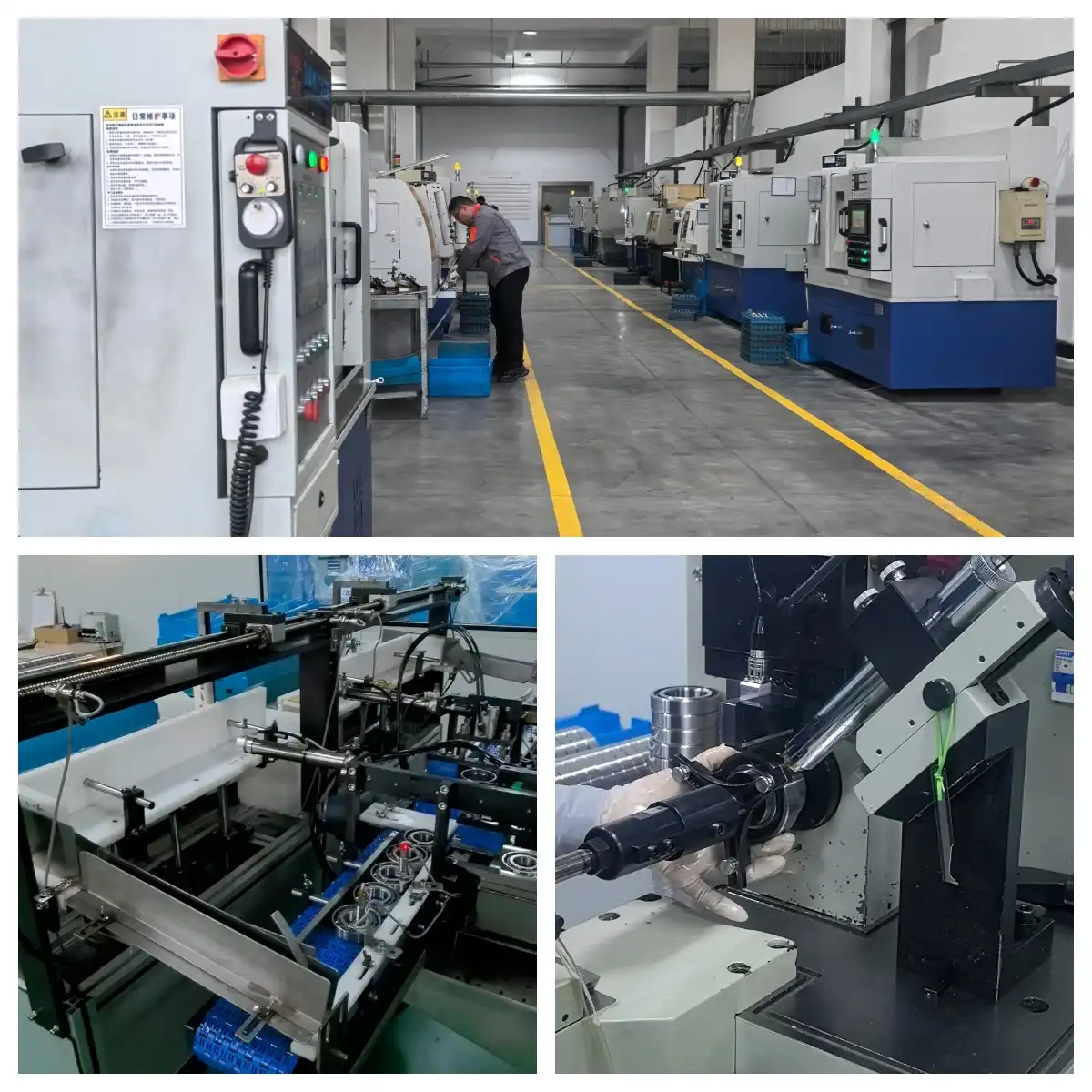
Understanding 7220AC Super Precision Bearings for CNC Spindles
Core Technical Specifications
The 7220AC Super Precision Bearing has an inner diameter of 100 mm, an outer diameter of 180 mm, a thickness of 34 mm, and weighs about 3.15 kg. It is made from GCr15 (52100) bearing steel that has been vacuum-degassed to give it the best wear protection. There are five accuracy grades: P5, P4, P2, and P3. These cover a wide range of spindle precision needs. The cage is usually made of phenolic resin (bakelite) or nylon, which keeps friction low at high speeds and allows oil-air lubrication above 10,000 RPM. The inner diameter is 100 mm, the outer diameter is 180 mm, the width is 34 mm, the contact angle is 25°, the material is GCr15/52100 bearing steel, the accuracy grades are P5, P4, and P2, and the mounting configurations are DB, DF, and DT. The delivery time is 7 working days.
| Parameter | Value |
|---|---|
| Inner Diameter | 100 mm |
| Outer Diameter | 180 mm |
| Width | 34 mm |
| Contact Angle | 25° |
| Material | GCr15 / 52100 Bearing Steel |
| Accuracy Grades | P5 / P4 / P2 |
| Cage Material | Bakelite / Nylon |
| Mounting Configurations | DB / DF / DT |
| Delivery Time | 7 working days |
How the 25-Degree Contact Angle Works
The contact angle is 25 degrees when the letter "AC" is used. This shape spreads axial thrust more widely than the 15-degree "C" shape, which makes it stiffer when cutting loads are applied. It also spins faster than the "B" type at 40 degrees, making it perfect for wheels that need both speed and strength. This contact shape keeps the shaft centered when a CNC tool presses against a workpiece. This stops the tiny deflections that leave chatter marks on final surfaces.
Lubrication and Temperature Management
When using a shaft with a high dmn value, oil-air or oil-mist lubrication is best because it cools the part continuously while forming a film. If you're using high-quality synthetic grease like Klüber or Kyodo, only fill 15–20% of the empty space to keep the heat from building up too much. Keeping the working temperature below 120°C protects the hardness of the GCr15 steel and stops it from wearing out too quickly. Service life is greatly increased when lubrication times are matched to real spinning hours instead of date time.
Comparing 7220AC Bearing to Alternative Super Precision Bearings
7220AC vs. 7220C and 7220A
It comes down to load priority vs. speed priority when choosing between these three models. The 7220C (15-degree angle) can handle lower axial loads but runs at faster limiting speeds. At a 40-degree angle, the 7220B can carry the biggest loads along its length, but it makes more heat when it moves quickly. That's why the 7220AC Super Precision Bearing is the best choice for mixed-load CNC spindles that can't handle either extreme. Its contact angle is 15°, which means it's moderately or very high for ultra-high-speed light-load spindles. Its axial load capacity is 25°, which means it's high for CNC milling and grinding spindles. Its axial load capacity is 40°, which means it's very high for heavy machinery. Its contact angle is 25°, which means it's moderate to high for smaller spindles (95mm bore) and moderately or strongly for large-bore heavy-duty spindles.
| Model | Contact Angle | Axial Load Capacity | Speed Suitability | Best Application |
|---|---|---|---|---|
| 7220C | 15° | Moderate | Very High | Ultra-high-speed light-load spindles |
| 7220AC | 25° | High | High | CNC milling / grinding spindles |
| 7220B | 40° | Very High | Moderate | Heavy axial-load machinery |
| 7219AC | 25° | Moderate | High | Smaller spindles (95mm bore) |
| 7222AC | 25° | Very High | Moderate | Large-bore heavy-duty spindles |
7219AC and 7222AC: Size-Based Trade-Offs
The 7219AC has the same 25-degree contact angle as the 7219, but its size is 95 mm, which makes it lighter and better for smaller spindle housings. For bigger industrial shafts, the 7222AC can be scaled up to a 110mm bore. If your spindle housing is built around a 100mm shaft, neither of the alternatives will fit without re-machining the housing, which costs a lot more than the difference in price.
Cost-to-Performance Ratio Analysis
OEM buying teams often ask if there is a cheaper option to the 7220AC that can be used in high-precision wheels. The answer depends on how much is being made and what the tolerances are. If you use a standard-grade bearing in a spindle that is working at P4 or P2 accuracy, it adds runout variability that causes parts further downstream to be rejected. Quality-grade buying is the smart financial choice because the cost of one batch of scrap parts is usually higher than the price increase of the right super precision angular contact bearing.
Procurement Considerations for 7220AC Super Precision Bearings
Pricing Trends and Bulk Purchase Advantages
Prices for the 7220AC on the market depend on the level of accuracy and the number of orders. P5-grade units are less expensive and are better for less demanding jobs. On the other hand, P4 and P2 grades are more expensive because they have to meet stricter standards. When you order more than 50 units at once, you usually get better unit pricing and faster scheduling. Instead of trade businesses, manufacturers who do their own grinding and inspection offer more uniform quality at lower prices.
Lead Times and Supply Chain Reliability
ATLYC's standard shipping time for stock sizes of the 7220AC Super Precision Bearing is 7 business days. Lead times are longer for customized configurations that include OEM markings or special clearance adjustments. When buyers from other countries look for goods, they need to think about customs paperwork, HS code classification, and any import taxes that might apply. Working directly with a manufacturer that is ISO 9001 and IATF 16949 certified cuts down on the time it takes to check the product and the chance of getting something that doesn't meet standards.
Avoiding Counterfeit Bearings
In the aftermarket world, counterfeit precision bearings are still a real risk when buying them. If you put a fake 7220AC in a high-speed spindle, it will break down early, which could cause unexpected downtime and damage to the equipment. With every shipment, buyers should ask for material certifications, dimensional inspection reports, and noise test records. When you buy from makers with production records that can be tracked and quality certifications that are recognized, you have the paperwork you need for an incoming check.
Practical Applications and Benefits of 7220AC Bearings in CNC Machinery
CNC Milling and Grinding Spindles
The 7220AC handles mixed loads in both vertical and horizontal machining centers, where cutting forces act in a radial direction and tool contact creates an axial push. Surface and cylinder grinders need runout to be less than 1.5 microns. This bearing's P4 or P2 accuracy grades always meet that need. Engineers who work in die-mold shops, aerospace precision work, and making auto parts say that rework rates have gone down since they switched to properly preloaded 7220AC sets. In the main industrial settings where this bearing has shown measurable results, they are:
- CNC High-Speed Machining Centers: Supports both radial and axial loads in milling spindles, maintaining dimensional accuracy across long production runs and reducing surface finish defects caused by spindle deflection.
- Precision Grinding Headstocks: Delivers runout performance below 1.5 microns, which is the threshold needed for acceptable surface finish in cylindrical and surface grinding operations across metalworking and automotive component lines.
- Industrial Pumps and Compressors: Manages continuous axial thrust from fluid pressure in 100mm-shaft centrifugal pumps and screw compressors, operating reliably in elevated-temperature environments when clearance is correctly specified.
These benefits for applications immediately lead to lower total cost of ownership, fewer spindle rebuilds, and more machine uptime during all shifts.
Preload Selection and Mounting Configurations
Back-to-back (DB) mounting is the standard way to set up CNC spindles that need to be very rigid at high moments. Face-to-face (DF) works well in situations where thermal expansion needs to be taken into account. Tandem (DT) setups can handle heavy axial loads that only go in one direction in the pump and compressor shafts. If you choose the wrong loading class (light, medium, or heavy), either the stiffness is lost, or too much heat is produced. For general-purpose CNC milling, most spindle rebuilders say that medium preload is the best starting point for balance.
Maintenance Intervals and Condition Monitoring
The best way to tell if a bearing is healthy is to check the temperature at the spindle shaft. A steady rise of 10–15°C above the normal working temperature is often a sign of deteriorating grease or early damage from wear and tear. If vibration signature analysis is possible, it can find worn cages or problems with the raceways before the spindle breaks. Maintenance times that are based on actual production hours instead of set calendar dates cut down on needless disassembly and catch real wear early, helping maintain the performance of a 7220AC Super Precision Bearing.
Why 7220AC is the Preferred Choice for CNC Spindle Manufacturers
Dimensional Accuracy and Quality Certification
The 7220AC is chosen by top spindle makers because its tolerance stack-up stays within acceptable limits for both DB and DF sets from the same production lot. This is important when putting together matched pairs because bearings from the same lot have the same internal shape, which means that the pressure after assembly can be predicted. ISO 9001 and IATF 16949 certifications set the standards for quality management that ensure consistency from lot to lot, which is a basic requirement for OEM spindle production.
Compatibility with Evolving CNC Technology
More and more modern CNC machining centers need spindles that go faster than 15,000 RPM, temperature sensors that are built in, and bearings that can work with automatic lubrication systems. These operational needs can be met by the 7220AC's cage design and clearance options, which don't require redesigning the housing. Hybrid versions with silicon nitride (Si3N4) ceramic rolling elements have less mass and heat expansion, which lets them go faster while keeping the same outside dimensions as the steel version.
Verified Field Performance
OEMs and procurement teams consistently say that 7220AC sets that are properly specified last longer in production spindles than standard-grade alternatives. According to field data from people who repair machining centers, the L10 fatigue life estimates based on GCr15 steel under the right lubrication and preload conditions are in line with what ISO 281 says should happen. This predictability helps with planning for upkeep and capital budgeting, which are two important things that procurement managers look at when choosing a long-term bearing provider.
Conclusion
The 7220AC Super Precision Bearing has a clear technical place in CNC spindle design. It has the right amount of axial stiffness for heavy cutting, the right amount of speed for high-productivity machining, and the right amount of accuracy to support the production of precision-grade parts. It's a good choice for CNC milling, grinding, and industrial rotating equipment because of the way it's mounted and the materials it's made of. For buying teams, the choice comes down to finding a maker with consistent quality, clear certifications, and dependable lead times at a price that beats the competition.
FAQ
What is the primary difference between the 7220AC and 7220C?
The position of the touch. The 7220AC has a 25-degree angle, which makes it more rigid along its length when cutting. The 7220C has an angle of 15 degrees, which works well for very fast tasks with light vertical loads. The 7220AC has better balance for most CNC milling spindles.
Can I mix 7220AC bearings from different manufacturers in one spindle?
No, each brand of super-precise bearings has its own tolerance errors and internal clearance values. When you mix brands in a matched set, the load is spread out unevenly, fatigue builds up quickly, and the set fails early. Get a full set from the same production lot at all times.
What lubrication method works best for the 7220AC at high speed?
For wheels that spin faster than 10,000 RPM, oil-air or oil-mist lubrication is best because it gives both a film of lubrication and constant cooling. High-quality synthetic grease works at moderate speeds and only needs to fill 15–20% of the empty space to keep the engine from getting too hot.
How does preload selection affect bearing life?
Heavy preload makes the structure more rigid, but it also raises the operating temperature, which cuts down on fatigue life if cooling isn't enough. Light loading makes the material cooler, but it might not be stiff enough for big cuts. For most CNC milling spindles, medium preload is a good place to start.
What mounting arrangement gives the highest stiffness?
Back-to-back (DB) mounting is common for CNC spindle jobs that need a lot of rigidity at high moments. It is the most common way for machine tool wheels to run the 7220AC when they are paired up.
Get a Quote on 7220AC Super Precision Bearing Supplier Solutions from ATLYC
ATLYC, which stands for Luoyang Auto Bearing Co., Ltd., has been making precision bearings since 2010. Their six production workshops are ISO 9001 and IATF 16949 certified. People in the USA, Germany, South Korea, and other places trust our 7220AC Super Precision Bearing, which ships in 7 business days and can be customized by the original equipment manufacturer (OEM). Get price quotes, technical details, and bulk discounts right away by getting in touch with our engineering team. To start your question, email us at auto@lyautobearing.com.
References
1. Harris, T. A., & Kotzalas, M. N. — Rolling Bearing Analysis: Essential Concepts of Bearing Technology — Taylor & Francis, 2006.
2. International Organization for Standardization — ISO 281: Rolling Bearings — Dynamic Load Ratings and Rating Life — ISO, 2007.
3. International Organization for Standardization — ISO 15241: Rolling Bearings — Symbols for Quantities — ISO, 2004.
4. Weck, M., & Brecher, C. — Werkzeugmaschinen: Messtechnische Untersuchung und Beurteilung — Springer, 2006.
5. SKF Group — SKF Rolling Bearings Catalogue — SKF, 2018.
6. Byrne, G., Dornfeld, D., & Denkena, B. — "Advancing Cutting Technology" — CIRP Annals — Manufacturing Technology, Vol. 52, Issue 2, 2003.
Learn about our latest products and discounts through SMS or email