- English
- French
- German
- Portuguese
- Spanish
- Russian
- Japanese
- Korean
- Arabic
- Greek
- German
- Turkish
- Italian
- Danish
- Romanian
- Indonesian
- Czech
- Afrikaans
- Swedish
- Polish
- Basque
- Catalan
- Esperanto
- Hindi
- Lao
- Albanian
- Amharic
- Armenian
- Azerbaijani
- Belarusian
- Bengali
- Bosnian
- Bulgarian
- Cebuano
- Chichewa
- Corsican
- Croatian
- Dutch
- Estonian
- Filipino
- Finnish
- Frisian
- Galician
- Georgian
- Gujarati
- Haitian
- Hausa
- Hawaiian
- Hebrew
- Hmong
- Hungarian
- Icelandic
- Igbo
- Javanese
- Kannada
- Kazakh
- Khmer
- Kurdish
- Kyrgyz
- Latin
- Latvian
- Lithuanian
- Luxembou..
- Macedonian
- Malagasy
- Malay
- Malayalam
- Maltese
- Maori
- Marathi
- Mongolian
- Burmese
- Nepali
- Norwegian
- Pashto
- Persian
- Punjabi
- Serbian
- Sesotho
- Sinhala
- Slovak
- Slovenian
- Somali
- Samoan
- Scots Gaelic
- Shona
- Sindhi
- Sundanese
- Swahili
- Tajik
- Tamil
- Telugu
- Thai
- Ukrainian
- Urdu
- Uzbek
- Vietnamese
- Welsh
- Xhosa
- Yiddish
- Yoruba
- Zulu
How to Select NJ Series Roller Bearings for Your Machine
Before you choose NJ Series Roller Bearings for your machine, you should look at the loads, speed, temperature, and layout of the shaft. Make sure the design calls for a high radial capacity and a single-direction axial location. Then, make sure that the size, internal clearance, accuracy class, and type of cage all fit those needs. Before you accept a part, make sure it fits well and will last as long as it's supposed to. Last, check the supplier's samples, certificates, and delivery terms. People in the US who want a clear path from their first idea to a confirmed order can use this guide.It's not enough to match the shaft diameter or copy an old part number when choosing NJ Series Roller Bearings. Making the wrong choice can lead to overheating, vibrations, early fatigue, and downtime that wasn't planned. The sections that follow talk about design, size, comparisons, installation, service life, and where to get the product.

Understand NJ Series Roller Bearings and Your Machine Needs
What Defines NJ Series Roller Bearings
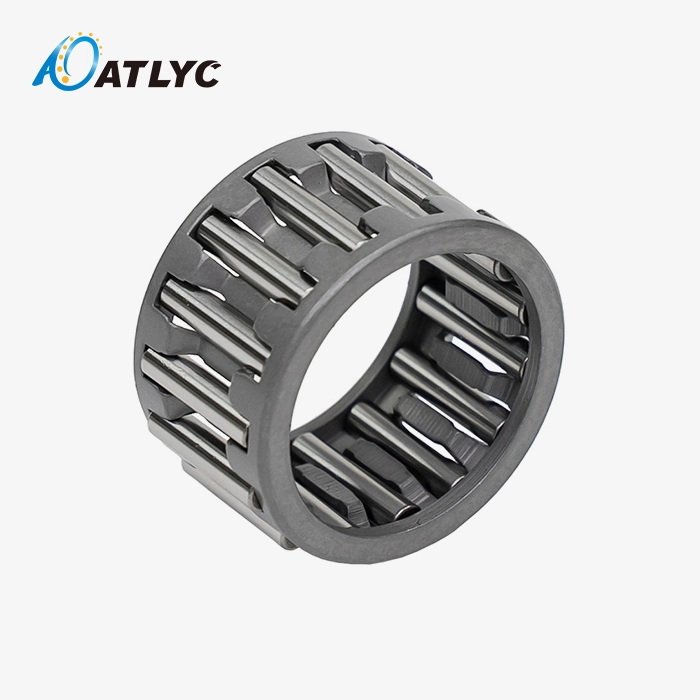
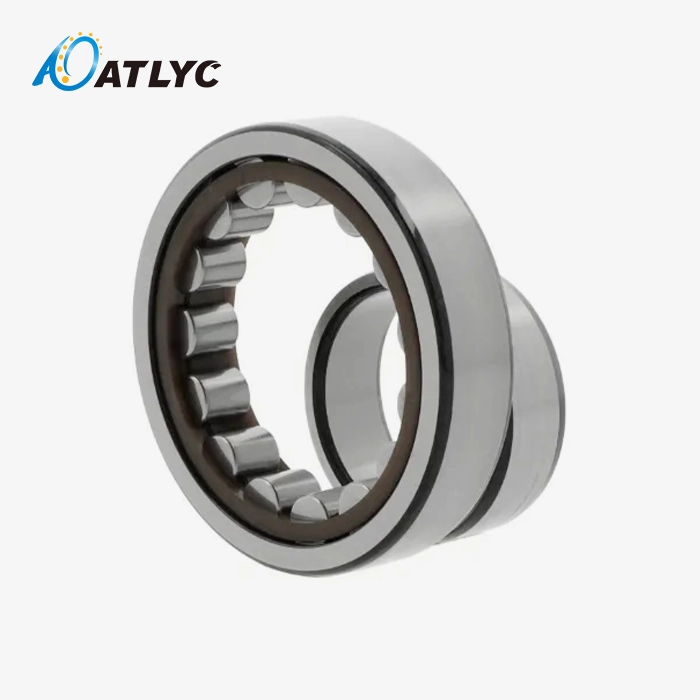
NJ Series Roller Bearings are cylinder-shaped roller bearings with only one row. The outer ring has two flanges, and the inner ring only has one. This means that the axial location can only go in one direction. You can take the bearing apart, so you can mount the inner ring separately from the outer ring, roller, and cage assembly. The rollers make line contact with the raceways, which gives them a lot of radial strength, stiffness, and resistance to impact and shock. These bearings are made by ATLYC out of GCr15 bearing steel, a grade that has been through-hardened and is chosen for its resistance to fatigue. Engineers choose this style when a shaft needs to go in a fixed direction and have room to grow in the other direction as it gets hot.
Define Your Operating Conditions First
Write down how the machine will actually work before you choose a part number. Write down the radial load, the axial load and its direction, the speed, the duty cycle, the temperature range, the contamination, and the service life you want the machine to last. A machine tool spindle needs to be rigid and accurate while it's running. With rotor weight, magnetic pull, and heat growth, a motor has to be able to work. Hydraulic forces and thrust act on a pump all the time. If you only look at the bore size, you might get a pipe with too little capacity or the wrong axial behavior. Include the conditions at startup and at peak, as these are often what set the limit. A quick look over the application at this point lowers the risk of maintenance and the total cost of ownership in the long run.
Check Shaft, Housing, and Axial Space
Next, find the size of the area around the bearing. Check the shoulder diameters, fillet radii, axial space, and installation access to make sure the shaft and housing fit together. NJ Series Roller Bearings that can be taken apart let the shaft and housing interfere with each other. The one inner flange needs to face the way you want the shaft to go, and the open side needs space for heat to dissipate. The general plan for measurements is ISO 15, so you can compare sizes from different brands. However, you should still check the datasheet for shoulder measurements. You need to use metric measurements, so change any drawings that are in inches first. Even small differences can lead to flange contact and early wear.
Choose the Correct NJ Series Roller Bearings Size and Specification
Match Load Ratings to the Duty
Size is based on two ratings. ISO 281 says that the basic load rating C gives an idea of the rolling fatigue life, and ISO 76 says that the static load rating C0 checks for permanent deformation. Use the basic rating for service that involves turning, and the static rating for service that involves shock, stopping, or turning very slowly. Compare them to the same load that your machine can handle at normal and peak conditions. If two bearings have the same size, don't assume they have the same rating. The internal geometry and roller profile can be different. Because flange contact limits how much thrust the bearing can carry, axial load needs to be checked separately.
Select Internal Clearance and Accuracy Class
A normal amount of space works for most standard sizes and temperatures. It can help when interference fits make the clearance smaller or when the inner ring gets hotter than the outer ring. There is more space in C3. But too much clearance makes the vibrations worse and makes it harder for the rollers to share the load. When it comes to accuracy, ATLYC offers NJ Series Roller Bearings in P0, P5, and P4. For general machinery, P0 is the standard class. P5 and P4 are better for uses that need more precise running, like machine tool spindles. Tolerance values in ISO 492 are used for these classes. Choose the class that fits your actual runout needs, since extra precision doesn't help a conveyor drive much.
Pick the Cage and Confirm Specifications
Strength and vibration tolerance are affected by the choice of cage. Cages made of pressed steel are good for general industrial use. For crushers, heavy pumps, and drives that are prone to shocks, I suggest machined brass cages because they can handle vibration, impact, and heavy lubrication better. When the job calls for it, save brass for duty. When the load stays steady, use pressed steel. The ATLYC specs are shown in the table below. Before you ask for a quote, give it to your engineer.
| Item | ATLYC NJ Series Roller Bearings |
|---|---|
| Structure | Outer ring with double flanges, inner ring with single flange |
| Material | GCr15 bearing steel |
| Accuracy | P0, P5, P4 |
| Cage | Pressed steel, machined brass |
| Main applications | Machine tool spindles, motors, pumps |
| Delivery time | 7 working days |
| Customization | OEM service |
| Samples | Sample service available |
Compare NJ Series Roller Bearings With Other Designs
NJ Versus NU and N Designs
NU bearings can move in both directions because the outer ring has two flanges and the inner ring does not. N bearings have two flanges on the inner ring and a plain ring on the outside. They also move freely. This kind of bearing works well as a floating bearing. One extra flange is added to the NJ Series Roller Bearings to keep the shaft in one place while heat growth moves it in the other direction. That kind of behavior is good for shafts that need to be guided in one direction and have room to grow in the other. Before you make your choice, check which way the axial load moves.
NJ Versus NUP and the HJ Angle Ring
NUP bearings have a loose flange ring that can hold the shaft in place in either direction as long as the axial load stays within the limits. You can do one of two things if your machine needs two-way location. With an HJ angle ring next to the open side of an NJ bearing, it works a lot like an NUP. You can choose an NUP design. This is always a good idea to check the axial load limit. When thrust moves through sliding contact between roller ends and flanges, heat is generated. This is why the quality of the lubricant is important. When there is strong two-way thrust on the shaft, you shouldn't just rely on an NJ bearing.
NJ Versus Deep Groove Ball Bearings
Deep groove ball bearings move more quickly and have less friction. They can handle moderate axial and radial loads in both directions. They work with small assemblies and lighter loads. A ball bearing of the same size, on the other hand, can't hold as much radial load as a cylindrical roller design because the ball contact is a point. NJ Series Roller Bearings tend to last longer in the same amount of space when shocks, heavy gear forces, or impeller loads act on the shaft. Each case is different, and the full load profile is what makes the difference. The table shows how the choices stack up.
| Type | Flange layout | Axial behavior | Typical role |
|---|---|---|---|
| NU | Two outer flanges, none on inner ring | Moves both directions | Floating bearing |
| N | Two inner flanges, none on outer ring | Moves both directions | Floating bearing |
| NJ | Two outer flanges, one inner flange | Locates one direction | Semi-locating bearing |
| NUP | Two outer flanges, one inner flange plus loose ring | Locates both directions | Locating bearing |
| Deep groove ball | Grooved raceways, no flanges | Moderate axial load both ways | Compact, higher speed |
Verify Installation, Lubrication, and Service Life
Install NJ Series Roller Bearings With Correct Fits
If the installation is done wrong, even a well-chosen bearing will not work. Double-check which end is fixed and which end floats, and make sure the single flange is facing the right direction. Mounting force should only go through the ring you are fitting, never the rollers. Because the inner ring comes apart, you can heat it and stretch it to fit the shaft. Then, you can slide the outer ring assembly into the housing. First, clean everything. When you join the two pieces, be careful because rollers that drag across a raceway will make the paint smear. Cylindrical roller bearings can only handle a few minutes of being out of alignment, so make sure the alignment is tight.
Choose Lubrication and Check During Commissioning
You can choose between grease, oil bath, circulating oil, or oil-air lubrication based on speed, temperature, contamination, and ease of maintenance. When motors and pumps are used at low speeds or with low heat loads, grease works well. The quality of the lubricant film is very important when there is flange contact under axial load. I suggest that you check the temperature, vibration, noise, and lubricant condition at regular intervals during commissioning. A quick rise in temperature could mean that there is too much lubrication, contamination, misalignment, or preload. Smearing can also happen when rollers skid instead of roll because of a light radial load, so make sure the machine can handle the minimum load. Take note of these numbers as your starting point.
Estimate Service Life With L10
ISO 281 says that the basic rating life L10 is the life that 90% of a group of identical bearings reach or beat. When it comes to roller bearings, L10 is equal to (C/P) raised to the power of 10/3, in millions of turns. C is the basic load rating, and P is the equivalent load. Use speed to convert that into hours and get L10h. In real life, the outcome is different because of things like temperature, lubrication, contamination, misalignment, vibration, and shock. Not just price, but also failure history, maintenance records, and inspection data should be used to compare options. Set criteria for replacement based on temperature, noise, vibration, spalling, damage to the cage, and the condition of the lubricant.
Source NJ Series Roller Bearings and Avoid Costly Mistakes
Evaluate the Supplier and Documentation
Start your RFQ for NJ Series Roller Bearings with the full name, including the size, clearance, cage material, precision class, and any other necessary suffixes. Describe the use, the amount, the location of delivery, and the documents that are needed. It's not always true that dimensions and ratings are the same, so ask for datasheets before accepting an equivalent. Check the certificates, the ability to track batches, the packaging, and the ability to export. It has been owned by Luoyang Auto Bearing Co., Ltd. since 2010 and is certified by both ISO 9001 and IATF 16949. Over the course of six workshops, our 120 skilled workers handle production, research and development, quality control, and assembly. People from South Korea, the US, Germany, Russia, Iran, and Turkey buy from us. Don't just look at the unit price; compare the total cost, which should include downtime and delivery risk.
Follow a Practical Selection Workflow
This is how I buy NJ Series Roller Bearings. To begin, write down the shaft's length, width, weight, speed, temperature, lubrication, and duty cycle. The second step is to choose whether the machine needs a floating bearing, a locating bearing, or both. Third, figure out the basic and static capacities. Next, guess how long something will last in normal and peak conditions. Fourth, write down the precision class, clearance, and cage. Fifth, check the fit, the shoulders, the axial movement, and the compatibility of the lubricant. Sixth, look over the quality, documents, and availability of the supplier. The part should be approved after an engineering review, prototype testing, or validation in the field. At Lync, you can test real parts before you order a lot of them through their sample service and OEM service.
Avoid Common NJ Series Roller Bearings Selection Mistakes
Most mistakes happen when people choose based only on the bore size, use an NJ bearing when two-way axial location is needed, or choose C3 clearance without checking the fit or temperature. Ignoring lubricant compatibility, contamination, storage, mounting force, and traceability are some of the other problems. Even if the sizes of two parts are the same, they may have different ratings, cage construction, or clearance. Check the full name and datasheet, make sure the suppliers are qualified before buying in bulk, and look over the whole assembly. To be sure of these things, ask your supplier to write them down. Pre-ordering a short technical check costs a lot less than having to redo work or deal with unplanned downtime. ATLYC's delivery time of 7 business days gives you time to do that.

Conclusion
Not the catalog, but the machine, is the first place to look for NJ Series Roller Bearings. It depends on the loads, speed, temperature, and layout of the shaft to see if a one-direction axial location works for the design. The duty determines the size, and the accuracy class, clearance, and cage type determine the type of work. It is possible to get NU, N, NUP, HJ, and deep groove ball bearings, which all meet different axial and speed needs. It is estimated that the L10 will last for 10 years if it is properly fitted, oiled, and aligned, and early problems are found during commissioning checks. When choosing a supplier, full names, certificates, the ability to track goods, and total cost are more important than unit price. A structured workflow and early validation cut down on mistakes and downtime during selection.
FAQ
What is the difference between NJ and NU bearings?
NU bearings don't have an inner ring flange, so the shaft can move in both directions along its length. NJ bearings have an extra flange on the inside that holds the shaft in place in one direction while still letting the other side expand.
Can NJ Series Roller Bearings carry thrust loads?
Yes, but only a small axial load in one direction. The quality of the lubrication is important because flange contact causes sliding heat. Check the catalog limit to see what size and speed you can use.
When should I choose a brass cage?
For vibration, impact, or heavy lubrication, choose machined brass. Pressed steel is good for heavy industrial use.
Which accuracy classes does ATLYC offer?
ATLYC gives out P0, P5, and P4. P0 is good for general machinery; P5 and P4 are good for machine tool spindles and other precision work.
Does ATLYC offer samples?
Yes. Sample service and OEM service are both offered by ATLYC. Send us your name, the number of loads, and the speed so that we can match the sample to your needs.
Request NJ Series Roller Bearings Selection Support From ATLYC
Looking for a company that can supply NJ Series Roller Bearings and understands what OEMs need? ATLYC is certified by both ISO 9001 and IATF 16949. They provide OEM service and sample service, and they deliver within 7 working days. To get more information, send your name, loads, speed, and quantity to auto@lyautobearing.com or go to https://aotezhoucheng.aixdb.cn/. Our engineers will look over your NJ Series Roller Bearings application and get back to you with clear advice on which ones to choose.
References
1. ISO 76 Rolling Bearings: Static Load Ratings, 2006
2. ISO 15 Rolling Bearings: Radial Bearings, Boundary Dimensions, General Plan, 2017
3. ISO 492 Rolling Bearings: Radial Bearings, Geometrical Product Specifications and Tolerance Values, 2014
4. IATF 16949 Automotive Quality Management System Standard, 2016
5. SKF Rolling Bearings Catalogue, 2018
6. Harris and Kotzalas, Rolling Bearing Analysis: Essential Concepts of Bearing Technology, 2006
Learn about our latest products and discounts through SMS or email