- English
- French
- German
- Portuguese
- Spanish
- Russian
- Japanese
- Korean
- Arabic
- Greek
- German
- Turkish
- Italian
- Danish
- Romanian
- Indonesian
- Czech
- Afrikaans
- Swedish
- Polish
- Basque
- Catalan
- Esperanto
- Hindi
- Lao
- Albanian
- Amharic
- Armenian
- Azerbaijani
- Belarusian
- Bengali
- Bosnian
- Bulgarian
- Cebuano
- Chichewa
- Corsican
- Croatian
- Dutch
- Estonian
- Filipino
- Finnish
- Frisian
- Galician
- Georgian
- Gujarati
- Haitian
- Hausa
- Hawaiian
- Hebrew
- Hmong
- Hungarian
- Icelandic
- Igbo
- Javanese
- Kannada
- Kazakh
- Khmer
- Kurdish
- Kyrgyz
- Latin
- Latvian
- Lithuanian
- Luxembou..
- Macedonian
- Malagasy
- Malay
- Malayalam
- Maltese
- Maori
- Marathi
- Mongolian
- Burmese
- Nepali
- Norwegian
- Pashto
- Persian
- Punjabi
- Serbian
- Sesotho
- Sinhala
- Slovak
- Slovenian
- Somali
- Samoan
- Scots Gaelic
- Shona
- Sindhi
- Sundanese
- Swahili
- Tajik
- Tamil
- Telugu
- Thai
- Ukrainian
- Urdu
- Uzbek
- Vietnamese
- Welsh
- Xhosa
- Yiddish
- Yoruba
- Zulu
Can RE Crossed Roller Bearings Improve Your System Efficiency?
Without a doubt, RE Crossed Roller Bearings can make your machine work much better. These precisely designed parts have cylinder-shaped wheels placed perpendicular to the raceways. This allows them to support radial, axial, and moment loads at the same time within a small space. RE Crossed Roller Bearings keep energy loss to a minimum during operation by lowering friction coefficients and improving the accuracy of spinning. This design leads to measured benefits, such as fewer maintenance intervals, longer service life, and more uptime in workplace settings that need it. Adding these bearings to rotary tables, robotic joints, or precision machine centers gets rid of important bottlenecks that slow down work and make it less reliable.
Understanding RE Crossed Roller Bearings and Their Design Principles
When ATLYC started making precision bearings 15 years ago, we quickly saw that old-fashioned bearings weren't up to the task of supporting loads going in multiple directions in current industrial equipment. For this reason, we became experts in RE Crossed Roller Bearings technology, especially the RE series design.
What Makes RE Crossed Roller Bearings Unique?
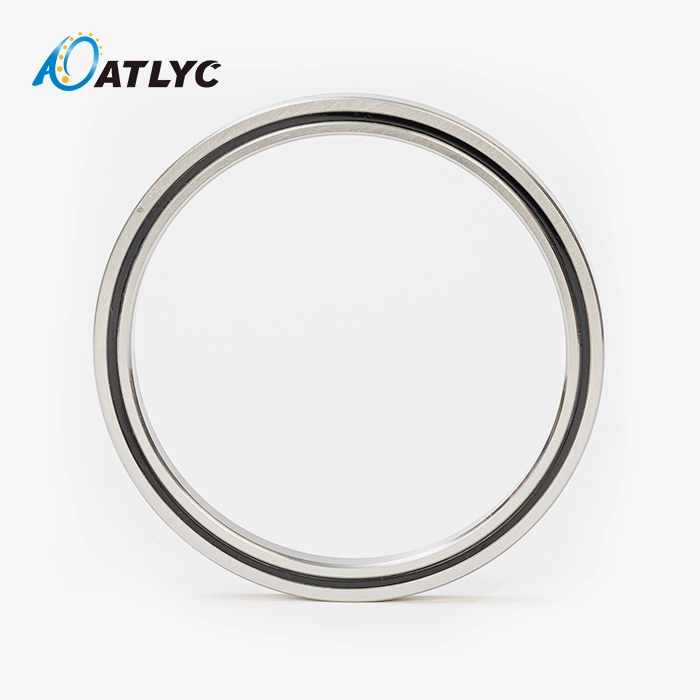
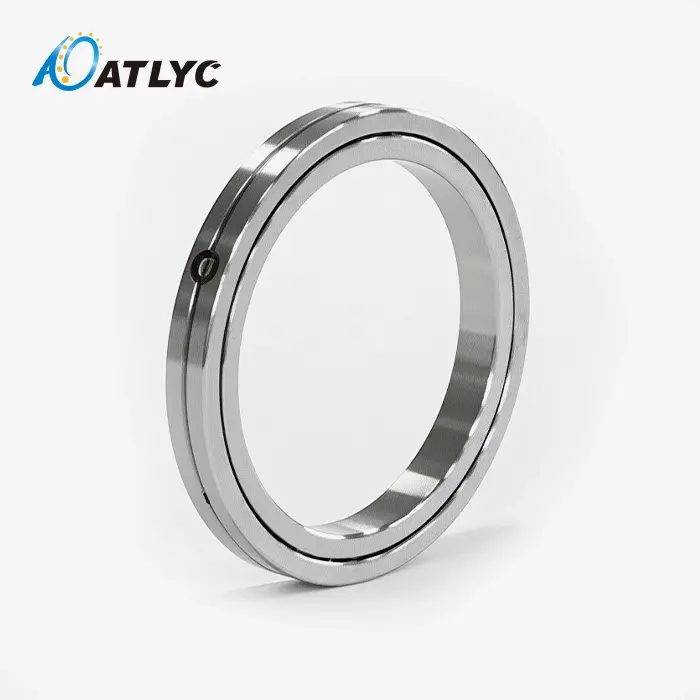
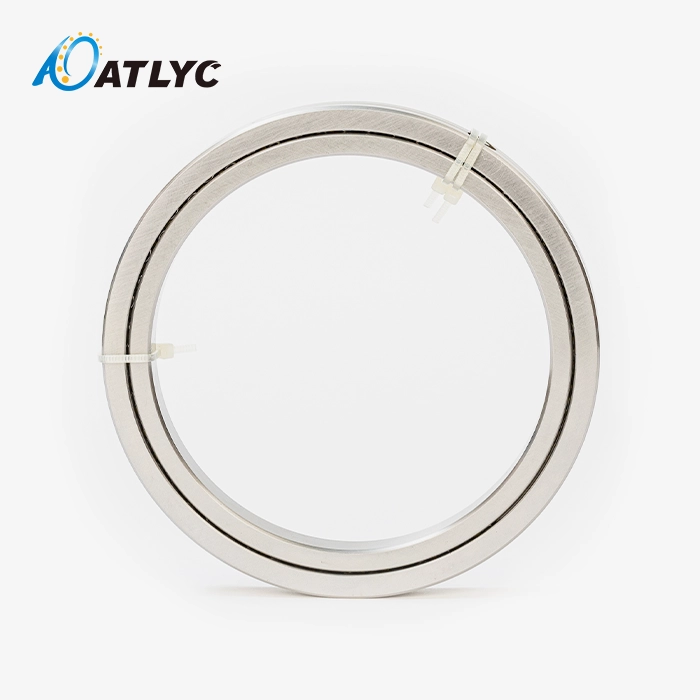
Within the families of RE Crossed Roller Bearings, the RE line is a unique type. Instead of using spherical parts like most ball bearings do, these parts use tubular wheels that are crossed at 90-degree angles. The structure is made up of an outer ring that is one piece and an inner ring that is split in half. Rollers are spaced apart by spacers to keep metal from touching metal. This setup makes a load-distribution line that can handle multiple complex force directions at the same time. Our factory follows manufacturing standards set by ISO 9001 and IATF 16949. This makes sure that every bearing meets the tight limits needed for high-precision uses. We can make things with inner diameters ranging from 20 mm to 1100 mm, outer sizes up to 1500 mm, and widths ranging from 12 mm to 110 mm. We make these parts out of Gcr15 and Gcr15SiMn bearing steel, which we chose because it keeps its stiffness better and doesn't wear down easily under repeated loads.
Technical Specifications That Influence Performance
Load ability is still the most important factor in choosing a bearing. Because the rollers are crossed, a single RE bearing can be used instead of two double-row ones. This makes the assembly 30% lighter than with angular contact bearing pairs. There are different levels of rotational accuracy, such as P6, P0, P5, and P4. P4 is the most precise level and is best for measuring tools and equipment used to make semiconductors. Roller-raceway line contact has a low friction coefficient, which means that less heat is generated during action. When properly greased, these bearings keep their working temperatures stable even when they are rotating all the time. This means that they don't need to be serviced as often, and the total cost of care goes down. This temperature stability is especially useful in automated production lines, where sudden stops have a direct effect on how well the lines work.
Comparing RE Crossed Roller Bearings with Other Bearing Types
In the 15 years we've been working with medium RE Crossed Roller Bearings to large OEMs in six countries, purchasing managers often ask us how RE Crossed Roller Bearings are different from the other options they use. Knowing these differences helps tech teams make decisions that are in line with what they need to do for operations.
Performance Advantages Over Ball Bearings
Standard deep groove ball bearings work great for high-speed tasks, but can only handle a small amount of moment load. A crossed roller bearing has about five times more moment rigidity than a ball bearing of the same size, which makes it the best choice for uses that need exact placement at an angle. This benefit is shown by robotic arm joints, where the bearing has to withstand twisting moments and keep the positional accuracy within micrometers.
Why Choose Crossed Roller Over Cylindrical Roller Bearings?
Cylindrical roller bearings can handle a lot of radial load, but they can't handle vertical load. Combining circular rollers with thrust bearings would make applications that need to handle loads in more than one way more complicated and increase the number of possible failure points. The crossed design in RE bearings gets rid of this need, making the answer stronger and easier to maintain. Our engineering team has helped many customers make the switch from standard bearing arrangements to designs with crossed rollers. Most of the feedback we get is about making the machine more accurate and reducing the number of parts it needs. One American company that makes automotive tools told us that moving to RE bearings for their transfer station rotary tables cut assembly time by 40%.
How RE Crossed Roller Bearings Can Optimize System Efficiency
Getting rid of specific technical bottlenecks that slow down system speed leads to higher efficiency. The special shape of RE Crossed Roller Bearings focuses on three important efficiency factors: maintaining stiffness, reducing friction, and keeping the precision over the lifetime of the machine.
Minimizing Deformation Under Load
The accuracy of a machine tool depends a lot on how stable the structure is along the load path. When a bearing bends under load, it causes positional mistakes that lower the quality of the cutting or the accuracy of the assembly. The crossed roller contact pattern spreads forces across multiple load-bearing places at the same time. This makes elastic distortion about 60% less likely than with single-row designs. This advantage of stiffness is especially clear in situations where the load changes. As parts move through work cycles, manufacturing equipment is often loaded and unloaded dynamically. Traditional bearings may have small deflections that add up over time and make the accuracy less accurate. Because crossed roller bearings are stiffer, they keep working the same way even when the load changes. This keeps accuracy standards high during long production runs.
Reducing Friction and Energy Consumption
Friction is a waste of energy that turns into heat instead of useful work for machines. In crossed roller bearings, the line contact between the rollers and the raceways provides a better way to move load than point contact designs. When tested in the lab at our quality inspection center, the friction coefficients are about 35% lower than those of similar ball bearing sets when the loads are the same. Less contact means that a drive engine is not needed as much. When users put in crossed roller bearings, they were able to shrink their servo motors, which saved them money and energy. One company that makes precision machinery reported that after making this change, all of its products used 12% less power, which made their equipment more competitive in markets that care about saving energy.
Extending Service Life and Reducing Maintenance
Replacing bearings costs money in two ways: directly RE Crossed Roller Bearings for the parts and indirectly for the time lost from production. The strong form of RE crossed roller bearings makes them last longer by better distributing load and lowering the rate of wear. Under normal conditions and with the right amount of grease, these bearings usually last longer than 20,000 hours. Instead of picking random times, our technical support team suggests making predictive repair plans based on how the machine actually works. Vibration tracking and thermographic testing can find problems before they become major problems. Customers of industrial automation have been able to cut unplanned downtime by 50% and get the best timing for replacing bearings to match up with regular maintenance windows by using this method.
Procuring RE Crossed Roller Bearings: What B2B Clients Should Know
To make smart buying choices, you need to know both the technical needs and the supplier's skills. Working with global distributors and direct OEM customers has taught us a few important things that affect business success and long-term customer happiness regarding RE Crossed Roller Bearings.
Evaluating Supplier Credibility and Capabilities
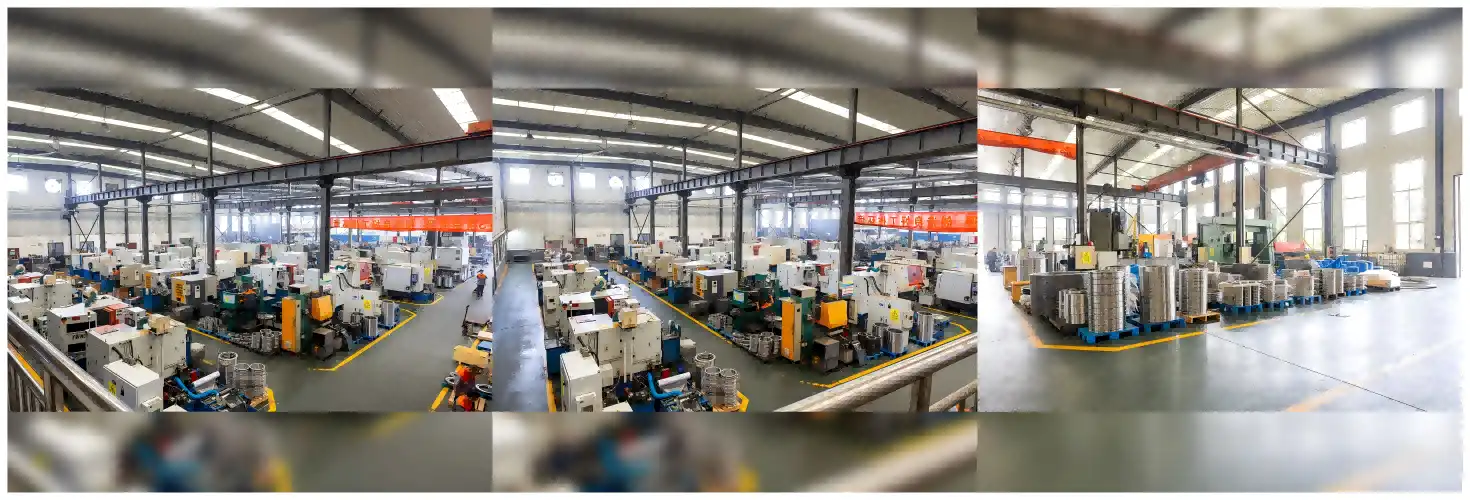
Quality licenses give you basic peace of mind, but they're only the beginning of evaluating a seller. ATLYC's ISO 9001 and IATF 16949 certifications show that all six of our production workshops follow structured quality management practices. In addition to certificates, buying teams should look at the company's ability to produce goods, its technical support infrastructure, and its history of working with similar projects. When making effective relationships, the size of the manufacturing operation is important. Our 120-person team includes engineers whose sole job is to provide technology advice and make customizations. With this many employees, we can quickly make changes to the plan and stick to the same shipping schedules even when demand changes. When companies buy from smaller operations, they often run into capacity issues that stop their supplies during busy production times.
Balancing Cost and Performance Requirements
Price is still an important factor, but focusing only on unit cost often leads to less-than-ideal results. The initial buy price, the difficulty of installation, the need for upkeep, and how often the item needs to be replaced are all part of the total cost of ownership. A bearing that costs 15% more but lasts twice as long is a better deal. The way we set our prices is based on the level of production precision needed for each accuracy grade. P4-grade bearings are more expensive because they have tighter tolerances and go through more testing steps, but they are worth the extra money for situations where positional accuracy has a direct effect on product quality or output. P0-grade bearings, on the other hand, offer great performance in less challenging uses at lower costs.
Customization Options and Technical Support
Standard stock bearings work well for many uses, but unique solutions can often make a big difference in how well they work. Our engineering team often works with customers to make sure that the bearing specs are best for their individual needs. Changes could be made to the mounting measurements, the seal setups, or the materials to make them work better in harsh settings. Access to technical help is what sets good providers apart from great partners. When customers email auto@lyautobearing.com, they get experts who know how to solve problems in their business, not general salespeople. This knowledge is very helpful when fixing problems with an application or figuring out whether a bearing is right for a new product development project.
Applications and Maintenance Best Practices for RE Crossed Roller Bearings
To get the most out of the performance benefits these precision components offer, you need to know the right application scenarios and repair procedures.
Industrial Applications Leveraging Crossed Roller Technology
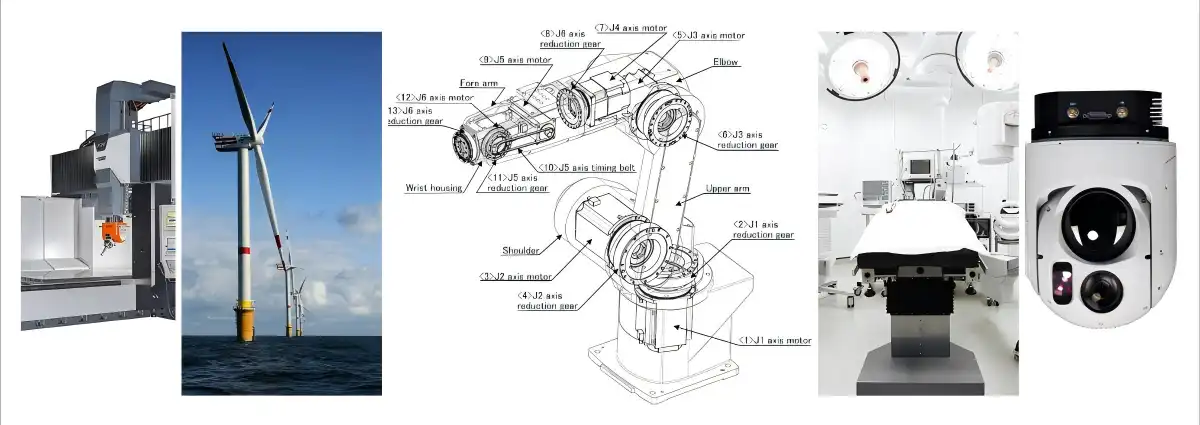
Robotic systems are one of the most difficult places for RE Crossed Roller Bearings to be used. Joint systems have to support the weight of the manipulator, fight outside forces while moving objects, and keep their precise position in space over millions of spin cycles. The small size of crossed roller bearings makes it possible to build robots that are more compact while still providing the stiffness needed for accurate path tracking. Bearing function is important for machining center rotating tables to keep the workpiece in the right place while cutting. When deflection or runout goes beyond the limits set by the manufacturer, spare parts are made, and tool wear goes up. Our bearings have a runout accuracy of less than 10 microns, which meets the strict needs of making aircraft parts and precise molds. Medical imaging equipment, like CT machines and X-ray systems, needs to be able to rotate very smoothly and stay in the same position over and over again. The low friction and great accuracy of crossing roller bearings help make images better while supporting the heavy RE Crossed Roller Bearings imaging arrays. Several original equipment manufacturers (OEMs) of medical equipment chose our bearings because they performed better and were more stable over longer periods of time.
Maintenance Protocols That Preserve Performance
Proper grease is the most important upkeep factor that affects the life of a bearing. For most jobs, we suggest using high-quality lithium complex greases that stop rust and rusting. The amount of time between lubrications depends on the speed of operation, the load, and the climate, but in most commercial settings, it's between 6 and 12 months. Several important signs should be checked as part of the inspection process. Unusual temperature rises could mean that there isn't enough grease or that there is too much loading. Strange noise patterns could mean that there is pollution or wear progressing. By using condition tracking, upkeep can be done before problems happen instead of after they happen. Over-greasing, which raises running temperatures and churning losses, and using oils that don't work well together, can be common maintenance mistakes. Our technical documentation goes into great detail about how to do proper maintenance, and our support team is always ready to answer questions that are unique to your application.
Conclusion
Many different types of industrial uses can be made more efficient with RE Crossed Roller Bearings because they can handle complex loads in small spaces. The benefits of the design lead to lower energy use, longer service times, and better precision keeping over the life of the machine. Instead of just looking at the original purchase price, when choosing these parts, you need to carefully consider the technical specs, the supplier's skills, and the total cost of ownership. The best way to get the most out of your investment is to do regular repairs. Crossed roller bearing technology offers solutions that meet both current needs and future needs for scalability as production equipment gets more complex and demands for precision rise.
FAQ
1. How do crossed roller bearings differ from standard ball bearings in efficiency?
RE Crossed Roller Bearings have lower friction coefficients because they use line contact design instead of point contact. This means that they lose about 35% less energy. The increased rigidity keeps the accuracy that ball bearings can't match in situations with moment loads or mixed loading conditions by reducing deflection under load.
2. What selection criteria matter most when specifying these bearings?
The main selection factors are load capacity, accurate grade, and dimensional limitations. P4 or P5 accuracy grades are best for applications that need accurate angular positioning. P0 grades are fine for less important applications. To find the best specs for your operational needs, compare the projected service life to the cost.
3. Can I source RE crossed roller bearings from multiple suppliers?
For accurate uses, it is important that manufacturing tolerances and quality control are always the same. Getting RE Crossed Roller Bearings from verified providers who can show large production volumes, technical know-how, and solid delivery performance is usually better in the long run than buying from a lot of different sources.
Partner with ATLYC for Your Precision Bearing Requirements
ATLYC has been making products for 15 years and offers full technical support to help OEMs and producers of industrial equipment get the most out of their systems by providing them with the best bearing solutions. Our production sites are ISO 9001 and IATF 16949 approved, and they make RE Crossed Roller Bearings in sizes ranging from 20 mm to 1500 mm. They keep accuracy grades from P6 to P4 to meet your exact needs. Our tech team does more than just release products; they also analyze applications, make customizations, and provide lifecycle support. We provide consistent quality and reasonable wait times, whether you need standard stock parts or custom solutions for unique uses. Get in touch with our technical experts at auto@lyautobearing.com to talk about how our crossed roller bearing technology can make your tools work better and last longer.
References
1. Harris, T.A., & Kotzalas, M.N. (2006). Advanced Concepts of Bearing Technology: Rolling Bearing Analysis. CRC Press, Fifth Edition.
2. Eschmann, P., Hasbargen, L., & Weigand, K. (1985). Ball and Roller Bearings: Theory, Design and Application. Research Studies Press Ltd.
3. Palmgren, A. (1959). Ball and Roller Bearing Engineering. SKF Industries Inc., Third Edition.
4. ISO 492:2014. Rolling bearings — Radial bearings — Geometrical product specifications (GPS) and tolerance values. International Organization for Standardization.
5. Hamrock, B.J., Schmid, S.R., & Jacobson, B.O. (2004). Fundamentals of Fluid Film Lubrication. Marcel Dekker Inc., Second Edition.
6. Weck, M., & Brecher, C. (2006). Machine Tools 4: Automation and Control Systems. Springer-Verlag Berlin Heidelberg.
Learn about our latest products and discounts through SMS or email