- English
- French
- German
- Portuguese
- Spanish
- Russian
- Japanese
- Korean
- Arabic
- Greek
- German
- Turkish
- Italian
- Danish
- Romanian
- Indonesian
- Czech
- Afrikaans
- Swedish
- Polish
- Basque
- Catalan
- Esperanto
- Hindi
- Lao
- Albanian
- Amharic
- Armenian
- Azerbaijani
- Belarusian
- Bengali
- Bosnian
- Bulgarian
- Cebuano
- Chichewa
- Corsican
- Croatian
- Dutch
- Estonian
- Filipino
- Finnish
- Frisian
- Galician
- Georgian
- Gujarati
- Haitian
- Hausa
- Hawaiian
- Hebrew
- Hmong
- Hungarian
- Icelandic
- Igbo
- Javanese
- Kannada
- Kazakh
- Khmer
- Kurdish
- Kyrgyz
- Latin
- Latvian
- Lithuanian
- Luxembou..
- Macedonian
- Malagasy
- Malay
- Malayalam
- Maltese
- Maori
- Marathi
- Mongolian
- Burmese
- Nepali
- Norwegian
- Pashto
- Persian
- Punjabi
- Serbian
- Sesotho
- Sinhala
- Slovak
- Slovenian
- Somali
- Samoan
- Scots Gaelic
- Shona
- Sindhi
- Sundanese
- Swahili
- Tajik
- Tamil
- Telugu
- Thai
- Ukrainian
- Urdu
- Uzbek
- Vietnamese
- Welsh
- Xhosa
- Yiddish
- Yoruba
- Zulu
How to Choose an XU Series Cross Roller Bearing Factory?
When selecting the appropriate XU Series Cross Roller Bearing manufacturer, look for aspects such as ISO 9001 certification, IATF 16949 certification, production capacity, accuracy standards, and quality control procedures. A competent facility should produce bearings in precision classes P6 to P2, with inner diameters from 20mm to 1100 mm, and have expertise in servicing the automotive, robotics, and automation industries. Reliability of supply, ability to customize, and rapid technical assistance are just as crucial in B2B purchasing choices made for the long term.

Why the Factory Behind Your Cross Roller Bearing Matters
Many a bearing fails not because it failed on the production floor, but because of where it was created. A cross roller bearing for a robotic joint, precision rotary table, or medical imaging equipment will last two years or 10 years depending upon how it was constructed back at the factory.
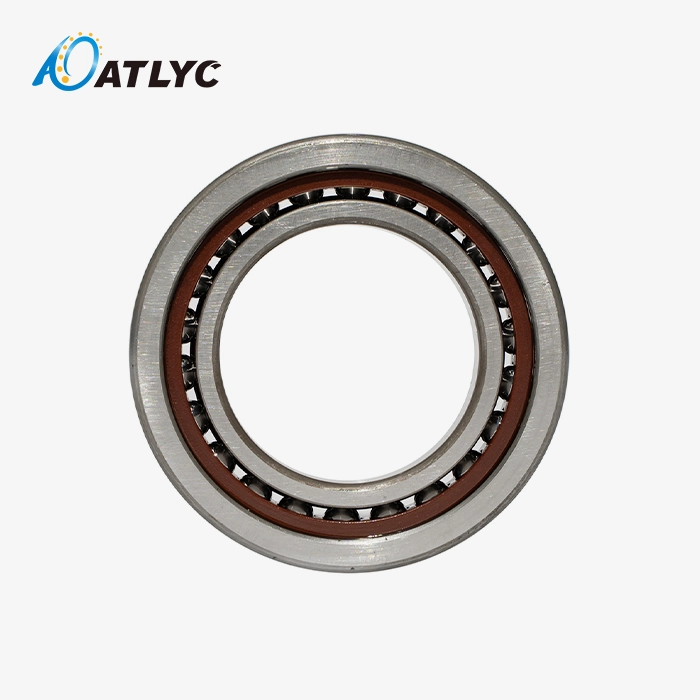
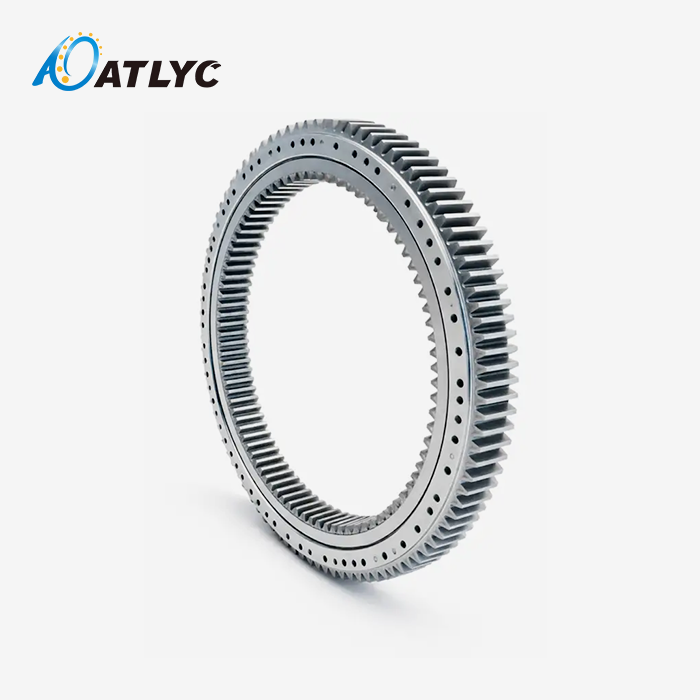
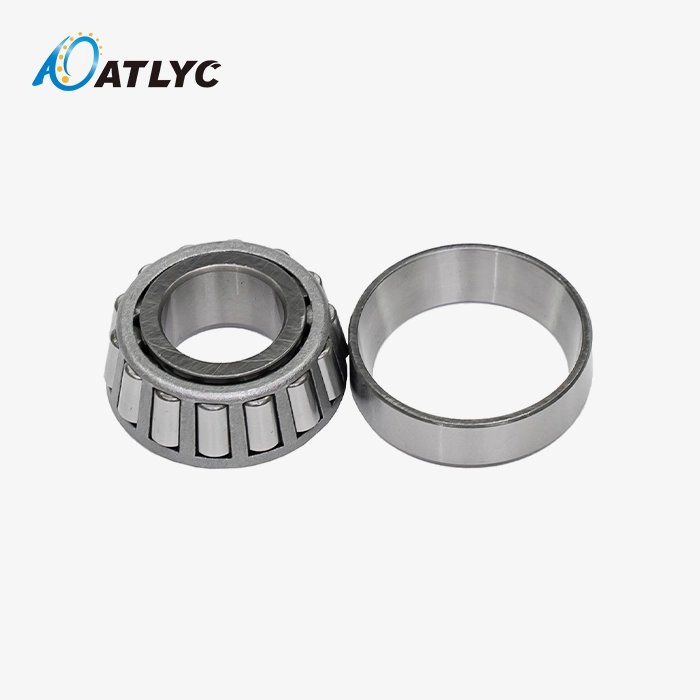
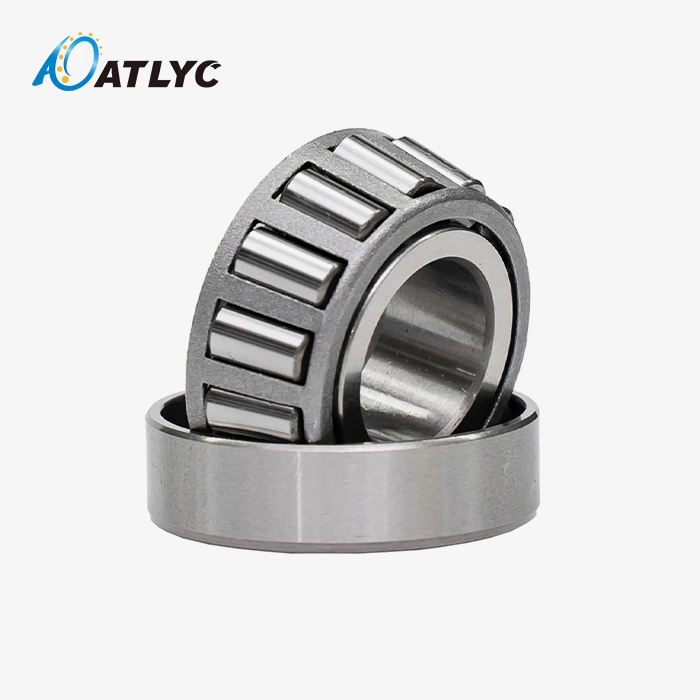
The XU Series Cross Roller Bearing has inner and outer rings that are formed as a single piece, with cylindrical rollers positioned at a 90° angle along a V-groove track. Such construction carries radial, vertical, and moment loads in a small space at the same time. Both rings are pre-drilled for mounting holes, so you won't need any flanges or external housings. This is good for gatherings when there is not much space.
Any alteration in heat treatment, grinding, or raceway finishing will directly impact the bearing’s ability to spin properly and its wear life. This is because the design tolerances are exceedingly tight (runouts are generally less than 2 microns at P4 grade). So the procedure of plant selection is quite significant.
Core Criteria for Selecting an XU Series Cross Roller Bearing Manufacturer
To perform a proper evaluation of a business, it is not sufficient to merely be concerned with the products that the company sells when completing the review. This is because these products are not the only things that the company offers. One example of a conceptual framework that may be used by procurement teams is the one that is described in this example, which can be summarized as follows:
Certification and Quality System
For cross roller bearings to come from a reliable company, they should have both ISO 9001 (quality management) and IATF 16949 (automotive-grade process control). These certifications show that the plant follows written, checkable processes instead of just doing random checks. Ask for up-to-date certificates and check the body that issued them.
Precision Manufacturing Capability
The plant has to show that its production is uniform across a range of accuracy grades. For the XU Series, those are P6, P0, P5, P4, and P2 limits. They should have Coordinate Measuring Machines (CMM), eddy current testing, and hardness verification as standard in their quality line, not as a choice.
Customization and Product Range
Inside sizes of standard XU Series Cross Roller Bearings range from 20 mm to 1100 mm, and outside diameters can go up to 1500 mm. If your application calls for it, a skilled factory should be able to handle non-standard bore sizes, special finishes, or changed preload settings. You won't have as much design freedom if they can only ship catalog sizes.
These are the standard XU Series measurement ranges and accuracy grades, shown in a table:
The inner diameter can be 20 to 1100 mm, the outer diameter can be 70 to 1500 mm, and the width can be 12 to 110 mm. The accuracy grades are P6, P0, P5, P4, and P2. The material is GCr15 or GCr15SiMn, and the raceway hardness is 58 to 64 HRC.
| Parameter | Range / Options |
|---|---|
| Inner Diameter | 20 – 1100 mm |
| Outer Diameter | 70 – 1500 mm |
| Width | 12 – 110 mm |
| Accuracy Grades | P6, P0, P5, P4, P2 |
| Material | GCr15, GCr15SiMn |
| Raceway Hardness | 58 – 64 HRC |
Comparing XU Series Cross Roller Bearings with Other Bearing Types
XU vs. RB / RE Series
The RB and RE series use split-ring designs, which make the assembly more flexible but less rigid when loads are added together. The XU is the best choice when moment load stiffness is a must, like in 6-axis robot joints or machine tool spindles, because it is made of an integrated one-piece design that keeps the rings from coming apart.
XU vs. Angular Contact Ball Bearings
Angular contact pairs can handle both axial and rotational loads, but they need two bearings, which makes them taller and more difficult to put together. This two-bearing setup can be replaced with a single XU cross roller bearing that takes up less horizontal room. It can hold more weight per unit volume because the cylindrical rollers and V-groove raceway are in direct contact with each other.
Cost-Benefit Perspective
A cross roller bearing costs more to buy at first than a normal ball bearing. The total cost of ownership is better for the XU design, though, because it has fewer parts that need to be put together, less maintenance, and longer service intervals. This is especially true for high-cycle automation equipment. For OEMs with continuous production lines, this calculation is important over the life of the equipment, which can be several years.
Procurement Best Practices When Ordering from a Cross Roller Bearing Factory
If you get the specifications right before making an order, you’ll avoid having to spend a lot on rework. Here are the most crucial stages for the engineering and purchasing teams:
First, define the load and accuracy criteria. Specify the values of the radial load, axial load, and moment load. Give the grade of precision necessary. If you need P4 in your application, but you order a P0 bearing, you’ll instantly impair machine performance.
Check out the supplier’s credentials before tasting. Request ISO & IATF certifications, manufacturing capacity statistics, and inspection reports. If feasible, check the registered location and audit history of the factory. Counterfeit cross roller bearings are circulating on the gray market and cannot be detected by eye examination.
Clear lead times and MOQ up front. Bulk order delivery from recognized manufacturers is usually between 30 and 60 days, depending on the size range. Negotiate buffer stock solutions for high-turnover SKUs so that bearing shortages do not cause production line stoppages to cascade.
Whether you are seeking a single model or a long-term supply arrangement for a variety of various kinds of XU Series Cross Roller Bearings, these processes will work.
| Procurement Factor | What to Verify |
|---|---|
| Certifications | ISO 9001, IATF 16949 (current, valid) |
| Quality Inspection | CMM, MPI, hardness testing, torque testing |
| Lead Time | 30–60 days typical for standard sizes |
| Customization | Non-standard IDs, preload adjustment, coatings |
| Packaging & Logistics | Export packaging, multi-country shipping experience |
Maintenance and Lifespan Optimization for XU Cross Roller Bearings
Lubrication Schedule
The most common lubricant for XU Series bearings is oil. The time to re-oil depends on the speed, temperature, and load of the machine. The robotic joints operate constantly. Check the oil level every 2,000 hours of usage and add lithium-based or synthetic grease as required within the operating temperature range.
Early Warning Signs
If it is spinning and you hear grinding or clicking, it can be because the rollers are dusty or out of alignment. A shift in the preload might be indicated by a high beginning torque or uneven rotation. Early detection of these indications may prevent unexpected downtime and keep the mechanical system around you safe.
ROI Through Preventive Care
One automation installer who works with a 6-axis welding robot noted that changing from reactive replacement to a scheduled inspection cycle extended the life of bearings by over 40%, which decreased the cost of replacing them every year by a significant amount. The wrist joint was fitted with cross roller bearings, which is just the kind of application that XU Series bearings excel in. A quality part, properly cared for, may be an asset for a long time.

Conclusion
Selecting the correct cross roller bearing plant is not just a question of making a purchase. Check certifications, check that the precision can be accomplished at all levels of accuracy, examine the quality control processes, and consider how dependable the supply is likely to be in the long term. The XU Series Cross Roller Bearing, with its integral ring construction and capacity to absorb stresses from many directions, is ideal when supplied by a manufacturer with stringent process control and solid technical expertise. The correct supplier reduces the risk to your organization and ensures your equipment operates for the period of time it is designed to.
FAQ
1. What material are XU Series Cross Roller Bearings made from?
They are made from GCr15 or GCr15SiMn steel, which is high in carbon and chromium and has been heated to a hardness of 58 to 64 HRC. This substance is resistant to wear and has fatigue strength that makes it good for harsh industrial settings.
2. How do cross roller bearings compare to standard ball bearings in precision?
Cross roller bearings have better stiffness and runout accuracy than ball bearings because the circular rollers and the raceway are in line contact with each other. Runout values can be less than 2 microns at the P4 grade, which is much tighter than a normal ABEC-3 ball bearing.
3. What accuracy grades are available for XU cross roller bearings?
There are different levels of precision for dimensions and shapes, with grades like P6, P0, P5, P4, and P2 being the highest. For applications in semiconductors, medicine, and high-speed robotics, P4 and P2 are suggested.
4. What are typical lead times for bulk orders?
Lead times for regular sizes are usually 30 to 60 days from the time an order is confirmed. For non-standard designs, extra wait time may be needed for tooling and material preparation.
5. Can XU Series bearings be customized for special applications?
Yes. Changes can be made, like not using standard bore sizes, changing the preload, adding special sealing, or treating the surface. Tell the manufacturer's research team about the details of your application before you finalize the order.
Partner with ATLYC for Verified XU Series Cross Roller Bearing Supply
ATLYC, which stands for Luoyang Auto Bearing Co., Ltd., has been making precision bearings since 2010. Our six production workshops are ISO 9001 and IATF 16949 certified. We are a reliable XU Series Cross Roller Bearing seller with export experience to the US, Germany, South Korea, and other countries. For OEMs and wholesalers, we offer custom solutions, low prices, and consistent quality. To get a price or download detailed datasheets, email our engineering team at auto@lyautobearing.com.
References
1. Harris, T. A., & Kotzalas, M. N. Rolling Bearing Analysis: Essential Concepts of Bearing Technology. CRC Press, 2006.
2. ISO 9001:2015 — Quality Management Systems: Requirements. International Organization for Standardization, 2015.
3. IATF 16949:2016 — Quality Management System Requirements for Automotive Production. International Automotive Task Force, 2016.
4. Hamrock, B. J., Schmid, S. R., & Jacobson, B. O. Fundamentals of Machine Elements. McGraw-Hill, 2005.
5. Bearing Technical Journal: Precision Slewing Ring and Cross Roller Bearing Applications in Industrial Robotics. Power Transmission Engineering, 2019.
6. Eschmann, P., Hasbargen, L., & Weigand, K. Ball and Roller Bearings: Theory, Design and Application. John Wiley & Sons, 1985.
Learn about our latest products and discounts through SMS or email