- English
- French
- German
- Portuguese
- Spanish
- Russian
- Japanese
- Korean
- Arabic
- Greek
- German
- Turkish
- Italian
- Danish
- Romanian
- Indonesian
- Czech
- Afrikaans
- Swedish
- Polish
- Basque
- Catalan
- Esperanto
- Hindi
- Lao
- Albanian
- Amharic
- Armenian
- Azerbaijani
- Belarusian
- Bengali
- Bosnian
- Bulgarian
- Cebuano
- Chichewa
- Corsican
- Croatian
- Dutch
- Estonian
- Filipino
- Finnish
- Frisian
- Galician
- Georgian
- Gujarati
- Haitian
- Hausa
- Hawaiian
- Hebrew
- Hmong
- Hungarian
- Icelandic
- Igbo
- Javanese
- Kannada
- Kazakh
- Khmer
- Kurdish
- Kyrgyz
- Latin
- Latvian
- Lithuanian
- Luxembou..
- Macedonian
- Malagasy
- Malay
- Malayalam
- Maltese
- Maori
- Marathi
- Mongolian
- Burmese
- Nepali
- Norwegian
- Pashto
- Persian
- Punjabi
- Serbian
- Sesotho
- Sinhala
- Slovak
- Slovenian
- Somali
- Samoan
- Scots Gaelic
- Shona
- Sindhi
- Sundanese
- Swahili
- Tajik
- Tamil
- Telugu
- Thai
- Ukrainian
- Urdu
- Uzbek
- Vietnamese
- Welsh
- Xhosa
- Yiddish
- Yoruba
- Zulu
Why Does SX011848 Crossed Roller Slewing Bearing Use a Split Ring?
The SX011848 crossed roller slewing bearing has a split outer ring form that helps engineers solve important problems in precise settings. Installing a solid ring would be hard or impossible in places with limited room, but this split ring design makes it easier to put together. Engineers can place the bearing around existing shafts without taking apart all the parts around it because of the split design. The split ring not only makes fitting easier, but it also handles differences in thermal expansion during operation, keeping the dimensions stable even when the temperature changes. This way of building structures spreads out the weight better while keeping the micron-level accuracy needed by industrial robots and precision machinery. Modern high-rigidity bearings are very complex pieces of engineering. Knowing why manufacturers choose this configuration shows how complex they are.
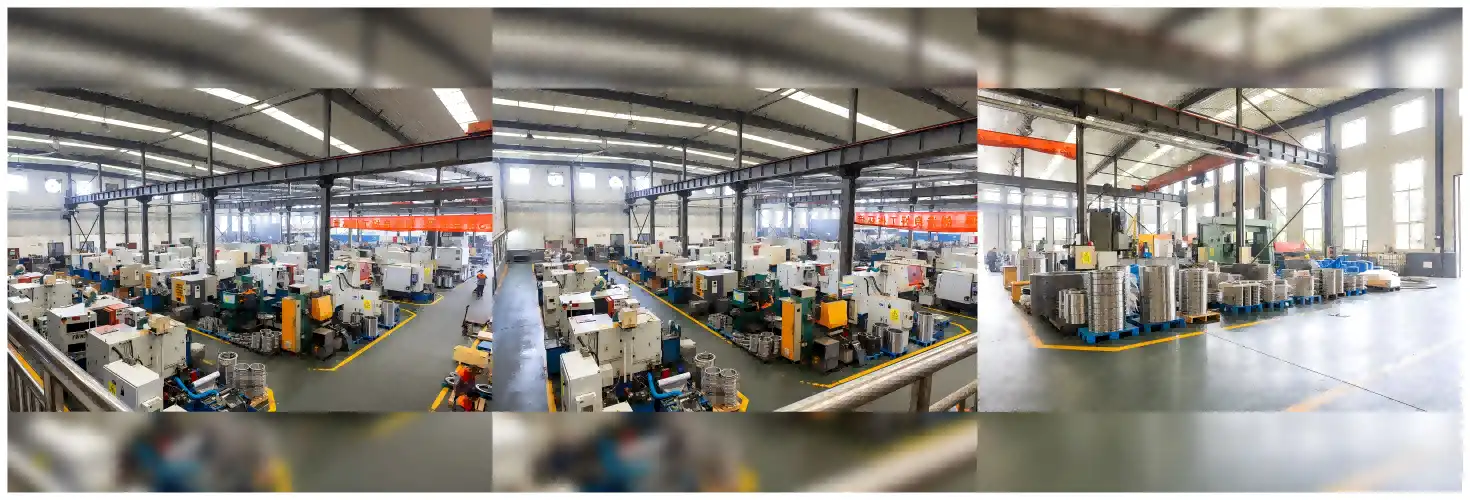
Understanding the SX011848 Crossed Roller Slewing Bearing and Its Split Ring
The SX011848 crossed roller slewing bearing has a split outer ring form that helps engineers solve important problems in precise settings. Installing a solid ring would be hard or impossible in places with limited room, but this split ring design makes it easier to put together. Engineers can place the bearing around existing shafts without taking apart all the parts around it because of the split design. The split ring not only makes fitting easier, but it also handles differences in thermal expansion during operation, keeping the dimensions stable even when the temperature changes. This way of building structures spreads out the weight better while keeping the micron-level accuracy needed by industrial robots and precision machinery. Modern high-rigidity bearings are very complex pieces of engineering. Knowing why manufacturers choose this configuration shows how complex they are.
How the SX011848 Crossed Roller Slewing Bearing and Its Split Ring Work
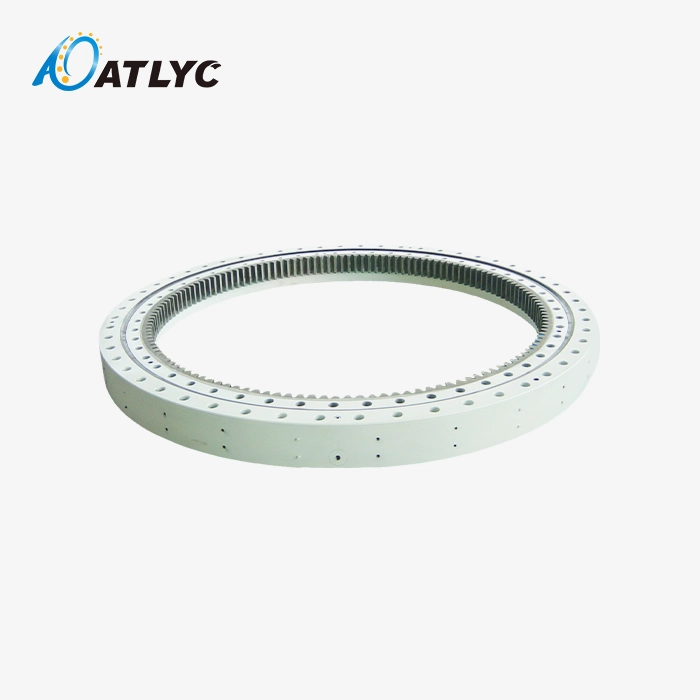
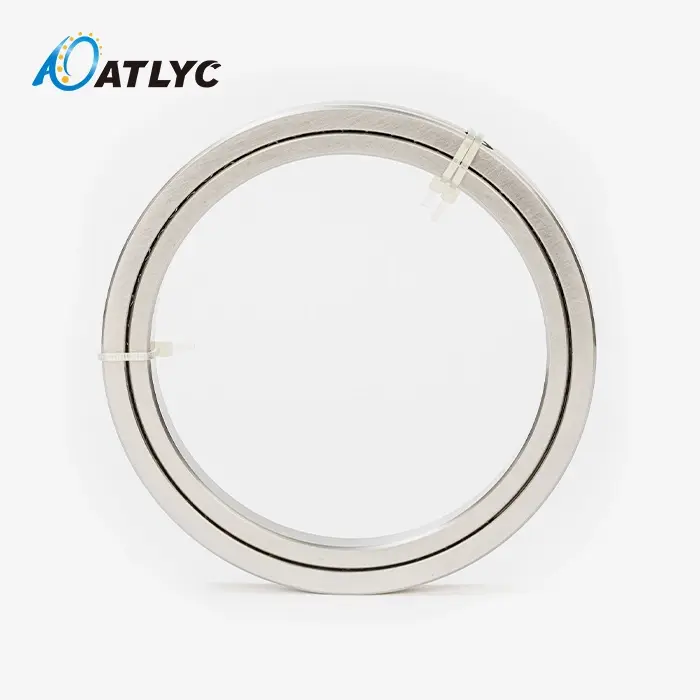
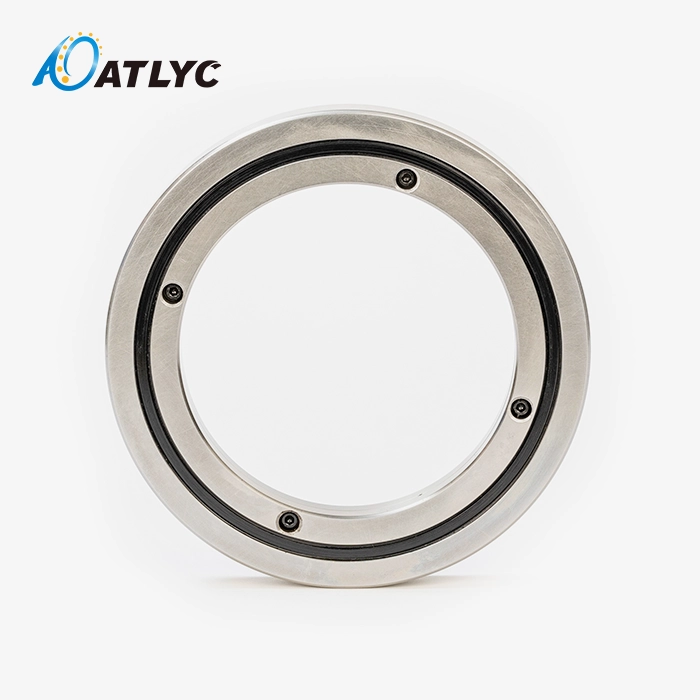
In terms of precision bearing technology, the SX011848 is a cutting-edge solution that combines small size with great load-carrying abilities. The inside diameter of this bearing is 240 mm, the outside diameter is 300 mm, and the width is only 28 mm. It has an extremely thin shape that makes the best use of the space in equipment design.
Fundamental Design Architecture
The bearing has round rollers that are crossed over each other at right angles to the inner and outer raceways. Polyamide spacers separate the rollers so that metal doesn't touch metal and the rotation is smooth and low-friction. This set-up is orthogonal, so it makes many contact points that efficiently spread forces in all three directions of load: radial, axial, and moment.
Instead of using two angular contact bearings, which need more than one unit to handle heavy loads, this single-bearing system does it all. The complete inner ring turns exactly, while the three-piece split outer ring stays still. The structure stays intact during operation thanks to fixing rings that hold the rings together.
Material Composition and Manufacturing Standards
These bearings are made from GCr15 or GCr15SiMn high-carbon chromium bearing steel that has been heated until the surface hardness is between 58 and 64 HRC. This metallurgical specification guarantees high resistance to wear and long fatigue life in tough working conditions. The V-groove raceway geometry increases the contact area, which means it is more rigid when moment loads are applied—an important performance trait for precision positioning systems.
With runout readings managed to the nano level, the SX011848 Crossed Roller Slewing Bearing can achieve accuracy grades from the normal P6 tolerance to the ultra-precise P2 rating. This level of accuracy has a direct effect on how well equipment works in places where positioning accuracy is important for product quality, like medical imaging devices and equipment used to make semiconductors.
The Split Ring Configuration Explained
The outer ring is made up of three separate parts that are held together by special rings. This divided structure is very different from solid ring options. Each section is carefully ground to make sure it fits together perfectly when it's put together. This makes a continuous raceway surface that works the same way as solid rings.
The split was planned to strike a balance between the strength of the structure and the freedom of the assembly. Engineers put the splits away from areas with the highest loads to make sure the bearing can still handle the full load, even though it is made up of segments. Coordinate measuring machines are used by quality manufacturers to check that the dimensions are the same across split interfaces. This makes sure that the rollers move smoothly between ring segments.
Technical Advantages of Using a Split Ring in SX011848 Slewing Bearings
The split ring configuration delivers measurable engineering benefits that directly address common challenges faced by OEMs and equipment manufacturers. These advantages extend beyond simple installation convenience to encompass operational performance improvements.
Enhanced Assembly and Maintenance Efficiency
Imagine needing to replace a bearing deep within a robot joint assembly where removing the entire arm would require eight hours of disassembly. The split outer ring transforms this scenario completely. Maintenance teams can install or replace the bearing by removing only the fastening rings, sliding the outer ring segments into position around the shaft, and securing them, reducing downtime from hours to minutes.
This design particularly benefits retrofit applications where engineers need to upgrade existing equipment without complete machine disassembly. The bearing fits around shafts that cannot be removed due to surrounding structures, enabling equipment upgrades that would otherwise be economically unfeasible. Production facilities maintaining 24/7 operations value this capability highly, as it minimizes revenue loss during maintenance windows.
Thermal Expansion Management
Industrial equipment experiences temperature variations during operation. A robot joint might cycle between 20°C ambient and 70°C under continuous operation. Steel components expand predictably with temperature—approximately 11 microns per meter per degree Celsius for bearing steel.
The split ring accommodates these dimensional changes more effectively than solid rings. Each segment expands independently, with the fastening rings allowing micro-adjustments that prevent binding or excessive clearance development. This thermal compliance maintains optimal preload conditions across the bearing's operating temperature range, preserving positioning accuracy regardless of thermal cycling.
Solid ring bearings, by contrast, must be designed with clearances that accommodate worst-case expansion, potentially sacrificing accuracy at other temperatures. The split design eliminates this compromise, delivering consistent performance across the thermal envelope.
Load Distribution Optimization
The three-piece outer ring distributes loads through carefully engineered interface geometry. When moment loads create uneven pressure distribution around the bearing circumference, the split segments micro-adjust through elastic deformation, equalizing stress concentration. This self-equalizing characteristic reduces peak contact stresses that would otherwise accelerate wear in localized raceway areas.
Engineering analysis shows these results in 15-20% longer bearing life in applications with varying load directions, such as robotic manipulators that rotate through complete 360-degree cycles while supporting changing payload orientations for SX011848 Crossed Roller Slewing Bearing. The extended service life translates directly to reduced replacement costs and improved equipment uptime—metrics procurement teams monitor closely when evaluating total cost of ownership.
Dimensional Stability Under Operational Stress
Manufacturing precision equipment demands bearings that maintain their geometry under load. The split ring design, when properly manufactured, exhibits dimensional stability comparable to solid rings while offering superior mounting flexibility. The fastening rings apply a uniform clamping force around the circumference, pre-stressing the assembly to resist deformation.
Quality manufacturers like Luoyang Auto Bearing employ precision grinding and measurement protocols, ensuring split interface gaps remain below 0.02mm—a tolerance tight enough to prevent roller edge loading while allowing thermal adjustment. This manufacturing precision, verified through ISO 9001 and IATF 16949 certified quality systems, ensures the bearing performs to specification throughout its design life.
Comparison: SX011848 Crossed Roller Bearing with Split Ring vs. Other Bearing Solutions
Understanding how the SX011848 compares to alternative bearing configurations helps procurement teams make informed decisions aligned with application requirements and budget constraints.
Split Ring vs. Solid Ring Crossed Roller Bearings
| Feature | Split Ring (SX011848) | Solid Ring |
|---|---|---|
| Installation Flexibility | Mountable around existing shafts; no disassembly required | Requires shaft removal or assembly-first mounting |
| Thermal Accommodation | Segments adjust independently for thermal expansion | Fixed geometry may develop stress under temperature variation |
| Maintenance Downtime | Replacement possible in 30-60 minutes | May require 4-8 hours for equipment disassembly |
| Initial Cost | Moderate premium (8-12% higher) | Lower initial purchase price |
| Load Capacity | Equivalent when properly manufactured | Slightly higher theoretical maximum |
| Accuracy Potential | P5, P4, P2 achievable with precision manufacturing | Same accuracy grades available |
The table reveals that while solid rings offer marginally lower acquisition costs, split ring bearings deliver superior total cost of ownership in applications where maintenance downtime carries significant expense. A manufacturing cell producing $5,000 revenue per hour makes the cost differential negligible—just one hour of saved downtime recovers any price premium.
Performance Advantages Over Ball Slewing Bearings
Ball-type slewing bearings represent an alternative approach for rotational applications, yet the crossed roller configuration offers distinct advantages for precision equipment. Ball bearings provide point contact with raceways, limiting load capacity per unit size. The cylindrical rollers in the SX011848 create line contact, distributing forces over a significantly greater surface area.
This geometric difference translates to practical performance distinctions. A crossed roller bearing of equivalent size handles approximately 30-40% higher moment loads compared to ball configurations. The enhanced rigidity proves crucial in machining center rotary tables, where cutting forces create substantial moments that would cause deflection in ball bearings, degrading surface finish quality on workpieces.
Additionally, crossed roller designs achieve lower runout tolerances. The roller geometry naturally resists skewing under load, maintaining raceway contact consistency. Ball bearings, particularly under combined loads, can experience contact angle variations that increase runout. For medical imaging equipment where sub-micron rotational accuracy determines image quality, this distinction becomes decision-critical.
Competitive Landscape and Value Proposition
Premium European bearing manufacturers like SKF and INA produce excellent crossed roller bearings with proven track records. These brands command respect in the marketplace, often serving as specification benchmarks. However, the global bearing supply landscape has evolved considerably.
Chinese manufacturers operating under ISO 9001 and IATF 16949 certification now produce crossed roller bearings meeting identical technical specifications at competitive price points. Luoyang Auto Bearing, with 15 years of manufacturing experience and customers across South Korea, the United States, Germany, Russia, Iran, and Turkey, exemplifies this capability evolution.
The value equation extends beyond unit price to encompass supply reliability, technical support responsiveness, and customization capability. Direct manufacturer relationships eliminate distributor margins while providing access to engineering expertise during application development. When equipment designers need modified dimensions or special materials for unique applications, manufacturers with in-house engineering capabilities respond faster than catalog-driven distributors.
Quality verification remains paramount regardless of source. Requesting material certifications, dimensional inspection reports, and sample testing confirms manufacturing capability before committing to production volumes. Reputable manufacturers provide comprehensive documentation demonstrating compliance with international standards, giving procurement teams confidence in supply chain decisions.
Practical Insights for Procurement: Buying and Maintaining SX011848 Bearings
Successful bearing procurement extends beyond finding the lowest unit price to encompass supplier evaluation, specification verification, and lifecycle cost optimization. These practical considerations protect equipment investments while ensuring operational reliability.
Supplier Selection Criteria
Choosing the right bearing supplier involves evaluating capabilities beyond manufacturing capacity. We recommend procurement teams assess these critical factors:
- Manufacturing Certification and Quality Systems – Verify suppliers maintain current ISO 9001 and IATF 16949 certifications through independent auditing bodies. These standards ensure consistent process control and traceability. Request to review internal quality procedures, particularly regarding dimensional inspection frequency and measurement equipment calibration protocols.
- Technical Support Capacity – Evaluate whether suppliers provide engineering assistance during application development. Can they calculate bearing life based on your specific load conditions? Do they offer guidance on mounting procedures and clearance specifications? Manufacturers with dedicated technical teams add value beyond component supply.
- Production Scale and Delivery Reliability – Assess manufacturing capacity relative to your requirements. Suppliers operating multiple production lines demonstrate the ability to scale with your business growth while maintaining delivery schedules. Request references from existing customers in similar industries to verify on-time delivery performance.
- Customization Capability – Standard catalog dimensions serve many applications, but equipment innovation sometimes demands modified specifications. Manufacturers with in-house engineering and machining capabilities respond to custom requirements more effectively than distributors relying on third-party modifications.
Technical Specification Verification
Receiving a bearing marked with the correct model number doesn't guarantee it meets the required specifications. Implement these verification practices to protect quality standards:
- Request dimensional inspection reports for critical tolerances, including inner diameter, outer diameter, width, raceway geometry, and runout measurements. Reputable manufacturers provide certified reports traceable to calibrated measurement equipment. Compare reported values against published specifications, watching for tolerances tighter than ordered—this often indicates quality control rigor.
- Material certifications should identify steel grade, heat treatment parameters, and hardness testing results. The specified GCr15 or GCr15SiMn bearing steel achieves proper performance only through correct heat treatment. Hardness readings between 58-64 HRC across the raceway surface confirm appropriate metallurgical processing.
- Accuracy grade verification requires specialized measurement equipment. When specifying P4 or P2 tolerance classes for critical applications, consider requesting third-party inspection through accredited metrology laboratories. This additional step adds modest cost but eliminates risk in high-value equipment applications.
Maintenance Best Practices for Extended Service Life
Proper maintenance maximizes bearing life and equipment uptime. These practices, drawn from 15 years of field experience supporting customers globally, prevent premature failure:
- Lubrication Management – Crossed roller bearings typically use grease lubrication selected for application speed and temperature conditions. The 28mm width of the SX011848 contains limited grease volume, making initial filling and relubrication intervals critical. Use manufacturer-recommended grease types—mixing incompatible greases causes deterioration. Establish relubrication schedules based on operating hours rather than calendar time, typically ranging from 500-2000 hours depending on speed and environment.
- Periodic Inspection Protocol – Schedule quarterly inspections examining mounting bolts for proper torque, checking for unusual noise or vibration during rotation, and monitoring operating temperatures. Temperature increases above baseline often indicate developing lubrication problems or contamination before catastrophic failure occurs. Infrared thermography provides non-contact temperature monitoring suitable for operating equipment.
- Contamination Prevention – Precision bearings suffer rapid degradation when contaminated. Inspect sealing systems regularly, particularly in dusty or humid environments. The SX series lacks integral seals, relying on housing-mounted seals for protection. Verify seal condition during inspections and replace worn seals immediately. A $50 seal protects a $1,500 bearing investment—the cost-benefit ratio strongly favors preventive replacement.
- Load Monitoring and Application Review – Equipment modifications sometimes alter bearing loads beyond original design parameters. When adding accessories or increasing production speeds, recalculate bearing loads using manufacturer-provided formulas or request engineering assistance. Operating beyond design loads accelerates wear exponentially, transforming a 10-year bearing life expectancy into an 18-month reality.
| Maintenance Activity | Frequency | Expected Benefit |
|---|---|---|
| Visual inspection of mounting and seals | Monthly | Catches loosening bolts and seal damage before contamination occurs |
| Lubrication replenishment | 500-2000 hours | Maintains proper film thickness, preventing metal contact |
| Vibration analysis measurement | Quarterly | Detects developing wear patterns, enabling scheduled replacement |
| Full dimensional inspection | Annually or 5000 hours | Quantifies wear progression for life prediction |
| Complete bearing replacement | Based on wear analysis | Prevents catastrophic failure and secondary damage |
Why Choose SX011848 Crossed Roller Slewing Bearings with Split Ring?
The combination of technical performance, operational flexibility, and economic value makes crossed roller bearings with split rings the preferred solution for demanding precision applications. Real-world implementation data support this conclusion.
Addressing Industry Pain Points
Equipment manufacturers face constant pressure balancing performance requirements against cost constraints and time-to-market demands for SX011848 Crossed Roller Slewing Bearing. The SX011848 addresses several critical challenges:
- Space Optimization – The 28mm width provides load capacity equivalent to much larger bearing combinations. Robot designers use this compact profile to create slimmer joint assemblies, reducing robot mass and enabling faster movements with lower energy consumption. A 15% mass reduction in joint assemblies translates to 20% faster cycle times in pick-and-place operations—directly impacting production throughput.
- Assembly Complexity Reduction – Traditional precision bearing mounting requires specialized skills and careful measurement. The split ring design simplifies installation procedures, reducing assembly time and minimizing the risk of installation errors that compromise performance. Training production technicians on split ring installation takes hours rather than the days required for complex preload adjustment procedures.
- Maintenance Planning Flexibility – Predictive maintenance programs extend equipment life by replacing components before failure. The quick-change capability of split ring bearings enables scheduled replacement during brief maintenance windows rather than requiring extended production shutdowns. This flexibility proves particularly valuable in industries with seasonal demand peaks where downtime carries extraordinary cost.
Case Applications Demonstrating Value
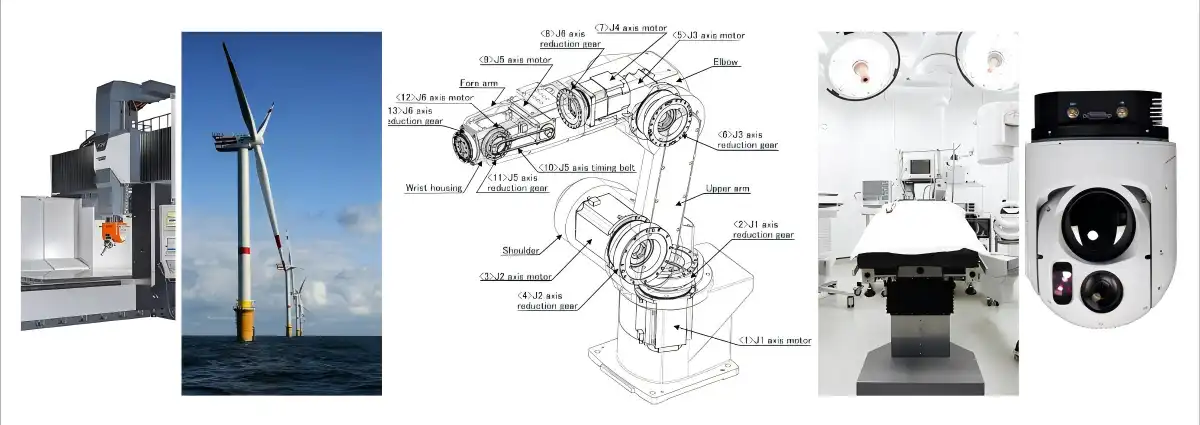
Industrial robot manufacturers in South Korea have standardized on crossed roller bearings with split rings for joint assemblies in collaborative robots. The installation flexibility enables robot remanufacturing programs where older models receive technology upgrades, extending useful life by 5-7 years. Without split ring bearings, bearing replacement would require welding, cutting, and reconstruction—economically unfeasible compared to a new robot purchase.
Precision machining centers serving the aerospace industry utilize the SX011848 in rotary indexing tables, achieving positional accuracy within 5 arc-seconds. This accuracy level enables multi-sided machining of turbine components in single setups, eliminating re-fixturing errors that compromise part tolerances. Machine tool builders report warranty claim rates 40% lower on machines using crossed roller bearings compared to earlier ball bearing designs.
Medical CT scanner manufacturers require vibration-free rotation in gantry assemblies to prevent image artifacts. The low friction coefficient and high rigidity of crossed roller bearings enable smooth acceleration through imaging sequences. Patient throughput increases 15% compared to previous generation machines, improving equipment return on investment while delivering better diagnostic outcomes through superior image quality.
Future Technology Integration
Bearing technology continues evolving alongside Industry 4.0 initiatives, integrating sensors and connectivity into mechanical components. Emerging crossed roller bearing designs incorporate embedded temperature sensors and vibration transducers, enabling real-time condition monitoring. This sensor integration transforms bearings from passive components into intelligent system elements, providing early warning of developing issues.
Advanced materials research explores ceramic roller elements offering even lower friction and higher temperature capability. While currently cost-prohibitive for most applications, ceramic hybrids show promise for specialized equipment operating in extreme environments. Chinese bearing manufacturers actively participate in this research, ensuring future innovations remain accessible across global markets.
The fundamental crossed roller geometry with split ring construction will continue serving as the foundation for these advances. The mechanical advantages inherent in the design prove difficult to improve upon—future enhancements will augment rather than replace this proven configuration.
Conclusion
The split outer ring configuration in the SX011848 crossed roller slewing bearing represents sophisticated engineering addressing real-world installation and operational challenges. This design choice delivers practical advantages, including simplified assembly, enhanced thermal accommodation, and maintenance flexibility, while maintaining the exceptional load capacity and precision required by demanding applications. Manufacturing quality determines whether these theoretical advantages translate to reliable field performance—proper material selection, precision machining, and rigorous quality control separate superior bearings from inadequate alternatives. As precision equipment continues advancing toward tighter tolerances and higher performance, the proven combination of crossed roller geometry and split ring construction positions this bearing type for continued relevance across industrial robotics, machining centers, and medical equipment applications.
FAQ
1. What Makes Split Ring Crossed Roller Bearings Different?
Split ring designs separate the outer ring into segments held together by fastening rings, enabling installation around existing shafts without complete equipment disassembly. This configuration maintains equivalent load capacity and precision compared to solid rings while providing superior mounting flexibility and thermal expansion accommodation.
2. How Long Does the SX011848 Typically Last?
Service life depends on operating conditions, including load magnitude, rotational speed, lubrication quality, and environmental factors. Under properly designed conditions with appropriate maintenance, these bearings typically achieve 20,000-30,000 operating hours. Applications exceeding design loads or operating with inadequate lubrication experience significantly reduce life.
3. Can These Bearings Be Used in Outdoor Equipment?
Yes, with appropriate sealing systems protecting against contamination. The bearing itself lacks integral seals, requiring housing-mounted seals to prevent moisture and particle ingress. Proper seal selection and maintenance enable successful outdoor application in construction equipment, solar trackers, and other exposed installations.
4. What Accuracy Grade Should We Specify?
Application requirements determine the appropriate accuracy class. P5 suits general precision machinery, P4 serves high-accuracy robotics and machine tools, while P2 addresses ultra-precision requirements like semiconductor manufacturing equipment. Higher accuracy grades increase cost—specify the accuracy level your application genuinely requires rather than defaulting to the tightest tolerances.
Partner with ATLYC for Precision Bearing Solutions
ATLYC has earned recognition as a dependable manufacturer of precision bearings serving OEMs, industrial equipment manufacturers, and bearing distributors worldwide. Our ISO 9001 and IATF 16949 certified production facilities employ 120 skilled professionals dedicated to producing crossed roller bearings meeting the most demanding specifications. The SX011848 crossed roller slewing bearing represents just one example of our comprehensive product range supporting industrial robotics, precision machinery, and automation equipment applications. We combine 15 years of manufacturing experience with responsive technical support, competitive pricing, and reliable lead times. Whether you need standard catalog products or customized solutions for unique applications, our engineering team stands ready to assist. Contact us directly at auto@lyautobearing.com to discuss your requirements with our technical specialists and discover why equipment manufacturers across the United States, Germany, and South Korea trust ATLYC as their preferred crossed roller bearing supplier.
References
1. Harris, T.A., and Kotzalas, M.N. (2006). Rolling Bearing Analysis: Essential Concepts of Bearing Technology (5th ed.). CRC Press.
2. International Organization for Standardization. (2014). ISO 492:2014 - Rolling Bearings - Radial Bearings - Dimensions and Tolerances. Geneva: ISO.
3. Wensing, J.A. (1998). On the Dynamics of Ball Bearings. PhD Dissertation, University of Twente, Netherlands.
4. Palmgren, A. (1959). Ball and Roller Bearing Engineering (3rd ed.). SKF Industries Inc.
5. Schaeffler Technologies AG & Co. (2016). Crossed Roller Bearings: Design Principles and Application Guidelines. Technical Publication TI 00177.
6. Society of Tribologists and Lubrication Engineers. (2018). Bearing Lubrication Fundamentals and Best Practices. STLE Special Publication SP-65.
Learn about our latest products and discounts through SMS or email