- English
- French
- German
- Portuguese
- Spanish
- Russian
- Japanese
- Korean
- Arabic
- Greek
- German
- Turkish
- Italian
- Danish
- Romanian
- Indonesian
- Czech
- Afrikaans
- Swedish
- Polish
- Basque
- Catalan
- Esperanto
- Hindi
- Lao
- Albanian
- Amharic
- Armenian
- Azerbaijani
- Belarusian
- Bengali
- Bosnian
- Bulgarian
- Cebuano
- Chichewa
- Corsican
- Croatian
- Dutch
- Estonian
- Filipino
- Finnish
- Frisian
- Galician
- Georgian
- Gujarati
- Haitian
- Hausa
- Hawaiian
- Hebrew
- Hmong
- Hungarian
- Icelandic
- Igbo
- Javanese
- Kannada
- Kazakh
- Khmer
- Kurdish
- Kyrgyz
- Latin
- Latvian
- Lithuanian
- Luxembou..
- Macedonian
- Malagasy
- Malay
- Malayalam
- Maltese
- Maori
- Marathi
- Mongolian
- Burmese
- Nepali
- Norwegian
- Pashto
- Persian
- Punjabi
- Serbian
- Sesotho
- Sinhala
- Slovak
- Slovenian
- Somali
- Samoan
- Scots Gaelic
- Shona
- Sindhi
- Sundanese
- Swahili
- Tajik
- Tamil
- Telugu
- Thai
- Ukrainian
- Urdu
- Uzbek
- Vietnamese
- Welsh
- Xhosa
- Yiddish
- Yoruba
- Zulu
OEM Guide to Cross Roller Bearing RA Series Selection
If you are looking for precise bearings for robotic joints, CNC machines, or automation systems, the cross roller bearing RA series should get your full attention. This book provides OEM engineers and procurement managers with all they need to know about wheel loaders, from structural characteristics and selection criteria to price, maintenance, and supplier assessment, so you can make a confident, well-informed purchase choice.
Understanding Cross Roller Bearing RA Series: Features, Specifications, and Applications
What Is the RA Series?
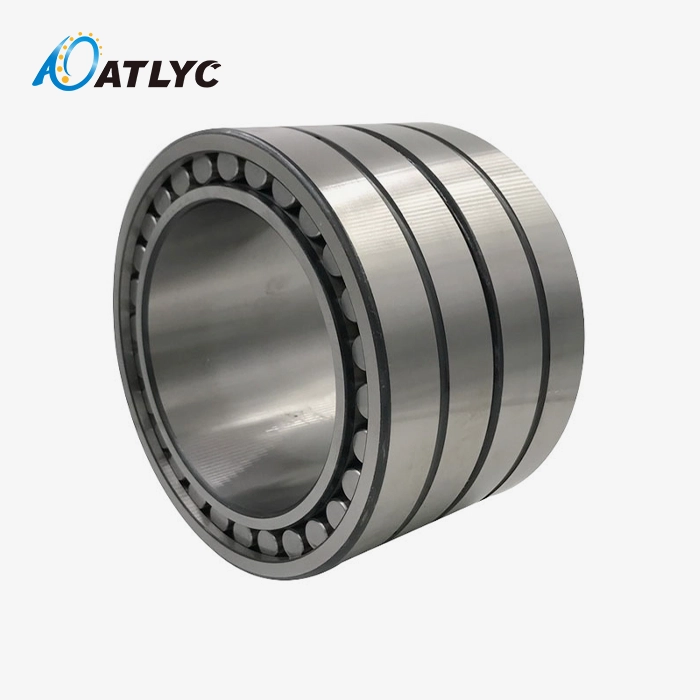
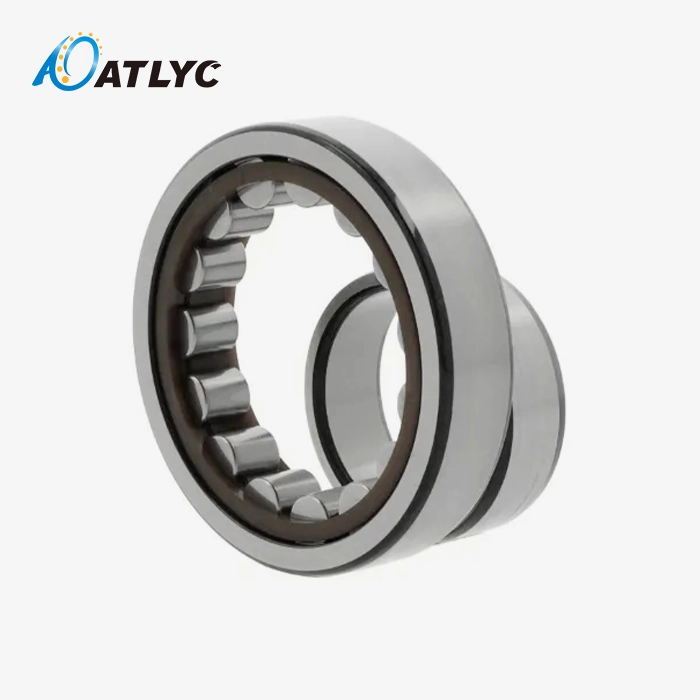
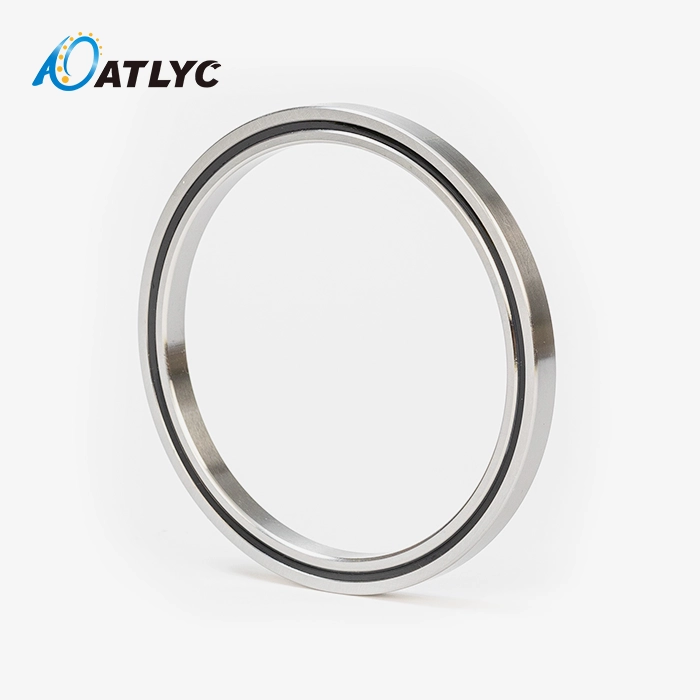
The RA series cross roller bearing is an extremely thin, highly precise rotating part. Unlike regular bearings, it features a divided inner ring and solid outer ring. The V-groove raceway is orthogonally arranged with cylindrical rollers at an interval of 90°. This design enables a single unit to take radial, axial, and moment stresses simultaneously. This eliminates the need for additional bearing stacks and, in certain circumstances, reduces the weight of the whole system by up to 40 per cent.
Key Technical Specifications
| Parameter | Typical RA Series Value |
|---|---|
| Wall section reduction vs. RB | 20–40% thinner |
| Roller arrangement | Orthogonal (90°) |
| Bearing steel hardness | 58–62 HRC (GCr15) |
| Precision grades available | P5, P4, P2 (JIS/ISO) |
| Load types supported | Radial, axial, moment |
Where the RA Series Is Used
The cross roller bearing RA series can be found in OEM markets that are very demanding:
Collaborative robot (cobot) joints: The thin profile integrates directly with compact motor housings, improving the payload-to-weight ratio and dynamic response.
Medical imaging equipment: Portable CT scanners and laparoscopic surgical robots rely on zero-clearance RA bearings to maintain imaging clarity inside tight, sterile housings.
Semiconductor wafer handlers: Vacuum and cleanroom alignment stages use RA series units with low-outgassing lubricants to achieve micrometer-level positioning without particle contamination.
All of these uses need the highest level of stiffness in the smallest space possible. The RA line is perfect for meeting these needs.
Cross Roller Bearing RA Series vs. Other Bearing Types: Comparison and Decision-Making
RA vs. RB Series
The RB series is the cross roller design with a standard wall. It can hold more actual weight, but it takes up more radial room. The RB series is a good choice for situations where the size of the building is not limited. The RA series is the right choice when weight and size are important, like in cobot arms or handheld medical devices.
RA vs. RW and NX Series
| Feature | RA Series | RW Series | NX Series |
|---|---|---|---|
| Ring configuration | Split inner / solid outer | Solid inner / split outer | Solid inner / solid outer |
| Mounting style | Inner ring bolted | Outer ring bolted | Either face |
| Cross-section | Ultra-thin | Standard | Compact |
| Typical application | Robot joints, medical | Rotary tables | CNC indexers |
Decision Criteria for OEM Engineers
Check three things before making your choice: the required moment stiffness, the available housing bore diameter, and the direction of the main load. Most of the time, the RA series cross roller bearing is the best choice when the moment load is more than 30% of the dynamic load rating, and the bore diameter is limited.
OEM Procurement Guide: Price, Suppliers, and Ordering Considerations
Pricing Factors
The cost of RA series cross roller bearings depends on the level of accuracy, the size of the bore, and the surface finish that is needed. Most of the time, a standard-sized P5-grade unit costs 1.5 to 2.5 times less than a P4 or P2 version. Extra features, like unique raceways, sealed versions, or changed setup, increase lead time and tooling costs. By asking for a full quote with all tolerance callouts up front, you can avoid having to make expensive changes later.
Choosing a Cross Roller Bearing RA Series Supplier
To find a good Cross Roller Bearing RA Series provider, you should do more than just look at their website. Find manufacturers that are certified by ISO 9001 and IATF 16949, have their own grinding and inspection departments, and can give you a first-article inspection report (FAIR) for every new part number. In the supply lines for cars and semiconductors, it is common to be able to track items from the raw steel heat lot to the finished bearing.
Lead Times and Bulk Orders
Standard RA series models from a maker with a lot of stock usually ship in two to four weeks. It could take 6–10 weeks for custom or high-precision grades (P4, P2). Setting up a blanket purchase order or safety stock agreement with your seller lowers the risk of line stops and generally lets you get better prices for large orders. If you use just-in-time production, make sure that your seller can agree to a 12-week rolling prediction program.
Maintenance and Longevity: Ensuring Optimal Performance of RA Series Bearings
Installation Best Practices
The single most important thing that affects how long a RA series bearing lasts is how it is installed. Always work in a clean space with a steady temperature. When you press on the split inner ring, use even force. Uneven force causes localized preload, which speeds up raceway wear. Before putting it together, check the manufacturer's fit table to see if the bore and shaft tolerances are correct.
Lubrication and Inspection Schedules
It is recommended that lithium-complex grease be replaced every 2,000 to 3,000 hours of operation in normal commercial settings. PFPE-based lubricants with set outgassing rates are needed in cleanrooms and vacuum uses. At every planned repair interval, check for strange noises and axial play. If the average torque changes by more than 15% from the starting value, it's likely that there is pollution or damage from wear and tear.
Troubleshooting Common Issues
Noise is frequently a symptom of dirt or insufficient lubrication. If there is excessive radial play after a lengthy period of service, the raceways are worn out and should be replaced rather than re-oiled. “Since we began checking the torque on our RA series joints every three months and pulling units when they deviated from 15% torque, rather than waiting for them to break, unplanned downtime dropped 35%,” claimed one South Korean robotics integrator.
Why Choose RA Series Cross Roller Bearings? Strategic Value for OEMs
The RA series delivers a unique performance advantage when space, weight, and positioning precision are all a concern. Its line-contact roller design produces greater stiffness than the angular contact ball bearings of the same cross-section. The RA series provides positional repeatability of less than 5 arc-seconds with P4 or P2 precision grades, which is crucial for five-axis CNC work centers and semiconductor lithography.
Here are the key advantages OEM purchasers generally mention they obtain when upgrading to the RA series:
Single unit multi-load capacity: Eliminates two or three distinct bearing arrangements, decreasing parts and assembly time.
Auditable precision grades: P5 through P2 grades are auditable to JIS B 1514 and ISO 492 dimensional standards.
Material durability: Heat-treated GCr15 bearing steel (58–62 HRC) offers excellent durability under high contact stress and extensive service cycles.
These advantages significantly reduce the complexity of assembly and long-term maintenance costs, two factors that impact total cost of ownership in high-volume OEM manufacturing.
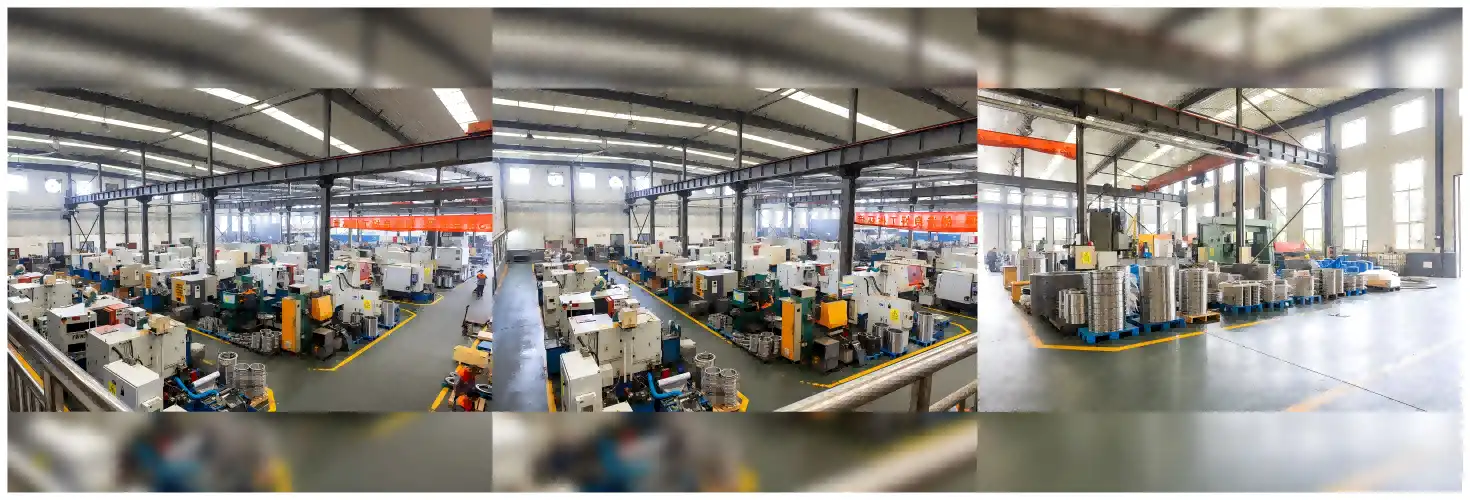
Manufacturers who have relied on IATF 16949 quality management systems, the standard for the automotive industry, are bringing process control to the table, resulting in decreased defect rates and consistency in dimensional compliance throughout production runs. Luoyang Auto Bearing Co., Ltd. (ATLYC) is dual-certified ISO 9001 / IATF 16949, with 15 years of manufacturing experience and 6 production workshops. We stand behind all RA series cross roller bearings sent to our clients in the US, Germany, South Korea, and beyond.

Conclusion
It is important to choose the proper Cross roller bearing RA series with the right construction, accuracy class, and load grades to suit your application. The RA series is the optimum solution when compact size, flexibility to transport loads in numerous directions, and precision placement are simultaneously required. Add to it a competent and certified supplier that can deal with big orders, demands for customisation, and documentation that can be traced, and you have the foundation for a stable, long-term OEM supply partnership.
FAQ
1. What precision grade should I specify for a CNC rotary axis?
For CNC rotary tables and indexing axes, P4 grade is the standard starting point. P2 grade is warranted for ultra-precision grinding spindles or semiconductor alignment stages where angular error must stay below 3 arc-seconds.
2. How does the RA series differ from the RB series in maintenance terms?
Both series share the same lubrication and inspection logic, but the RA series' split inner ring requires extra care during installation to avoid uneven preload. Once installed correctly, maintenance intervals are comparable.
3. Can the RA series cross roller bearing be customized for vacuum environments?
Yes. Modifications include low-outgassing PFPE lubricants, non-magnetic stainless steel variants, and cage-free full-roller configurations. Confirm your environmental requirements — pressure, temperature, and chemical exposure — with the supplier at the quoting stage.
4. What certifications should I require from a supplier?
ISO 9001 is the baseline. For automotive and tier-1 supply chains, IATF 16949 is required. Ask for a copy of the certificate and verify the scope covers bearing manufacturing, not just trading.
5. What is a realistic minimum order quantity for custom RA series bearings?
Most manufacturers set MOQs between 10 and 50 units for custom configurations. Standard catalog sizes often have lower MOQs. Negotiate a sample order of 5–10 units first to validate dimensional compliance before committing to production volumes.
Request a Quote from ATLYC — Your Trusted Cross Roller Bearing RA Series Manufacturer
Over the past 15 years, ATLYC (Luoyang Auto Bearing Co., Ltd.) has sold high-precision bearings to OEMs in the US, Germany, South Korea, and Turkey. Our cross roller bearing RA series is made in six separate production workshops that follow ISO 9001 and IATF 16949 rules. Get in touch with our engineering team right away for details, samples, or bulk pricing. To begin, please email us at auto@lyautobearing.com.
References
1. Harris, T. A., & Kotzalas, M. N. — Essential Concepts of Bearing Technology, Taylor & Francis, 2006.
2. Japanese Industrial Standards Committee — JIS B 1514: Rolling Bearings — Tolerances, Japanese Standards Association, 2016.
3. International Organization for Standardization — ISO 492: Rolling Bearings — Radial Bearings — Dimensional and Geometrical Tolerances, ISO, 2014.
4. International Automotive Task Force — IATF 16949:2016 — Quality Management System Requirements for Automotive Production, IATF, 2016.
5. Hamrock, B. J., Schmid, S. R., & Jacobson, B. O. — Fundamentals of Machine Elements, McGraw-Hill, 2005.
6. Weck, M., & Brecher, C. — Werkzeugmaschinen: Konstruktion und Berechnung (Machine Tools: Design and Calculation), Springer, 2006.
Learn about our latest products and discounts through SMS or email
_1772782093670.webp)