- English
- French
- German
- Portuguese
- Spanish
- Russian
- Japanese
- Korean
- Arabic
- Greek
- German
- Turkish
- Italian
- Danish
- Romanian
- Indonesian
- Czech
- Afrikaans
- Swedish
- Polish
- Basque
- Catalan
- Esperanto
- Hindi
- Lao
- Albanian
- Amharic
- Armenian
- Azerbaijani
- Belarusian
- Bengali
- Bosnian
- Bulgarian
- Cebuano
- Chichewa
- Corsican
- Croatian
- Dutch
- Estonian
- Filipino
- Finnish
- Frisian
- Galician
- Georgian
- Gujarati
- Haitian
- Hausa
- Hawaiian
- Hebrew
- Hmong
- Hungarian
- Icelandic
- Igbo
- Javanese
- Kannada
- Kazakh
- Khmer
- Kurdish
- Kyrgyz
- Latin
- Latvian
- Lithuanian
- Luxembou..
- Macedonian
- Malagasy
- Malay
- Malayalam
- Maltese
- Maori
- Marathi
- Mongolian
- Burmese
- Nepali
- Norwegian
- Pashto
- Persian
- Punjabi
- Serbian
- Sesotho
- Sinhala
- Slovak
- Slovenian
- Somali
- Samoan
- Scots Gaelic
- Shona
- Sindhi
- Sundanese
- Swahili
- Tajik
- Tamil
- Telugu
- Thai
- Ukrainian
- Urdu
- Uzbek
- Vietnamese
- Welsh
- Xhosa
- Yiddish
- Yoruba
- Zulu
RA Crossed Roller Bearings: Benefits for Compact Linear Motion
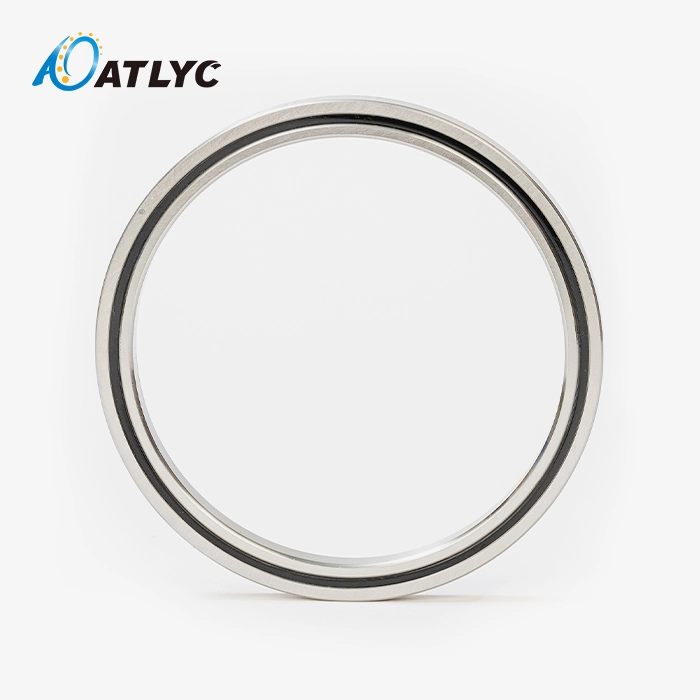
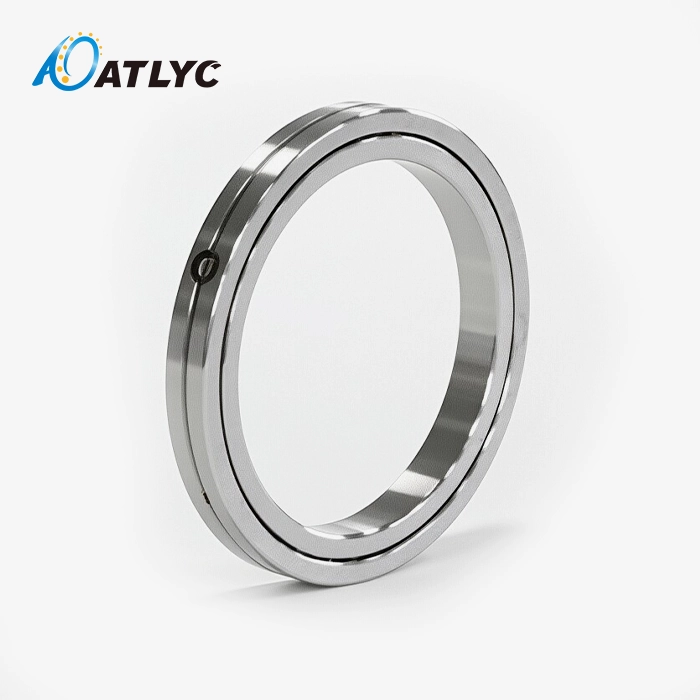
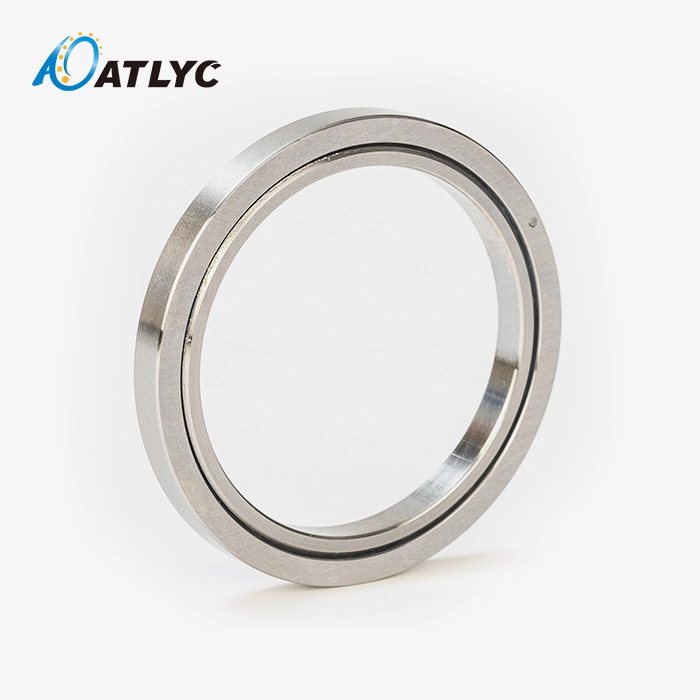
When precision matters in tight spaces, RA crossed roller bearings stand apart from conventional bearing solutions. These thin-section bearings feature cylindrical rollers arranged alternately at 90-degree angles within a V-groove raceway, allowing a single unit to carry radial, axial, and moment loads at the same time. The RA series uses a separable outer ring with an integrated inner ring rotation design, covering inner diameters from 20mm to 350mm and outer diameters from 70mm to 540mm. For OEMs and industrial equipment manufacturers demanding micron-level accuracy in compact assemblies, these bearings offer a technically sound, space-efficient answer.
Understanding RA Crossed Roller Bearings and Their Design Features
The Separable Outer Ring and Inner Ring Structure
The RA series is unique because it has an outer ring that can be separated and an inner ring that is one piece. This setup makes it easier to install and change bearings without affecting parts that are close by. The inner ring rotates as the main moving part, keeping the runout accuracy high throughout operation. Both rings are made from high-quality GCr15 and GCr15SiMn bearing steel. They are hard and won't wear out easily, so they can handle heavy industrial use.
The 90-Degree Roller Cross-Arrangement
Inside 90-degree V-groove raceways, cylindrical wheels sit next to each other straight on. Instead of the point contact that most ball bearings have, these rollers make line contact with the raceway surfaces. This shape spreads the load over a larger contact area. This lowers contact stress and increases the load-carrying ability in all directions at the same time. This makes a bearing that can handle combined loads without the need for extra support bearings.
Precision Grades and Dimensional Range
| Specification | Range |
|---|---|
| Inner Diameter | 20 mm – 350 mm |
| Outer Diameter | 70 mm – 540 mm |
| Width | 12 mm – 45 mm |
| Accuracy Grades | P6, P0, P5, P4, P3 |
| Material | GCr15, GCr15SiMn |
From P6 to P3, engineers can choose the right tolerance class for each job, whether it's a normal rotary table or a semiconductor chip alignment stage that needs repeatability on the nanometer scale.
Advantages of RA Crossed Roller Bearings in Compact Linear Motion
The RA series is the best choice for businesses that need precision because it has many engineering benefits. Here are some of the main ways that these RA Crossed Roller Bearings work well:
Multi-directional load capacity in a single unit: One crossed roller ring bearing replaces what would otherwise require two or more separate bearings. It carries radial, axial, and moment loads concurrently, reducing the total component count in any assembly and lowering overall machine weight.
Low friction coefficient for smooth rotation: The line-contact roller geometry distributes load evenly, which keeps the friction coefficient low. This means consistent torque requirements, reduced heat generation during operation, and less wear on raceway surfaces over time.
Micron-level runout accuracy: At P4 and P3 accuracy grades, runout tolerances reach the micron range. This level of accuracy is non-negotiable in applications like IC manufacturing devices, medical imaging equipment, and precision rotary tables where positional repeatability determines product quality.
Compact wall thickness without structural compromise: The thin-section construction keeps the bearing's outer envelope minimal, allowing equipment designers to shrink machine dimensions without sacrificing the structural stiffness required for accurate motion.
When purchasing experts have to choose bearings for automation equipment, artificial joints, and precision machinery, these benefits help them out in the exact ways they need to. Total cost of ownership stays low over the life of the bearing because it has less pushback and can be maintained at regular intervals.
Comparing RA Crossed Roller Bearings with Other Bearing Types
Choosing the right bearing type for a given application requires an honest comparison of load handling, space requirements, and accuracy performance.
| Bearing Type | Multi-Directional Load | Compact Section | Precision Grade | Best Application |
|---|---|---|---|---|
| RA Crossed Roller | Yes (all three axes) | Yes (thin wall) | P3–P6 | Robotics, rotary tables, medical devices |
| Angular Contact Ball | Partial (axial + radial) | Moderate | P4–P6 | High-speed spindles |
| Tapered Roller | Axial + radial only | No | P6–P0 | Heavy-duty drives |
| Slewing Ring | Yes (large diameter) | No | P6 | Cranes, large turntables |
Against Ball Bearings
Standard ball bearings rely on point contact, which limits their capacity under moment loads. When a robotic arm extends under a cantilevered load, a ball bearing arrangement deflects measurably. The RA design's line-contact geometry resists this deflection significantly better, maintaining positioning accuracy where it counts.
Against Tapered Roller Bearings
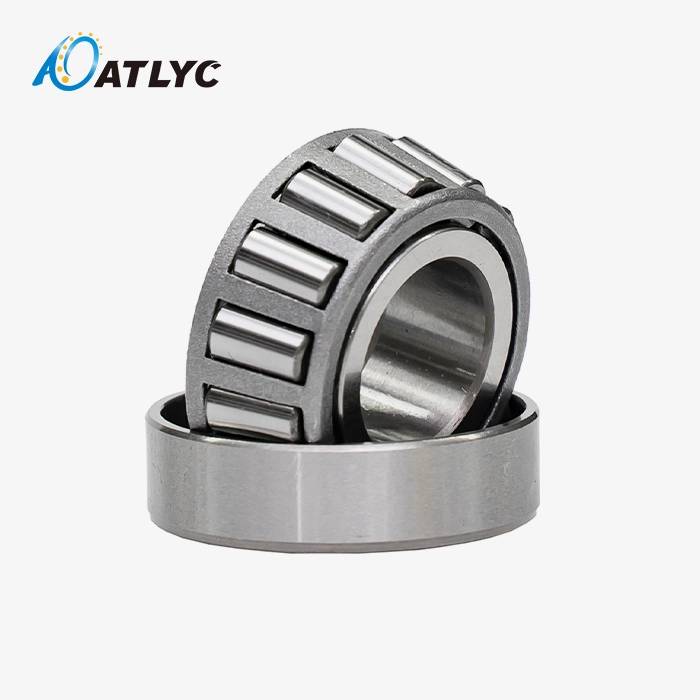
Tapered RA Crossed Roller Bearings handle combined loads well in heavy drives, but their size and geometry make them unsuitable for compact precision systems. An RA bearing serving a machining center rotary table occupies far less axial space than a paired tapered roller arrangement while delivering superior rotational accuracy.
Against Slewing Rings
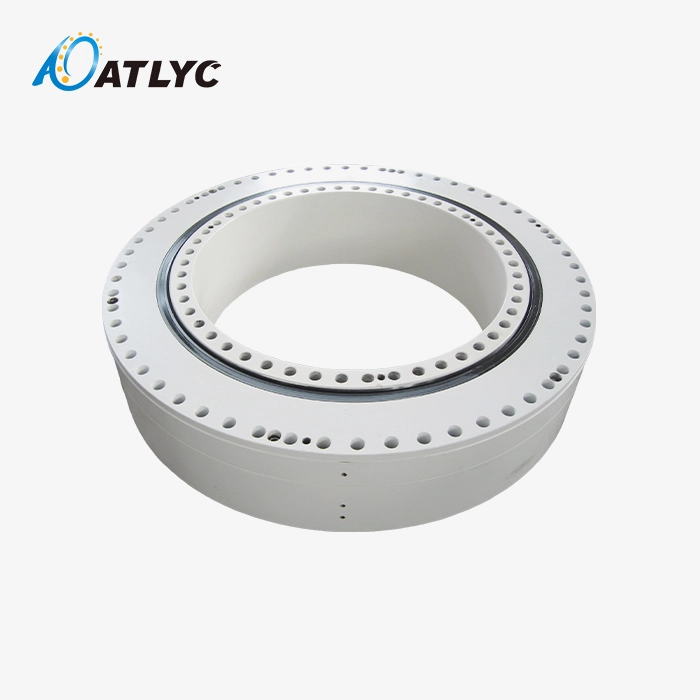
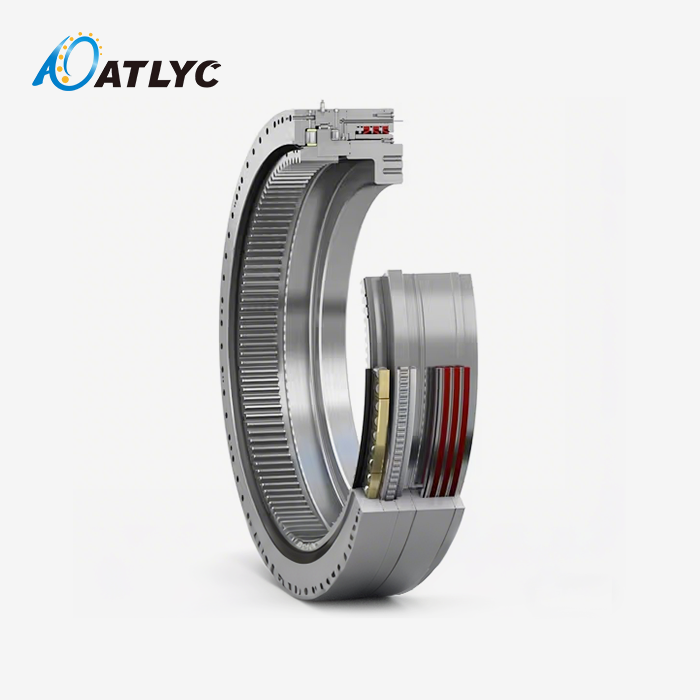
Slewing rings are built for large-diameter, high-torque rotary applications. They carry similar multi-directional loads but are physically much larger and heavier. For robotic manipulators, manipulator rotating parts, and thin-section measurement devices, the RA series fills the performance gap that slewing rings cannot address due to size limitations.
Procurement Guide: Buying RA Crossed Roller Bearings for B2B Applications
Evaluating Supplier Credentials
For medium-sized to big OEMs and makers of industrial tools, supplier approval is a must. Any RA crossed roller bearing supplier that you should consider should be certified by both ISO 9001 and IATF 16949. These standards control the process, make sure the measurement system works properly, and encourage continuous improvement. They are all connected to the consistency of bearing dimensions and the number of defects. Following both certifications, Luoyang Auto Bearing Co., Ltd. (ATLYC) has been making products for 15 years and has sold them to customers in the US, Germany, South Korea, and other countries.
Understanding Pricing and Lead Time Variables
The price of precision crossed roller bearings is based on three main things: the level of accuracy chosen, the size of the order, and the number of bearings ordered. Because of tighter grinding limits and stricter testing steps, P3 bearings are more expensive than P6 bearings. When you buy in bulk, the cost per unit usually goes down, and it's easier to keep your inventory levels stable for high-volume production plans. Lead time depends on how customized the order is. If you talk about specs with your RA crossed roller bearing manufacturer early on in the buying process, you can avoid delays later on in the project.
Technical Support and Customization
Not every use case fits into a catalog size. Robotics programmers, medical device makers, and builders of semiconductor equipment often need hole sizes or preload levels that aren't standard. Working with a bearing seller that does more than just fulfill orders from a catalog cuts down on the time it takes to design new parts and lowers the chance that they will fail in the field.
Case Studies and Practical Applications in Industry
Industrial Robots and Manipulator Joints
As the arm moves in different directions, the moment loads on collaborative robot joints constantly change. RA Crossed Roller Bearings can handle these changing conditions and keep the joint width small enough to fit arm shapes that aren't too thick. Positioning accuracy within micrometers is maintained over thousands of rounds of operation, which is a proven need in automated car assembly.
Precision Rotary Tables for Machining Centers
High axial rigidity and smooth, repeatable indexing are both important for machining center rotary tables. Older table designs needed two bearings, but now there is only one. This lowers the height of the stack and makes the table lighter. This method has been used by several machining center makers in Germany and Japan to reduce the size of the tables without lowering their load ratings.
Medical Equipment and IC Manufacturing Devices
C-arm X-ray tools need to be able to rotate smoothly and without shaking in a small space. Surgical robots need end-effectors that can repeat within a millimeter. When handling semiconductor wafers, alignment stages work in cleanrooms that require lubricants with low outgassing and tight runout limits. The RA series works in all three settings and can achieve accuracy grades P5 through P3, based on the task.

Conclusion
RA Crossed Roller Bearings solve a specific and long-standing problem in the design of precise machines: how to accurately carry combined loads while taking up as little space as possible. The GCr15 steel construction, separate outer ring, and 90-degree roller cross-arrangement make for a reliable bearing that works well in robotic joints, spinning tables, medical devices, and tools used to make integrated circuits. The RA series has accuracy grades from P6 to P3 and inner sizes ranging from 20mm to 350mm. It can meet a lot of different industry needs. This type of bearing always lives up to its specifications for OEMs and procurement teams that value precision, small size, and long service life.
FAQ
1. What is the difference between P5 and P3 accuracy grades in RA bearings?
P3 has a lower tolerance level than P5. Runout and dimension tolerances are held to tighter limits at P3, which means that positions can be repeated more accurately. P3-grade bearings work well in medical and electronics uses where precision is very important. P5 works well with standard rotary tables and general precision tools.
2. Can the separable outer ring affect bearing performance once installed?
The outer ring works as a solid part once it is put into a housing with the right bore tolerance and clamped down with the right amount of force. As long as the housing shape meets the manufacturer's requirements, rigidity stays strong. Most of the time, less stiffness is caused by housing limits that are not set correctly.
3. How do I choose between GCr15 and GCr15SiMn material grades?
GCr15SiMn has extra silicon and manganese in it, which makes it easier to harden. This makes it better for larger cross-section bearings where consistent through-hardening is important. For the vast majority of common RA bearing sizes, GCr15 works well enough. The engineering team at your bearing provider can tell you which type of material is best for your size and load.
4. What lubrication does the RA series require?
Lithium soap-based grease that is put on at the plant is used for standard uses. Equipment used in cleanrooms or vacuums, like chip processing equipment, needs grease that doesn't release a lot of gas or can work in vacuums. Before selecting for sensitive settings, you should always check with your RA crossed roller bearing provider to make sure of the type of lubricant.
Get a Quote from ATLYC — Your Trusted RA Crossed Roller Bearing Manufacturer
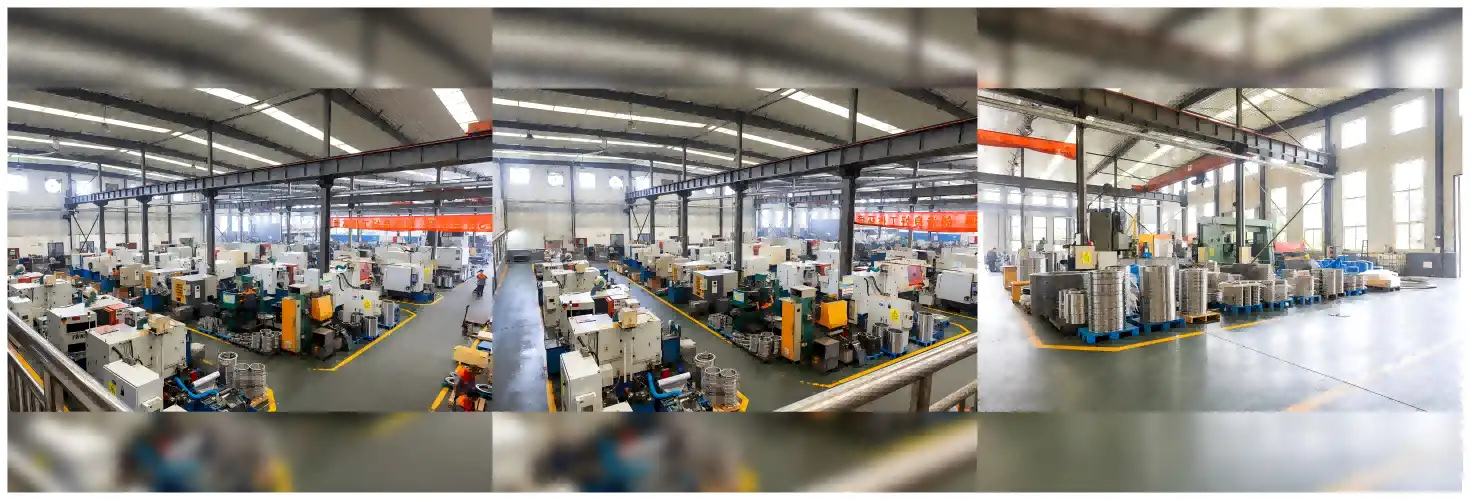
Since 2010, ATLYC has been making precision bearings and has six production workshops that are certified by ISO 9001 and IATF 16949. For RA Crossed Roller Bearings, the inner diameters range from 20mm to 350mm, and the accuracy grades range from P6 to P3. We offer application engineering support and reliable export lead times. Get in touch with our team right away to talk about your needs and the quantity you need. You can email us at auto@lyautobearing.com to see all of our products.
References
1. Harris, T. A., & Kotzalas, M. N. — Essential Concepts of Bearing Technology, Taylor & Francis, 2006.
2. SKF Group — SKF Bearing Catalogue: Rolling Bearings, SKF Publication, 2018.
3. ISO 9001:2015 — Quality Management Systems — Requirements, International Organization for Standardization, 2015.
4. IATF 16949:2016 — Quality Management System Requirements for Automotive Production, International Automotive Task Force, 2016.
5. Brewe, D. E., & Hamrock, B. J. — "Analysis of Roller Geometry for Crossed Roller Bearings," Journal of Tribology, ASME, 1977.
6. Weck, M., & Brecher, C. — Werkzeugmaschinen: Konstruktion und Berechnung, Springer-Verlag, 2006.
Learn about our latest products and discounts through SMS or email