- English
- French
- German
- Portuguese
- Spanish
- Russian
- Japanese
- Korean
- Arabic
- Greek
- German
- Turkish
- Italian
- Danish
- Romanian
- Indonesian
- Czech
- Afrikaans
- Swedish
- Polish
- Basque
- Catalan
- Esperanto
- Hindi
- Lao
- Albanian
- Amharic
- Armenian
- Azerbaijani
- Belarusian
- Bengali
- Bosnian
- Bulgarian
- Cebuano
- Chichewa
- Corsican
- Croatian
- Dutch
- Estonian
- Filipino
- Finnish
- Frisian
- Galician
- Georgian
- Gujarati
- Haitian
- Hausa
- Hawaiian
- Hebrew
- Hmong
- Hungarian
- Icelandic
- Igbo
- Javanese
- Kannada
- Kazakh
- Khmer
- Kurdish
- Kyrgyz
- Latin
- Latvian
- Lithuanian
- Luxembou..
- Macedonian
- Malagasy
- Malay
- Malayalam
- Maltese
- Maori
- Marathi
- Mongolian
- Burmese
- Nepali
- Norwegian
- Pashto
- Persian
- Punjabi
- Serbian
- Sesotho
- Sinhala
- Slovak
- Slovenian
- Somali
- Samoan
- Scots Gaelic
- Shona
- Sindhi
- Sundanese
- Swahili
- Tajik
- Tamil
- Telugu
- Thai
- Ukrainian
- Urdu
- Uzbek
- Vietnamese
- Welsh
- Xhosa
- Yiddish
- Yoruba
- Zulu
RB Cross Roller Bearing Certifications: What Should Buyers Check?
When buying crossed roller bearings for precise applications, certifications are not a mere formality; they are a clear sign of product quality and supplier responsibility. For procurement teams considering an RB cross roller bearing supplier, understanding which certifications are important and how to verify them helps avoid expensive field failures, non-compliance fines, and supply chain interruptions. This document details all the certification milestones that purchasers in the U.S. and worldwide markets should review before making an order.

Understanding RB Cross Roller Bearings and Their Certification Needs
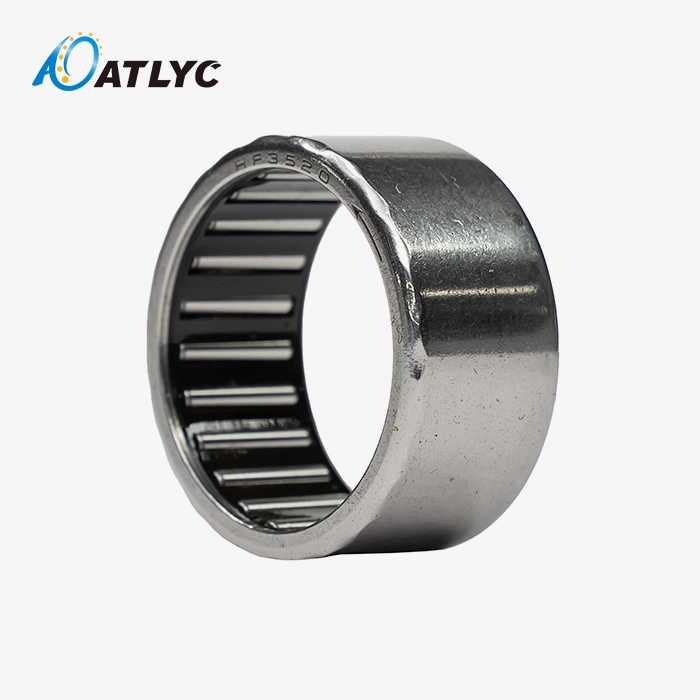
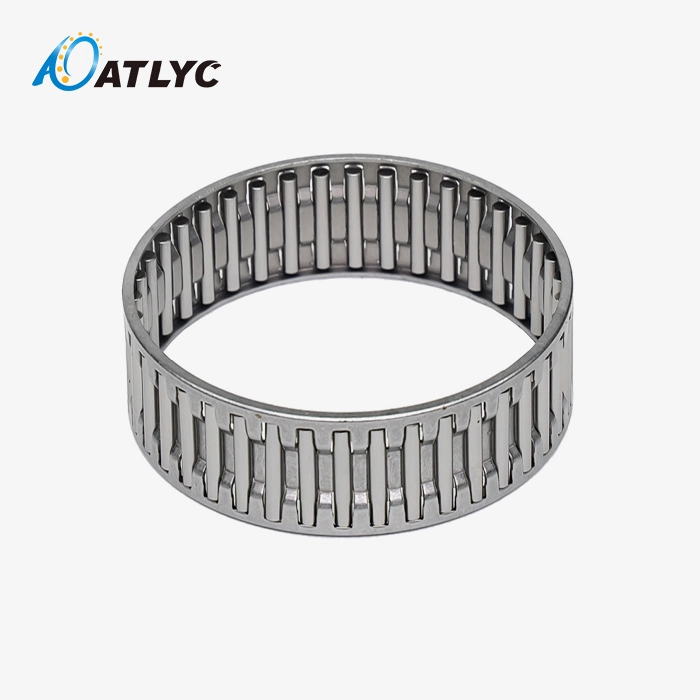
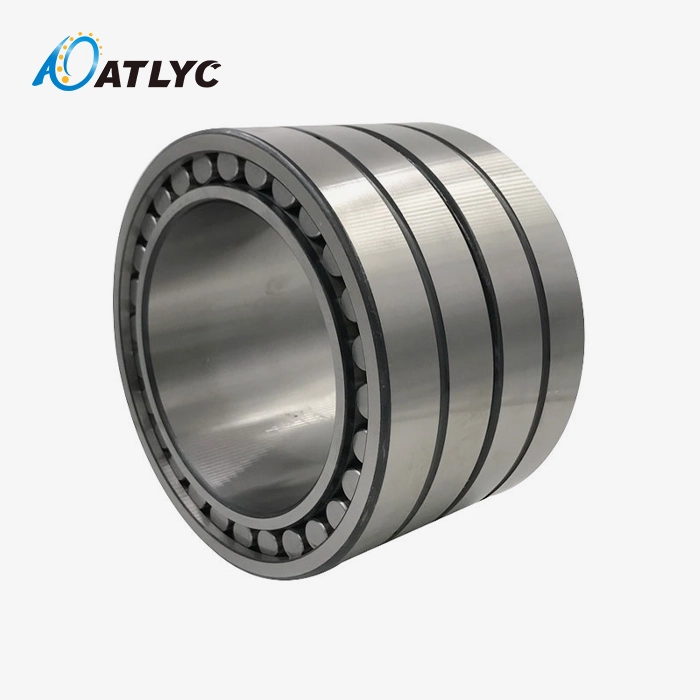
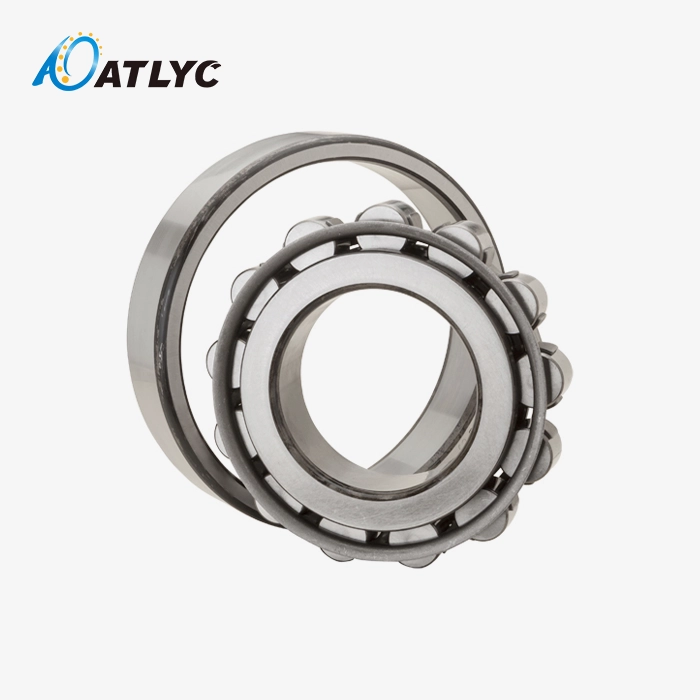
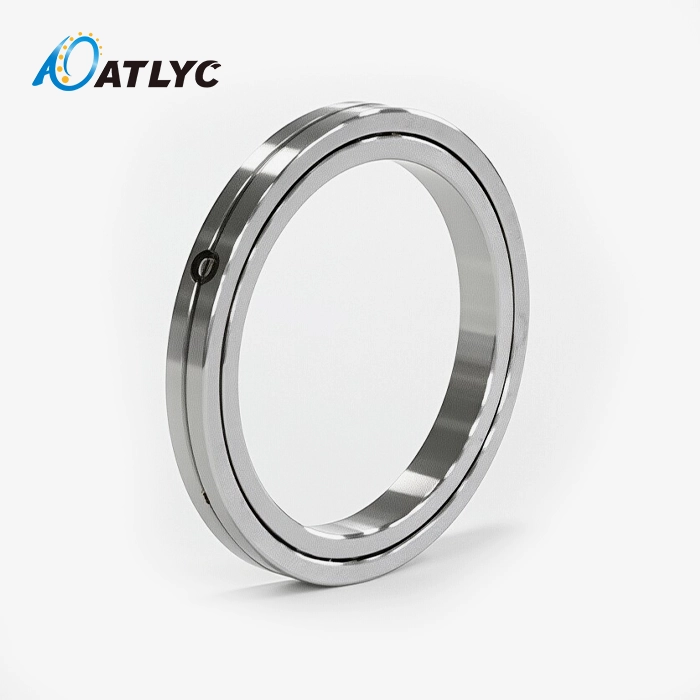
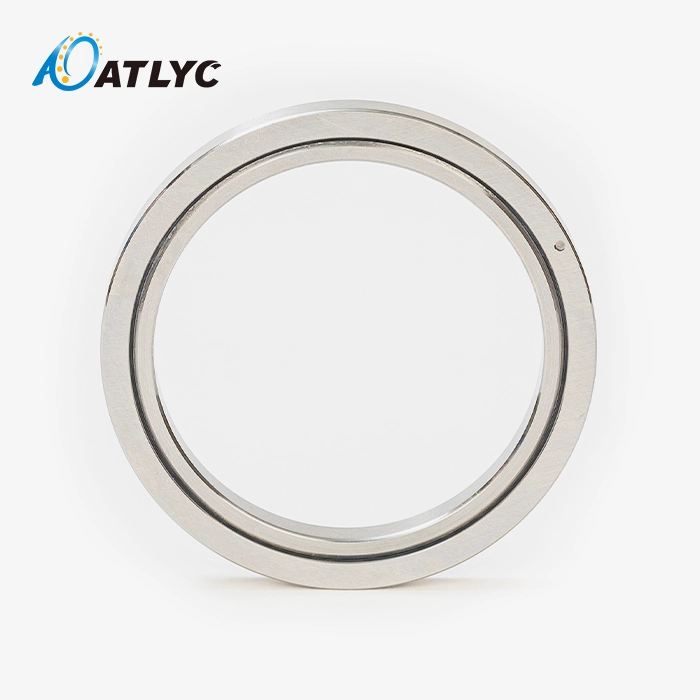
The RB Cross Roller Bearing has solid inner and outer rings. The outer ring serves as a stopper to hold the rollers in position and regulate the oil. Cylindrical wheels are set 90 degrees apart and are supported by precision V-groove raceways. This allows one unit to carry radial, axial, and moment loads at the same time. The bearing series are available in inner diameters from 20 mm to 1,100 mm, exterior diameters from 70 mm to 1,500 mm, and widths from 12 mm to 110 mm, thereby meeting a number of varied requirements in precision equipment.
Why Certifications Are Non-Negotiable
The positional precision in microns may be measured in robotic joints, CNC rotary tables, and machines used to create integrated circuits. If a bearing is even slightly wrong in dimension, the whole manufacturing line might be thrown off. Certifications assure consumers that the manufacturing process is at an internationally recognized level.
Standards That Govern This Product Category
The primary standards for crossing roller bearings are ISO 492 (radial bearings – tolerances), JIS B 1514 and DIN 620. Runout and dimensional tolerances are specified according to accuracy grades P6, P0, P5, P4, and P2, with P4 and P2 being utilized primarily for the most demanding applications such as medical imaging equipment and precision measurement instruments.
Traceability as a Quality Signal
Each crossed roller bearing produced by a reliable manufacturer is traceable to its raw material heat lot, the grinding process parameters, and inspection data, with records maintained for each batch. Without this monitoring, purchasers are unable to investigate what went amiss when issues arise during assembly or while the product is in use.
Key Certification Criteria Buyers Should Verify
There are a number of different forms of certifications for precision rotor RB Cross Roller Bearings. Different sorts of certifications exist, and purchasers need to make sure they have documentation for all of them before signing a supply agreement.
| Certification Type | Applicable Standard | What It Confirms |
|---|---|---|
| Quality Management System | ISO 9001 / IATF 16949 | Process control, corrective action, traceability |
| Dimensional Accuracy | ISO 492 / JIS B 1514 | Bore, OD, width, runout tolerances |
| Material Certification | Mill test report (Gcr15, Gcr15SiMn) | Chemical composition, hardness depth |
| Environmental Compliance | RoHS / REACH | Restricted substance content |
| Rotational Accuracy Test | P4/P5 grade inspection report | Radial and axial runout values per unit |
Material Certifications
The RB series bearings are made from Gcr15 and Gcr15SiMn bearing steel, which are both well-known high-carbon chromium alloys that give the needed surface hardness (HRC 60–65) and fatigue resistance for long service life. Buyers should ask for mill papers that list the chemicals used and the amount of heat treatment. One of the most common ways to cut corners on quality in the bearing supply chain is to use different materials.
Quality Management System Certifications
ISO 9001 makes sure that a seller has a quality control system that is written down. IATF 16949 goes even further; it only applies to production for the automotive industry and requires statistical process control, measurement system analysis, and management of customer-specific requirements. IATF 16949 is a must for OEM buyers who buy car parts; it's not a nice-to-have.
Dimensional and Performance Test Reports
For every batch of precision slewing bearings or crossing roller units that are made, there should be inspection records that match the stated accuracy grade with the bore diameter, outer diameter, width, and all runout values. Radial runout (Kia) must be within single-digit micron tolerances for P4-grade parts that are used in manipulators or precise rotating tables.
How to Verify and Validate RB Cross Roller Bearing Certifications
Having a certificate and actually following the rules set by the certificate are two different things. It is known that the bearing industry has a problem with fake paperwork, especially when prices are low.
Cross-Check Against Certifying Body Registries
Each ISO 9001 and IATF 16949 license has its own number and the name of an organization that issued it, such as TÜV, Bureau Veritas, or SGS. Buyers can check these on the public registry of the certifying body or in the IATF's database of approved interpretations. Any supplier that won't give you a certificate number that can be checked should be looked at more closely.
Request Batch-Level Inspection Reports
Factory-level quality approvals only prove that there is a system in place; they don't promise that a certain batch met the requirements. Always ask for the hardness verification and dimensional inspection report for the specific order lot. It is common for industrial robot joint bearings and machine center rotary tables with a failure tolerance of 0 to be set up this way.
Signs of Non-Authentic Documentation
Keep an eye out for certificates that don't have a clearly named accrediting body, don't have an end date (ISO 9001 certificates are good for three years and need to be renewed every year), or don't cover industrial RB Cross Roller Bearings. Before committing to a purchase order, you should talk to the supplier about these red flags.
Comparing Certifications Across Leading Crossed Roller Bearing Brands
The degree of certification varies considerably throughout the market. Japanese businesses like NSK and THK have long had quality procedures in place that meet JIS requirements and tend to generate a lot of documentation, which may be utilized to trace down their goods. European brands like SKF and FAG (Schaeffler) have a number of certifications that testify to their compliance with EU standards for quality and environmental protection.
Chinese enterprises that have invested in international certification, notably IATF 16949 and ISO 9001, may now compete in the same area with confidence. Luoyang Auto Bearing Co., Ltd. (ATLYC) was established in 2010 and has been certified with ISO 9001 and IATF 16949. It has expanded its manufacturing capacity over the last 15 years across six workshops and now supplies clients in the U.S., Germany, South Korea, and other important markets.
The typical shift in the scope of certification across supplier tiers is shown in the table below:
| Supplier Tier | ISO 9001 | IATF 16949 | Material Certs | RoHS/REACH | Batch Traceability |
|---|---|---|---|---|---|
| Tier 1 Global Brand | ✓ | ✓ | ✓ | ✓ | ✓ |
| Certified Chinese Manufacturer | ✓ | ✓ | ✓ | ✓ | ✓ |
| Uncertified Distributor | Sometimes | Rare | Rarely | Rarely | Rarely |
To figure out the real cost of quality over the life of the bearing, people making purchasing choices should look at both the level of approval and the price per unit.
Practical Tips for Buyers: Certification Checklist and Best Practices
A thorough pre-purchase checklist will ensure you won’t have difficulties in the field because of documentation deficiencies. Before placing an order for a precision crossed roller bearing, procurement teams should ensure that they have considered the following:
Quality system certificate: ISO 9001 or IATF 16949 valid for a three-year period, covering bearing manufacture in the scope.
Material Mill Certificate: Check Gcr15 or Gcr15SiMn steel grade, chemical composition, and heat treatment records for the exact production lot.
Dimensional Inspection Report: Check the stated accuracy grade (P6, P0, P5, P4, or P2) vs. the actual measured values of bore, OD, and runout to ISO 492 or JIS B 1514.
Environmental compliance: Look for RoHS and REACH declarations, particularly for items into EU or California-regulated supply chains.
Supplier audit records: Request the most current third-party audit report to confirm production capabilities, equipment calibration, and corrective action history.
These checks are the same for standard catalog sizes and bespoke sales. If you acquire a high volume of bearing units (sized 20 mm bore and above), you should have a contractual need to provide batch tracking documentation.
Buyers using this method during the RFQ stage swiftly eliminate vendors that don’t play by the rules. This saves time in certification and prevents the project from having to be re-sourced, which may be costly.

Conclusion
RB Cross Roller Bearing certifications are the greatest method customers can gauge how well a product will operate before installing it. Each tier of certificate checks for a different form of failure, such as material grade verification, runout accuracy reporting, and quality management system audits. Procurement teams who make reviewing certifications an inherent part of their business, instead of something that happens after the fact, consistently report reduced failure rates and improved connections with their suppliers. With the correct documentation, you can confidently commit, whether you are searching for robotic arm joints, precision CNC tables, or medical device assembly.
FAQ
1. Which certification matters most for automotive OEM applications?
IATF 16949 carries the most weight for automotive supply chains. It goes beyond basic quality management to require statistical process control, measurement system analysis, and alignment with customer-specific requirements. ISO 9001 alone is insufficient for Tier 1 and Tier 2 automotive supplier qualification.
2. How do I confirm that a Chinese bearing manufacturer's certifications are genuine?
Request the full certificate document, including the certificate number, issuing body name, and scope of certification. Then verify the certificate number directly on the certifying body's website (TÜV, Bureau Veritas, SGS, etc.). IATF 16949 certificates can also be cross-checked through the IATF's official global oversight structure.
3. Does accuracy grade affect which certifications apply?
Yes. Higher accuracy grades — P4 and P2 — require stricter dimensional and runout inspection protocols. Buyers should request grade-specific inspection reports, not just a general factory quality certificate, to confirm that the actual measured values meet the declared tolerance class.
4. Are RoHS and REACH certifications required for U.S. buyers?
They are not federally mandated for all industrial purchases in the U.S., but many OEMs and distributors require them for products entering global supply chains, particularly when components may be re-exported to the EU or used in consumer-adjacent applications.
Source Certified RB Cross Roller Bearings from ATLYC
For 15 years, ATLYC has helped manufacturers in the U.S., Germany, South Korea, and other places with their precision bearing needs. Our RB Cross Roller Bearings come in inner sizes ranging from 20mm to 1,100mm and accuracy grades P6 through P4. They are made from Gcr15 and Gcr15SiMn steel in a way that is approved by ISO 9001 and IATF 16949. Full material approvals and dimensional inspection records are sent with every package. You can email our team at auto@lyautobearing.com to get product details and a quote from a reliable RB Cross Roller Bearing manufacturer.
References
1. International Organization for Standardization. ISO 492: Rolling Bearings — Radial Bearings — Dimensional and Geometrical Tolerances. ISO, 2014.
2. International Automotive Task Force. IATF 16949:2016 — Quality Management System Requirements for Automotive Production and Relevant Service Part Organizations. IATF, 2016.
3. Japanese Industrial Standards Committee. JIS B 1514: Rolling Bearings — Tolerances. Japanese Standards Association, 2006.
4. European Chemicals Agency. REACH Regulation (EC) No 1907/2006: Registration, Evaluation, Authorisation and Restriction of Chemicals. ECHA, 2006.
5. American Bearing Manufacturers Association. ABMA Standard 20: Radial Bearings of Ball, Cylindrical Roller and Spherical Roller Types — Metric Design. ABMA, 2011.
6. Deutsches Institut für Normung. DIN 620: Rolling Bearings — Tolerances. DIN, 2004.
Learn about our latest products and discounts through SMS or email