- English
- French
- German
- Portuguese
- Spanish
- Russian
- Japanese
- Korean
- Arabic
- Greek
- German
- Turkish
- Italian
- Danish
- Romanian
- Indonesian
- Czech
- Afrikaans
- Swedish
- Polish
- Basque
- Catalan
- Esperanto
- Hindi
- Lao
- Albanian
- Amharic
- Armenian
- Azerbaijani
- Belarusian
- Bengali
- Bosnian
- Bulgarian
- Cebuano
- Chichewa
- Corsican
- Croatian
- Dutch
- Estonian
- Filipino
- Finnish
- Frisian
- Galician
- Georgian
- Gujarati
- Haitian
- Hausa
- Hawaiian
- Hebrew
- Hmong
- Hungarian
- Icelandic
- Igbo
- Javanese
- Kannada
- Kazakh
- Khmer
- Kurdish
- Kyrgyz
- Latin
- Latvian
- Lithuanian
- Luxembou..
- Macedonian
- Malagasy
- Malay
- Malayalam
- Maltese
- Maori
- Marathi
- Mongolian
- Burmese
- Nepali
- Norwegian
- Pashto
- Persian
- Punjabi
- Serbian
- Sesotho
- Sinhala
- Slovak
- Slovenian
- Somali
- Samoan
- Scots Gaelic
- Shona
- Sindhi
- Sundanese
- Swahili
- Tajik
- Tamil
- Telugu
- Thai
- Ukrainian
- Urdu
- Uzbek
- Vietnamese
- Welsh
- Xhosa
- Yiddish
- Yoruba
- Zulu
RA8008UUCC0 Crossed Roller Bearing for Space-Saving Designs
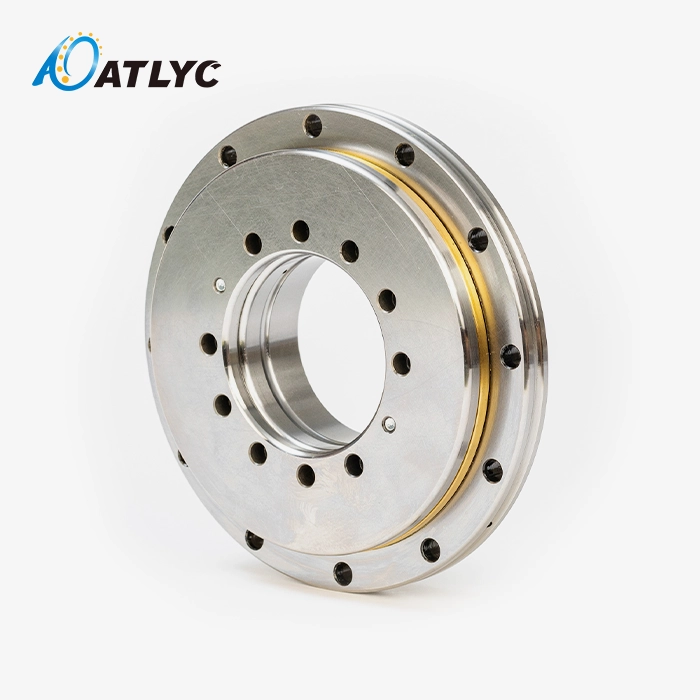
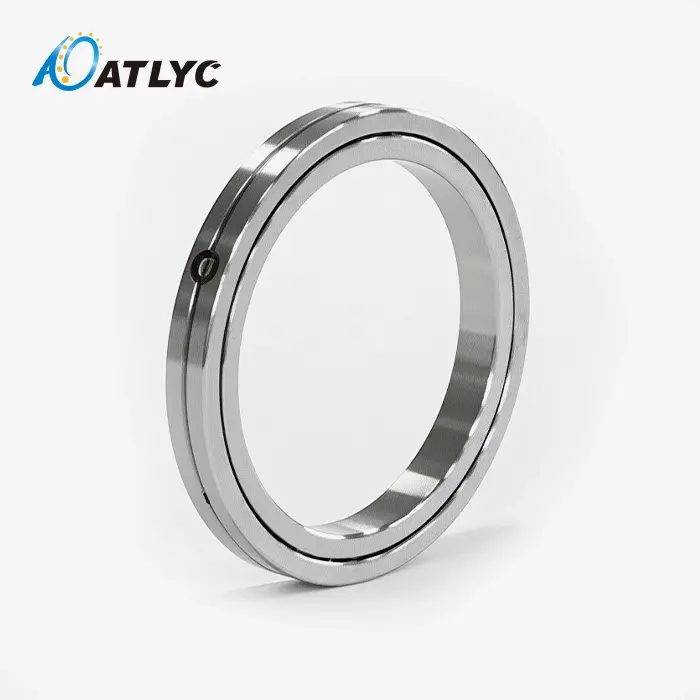
When your engineering team faces the challenge of fitting high-load capacity into impossibly tight spaces, the RA8008UUCC0 crossed roller bearing delivers a solution that redefines what compact precision means. This ultra-thin bearing—measuring just 8mm in width with an 80mm inner diameter and 96mm outer diameter—replaces bulky multi-bearing arrangements with a single unit capable of handling radial, axial, and moment loads simultaneously. Manufactured from premium GCr15 bearing steel and featuring a separable outer ring design, this crossed roller bearing achieves weight reductions up to 50% compared to conventional alternatives while maintaining exceptional rigidity. Engineers in robotics, semiconductor manufacturing, and precision machinery trust this component to solve space constraints without compromising performance.
Understanding RA8008UUCC0 Crossed Roller Bearing Specifications and Features
The technical foundation of this specialised bearing begins with its material composition and dimensional precision. We manufacture the RA8008UUCC0 from GCr15 and GCr15SiMn bearing steels, heat-treated to HRC 58-64 hardness levels. This material selection ensures consistent performance across temperature ranges while resisting wear under continuous operation. The bearing's core dimensions—80mm bore, 96mm outer diameter, and 8mm section height—represent a carefully optimised geometry that maximises load capacity within minimal envelope constraints.
Core Design Architecture
The separable outer ring construction distinguishes this crossed roller bearing from integrated designs. This configuration allows straightforward installation in assemblies where access limitations would otherwise complicate mounting procedures. The integrated inner ring maintains dimensional stability during rotation, contributing to the bearing's exceptional runout accuracy. When you compare this architecture to traditional ball bearing stacks, the weight savings become immediately apparent—reducing rotational inertia and enabling faster acceleration profiles in automated equipment.
Precision Grade Capabilities
Our production lines deliver this bearing across multiple accuracy classes: P6, P0, P5, P4, and P2. The P5 and P4 grades particularly suit applications in medical imaging equipment and semiconductor fabrication tools where micron-level positioning matters. Each precision grade undergoes specific raceway grinding processes and dimensional inspections using coordinate measuring machines. The tighter tolerances in P4 and P2 grades directly translate to reduced vibration amplitudes and longer service intervals in your critical machinery.
Load Distribution Mechanism
The crossed roller arrangement positions cylindrical rollers at alternating 90-degree orientations within precision V-groove raceways. This orthogonal configuration creates multiple contact points that distribute forces across the bearing's circumference. When moment loads apply—common in robotic arm joints—the geometry naturally resists tilting motions that would cause premature wear in ball bearings. The result is a bearing that handles complex load combinations without requiring supplementary support bearings, simplifying your mechanical design and reducing part counts.
Material properties extend beyond basic hardness specifications. The chromium content in GCr15 steel provides corrosion resistance in environments with moderate humidity exposure. Heat treatment protocols ensure through-hardening that maintains surface integrity even as rollers contact raceways under heavy loads. We've documented service lives exceeding 20,000 operating hours in properly maintained robotic joint applications, demonstrating the material's durability under real-world conditions.
RA8008UUCC0 vs. Alternative Bearings: Which One Fits Your Needs?
Selecting the optimal bearing for compact applications requires understanding how different designs perform under specific operating conditions. The RA8008UUCC0 occupies a specialised niche, yet procurement decisions often involve comparing it with related models and alternative bearing types. These comparisons clarify when this crossed roller bearing delivers superior value versus situations where other solutions prove more cost-effective.
Comparison with Standard RA8008 Variants
The RA8008UUCC0 differs from the standard RA8008UUCC through its CC0 preload specification. While both versions share identical dimensional envelopes, the CC0 designation indicates negative internal clearance ranging from -2 to -5 microns. This preload eliminates axial play, creating zero-backlash operation essential for precision positioning tables and robotic joints. Standard UUCC versions with normal clearance suit applications where some internal play is acceptable, such as turntable assemblies that don't require sub-micron accuracy. The tradeoff involves slightly higher starting torque in the CC0 variant, which your drive motors must overcome during startup sequences.
Angular Contact Bearing Alternatives
When engineers evaluate angular contact bearings against this crossed roller option, the space equation shifts dramatically. Achieving equivalent load ratings with angular contact bearings typically requires back-to-back or face-to-face paired arrangements. These configurations consume additional axial space and demand precise mounting shoulder dimensions to maintain proper preload. The single-unit crossed roller bearing eliminates these complications while delivering comparable rigidity in a fraction of the installation length. Rotary table applications particularly benefit from this consolidation, as the reduced stack-up dimensions allow lower-profile machine designs.
Four-Point Contact Slewing Bearings
Larger diameter applications sometimes consider four-point contact slewing bearings as alternatives. While slewing rings handle moment loads effectively, their minimum practical sizes typically start around a 200 mm bore diameter. The RA8008UUCC0 serves equipment requiring similar multi-directional load capacity but at much smaller scales. Collaborative robot joints, medical device pivots, and compact rotary indexers operate in size ranges where slewing bearings cannot physically fit. The crossed roller design fills this gap between miniature ball bearings and large-diameter slewing rings.
Performance differences extend to rotational friction characteristics. The line contact between cylindrical rollers and raceways creates lower friction coefficients compared to ball bearings under equivalent loads. Your equipment experiences smoother rotation with reduced torque ripple—a critical advantage in precision optical systems and measurement instruments where vibration affects accuracy. We've measured friction coefficients as low as 0.002 under optimal lubrication conditions, enabling sensitive torque feedback in robotic force-sensing applications.
Procurement Guide: How to Buy RA8008UUCC0 Crossed Roller Bearings Efficiently?
Global sourcing for precision components demands careful supplier evaluation and clear specification communication. The procurement process for specialised crossed roller bearings involves considerations beyond simple price comparisons. Understanding supplier capabilities, quality systems, and logistical frameworks ensures you receive components that meet your application requirements while maintaining delivery schedules.
Identifying Qualified Manufacturers
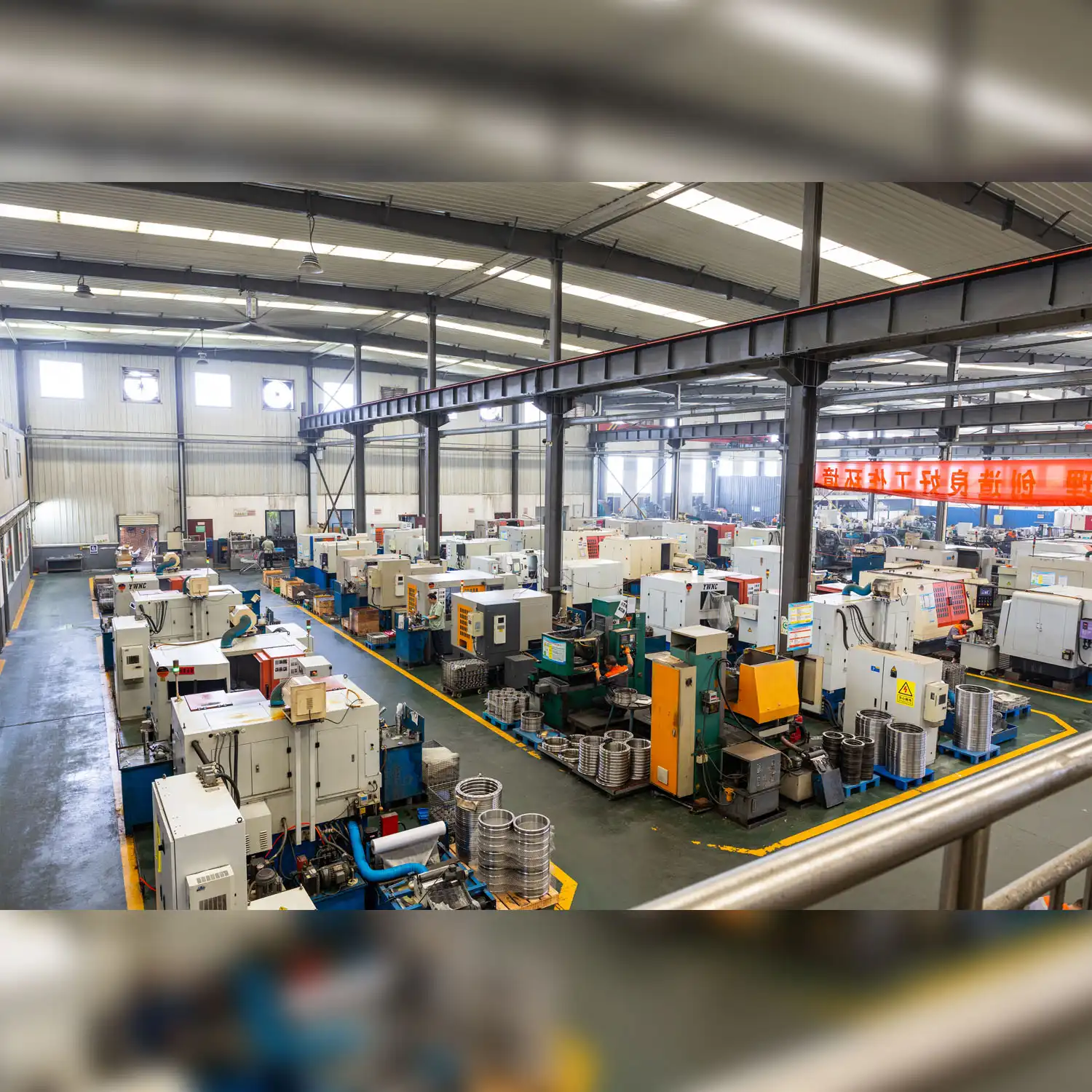
The market includes both original equipment manufacturers and authorised distributors. Japanese brands like NSK, IKO, and THK established the crossed roller bearing category, offering extensive engineering support and documented reliability. Their pricing typically reflects brand positioning and comprehensive technical resources. Chinese manufacturers—including ATLYC—have developed equivalent manufacturing capabilities over the past decade, achieving ISO 9001 and IATF 16949 certifications that validate quality management systems. We've invested in precision grinding equipment and inspection technology comparable to established brands, enabling competitive pricing without compromising dimensional accuracy or material specifications.
Quality Verification Methods
When evaluating potential suppliers, request certification documentation that demonstrates compliance with relevant standards. Legitimate bearing manufacturers maintain material traceability through heat lot numbers and provide dimensional inspection reports upon request. The precision grade marking on each bearing should correspond to measurable runout characteristics—a P5 grade bearing must demonstrate radial runout within 2.5 microns and axial runout under 2.5 microns when measured according to ISO 492 protocols. Our quality assurance team performs random sampling inspections using coordinate measuring machines calibrated to national measurement standards.
Commercial Terms and Lead Times
Standard production runs for the RA8008UUCC0 crossed roller bearing typically require a lead time of 4-6 weeks from order confirmation to shipment. Minimum order quantities vary by manufacturer—established brands often specify minimums of 10-20 pieces, while specialised suppliers may accommodate smaller prototype quantities. Volume pricing structures show significant breaks at 50, 100, and 500-piece thresholds. When planning procurement budgets, factor in packaging and freight costs, which can represent 8-12% of the component value for international shipments. We offer consolidated shipping options for customers ordering multiple bearing types, reducing per-unit logistics expenses.
Payment terms reflect standard B2B practices, with new customers typically operating under prepayment or letter of credit arrangements until trading relationships establish trust. After initial successful transactions, many suppliers extend net-30 or net-60 terms to qualified accounts. Warranty coverage generally spans 12-18 months from delivery, protecting against manufacturing defects but excluding wear from improper installation or inadequate lubrication. Clear documentation of storage conditions and handling procedures helps resolve any warranty claims that arise during this period.
Technical support availability differentiates manufacturers significantly. Access to application engineers who understand load calculation methods and mounting specifications accelerates your product development cycles. We maintain technical staff fluent in English to assist North American customers with bearing selection, CAD model integration, and troubleshooting installation challenges. This support extends beyond initial purchase, helping optimise bearing performance throughout your equipment's service life.
Optimising the Use of RA8008UUCC0 Bearings for Space-Saving Designs
Maximising the service life and performance of thin-section crossed roller bearings requires attention to installation practices and maintenance protocols. The compact design that makes these bearings valuable also creates sensitivity to mounting errors and contamination. Understanding proper handling procedures protects your investment while ensuring equipment achieves designed performance specifications.
Installation Best Practices
The thin-wall construction demands careful mounting techniques that distribute installation forces evenly around the bearing circumference. Never apply direct hammer blows to the bearing rings—the thin cross-section will deform permanently under point loads. We recommend using press-fitting jigs machined to match the bearing's outer diameter precisely, applying uniform pressure during installation. Housing bore tolerances must maintain tight specifications; an out-of-round housing will distort the outer ring, creating uneven load distribution and premature wear. Our installation guides specify H7 tolerance for housing bores when press-fitting the outer ring, ensuring proper interference without excessive deformation.
Lubrication Requirements
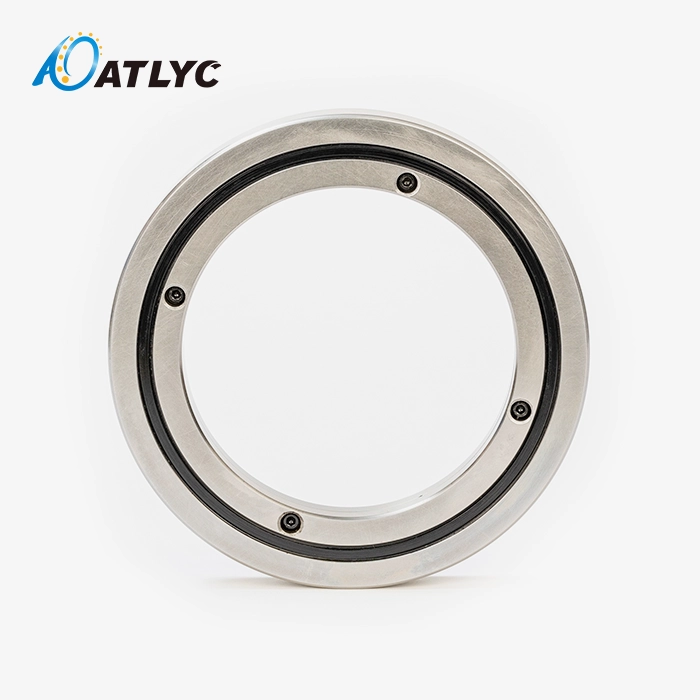
The UU seal designation indicates contact seals on both bearing faces, prefilled with lithium soap-based grease during manufacturing. This factory lubrication typically suffices for the bearing's service life in normal operating environments. High-temperature applications above 100°C may require synthetic greases with elevated dropping points. Vacuum applications demand low-outgassing lubricants that won't contaminate clean environments. When selecting specialised greases, verify compatibility with the nitrile rubber seal material to prevent seal degradation. We provide detailed lubrication specifications matching various operating conditions, helping you select appropriate greases for extended service intervals.
Condition Monitoring Strategies
Proactive maintenance extends bearing life significantly beyond reactive replacement approaches. Vibration analysis detects early-stage wear patterns before catastrophic failures occur. Installing accelerometers near bearing locations allows trending of vibration amplitudes and frequency spectrums over time. Gradual increases in high-frequency components often indicate surface fatigue developing on raceways. Temperature monitoring provides another early warning indicator—bearings operating consistently above ambient temperatures by more than 40°C warrant inspection for lubrication degradation or excessive preload. We've documented cases where condition monitoring prevented unplanned downtime by identifying bearing issues 2-3 months before functional failure.
Performance optimisation extends to system-level design decisions. Mounting arrangements that minimise bearing misalignment reduce edge loading that concentrates stresses on raceway ends. Ensuring proper perpendicularity between the bearing's mounting face and the shaft axis keeps roller contact patterns centred on raceways. Angular misalignment exceeding 2 arc-minutes can reduce bearing life by 30% compared to properly aligned installations. Our application engineering team provides mounting dimension recommendations that maintain alignment within acceptable limits across expected thermal expansion ranges.
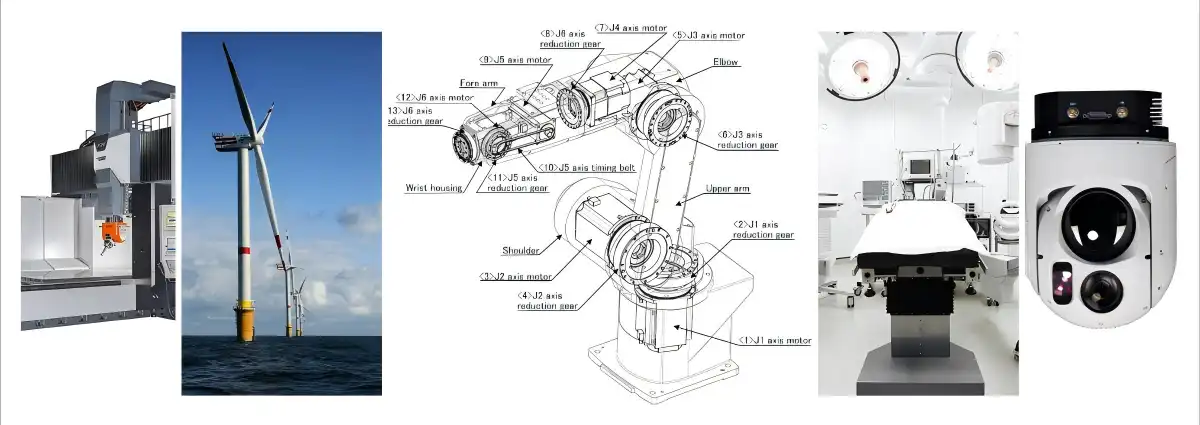
Case evidence from robotic applications demonstrates these principles clearly. A collaborative robot manufacturer integrated the RA8008UUCC0 Crossed Roller Bearing into shoulder and elbow joints, achieving 18-month maintenance-free operation in industrial assembly lines. The compact bearing enabled 15% weight reduction in the robot arm compared to their previous design using paired angular contact bearings. Reduced rotational inertia allowed 20% faster acceleration profiles, improving cycle times in pick-and-place operations. The manufacturer's engineers credited proper installation procedures and condition monitoring protocols with achieving these performance gains while maintaining high reliability.
Conclusion
The RA8008UUCC0 Crossed Roller Bearing represents a proven solution for engineers confronting space limitations without compromising load capacity or precision. Its 8 mm ultra-thin profile, combined with a separable outer ring design and CC0 preload specification, delivers zero-backlash operation essential for robotic joints, precision rotary tables, and compact automation equipment. Material selection using GCr15 bearing steel and manufacturing to P5/P4 precision grades ensures consistent performance across demanding applications. Compared to multi-bearing arrangements or larger slewing rings, this crossed roller option reduces assembly weight while simplifying installation requirements. Procurement strategies that emphasise supplier quality certifications and technical support capabilities protect your investment while accelerating product development timelines. Proper installation techniques and proactive maintenance maximise service life, with documented field experience demonstrating 20,000+ operating hours in properly maintained systems.
FAQ
What distinguishes the CC0 preload from standard clearance specifications?
The CC0 designation indicates negative internal clearance between -2 and -5 microns, creating preload that eliminates axial play completely. This preload delivers zero-backlash operation critical for precision positioning applications like robotic joints and rotary indexers. Standard clearance versions allow slight internal movement, which is acceptable in turntable assemblies not requiring sub-micron accuracy. The CC0 variant exhibits slightly higher starting torque, which drive motors must overcome during startup.
How should housing tolerances accommodate the thin-wall design?
Housing bore roundness directly affects bearing performance due to the thin outer ring construction. We specify an h7 tolerance for press-fit installations, maintaining a 15-30 micron interference. Out-of-round housings distort the outer ring, creating uneven load distribution and accelerated wear. Precision-machined housings ensure the bearing maintains designed contact patterns across the raceway surfaces, maximising service life.
Can the separable outer ring be removed for maintenance access?
While the outer ring design allows theoretical separation, we strongly advise against disassembly after initial installation. The bearing arrives pre-adjusted to specific preload specifications during manufacturing. Separating components disrupts this calibration, and reassembly requires specialised equipment to restore proper preload and runout accuracy. Match-marks must align perfectly during any necessary reassembly to maintain performance specifications.
Which accuracy grade suits typical robotic joint applications?
Robotic joints typically specify a P5 precision grade, balancing performance requirements with cost considerations. This grade provides runout accuracy within 2.5 microns—sufficient for collaborative robots and industrial manipulators. Semiconductor handling equipment and precision measurement instruments may require P4 or P2 grades for tighter tolerances. Application requirements regarding positioning accuracy and vibration sensitivity determine the appropriate precision level.
Partner with ATLYC for Reliable RA8008UUCC0 Crossed Roller Bearing Supply
ATLYC brings 15 years of bearing manufacturing experience to your precision component sourcing needs. Our ISO 9001 and IATF 16949-certified facilities in Luoyang produce the RA8008UUCC0 Crossed Roller Bearing to exact specifications, delivering the space-saving performance your compact machinery designs require. We maintain consistent quality through rigorous inspection protocols and serve as a trusted crossed roller bearing manufacturer for OEMs across North America, Europe, and Asia. Our 120-person production and engineering team provides technical support throughout your product development cycle—from initial bearing selection through installation guidance and ongoing performance optimisation. Whether you need prototype quantities or production volumes, we offer competitive pricing with 4-6 week lead times and flexible minimum order quantities. Contact our team at auto@lyautobearing.com to discuss your specific application requirements, request detailed technical specifications, or obtain quotations for the RA8008UUCC0 and complementary bearing solutions. We're committed to becoming your long-term precision bearing supplier, supporting your engineering challenges with reliable components and responsive service.
References
1. Harris, T.A. and Kotzalas, M.N. (2006). "Advanced Concepts of Bearing Technology: Rolling Bearing Analysis, Fifth Edition." CRC Press, Taylor & Francis Group.
2. Schaeffler Technologies AG & Co. KG. (2019). "Crossed Roller Bearings: Design, Application and Maintenance Guidelines." Schaeffler Industrial Division Technical Publication.
3. ISO 492:2014. "Rolling Bearings – Radial Bearings – Geometrical Product Specifications (GPS) and Tolerance Values." International Organisation for Standardisation.
4. Xu, H. and Zhang, L. (2018). "Load Distribution Analysis of Thin-Section Crossed Roller Bearings in Robotic Joints." Journal of Mechanical Engineering Science, Vol. 232, Issue 19.
5. NSK Ltd. (2020). "Precision Bearings for Robotics and Automation: Technical Handbook." NSK Motion & Control Division Engineering Publication.
6. IATF 16949:2016. "Quality Management System Requirements for Automotive Production and Relevant Service Parts Organisations." International Automotive Task Force Standard.
Learn about our latest products and discounts through SMS or email