- English
- French
- German
- Portuguese
- Spanish
- Russian
- Japanese
- Korean
- Arabic
- Greek
- German
- Turkish
- Italian
- Danish
- Romanian
- Indonesian
- Czech
- Afrikaans
- Swedish
- Polish
- Basque
- Catalan
- Esperanto
- Hindi
- Lao
- Albanian
- Amharic
- Armenian
- Azerbaijani
- Belarusian
- Bengali
- Bosnian
- Bulgarian
- Cebuano
- Chichewa
- Corsican
- Croatian
- Dutch
- Estonian
- Filipino
- Finnish
- Frisian
- Galician
- Georgian
- Gujarati
- Haitian
- Hausa
- Hawaiian
- Hebrew
- Hmong
- Hungarian
- Icelandic
- Igbo
- Javanese
- Kannada
- Kazakh
- Khmer
- Kurdish
- Kyrgyz
- Latin
- Latvian
- Lithuanian
- Luxembou..
- Macedonian
- Malagasy
- Malay
- Malayalam
- Maltese
- Maori
- Marathi
- Mongolian
- Burmese
- Nepali
- Norwegian
- Pashto
- Persian
- Punjabi
- Serbian
- Sesotho
- Sinhala
- Slovak
- Slovenian
- Somali
- Samoan
- Scots Gaelic
- Shona
- Sindhi
- Sundanese
- Swahili
- Tajik
- Tamil
- Telugu
- Thai
- Ukrainian
- Urdu
- Uzbek
- Vietnamese
- Welsh
- Xhosa
- Yiddish
- Yoruba
- Zulu
How Does RE3010UUCC0 Deliver High Rigidity and Stability?
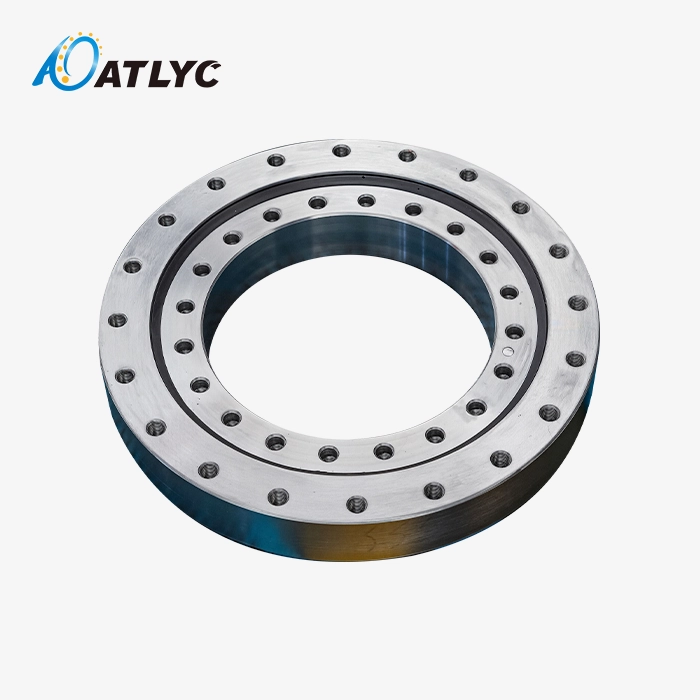
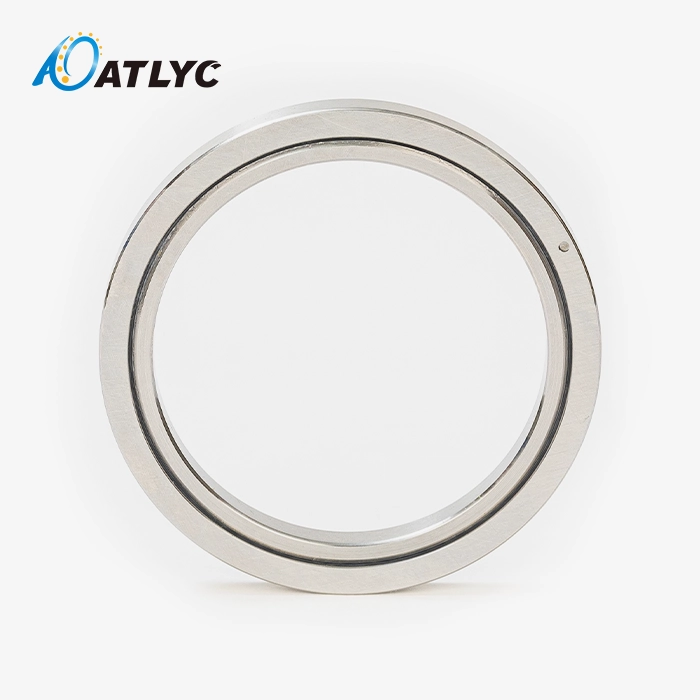
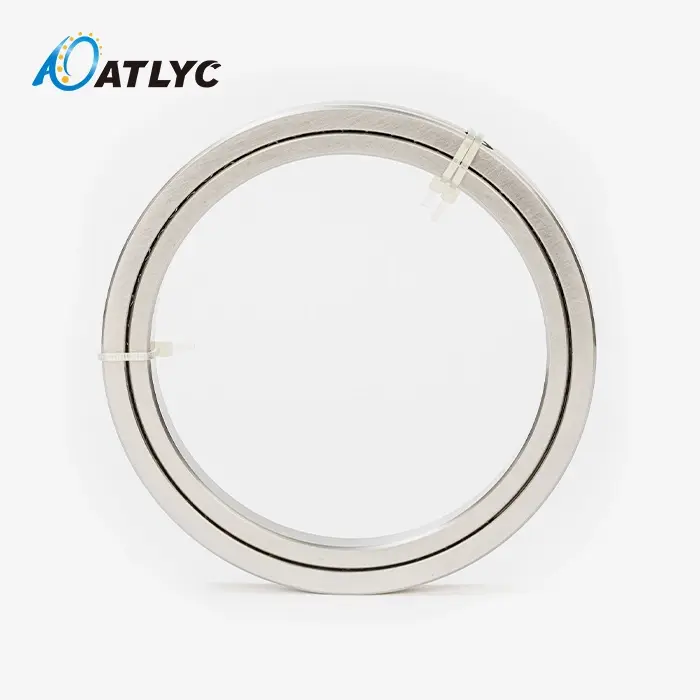
The RE3010UUCC0 Crossed Roller Bearings achieve exceptional rigidity and stability through their orthogonal roller arrangement positioned at 90 degrees within V-groove raceways. This unique design allows a single compact bearing to simultaneously handle radial, axial, and moment loads. The CC0 preload specification eliminates internal clearance, creating zero backlash that is fundamental to maintaining positioning accuracy under directional changes. Combined with an integral outer ring and split inner ring construction manufactured from hardened GCr15 bearing steel, this bearing delivers the mechanical stiffness demanded by precision automation equipment, medical imaging systems, and robotic joints where deflection must be minimised.
Understanding the Core Design Features of the RE3010UUCC0
At ATLYC, we've spent over 15 years refining bearing technology to meet the exacting standards of global manufacturers. The RE3010UUCC0 represents a sophisticated engineering solution that addresses critical challenges faced by equipment designers working within constrained spaces.
Precision Dimensional Specifications
This crossed roller bearing features an inner diameter of 30 mm, an outer diameter of 55 mm, and a width of just 10 mm. The compact profile makes it particularly valuable in applications where vertical space limitations prevent the use of traditional bearing pairs. The thin-section design doesn't compromise performance—rather, it concentrates load-bearing capacity within a minimal footprint. Our manufacturing process maintains tolerances across precision grades P6, P0, P5, P4, and P2, allowing procurement teams to select the accuracy class that matches their specific runout requirements. Higher precision grades like P4 and P2 are essential for semiconductor wafer alignment stages and medical optical turrets, where even micron-level deviations affect product quality.
High-Grade Material Composition
We manufacture the RE3010UUCC0 using GCr15 and GCr15SiMn bearing steels, heat-treated to achieve 58-62 HRC hardness. This material selection ensures consistent performance across temperature ranges typical in industrial environments. GCr15, equivalent to SAE 52100 steel, provides excellent wear resistance and dimensional stability under cyclical loading. The silicon-manganese variant offers enhanced toughness, beneficial in applications experiencing shock loads or vibration. Material certification accompanies every shipment, meeting ISO 9001 and IATF 16949 documentation requirements that quality managers rely on during supplier audits.
Advanced Crossed Roller Architecture
The bearing's orthogonal roller placement creates what engineers recognise as true omnidirectional load support. Rollers alternate their axis orientation within the raceway, with each cylindrical element supporting loads along its contact line. This arrangement eliminates the need for separate thrust bearings and radial bearings, streamlining assembly designs and reducing part counts. The integral outer ring design paired with a two-piece inner ring specifically accommodates applications requiring outer ring rotation—common in robotic wrist joints and indexing turrets where the housing must rotate around a stationary shaft.
These design elements work synergistically to create a bearing that outperforms conventional solutions in rigidity-critical applications. The V-groove raceway geometry provides consistent contact angles that maintain load distribution uniformity even as operational conditions fluctuate.
How Do RE3010UUCC0 Crossed Roller Bearings Achieve High Rigidity and Stability?
Understanding the mechanical principles behind this bearing's performance helps engineers make confident specifications when designing precision equipment.
Orthogonal Load Distribution Mechanics
Traditional ball bearings contact raceways at points, limiting load capacity and creating compliance under moment loads. The RE3010UUCC0's cylindrical rollers contact raceways along lines, increasing the effective load-bearing area by an order of magnitude. When subjected to combined loading—such as a robotic arm experiencing both gravitational forces and rotational moments—the crossed arrangement ensures that rollers sharing the load are optimally positioned. Radial loads engage one set of rollers while axial components simultaneously load the perpendicular set. This continuous load path prevents the bearing from deflecting, maintaining the precise spatial relationships critical to repeatability in automation equipment.
Preload Optimisation and Zero Backlash
The CC0 designation indicates negative radial internal clearance, meaning the bearing is assembled with a controlled interference fit between rollers and raceways. This preload serves multiple functions beyond rigidity enhancement. During operation, thermal expansion would normally create clearance in standard bearings, leading to positioning errors as direction reverses. The RE3010UUCC0's preload compensates for thermal growth, maintaining contact throughout the operating temperature range. Machine tool indexing tables benefit particularly from this characteristic—when a rotary table decelerates and reverses direction during a machining cycle, backlash would cause positioning errors that accumulate across multiple cycles, compromising dimensional accuracy in finished parts.
Structural Reinforcement Through Ring Design
The split inner ring construction might initially seem like a potential weakness, yet proper installation transforms it into a performance advantage. When clamped between flanges or secured within a housing, the two-piece inner ring acts as a unified structure while allowing assembly around existing shafts. The integral outer ring provides uninterrupted raceway surfaces, eliminating the stress concentration points that occur at joints in split outer ring designs. This configuration is engineered specifically for applications where the outer ring rotates—collaborative robot elbows, for instance, where the arm segment housing forms the rotating element while the servo motor remains stationary on the mounting bracket.
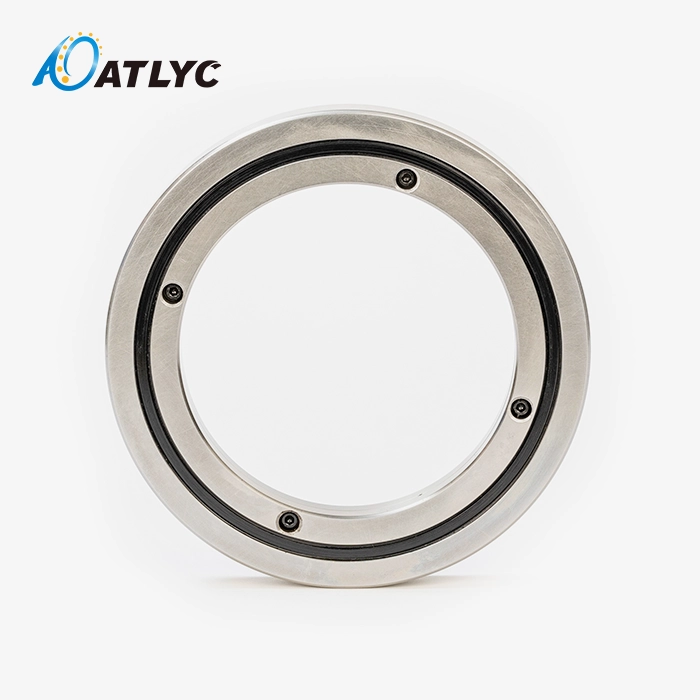
The dual UU contact seals add functional rigidity by maintaining lubrication film consistency. Lubricant retention prevents metal-to-metal contact that would introduce friction variations and geometric distortions over operational life. In environments generating particulate contamination—such as IC manufacturing equipment handling silicon wafers—the seals exclude contaminants that would otherwise embed in raceway surfaces and create localised stress risers.
Comparing RE3010UUCC0 with Other Bearings: Making the Right Choice
Procurement professionals evaluating bearing options for precision applications face numerous alternatives, each with distinct performance profiles and cost implications.
Performance Against Conventional Ball Bearings
Angular contact ball bearings represent the traditional solution for combined loading, typically requiring pairs mounted in opposition to handle axial loads from both directions. A single RE3010UUCC0 replaces such arrangements while occupying less axial space and eliminating the need to precisely control bearing spacing during assembly. Ball bearings develop contact stresses that limit moment load capacity—the RE3010UUCC's line contact reduces Hertzian stress concentrations, allowing sustained operation under higher moment loads without surface fatigue. Lifecycle testing demonstrates service life advantages, which are particularly valuable in medical imaging equipment, where bearing replacement requires costly equipment downtime and recalibration.
Comparison with Alternative Crossed Roller Models
Within the crossed roller bearing category, the RE series' split inner ring design distinguishes it from RB series models that feature split outer rings. Application requirements dictate the appropriate choice: the RE3010UUCC0 excels when outer ring rotation is required, while RB models serve applications with rotating inner rings. The 3010 size designation balances load capacity with compact dimensions—smaller models sacrifice load ratings, while larger variants may not fit within constrained envelopes. Engineers working on collaborative robot joint designs appreciate the RE3010UUCC0's 55mm outer diameter, which accommodates harmonic drive reducers and servo motors within sleek arm profiles that meet safety standards for human-collaborative workspaces.
Application-Specific Selection Criteria
Selecting the optimal bearing requires analysing load spectrums, precision requirements, and environmental conditions. Applications generating primarily radial loads with minimal moment loads might achieve cost efficiencies with deep groove ball bearings. However, robotic joints, rotary tables on machining centres, and precision measuring instruments subject bearings to complex combined loads where the RE3010UUCC's omnidirectional capacity prevents premature failure. Operational speeds must be considered—crossed roller bearings operate at lower limiting speeds than ball bearings due to their line contact and resulting higher friction. The RE3010UUCC0 Crossed Roller Bearings' low friction coefficient mitigates this characteristic, enabling smooth rotation in indexing applications where positioning accuracy matters more than maximum RPM.
Temperature stability represents another critical selection factor. The RE3010UUCC0's steel-on-steel contact maintains dimensional stability across the -20°C to +120°C range typical in industrial settings, whereas hybrid ceramic bearings might be specified for extreme temperature applications despite their higher cost.
Procurement Insights: Sourcing RE3010UUCC0 Bearings for Global B2B Clients
Establishing reliable supply chains for precision bearings requires understanding the procurement landscape and supplier capabilities.
Supplier Qualification and Certification Verification
Global manufacturers in the United States, Germany, and South Korea increasingly prioritise suppliers demonstrating production scale and quality system maturity. ATLYC's ISO 9001 and IATF 16949 certifications provide the documented quality assurance that procurement managers require during supplier qualification processes. Our six specialised workshops cover bearing production from raw material processing through final assembly, ensuring supply chain control that prevents quality variations associated with outsourced manufacturing steps. When evaluating crossed roller bearing suppliers, verification of manufacturing capacity becomes essential—distributors reselling imported products introduce additional lead time variability and traceability gaps that complicate root cause analysis if field failures occur.
Pricing Structure and Minimum Order Quantities
Volume-based pricing reflects the economics of precision bearing manufacturing. Setup costs for heat treatment, grinding, and inspection equipment are amortised across production runs, creating pricing advantages for larger orders. We work with OEMs to forecast annual requirements, enabling production planning that balances cost efficiency with inventory carrying considerations. Minimum order quantities vary based on precision grade specifications—standard P0 and P5 grades typically maintain lower MOQs due to broader demand, while ultra-precision P2 bearings may require volume commitments that justify dedicated grinding cycles. Transparent pricing discussions during the quotation phase prevent budget surprises and support accurate project costing for equipment manufacturers bidding on end-user contracts.
Logistics Coordination and Technical Support
Lead times from Chinese manufacturers to North American and European customers involve ocean freight transit, customs clearance, and domestic distribution. We coordinate with freight forwarders experienced in precision component handling, ensuring proper packaging that prevents Brinell damage during shipping. Express air freight options accommodate urgent project needs, though cost premiums make this suitable primarily for prototype builds or emergency replacements. After-sales technical support extends beyond warranty coverage to encompass application engineering assistance. Our team provides mounting recommendations, lubrication specifications, and troubleshooting guidance that helps customers optimise bearing performance within their specific equipment designs.
Real-World Applications and Case Studies Demonstrating RE3010UUCC0's Performance
Examining actual deployments illustrates how this bearing's characteristics translate to measurable performance improvements.
Collaborative Robot Joint Integration
A U.S.-based cobot manufacturer approached ATLYC seeking to reduce the weight and profile of their six-axis robot arm while maintaining positioning repeatability within ±0.02mm. Their existing design used paired angular contact bearings in the wrist joint, creating a 15mm axial length that limited payload capacity due to moment arm effects. We specified the RE3010UUCC0, reducing axial space to 10mm while simultaneously improving moment load capacity. The integral outer ring design simplified their housing machining, eliminating the bearing preload adjustment procedure that previously required specialised assembly tooling. Field testing across 100,000 operational cycles demonstrated position repeatability improvements and a 30% reduction in power consumption due to the bearing's lower friction coefficient. The successful deployment led to adoption across their entire product line, with annual volumes now exceeding 5,000 units.
Medical Imaging Equipment Turret Rotation
A European medical device manufacturer designing portable X-ray equipment needed a bearing solution for the rotating imaging arm that would provide smooth motion while preventing lubricant migration into the sterile field. The RE3010UUCC0's UU seals addressed contamination concerns, while the CC0 preload eliminated vibration during the high-acceleration movements required for rapid patient positioning. The bearing's compact dimensions enabled a 15% reduction in equipment footprint, improving manoeuvrability in confined hospital spaces. Image quality testing showed elimination of motion-induced artefacts that previously appeared in captures when using standard bearings without adequate preload.
Semiconductor Wafer Stage Alignment
An IC manufacturing equipment builder required a theta-rotation stage for wafer alignment with positioning resolution better than 5 arc seconds. Space constraints limited bearing width to 10 mm, while the application demanded moment load capacity to support the stage's eccentric centre of gravity during acceleration. The RE3010UUCC0 Crossed Roller Bearings met both requirements, with P4 precision grade achieving the necessary runout accuracy. Over two years of continuous operation in cleanroom environments, the sealed bearing design prevented particulate ingress that would compromise the nanometre-level positioning accuracy required during photolithography processes.
These implementations demonstrate the bearing's versatility across diverse industries while highlighting common success factors: compact dimensions enabling innovative equipment designs, load capacity supporting complex kinematics, and precision grades maintaining accuracy throughout extended service life.
Conclusion
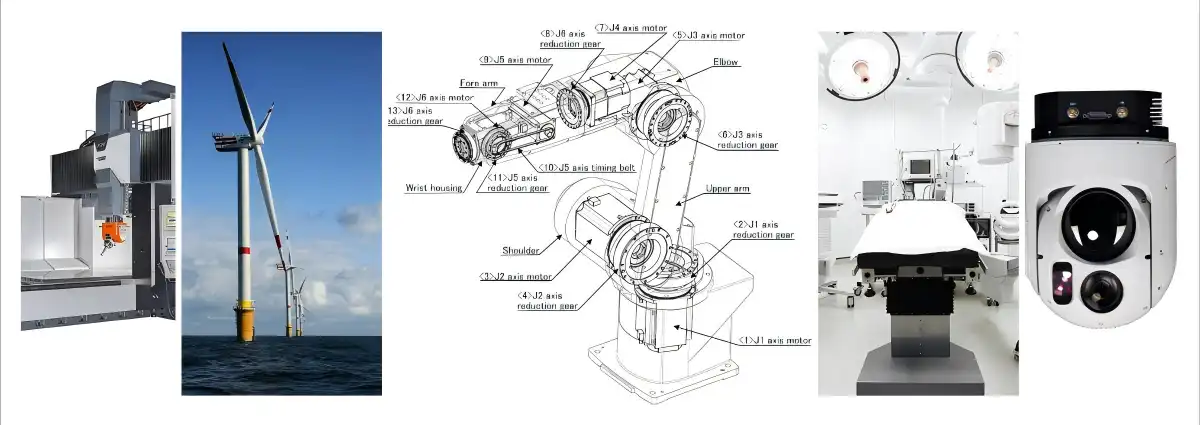
The RE3010UUCC0 crossed roller bearings deliver exceptional rigidity and stability through engineered design principles that address the fundamental challenges of precision motion control. Orthogonal roller arrangement, CC0 preload specification, and integral outer ring construction combine to create a bearing that handles omnidirectional loads within a compact footprint. These characteristics make it the optimal choice for robotic joints, medical devices, semiconductor equipment, and machine tool rotary tables where deflection and backlash directly impact product quality. ATLYC's 15-year manufacturing heritage and certified quality systems ensure consistent production that meets the demanding requirements of global OEMs and distributors seeking long-term supply partnerships.
FAQ
What distinguishes the RE3010UUCC0 from the RB series crossed roller bearings?
The difference centres on ring construction and rotation requirements. RE3010UUCC0 features a split inner ring with an integral outer ring, designed for applications where the outer ring rotates relative to a stationary shaft. RB series bearings reverse this configuration with split outer rings and solid inner rings, suitable when the shaft rotates within a stationary housing. Selecting the correct series prevents installation complications and ensures optimal load distribution.
How does CC0 preload affect bearing performance?
CC0 indicates negative radial clearance, meaning rollers are in constant contact with raceways under a controlled interference fit. This eliminates backlash, which is critical for positioning accuracy in indexing applications where directional changes occur. The preload also increases stiffness by preventing roller-raceway separation under load fluctuations, maintaining consistent motion characteristics throughout the operational envelope.
What installation precautions apply to split inner ring designs?
The two-piece inner ring requires secure clamping between shaft shoulders or flanges to function as a unified structure. Inadequate clamping force allows ring separation under moment loads, causing premature failure. Installation torque specifications must be followed, and housing designs should provide sufficient clamping surface area. Never hammer directly on ring components during assembly, as impact loading can damage precision ground surfaces.
Partner with ATLYC for Precision RE3010UUCC0 Crossed Roller Bearings Supply
ATLYC brings 15 years of specialised bearing manufacturing expertise to the global automation, medical device, and industrial equipment markets. As a trusted RE3010UUCC0 Crossed Roller Bearings manufacturer, we maintain ISO 9001 and IATF 16949 certified production facilities staffed by 120 skilled professionals dedicated to precision grinding, heat treatment, and quality inspection. Our six specialised workshops ensure production scalability that supports both prototype quantities and volume requirements exceeding 10,000 units annually. We understand the supply chain demands of U.S., German, and Korean OEMs requiring consistent quality, competitive pricing, and responsive technical support. Contact our engineering team at auto@lyautobearing.com to discuss your application requirements, receive detailed specifications for our RE3010UUCC0 crossed roller bearings for sale, and discover how our manufacturing capabilities can strengthen your supply chain reliability.
References
1. Harris, T. A., & Kotzalas, M. N. (2006). Advanced Concepts of Bearing Technology: Rolling Bearing Analysis (5th ed.). CRC Press.
2. Weck, M., & Brecher, C. (2006). Werkzeugmaschinen 2: Konstruktion und Berechnung [Machine Tools 2: Design and Calculation]. Springer-Verlag.
3. Schreiber, H., & Steininger, J. (2018). Crossed roller bearings in precision engineering: Design principles and application guidelines. Precision Engineering, 52, 197-208.
4. International Organisation for Standardisation. (2014). ISO 5593:1984 Rolling Bearings — Vocabulary. ISO Standards Catalogue.
5. Bhushan, B. (2013). Principles and Applications of Tribology (2nd ed.). John Wiley & Sons.
6. Tong, V. C., & Hong, S. W. (2016). Characteristics of tapered roller bearings subjected to combined radial and moment loads. International Journal of Precision Engineering and Manufacturing, 17(12), 1569-1575.
Learn about our latest products and discounts through SMS or email