- English
- French
- German
- Portuguese
- Spanish
- Russian
- Japanese
- Korean
- Arabic
- Greek
- German
- Turkish
- Italian
- Danish
- Romanian
- Indonesian
- Czech
- Afrikaans
- Swedish
- Polish
- Basque
- Catalan
- Esperanto
- Hindi
- Lao
- Albanian
- Amharic
- Armenian
- Azerbaijani
- Belarusian
- Bengali
- Bosnian
- Bulgarian
- Cebuano
- Chichewa
- Corsican
- Croatian
- Dutch
- Estonian
- Filipino
- Finnish
- Frisian
- Galician
- Georgian
- Gujarati
- Haitian
- Hausa
- Hawaiian
- Hebrew
- Hmong
- Hungarian
- Icelandic
- Igbo
- Javanese
- Kannada
- Kazakh
- Khmer
- Kurdish
- Kyrgyz
- Latin
- Latvian
- Lithuanian
- Luxembou..
- Macedonian
- Malagasy
- Malay
- Malayalam
- Maltese
- Maori
- Marathi
- Mongolian
- Burmese
- Nepali
- Norwegian
- Pashto
- Persian
- Punjabi
- Serbian
- Sesotho
- Sinhala
- Slovak
- Slovenian
- Somali
- Samoan
- Scots Gaelic
- Shona
- Sindhi
- Sundanese
- Swahili
- Tajik
- Tamil
- Telugu
- Thai
- Ukrainian
- Urdu
- Uzbek
- Vietnamese
- Welsh
- Xhosa
- Yiddish
- Yoruba
- Zulu
RB12025 Applications: What Is This Cross-Roller Bearing Used For?
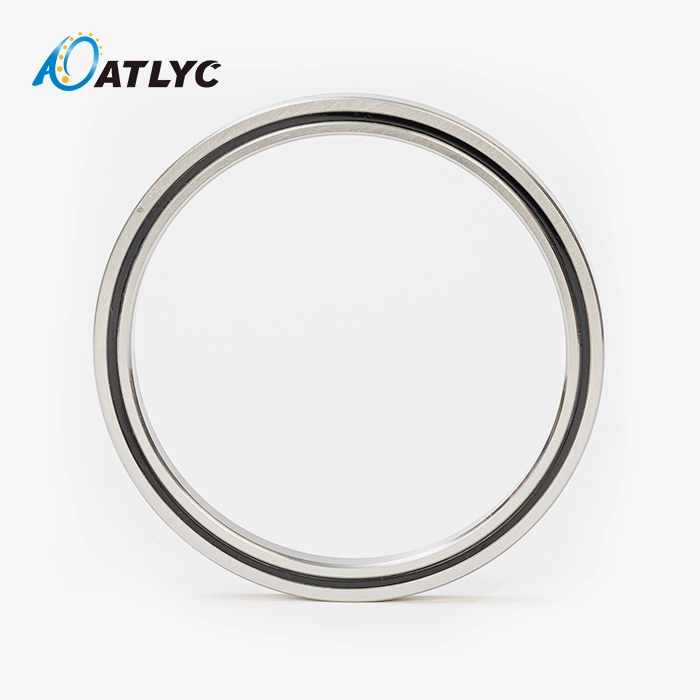
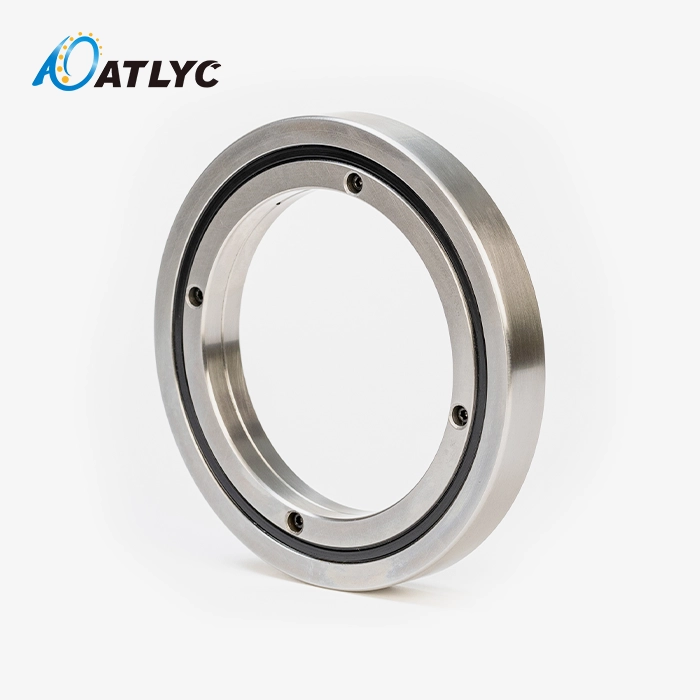
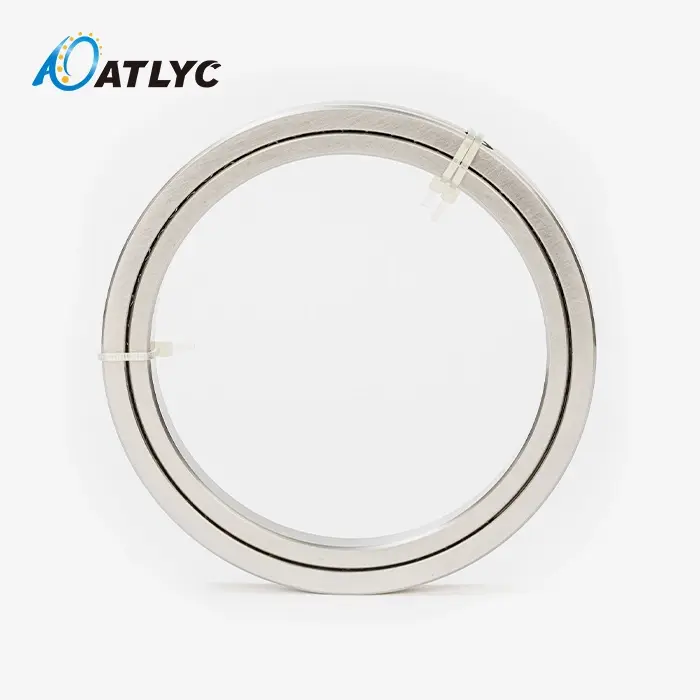
The RB12025 cross-roller bearing is vital in high-precision industrial machinery, robotics and automation applications where compact spaces meet rigorous load demands. RB12025 Applications include CNC machine tool rotary tables, semiconductor production equipment, and other sectors where compact designs with excellent stiffness are important. This unusual form of bearing can handle radial, axial and moment loads at the same time, in a very slim profile, thereby making it vital for situations where conventional bearing arrangements are too bulky or not accurate enough.

Typical Applications of RB12025: Industries and Use Cases
Cross roller bearings have a wide range of applications in many industries. Knowing the application context allows the procurement team to determine if this bearing type fits their equipment needs.
Industrial Robotics and Automation Systems
The RB12025 specifications are very advantageous for robotic joint systems. The low profile of the bearing enables designers to construct articulation points that are small without compromising payload capacity. Bearings used in industrial robots carrying out repeated precision activities like welding, assembling and material handling need to be able to maintain positional accuracy over millions of cycles. The large moment load capacity is especially beneficial in robot arms when torque transfer is needed during long reach activities.These bearings are built into the navigation and lifting systems of automated guided vehicles (AGVs) and autonomous mobile robots. The low size together with multi-directional load handling also provides precise motion control in limited equipment enclosures. We have provided RB12025 units to manufacturers of automation equipment in Germany and the United States, where the dependability of the equipment directly effects the efficiency of the manufacturing line.
Precision Machine Tools and Manufacturing Equipment
Cross roller bearings are perhaps the most difficult RB12025 Applications environment of the CNC rotary table. These indexing systems demand no backlash performance and extreme rigidity for machining precision. The RB12025 offers the stiffness required for deflection-free heavy cutting operations and the precision-ground surfaces allow positional repeatability in the arc-second range.In vertical machining centers, horizontal boring mills and multi-axis turning centers, cross-roller bearings are used in the swivel head and rotary axes. When cutting forces produce off-axis strains, the bearing's capacity to carry moment loads is important. We’ve teamed with South Korea-based manufacturers that have reported service lifetimes of more than 15,000 working hours in continuous production scenarios, a reflection of the design’s efficacy and manufacturing quality.
| Application Sector | Primary Load Type | Key Performance Requirement | Typical Service Life |
|---|---|---|---|
| CNC Rotary Tables | Moment + Axial | Positioning Accuracy <5 arc-sec | 12,000-18,000 hours |
| Industrial Robots | Combined Radial/Axial | Compact Design + High Rigidity | 20,000-30,000 hours |
| Semiconductor Equipment | Precision Axial | Ultra-low Vibration | 25,000-40,000 hours |
| Medical Imaging Devices | Smooth Rotation | Quiet Operation <40dB | 15,000-25,000 hours |
Medical and Analytical Equipment
CT scanners and X-ray equipment with smooth, vibration-free rotation provide good images. The balanced roller arrangement of the RB12025 reduces operating noise and keeps the rotating torque constant during the 360 degree trip. The bearing supports huge gantry assemblies but yet allows accurate angular positioning , an important consideration for makers of diagnostic equipment .The bearings are used in sample handling mechanisms in laboratory automation systems, especially high-throughput screening equipment in pharmaceutical research. The sealed versions avoid contamination in cleanroom conditions and preserve the positional repeatability required for precise dispensing and analysis procedures.
Comparing RB12025 to Alternative Bearings: Making the Right Choice
Choosing proper bearing solutions demands understanding performance trade-offs across various designs. Engineers will usually look at a variety of choices before they finally settle on the specs for a product. They have to balance the technical needs against the budget and what’s available from their supply chain.
Adjacent Series Comparison: RB12024 vs. RB12025 vs. RB12026
The number in the name directly refers to the height of the sections and influences the load capacity and installation requirements. At 24mm height, the RB12024 has some use for applications where rotational velocity is more important than maximum load capacity, since the less roller mass provides somewhat more speed potential. The RB12026, in contrast, has a load rating around 8-10% higher, which may be useful for heavy-duty applications where the extra millimetre can be afforded.Our technical team at ATLYC helps customers assess these subtle discrepancies in the specification process. A machine tool maker has recently changed a small turret design from RB12026 to RB12025 with the essential space reductions and sufficient load margins with optimised preload settings. This sort of application specific optimisation is the reason why technical consulting is helpful beyond just selecting a catalogue.
Cross-Roller Bearings Versus Ball Bearing Arrangements
Cross-roller designs are more space-efficient than conventional angular contact ball bearings even when used in duplex or triplex arrangements, for applications needing a moment load capacity. A standard back-to-back ball bearing pair occupying 50mm axial space might provide rigidities equal to a 25mm cross-roller bearing. However ball bearings are better for high speed applications where minimal friction and less heat build up is important.The standard deep groove ball bearing is a low cost and readily accessible option but does not provide the moment load capacity which is so important in many precision positioning applications. The decision for equipment designers is simple: several traditional bearings with complicated preload arrangements or one cross-roller bearing with the same performance in a fraction of the area. The selection is typically a function of production numbers, cost sensitivity and maintenance accessibility.
Brand Equivalents and Quality Considerations
Cross roller bearings with specs similar to the RB12025 are manufactured by major bearing manufacturers such as NSK, IKO, THK and SKF. The selection of brands is usually a compromise between the original purchase price and the warranty period and guarantyd life. European and Japanese manufacturers often are sold at premium prices generally 30-50% more than Chinese manufacturers. This is justified with the backing of substantial application engineering and quality reputation.ATLYC has made large investments in precise production to achieve worldwide standards of performance, while also retaining competitive price structures. Our ISO 9001 systems provide process consistency throughout our six specialised workshops, while our IATF 16949 accreditation demonstrates that we meet the quality criteria of the automotive sector. Procurement teams in Iran, Turkey and Russia are increasingly finding that disciplined Chinese manufacturing, with valid certifications and testing standards, gives great value without sacrificing dependability.
Procurement Insights for RB12025 Bearings: How to Source and Purchase Smart
When purchasing bearings, it’s not only a matter of comparing prices, but assessing the stability of the supply chain, the technical support capabilities and the overall cost of ownership.
Navigating Stock Availability and Lead Times
Crossed roller bearings are a niche product and stock availability might vary greatly across providers. Standard sizes like the RB12025 tend to have better stock positions than bespoke versions although even common specs may need 4-8 week delivery times from certain suppliers. We keep strategic inventories on models that are often requested for 7-10 day dispatch for standard setups.Bulk purchase agreements provide more than just discounts on unit prices. Volume commitments enable manufacturers to better schedule production, perhaps resulting in shorter lead times and assured precedence during demand surges. OEMs using RB12025 bearings in their manufacturing equipment may take advantage by placing blanket orders with planned releases to achieve stable price and delivery performance across fiscal years. RB12025 Applications can therefore benefit from planned procurement and reliable supply arrangements.
Evaluating Suppliers and Certification Requirements
Genuine items with warranty support are available via authorised distributor networks for companies like FAG, Timken, and KOYO, although this includes distribution markups. Direct manufacturer ties, especially with Chinese ISO-certified manufacturers, provide cost savings, with quality standards guarantyd by documented quality management systems.
| Supplier Type | Price Position | Lead Time | Technical Support | Minimum Order |
|---|---|---|---|---|
| OEM Brand (NSK, SKF) | Baseline +40-50% | 8-12 weeks | Extensive Engineering | 10-20 units |
| Authorized Distributor | Baseline +25-35% | 4-6 weeks | Application Guidance | 5-10 units |
| Certified Manufacturer | Baseline | 2-4 weeks | Technical Consultation | 20-50 units |
| Trading Company | Baseline +10-20% | Variable | Limited | 1-5 units |
Due diligence during supplier selection should verify certification authenticity, manufacturing capacity, and quality control procedures. We encourage potential partners to audit our Luoyang facilities, where visitors observe our complete production chain—from raw material inspection through final dimensional verification. This transparency builds confidence in our 15-year manufacturing heritage and commitment to consistent quality.
Balancing Cost and Quality in Procurement Decisions
The lowest quoted price rarely represents the best value when total cost of ownership enters the equation. Premature bearing failures trigger expenses far exceeding initial purchase savings—machine downtime, emergency shipping costs, labor for unscheduled maintenance, and potential damage to adjacent components. A bearing priced 20% below alternatives but delivering only 60% of expected service life ultimately costs more.Quality indicators extend beyond certification documents to include manufacturing process controls, material traceability, and post-delivery support. Our quality inspection team conducts dimensional verification, surface finish analysis, and operational testing on production samples, ensuring each batch meets specification requirements before shipment. This commitment to consistent quality has earned us long-term partnerships with automotive component manufacturers and industrial machinery OEMs across our primary export markets.
Maintenance Tips and Best Practices for Maximizing RB12025 Bearing Life
Proper maintenance protocols significantly extend bearing service intervals, protecting machinery investment and maintaining operational reliability.
Lubrication Requirements and Regreasing Intervals
Cross-roller bearings demand appropriate lubrication to prevent metal-to-metal contact between rollers and raceways. Grease selection should consider operational temperature ranges, rotational speeds, and environmental conditions. Lithium-based greases with molybdenum disulfide additives provide excellent protection for moderate-speed applications, while synthetic options extend performance envelopes for extreme temperatures or high-speed operations.Sealed bearing variants arrive pre-lubricated for maintenance-free operation throughout their design life—typically appropriate for applications with limited accessibility or cleanroom requirements. Open bearing designs require periodic regreasing, with intervals determined by operational duty cycles. Equipment operating continuously under moderate loads might require relubrication every 2,000-3,000 hours, while intermittent-use applications may extend intervals to 5,000-8,000 hours. Over-greasing proves as detrimental as inadequate lubrication, creating excessive churning resistance and heat generation.
Inspection Protocols and Failure Prevention
Routine monitoring detects developing problems before catastrophic failure occurs. Vibration analysis identifies abnormal frequencies indicating wear or contamination, enabling proactive bearing replacement during scheduled maintenance windows rather than emergency shutdowns. Temperature monitoring, either through contact sensors or thermal imaging, reveals inadequate lubrication or excessive preload conditions. Visual inspection during planned maintenance intervals should examine seal integrity, mounting surface conditions, and any evidence of lubricant leakage or contamination. Audible noise changes—increased roughness, periodic clicking, or grinding sounds—signal advancing wear requiring immediate attention. Our technical team provides guidance on establishing condition monitoring programs appropriate for specific RB12025 Applications and accessibility constraints.
Addressing Common Operational Issues
Overheating typically stems from inadequate lubrication, excessive preload, or insufficient heat dissipation in the surrounding structure. Bearing temperatures exceeding 20°C above ambient under steady-state conditions warrant investigation. Solutions may involve lubrication specification changes, preload adjustment, or improved cooling through enhanced airflow or heat sinking.Misalignment during installation creates uneven load distribution, accelerating wear and reducing service life. Precision mounting procedures using calibrated torque tools and alignment fixtures prove essential, particularly for large-diameter bearings. The mounting holes integrated into RB12025 rings simplify installation but require accurate pilot surfaces on mating components. We provide detailed installation specifications and procedures with each bearing shipment, supporting proper implementation even for teams unfamiliar with cross-roller designs.Contamination represents another common failure mode, as particulate matter causes abrasive wear between precision-ground surfaces. Effective sealing solutions and regular inspection of seal integrity protect internal components. Applications in harsh environments benefit from additional external shields or purge air systems maintaining positive pressure within bearing cavities.

Conclusion
The RB12025 Applications cross-roller bearing delivers exceptional performance for applications demanding compact designs with multi-directional load capacity. Understanding its technical characteristics, appropriate applications, and maintenance requirements enables informed procurement decisions that balance immediate costs against long-term reliability. Comparing alternatives and selecting qualified suppliers ensures optimal value while maintaining operational standards. As manufacturing technologies advance and precision requirements intensify, components like the RB12025 prove increasingly valuable across industrial automation, machine tools, and specialized equipment sectors.
FAQ
What makes cross-roller bearings different from standard ball bearings?
Cross-roller bearings utilize cylindrical rollers arranged perpendicular to each other, creating line contact in multiple directions simultaneously. This design provides superior rigidity and moment load capacity compared to ball bearings' point contact, while occupying significantly less axial space than equivalent ball bearing arrangements. The configuration enables a single bearing to handle radial, axial, and moment loads that would otherwise require multiple ball bearing assemblies.
Can the RB12025 be used in high-speed applications?
While cross-roller bearings handle moderate speeds effectively, their design optimizes for rigidity and load capacity rather than maximum velocity. The RB12025 typically operates reliably up to approximately 500-800 RPM depending on lubrication and cooling provisions. Applications requiring higher speeds might benefit from ball bearing alternatives or specialized high-speed cross-roller variants with modified roller profiles and cage designs.
How do I determine the correct preload for my application?
Preload selection balances rigidity requirements against friction and heat generation. Light preload suits precision positioning applications where minimizing torque variation proves critical. Medium preload provides general-purpose performance for most industrial machinery. Heavy preload maximizes stiffness for applications experiencing significant external loads or vibration. Manufacturer specifications typically provide preload recommendations based on application characteristics; our engineering team assists with optimization for specific operational conditions.
Partner with ATLYC for Reliable RB12025 Applications Solutions
ATLYC combines 15 years of bearing manufacturing excellence with comprehensive technical support, serving as your trusted RB12025 Applications manufacturer for demanding industrial requirements. Our ISO 9001 and IATF 16949 certified facilities in Luoyang produce precision cross-roller bearings meeting international quality standards while maintaining competitive pricing structures. Whether you're an automotive component OEM, industrial machinery manufacturer, or global bearing distributor, our 120-person team delivers consistent quality with lead times supporting your production schedules. We've built lasting partnerships across the United States, Germany, South Korea, and beyond through reliable supply, technical consultation, and responsive customer service. Reach out to our team at auto@lyautobearing.com to discuss your specific RB12025 requirements, request technical specifications, or explore volume pricing options. Our bearing specialists provide application analysis and supplier evaluation support, helping you make informed procurement decisions that balance performance, reliability, and cost-effectiveness.
References
1. Harris, T.A. & Kotzalas, M.N. (2006). Advanced Concepts of Bearing Technology: Rolling Bearing Analysis, Fifth Edition. CRC Press, Taylor & Francis Group.
2. Wensing, J.A. (1998). On the Dynamics of Ball Bearings. PhD Thesis, University of Twente, Netherlands.
3. ISO 492:2014. Rolling Bearings — Radial Bearings — Geometrical Product Specifications (GPS) and Tolerance Values. International Organization for Standardization.
4. Palmgren, A. (1959). Ball and Roller Bearing Engineering, Third Edition. SKF Industries Inc., Philadelphia.
5. Schaeffler Technologies AG & Co. (2019). Rolling Bearings: Catalogue HR 1, Technical Documentation for Cross-Roller Bearings. Herzogenaurach, Germany.
6. Hamrock, B.J., Schmid, S.R., & Jacobson, B.O. (2004). Fundamentals of Fluid Film Lubrication, Second Edition. Marcel Dekker, New York.
Learn about our latest products and discounts through SMS or email