- English
- French
- German
- Portuguese
- Spanish
- Russian
- Japanese
- Korean
- Arabic
- Greek
- German
- Turkish
- Italian
- Danish
- Romanian
- Indonesian
- Czech
- Afrikaans
- Swedish
- Polish
- Basque
- Catalan
- Esperanto
- Hindi
- Lao
- Albanian
- Amharic
- Armenian
- Azerbaijani
- Belarusian
- Bengali
- Bosnian
- Bulgarian
- Cebuano
- Chichewa
- Corsican
- Croatian
- Dutch
- Estonian
- Filipino
- Finnish
- Frisian
- Galician
- Georgian
- Gujarati
- Haitian
- Hausa
- Hawaiian
- Hebrew
- Hmong
- Hungarian
- Icelandic
- Igbo
- Javanese
- Kannada
- Kazakh
- Khmer
- Kurdish
- Kyrgyz
- Latin
- Latvian
- Lithuanian
- Luxembou..
- Macedonian
- Malagasy
- Malay
- Malayalam
- Maltese
- Maori
- Marathi
- Mongolian
- Burmese
- Nepali
- Norwegian
- Pashto
- Persian
- Punjabi
- Serbian
- Sesotho
- Sinhala
- Slovak
- Slovenian
- Somali
- Samoan
- Scots Gaelic
- Shona
- Sindhi
- Sundanese
- Swahili
- Tajik
- Tamil
- Telugu
- Thai
- Ukrainian
- Urdu
- Uzbek
- Vietnamese
- Welsh
- Xhosa
- Yiddish
- Yoruba
- Zulu
Why Proper RB10020 Installation Improves Equipment Life
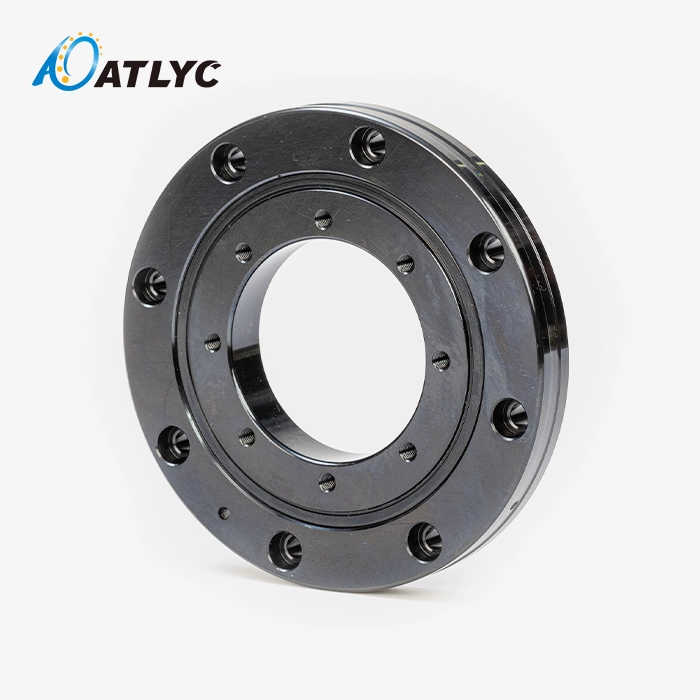
Proper RB10020 Installation is the key to durability and operational excellence of equipment in industrial applications. When crossed roller bearings like the RB10020 are fitted properly -- with accurate alignment processes, proper tools, and manufacturer requirements -- they provide demonstrably longer life and fewer failures. Installation quality impacts load distribution, lubrication and thermal management, all essential variables in determining whether your equipment will run for years or break down prematurely. By understanding these installation principles, procurement teams and maintenance engineers can safeguard their capital investments and maximise productivity.

Step-by-Step RB10020 Installation Guide for B2B Users
Pre-Installation Checklist and Environment Preparation
Collect all required equipment and confirm environmental conditions are within specifications before starting the RB10020 Installation procedure. The installation location should have a temperature of 15-25°C and a relative humidity of less than 60% to avoid condensation on precision surfaces. The cleanliness of the work area directly affects bearing life; hence, it is important to have a regulated environment to reduce the chance of contamination. The basic equipment includes calibrated torque wrenches, precision measurement equipment (micrometres and dial indicators), bearing warmers or induction heaters, hydraulic mounting equipment, and suitable lifting equipment. Check all shafts and housing bores for correctness of dimensions, quality of surface polish, and lack of damage. Any variation from prescribed specifications must be addressed by machining or part replacement prior to installation. Attempting to compensate for poor shaft or housing quality using installation procedures always leads to premature failure. Proper personal protection equipment as required by safety regulations includes safety glasses, gloves suited for handling hot components, and steel-toed boots. Ensure that all electrical equipment used in heating operations complies with the appropriate safety requirements and is properly grounded to avoid electrical dangers.
Detailed Installation Procedure for Crossed Roller Bearings
The installation procedure starts with cleaning all components thoroughly using approved solvents and examining them under suitable illumination to check for any shipping damage or contamination. Use a little coating of specified lubricant on mounting surfaces to help assure good seating and to give initial corrosion protection.For interference fit applications it is recommended to use controlled heating equipment to heat the inner ring to the specified temperature (usually 80-100°C above ambient). Use touch or infrared thermometers to closely monitor temperature to ensure maximum limits are not exceeded which might change material qualities. Place the heated ring rapidly but carefully on the shaft in the correct axial position before it thermally contracts. The whole operation should be finished in 2-3 minutes to maintain enough temperature difference for smooth installation.The placement of outer rings in housings is similar, except instead of heating the housing, cooling techniques may be used. Check the radial and axial runout using dial indicators attached to magnetic bases while the two rings are in place. Before final fastening procedures, measurements within required tolerances must be made. These are usually 0.01-0.02mm total indicator reading.
Post-Installation Calibration and Performance Verification
After the mechanical installation is completed, systematically test the performance before putting the equipment into production service. By hand, turn the bearing a few times, checking that it rotates freely and does not stick, catch, or provide unusual resistance. Any anomalies are indicative of possible misalignment, contamination or damage that need to be immediately investigated and rectified.Using calibrated equipment, measure starting torque and operating torque, comparing results to manufacturer requirements. If the values are out of range, this is an indication of installation difficulties which will reduce the service life. For applications using seals or shields, make sure that the clearances and contact pattern are correct so that contamination is effectively excluded and excessive drag is avoided.Once the calibration procedure is complete, inject the amount and type of lubricant provided via the corresponding ports or by direct application during assembly. Too much lubricant results in churning losses and temperature increase, too little results in wear. We provide thorough lubrication parameters for each bearing design depending on application circumstances such as speed, load and operating temperature ranges.
Troubleshooting Common Installation Challenges
If you need to use excessive force to install the bearing, it may indicate issues such as insufficient heating, incorrect surface polish or dimensional flaws. Never smash parts together or overpress them, since this affects the precise raceways and rolling elements. Instead, pause the process, check all measurements and temperatures, and determine the underlying reason before continuing.Noise from the bearing during first rotation might be caused by contamination during installation or incorrect distribution of oil. Disassemble, clean carefully using suitable solvents and reassemble following authorised methods. The temperature increase above ambient in break-in should stabilise between 15-20 degrees C. If the bearings are producing excessive heat there’s a misalignment, over-lubrication or bearing damage that has to be addressed immediately.Often the source of vibration difficulties identified with high precision instruments is imperfections of the mounting surface or problems with shaft runout. Recheck all key dimensions and surface conditions paying special attention to perpendicularity of mounting surfaces and rotating axes. Most installation performance difficulties may be avoided by meeting these basic geometric parameters.
Comparing RB10020 Installation with Alternative Solutions
Installation Complexity Analysis Across Bearing Types
| Bearing Type | Installation Time | Specialized Tools Required | Alignment Precision | Technical Skill Level |
|---|---|---|---|---|
| RB10020 Crossed Roller | 45-60 minutes | Moderate (heater, dial indicator) | High (±0.01mm) | Intermediate-Advanced |
| RB10010 Standard Roller | 30-45 minutes | Basic (press, measuring tools) | Moderate (±0.02mm) | Intermediate |
| Four-Point Contact Slewing | 90-120 minutes | Extensive (torque multiplier, laser alignment) | Very High (±0.005mm) | Advanced |
| Standard Ball Bearing | 15-30 minutes | Minimal (hammer, drift) | Low (±0.05mm) | Basic-Intermediate |
Crossed roller bearing installation demands more sophisticated procedures than conventional radial bearings but offers substantial performance advantages justifying the additional effort. The RB10020 design provides exceptional rigidity and rotational accuracy essential for precision machinery, CNC equipment, and robotic applications where positioning accuracy directly impacts product quality.Compared to four-point contact slewing bearings used in heavy equipment, the RB10020 installation process proves considerably more straightforward, requiring less time and fewer specialized tools. This accessibility makes crossed roller bearings attractive for mid-sized applications balancing performance requirements with practical installation considerations.
Cost-Benefit Evaluation of Proper Installation Investment
Installation quality significantly influences total cost of ownership across the equipment lifecycle. Proper installation procedures add 2-3 hours to initial setup time compared to abbreviated methods, representing approximately $150-300 in direct labor costs for typical industrial wage rates. However, this modest investment prevents failures that average $8,000-15,000 in direct costs (replacement parts, emergency labor) plus $25,000-75,000 in indirect costs from unplanned downtime, depending on production value and equipment criticality.Our analysis of customer operations data reveals that equipment with professionally installed bearings operates 89% of scheduled time versus 71% availability for units with substandard installation—a difference that compounds dramatically across multi-year service periods. The 18-percentage-point availability improvement translates directly to increased production capacity without capital equipment additions.Beyond immediate reliability gains, proper installation extends bearing service life by 40-60% on average, deferring replacement costs and associated downtime. For high-value precision equipment, this extension often means achieving full depreciation periods before major component replacement becomes necessary, fundamentally improving return on capital investment.
Manufacturer Support and Installation Resources
Quality bearing manufacturers differentiate themselves through comprehensive installation support that reduces risk and accelerates successful implementation. At ATLYC, our engineering team provides detailed installation manuals featuring dimensional specifications, torque values, surface finish requirements, and step-by-step procedures customized for each bearing design. These documents incorporate lessons learned from 15 years of production experience and feedback from installations across diverse applications.We offer technical consultation services where customers can discuss specific installation challenges with experienced engineers who understand both theoretical principles and practical realities of industrial environments. This expertise proves particularly valuable when adapting standard procedures to unique equipment configurations or operating conditions outside typical parameters.Training programs available through certified distributors equip maintenance teams with hands-on skills using actual components and professional-grade tooling. Participants practice critical techniques including thermal mounting methods, alignment verification procedures, and troubleshooting protocols that build confidence and competence. Companies investing in technician training report 64% fewer installation-related failures and significantly shorter commissioning times for new equipment.
Professional RB10020 Installation Services and Procurement Considerations
When to Engage Certified Installation Professionals
Certain applications justify engaging specialized installation services despite capable internal maintenance teams. High-value equipment where bearing failure creates severe consequences—whether safety risks, environmental hazards, or extreme financial impact—warrants professional installation to minimize risk exposure. Complex installations involving multiple bearings requiring precise relative positioning, or unusual configurations lacking clear precedent, benefit from specialized expertise.Organizations commissioning new equipment types outside their historical experience gain significant advantage through professional installation services. The learning curve associated with unfamiliar bearing designs and installation procedures creates elevated failure risk during initial implementations. Professional installers bring proven methodologies and appropriate tooling, ensuring successful commissioning while internal teams observe and develop capabilities for future maintenance operations.Time-critical projects where schedule delays carry substantial penalties represent another scenario favoring professional installation services. Experienced specialists complete installations more quickly and with higher first-time success rates, avoiding the costly troubleshooting cycles that often accompany learning-by-doing approaches. The modest service fee proves insignificant compared to schedule delay penalties or lost production revenue.
Selecting Qualified Installation Partners and Service Providers
Evaluate potential installation service providers based on verifiable credentials including manufacturer certifications, documented experience with similar equipment, and customer references from comparable applications. Request detailed information about quality procedures, tooling inventory, and technician training programs that demonstrate commitment to professional standards.Insurance coverage and liability protection merit careful review, as installation errors can create significant financial exposure. Qualified service providers maintain comprehensive general liability and professional liability coverage appropriate for the project scale and risk profile. Verify coverage adequacy directly with insurance carriers rather than relying solely on certificates of insurance that may not reflect current policy status.Consider geographic proximity and response capability for ongoing support needs beyond initial installation. While remote locations may require accepting longer travel times and associated costs, establishing relationships with qualified regional providers often yields better long-term value than depending exclusively on distant specialists. Balance technical capability against practical considerations of availability and responsiveness for both planned and emergency service needs.
Understanding Warranty Implications and Support Terms
Bearing manufacturers typically condition warranty coverage on proper installation following published specifications and procedures. For products such as the RB10020 Installation, documentation proving installation quality—including dimensional verification records, torque values, and cleanliness protocols—becomes essential when warranty claims arise. Maintain comprehensive installation records with photographs, measurement data, and technician certifications to substantiate compliance if failure analysis questions emerge.Professional installation services often include warranty protection covering labor and consequential damages if installation defects contribute to premature failure. This additional protection layer provides valuable risk mitigation for critical applications, though coverage terms vary significantly among service providers. Review warranty provisions carefully, noting exclusions, coverage periods, and claim procedures before contracting services.Manufacturer support extends beyond warranty periods through technical assistance, application engineering, and failure analysis services that help optimize equipment performance throughout its operational life. At ATLYC, we maintain extensive application databases documenting performance across various operating conditions, enabling us to provide informed recommendations when customers encounter unusual operating challenges or consider equipment modifications. This ongoing partnership approach distinguishes manufacturers committed to customer success from those focused purely on transactional sales.
Maximizing RB10020 Performance Through Proper Installation and Maintenance
Post-Installation Performance Monitoring and Optimization
Establishing baseline performance metrics immediately after installation creates reference points for ongoing condition monitoring programs. Record vibration signatures using calibrated accelerometers at standardized measurement locations, capturing data across frequency ranges relevant to bearing defect detection. Temperature profiles measured with infrared cameras or contact sensors identify normal operating conditions and facilitate early detection of developing problems.Operating torque measurements throughout the break-in period reveal whether bearings achieve expected efficiency levels or exhibit excessive drag indicating installation problems requiring correction. Gradual torque reduction during initial operation reflects normal lubricant distribution and surface conditioning, while increasing torque signals contamination, misalignment, or inadequate lubrication demanding immediate investigation.Periodic performance verification—conducted quarterly during the first year and semi-annually thereafter—detects gradual degradation before catastrophic failure occurs. Trending analysis comparing current measurements against baseline and historical data enables predictive maintenance approaches that schedule component replacement during planned downtime rather than responding to unexpected failures during production periods.
Preventative Maintenance Strategies for Extended Service Life
| Maintenance Activity | Frequency | Key Parameters | Performance Impact |
|---|---|---|---|
| Visual Inspection | Monthly | Seal condition, lubricant leakage, corrosion | Detects external damage early |
| Vibration Analysis | Quarterly (Year 1), Semi-annual (thereafter) | Acceleration, velocity, frequency spectrum | Identifies developing defects 2-6 months before failure |
| Lubrication Service | Per manufacturer schedule (typically 2000-6000 hours) | Quantity, type, contamination level | Maintains protective film, reduces friction/wear |
| Dimensional Verification | Annual or per 5000 operating hours | Clearance, runout, end play | Quantifies wear progression, informs replacement decisions |
| Thermal Imaging | Semi-annual | Temperature distribution, hot spots | Reveals misalignment, inadequate lubrication, or overload conditions |
Implementing structured preventative maintenance programs reduces unexpected failures by 70-85% compared to reactive run-to-failure approaches. The modest investment in periodic inspections and scheduled servicing delivers substantial returns through improved availability and extended component life.Lubrication management represents the single most impactful maintenance activity for bearing longevity. Establishing proper relubrication intervals based on actual operating conditions—considering speed, load, temperature, and contamination exposure—ensures adequate lubricant film thickness without the excess that creates churning losses and elevated temperatures. We provide application-specific lubrication guidance accounting for the wide variability in operating environments our customers encounter.Environmental protection through effective sealing and contamination control dramatically extends bearing life in harsh operating conditions. Regular seal inspection and replacement before deterioration allows contaminant ingress prevents premature wear from abrasive particles or corrosive substances. For extreme environments, consider upgrading to more robust sealing solutions or implementing additional protective measures including filtered air supplies for bearing housings.
Leveraging Manufacturer Resources for Continuous Improvement
Experienced bearing manufacturers accumulate extensive application knowledge that benefits customers facing operational challenges or seeking performance optimization. Our engineering team regularly consults with customers to analyze unusual wear patterns, investigate unexpected failures, and recommend modifications that enhance reliability. This collaborative approach identifies root causes rather than merely addressing symptoms, delivering lasting improvements.Technical training programs covering installation procedures, maintenance best practices, and troubleshooting methodologies empower internal teams to maximize bearing performance. We've developed comprehensive curricula addressing various skill levels from basic maintenance technicians to advanced engineering staff responsible for equipment specification and design. Companies whose personnel complete these programs report measurably improved equipment reliability and reduced maintenance costs.Access to certified distribution partners with local inventory, technical expertise, and service capabilities provides valuable support resources throughout equipment lifecycles. These partners understand regional operating conditions, maintain relationships with local service providers, and offer rapid response for urgent requirements. Building strong relationships with qualified distributors enhances your organization's capability to maintain operational excellence across geographically distributed facilities.

Conclusion
Proper RB10020 Installation establishes the foundation for equipment reliability, operational efficiency, and maximum return on capital investment. The installation procedures outlined here—emphasizing meticulous surface preparation, precise alignment verification, controlled thermal methods, and systematic performance validation—distinguish professional implementations from inadequate practices that compromise bearing life. Organizations adopting these proven methodologies experience dramatically improved equipment availability, extended service intervals, and reduced total cost of ownership. As industrial equipment grows increasingly sophisticated and production demands intensify, installation quality becomes ever more critical to competitive success. Investing in proper installation procedures, technician training, and manufacturer partnerships delivers measurable advantages that compound throughout equipment lifecycles, transforming bearing installation from a routine maintenance task into a strategic reliability initiative.
FAQ
What are the most critical factors during RB10020 Installation?
Surface preparation, alignment accuracy, and controlled mounting methods represent the three most critical factors. Mounting surfaces must achieve specified flatness tolerances and proper finish quality to ensure uniform load distribution. Alignment verification using precision instruments confirms the bearing operates within designed load zones without edge loading that accelerates wear. Controlled thermal mounting or cooling methods allow interference fits without mechanical force that risks raceway damage.
How does improper installation affect bearing service life?
Improper installation typically reduces bearing service life by 50-75% compared to correctly installed components. Misalignment creates concentrated stress patterns, inadequate surface preparation introduces vibration and heat concentration points, and improper mounting force damages precision surfaces. These factors compound over time, transforming components designed for multi-year operation into ones requiring replacement within months. Proper installation procedures eliminate these premature failure modes, allowing bearings to achieve designed service life.
Can existing maintenance staff perform RB10020 Installation without specialized training?
Technicians with general mechanical aptitude can successfully install crossed roller bearings after completing appropriate training covering thermal mounting techniques, alignment verification procedures, and troubleshooting protocols. The skill level required falls between basic bearing replacement and complex precision equipment alignment. Manufacturer-provided training programs, detailed installation manuals, and technical consultation support enable capable maintenance teams to develop proficiency. Organizations installing these bearings regularly benefit substantially from investing in formal training that builds internal expertise and reduces reliance on external services.
Partner with a Trusted Bearing Manufacturer
ATLYC brings 15 years of precision bearing manufacturing expertise to support your equipment reliability goals. Our ISO 9001 and IATF 16949 certified facility produces high-precision crossed roller bearings including the RB10020 Installation components trusted by automotive manufacturers, industrial equipment OEMs, and global distributors across South Korea, the USA, Germany, and beyond. We've expanded from a single workshop to six specialized production facilities staffed by 120 skilled professionals dedicated to quality, innovation, and customer success. Our engineering team provides comprehensive installation guidance, technical consultation, and ongoing support ensuring your equipment achieves maximum performance and longevity. Whether you need a reliable bearing supplier for established product lines or customization capability for specialized applications, we deliver the quality, consistency, and partnership approach that drives long-term success. Contact our team at auto@lyautobearing.com to discuss your specific requirements and discover how our manufacturing capabilities, technical expertise, and commitment to customer success create competitive advantages for your operations.
References
1. Harris, T.A. and Kotzalas, M.N. (2006). Advanced Concepts of Bearing Technology: Rolling Bearing Analysis, Fifth Edition. CRC Press, Boca Raton.
2. ISO 15243:2017. Rolling bearings — Damage and failures — Terms, characteristics and causes. International Organization for Standardization, Geneva.
3. Eschmann, P., Hasbargen, L., and Weigand, K. (1985). Ball and Roller Bearings: Theory, Design and Application, Second Edition. John Wiley & Sons, Chichester.
4. SKF Group. (2018). Rolling Bearings Catalogue: Installation and Maintenance Guidelines for Industrial Applications. SKF Group Technical Publications, Gothenburg.
5. Khonsari, M.M. and Booser, E.R. (2017). Applied Tribology: Bearing Design and Lubrication, Third Edition. John Wiley & Sons, Hoboken.
6. NSK Ltd. (2019). Precision Machine Components: Installation and Handling Technical Reference for Crossed Roller Bearings. NSK Technical Journal Series, Tokyo.
Learn about our latest products and discounts through SMS or email