- English
- French
- German
- Portuguese
- Spanish
- Russian
- Japanese
- Korean
- Arabic
- Greek
- German
- Turkish
- Italian
- Danish
- Romanian
- Indonesian
- Czech
- Afrikaans
- Swedish
- Polish
- Basque
- Catalan
- Esperanto
- Hindi
- Lao
- Albanian
- Amharic
- Armenian
- Azerbaijani
- Belarusian
- Bengali
- Bosnian
- Bulgarian
- Cebuano
- Chichewa
- Corsican
- Croatian
- Dutch
- Estonian
- Filipino
- Finnish
- Frisian
- Galician
- Georgian
- Gujarati
- Haitian
- Hausa
- Hawaiian
- Hebrew
- Hmong
- Hungarian
- Icelandic
- Igbo
- Javanese
- Kannada
- Kazakh
- Khmer
- Kurdish
- Kyrgyz
- Latin
- Latvian
- Lithuanian
- Luxembou..
- Macedonian
- Malagasy
- Malay
- Malayalam
- Maltese
- Maori
- Marathi
- Mongolian
- Burmese
- Nepali
- Norwegian
- Pashto
- Persian
- Punjabi
- Serbian
- Sesotho
- Sinhala
- Slovak
- Slovenian
- Somali
- Samoan
- Scots Gaelic
- Shona
- Sindhi
- Sundanese
- Swahili
- Tajik
- Tamil
- Telugu
- Thai
- Ukrainian
- Urdu
- Uzbek
- Vietnamese
- Welsh
- Xhosa
- Yiddish
- Yoruba
- Zulu
RB6013UUCC0 Crossed Roller Bearings Buying Guide for OEMs
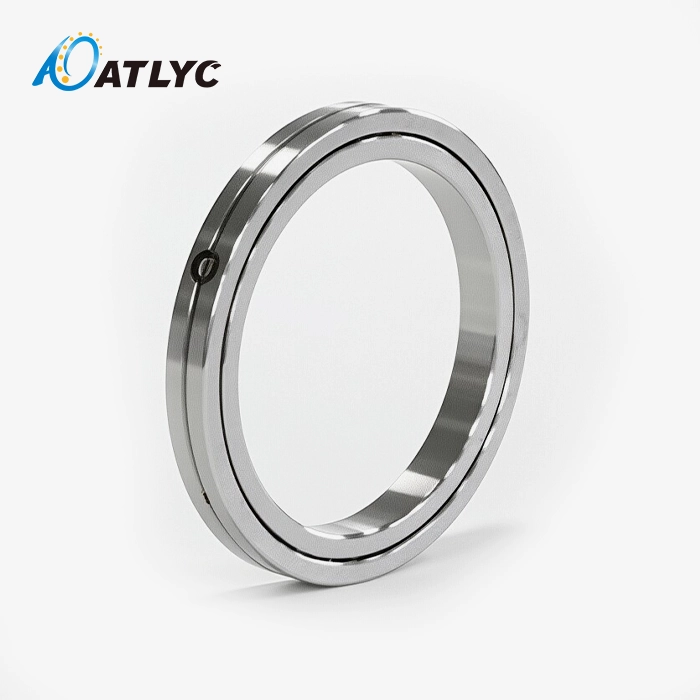
Selecting the right crossed roller bearing for your precision applications requires understanding performance specifications, quality verification, and supply chain reliability. The RB6013UUCC0 Crossed Roller Bearings represent a compact, high-rigidity solution engineered for OEM applications where space constraints meet demanding load requirements. With an inner diameter of 60mm, outer diameter of 85mm, and width of 13mm, this bearing integrates multi-directional load handling into a single compact unit, eliminating the complexity of paired bearing arrangements commonly seen in robotic joints and rotary indexing tables. For mid-to-large manufacturers, this translates directly into simplified assembly processes, reduced machine footprints, and improved positioning accuracy across automated production lines.

Understanding RB6013UUCC0 Crossed Roller Bearings
Core Design and Construction Features
The RB6013UUCC0 Crossed Roller Bearings have an inner ring that is built in and an outer ring that is split in two and has a precision plug assembly built in. This structural approach makes mounting easier while still ensuring very accurate alignment during installation. Cylindrical rollers are placed 90 degrees apart and perpendicularly within precision-ground V-groove raceways. Spacer guards keep the rollers from touching each other. This setup lets radial loads, axial loads, and moment loads all be handled at the same time within a single bearing envelope. The letter "UU" means that there are two rubber contact seals on both sides of the bearing. These seals protect in two ways: they keep the lubrication inside and stop dust, coolant, and metal particles that are common in machining environments from getting in. The ending "CC0" refers to a certain type of radial clearance, especially a negative clearance or preload state. This preload gets rid of all internal clearance, giving the system maximum stiffness and zero backlash. This is very important in precision placement tasks where repeatable errors need to be as accurate as microns.
Material Specifications and Manufacturing Standards
High-carbon chromium bearing steel, GCr15 or GCr15SiMn, is used to make bearing rings and rollers. Through-hardening heat treatment makes the surfaces of these materials between 58 and 64 HRC, which gives them great wear protection under cyclic loading conditions. When there is high-frequency reciprocating motion, like in robotic wrist joints and precise spinning tables, the choice of material has a direct effect on the service life. The different levels of manufacturing precision go from P6 (normal) to P2 (ultra-precision). For industrial automation tools, P5 and P4 grades are usually required. Higher precision grades have tighter limits on the shape of the raceway, the difference in roller width, and the accuracy of the finished runout. When procurement managers look at bearing specs, making sure that the precision grade matches the needs of the application stops them from over-specifying, which raises costs without improving performance.
How Crossed Roller Bearings Handle Complex Loading
Understanding how loads are distributed mechanically helps engineering teams choose the best bearings. In regular deep groove ball bearings, the amount of load that can be carried is limited by point contact between the balls and the raceways. Crossed roller bearings use line contact between cylinder-shaped rollers and V-groove raceways to spread loads over a lot more contact area. Because of this physical benefit, they can handle loads that are three to five times higher than ball bearings of the same size. The design of the orthogonal rollers gives a moment load capacity that doesn't need matched bearing pairs. When designers would normally call for two angular contact bearings to be mounted opposite each other, a single RB6013UUCC0 is used instead. This streamlining cuts down on the number of parts needed, makes it easier to handle inventory, and speeds up assembly on production lines. All of these things have a direct effect on OEM makers' total cost of ownership estimates.
Comparing RB6013UUCC0 with Alternative Bearing Solutions
Performance Benchmarks Against Standard Bearing Types
When buying professionals look at different bearing choices, making technically sound decisions is helped by knowing how the bearings compare in terms of performance. The table below shows the main ways that RB6013UUCC0 Crossed Roller Bearings are different from other options that are often thought of for precision applications:
| Bearing Type | Load Capacity (Radial/Axial) | Moment Load Capacity | Rigidity | Installation Space | Typical Applications |
|---|---|---|---|---|---|
| RB6013UUCC0 Crossed Roller | High/High | Excellent | Maximum | Compact | Medical cameras, rotating tables, and robot joints |
| Deep Groove Ball Bearing | Low to Moderate | Bad | Low | Compact | Movement in general, electric motors |
| Angular Contact Bearing (Paired) | High to Moderate | Good | Moderate | Space is needed | Spindles for machine tools and wheels for cars |
| Tapered Roller Bearing | Very High or High | Moderate | High | More axial room | Lots of heavy tools, gearboxes |
The RB6013UUCC0 is especially useful in situations where there isn't much room along one axis but handling loads in more than one way is still important. Unlike angular contact bearings, which need precise preload adjustment during installation, the CC0 clearance is set at the factory and ensures consistent performance characteristics as soon as the bearing is mounted. This makes the assemblies more consistent and cuts down on the need for special installation tools on the factory lines.
Dimensional and Operational Comparisons
Different bearing sizes and types of internal space lead to different performance levels that are best for different applications. The following table shows the differences in specs between similar RB6013UUCC0 Crossed Roller Bearing models:
| Model | Inner Diameter (mm) | Outer Diameter (mm) | Width (mm) | Clearance Type | Seal Configuration | Optimal Use Case |
|---|---|---|---|---|---|---|
| RB6013UUCC0 | 60 | 85 | 13 | CC0 (Preload) | Double sealed (UU) | High rigidity, dirty places to work |
| RB6013UUC0 | 60 | 85 | 13 | C0 (Normal) | Double sealed (UU) | Normal stiffness and less friction |
| RB6013 (Open) | 60 | 85 | 13 | C0 (Normal) | No seals | Clean areas and easy access to re-lubrication |
When deciding between CC0 and C0 clearance ratings, you have to weigh the need for rigidity against the need for starting power. The CC0 preload setup is best for situations where positioning accuracy under changing loads is very important because it makes the structure stiffer. But the preload raises the starting power and makes the operating temps a little higher. For uses that need constant high-speed rotation, C0 clearance may help cut down on friction losses and heat production. Another choice point is between sealed and open setups. When there is dust, coolant spray, or metal chips around, the UU seals on the RB6013UUCC0 make upkeep much less frequent. Open bearings have less friction and are easier to check, but they need to be sealed from the outside and oiled more often. OEMs that make equipment for foundries, woodworking shops, or outdoor use usually choose sealed bearings so that they don't need as much service in the field.
Procurement Considerations for OEM Manufacturers
Sourcing Strategy and Supplier Qualification
Building ties with certified bearing makers guarantees consistent quality and a steady flow of supplies. Procurement managers should check that possible suppliers have ISO 9001 and IATF 16949 certifications. These show that the company has a method for managing quality and uses manufacturing processes that meet automotive standards. These certifications show that suppliers follow written procedures for tracking materials, checking measurements, and keeping an eye on statistical process control during production. Ask for detailed quality control records, such as dimensional inspection reports that compare actual measurements to the allowed ranges. Reliable manufacturers give out material certificates that show what the bearing steel is made of and how hard it is. Traceability paperwork is necessary for use in controlled industries like medical devices or aerospace parts to meet regulations and protect warranties for RB6013UUCC0 Crossed Roller Bearings.
Pricing Structures and Volume Considerations
Prices for bearings change a lot depending on how many you order, the level of precision, and when you need them. The price per unit for small lot sales is usually 40–60% higher than the price per unit for bulk purchases. Price breaks are often set by manufacturers at 100, 500, and 1,000 pieces, and you can get even bigger discounts for placing an annual blanket order with scheduled releases. Not only should you add up the unit prices, but you should also add up the costs of importing the goods, paying customs duties, and keeping the goods in stock. For established suppliers who keep stock, lead times for standard configurations are between 4 and 6 weeks. Lead times may go up to 8 to 12 weeks if custom specs call for special materials, non-standard seals, or different preload settings. To protect against problems in the supply chain without keeping too much capital in stock, procurement managers should set safety stock amounts based on production plans and past consumption patterns.
Verification and Authentication Protocols
It is always a problem in global supply lines to find fake bearings, especially when buying from unknown wholesalers or online markets. Real RB6013UUCC0 Crossed Roller Bearings have marks laser-engraved on the outside ring that show the model number, the name of the maker, and the production date. With uniform font features, these markings should look clean and easy to read. Use calibrated micrometres or coordinate measuring machines to check the dimensions of incoming items. Check the inner diameter, outer diameter, and width against the published standards, making sure to account for the precision class's tolerance bands. When there are big differences, it could mean that the products are fake or that quality control went wrong. You can get more proof of authenticity by putting bearings on precision arbours and using dial signs to measure radial play during runout checks. Legitimate makers keep a close eye on runout values, but fake goods often have too much wobble or uneven rotational resistance.
Maintenance and Handling Best Practices
Pre-Installation Storage and Handling Protocols
How the RB6013UUCC0 Crossed Roller Bearings are stored before they are installed has a direct effect on their service life and how well they work. Keep bearings in their original packaging in climate-controlled spaces that stay between 15°C and 25°C and have a relative humidity of 40–60%. Too much humidity speeds up corrosion on bearing surfaces, and high temperatures can damage seal materials and oils. If you store your bearings in places that are likely to vibrate, the repeated small moves between the raceways and rolling elements can damage them before they even go into service. Wear clean cotton or nitrile gloves when working with bearings during assembly tasks so that skin oils and sweat don't touch the precision surfaces. Even short contact to acidic elements starts oxidation processes that lower the quality of the surface finish. Metal hammers should never be used to hit bearing rings directly. Instead, soft-faced mallets or press-fit tools should be used so that the mounting forces are spread out evenly around the bearing's diameter. According to studies of industry reliability, about sixteen percent of early bearing failures are caused by bad installation methods.
Lubrication and Contamination Prevention
The RB6013UUCC0 usually comes with lithium-based grease already applied by the factory. This grease can handle temperatures ranging from -20°C to +120°C. With average load conditions, this original lubrication gives enough protection for about 10,000 hours of use. The two seals work well together to keep the lubricant in and keep outside contaminants from getting into the bearing envelope. Open bearings need to be re-oiled every so often, but sealed crossed roller bearings don't need any maintenance for the whole time they're supposed to last in normal conditions. However, specialised oils may be needed for situations with high temperatures, chemical contact, or high-pressure washdown. Before you try to re-grease the bearings, check with the manufacturers to see if other greases will work with the seal materials. When you mix grease types that don't work well together, chemical reactions can happen that weaken seals or make abrasive compounds that speed up wear.
Inspection Schedules and Failure Mode Recognition
Setting up guidelines for condition tracking helps maintenance teams spot problems as they arise before they become major problems. Set up regular inspections every three months to check for vibration patterns, working temperatures, and smooth rotation in critical applications like robotic production lines where unplanned downtime costs a lot. Taking baseline readings during the initial commissioning of equipment gives you a way to find trends in gradual decline. Some signs that a bearing might be broken are higher starting torque, which means the lubricant is wearing out; temperature rises above normal operating ranges, which means the bearing doesn't have enough lubrication or is under too much preload; and changes in noise from smooth operation to grinding or rumbling sounds, which mean contamination or component wear. If you act quickly on these warning signs and replace the bearings, you can avoid damage to nearby machine parts like shafts, housings, and drive systems that would make the fix much more expensive.
Why Choose ATLYC for Your Precision Bearing Requirements
Manufacturing Credentials and Quality Assurance
Since it was founded in 2010, Luoyang Auto Bearing Co., Ltd. (ATLYC) has grown from a single production workshop to a full-service bearing manufacturing company with six specialised production facilities. Our 120-person team is made up of engineering experts, precision machinists, quality inspectors, and assembly technicians. They all work together to make sure that every bearing meets our high standards for performance. Our systematic approach to quality control, from checking the quality of arriving materials to final dimensional inspection and performance testing, is backed up by ISO 9001 and IATF 16949 standards. As part of our quality control process for RB6013UUCC0 Crossed Roller Bearings, laser measurement systems check the inner diameter, outer diameter, and width dimensions to within microns of P4 and P2 standards for precision. We use precise dial indicators to test dynamic runout while spinning bearing kits in a controlled environment. This makes sure that the rotational accuracy meets the standards of the CC0 specification. Measuring the starting torque makes sure that the right amount of preload is present, which means that there is enough stiffness without too much friction, which would lower efficiency. Each production batch is tested for material hardness using Rockwell hardness testers to make sure that the raceway surfaces meet certain HRC values. This makes sure that they won't wear down when loaded and unloaded many times.
Global Supply Chain Capabilities and Technical Support
ATLYC works with bearing distributors and OEM manufacturers in South Korea, the US, Germany, Russia, Iran, and Turkey. Their logistics infrastructure makes international shipping easy. Our export department handles customs paperwork, sets up freight forwarding through established partnerships with carriers, and gives procurement teams information on how to watch shipments so they can safely plan production schedules. We keep extra stock on hand for widely ordered configurations so that lead times are shorter for urgent orders and production schedules are flexible for unique configurations. Technical consultation services help engineering teams choose the best bearings for each job. Our applications engineers look at things like operating conditions, load levels, rotational speeds, temperature ranges, and the environment to figure out which bearing models, precision grades, and seal configurations will work best. We help with the design of equipment by giving you CAD models, mounting measurement drawings, and load rating estimates. Together, we can make sure that the bearing specs exactly match the practical needs. This way, we don't have to worry about over-specification, which drives up costs, or under-specification, which lowers reliability.
Long-Term Partnership Value Proposition
ATLYC isn't just interested in selling products; they're also trying to build long-term partnerships with OEM manufacturers that need stable bearing supplies. Our efforts to keep getting better include spending money on new industrial technologies, better quality systems, and training for workers to get better at their jobs. All of these things help improve the quality of our products and the speed of our production. These changes mean that our customers can get better prices, shorter wait times, and more consistent products, all of which help their businesses. We keep detailed production records that allow full material traceability for regulated industries. We also offer a full warranty with responsive technical support, and we welcome customer audits that show how open our manufacturing process is. ATLYC is dedicated to operational success and working together with customers, which makes them your reliable RB6013UUCC0 Crossed Roller Bearings provider. They will help your equipment work better and help your business grow.
Conclusion
When buying RB6013UUCC0 Crossed Roller Bearings for precise OEM uses, you need to think carefully about the technical requirements, quality control procedures, and the supplier's abilities. This bearing's integrated design, ability to handle loads in multiple directions, and small size make it perfect for robotic joints, rotary tables, and medical equipment that needs to work well but doesn't have a lot of room. To get the most out of operational reliability and service life, it's important to compare specs to other bearing types, understand preload classifications, and follow the right handling methods. Working with qualified makers who follow the ISO 9001 and IATF 16949 quality systems will help you keep your production plans and equipment up to standard by ensuring stable product quality and supply continuity.

FAQ
What service life can I expect from RB6013UUCC0 bearings in robotic applications?
When an autonomous joint is loaded normally, with the right preload and enough external protection, RB6013UUCC0 Crossed Roller Bearings usually last between 15,000 and 25,000 hours before they need to be replaced. The actual service life depends on the amount of work, the job cycle, and how well the equipment is maintained. Applications with shock loads or dirty environments may have shorter bearing lives. This is why condition monitoring is so useful for figuring out when maintenance needs to be done.
How can I verify authentic RB6013UUCC0 bearings and avoid counterfeit products?
Genuine bearings have clear laser-engraved numbers and letters on the outer rings that identify the type and maker. Ask suppliers for material certificates and reports on dimensional inspection. Check the incoming by measuring important dimensions and making sure the spin is smooth. Products that don't match the written specs very well or have a surface finish that isn't consistent could be fakes. The risk of fake goods is greatly reduced when you buy from manufacturers with well-known quality certifications.
What lead times should I plan for bulk RB6013UUCC0 orders?
Standard RB6013UUCC0 configurations usually ship within 4 to 6 weeks from well-known manufacturers who keep stock. Lead times may go up to 8–12 weeks if you need special materials or different preload sets because of your custom specs. Placing blanket orders with planned releases helps makers plan production more efficiently and makes sure that your inventory matches how much you use. Share predictions early on to get the best arrival times.
Partner with ATLYC for Reliable Precision Bearing Solutions
ATLYC offers certified RB6013UUCC0 Crossed Roller Bearings that are made to meet ISO 9001 and IATF 16949 standards. These bearings combine precise engineering with low prices for OEM manufacturers all over the world. Our technical team helps you with your equipment design and regulatory compliance needs by giving you advice on applications, making custom specifications, and providing a lot of quality documentation. You can email our bearing experts at auto@lyautobearing.com to talk about your unique application needs, get full product specifications, or get pricing for large orders. Partnering with an experienced crossed roller bearing maker that is dedicated to supporting your business success through consistent quality and quick service will give you peace of mind.
References
1. Schaeffler Technologies AG & Co. KG. "Crossed Roller Bearings: Design and Application Guidelines." Bearing Technical Manual, 2022.
2. ISO 1132-2:2001. "Rolling bearings - Tolerances - Part 2: Measuring and gauging principles and methods." International Organization for Standardization, 2001.
3. Harris, Tedric A. and Kotzalas, Michael N. "Advanced Concepts of Bearing Technology: Rolling Bearing Analysis, Fifth Edition." CRC Press, 2006.
4. SKF Group. "Crossed roller bearing units: Installation and maintenance instructions." SKF Technical Publication, 2021.
5. Khonsari, M.M. and Booser, E.R. "Applied Tribology: Bearing Design and Lubrication, Third Edition." John Wiley & Sons, 2017.
6. IATF 16949:2016. "Quality management system requirements for automotive production and relevant service parts organizations." International Automotive Task Force, 2016.
Learn about our latest products and discounts through SMS or email